
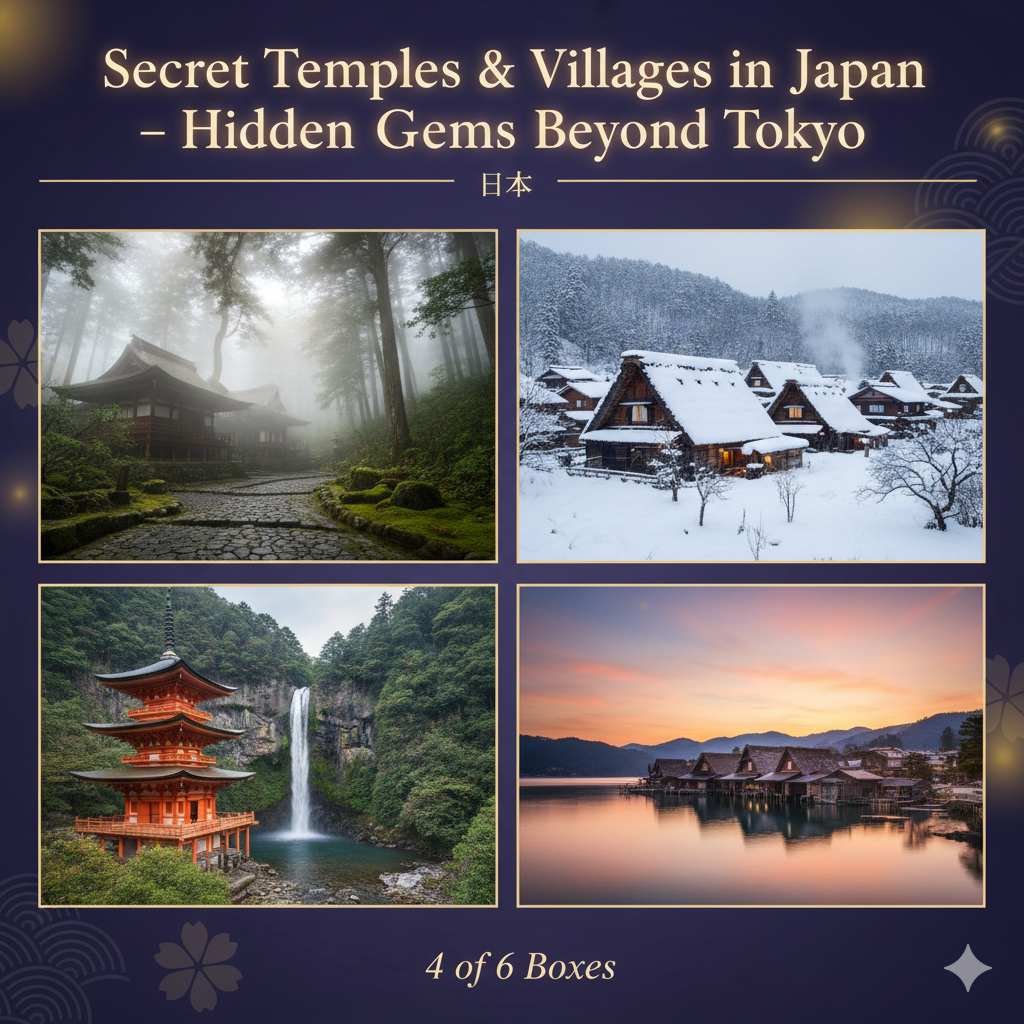

Japan’s Untold Serenity Beyond the Neon
When most travelers picture Japan, they think of Tokyo’s skyscrapers, Kyoto’s shrines, and Osaka’s street food. But Japan hides another world — a quiet, mystical side filled with forgotten temples, mist-shrouded villages, and timeless traditions untouched by mass tourism.
These hidden gems — nestled deep in mountains or coastal hamlets — are where Japan’s true spirit still lives on. Imagine meditating in a 1,000-year-old temple surrounded by cedar forests, or sipping green tea with locals in a thatched-roof village that looks frozen in time.
In this travel guide, we’ll explore the most secret temples and villages in Japan — destinations that go beyond the ordinary and capture the soul of offbeat Japan travel.
1. Sanzen-in Temple, Kyoto – The Temple That Time Forgot
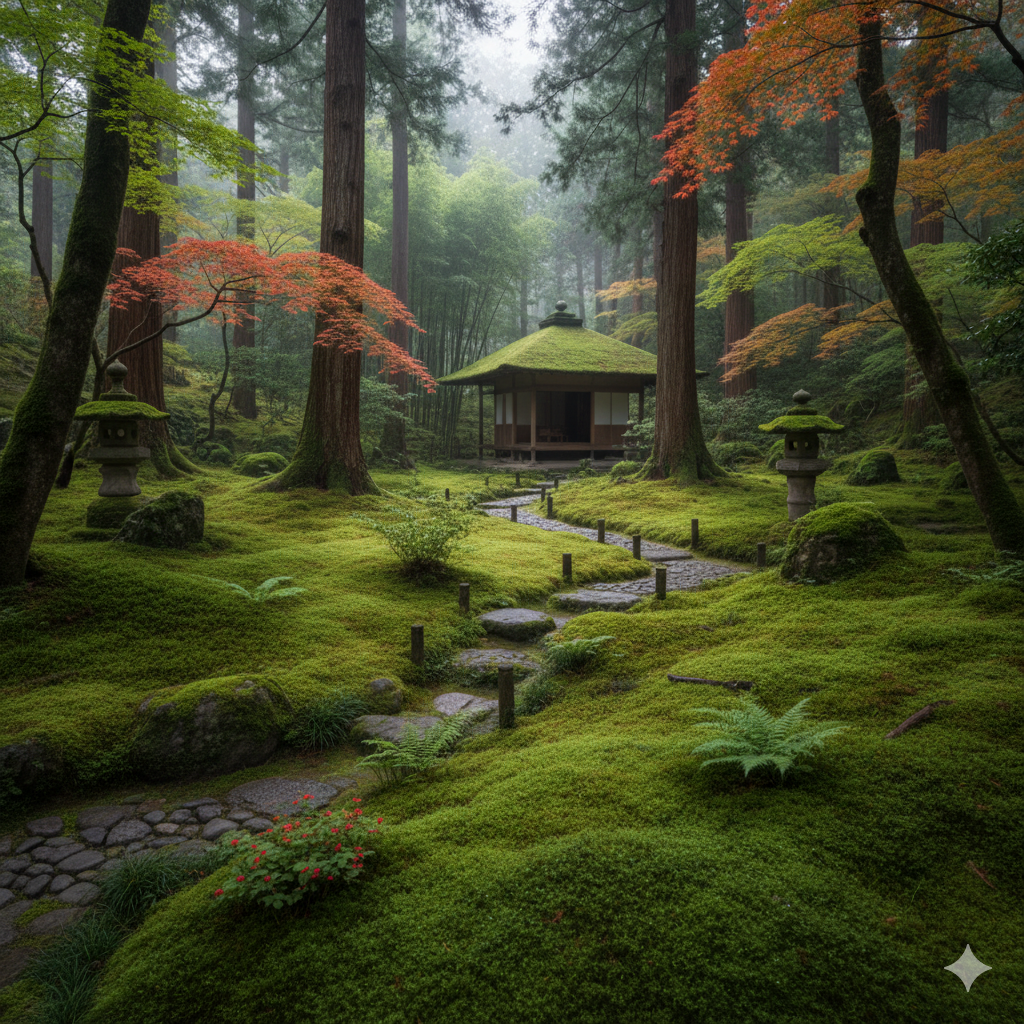
Hidden away in Ohara, a peaceful village north of Kyoto, lies Sanzen-in Temple — one of Japan’s most enchanting and lesser-known temples.
Why It’s Special
Sanzen-in isn’t just another temple; it’s an immersion into silence. The moss-covered gardens, gentle streams, and smiling stone Jizo statues create an atmosphere that feels almost otherworldly.
Travel Tip
Visit early morning to avoid small groups of pilgrims and enjoy tea with a view of the garden at nearby tea houses.
2. Shirakawa-go – Japan’s Living Fairy Tale Village
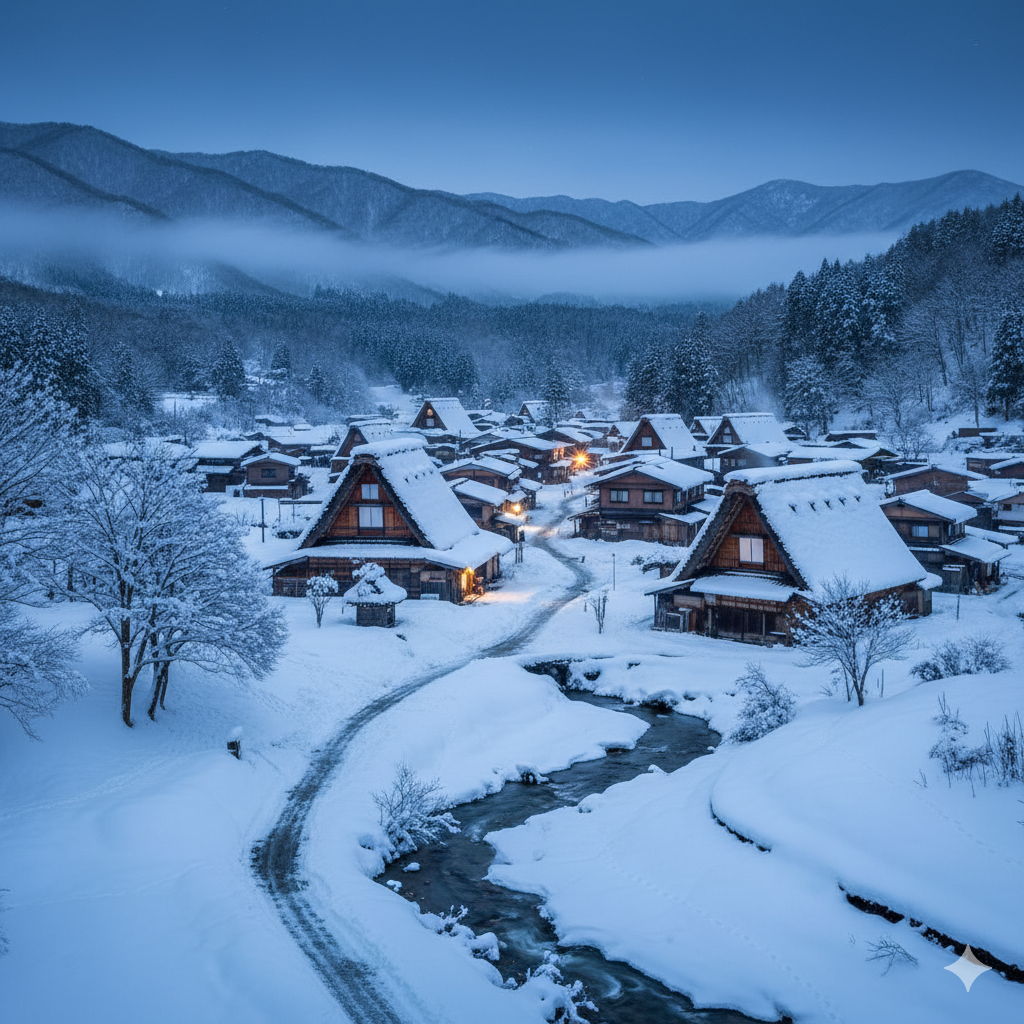
Nestled in the mountains of Gifu Prefecture, Shirakawa-go is a UNESCO World Heritage site famous for its gassho-zukuri farmhouses — traditional thatched-roof homes built to withstand heavy snow.
Why It’s a Hidden Gem
While known by name, few travelers stay overnight to witness its true magic — when the snowfall glows under lanterns, and smoke rises from chimneys like something out of a Studio Ghibli film.
Don’t Miss
Spend a night in one of the heritage houses for an authentic rural Japanese experience — homemade soba noodles, hot sake, and conversations by the fire.
3. Nachi Taisha, Wakayama – The Temple Beside a Waterfall
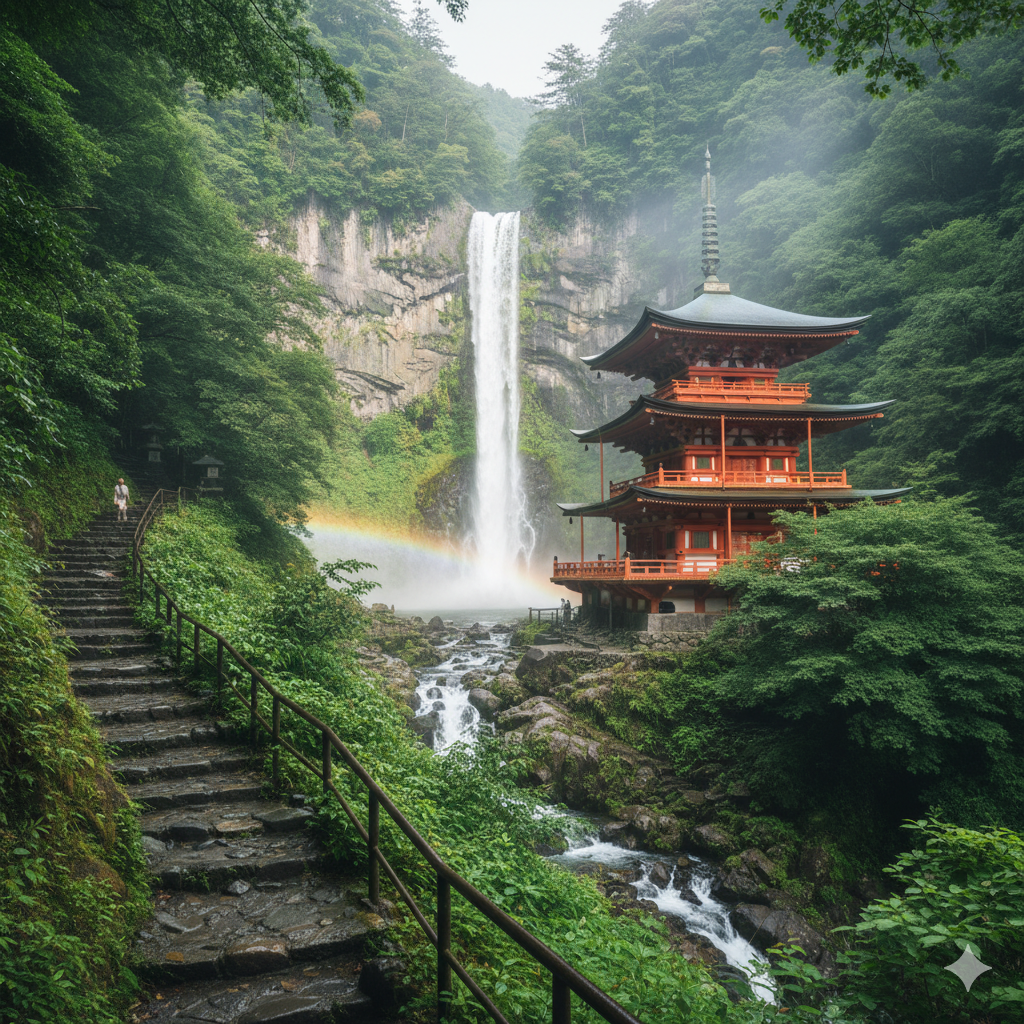
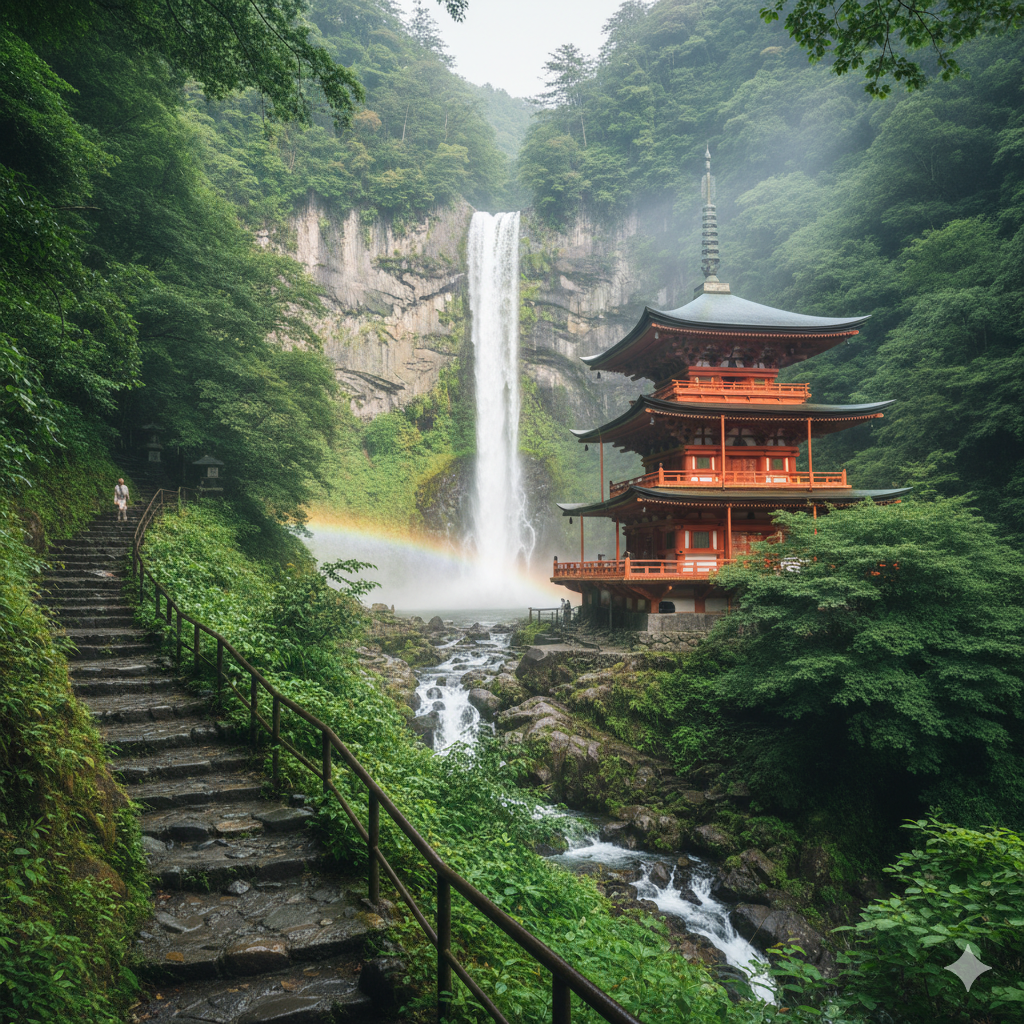
Perched on a mountainside with a view of Japan’s tallest waterfall, Nachi Taisha in Wakayama Prefecture is one of the Kumano Kodo pilgrimage’s most breathtaking stops.
Why Visit
It combines Shinto and Buddhist elements, representing Japan’s spiritual harmony. The sight of the vermilion pagoda beside Nachi Falls is one of the most photographed (yet peacefully quiet) scenes in the country.
Insider Tip
Take the Daimonzaka trail, a 2 km stone-paved path through ancient cedar forests — it’s like walking through a portal to another era.
Japan National Tourism Organization
4. Ouchi-juku – The Edo-Era Village Frozen in Time
Imagine walking down a dirt road lined with thatched-roof inns and shops selling handmade soba noodles — welcome to Ouchi-juku, a preserved Edo-era post town in Fukushima Prefecture.
Why It’s Special
Once a stop for feudal lords traveling the Aizu Nishi Kaido route, this village has maintained its historic charm without modern clutter. No electric poles, no billboards — just pure nostalgia.
What to Try
Taste Negi Soba, buckwheat noodles eaten using a green onion as chopsticks — a quirky tradition that’s a must-try experience!
5. Eiheiji Temple, Fukui – Japan’s Monastic Mountain Retreat
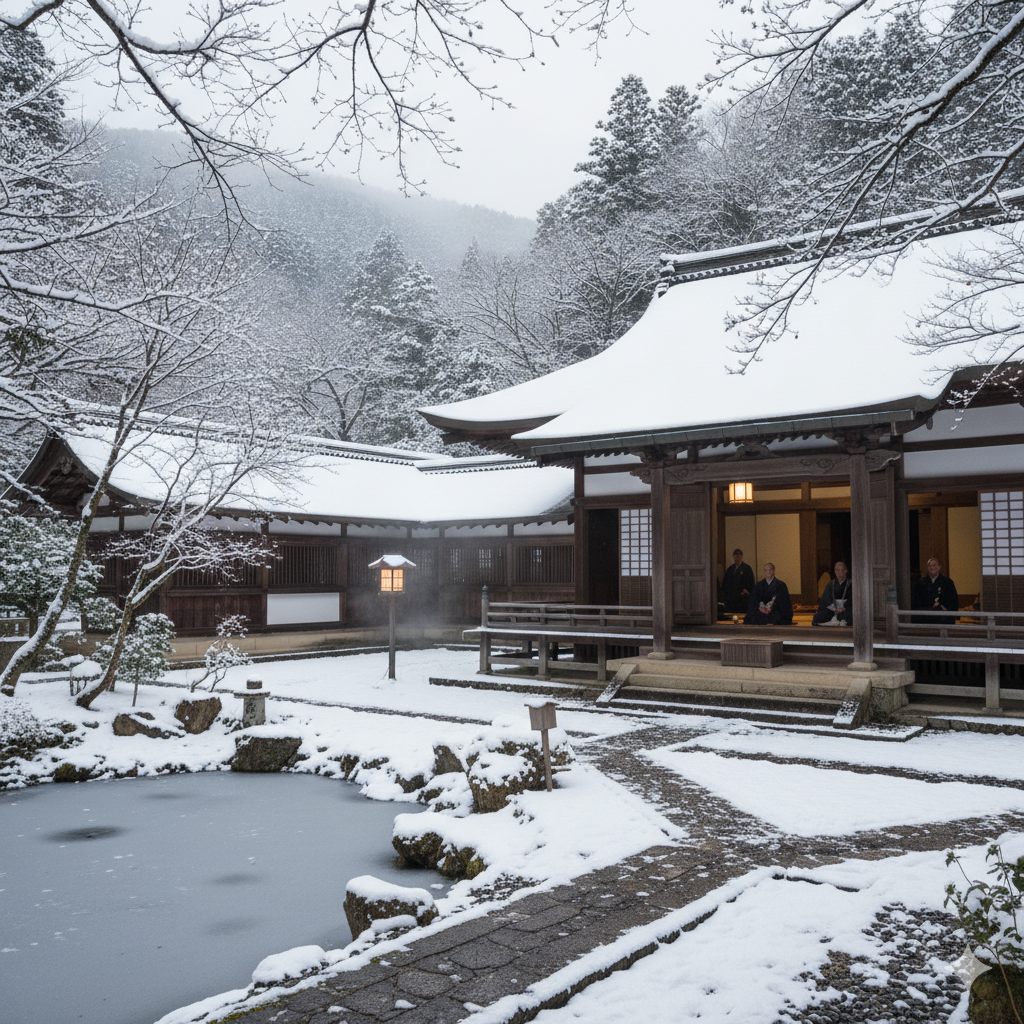
Founded in 1244, Eiheiji (meaning “Temple of Eternal Peace”) is a Zen monastery where monks still live and train.
Why Visit
It’s one of the purest Zen experiences in Japan. Guests can stay overnight, join meditation sessions, and share meals with monks — a deep spiritual reset from modern chaos.
Pro Tip
Silence is sacred here. If you seek mindful solitude, this temple offers exactly that — an escape into awareness.
6. Ine Fishing Village, Kyoto Prefecture – Japan’s Floating Town
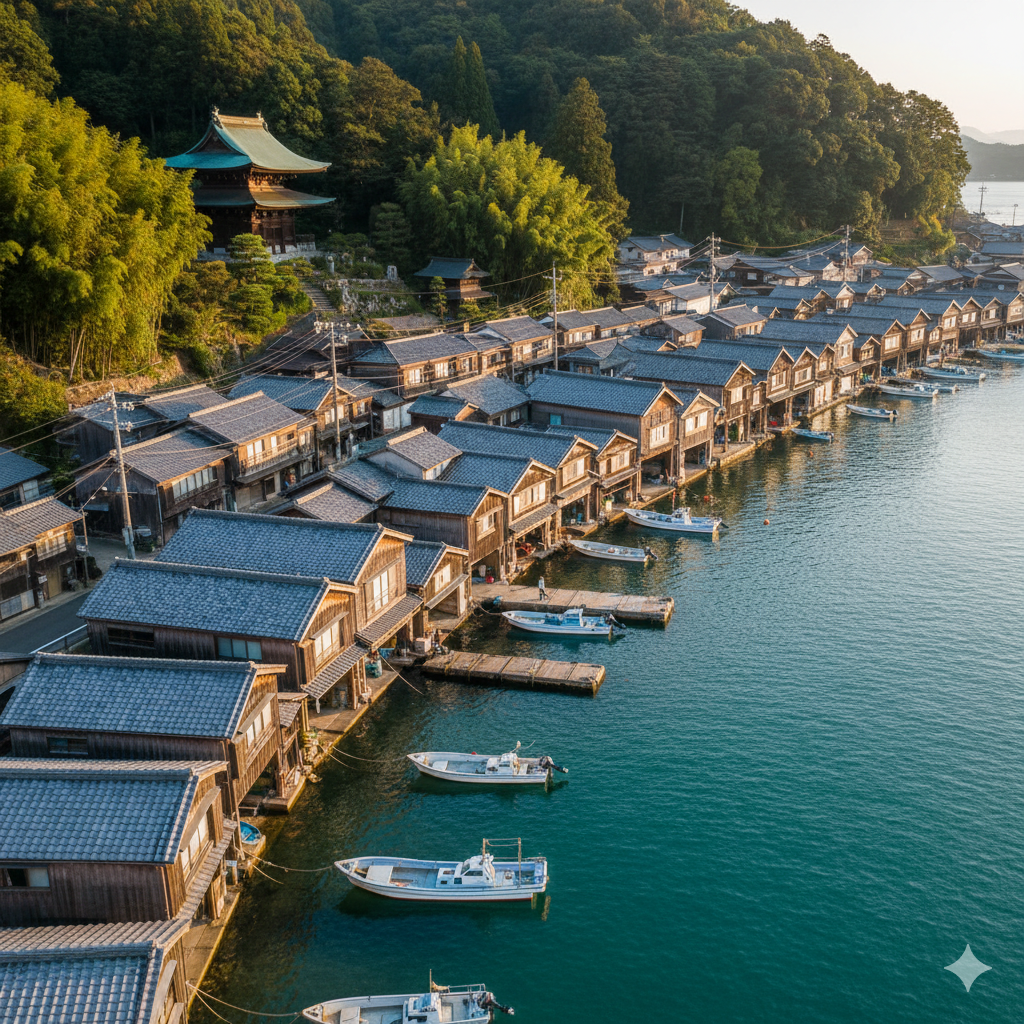
Located along the Sea of Japan, Ine is a picturesque fishing village where wooden boathouses (funaya) line the water’s edge, creating a mirror-like reflection at dawn.
Why It’s a Hidden Gem
Unlike the bustling coastal cities, Ine remains quiet and local, with fishing families still living above their boats.
Must-Do
Stay at a boathouse Airbnb and kayak through the calm bay waters for sunrise views that feel straight out of a painting.
7. Tottori’s Mitokusan Sanbutsu-ji – The Temple on the Cliff
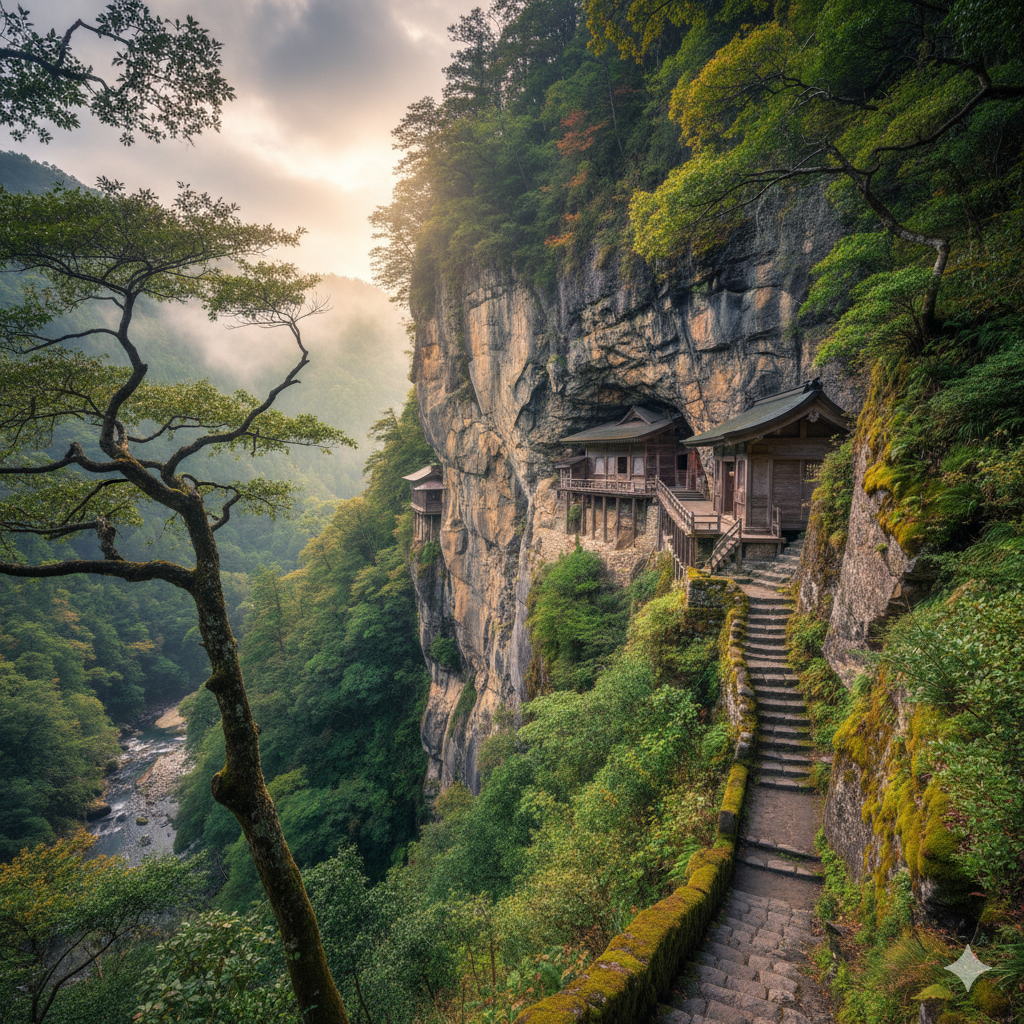
If you crave adventure, Sanbutsu-ji in Tottori Prefecture is your ultimate pilgrimage. The temple’s wooden hall is built into a sheer cliff face, earning it the title of “Japan’s most dangerous temple.”
Why Visit
You’ll hike through steep trails and narrow ridges to reach the sacred site, but the reward — the cliffside Nageiredo Hall — is worth every heartbeat.
Traveler’s Guide: How to Explore Japan’s Hidden Side
| Travel Tip | Details |
|---|---|
| Best Time to Visit | Spring (Mar–May) for blossoms or Autumn (Oct–Nov) for golden foliage |
| Getting Around | Use Japan Rail Pass and local buses for remote routes |
| Where to Stay | Try ryokans (traditional inns) or temple lodgings |
| Cultural Etiquette | Always bow, remove shoes, and avoid loud behavior in temples or villages |
| Budget Tip | Rural stays and temple lodging are often cheaper than city hotels! |
Why Japan’s Hidden Gems Matter
In a country balancing technology and tradition, these secret temples and villages preserve Japan’s ancient rhythm — where respect for nature, spirituality, and simplicity still reign.
Exploring these places isn’t just sightseeing — it’s soulseeing.
When you visit them, remember: you’re walking where monks once meditated, villagers once harvested rice by hand, and artisans still craft history with care.
Check Also: 10 Underrated Islands of Thailand – Hidden Gems to Explore
Traveler: Rediscover the Spirit of Japan
The real Japan doesn’t always shine in neon — sometimes, it glows softly through moss gardens, mountain shrines, and quiet riverside homes.
Whether you’re meditating in Eiheiji, strolling Ouchi-juku’s dirt lanes, or watching lanterns float in Shirakawa-go — you’ll discover a timeless beauty that no travel guide can truly capture.
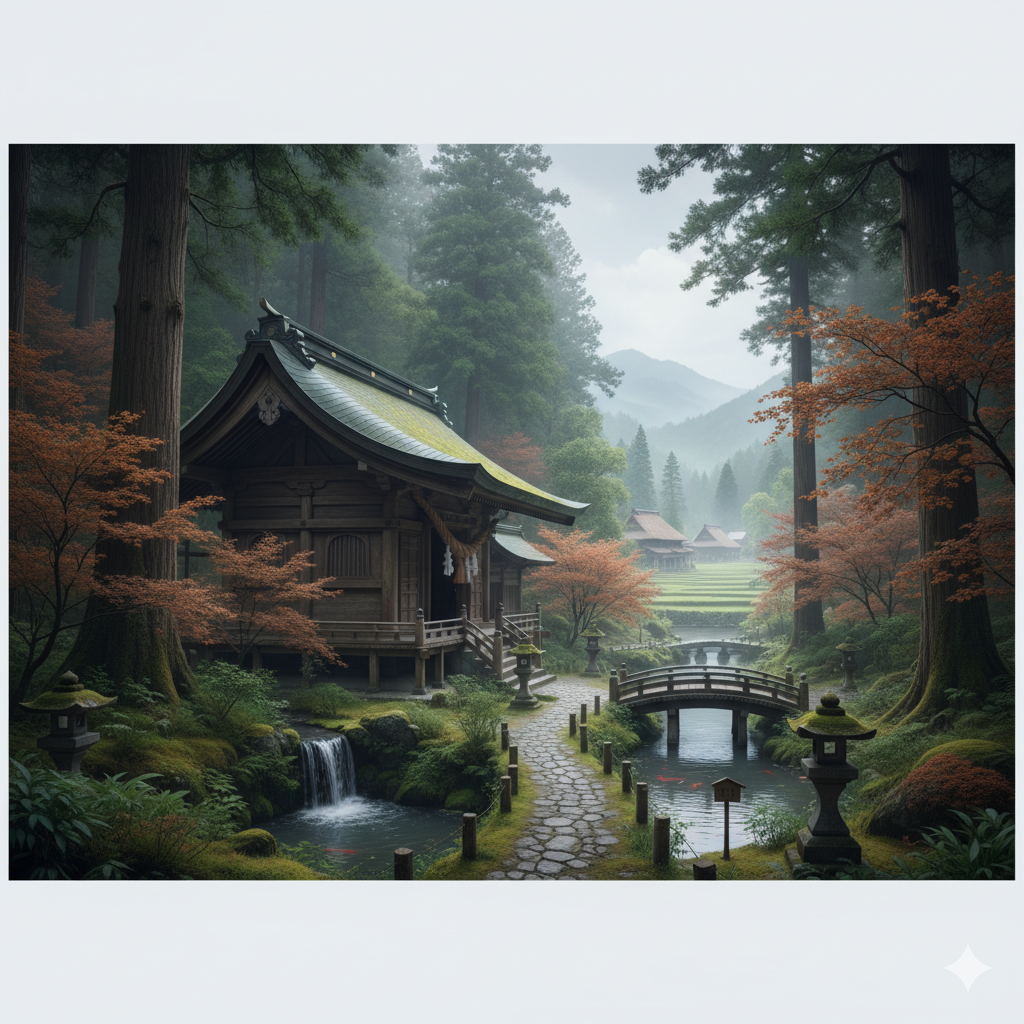
So next time you plan a trip to Japan, skip another city checklist.
Instead, follow the whisper of the cedar forests — Japan’s hidden heart is waiting.
FAQs
Q1: What’s the best time to explore Japan’s hidden temples and villages?
A: Visit during spring (March–May) or autumn (October–November) for comfortable weather and the best natural colors.
Q2: Are these hidden destinations easy to access?
A: Most are reachable by train and local bus; a few remote temples may require hiking or car rentals.
Q3: Can I stay overnight in these places?
A: Yes! Many villages offer homestays, ryokans, and temple lodgings where you can experience traditional Japanese hospitality.
Q4: Are these destinations family-friendly?
A: Absolutely. Places like Shirakawa-go and Ine Village are great for families wanting a peaceful, cultural experience.
Q5: What should I pack for temple visits?
A: Comfortable shoes, modest clothing (no sleeveless tops), and a small offering envelope if you wish to donate.