
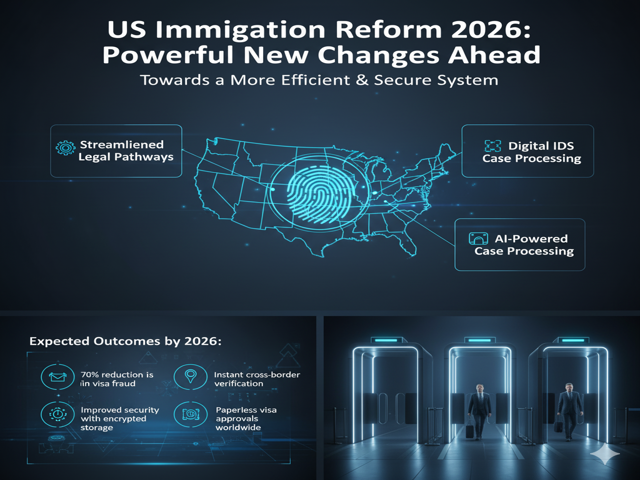

The Dawn of a New Era in U.S. Immigration
US Immigration Reform 2026 is shaping up to be one of the most transformative policy shifts in recent American history. The Biden administration, working alongside Congress and the Department of Homeland Security (DHS), has outlined reforms aimed at modernizing visa processing, enhancing border technology, and expanding opportunities for skilled and family-based immigration.
For millions of dreamers, professionals, and students across the world, these changes promise a more transparent, digital, and equitable system. Let’s explore how the reform impacts various visa categories, green card pathways, and future applicants.
Overview: What Is the US Immigration Reform 2026 About?
The US Immigration Reform 2026 aims to simplify immigration while protecting national interests. It introduces:
- Digital Visa Platforms: Transition to AI-supported case management via USCIS systems.
- Faster Green Card Allocation: Reducing backlog through expanded visa quotas.
- Skilled Immigration Boost: Priority for STEM graduates and tech professionals.
- Pathway to Citizenship for DACA and Essential Workers.
- Enhanced Border Control with AI and Blockchain verification.
Employment-Based Immigration: Opportunities Reimagined
One of the most exciting parts of the reform is the expansion of employment-based visas. Employers and foreign professionals stand to gain from these major updates:
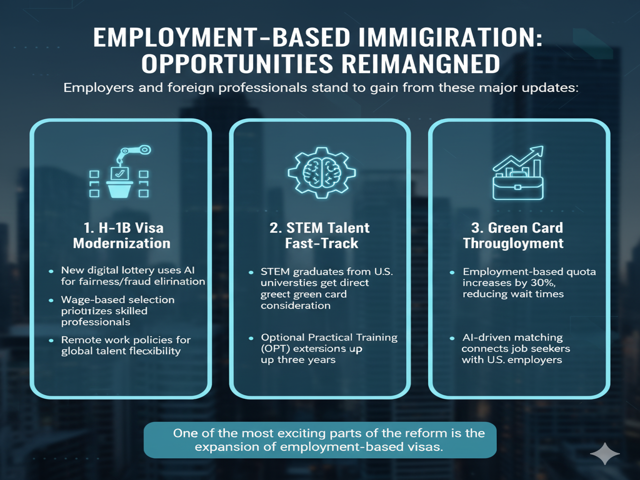
1. H-1B Visa Modernization
- The new digital lottery system uses AI to ensure fairness and eliminate fraud.
- Wage-based selection gives priority to highly skilled professionals.
- Remote work policies may be integrated for global talent flexibility.
2. STEM Talent Fast-Track
- STEM graduates from accredited U.S. universities can now apply for direct green card consideration.
- Optional Practical Training (OPT) extensions up to three years for critical research fields.
3. Green Card Through Employment
- The employment-based quota is set to increase by 30%, reducing wait times.
- AI-driven matching systems will connect job seekers directly with verified U.S. employers.
Family-Based Immigration: Reuniting Families Faster
The reform accelerates family reunification by cutting visa wait times for immediate relatives. Highlights include:
- Priority for spouses and children of lawful permanent residents.
- Digital document submission system for faster USCIS verification.
- Expansion of family categories for humanitarian sponsorship.
Example: If you’re a U.S. citizen sponsoring a sibling, you could see processing times drop by 40% under the new framework.
Green Card Reform 2026: A Step Toward Inclusivity
The Green Card backlog is one of the biggest challenges in U.S. immigration.
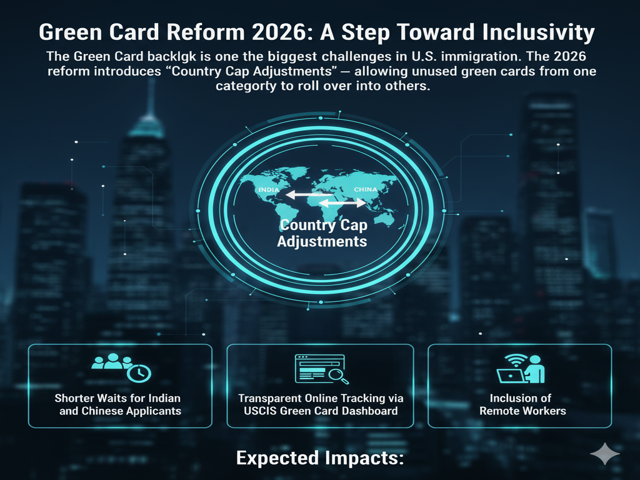
The 2026 reform introduces “Country Cap Adjustments” — allowing unused green cards from one category to roll over into others.
Expected Impacts:
- Shorter waits for Indian and Chinese applicants.
- Transparent online tracking via the USCIS Green Card Dashboard.
- Inclusion of remote workers under specialized professional categories.
Digital Transformation of Immigration
Technology lies at the heart of US Immigration Reform 2026. The U.S. government is shifting to digital identity, blockchain record-keeping, and AI screening to speed up applications and improve security.
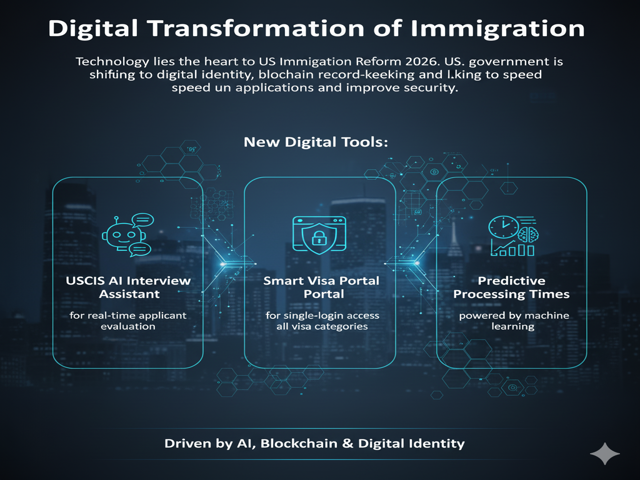
New Digital Tools:
- USCIS AI Interview Assistant for real-time applicant evaluation.
- Smart Visa Portal for single-login access to all visa categories.
- Predictive Processing Times powered by machine learning.
Border Management & Asylum Policy Updates
The reform invests heavily in border tech rather than physical barriers.
- Advanced biometric verification systems will secure entry points.
- Asylum processing centers will be digital-first and fast-tracked for humanitarian cases.
- Collaboration with Latin American nations ensures fair refugee distribution.
Economic Impact: Boosting Growth Through Immigration
Experts predict the reform will strengthen the U.S. economy by addressing labor shortages.
A report by the Migration Policy Institute suggests that modernizing immigration could add $400 billion to GDP by 2030.
Key Beneficiaries:
- Healthcare and tech sectors gain high-skilled foreign workers.
- Universities attract more international students.
- Small businesses benefit from foreign entrepreneurship incentives.
Digital Accessibility and Equity
The reform ensures equitable access through online platforms supporting multiple languages, accessibility tools for the disabled, and mobile-first submission portals.
“This isn’t just immigration reform,” said DHS Secretary Alejandro Mayorkas.
“It’s a transformation of how we connect people to the American dream.”
The Global Ripple Effect
As the U.S. modernizes its system, other countries — including Canada, the UK, and Australia — are taking notes. Expect parallel reforms, global visa partnerships, and digital mobility frameworks across continents.
Step-by-Step Guide to Prepare for US Immigration Reform 2026
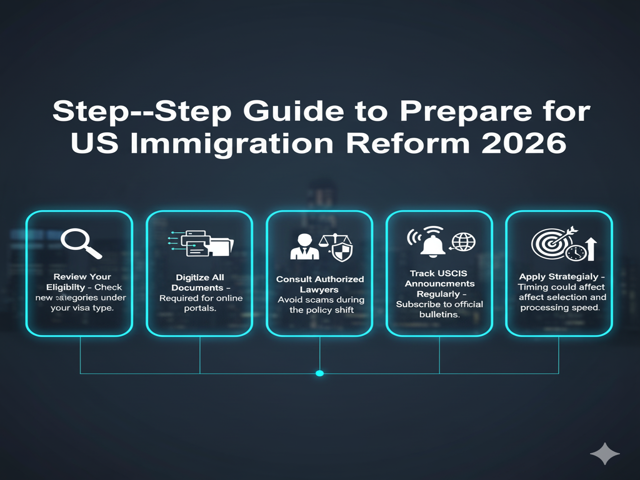
- Review Your Eligibility Early – Check new categories under your visa type.
- Digitize All Documents – Required for online portals.
- Consult Authorized Lawyers – Avoid scams during the policy shift.
- Track USCIS Announcements Regularly – Subscribe to official bulletins.
- Apply Strategically – Timing could affect selection and processing speed.
Source: White House Immigration Modernization Initiative
FAQs – US Immigration Reform 2026
1. What is the main goal of the US Immigration Reform 2026?
To simplify immigration, speed up digital applications, and open new opportunities for global applicants.
2. How will this affect H-1B visa holders?
The reform modernizes H-1B processes, promoting wage-based selection and AI-driven fairness.
3. Will Green Card wait times reduce?
Yes — the reform redistributes unused visas, cutting down years-long backlogs.
4. Are there new pathways to citizenship?
Yes, DACA recipients and essential workers gain priority in permanent residency.
5. How can applicants prepare now?
Start digitizing documents and follow official USCIS updates regularly.
Related Post: H-1B Visa 2025: Digital Lottery System Explained
Agent Advise: The Future Is Digital, Inclusive, and Global
The US Immigration Reform 2026 represents more than just policy — it’s a bold vision for the future.
By embracing technology, fairness, and inclusivity, America redefines its role as the world’s top destination for innovation and opportunity.
For global citizens, professionals, and families, this reform is an invitation — a powerful new gateway to the American dream.


Pingback: Australia Migration Program 2025–26: Powerful New Priorities
Pingback: US Visa Waiver Program 2026: Powerful New Country Additions