


Introduction – Haunted, Ghost & Mystery Places
In every corner of our world, beyond the lights of modern cities and the noise of daily life, there are haunted travel destinations that seem frozen in time — silent witnesses of forgotten tragedies, lost souls, and untold mysteries. These are the ghost towns, abandoned villages, and eerie islands that continue to fascinate travelers, storytellers, and spiritual explorers alike.
From Europe’s cobbled lanes where shadows whisper tales of betrayal to the Asian forests haunted by ancestral spirits, each of these destinations holds a unique energy — part beauty, part fear, and pure curiosity. Some are deserted ruins reclaimed by nature, others are still inhabited by people who live alongside legends of ghosts and echoes of the past.
What makes these mysterious locations so compelling is not just their haunted reputation, but the cultural stories and historical truths buried beneath the myths. You’ll find the ghost village of Scotland, where the mist never lifts; the deserted town of Craco in Italy, where crumbling walls hide medieval prayers; and the floating rocks of Socotra Island, where science and superstition coexist.
Each destination in this cluster is carefully curated to merge history, travel insight, access routes, hidden tips, and local food experiences — giving travelers the thrill of adventure with the grounding of cultural knowledge. Whether you believe in spirits or not, these places remind us that travel is not just about seeing new lands, but feeling the weight of stories that linger long after footsteps fade.
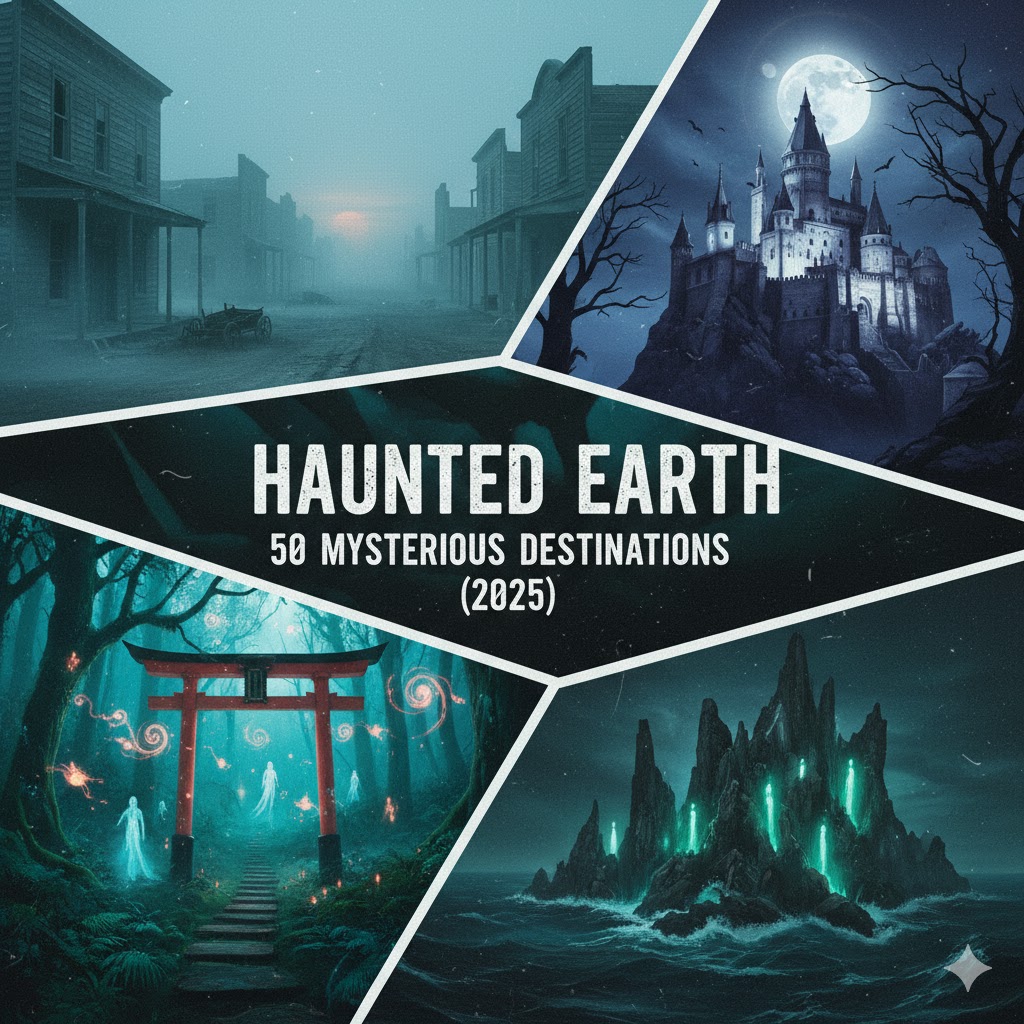
1. The Island of Floating Rocks – Socotra, Yemen
Hidden deep in the Arabian Sea, Socotra Island is often described as one of Earth’s most alien places — a land where nature blurs into mystery. Locals tell tales of “floating rocks” that rise slightly when the desert winds hum across the dunes. Scientists call it an illusion of magnetized minerals, but many islanders believe the rocks are alive — ancient guardians of lost travelers.
Highlights
- The famed Dragon’s Blood Trees, with crimson sap said to have healing power.
- Limestone caves filled with prehistoric carvings.
- The Detwah Lagoon, where eerie reflections shimmer under moonlight.
History & Mystery
Socotra’s myths trace back to the Sabaean Kingdom and even Alexander the Great’s era, when sailors swore the island was cursed by spirits. Ancient Greek texts mention “Isle of Bliss” — a deceptive paradise luring explorers to madness.
How to Reach
Fly via Cairo or Abu Dhabi directly to Socotra Airport. Access is limited to small charter flights.
Best Time to Visit
October to April — dry season offers pleasant travel and clearer skies.
Hidden Gems & Local Tips
Hire local Bedouin guides for permission to visit restricted caves. Always carry plenty of water — Socotra’s heat is intense.
Local Food Experience
Try Socotri honey, famed for its healing properties and rare taste infused with dragon’s blood resin aroma.

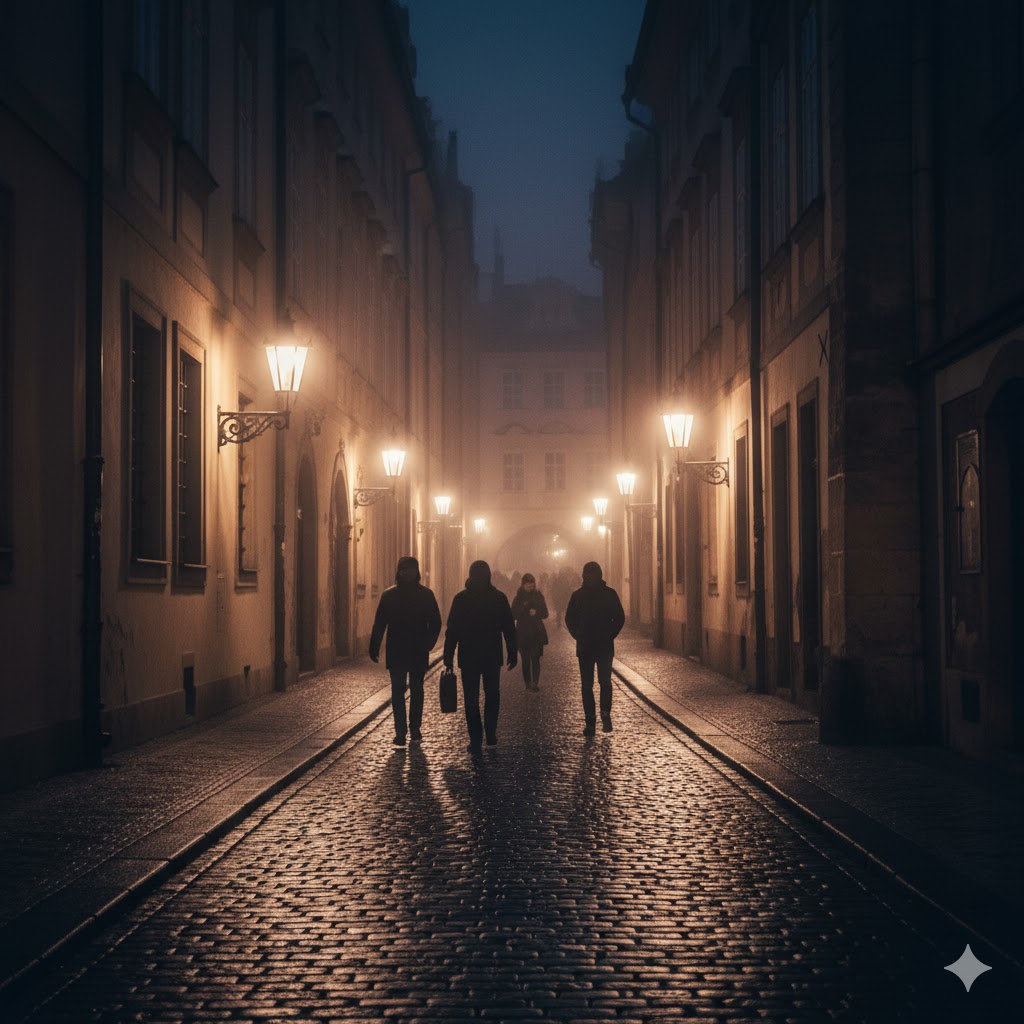
2. The Narrowest Alley – Prague, Czech Republic
Among Prague’s gothic spires lies a claustrophobic alley barely 50 centimeters wide — so narrow it needs a pedestrian traffic light. Yet locals claim it’s haunted by a woman who perished during a fire centuries ago, her voice still echoing through the passage.
Highlights
- A surreal walking experience with ancient stone walls pressing close.
- Romantic yet eerie views of Charles Bridge nearby.
- Lanterns flicker as if blown by unseen breath.
History & Lore
Dating back to the 14th century, this alley once connected bakeries to cellars used for storage. After a tragic fire, a woman was trapped and perished — since then, night visitors report a faint perfume scent and soft crying sounds.
How to Reach
Located near Charles Bridge in Prague’s Old Town; easily accessible by foot.
Best Time to Visit
Autumn evenings when fog cloaks the Vltava River, adding a supernatural vibe.
Hidden Gems & Local Tips
Arrive late evening after tourist rush; nearby pubs tell ghost stories tied to the alley.
Local Food Experience
Enjoy Czech goulash or roasted pork knuckle paired with dark beer for an authentic Prague night.
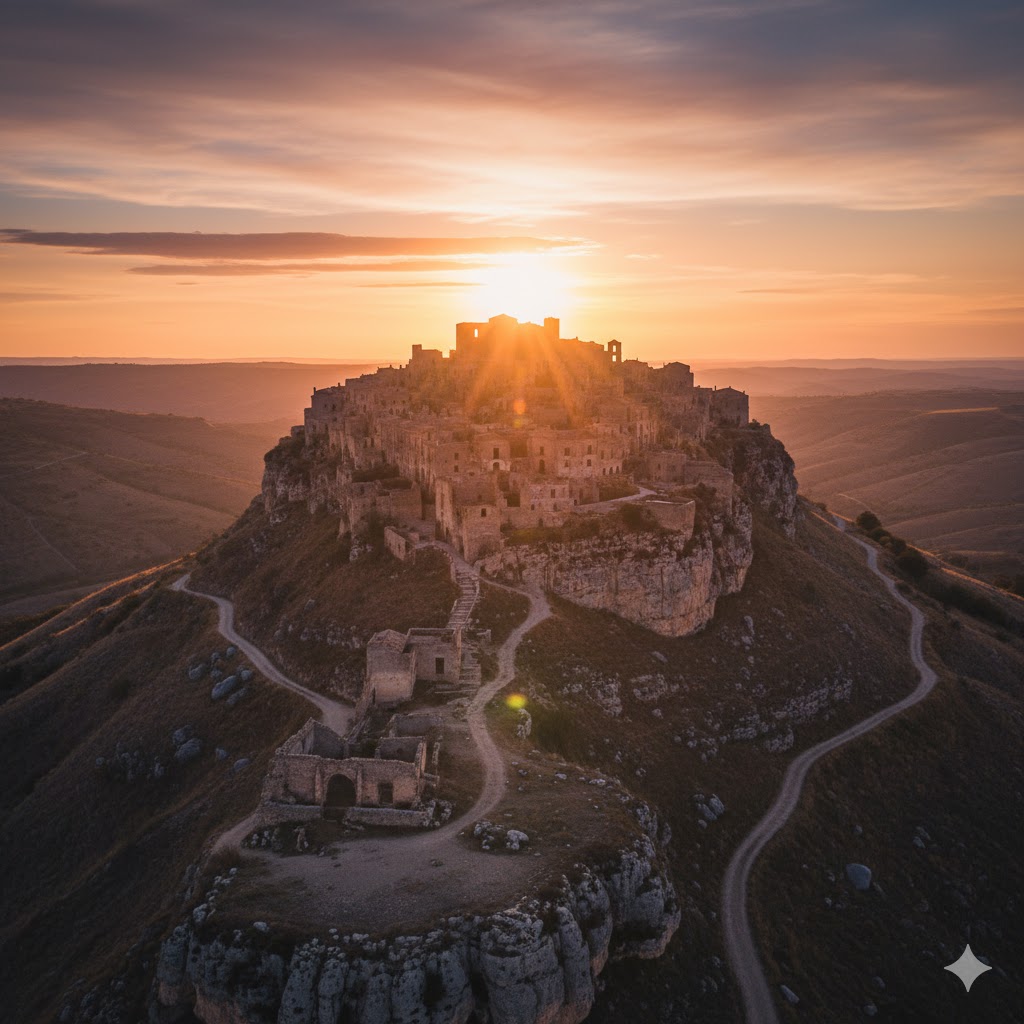
3. The Deserted Town of Craco – Basilicata, Italy
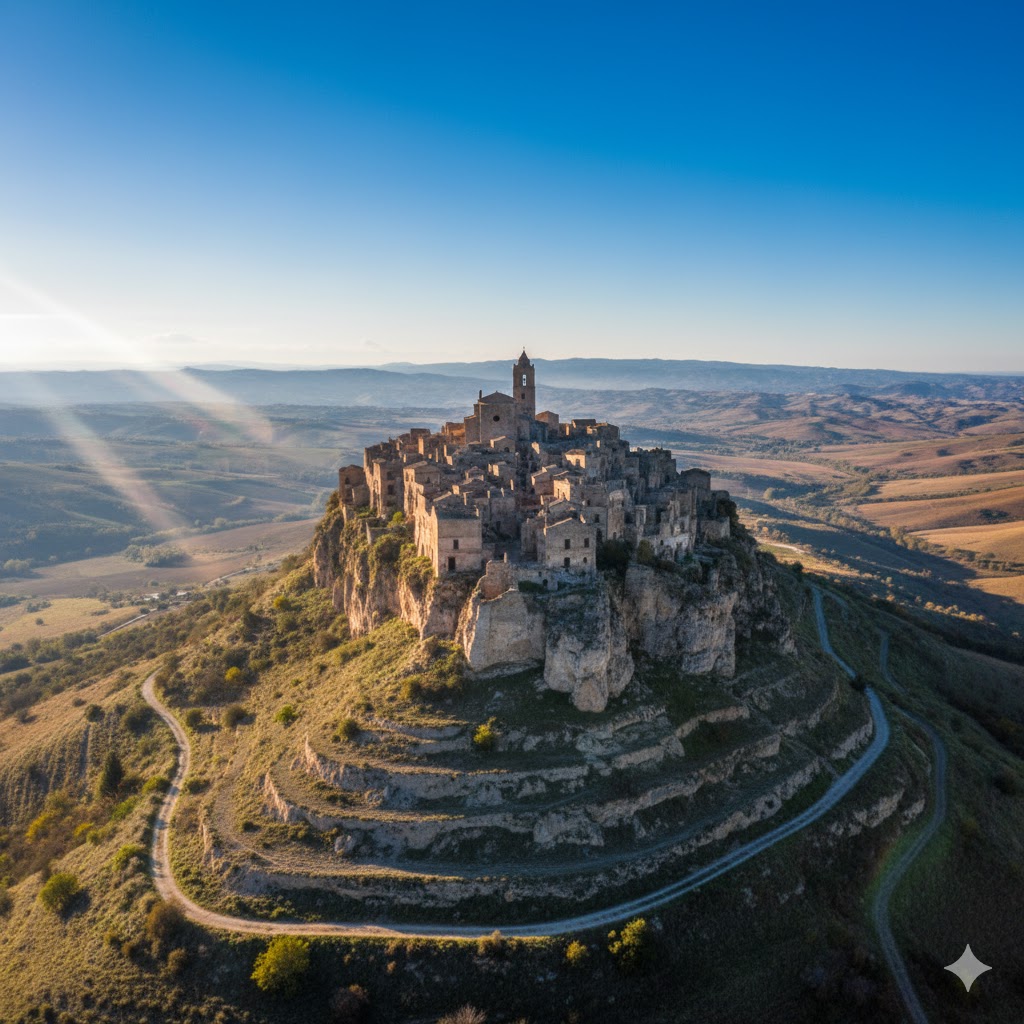
Perched high on a rugged cliff, the ghost town of Craco resembles a cinematic mirage — lifeless streets, empty churches, and winds that whisper prayers of lost souls. Once a thriving medieval town, it was abandoned after landslides and earthquakes in the 20th century.
Highlights
- Medieval watchtower, still standing tall against time.
- Empty cathedrals echoing hymns of the past.
- Filming location for movies like The Passion of the Christ.
History & Mystery
Craco was founded in the 8th century, thriving as a monastic settlement. Its fall began with natural disasters that forced evacuation, leaving the entire city trapped in time. Locals say ghostly monks still roam at twilight.
How to Reach
From Matera or Bari, drive through Basilicata hills — the route itself feels hauntingly scenic.
Best Time to Visit
Late spring or early fall to avoid extreme temperatures.
Hidden Gems & Local Tips
Book a guided tour; visitors are not allowed unsupervised due to unstable structures.
Local Food Experience
Try Lucanian sausage and Cruschi peppers, Basilicata’s crunchy delicacy.
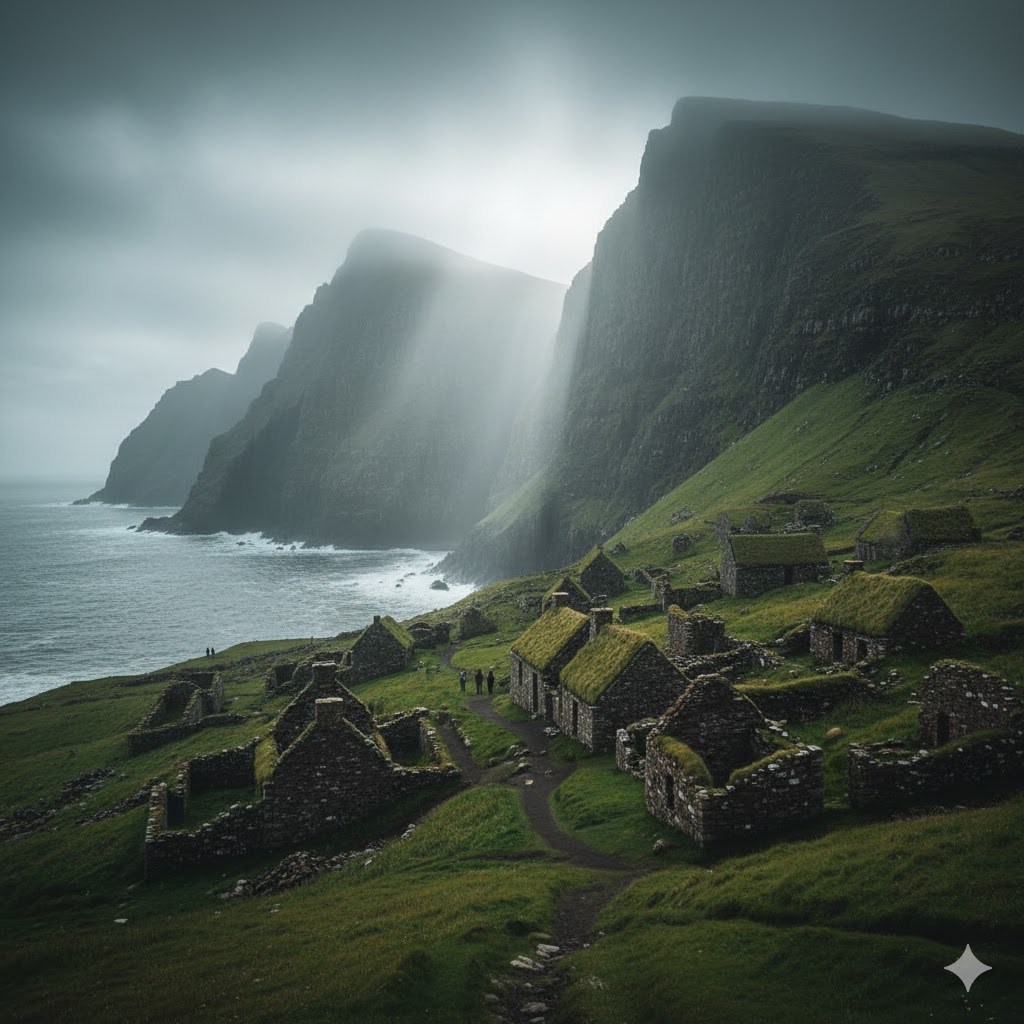
4. The Ghost Village of St. Kilda – Scotland
Off Scotland’s wild west coast, St. Kilda stands as a relic of human endurance and mystery. The island’s isolation and stormy seas made it uninhabitable, forcing the last villagers to leave in 1930.
Highlights
- Stone cottages left untouched.
- Soay sheep, a rare breed that outlived their herders.
- Bird cliffs swarming with puffins and fulmars.
History & Mystery
Archaeological remains trace life back 2,000 years. Locals believed the island was “watched by unseen eyes.” Fishermen still avoid its shores at night.
How to Reach
Boat tours operate from Isle of Skye or Harris. The journey is rough but breathtaking.
Best Time to Visit
Summer months when seas are calmer.
Hidden Gems & Local Tips
Carry warm waterproof gear; the weather changes in minutes.
Local Food Experience
Try smoked Scottish salmon and local whisky at nearby Hebridean pubs after your return.
5. The Ghost Island of Aniva – Sakhalin, Russia
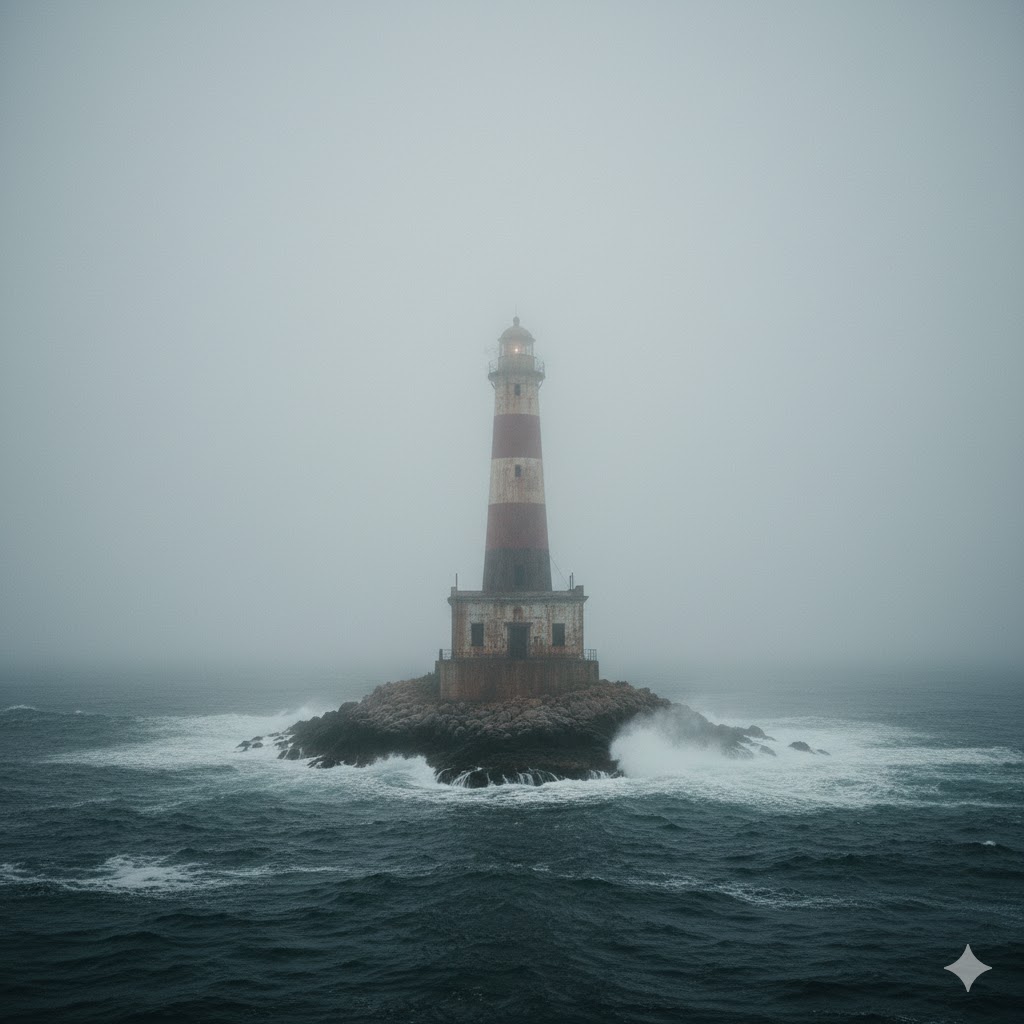
Towering in the cold Sea of Okhotsk, Aniva Lighthouse stands on a desolate island known for spectral sightings. Built by the Japanese in 1939, it’s now rusted, broken, and utterly haunting.
Highlights
- Abandoned lighthouse teetering on a jagged rock.
- Sea fogs that transform the ocean into a silver mist.
- Perfect for urban explorers seeking eerie solitude.
History & Mystery
Once a symbol of hope, Aniva turned into isolation after Japanese occupation ended. Locals claim its last keeper vanished without a trace — his shadow seen pacing the balcony at dawn.
How to Reach
Accessible by charter boat from Sakhalin Island (Neftegorsk port).
Best Time to Visit
July–September when seas are navigable.
Hidden Gems & Local Tips
Don’t visit alone — tides rise fast and currents are deadly.
Local Food Experience
Taste Russian fish stew (Ukha) and smoked herring in nearby Korsakov town.
6. The Hanging Gardens of Mawlynnong – Meghalaya, India
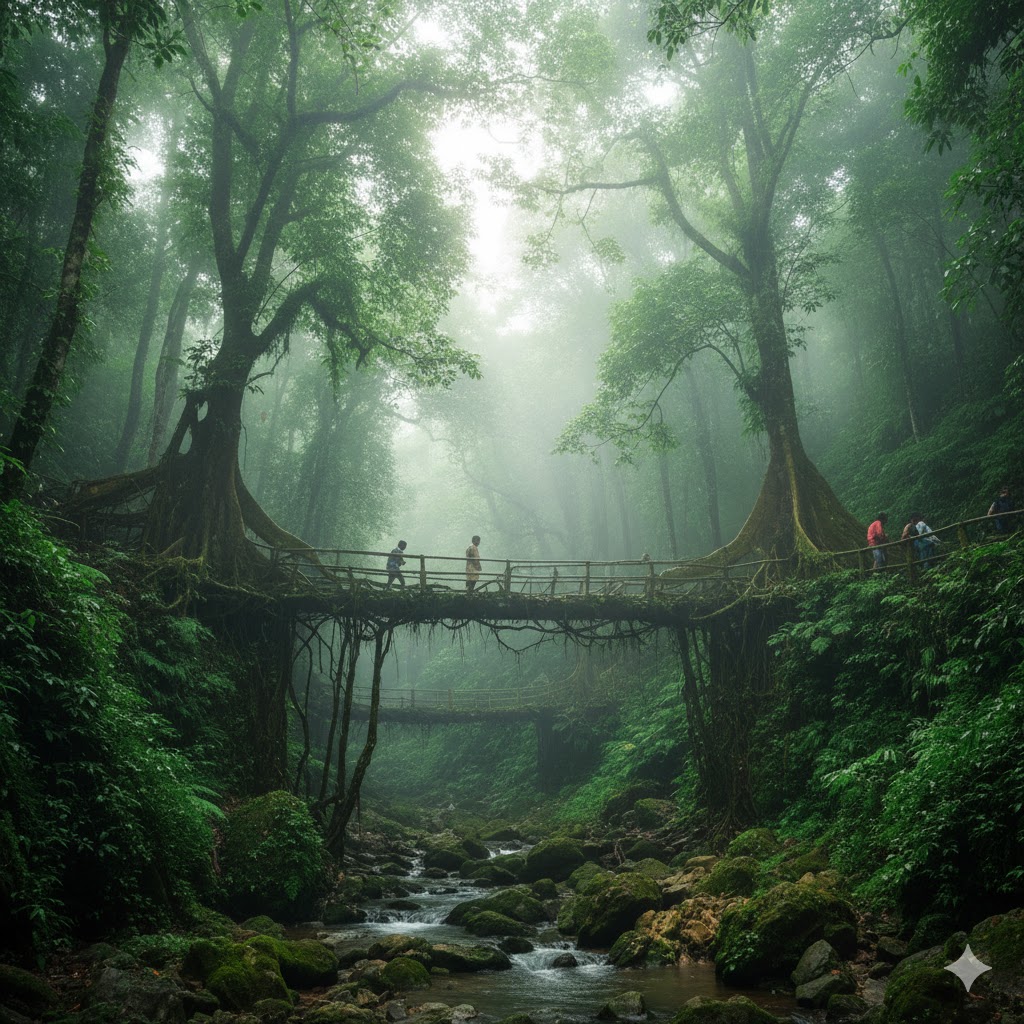
Nestled in India’s cleanest village, Mawlynnong, the Hanging Gardens are both enchanting and eerie. The living root bridges twist across deep ravines, appearing almost alive. At night, locals speak of faint lights floating near the forest edges — spirits said to guard the sacred fig trees.
Highlights
- Living Root Bridges formed from centuries-old rubber trees.
- Sky Viewpoint overlooking Bangladesh plains.
- Lush waterfalls and misty trails perfect for exploration.
History & Mystery
Mawlynnong’s Khasi tribes believe the forest is protected by Mother Spirits. Legends claim the roots themselves move when unwelcomed visitors approach.
How to Reach
From Shillong, drive 80 km via Dawki Road — best during daylight.
Best Time to Visit
March–May and September–November for clear visibility.
Hidden Gems & Local Tips
Hire a local Khasi guide; they’ll share folklore that outsiders rarely hear.
Local Food Experience
Try Pukhlein (sweet rice cake) and Jadoh (meat rice) — local favorites.
7. The Desert Bloom – Atacama Desert, Chile
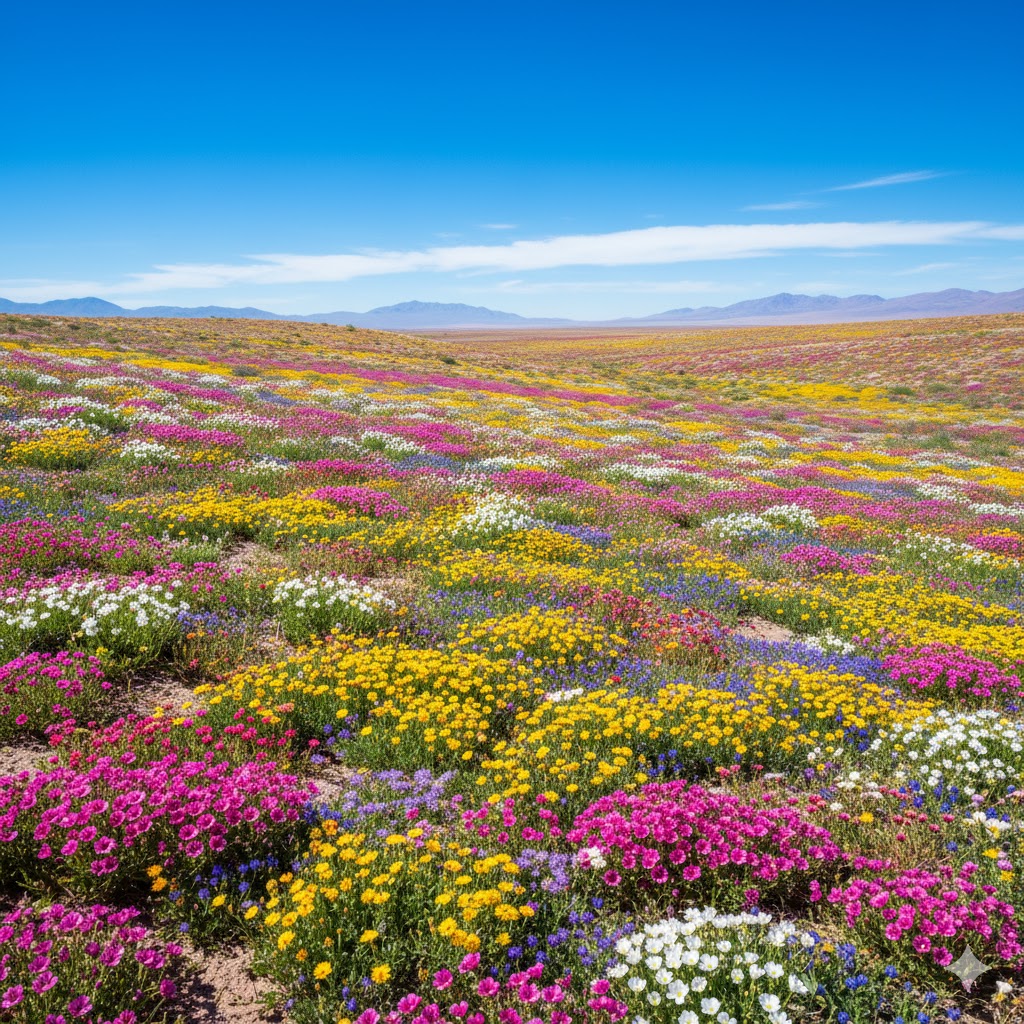
Known for its ghostly silence, the Atacama Desert occasionally transforms into a sea of wildflowers — an event locals call “the desert’s soul awakening.” Scientists explain it by rainfall, but myths say ancient spirits of the land return to life.
Highlights
- Valle de la Luna (Moon Valley) – surreal landscapes.
- Flower Bloom Phenomenon every few years.
- Stargazing among world’s clearest skies.
History & Mystery
Atacama’s indigenous lore speaks of desert goddesses blessing the barren land with color as a sign of forgiveness.
How to Reach
Fly to Calama Airport, then drive to San Pedro de Atacama.
Best Time to Visit
During bloom years (check forecasts; usually August–October).
Hidden Gems & Local Tips
Visit small ghost mining towns like Humberstone, now UNESCO-listed.
Local Food Experience
Enjoy empanadas de queso and pisco sour under the stars.
8. The Cursed Bell Tower – Lake Resia, Italy
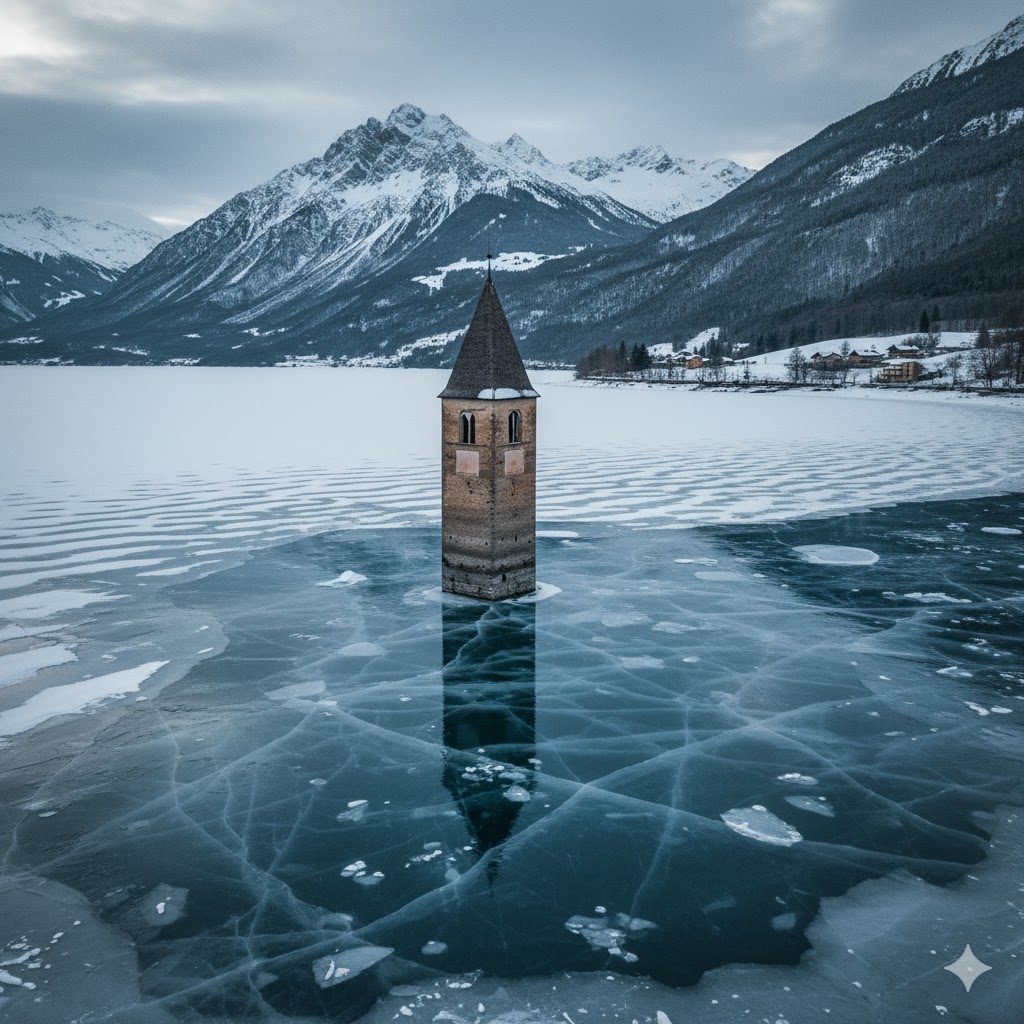
In northern Italy, Lake Resia hides an entire submerged village. Only a lonely bell tower emerges from the water, ringing faintly during winter winds — though the bells were removed long ago.
Highlights
- Half-submerged 14th-century bell tower in alpine lake.
- Snow-capped mountains mirrored in icy water.
- Historical remains visible during winter thaw.
History & Mystery
In 1950, the town of Curon Venosta was intentionally flooded for a hydroelectric project. Locals evacuated in tears, and legends say their grief cursed the valley. Some claim to hear church bells under moonlight.
How to Reach
From Bolzano, drive two hours north to Resia Pass.
Best Time to Visit
Winter for frozen lake walks; summer for scenic boat rides.
Hidden Gems & Local Tips
Visit early morning for mirror reflections; avoid tourist crowds.
Local Food Experience
Taste Speck (smoked ham) and apple strudel from local bakeries.
9. The Whispering Woods – Aokigahara, Japan
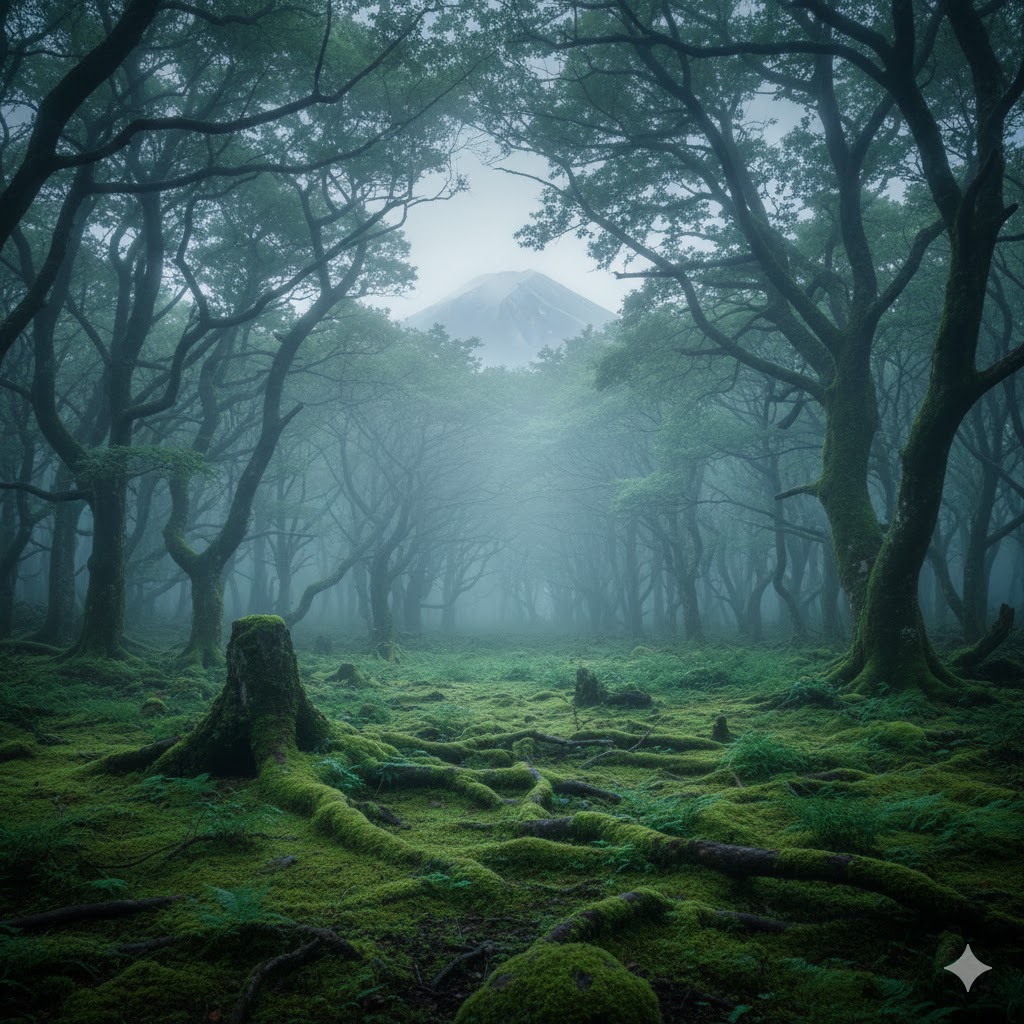
The Aokigahara Forest, near Mount Fuji, is both beautiful and chilling. Known as Japan’s “Sea of Trees,” it’s infamous for its silence — so dense that even wind seems to vanish. Travelers report hearing whispers and footsteps that fade into nowhere.
Highlights
- Lava caves and mossy trails.
- Deep stillness and magnetic anomalies.
- Proximity to Mount Fuji’s sacred base.
History & Mystery
Folklore links Aokigahara to Yūrei (restless spirits). During famines, villagers abandoned the elderly here — their souls are believed to linger.
How to Reach
From Tokyo, take train to Kawaguchiko Station, then bus to Aokigahara.
Best Time to Visit
Late spring or early autumn when mist rolls across forest floor.
Hidden Gems & Local Tips
Visit with a guide; paths are confusing and GPS fails due to iron content.
Local Food Experience
Try Hōtō noodles from Yamanashi Prefecture — hearty comfort after the eerie walk.
10. The Abandoned Hospital of Beelitz-Heilstätten – Germany
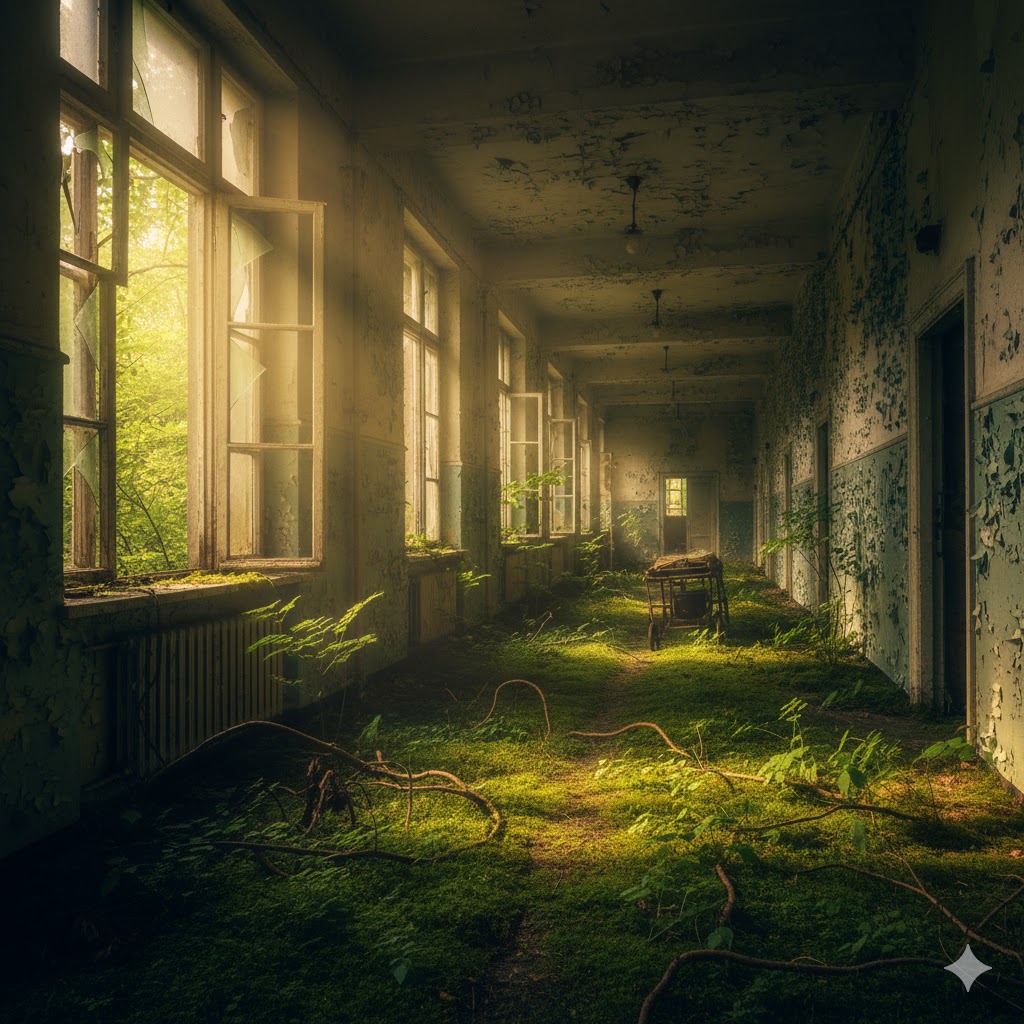
Deep in Brandenburg’s pine forest lies Beelitz-Heilstätten, an abandoned sanatorium complex from the 1890s. Once a military hospital where even Hitler was treated, it’s now a chilling relic where corridors echo faint footsteps.
Highlights
- 60+ abandoned buildings and decaying operating theaters.
- Photography tours and rope canopy walk above ruins.
- Stunning yet eerie architecture engulfed by nature.
History & Mystery
During WWI and WWII, thousands perished here. Locals claim the spirits of nurses still move through corridors, and lights flicker without power.
How to Reach
From Berlin Hauptbahnhof, take train to Beelitz-Heilstätten Station (50 mins).
Best Time to Visit
Spring and autumn for moody weather and fewer visitors.
Hidden Gems & Local Tips
Book official ghost tours at night — they include restricted wards.
Local Food Experience
Try Bratwurst and Currywurst at Berlin cafés before returning.
11. The Lost Village of Kayaköy – Turkey
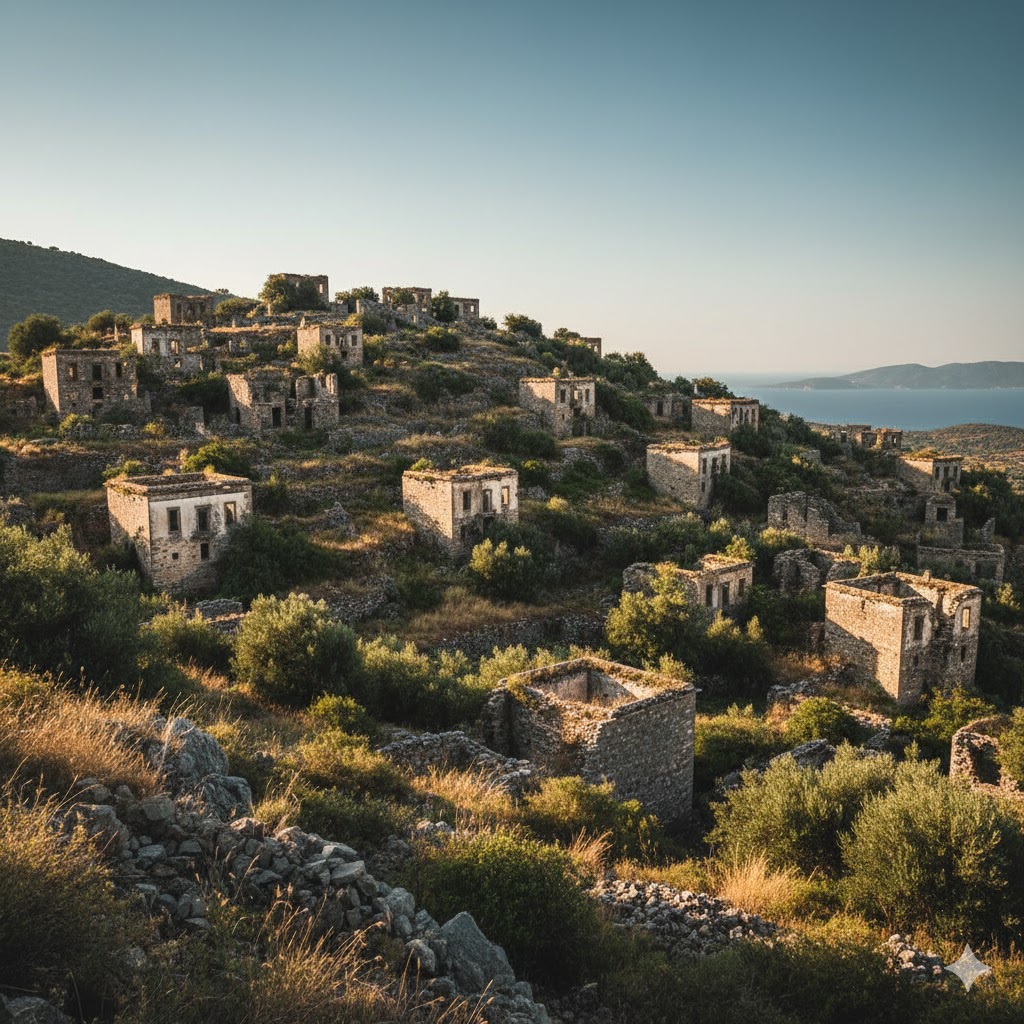
Located near Fethiye, Kayaköy is a hauntingly beautiful Greek village abandoned after the 1923 population exchange. Over 500 stone houses stand roofless, their windows watching the valley below.
Highlights
- Twin Greek churches with faded frescoes.
- Cobblestone lanes and panoramic hill views.
- Peaceful hiking trails through ghostly ruins.
History & Mystery
Once home to 2,000 people, Kayaköy fell silent overnight. Locals still avoid the area after dusk, believing spirits wander the ruins seeking lost homes.
How to Reach
From Fethiye, 8 km by road or a scenic hike via forest path.
Best Time to Visit
April–June and September–November.
Hidden Gems & Local Tips
Climb the chapel hill for sunset views — truly magical.
Local Food Experience
Try Gözleme (Turkish stuffed bread) and Ayran from local stalls.
12. The Phantom Village of Kolmanskop – Namibia
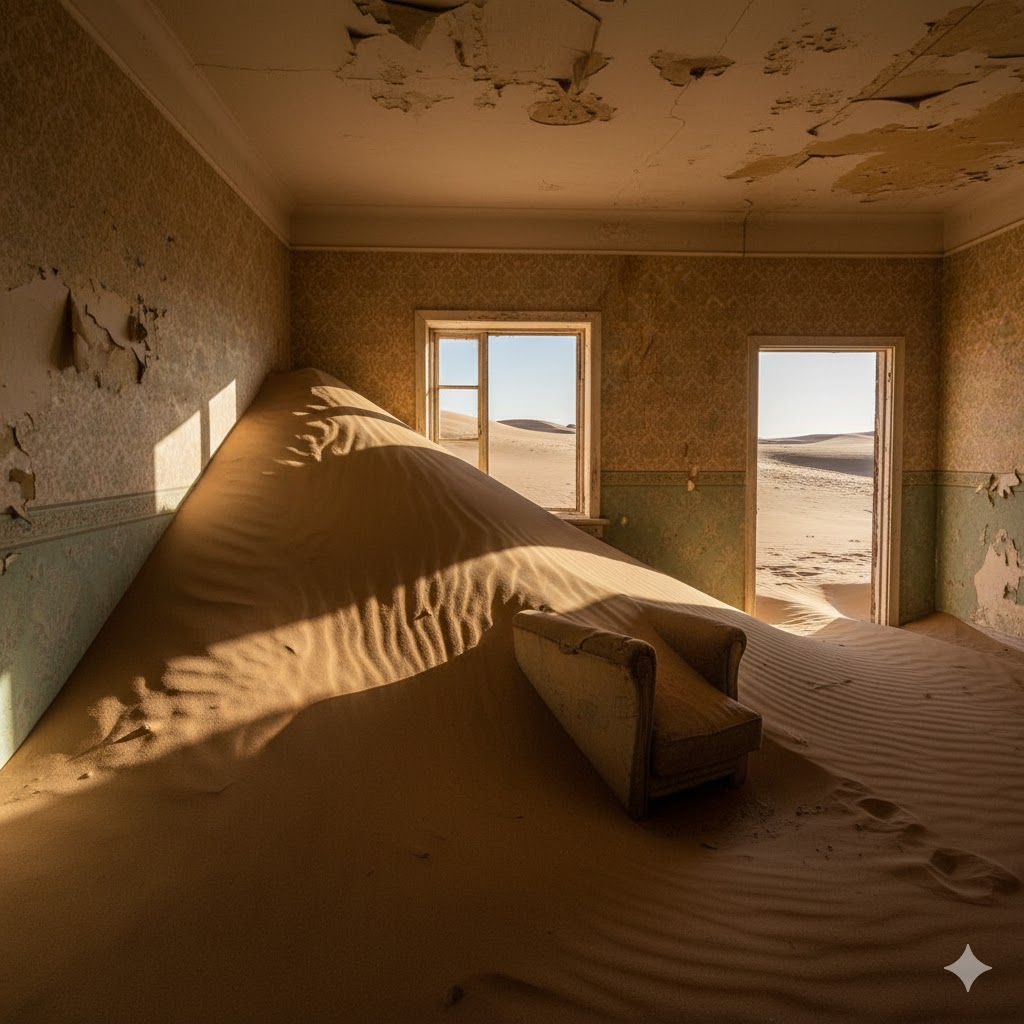
Once a diamond boomtown, Kolmanskop now lies swallowed by desert sands. Wind whistles through doorways as dunes reclaim houses filled with antique furniture and eerie calm.
Highlights
- Half-buried mansions and hospitals.
- Stunning photography at sunrise.
- Guided history tours by local conservators.
History & Mystery
Abandoned in the 1950s, it’s said miners vanished mysteriously while searching for new diamond fields.
How to Reach
Fly to Lüderitz Airport, 10 km drive from town.
Best Time to Visit
May–September for cooler desert air.
Hidden Gems & Local Tips
Bring dust protection — sandstorms are common.
Local Food Experience
Sample German pastries in Lüderitz town reflecting Namibia’s colonial past.
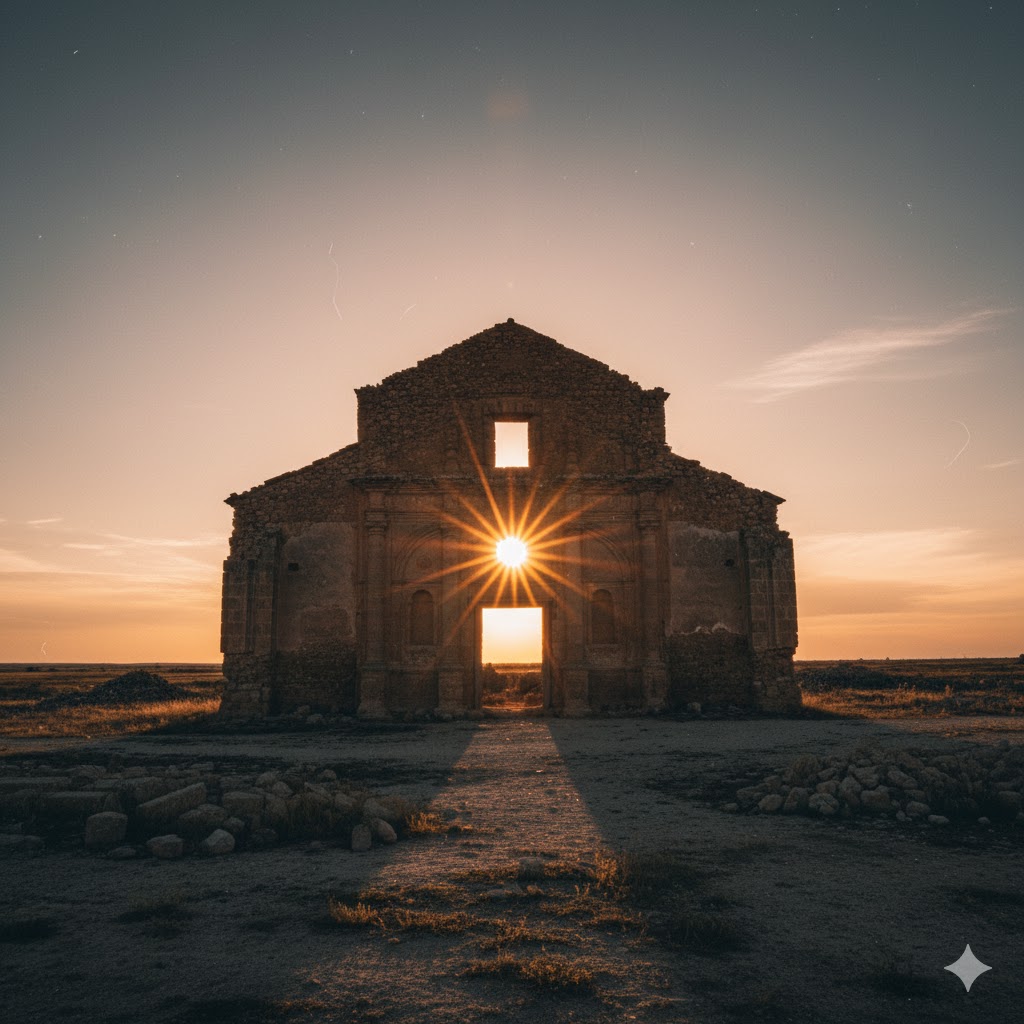
13. The Ruins of Belchite – Spain
Belchite, a small Spanish village destroyed during the Civil War, was left untouched as a “monument to horror.” Its bombed-out church and collapsed streets are said to echo ghostly prayers.
Highlights
- War-damaged buildings preserved in silence.
- Night ghost tours with local historians.
- Emotional photography sites.
History & Mystery
Thousands died during the Battle of Belchite (1937). Visitors often hear distant marching sounds at dusk.
How to Reach
From Zaragoza, 45-minute drive via A-222 highway.
Best Time to Visit
Autumn or early spring when weather is cool.
Hidden Gems & Local Tips
Attend the local museum nearby for contextual history before exploring ruins.
Local Food Experience
Try Tapas and Rioja wine in Zaragoza’s old town.
14. The Haunted Chateau de Brissac – France
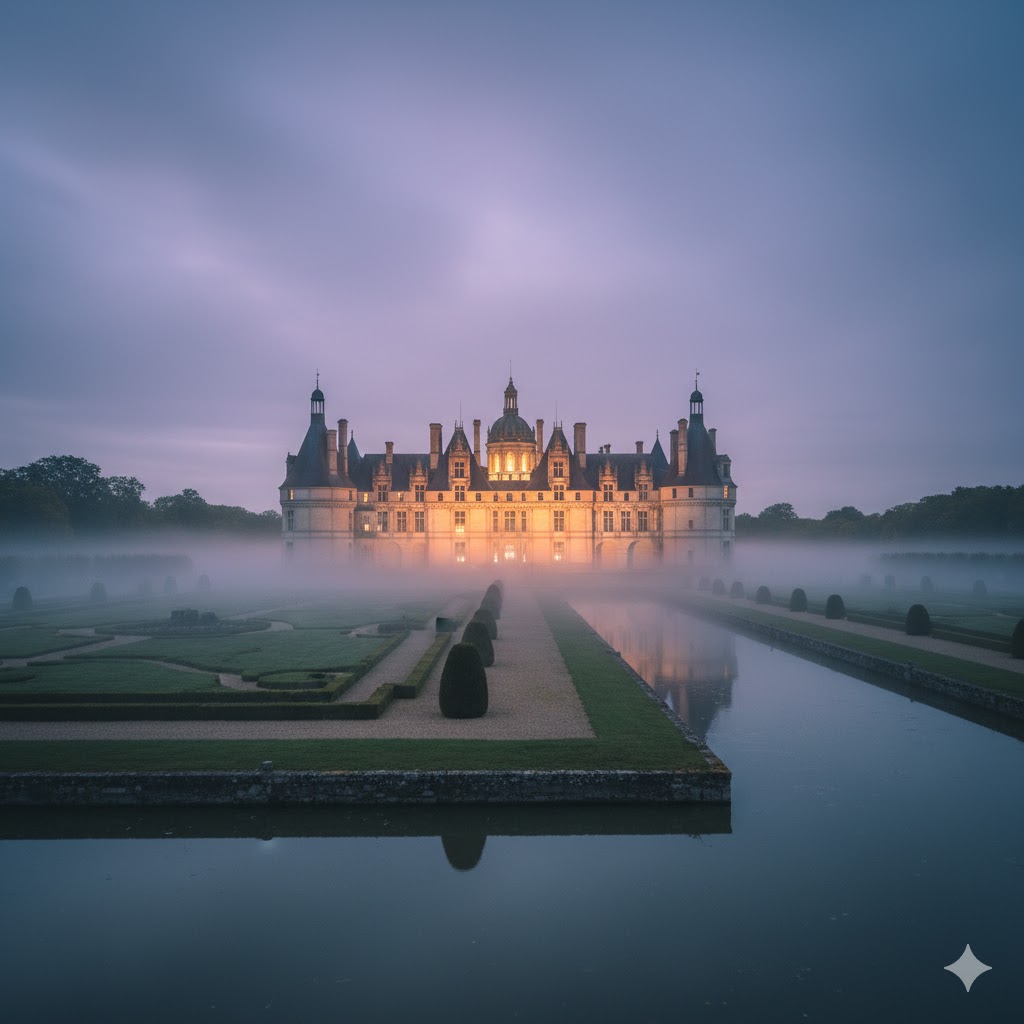
Known as the “Giant of the Loire Valley,” Château de Brissac is both stunning and haunted. The spirit of the “Green Lady,” murdered centuries ago, is said to roam its halls in green silks.
Highlights
- Grand Renaissance architecture.
- Guided night tours and wine cellars.
- Luxurious suites open to guests.
History & Mystery
Built in the 11th century and rebuilt in 1502, the château hides tales of betrayal and jealousy. The ghost of Charlotte de Brézé, murdered by her husband, is said to appear before thunder.
How to Reach
From Angers, drive 20 minutes southwest.
Best Time to Visit
April–October when gardens are in bloom.
Hidden Gems & Local Tips
Stay overnight; staff share centuries-old ghost encounters.
Local Food Experience
Taste Loire Valley wines and cheese platters in the castle cellar.
15. The Abandoned Dhanushkodi Town – Tamil Nadu, India
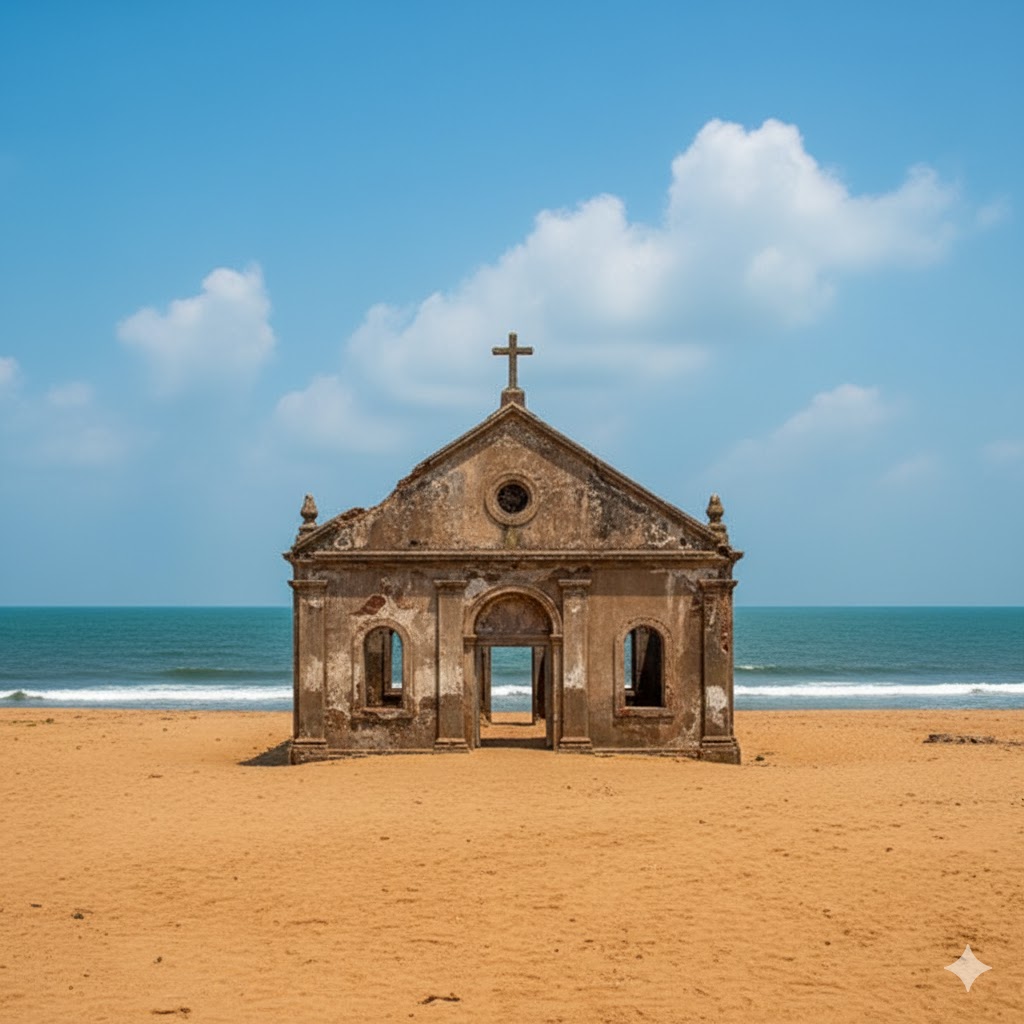
Once a bustling port, Dhanushkodi was destroyed by a cyclone in 1964, leaving behind eerie church ruins and railway debris. The sea hums with whispers — locals call it “the ghost town of the south.”
Highlights
- Ruins of old church and railway station.
- View of Adam’s Bridge, believed to link India and Sri Lanka.
- Serene beaches with haunting calm.
History & Mystery
The storm claimed thousands of lives; survivors say they still hear church bells on stormy nights.
How to Reach
Drive from Rameswaram (20 km); accessible by car or bike.
Best Time to Visit
October–March for pleasant coastal weather.
Hidden Gems & Local Tips
Stay till sunset — the contrast of light and silence is unforgettable.
Local Food Experience
Try fresh seafood fry from beach shacks near Rameswaram.
16. The Cursed Village of Kuldhara – Rajasthan, India
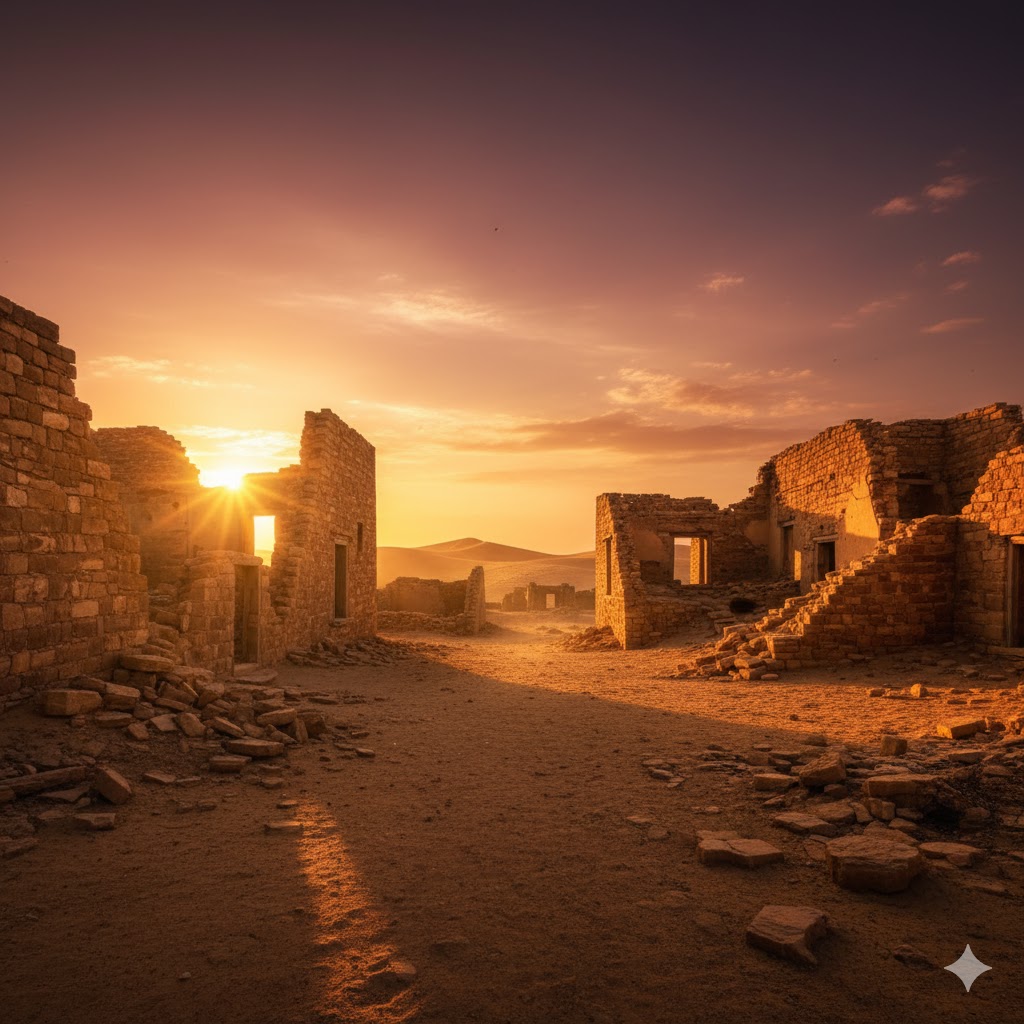
In the golden sands of Rajasthan’s Thar Desert lies Kuldhara, one of the most mysterious and spine-chilling villages in India. Once a thriving settlement of the Paliwal Brahmins, Kuldhara was home to hundreds of families known for their intelligence, architecture, and irrigation mastery. Then, one moonless night in the 19th century, every single inhabitant vanished without a trace.
According to local legends, the ruler of Jaisalmer fell in love with a village girl and threatened the community with ruin if they didn’t give her up. To protect her honor, the entire population fled overnight — but before leaving, they cursed the land so that no one could ever live there again. To this day, locals claim strange whispers rise from the ruins, and those who try to stay overnight face terrifying disturbances.
Highlights:
- Ruins of 85 sandstone houses
- Desert setting under open skies
- Paranormal investigations and night bans
- Excellent photography and heritage trail
History: Archaeologists have confirmed the village’s 13th-century foundation, but the reason for its abandonment remains unclear. Over time, stories of haunting have drawn curious visitors and spiritual seekers, making Kuldhara one of India’s top haunted travel destinations.
How to Reach: Located 18 km west of Jaisalmer, Rajasthan. Visitors can hire a private jeep or take guided tours that include Sam Sand Dunes and Bada Bagh.
Best Time to Visit: October to February — the desert weather is cool and ideal for exploration.
Hidden Gems & Local Tips:
- Visit around sunset when the desert light turns the ruins gold.
- Don’t miss Khaba Fort nearby — locals say it’s equally haunted but offers panoramic desert views.
- Avoid staying after dusk as entry is restricted by local guards.
Local Food: In Jaisalmer, savor Rajasthani dal baati churma, gatte ki sabzi, and lassi at heritage rooftop restaurants overlooking the fort.
17. The Island of Dolls – Xochimilco, Mexico
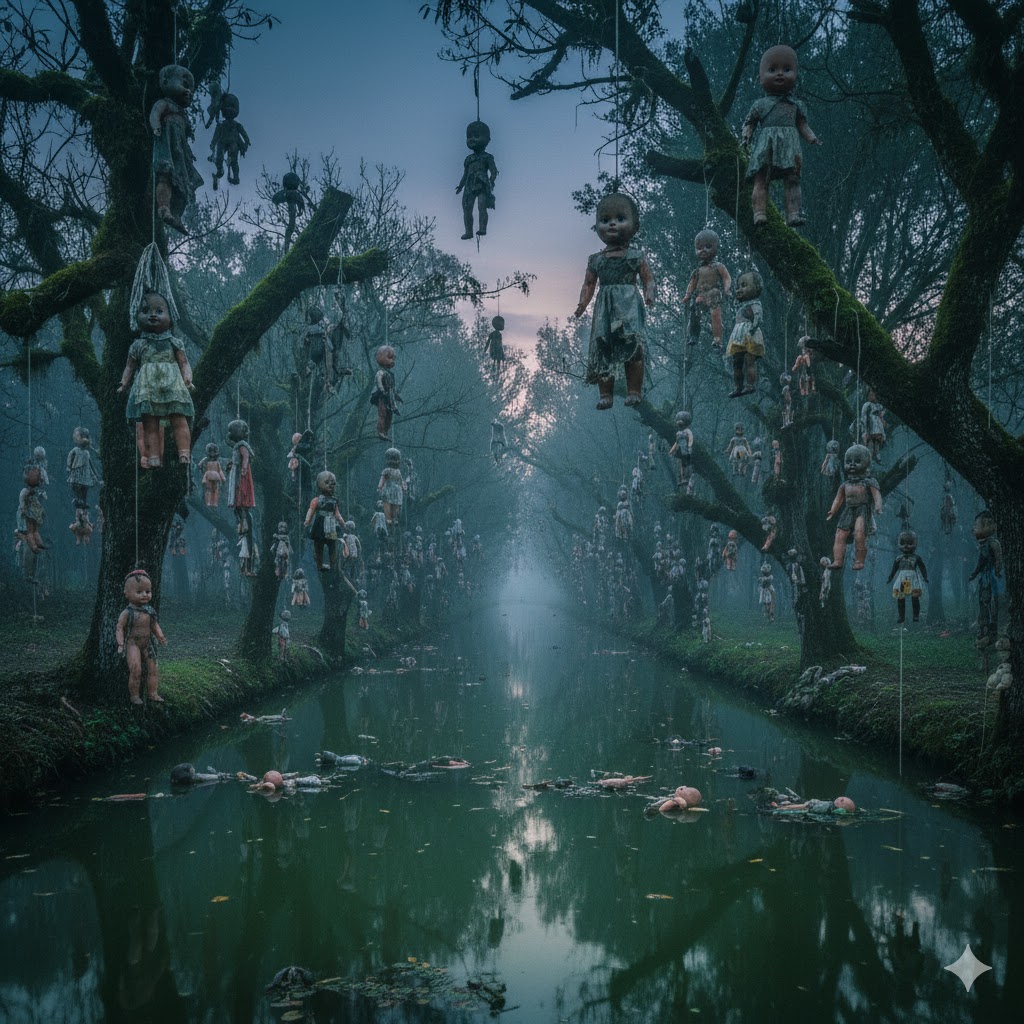
In the tranquil canals of Xochimilco, just outside Mexico City, a small island floats in eerie silence — its trees covered with hundreds of hanging, decaying dolls. This is La Isla de las Muñecas, or The Island of Dolls, one of the most unsettling and famous mysterious locations in Latin America.
The story began with Don Julián Santana Barrera, a hermit who discovered a drowned girl in the canal near his home. Soon after, he started hearing whispers and screams in the night. To appease the girl’s spirit, he hung discarded dolls around the island — each doll representing a lost soul. Over 50 years, he added hundreds more, until his own mysterious death in the same spot where the girl had drowned.
Today, the dolls — weather-beaten, eyeless, and crawling with insects — hang motionless in the humid air, creating a haunting sight. Many visitors report the dolls’ heads turning, or faint laughter echoing through the mangroves.
Highlights:
- Canal tour by colorful trajineras boats
- Hundreds of hanging dolls and altars
- Haunted folklore and night tours
History: The island gained global fame after being featured on Ghost Adventures and Destination Truth. It has become a pilgrimage for paranormal researchers and thrill-seekers who want to experience the “spirit of Xochimilco.”
How to Reach: Take a local train or taxi to Embarcadero Cuemanco in Mexico City, then hire a trajinera boat to reach the island (1–2 hours ride).
Best Time to Visit: November (near Día de los Muertos) when the atmosphere is eerily festive yet spiritual.
Hidden Gems & Local Tips:
- Bring flowers or small dolls to offer at the shrine — locals say it keeps the island’s spirits peaceful.
- Visit early morning for misty photos and minimal tourists.
- Night visits are only allowed with official guides.
Local Food: Try tamales, elotes, and atole (a warm corn drink) sold at the canal edges.
18. The Whaley House – San Diego, USA
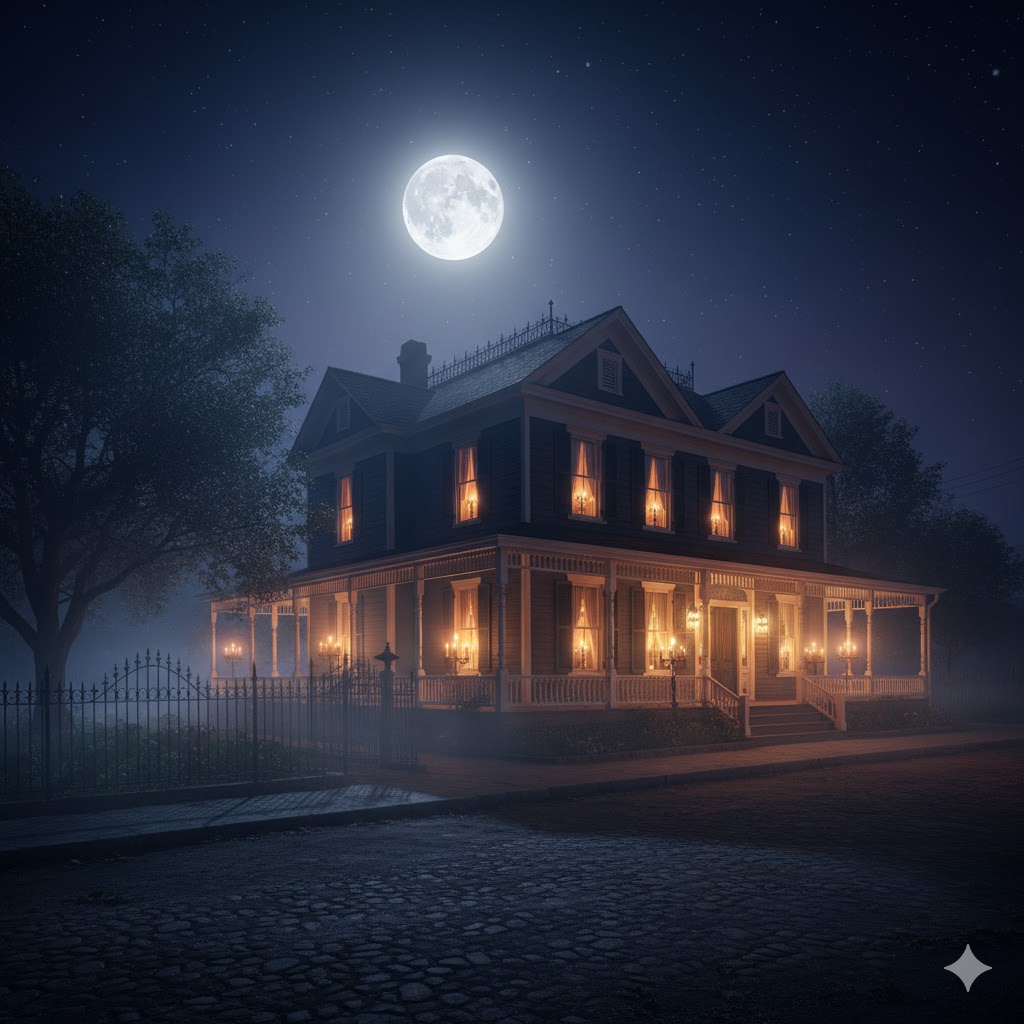
Built in 1857 by businessman Thomas Whaley, this elegant Greek Revival mansion stands in Old Town San Diego, but its history is anything but peaceful. Constructed over the site of a former gallows, it has long been called “America’s Most Haunted House.”
Visitors describe cold spots, sudden laughter, phantom footsteps, and even apparitions of the Whaley family — especially young Thomas Jr., who died of scarlet fever, and Mrs. Whaley, seen wandering the stairwell in mourning clothes. Paranormal experts have recorded numerous EVPs and shadow figures here.
Highlights:
- Authentic Victorian interiors
- Candlelit night tours
- Museum exhibits on 19th-century San Diego life
History: The Whaley House served not only as a home but also a courthouse, theater, and store. Its layered history of executions, personal tragedy, and unexplained events has made it one of America’s top haunted travel destinations.
How to Reach: Located at 2476 San Diego Avenue, accessible via trolley from downtown or by car with public parking nearby.
Best Time to Visit: Evenings, especially October, when ghost tours bring the legends to life.
Hidden Gems & Local Tips:
- Book a “Spirits of the Past” tour for deeper access to locked rooms.
- Photography is permitted — some visitors capture glowing orbs.
- Combine your visit with Old Town’s historical trail.
Local Food: Nearby, try California-style tacos, nachos, and handmade churros at Café Coyote, one of the city’s oldest Mexican restaurants.
19. The Myrtles Plantation – Louisiana, USA
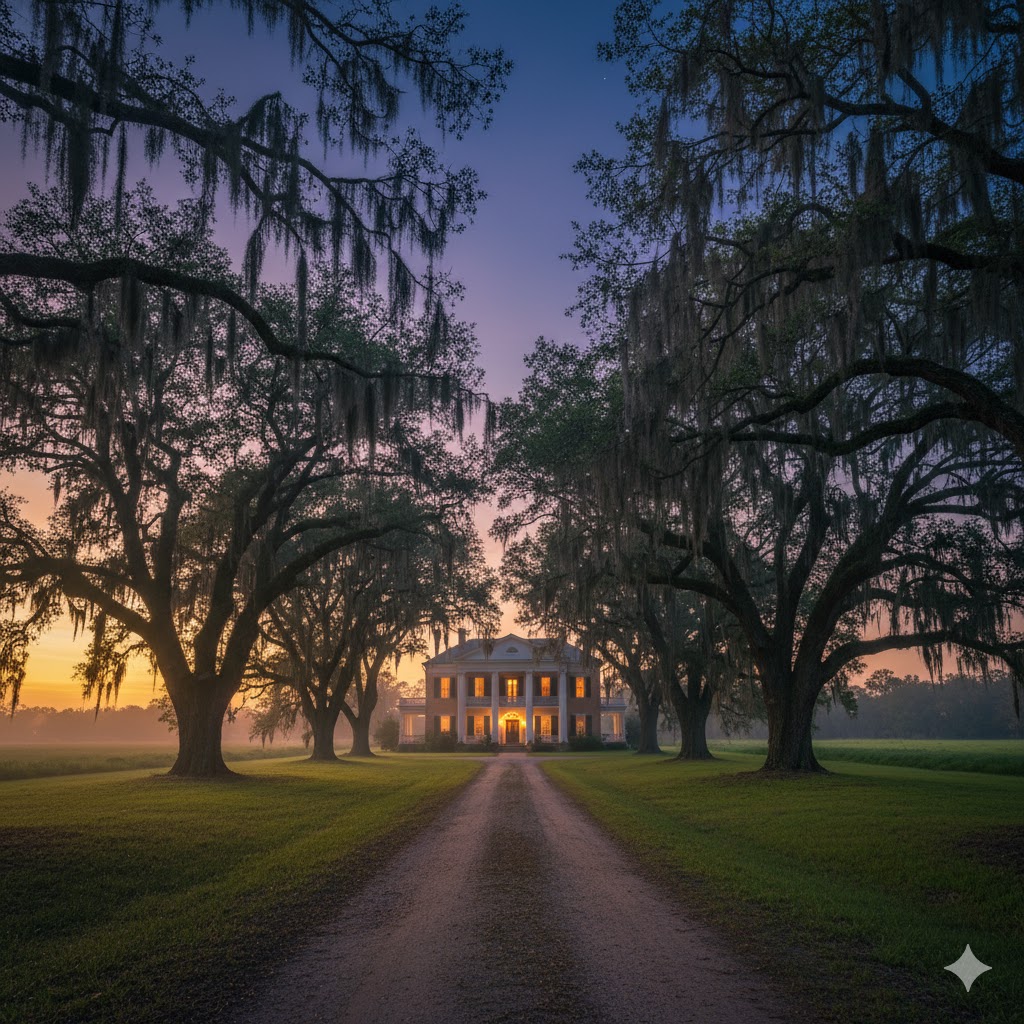
Tucked amid moss-draped oaks in St. Francisville, Louisiana, the Myrtles Plantation is often called America’s most haunted home. Built in 1796 by General David Bradford, this majestic antebellum mansion is a perfect blend of Southern grace and Gothic horror.
Legend tells of Chloe, an enslaved woman who eavesdropped on her master’s conversations. When discovered, she was punished brutally. Seeking revenge, she baked a poisoned cake that killed two of his daughters. Caught and executed, her ghost is said to wander the halls wearing a green headscarf — still seeking forgiveness.
Visitors report perfume scents, ghostly handprints on mirrors, and rocking chairs moving by themselves. The mirror where the family’s souls are “trapped” remains one of the most photographed paranormal spots in America.
Highlights:
- 18th-century architecture & oak-lined drive
- Daily ghost & history tours
- Haunted overnight stays
History: Beyond myth, this plantation also tells the darker truths of slavery in the Deep South. Its tragic stories and authentic period furnishings make it a living museum of history and mystery.
How to Reach: Located 30 miles north of Baton Rouge, easily reached via US-61.
Best Time to Visit: Fall (September–November) for cool weather and night ghost tours.
Hidden Tips:
- Stay in the General Bradford Suite for the most documented paranormal activity.
- Bring an EMF reader — staff encourage paranormal experiments.
Local Food: Sample Creole gumbo, fried catfish, and beignets at nearby Magnolia Café.
20. The Tower of London – England
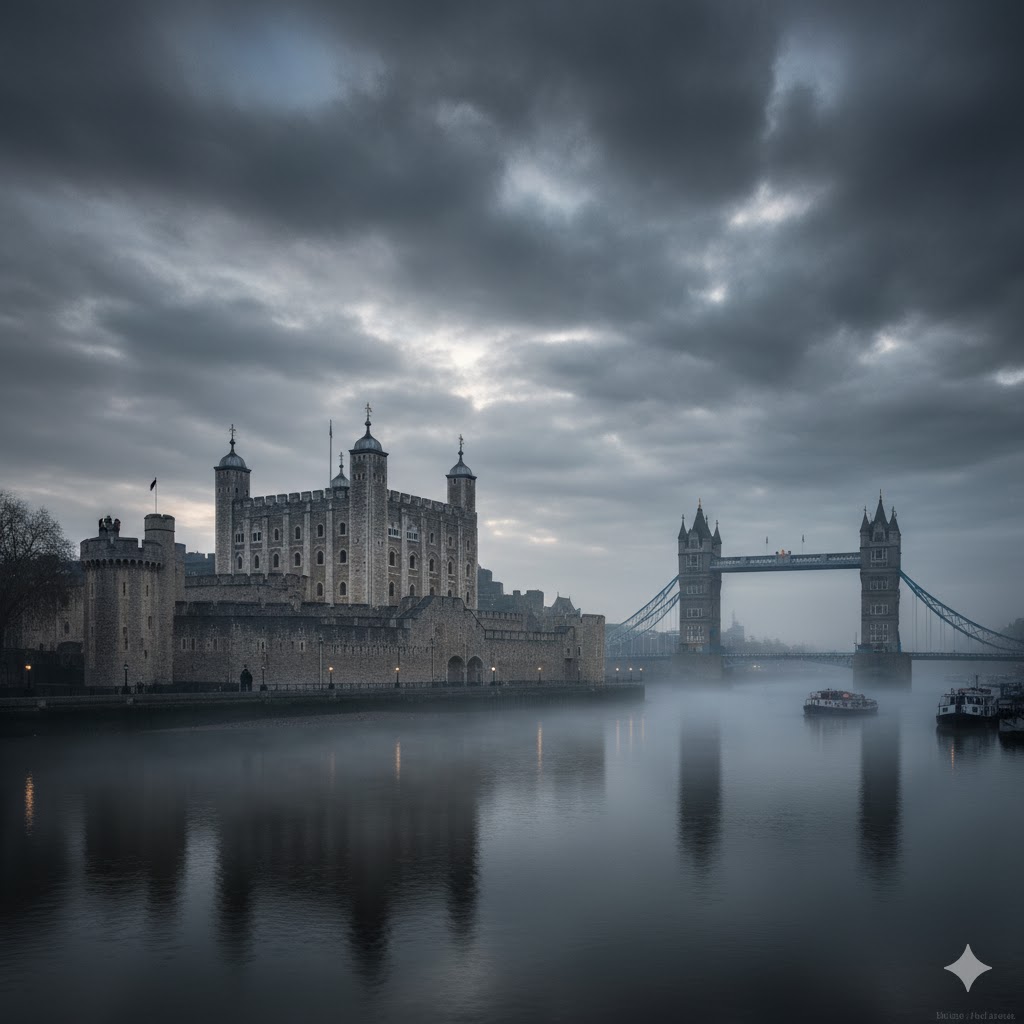
Few places on Earth carry as much royal blood and sorrow as the Tower of London. Built in 1078 by William the Conqueror, this UNESCO-listed fortress witnessed beheadings, betrayals, and centuries of imprisonment — all under the watch of the Crown Jewels.
The tower’s most famous ghosts include Anne Boleyn, executed by her husband Henry VIII, whose spirit walks the chapel corridors carrying her severed head, and the Princes in the Tower, two young heirs believed to have been murdered by their uncle, Richard III.
Highlights:
- Historic fortress & Crown Jewels
- Yeoman Warder ghost tours
- River Thames night reflections
History: A seat of power, prison, and treasury; every stone echoes England’s turbulent past. Even today, guards report cold drafts and phantom footsteps on night watch.
How to Reach: Tower Hill Underground Station (District or Circle Line).
Best Time: Winter evenings for mist-filled photos and quieter tours.
Hidden Tips: Attend the Ceremony of the Keys, a 700-year-old nightly ritual closing the gates.
Local Food: Enjoy steak & ale pies or fish and chips at nearby riverside pubs.
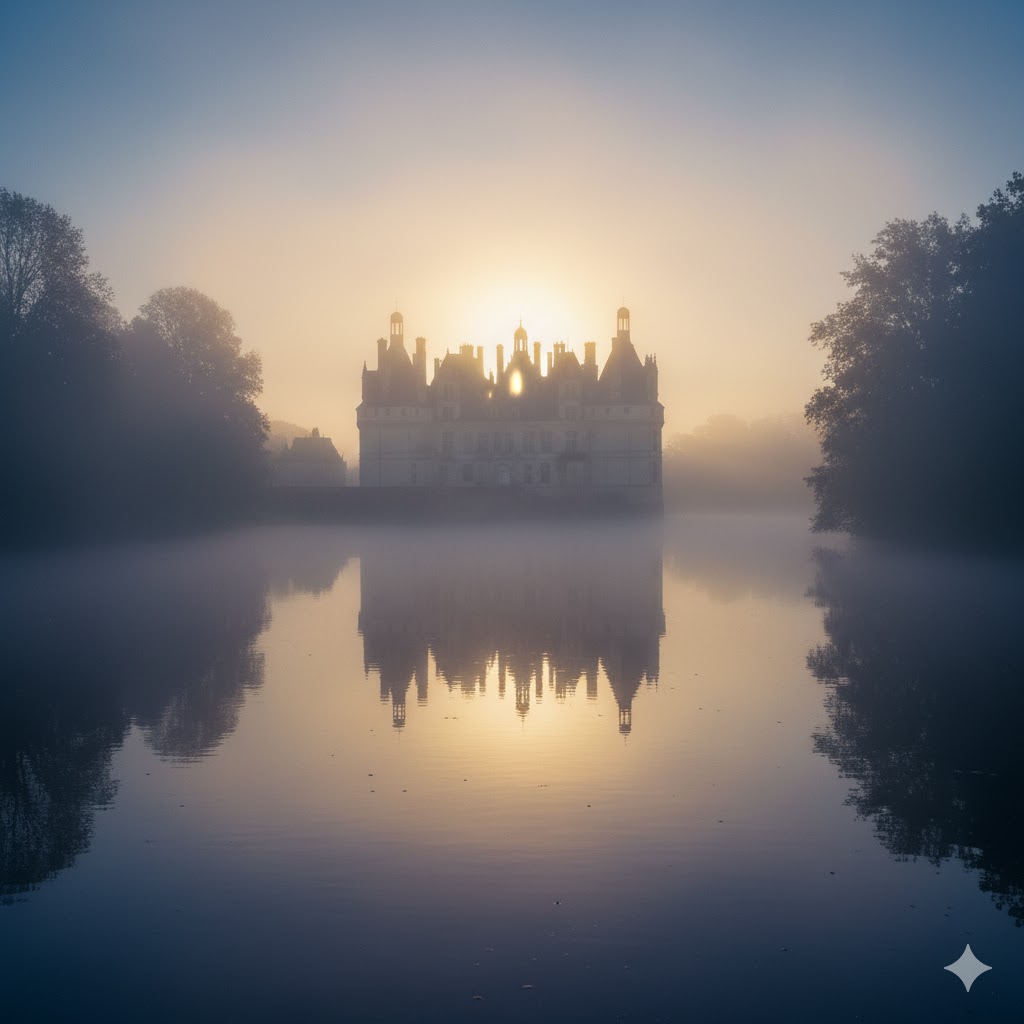
21. Château de Brissac – Loire Valley, France
The Château de Brissac, towering over the vineyards of the Loire Valley, is France’s tallest castle — and allegedly its most haunted. Inside its Renaissance walls lingers the Green Lady, believed to be Charlotte of France, murdered by her jealous husband after an affair.
Her apparition, veiled in green mist, roams the tower room at night, her cries echoing through marble corridors. Even today, the ducal family who owns the château reports strange sounds and flickering lights.
Highlights:
- Lavish Baroque interiors & seven stories high
- Loire Valley wine tastings nearby
- Romantic yet eerie overnight stays
History: Originally a 11th-century fortress, rebuilt after wars into the grand structure seen today.
How to Reach: Near Angers; short drive from Paris by TGV train (2 hours).
Best Time: April–October for full castle access and vineyard bloom.
Hidden Tips:
- Attend the annual Wine Harvest Festival to pair fine vintages with ghost lore.
- Book the Duke’s Chamber for late-night creaking experiences.
Local Food: Savor tarte tatin, Loire wines, and goat cheese.
22. Leap Castle – Ireland
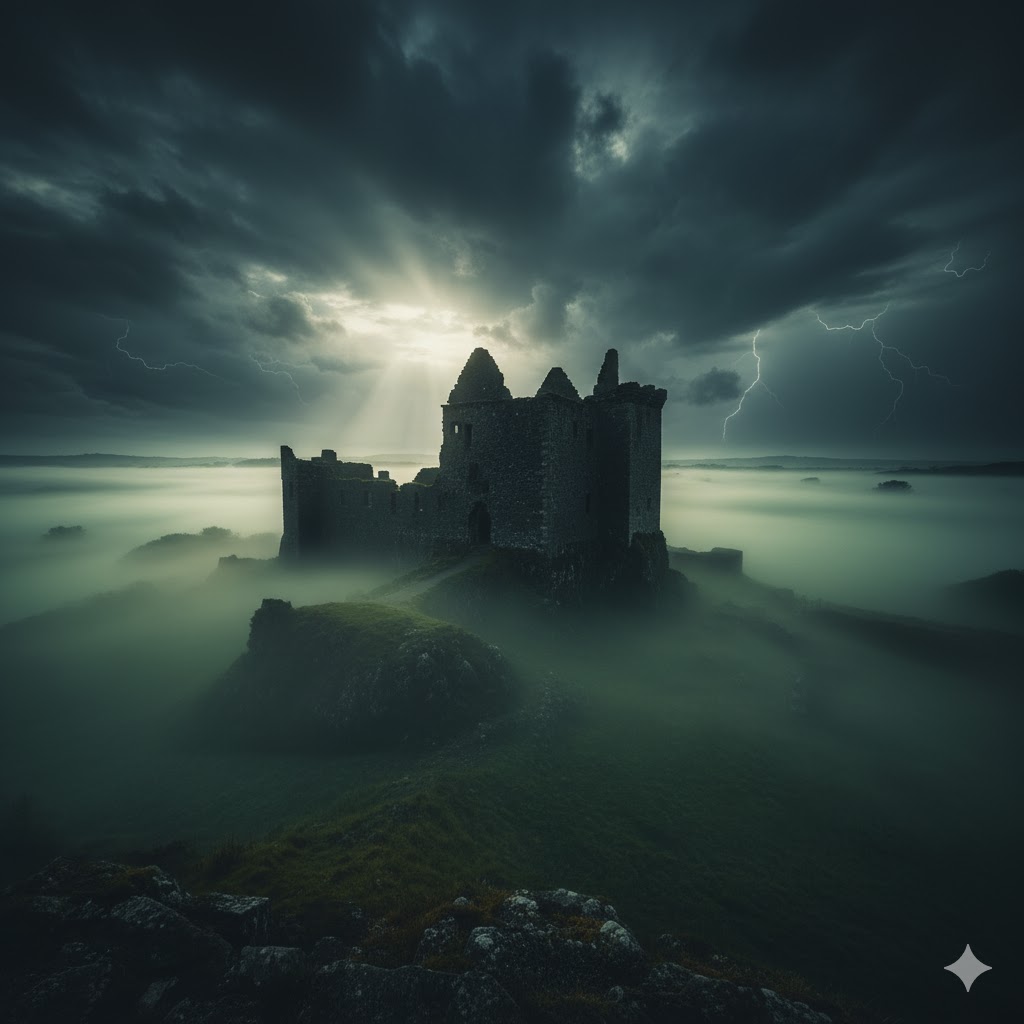
Standing against the rolling hills of County Offaly, Leap Castle has endured centuries of betrayal, murder, and the occult. Built by the O’Carroll clan in the 15th century, it’s infamous for the Bloody Chapel, where a brother killed his priest sibling during mass.
Inside, archaeologists found a pit filled with human bones and spikes — remnants of the castle’s dark past. Visitors have sighted the Elemental, a grotesque, decaying spirit with a stench of sulfur that appears before tragedy.
Highlights:
- Tower ruins, secret passageways
- Home of the “Elemental” apparition
- Private paranormal visits
How to Reach: 90 min drive from Dublin via M6 motorway.
Best Time: Late autumn when fog veils the countryside.
Hidden Tips:
- Arrange a private tour with current owner Sean Ryan, known for storytelling.
- Bring candles or flashlights — lighting is minimal.
Local Food: Warm up with Irish stew, soda bread, and Guinness in Roscrea pubs.
23. Château de Chillon – Switzerland
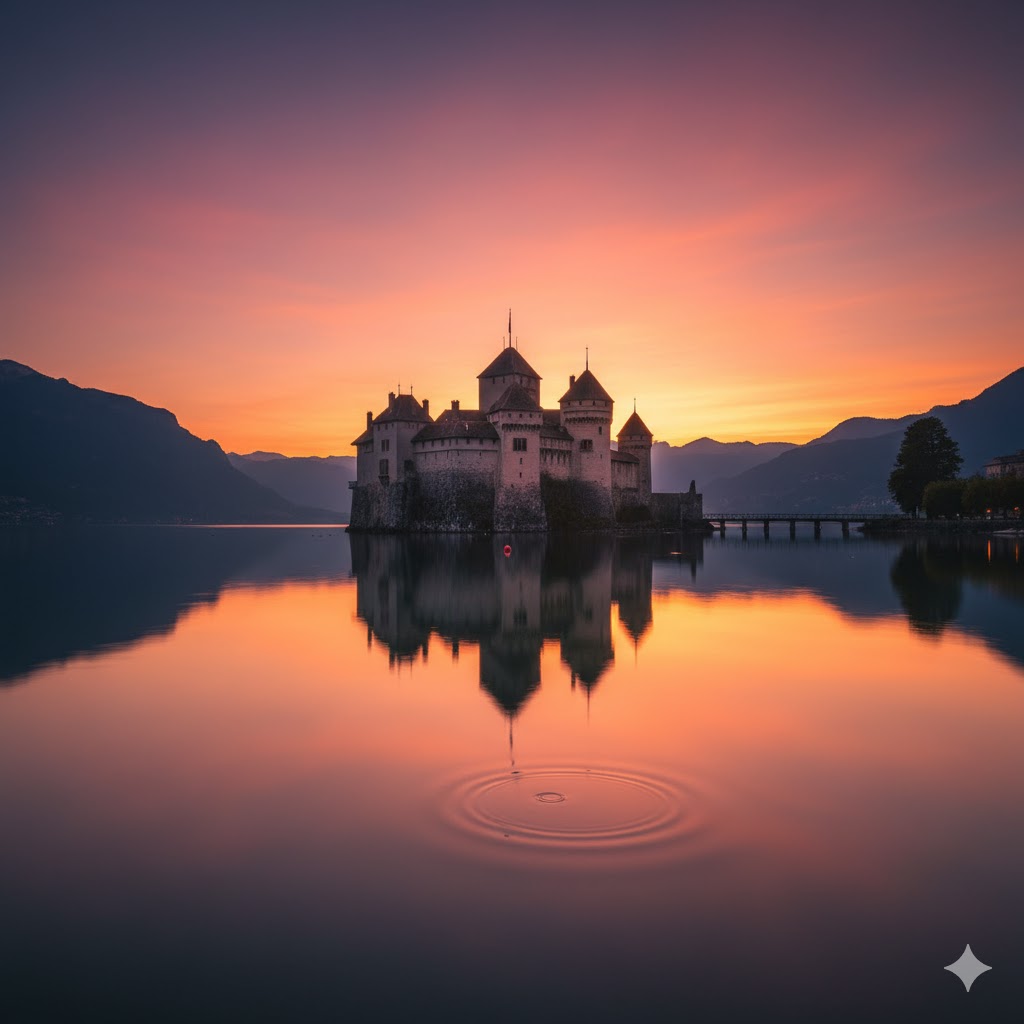
Perched on the edge of Lake Geneva, Château de Chillon combines fairy-tale beauty with macabre legend. Beneath its romantic façade lies a dungeon where François Bonivard, a political prisoner, was chained for six years — inspiring Lord Byron’s famous poem The Prisoner of Chillon.
Visitors claim to hear dripping water and the rattling of unseen chains. Its underground vaults remain chillingly cold even in summer.
Highlights:
- Lakeside medieval castle
- Dungeons & Byron’s cell
- Scenic photo spots
History: A 12th-century Savoy fortress guarding Alpine trade routes; now Switzerland’s most visited monument.
How to Reach: 3 km from Montreux; reachable by bus, boat, or lakeside walk.
Best Time: Spring to autumn; fewer tourists at sunrise.
Hidden Tips:
- Read Byron’s verses carved into the dungeon pillar.
- Explore the lakefront café for calm views afterward.
Local Food: Cheese fondue, rosti, and lake fish at nearby bistros.
24. Eastern State Penitentiary – Philadelphia, USA
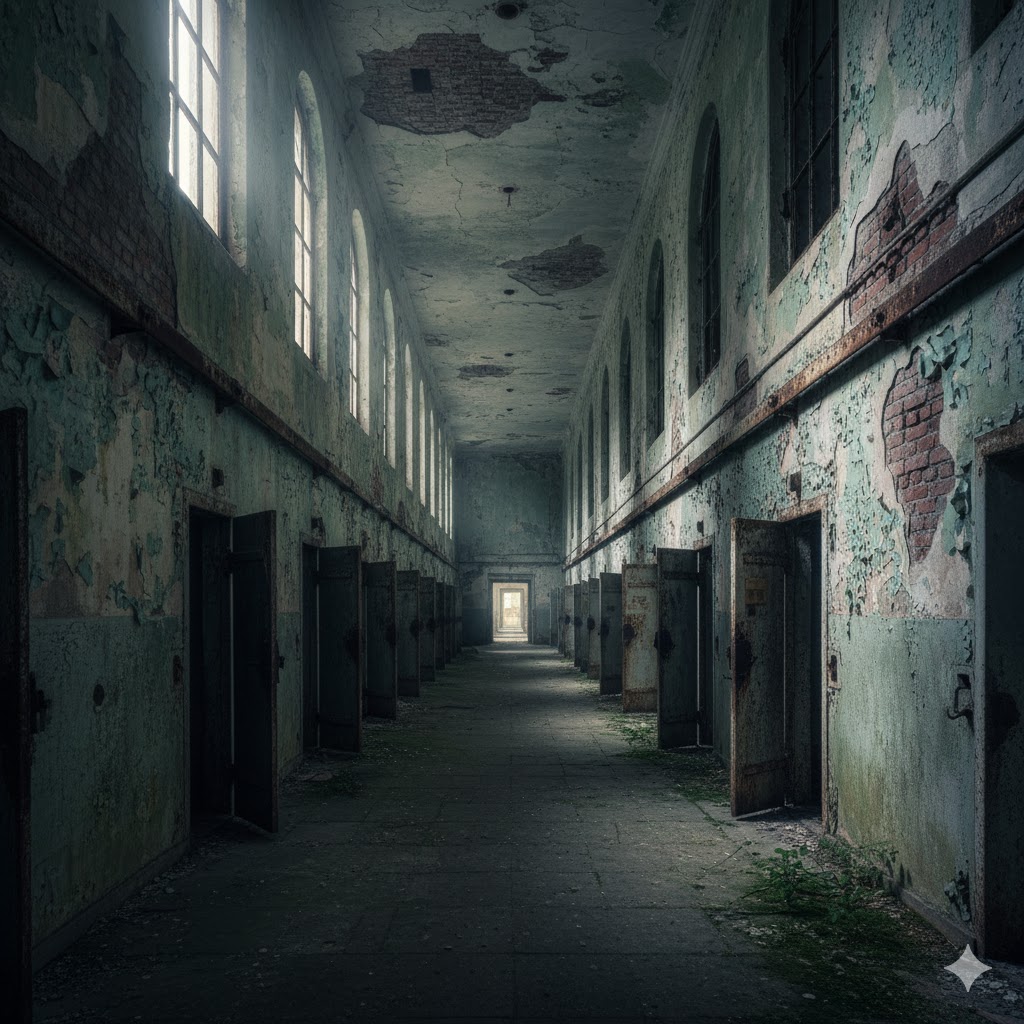
Once the most advanced prison in the world, Eastern State Penitentiary opened in 1829 with the radical idea of solitary confinement for reflection. Instead, it drove inmates insane. Today, its crumbling corridors echo with wails of despair.
Famous prisoners like Al Capone were held here, and visitors now report ghostly voices and shadows slipping across cellblocks. Its annual “Terror Behind the Walls” event transforms it into one of America’s premier haunted attractions.
Highlights:
- Abandoned Gothic prison
- Paranormal investigation tours
- Halloween haunted maze
History: Operating for 142 years, it pioneered penitence through isolation — a cruel experiment later abandoned.
How to Reach: Central Philadelphia; accessible via SEPTA subway or bus.
Best Time: September–November for evening tours.
Hidden Tips:
- Bring a flashlight for deeper corridors.
- Daytime self-guided audio tours by actor Steve Buscemi are world-class.
Local Food: Try Philly cheesesteaks and soft pretzels nearby.
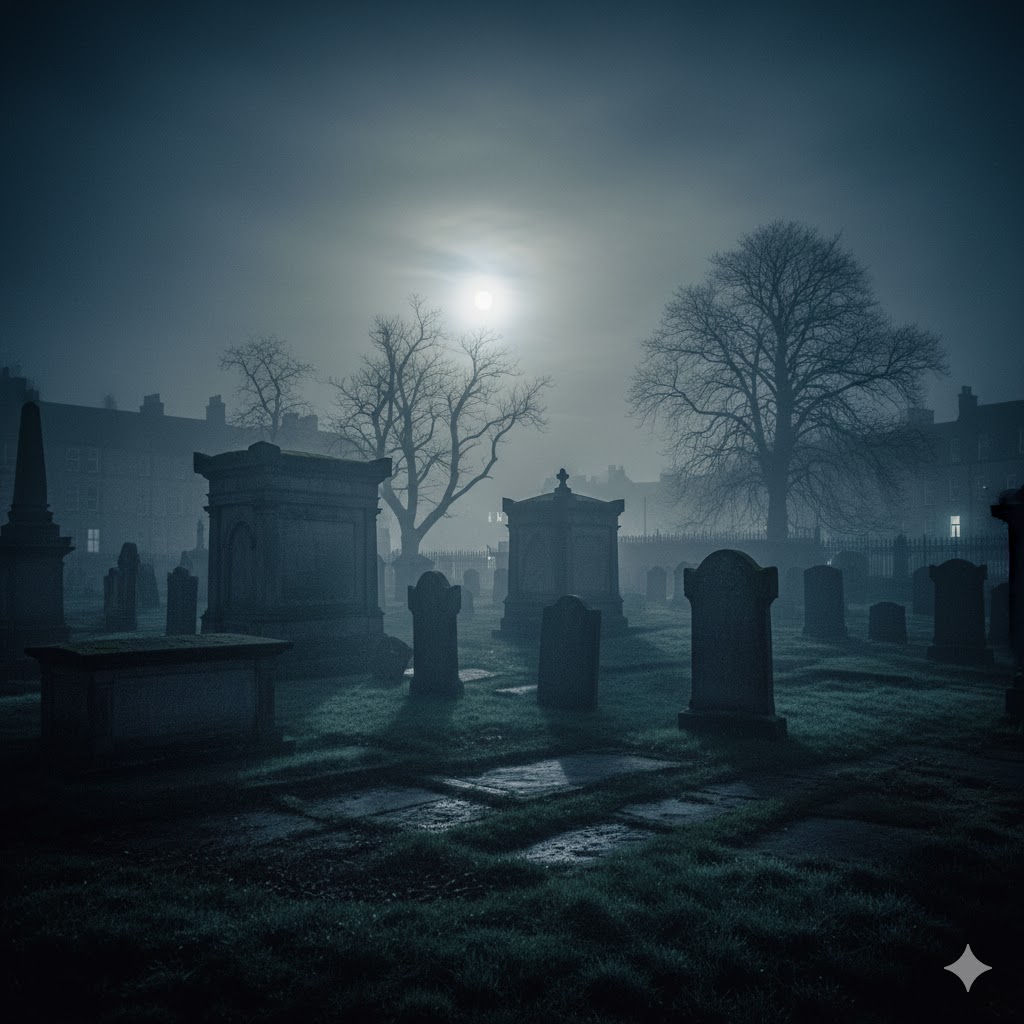
25. Greyfriars Kirkyard – Edinburgh, Scotland
Behind the stone walls of Greyfriars Kirkyard lies one of the most terrifying cemeteries in Europe. Once a peaceful burial ground, it became infamous for the violent spirit of Sir George Mackenzie, nicknamed “Bloody Mackenzie” for persecuting Covenanters in the 17th century.
Since a homeless man broke into Mackenzie’s tomb in 1998, hundreds of visitors have reported being scratched, pushed, or fainting during night tours — documented by Edinburgh Council itself.
Highlights:
- Historic tombs & mausoleums
- Mackenzie Poltergeist experience
- Midnight ghost walks
History: Dating to the 1560s, the graveyard also inspired J.K. Rowling’s Harry Potter names.
How to Reach: Old Town Edinburgh, near the Royal Mile; short walk from Grassmarket.
Best Time: Late evening tours; mist often rolls through the stones after rain.
Hidden Tips:
- Don’t taunt or shout in Mackenzie’s vault — guides warn it “answers back.”
- Combine with a City of the Dead ghost walk for full access.
Local Food: Warm up with haggis neeps and tatties or shortbread at nearby pubs.
26. The Whispering Forest – Aokigahara, Japan
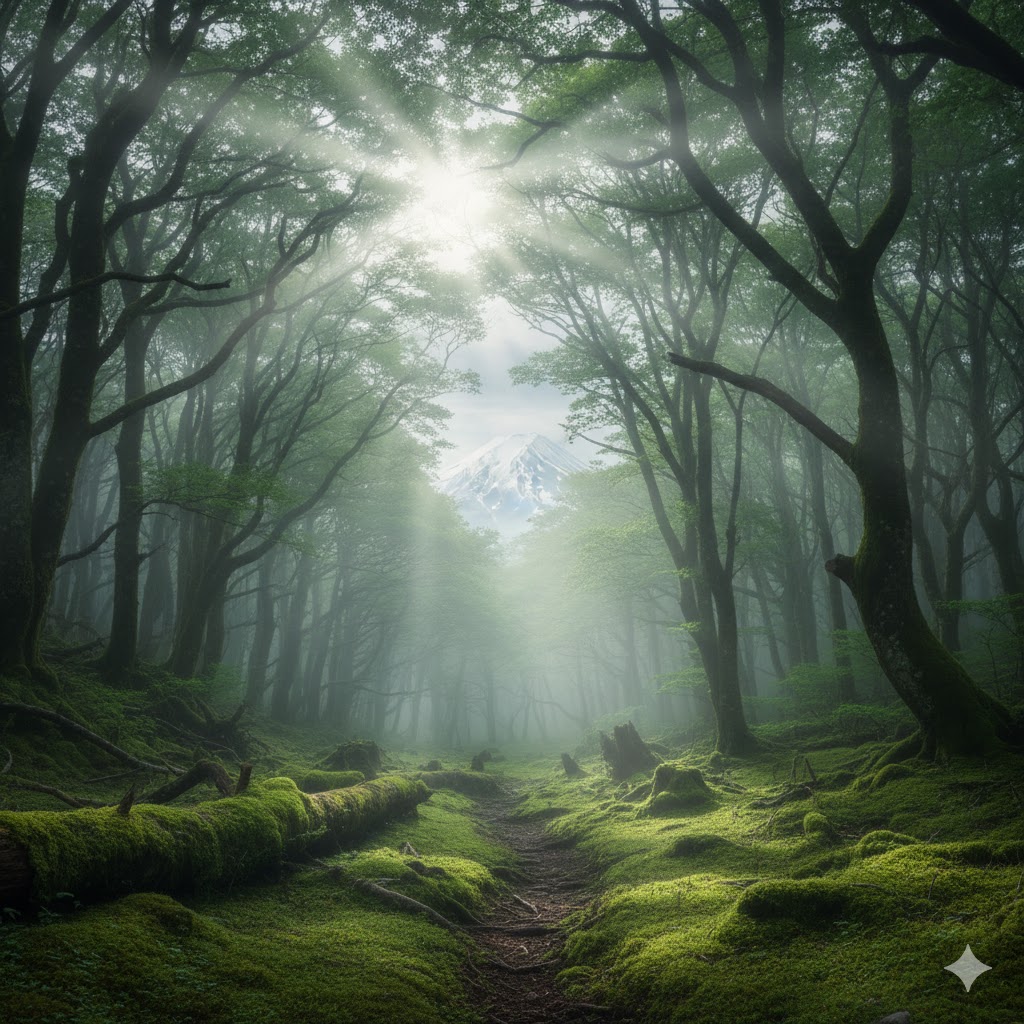
Nestled at the base of Mount Fuji, Aokigahara Forest, often called the Sea of Trees, is one of the most mysterious and spiritually charged places in Japan. Known worldwide for its eerie silence and dense canopy, it has long been associated with spirits, legends, and inexplicable energies.
Locals believe that the forest absorbs sound, making even footsteps disappear. Ancient folklore suggests that souls lost within Aokigahara wander eternally, whispering to travelers who stray too far from the marked trails. Despite its chilling reputation, it’s also a beautiful natural landscape filled with moss-covered lava, crystal caves, and winding trails.
Highlights: Dense moss forest, ice caves, and Mount Fuji viewpoints.
History: Once believed to be a place for spiritual cleansing, later became associated with ghost legends due to its haunting quiet.
How to Reach: From Tokyo, take the JR Chuo Line to Kawaguchiko Station; local buses run directly to Aokigahara.
Hidden Tips: Go with a guide and follow marked paths — GPS signals often fail inside the forest.
Local Food: Try Hōtō noodles at nearby Kawaguchiko, a local favorite comfort dish.
27. The Weeping Village – Pluckley, England
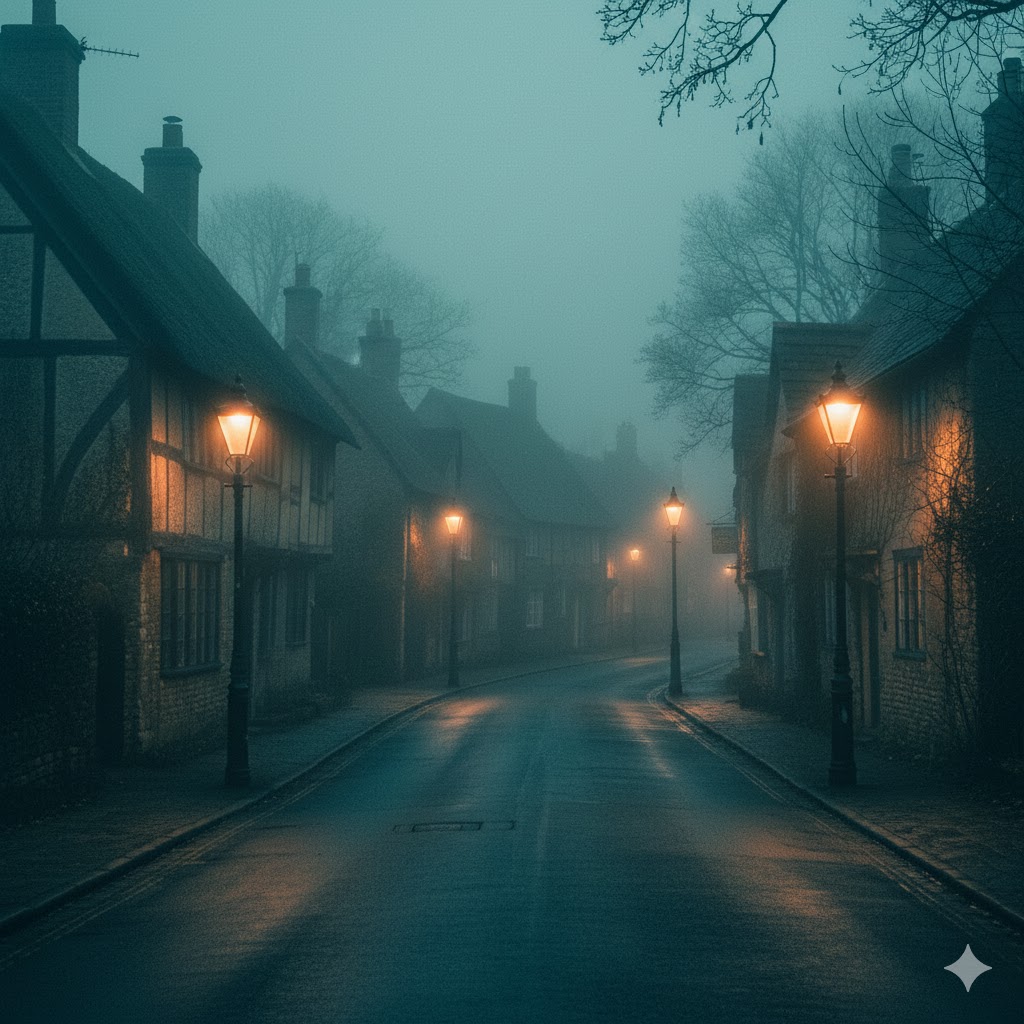
Known as Britain’s most haunted village, Pluckley in Kent has over 15 documented ghosts, from the screaming man to the phantom coach and horses. The quiet cobbled streets and fog-shrouded woods exude an eerie charm that draws paranormal seekers from around the world.
Locals report nightly whispers and faint carriage sounds echoing through the lanes. Despite its spooky fame, the village remains beautifully preserved — with thatched cottages, rose gardens, and historic pubs like the Black Horse Inn, said to host ghostly guests.
Highlights: Ghost walks, Pluckley Screaming Woods, and the haunted Dering Arms pub.
History: Dates back to the 11th century; legends trace hauntings to centuries-old local tragedies.
How to Reach: Just 1 hour by train from London to Pluckley Station; walking tours start near the churchyard.
Hidden Tips: Visit near Halloween for annual ghost events; photography is best at dusk.
Local Food: Try local ale or steak pie at The Black Horse Inn.
28. The Floating Island of Spirits – Chiloe, Chile
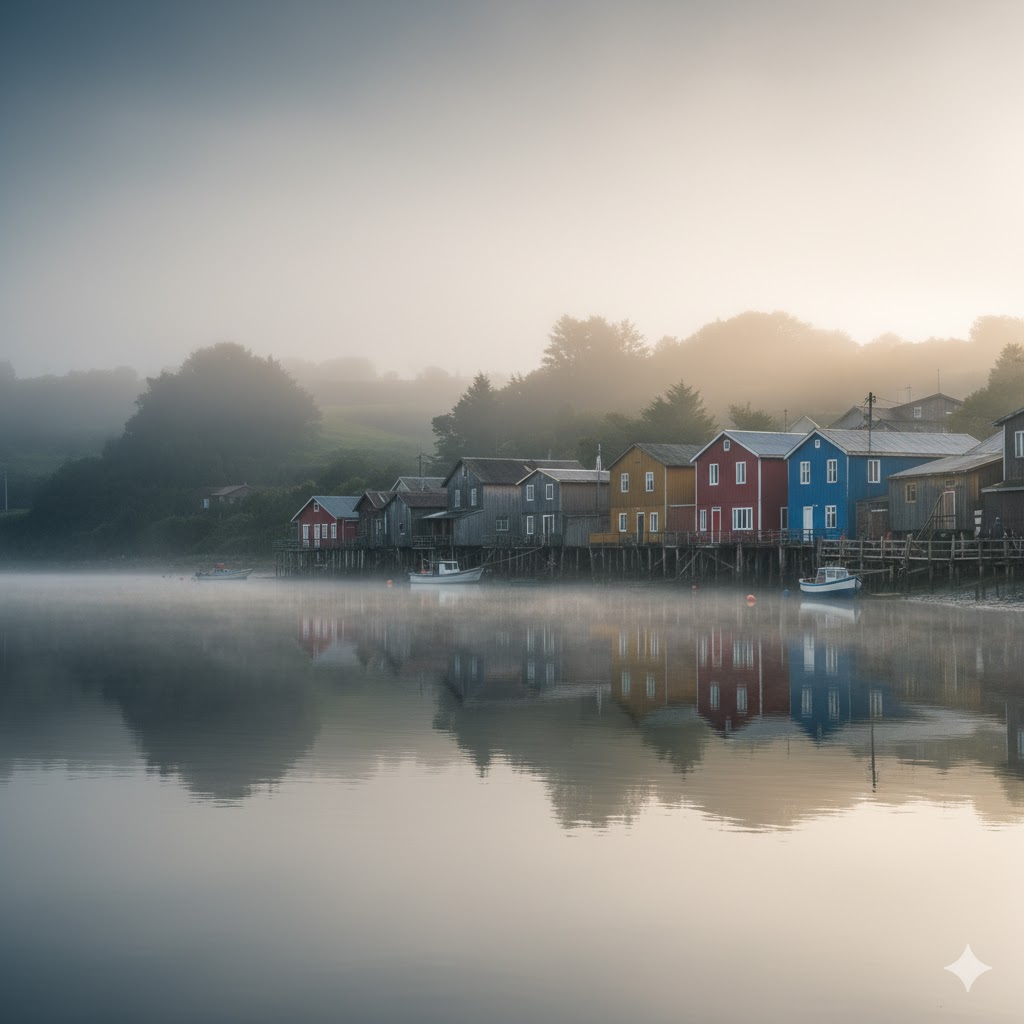
Off Chile’s southern coast lies Chiloe, a mystical island blending Catholicism with ancient Mapuche folklore. It’s known for tales of ghost ships, witches, and spirit creatures — especially the phantom ship Caleuche, said to appear glowing on foggy nights.
Chiloe’s wooden churches (UNESCO World Heritage Sites) and shingled houses tell stories of resilience and devotion. Travelers often say the island carries a mysterious energy — both protective and haunting.
Highlights: Caleuche ship legend, wooden churches, mystical folklore tours.
History: Rooted in indigenous Mapuche beliefs mixed with Spanish colonial myths.
How to Reach: Fly from Santiago to Castro Airport or ferry from Puerto Montt.
Hidden Tips: Visit local curanderos (folk healers) who share mythical stories.
Local Food: Enjoy curanto, a traditional seafood and meat stew cooked underground.
29. The Screaming Tunnel – Ontario, Canada
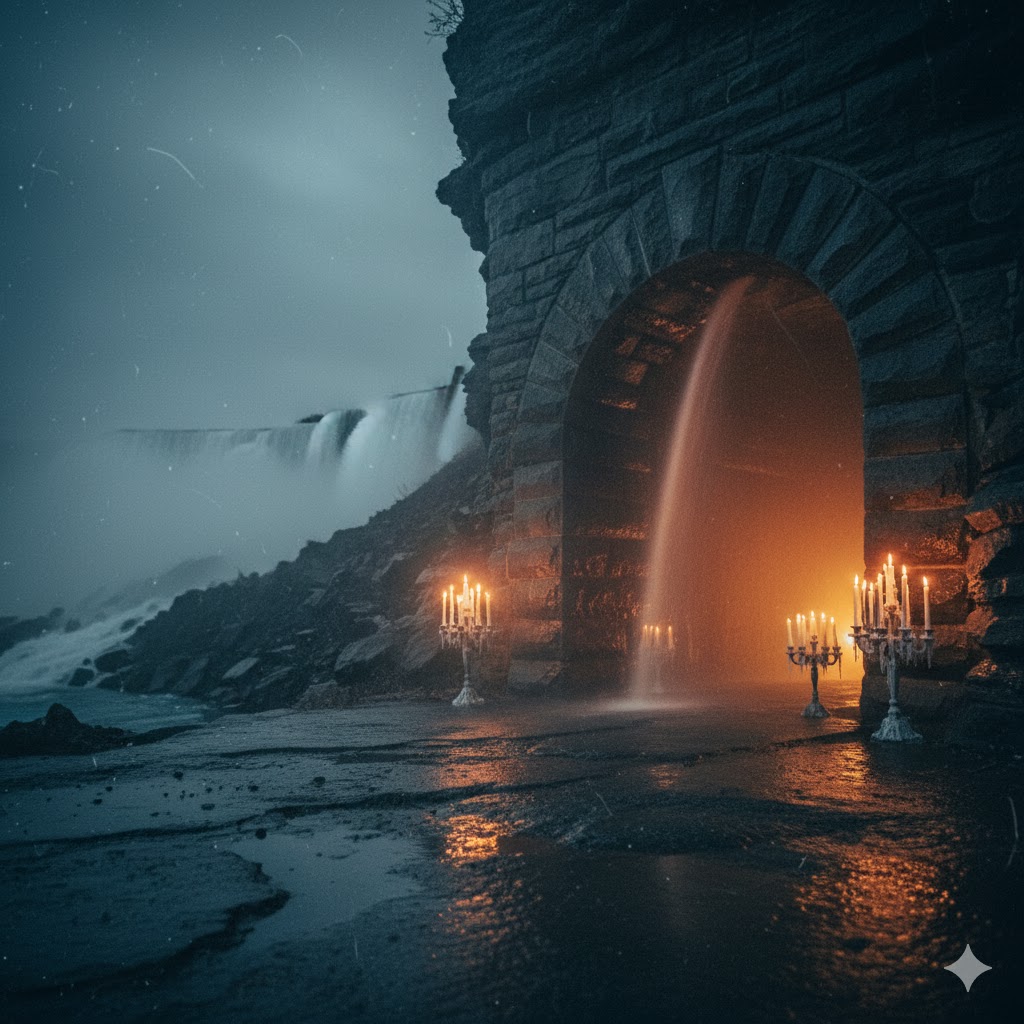
In Niagara Falls, beneath an abandoned railway, lies the Screaming Tunnel, one of Canada’s most chilling haunted locations. Locals say the ghost of a young girl — burned in a tragic fire — haunts the tunnel, her scream echoing when a match is lit inside.
Despite its dark story, it’s a fascinating site for thrill-seekers and photographers alike. The limestone walls, covered in graffiti and moss, tell decades of whispered legends.
Highlights: Haunted tunnel walk, nighttime ghost tours, historic Niagara sites nearby.
History: Built in the 1800s for drainage; became folklore central after local tragedy tales spread.
How to Reach: 10 minutes from Niagara Falls; easily accessible by car or walking trail.
Hidden Tips: Bring a flashlight — it’s pitch dark beyond the entrance.
Local Food: Stop at a local diner for Canadian butter tarts or poutine.
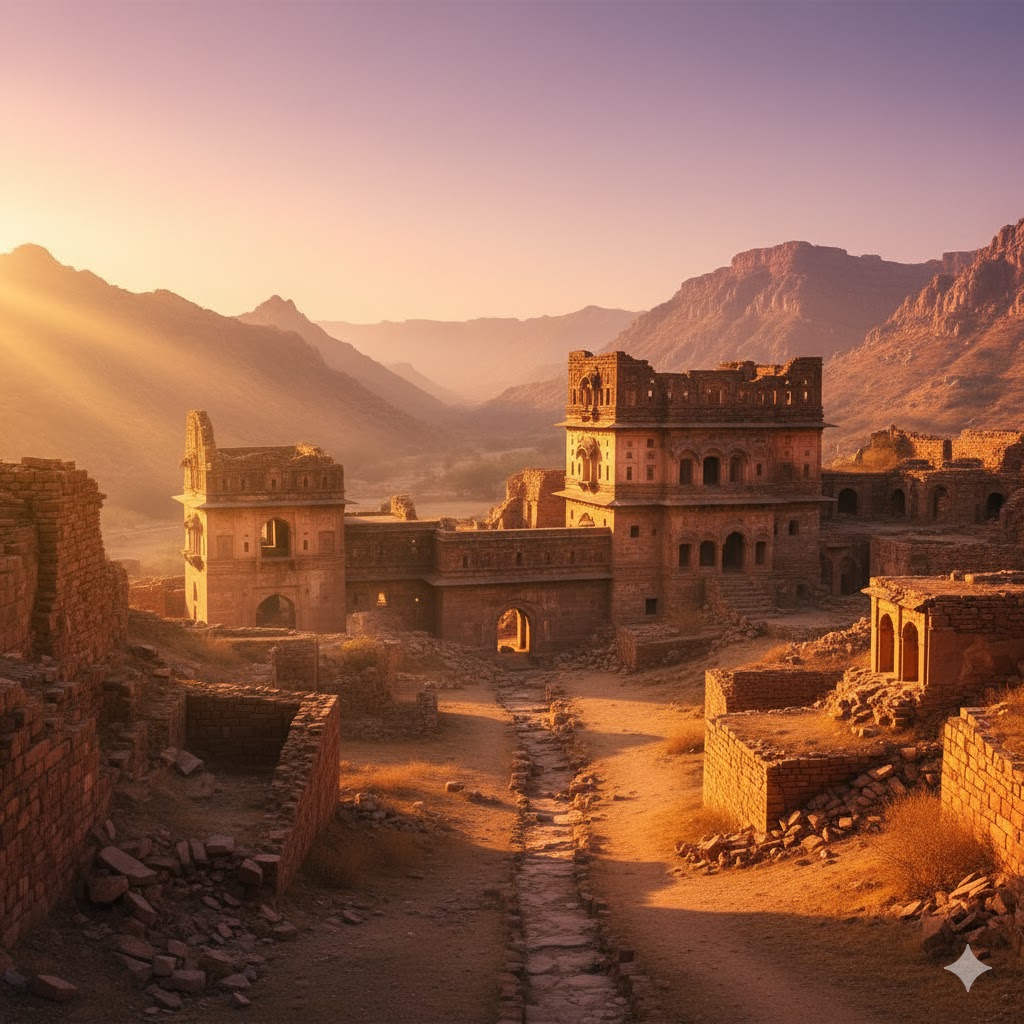
30. The Phantom Fortress – Bhangarh, India
Widely known as India’s most haunted place, the ruins of Bhangarh Fort sit silent under the shadow of the Aravalli Hills. Locals refuse to stay after sunset, believing the ancient curse of a rejected sorcerer still lingers.
Built in the 16th century, Bhangarh was once a thriving kingdom, mysteriously abandoned overnight. The fort’s crumbling walls, temples, and markets whisper of a vanished city frozen in time.
Highlights: Haunted fort ruins, temples of Hanuman & Shiva, panoramic hill views.
History: Legend says a magician cursed the fort after being rejected by Princess Ratnavati.
How to Reach: About 85 km from Jaipur; best accessed by car or guided jeep tours.
Hidden Tips: Visit early morning; entry is restricted after sunset by the Archaeological Survey of India.
Local Food: Enjoy Rajasthani thali or dal baati churma from roadside dhabas.
31. Lake Natron’s Blood-Red Waters – Tanzania
Highlights:
Lake Natron is one of the eeriest natural wonders in Africa, known for its blood-red hue and its deadly alkaline waters that can literally mummify animals. This surreal, mirror-like lake in northern Tanzania is surrounded by volcanic mountains and feels more like Mars than Earth.
History & Myth:
Locals believe Lake Natron is protected by ancient spirits and that its crimson waters are cursed. Scientifically, the red color comes from salt-loving microorganisms and algae that thrive in its extreme environment. Legends say those who enter uninvited risk never returning.
How to Reach:
Fly into Arusha Airport and drive approximately 8 hours north toward the Lake Natron Basin near the Kenyan border. 4×4 vehicles are necessary due to rough terrain.
Best Time to Visit:
June–October (dry season) when the lake’s eerie red hue is most visible and flamingos nest along the shore.
Hidden Gems & Tips:
Take a guided trek to Engare Sero Waterfall for breathtaking views of the Rift Valley. Avoid direct contact with the water.
Local Food:
Try local Nyama Choma (grilled meat) and Ugali after your visit — hearty Tanzanian dishes that contrast the stark beauty of the lake.

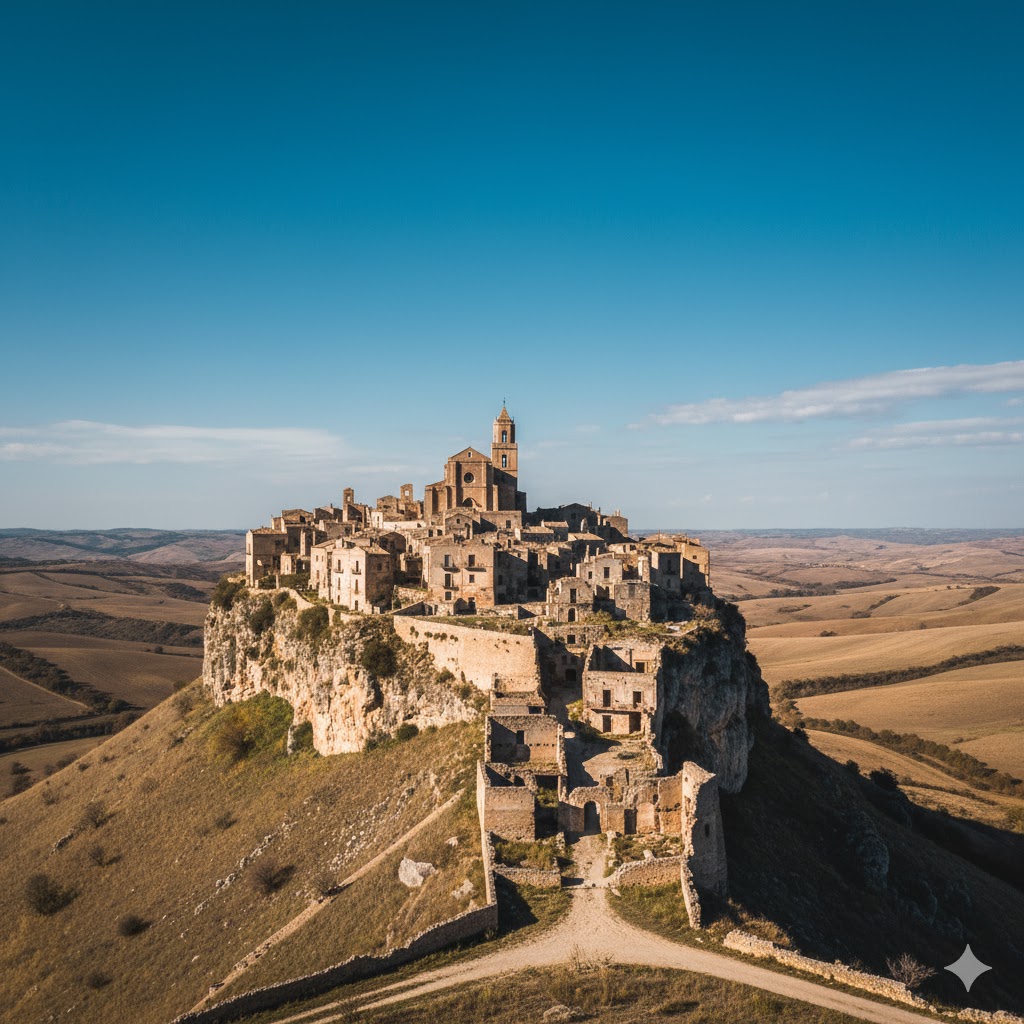
🕯️ 32. Craco – The Ghost Town of Italy
Highlights:
Craco, a haunting medieval hilltop town in southern Italy, has been abandoned since the 1960s after a series of landslides forced residents to flee. Today, it’s a frozen-in-time ghost village with crumbling stone buildings and empty piazzas echoing with silence.
History & Myth:
Craco dates back to the 8th century and was once a thriving agricultural center. Legends say the land became cursed after the local monastery collapsed, burying sacred relics beneath. Since then, locals have avoided rebuilding on the site.
How to Reach:
Craco lies in the Basilicata region — about 1.5 hours from Matera. The nearest airport is Bari Airport. Visitors must join an authorized guided tour for safety reasons.
Best Time to Visit:
April–June and September–October for mild weather and good photography lighting.
Hidden Gems & Tips:
Don’t miss the San Nicola Church ruins — said to house whispers of monks during nightfall.
Local Food:
Enjoy Basilicata’s rustic Pasta alla Lucana and locally produced olive oil in nearby towns.
🕯️ 33. Hoia Baciu Forest – Romania
Highlights:
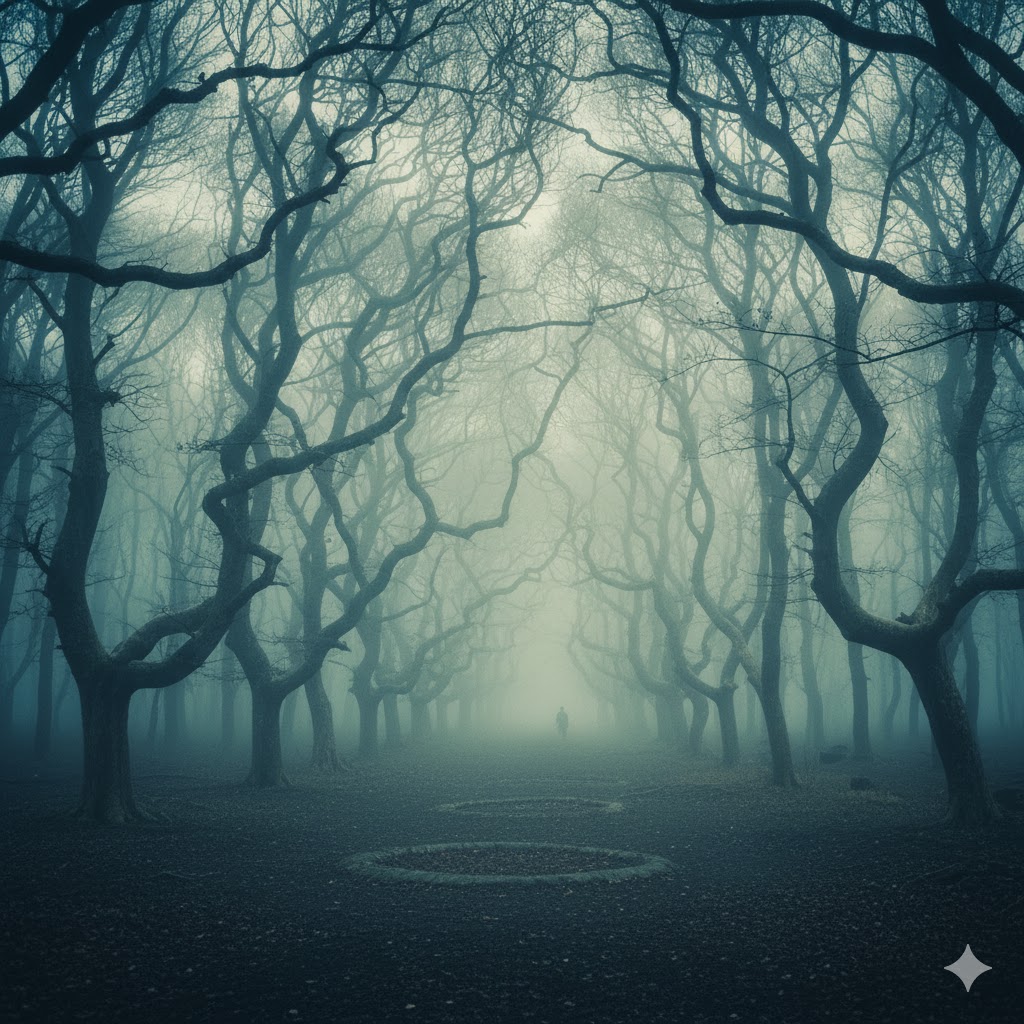
Known as the “Bermuda Triangle of Transylvania,” Hoia Baciu Forest is one of the world’s most haunted forests, infamous for UFO sightings, glowing orbs, and unexplained electromagnetic phenomena.
History & Myth:
Named after a shepherd who vanished with his entire flock, locals believe the forest is a portal to another dimension. Paranormal investigators have recorded abnormal radiation and static energy patterns here.
How to Reach:
Located near Cluj-Napoca — just a 20-minute taxi ride. Guided paranormal night tours are available for thrill-seekers.
Best Time to Visit:
September–November (autumn) when fog covers the forest floor, adding to the mystique.
Hidden Gems & Tips:
Look for the Circular Clearing — a mysterious treeless patch said to mark the forest’s supernatural epicenter.
Local Food:
Try Sarmale (stuffed cabbage rolls) and Papanasi (Romanian doughnuts) after your ghostly walk.
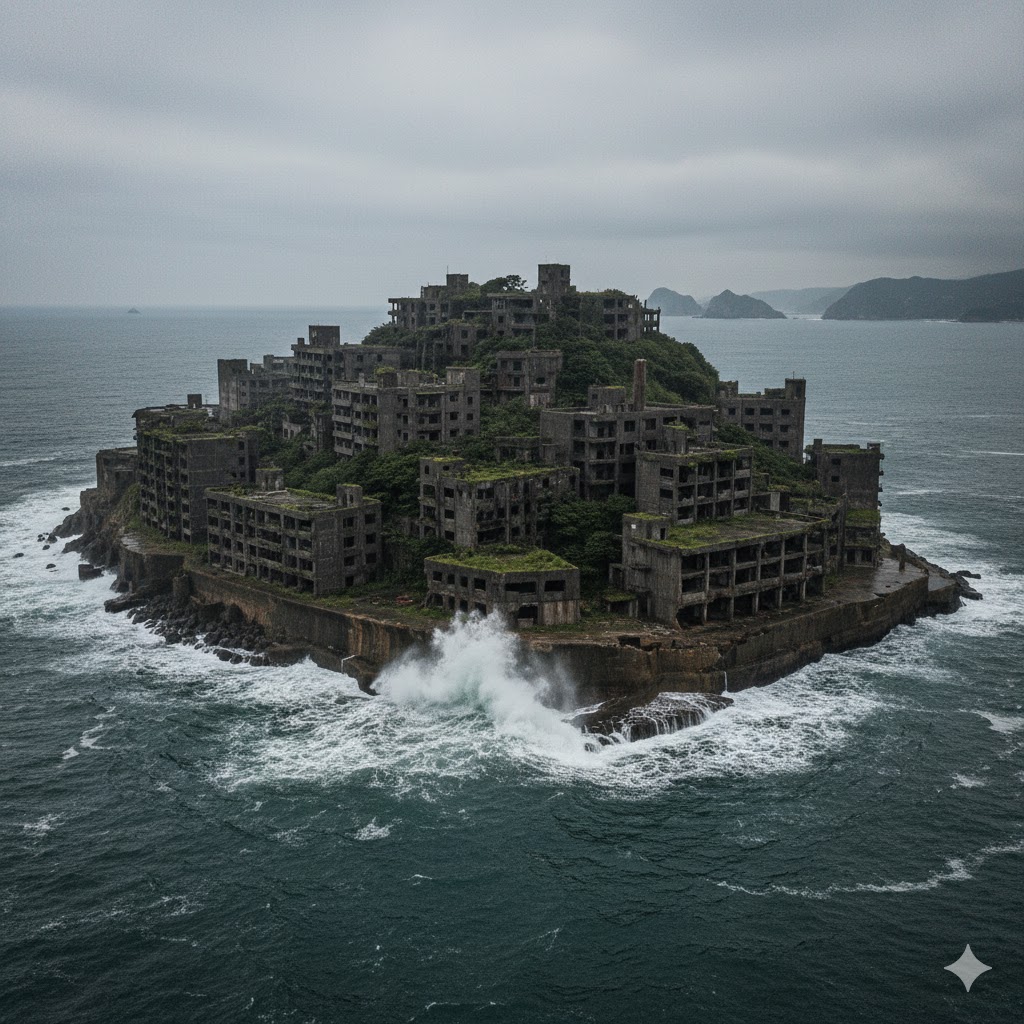
🕯️ 34. The Ghost Island of Hashima – Japan
Highlights:
Hashima Island, also known as Gunkanjima (“Battleship Island”), is an abandoned coal-mining settlement off Nagasaki. Its collapsing concrete buildings, overgrown corridors, and sea-battered walls create one of the world’s most surreal abandoned sites.
History & Myth:
Once home to over 5,000 residents, Hashima was deserted in the 1970s after its mines closed. Locals claim the spirits of miners still haunt the tunnels. The island’s eerie silhouette earned it a role in James Bond’s Skyfall.
How to Reach:
Ferries depart from Nagasaki Port with authorized tour operators offering guided visits.
Best Time to Visit:
March–May or October for clear weather and calm seas.
Hidden Gems & Tips:
Photography is restricted — but panoramic shots from the ferry offer stunning perspectives.
Local Food:
Try Champon (Nagasaki noodles) and Castella cake nearby.
🕯️ 35. Aokigahara Forest – Japan’s Sea of Trees
Highlights:
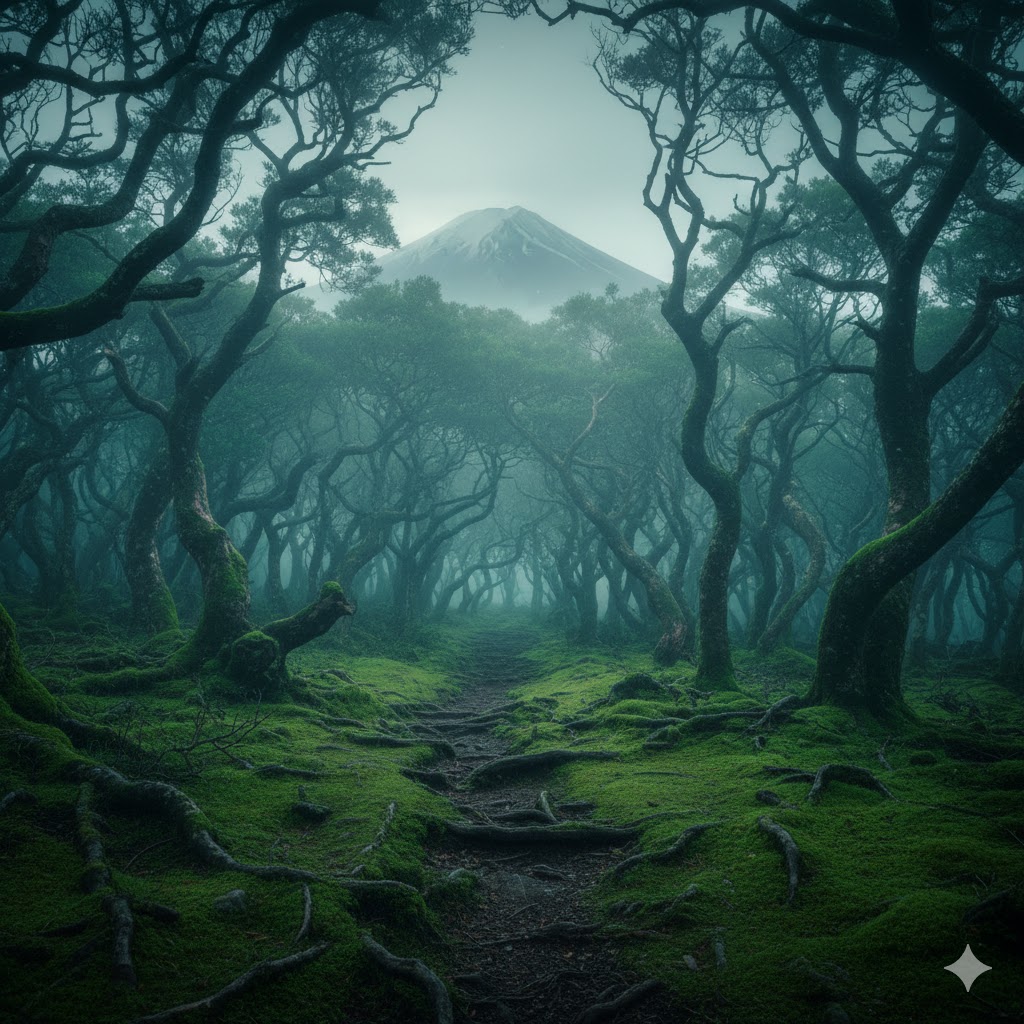
Aokigahara, located at the base of Mount Fuji, is both beautiful and infamous — a dense forest known for its tragic past and paranormal legends. Often referred to as Japan’s “Suicide Forest,” it’s a place of deep silence and eerie stillness.
History & Myth:
Historically associated with spirits in Japanese folklore, Aokigahara is believed to be haunted by yūrei — restless ghosts. Despite its grim reputation, it’s also a serene hiking location with lava caves and scenic trails.
How to Reach:
Take a train to Kawaguchiko Station, then a bus toward Aokigahara. Guided tours are available from Tokyo.
Best Time to Visit:
Spring (April–May) for pleasant hiking weather and fewer tourists.
Hidden Gems & Tips:
Visit Narusawa Ice Cave and Fugaku Wind Cave — natural lava tunnels near the forest.
Local Food:
Sample Hōtō noodle soup in the nearby Yamanashi region.
36. The Abandoned Village of Kolmanskop – Namibia
Deep in the Namib Desert lies Kolmanskop, one of the most surreal haunted travel destinations on Earth. Once a thriving diamond-mining settlement in the early 1900s, it’s now a ghostly sand-covered town — eerily silent except for the desert wind whispering through broken windows.
Every house here tells a story of forgotten luxury. The ballroom, once filled with laughter, now lies buried beneath dunes. Locals claim strange sounds echo at night, and shadows move inside empty halls. It’s a hauntingly beautiful mix of nature reclaiming human ambition.
Highlights: Sand-filled houses, eerie hospital ruins, vintage German architecture.
History: Established by German miners in 1908; abandoned in the 1950s after diamond depletion.
How to Reach: Located near Lüderitz; accessible via guided tours from the town.
Hidden Tips: Visit during early morning or late afternoon for best lighting and fewer tourists.
Local Food: Try Schnitzel and seafood at Lüderitz’s seaside restaurants.

37. The Cursed Island of Poveglia – Italy
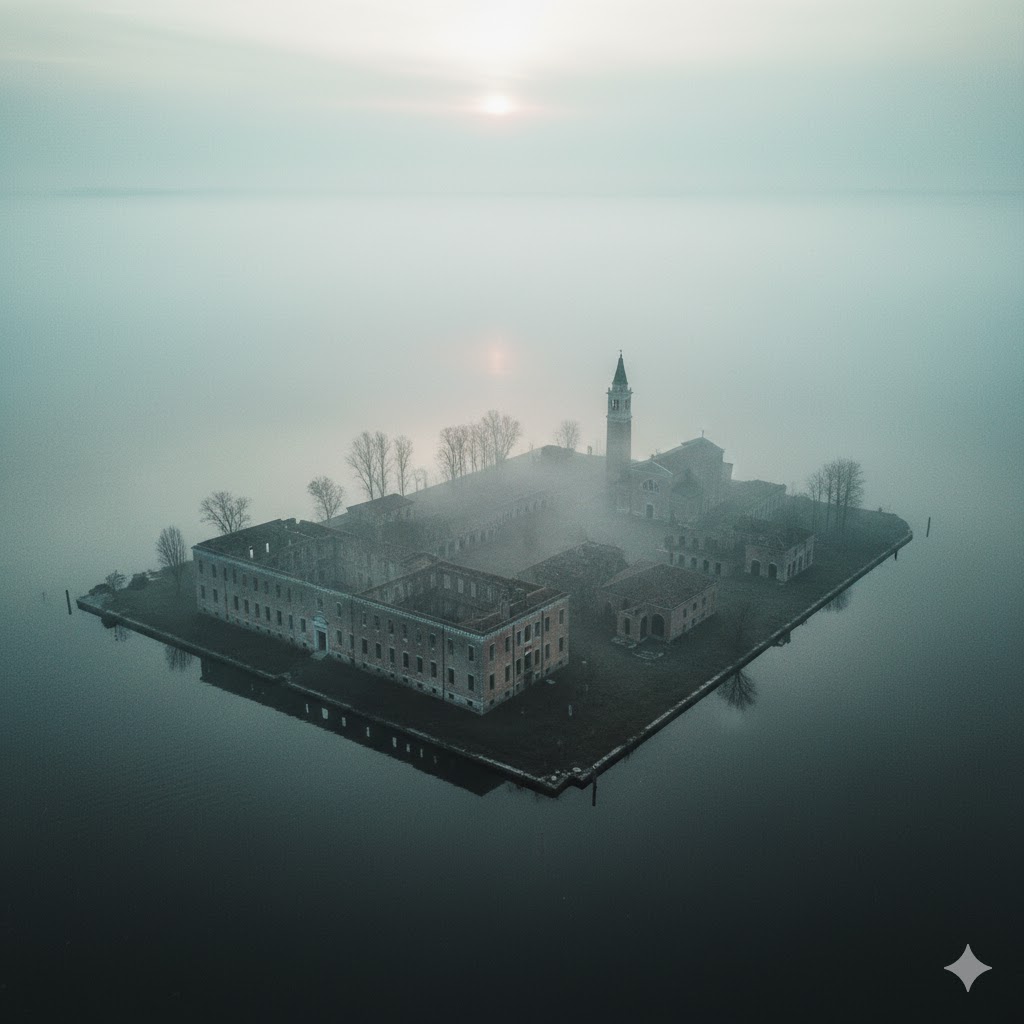
Floating quietly in the Venetian Lagoon, Poveglia Island is infamous as one of Europe’s most haunted places. Once a quarantine station for plague victims and later a psychiatric asylum, it’s said to hold the spirits of thousands who never left.
Visitors describe heavy air, ghostly whispers, and sudden chills as they explore its decaying hospital. Due to safety and legend, access is officially restricted, though thrill-seekers still attempt to reach it by private boats.
Highlights: Decaying asylum, bell tower ruins, ghost tours by private arrangement.
History: Used during Venice’s plague outbreaks in the 1700s; converted into an asylum in the 1920s.
How to Reach: By private boat from Venice; official visits require permission from local authorities.
Hidden Tips: Best viewed by drone or boat cruise — the eerie silhouette alone tells its story.
Local Food: Savor Venetian seafood pasta (Spaghetti alle vongole) after your lagoon adventure.
38. The Black Forest – Germany
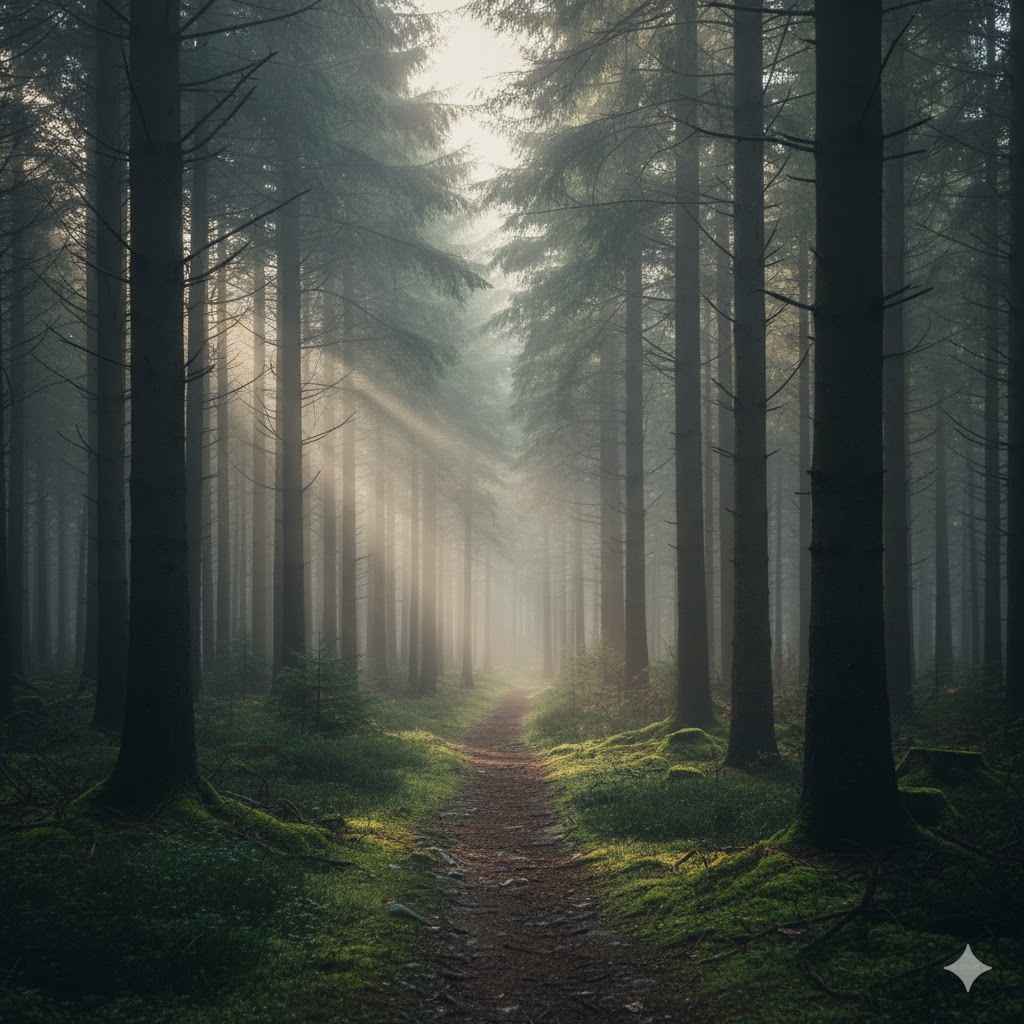
The Black Forest (Schwarzwald) is an enchanting yet chilling landscape that inspired countless ghost stories and Grimm Brothers’ fairytales. Its dense pine canopy and misty valleys conceal centuries-old legends — witches, forest spirits, and cursed castles.
Despite the haunting tales, it’s also one of Germany’s most scenic natural escapes. Locals speak of lights flickering at midnight and travelers hearing faint flute music in the fog.
Highlights: Fairy-tale villages, hiking trails, mysterious folklore museums.
History: Rooted in pagan mythology and medieval tales; home to Germany’s earliest ghost legends.
How to Reach: From Frankfurt or Stuttgart, take trains to Baden-Baden or Freiburg; local buses serve forest towns.
Hidden Tips: Join a folklore storytelling night in Triberg — a local favorite.
Local Food: Try Black Forest cake (Schwarzwälder Kirschtorte) where it originated.
39. The Deserted Hospital – Beelitz-Heilstätten, Germany
Just outside Berlin lies Beelitz-Heilstätten, a massive abandoned hospital complex with 60+ decaying buildings overtaken by nature. Once used as a World War I military hospital (where Adolf Hitler was treated), it’s now one of Germany’s most popular ghost and mystery travel spots.
Creeping vines wrap around shattered glass windows, and graffiti marks silent wards. Paranormal investigators report flickering lights, footsteps, and echoes through the corridors.
Highlights: Historic sanatorium ruins, guided ghost tours, forest walkways.
History: Opened in 1898 as a tuberculosis sanatorium; later used by Nazis and Soviet troops.
How to Reach: 50 km southwest of Berlin; accessible via Beelitz-Heilstätten train station.
Hidden Tips: Visit early morning for best photos; drone flying requires permission.
Local Food: Try traditional German Bratwurst from local vendors near the entrance.
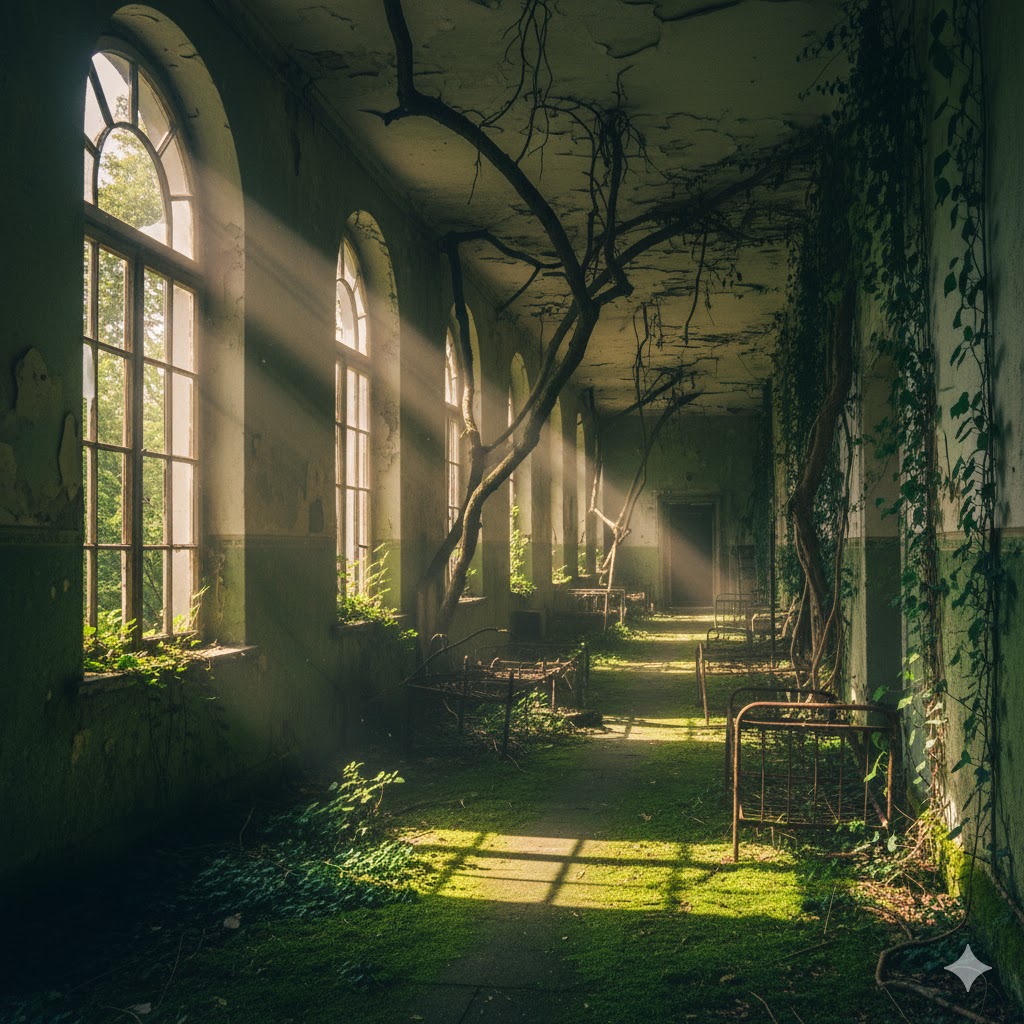
40. The Phantom City of Ani – Turkey
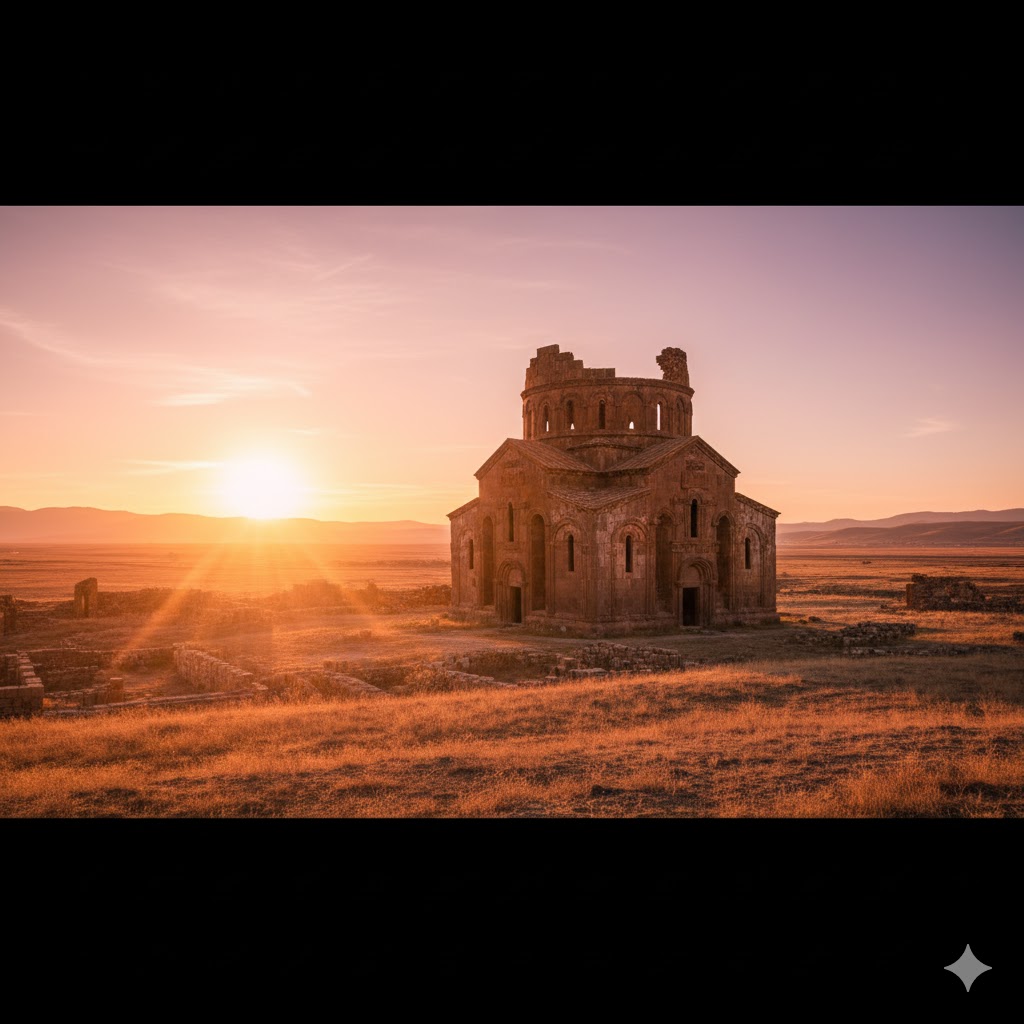
Located near the Turkish-Armenian border, the ancient city of Ani — once called the “City of 1,001 Churches” — now stands eerily silent. Once a major Silk Road hub, it was abandoned after wars and earthquakes.
Today, travelers wander through vast plains filled with half-collapsed cathedrals, echoing with forgotten prayers. Locals say strange lights appear at dusk — the spirits of worshippers long gone.
Highlights: Medieval ruins, cathedral, Silk Road fortress walls.
History: Capital of medieval Armenia in the 10th century; abandoned after invasions and quakes.
How to Reach: From Kars, drive 45 minutes east via local tours.
Hidden Tips: Visit during golden hour for surreal photography.
Local Food: Try Kars gravyeri cheese and local lamb kebabs.
41. The Ghost Palace Hotel – Malaysia
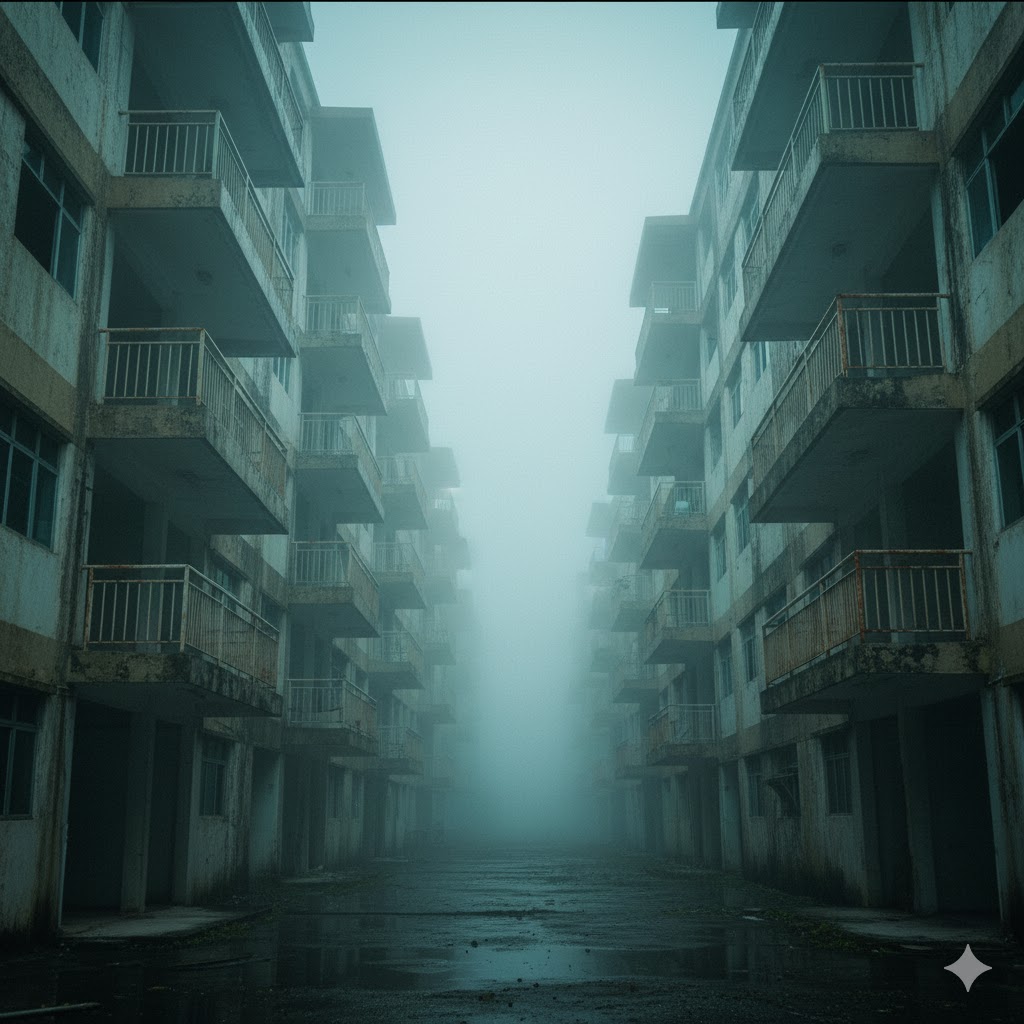
Hidden in the misty hills of Genting Highlands, the Amber Court (Ghost Palace) is one of Malaysia’s strangest sites. This massive apartment-hotel complex, partially abandoned, has gained fame for ghost sightings, flickering lights, and eerie quiet halls.
Despite the legends, some residents still live here, surrounded by thick fog and jungle silence. The atmosphere is unsettling yet fascinating — a photographer’s dream.
Highlights: Abandoned high-rise architecture, fog-covered hills, ghost tours.
History: Built in the 1990s for luxury tourism but never completed; fell into disuse.
How to Reach: 1-hour drive from Kuala Lumpur via Genting Expressway.
Hidden Tips: Visit during daylight for exploration; avoid late-night entry.
Local Food: Try steamboat hotpot at nearby Genting eateries.
42. The House of the Seven Deaths – Rio de Janeiro, Brazil
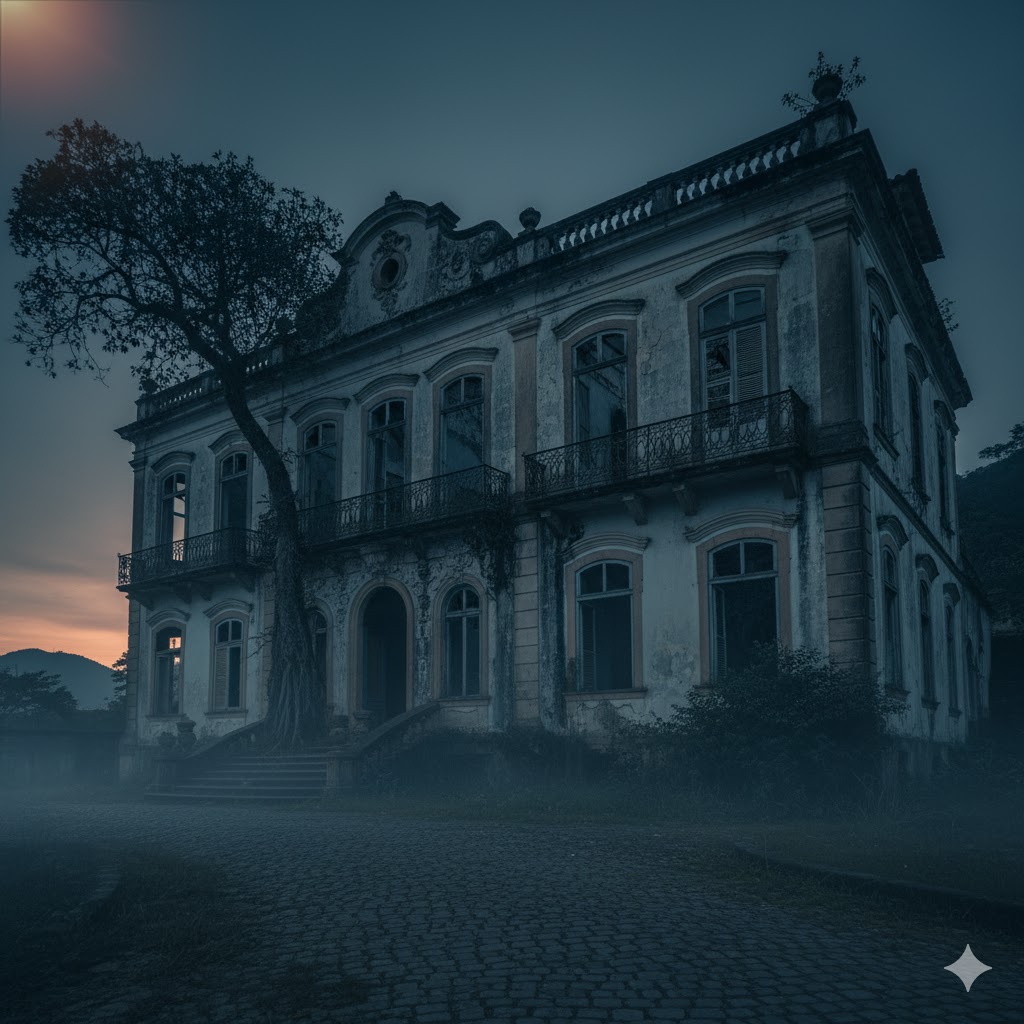
In Rio’s Santa Teresa neighborhood, an old mansion known as Casa das Sete Mortes is steeped in legend. In the 1800s, seven mysterious deaths occurred there in one night — sparking ghost tales that persist today.
The decaying façade still looms over the cobblestone streets, and residents report ghostly screams and piano sounds late at night. Despite the legends, it’s a cultural landmark representing Rio’s colonial past.
Highlights: Colonial architecture, haunted house legends, guided heritage walks.
History: Linked to unsolved murders in the 19th century; now a protected heritage site.
How to Reach: Located in Santa Teresa; accessible by tram from Rio downtown.
Hidden Tips: Join ghost-themed walking tours at night for full experience.
Local Food: Try Feijoada, Brazil’s traditional black bean stew.
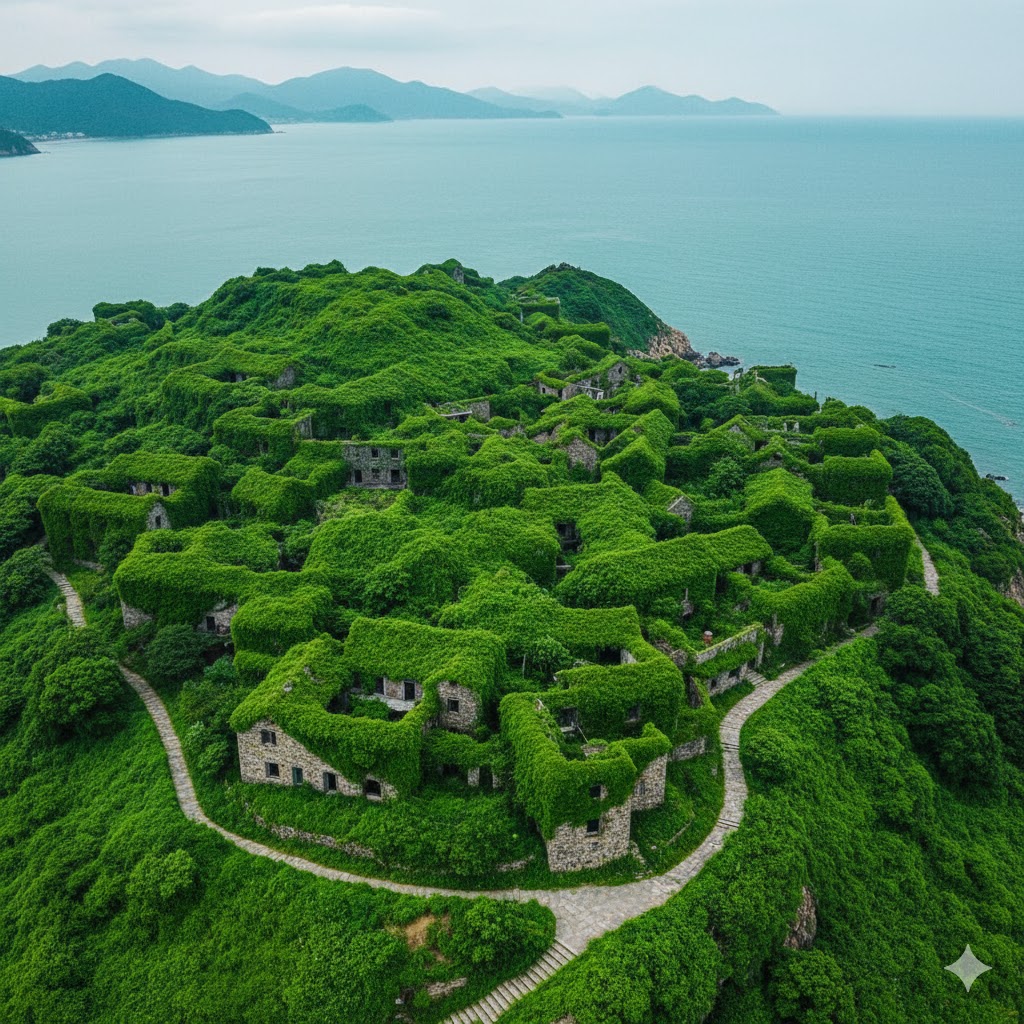
43. The Vanishing Village – Houtouwan, China
Once home to hundreds of fishermen, Houtouwan Village on Shengshan Island is now completely engulfed by ivy. The green vines have consumed every home, turning it into one of the world’s most photogenic abandoned places.
It’s hauntingly beautiful — a ghost village reclaimed by nature. Silent paths, rusted gates, and creeping vegetation make visitors feel as though time itself stopped here.
Highlights: Green-covered ruins, coastal cliffs, nature photography.
History: Abandoned in the 1990s due to isolation and lack of resources.
How to Reach: Ferry from Shanghai to Shengshan Island; local guides offer walking tours.
Hidden Tips: Go early morning to avoid fog and get bright natural light.
Local Food: Freshly caught seafood and rice dishes at local cafés.
44. The Cemetery of Dolls – Mexico
Just south of Mexico City lies Isla de las Muñecas (Island of the Dolls) — a macabre site where hundreds of decaying dolls hang from trees. The island’s caretaker, Don Julian, began hanging dolls to appease a drowned girl’s spirit — a tradition that turned into one of Mexico’s eeriest attractions.
Wind rustles through hollow-eyed dolls, and visitors claim to see their heads move. Despite its haunting vibe, the island draws curious travelers worldwide.
Highlights: Thousands of hanging dolls, eerie photography, canal boat tours.
History: Began in the 1950s by local hermit Julian Santana Barrera; now a tourist site.
How to Reach: Take a trajineras boat from Xochimilco docks (2 hours round trip).
Hidden Tips: Visit early morning; bring offerings like flowers or toys per local custom.
Local Food: Try tamales or elotes sold near Xochimilco docks.

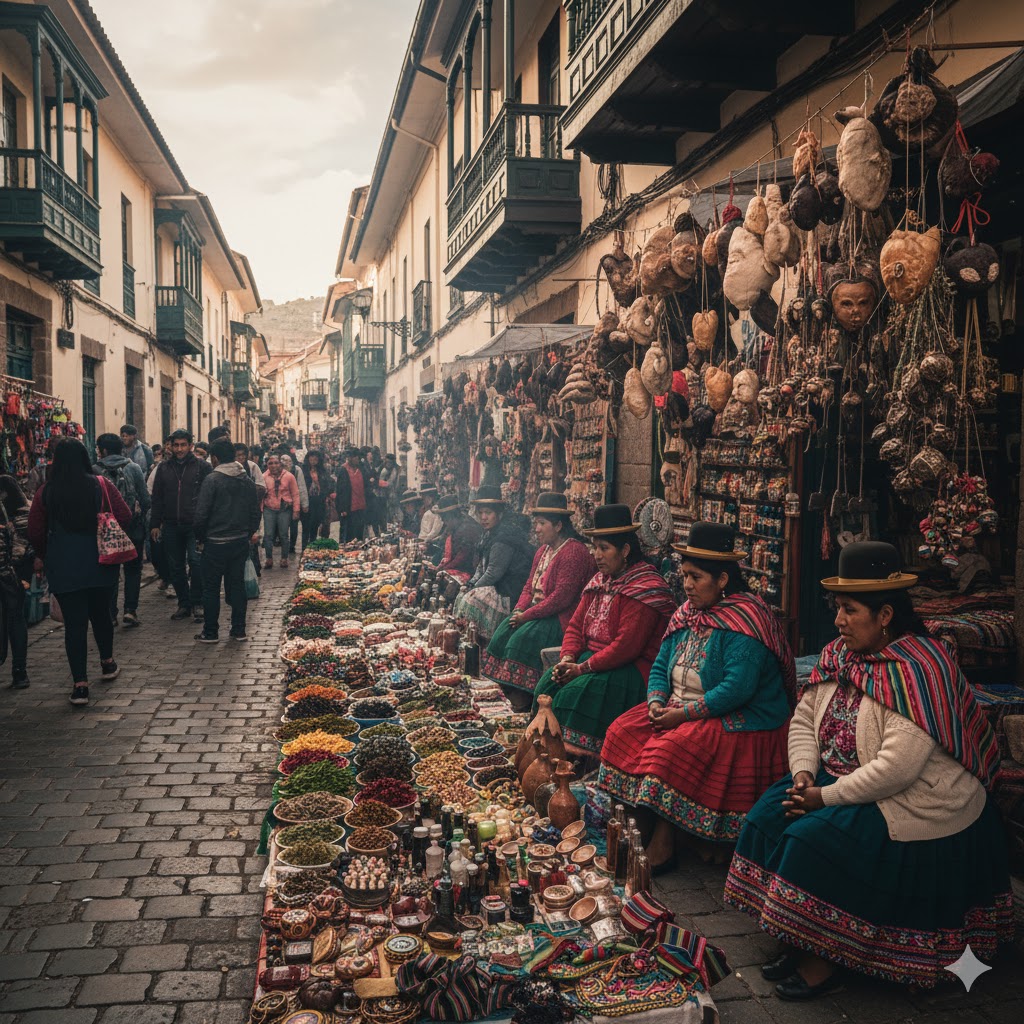
45. The Witch Market – La Paz, Bolivia
In the heart of La Paz, the Mercado de las Brujas (Witches’ Market) offers a mix of ancient Andean spirituality and mysticism. Vendors sell potions, dried herbs, amulets, and even llama fetuses used in traditional Aymara rituals.
Though not haunted in the ghostly sense, it’s deeply mystical. Travelers describe feeling intense energy as they explore narrow alleys filled with incense and ancestral magic.
Highlights: Ritual objects, shaman blessings, Andean witchcraft culture.
History: Rooted in pre-Incan traditions; local healers known as yatiris still practice daily.
How to Reach: Located near Sagarnaga Street, central La Paz; easy by foot or taxi.
Hidden Tips: Always ask permission before photographing stalls.
Local Food: Try Salteñas (Bolivian meat pastries) nearby.
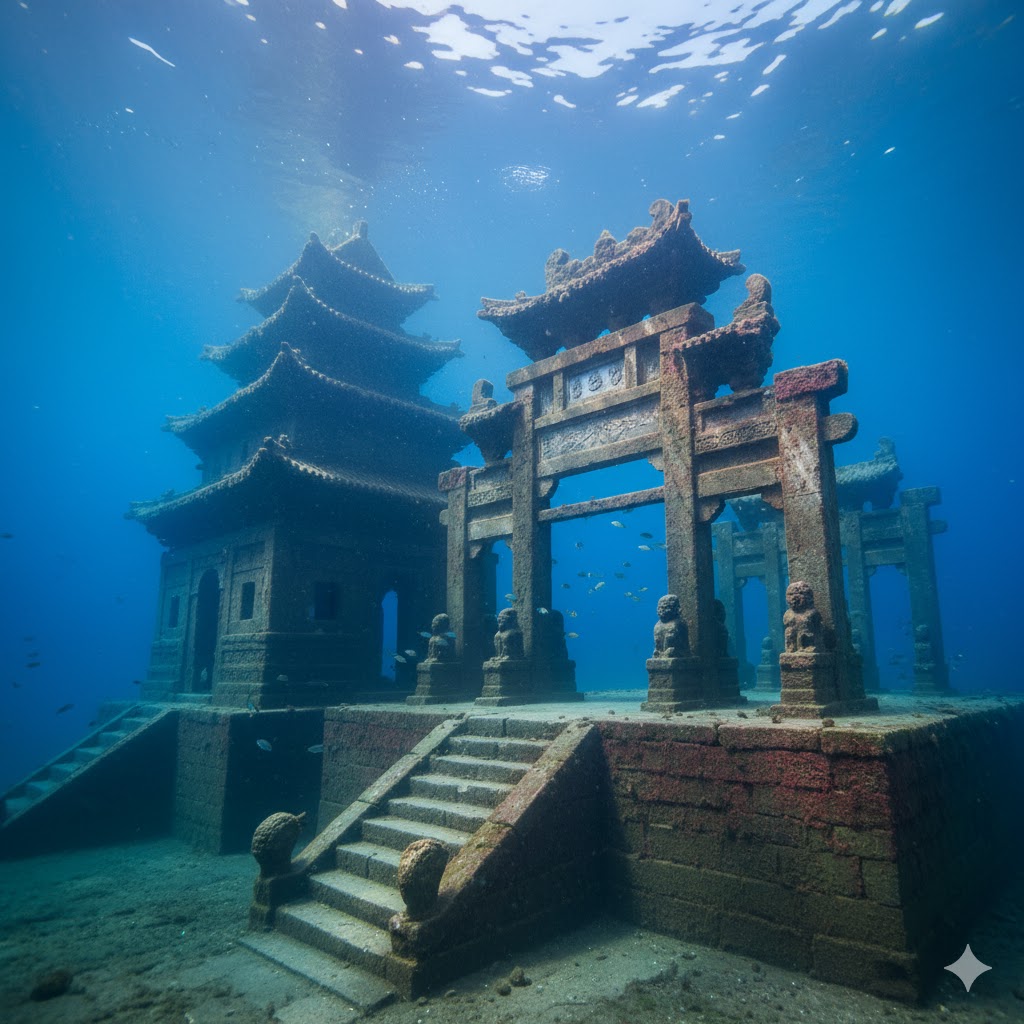
46. Haunted Travel Destinations: The Sunken City of Shicheng – China
Beneath the tranquil waters of Qiandao Lake lies one of the world’s most incredible haunted travel destinations — the Sunken City of Shicheng. Once known as the “Lion City,” it was submerged in 1959 to make way for a hydroelectric dam. Now, its ancient walls, gates, and temples rest eerily preserved underwater.
Divers report feeling strange chills and seeing moving shadows among the ruins. The city’s eerie silence and perfect preservation make it one of China’s greatest underwater mysteries. Today, it’s a favorite spot for experienced divers seeking beauty mixed with history and ghostly allure.
Highlights: Underwater temples, preserved lion statues, deep diving exploration.
History: Built during the Eastern Han Dynasty (25–200 AD), the city flourished for centuries before being submerged.
How to Reach: Located beneath Qiandao Lake, Zhejiang Province; access via guided diving tours from Hangzhou.
Hidden Tips: Only advanced divers allowed; book with certified tour operators.
Local Food: Try Hangzhou’s signature Dongpo pork and Longjing tea nearby.
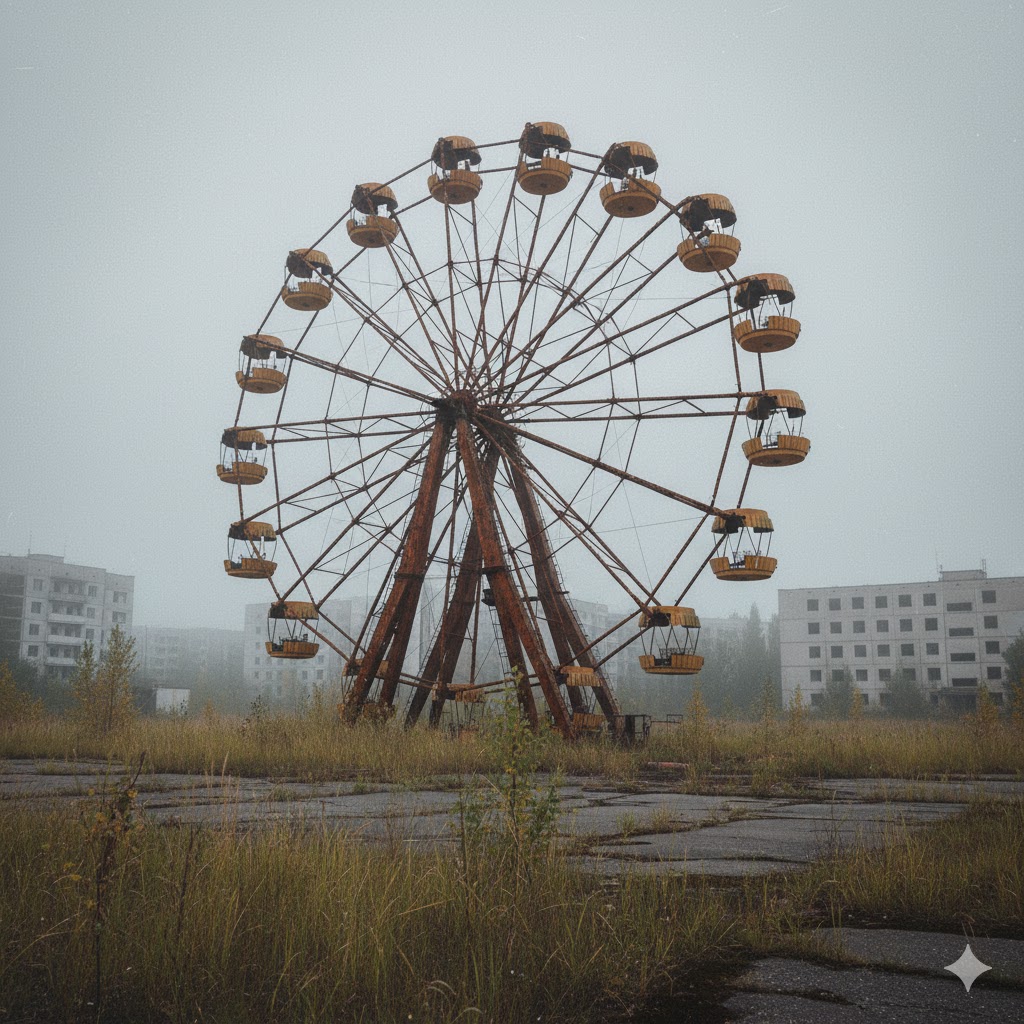
47. The Ghost Town of Pripyat – Ukraine
Once home to 50,000 residents, Pripyat now stands as one of the most haunting and symbolic ghost towns on Earth. Following the Chernobyl nuclear disaster in 1986, this vibrant Soviet city was abandoned overnight. Today, it’s a chilling time capsule of a frozen past — schoolbooks left open, amusement park rusting, and silence ruling the streets.
Despite its radioactive history, guided tours allow visitors to safely explore limited zones. The eerie Ferris wheel and overgrown apartment blocks have made Pripyat a global icon of desolation.
Highlights: Abandoned amusement park, hospital ruins, Chernobyl reactor view.
History: Founded in 1970 to house Chernobyl workers; evacuated after the 1986 meltdown.
How to Reach: 2-hour drive from Kyiv; official tours required for entry.
Hidden Tips: Avoid touching structures or vegetation; radiation levels vary.
Local Food: Kyiv offers classic Ukrainian dishes like borscht and vareniki.
48. The Ghostly Ruins of Craco – Italy
Perched atop a steep hill in southern Italy, Craco is a medieval ghost town abandoned after landslides in the 1960s. Its narrow lanes, decaying churches, and empty homes overlook breathtaking landscapes — creating an eerie, cinematic vibe that’s drawn filmmakers and paranormal explorers alike.
Visitors often speak of whispering winds and soft footfalls in empty corridors. Despite its tragic history, Craco is stunning, offering a glimpse into a vanished way of life.
Highlights: Medieval ruins, hilltop views, film site for The Passion of the Christ.
History: Settled in 540 AD; abandoned after repeated earthquakes and landslides.
How to Reach: 1.5-hour drive from Matera; guided access only.
Hidden Tips: Bring water and sturdy shoes — the terrain is steep.
Local Food: Enjoy orecchiette pasta and local olive oil in nearby Matera.
49. The Abandoned Resort of Varosha – Cyprus
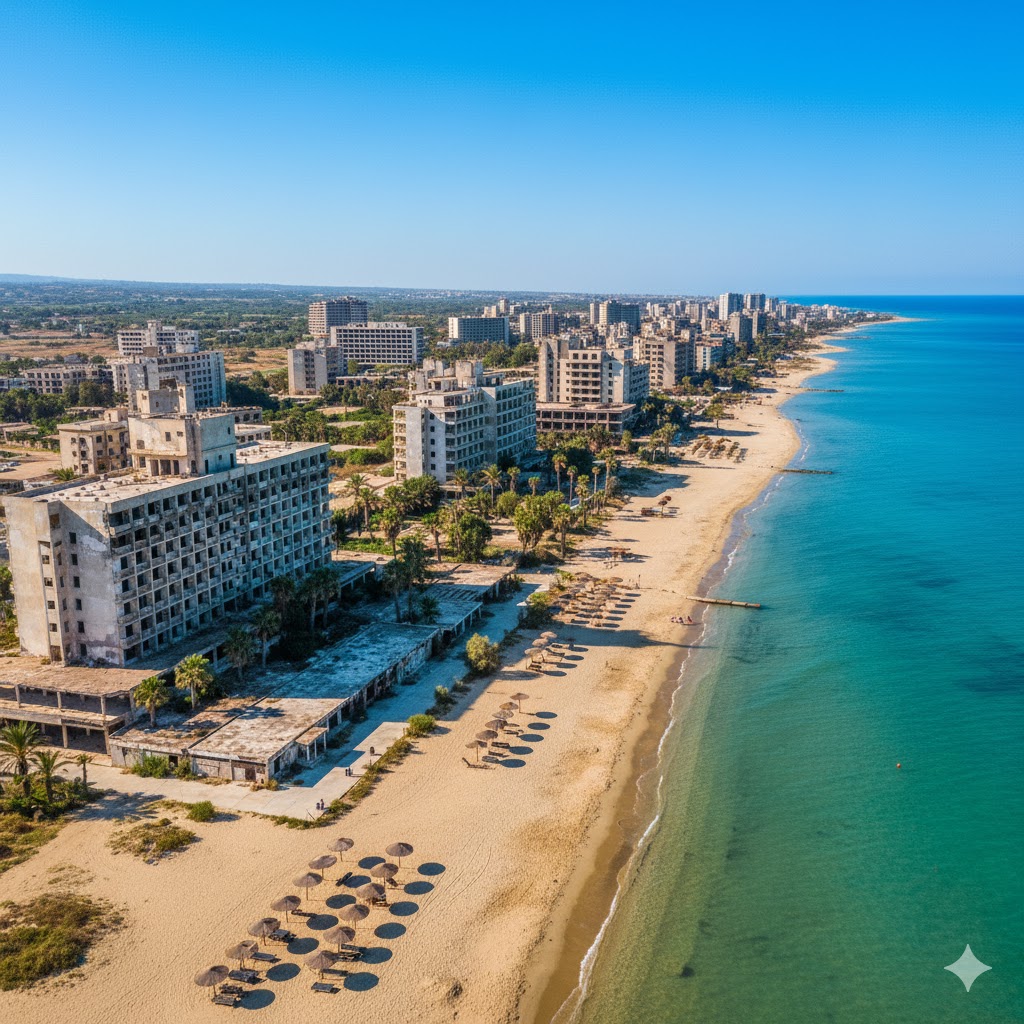
Once the Mediterranean’s most glamorous beach resort, Varosha in Famagusta was abandoned in 1974 during the Turkish invasion of Cyprus. The luxurious hotels, once filled with celebrities like Elizabeth Taylor, now crumble behind barbed wire.
For decades, the area was a forbidden military zone — recently reopened partially to visitors. Walking through its empty streets feels like entering a 1970s time capsule frozen mid-summer.
Highlights: Decaying beachfront hotels, ghost town exploration, coastal walks.
History: Abandoned in 1974 after Cyprus conflict; preserved as UN buffer zone.
How to Reach: Accessible from North Cyprus via guided tours.
Hidden Tips: Photography limited in military sections; follow local regulations.
Local Food: Try Halloumi cheese and Cypriot mezze in nearby Famagusta.
50. The Ghost Lights of Marfa – Texas, USA
On dark nights in the desert outside Marfa, Texas, glowing orbs appear mysteriously near the horizon — known as the Marfa Lights. Scientists and locals have debated their origin for decades: atmospheric gases, headlights, or something supernatural?
Whether natural or paranormal, the lights have made Marfa one of America’s most intriguing mysterious locations. Visitors gather nightly at a designated viewing area, hoping to catch a glimpse of these dancing, unexplained illuminations.
Highlights: Desert night viewing, mystery light phenomena, desert art installations.
History: First reported by settlers in the 1880s; studied but never fully explained.
How to Reach: 2.5-hour drive from El Paso; viewing platform east of Marfa on US Route 90.
Hidden Tips: Best seen on clear nights after 10 PM; bring binoculars.
Local Food: Sample Texas BBQ and chili brisket tacos at Marfa cafés.

Frequently Asked Questions (FAQs)
Q1. What are the most haunted travel destinations in the world?
Some of the most haunted travel destinations include Bhangarh Fort (India), Poveglia Island (Italy), Edinburgh Vaults (Scotland), and Hoia Baciu Forest (Romania). These places are renowned for ghost sightings, eerie sounds, and mysterious histories that attract paranormal enthusiasts worldwide.
Q2. Are haunted places safe for tourists to visit?
Yes, most haunted places open for tourism are safe to visit, especially during guided tours or official hours. However, travelers should always respect local customs, avoid restricted zones, and follow safety instructions — particularly in remote or unstable ruins.
Q3. What is the best time to visit haunted or ghost towns?
The best time varies by region. For European ghost towns, late autumn (October–November) enhances the spooky ambiance. Deserted or tropical locations like Kolmanskop or Hashima Island are best explored between March and June when the weather is stable.
Q4. How can I plan a haunted travel itinerary for 2025?
Start by shortlisting key haunted destinations, check if they allow public entry, and book local ghost tours or heritage walks. Combine your visit with nearby cultural or historical attractions to balance mystery with learning. Using reliable booking sites and travel insurance is also advised.
Q5. Why are haunted places becoming popular tourist attractions?
With rising interest in experiential and adventure travel, haunted tourism blends curiosity, history, and thrill. Documentaries and social media trends have amplified fascination with ghost towns and mysterious ruins, making them key attractions for brave-hearted travelers.
Traveler Guide:
The world’s haunted travel destinations reveal not only ghosts but forgotten stories of humanity itself.
From cursed villages buried in sand to eerie islands silenced by tragedy, each mysterious location carries centuries of emotion, culture, and curiosity. Exploring these haunted landmarks in 2025 is more than thrill-seeking — it’s a journey into the unknown corners of human history.
Whether you’re chasing whispers in a dark forest or walking through an abandoned mining town, you’re retracing the echoes of real lives that time has left behind. Always travel respectfully, guided by curiosity rather than fear — and you’ll find that every haunted place has a soul of its own.