
Blue Lava Volcano – Kawah Ijen’s Fiery Secret Revealed
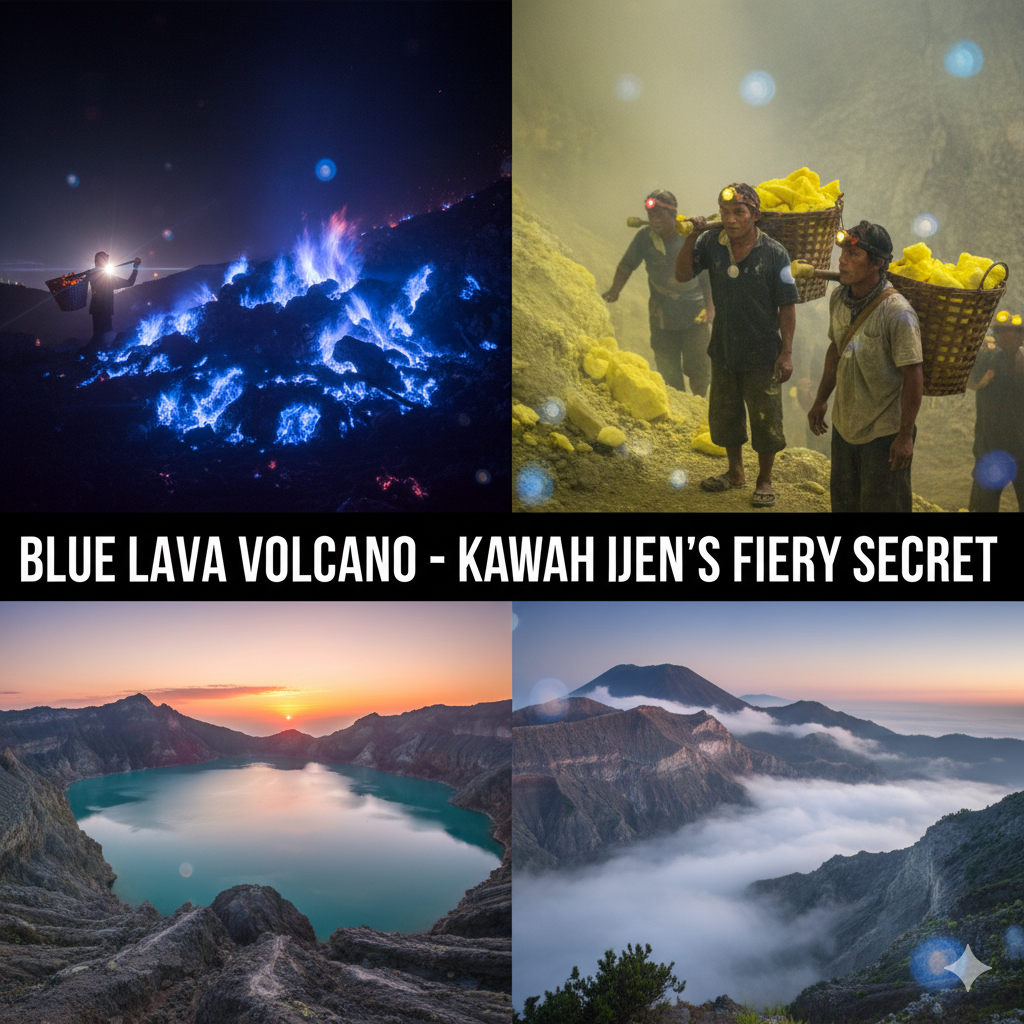
Blue Lava Volcano Kawah Ijen is one of Earth’s most mesmerizing and mysterious wonders. Deep in the mountains of East Java, Indonesia, a volcano burns with an unearthly blue flame that dances through the darkness — a sight so surreal that travelers often call it “the gateway to another planet.”
Unlike ordinary volcanoes that glow red or orange, Kawah Ijen’s flames shine a ghostly electric blue — a phenomenon that occurs nowhere else on the planet at this scale.
In this article, we’ll explore 10 incredible facts about the Blue Lava Volcano: from the science behind its color to the lives of miners who work in its toxic heart, and why it has become a symbol of both beauty and human endurance.
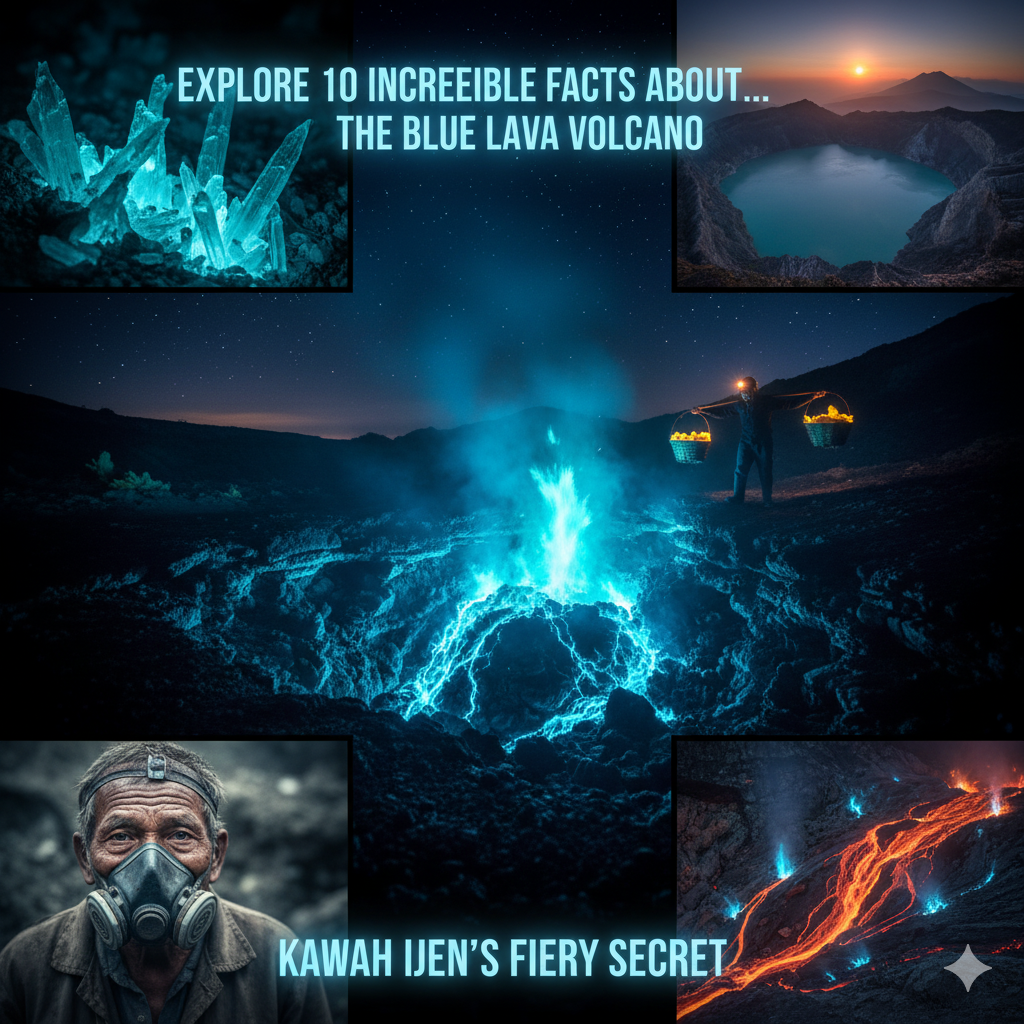
Let’s descend into this glowing abyss and uncover the fiery secret of Kawah Ijen.
Where Is the Blue Lava Volcano Located?
The Kawah Ijen volcano is located on Java Island, Indonesia, near the town of Banyuwangi, in East Java province.
Coordinates: 8.058°S, 114.242°E
Elevation: ~2,799 meters (9,183 feet)
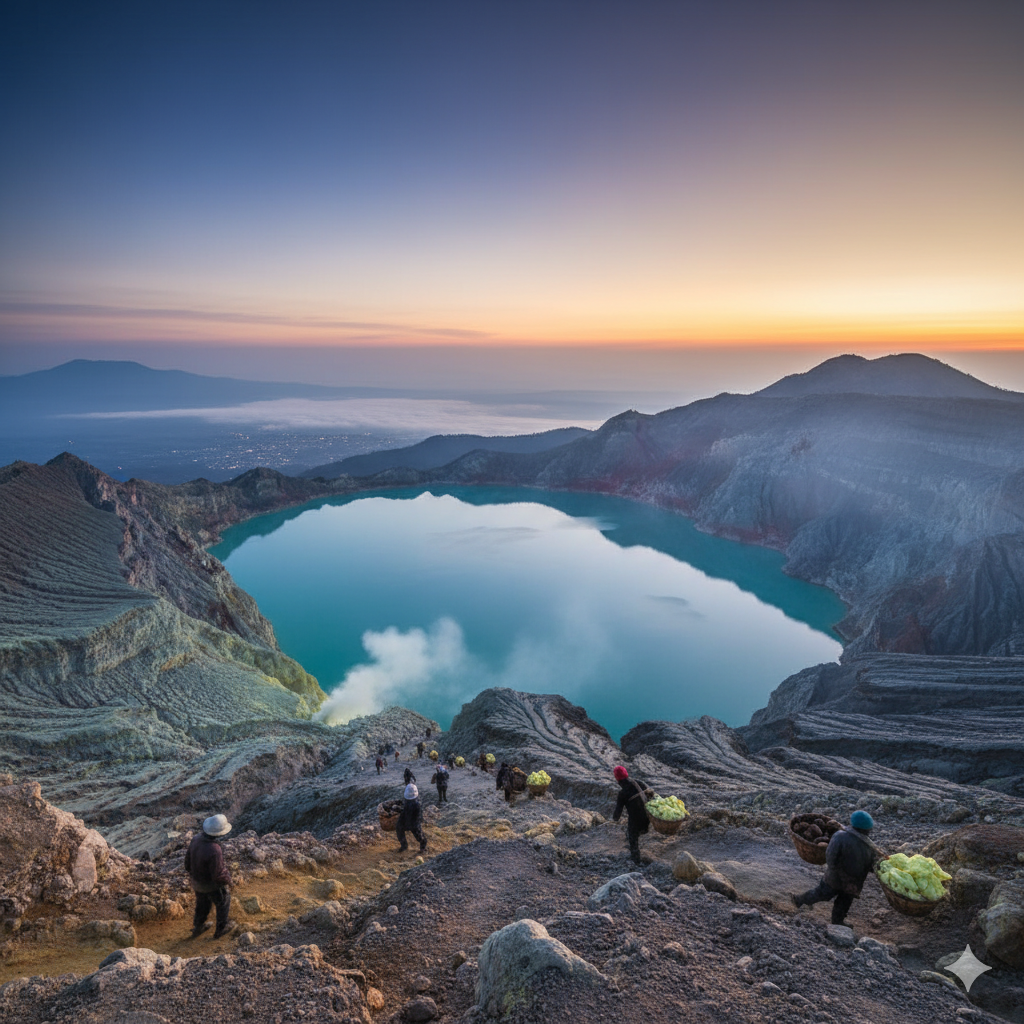
Kawah Ijen is part of a volcanic complex that includes Mount Merapi (not to be confused with the famous Merapi near Yogyakarta). Together, these volcanoes form part of the Pacific Ring of Fire — one of the most geologically active zones on Earth.
What Makes the Lava Blue?
Contrary to its name, the lava itself isn’t actually blue — it’s the flames around the lava that glow blue.
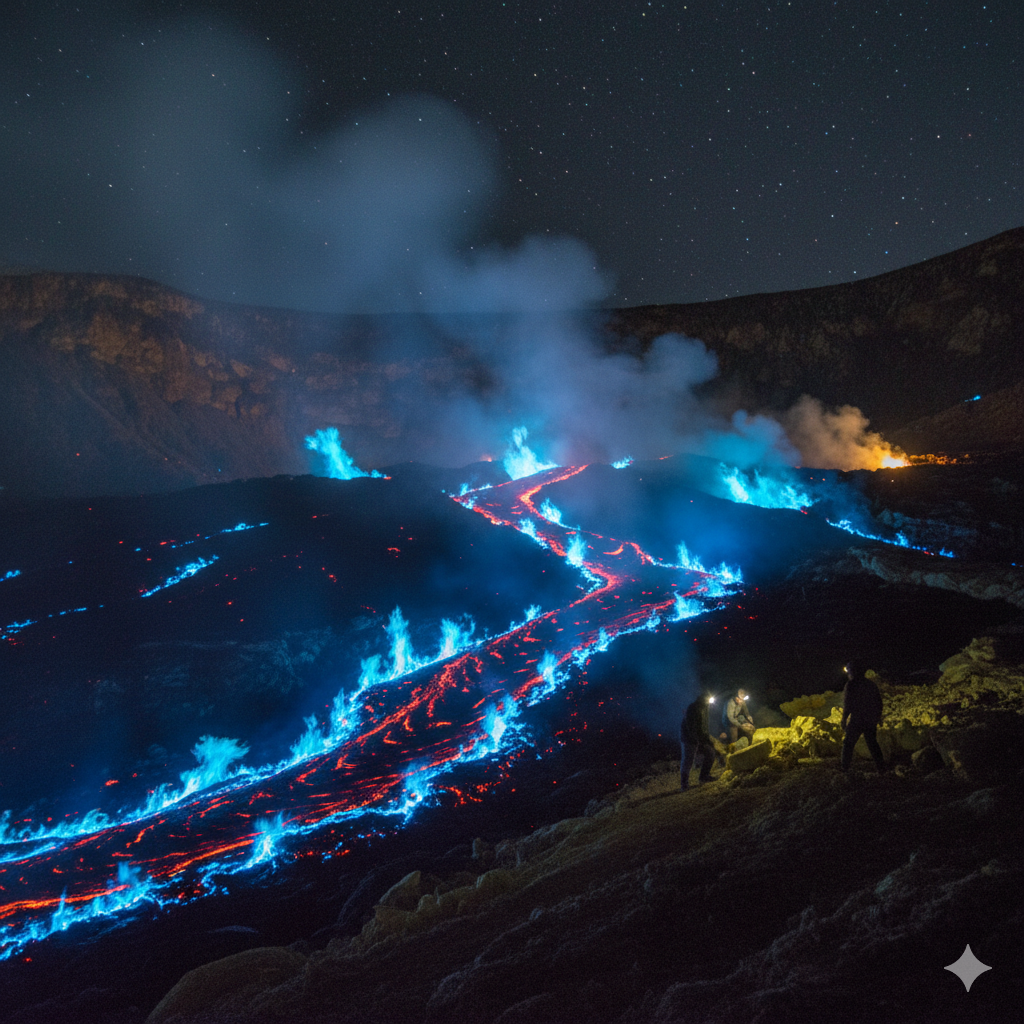
Here’s why:
- The volcano emits high levels of sulfuric gas.
- When this gas escapes through cracks in the volcano and meets the air at temperatures above 360°C (680°F), it ignites.
- The burning sulfur creates blue flames, which can reach heights of up to 5 meters (16 feet).
At night, the spectacle becomes ethereal — the slopes of the volcano light up with neon-blue rivers of fire, giving the illusion of blue lava flowing downhill.
Kawah Ijen’s Stunning Crater Lake
At the summit lies Kawah Ijen Crater Lake, a turquoise-blue body of water that looks heavenly but hides a deadly secret.
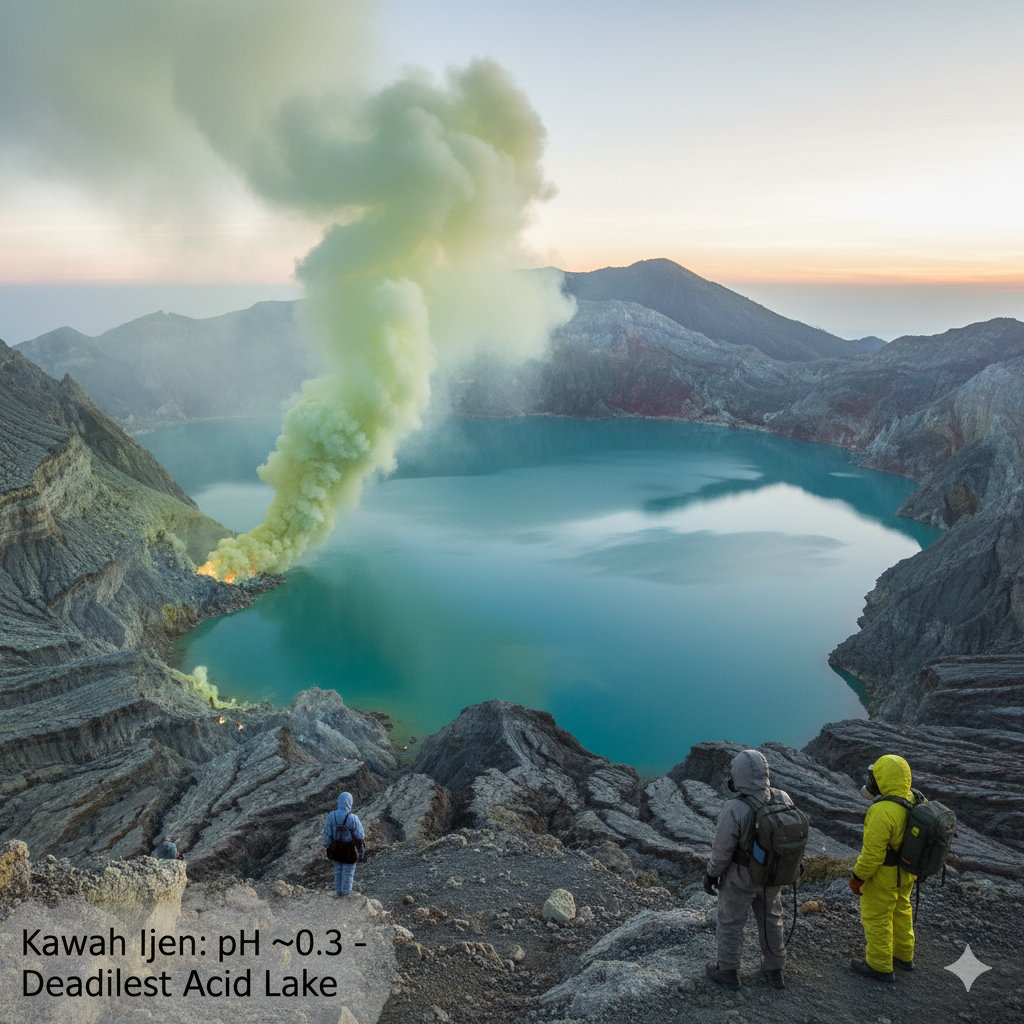
- It’s the most acidic lake on Earth, with a pH of near 0.3.
- The water is filled with dissolved sulfuric and hydrochloric acids.
- The lake emits thick clouds of toxic gas, making it one of the most dangerous places to stand unprotected.
The lake’s surreal color comes from the acid interacting with volcanic minerals, creating an otherworldly turquoise hue that contrasts dramatically with the dark volcanic rocks.
The Science Behind the Blue Fire
The blue flames of Kawah Ijen are a result of combustion, not molten rock.
When sulfuric gas ignites, it burns with a pure blue flame due to the specific wavelengths of light emitted during combustion.
In daytime, the flames are invisible against sunlight — but at night, they glow brilliantly, turning the landscape into a glowing alien world.
The blue fire can sometimes last for hours, continuously fed by the volcano’s gas emissions.
The Human Side: Sulfur Miners of Kawah Ijen
While the blue flames attract tourists, for locals, Kawah Ijen is not a wonder — it’s a workplace.
Hundreds of miners climb into the crater daily, harvesting solidified sulfur from the volcano’s vents.
They use primitive tools, often without proper protection, carrying loads of up to 90 kilograms (200 pounds) of sulfur up steep slopes for just a few dollars a day.
Despite the risk — toxic gases, unstable terrain, and extreme heat — they return every day.
Their endurance and courage make them some of the toughest workers in the world.
Night Tours – Witnessing the Blue Fire
Tourists from around the world travel to Kawah Ijen specifically to see the blue fire phenomenon.
Guided treks begin around midnight, allowing visitors to reach the crater by 2–3 a.m. — the perfect time to witness the glowing blue flames before sunrise.
What to Expect:
- A steep 3 km (1.8 mile) hike up the mountain
- A descent into the crater (with a mask due to gas)
- Watching blue flames flicker and dance in the darkness
When the sun rises, travelers are rewarded with the breathtaking sight of the acid lake shimmering under morning light — a perfect contrast between danger and beauty.
Why It’s So Rare
Kawah Ijen is the only volcano on Earth where blue fire can be seen so vividly and in such large quantities.
Similar chemical reactions happen in smaller forms at other volcanic sites, but none produce the intensity and scale found in East Java.
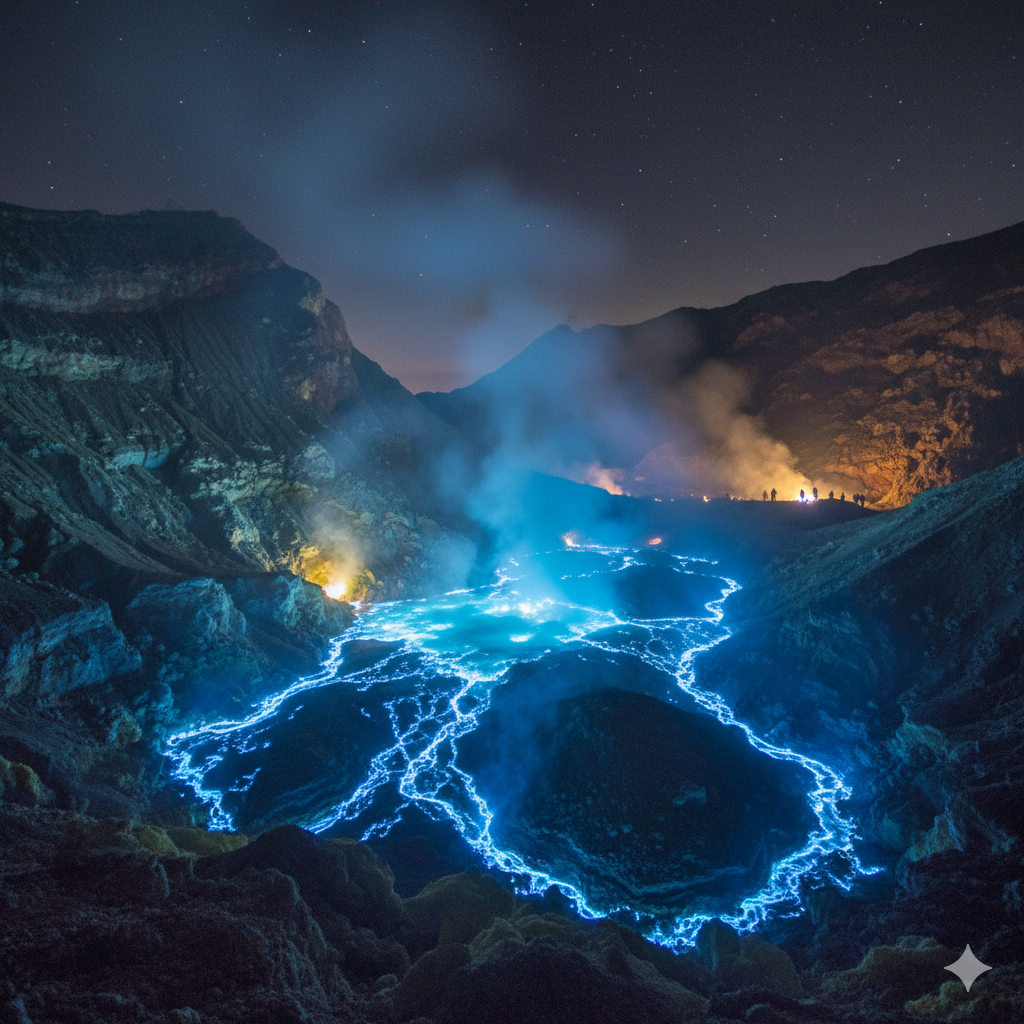
The phenomenon requires:
- Extremely high sulfur content
- Perfect oxygen exposure
- A combination of heat and airflow
It’s the only known place where all three conditions align perfectly — making Kawah Ijen a true one-of-a-kind wonder.
Travel Guide: Visiting Kawah Ijen Volcano
Getting There
- Nearest cities: Banyuwangi (East Java) or Bondowoso
- Closest airports: Banyuwangi International Airport (BWX) or Surabaya (SUB)
How to Visit
You can join a guided tour or rent a driver from Banyuwangi.
Most tours include gas masks, transport, and guidance into the crater.
What to Bring
- Gas mask or respirator (mandatory for crater entry)
- Sturdy shoes and warm clothes
- Flashlight or headlamp
- Water and snacks
Safety and Conservation
Kawah Ijen’s beauty hides real dangers:
- Toxic sulfur gases can cause respiratory damage.
- Acid rain can corrode gear and irritate skin.
- Landslides and heat bursts are occasional risks.
To protect both visitors and miners, authorities now limit the number of people allowed in the crater at one time and require local guides for all tours.
Environmental organizations are also working to support safer mining practices and provide equipment to workers.
Kawah Ijen in Popular Culture
The Blue Lava Volcano has captured the world’s imagination:
- Featured in National Geographic, BBC Earth, and Netflix documentaries.
- Photographers call it “the jewel of Java.”
- Filmmakers use it as a symbol of nature’s beauty and brutality.
Its surreal visuals have inspired countless artists, travelers, and scientists — each finding a different meaning in its electric glow.
Source:
Bonus: Why the World Is Obsessed with “Fire That’s Blue”
Humans are naturally drawn to contradiction — and Kawah Ijen embodies that perfectly.
It’s a place where:
- Fire meets water
- Beauty meets danger
- Creation meets destruction
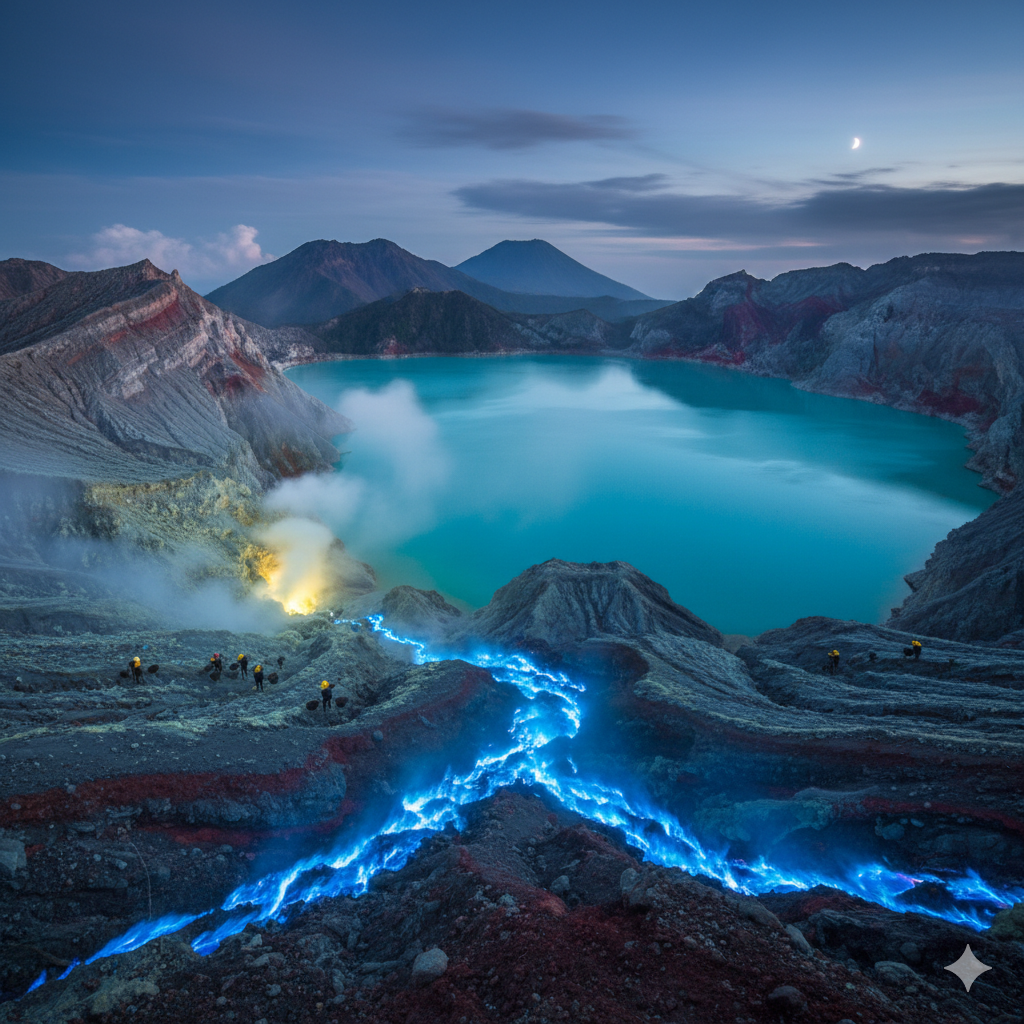
In a world full of red-orange volcanoes, a blue-burning mountain feels like Earth showing off — a reminder of how much mystery still lives within our planet.
Check Also: Top 10 Fascinating Facts About the Narrowest Street in Prague – Can You Fit In?
FAQs
1. Is the blue lava real lava?
No — it’s burning sulfur gas that creates the illusion of blue lava.
2. Where is Kawah Ijen volcano located?
In East Java, Indonesia, near the town of Banyuwangi.
3. Can you see the blue fire during the day?
No, it’s visible only at night when the flames contrast against darkness.
4. Is it safe to visit Kawah Ijen?
Yes, with a certified guide and gas mask — but always follow safety rules.
5. Why does the volcano emit so much sulfur?
Because Kawah Ijen sits on a highly active geothermal system with sulfur-rich magma.
Traveler: Where Fire Turns Blue and Beauty Defies Fear
The Blue Lava Volcano of Kawah Ijen is more than a geological oddity — it’s a living paradox.
It burns with impossible color, breathes toxic air, and yet draws people from around the world to witness its rare beauty.
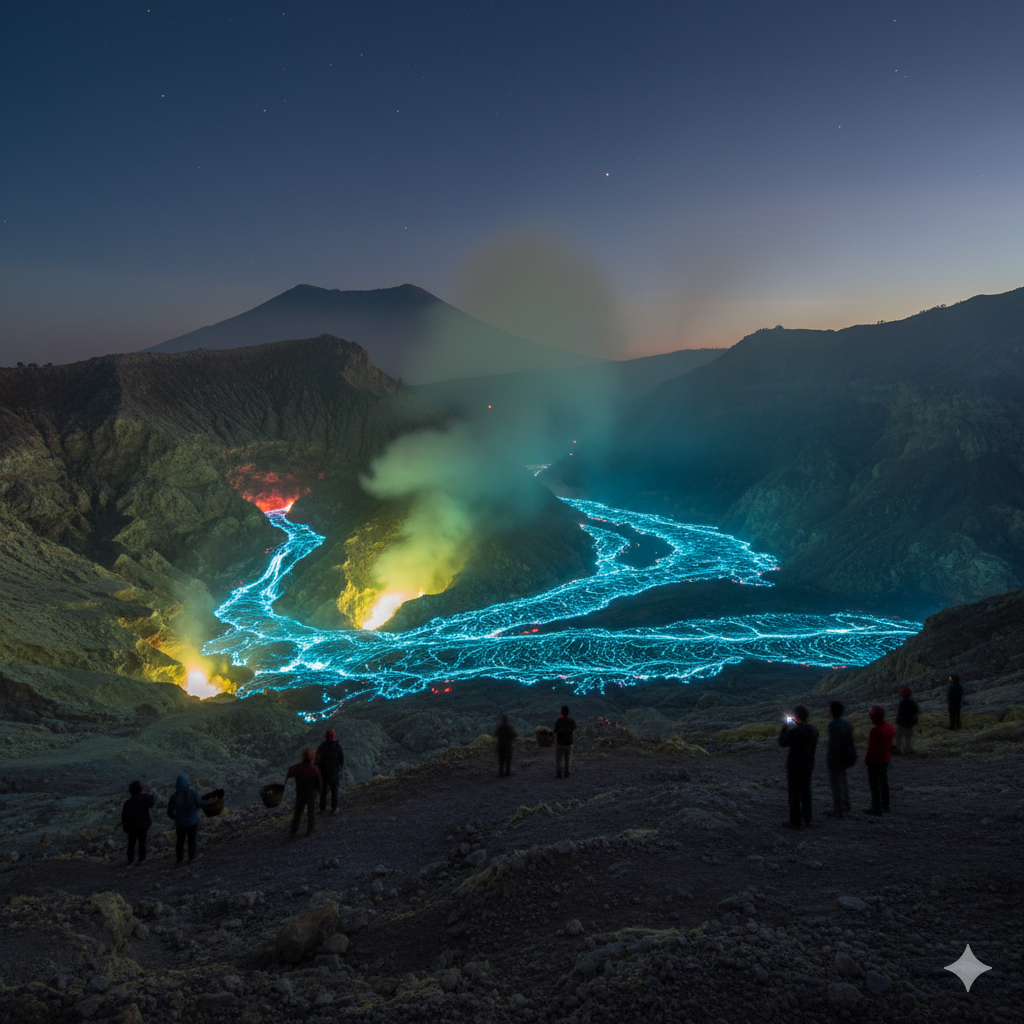
Every flicker of blue flame tells a story of science, survival, and awe — a testament to both nature’s artistry and human resilience.
If you ever find yourself in Indonesia, make the midnight trek.
Stand before the glowing crater and watch the impossible come alive.
Because at Kawah Ijen, fire doesn’t burn red — it burns blue.