

Where Nature Builds What Humans Can’t
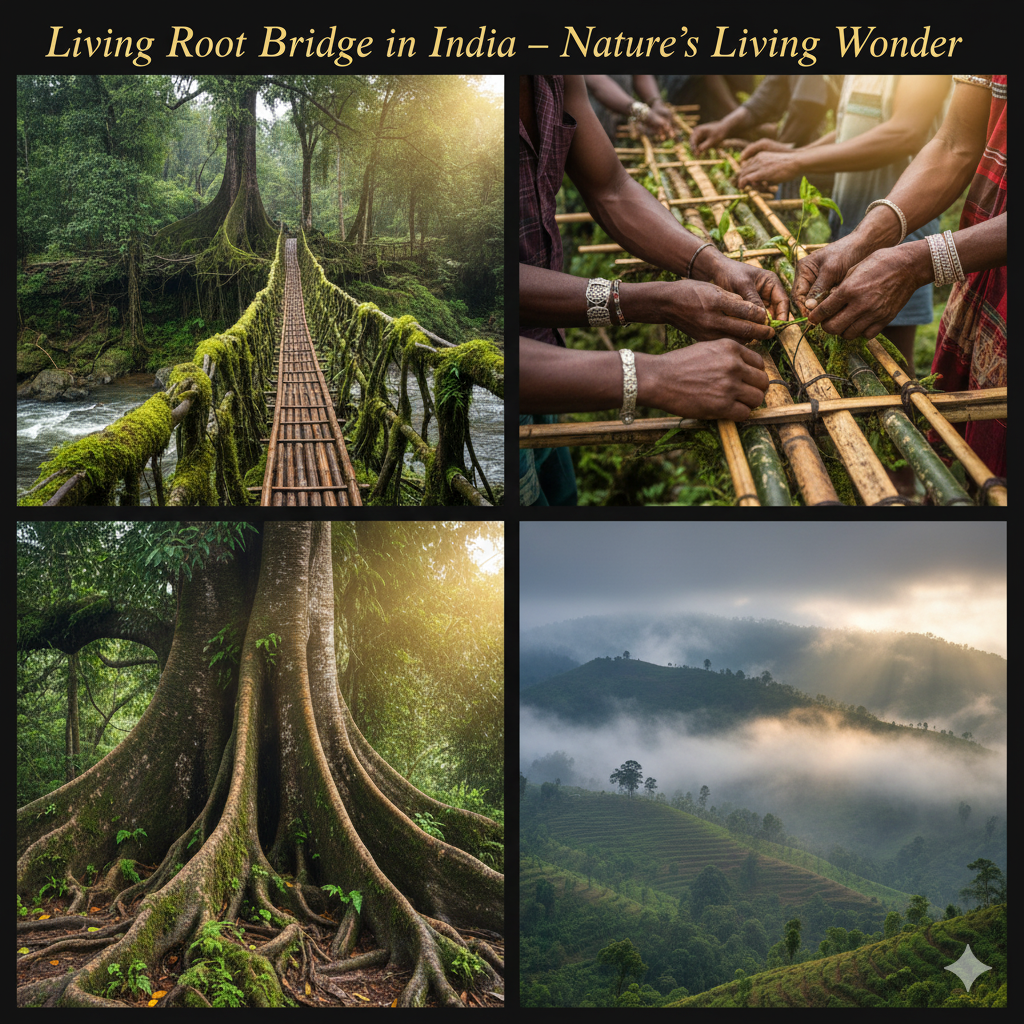
In the lush green heart of Meghalaya, India, where rain often paints the air silver and clouds kiss the treetops, lies one of the most extraordinary wonders on Earth — the Living Root Bridges.
Unlike steel or stone, these bridges are alive. Twisted roots of ancient rubber trees have been patiently guided by generations of Khasi villagers to form natural pathways across rivers and ravines. It’s as if Mother Nature herself decided to show humanity how sustainable engineering truly looks.
For travelers, standing on a Living Root Bridge feels surreal — like stepping into a dream woven by time, patience, and the rhythm of rain.
Why These Living Bridges Amaze the World
The Living Root Bridges of Meghalaya aren’t just structures — they’re living, breathing ecosystems. Found primarily in Cherrapunji (Sohra) and Nongriat, these bridges are crafted from the aerial roots of the Ficus elastica tree (rubber fig tree).
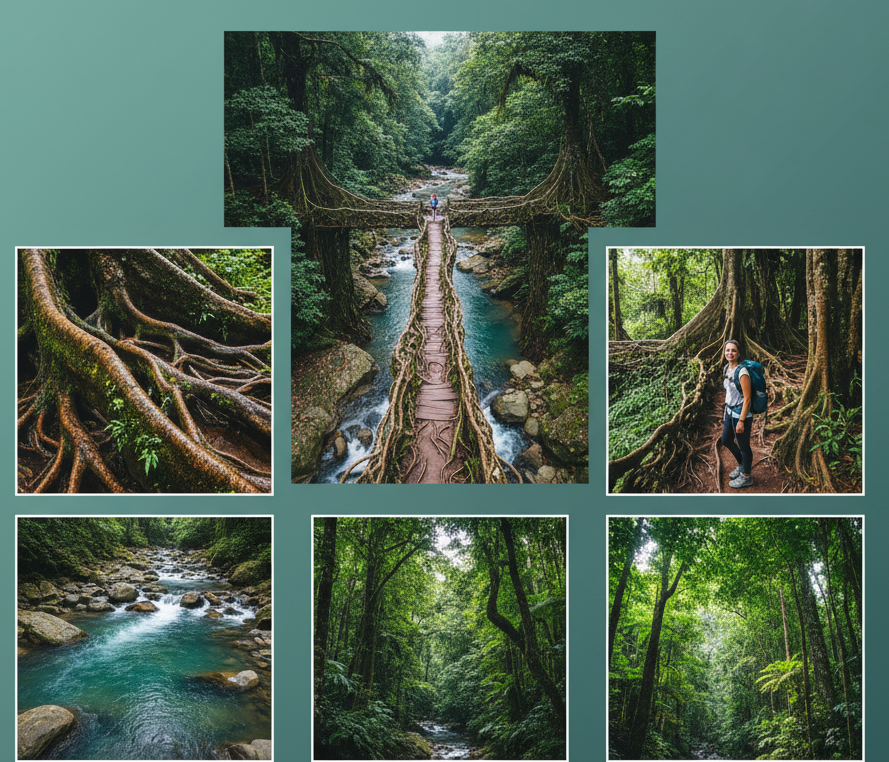
Locals gently manipulate the roots to grow over riverbanks and bamboo scaffolds. Over decades, the roots intertwine and strengthen, forming a bridge that can last for hundreds of years.
A Bridge That Grows Stronger with Time
Unlike conventional bridges that decay, Living Root Bridges get stronger with age. Some are believed to be over 500 years old — still functional and resilient against torrential monsoon rains.
Cherrapunji’s Double Decker Marvel
The Double Decker Living Root Bridge in Nongriat village is a must-visit masterpiece. It’s two bridges stacked vertically — an awe-inspiring example of nature’s architecture that you can literally walk on.
Eco-Engineering at Its Finest
These bridges are the ultimate example of sustainable design — no concrete, no nails, and zero carbon footprint. Every inch of the bridge is crafted from living material that adapts and grows stronger naturally.
How the Khasi Tribe Crafted Nature’s Architecture
The origins of these root bridges trace back centuries to the Khasi and Jaintia tribes of Meghalaya. Faced with rugged terrain and overflowing rivers, the locals needed reliable ways to cross during monsoon seasons.
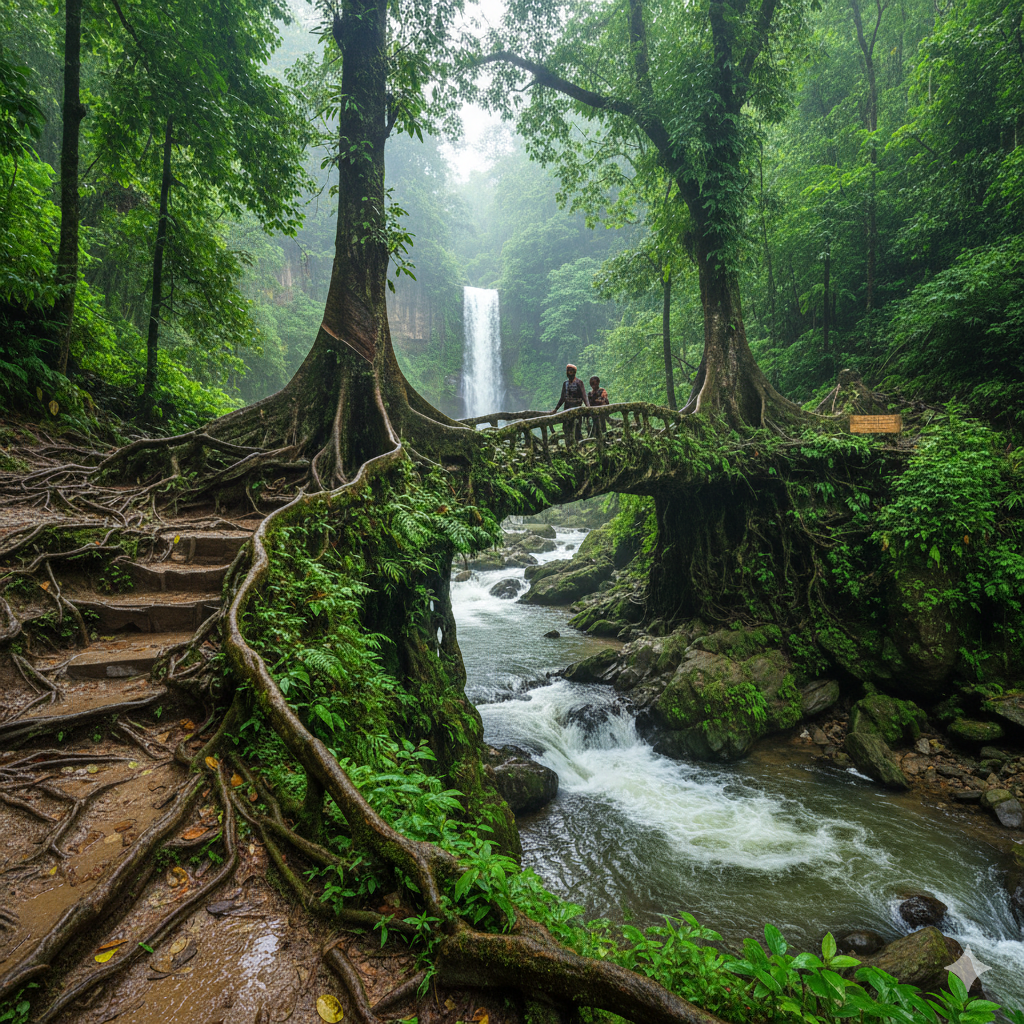
Instead of fighting nature, they decided to grow their bridges using the roots of the Ficus elastica tree, known for its strength and flexibility.
Each bridge took decades to mature — an effort spanning generations. Grandparents would start a bridge knowing their grandchildren might be the ones to walk across it.
This deep intergenerational bond symbolizes the Khasi philosophy:
“Ka Mei Ramew” — Respect and coexist with Mother Nature.
Today, these bridges stand as living testimonies of indigenous wisdom and ecological harmony.
The Science and Spirituality Behind the Living Root Bridges
What makes these bridges truly enchanting is the mystery that surrounds them. How do they remain so resilient in one of the wettest places on Earth?
Biologists reveal that the aerial roots contain a high concentration of lignin and cellulose, allowing them to resist rot and flex with the flow of water.
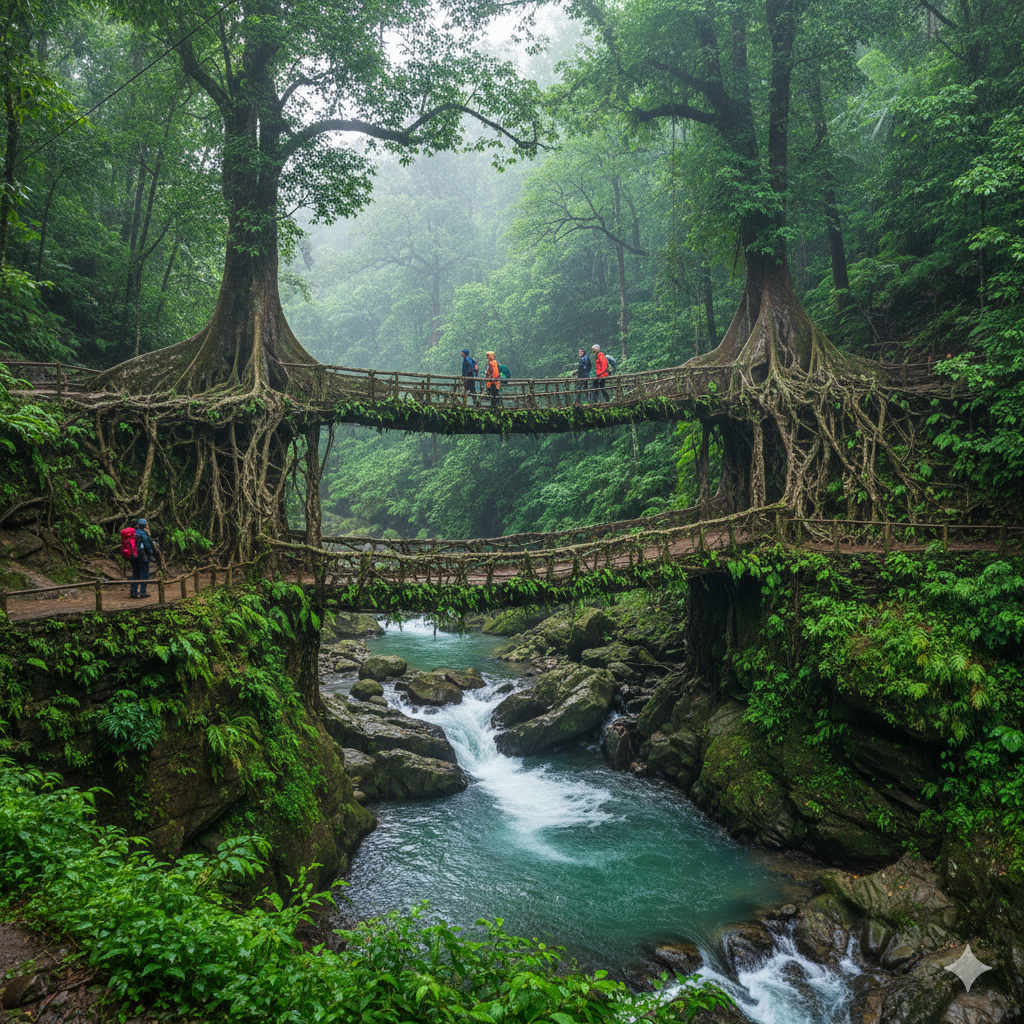
But for the Khasi people, there’s also a spiritual side. The bridges are considered sacred, believed to hold the spirit of the forest. Locals avoid cutting or damaging them, performing small rituals of gratitude before crossing during festivals.
The bridges’ ethereal beauty — especially when covered in moss and mist — adds to their legendary aura, making them look almost otherworldly.
How to Reach the Living Root Bridges of Meghalaya
Reaching these living marvels is an adventure in itself.
Nearest City: Shillong (approx. 80 km away)
Nearest Major Attraction: Cherrapunji (Sohra)

Step-by-Step Route:
- Fly into Guwahati Airport (Assam) — the nearest major airport (170 km from Cherrapunji).
- Hire a Taxi or Shared Cab — drive to Shillong (approx. 3 hours).
- Continue from Shillong to Cherrapunji — a scenic 2-hour journey through misty hills.
- Trek to Nongriat Village — the Double Decker Living Root Bridge is a 3,500-step downhill trek (around 1.5–2 hours).
Tip: Start early and wear trekking shoes. The stairs can be slippery during monsoon.
Tickets & Fees
- Entry Fee (Nongriat Double Decker Bridge): ₹20–₹50 per person
- Camera Fee: ₹50–₹100 (depending on local guides)
- Local Guide Fee: ₹300–₹600 (optional but recommended for first-time visitors)

Guided tours are available in Shillong and Cherrapunji, which often include visits to nearby waterfalls like Nohkalikai and Seven Sisters Falls.
Best Time to Visit the Living Root Bridges
While Meghalaya’s beauty is year-round, the ideal time to visit is:
- October to April – Clear skies, pleasant weather, and perfect trekking conditions.
- Avoid June–September – Monsoon season makes the trails slippery, though the greenery is spectacular for photographers.
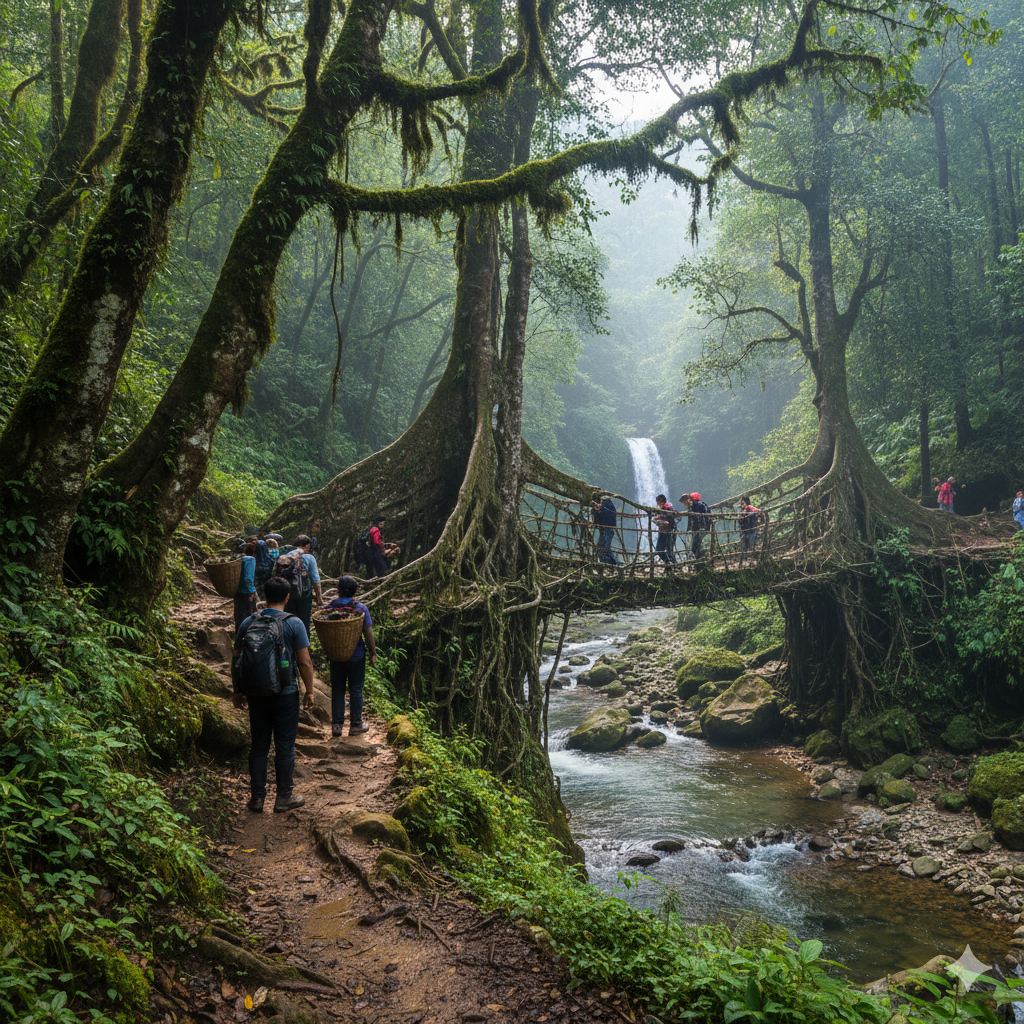
For the most breathtaking experience, visit early morning when the bridges are shrouded in mist and sunlight filters through the jungle canopy.
Source:
Hidden Gems Around the Living Root Bridges
Beyond Nongriat, there are lesser-known root bridges worth exploring:
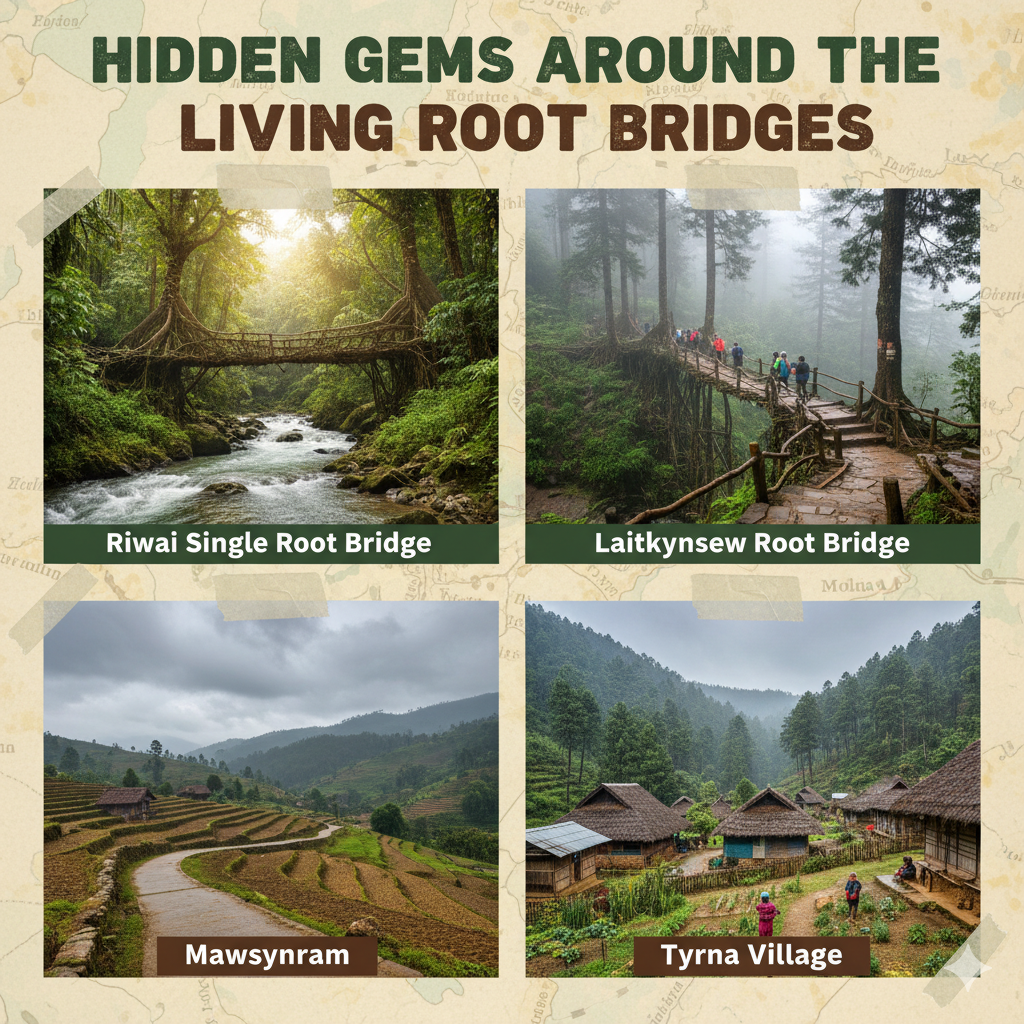
- Riwai Single Root Bridge – near Mawlynnong (Asia’s Cleanest Village).
- Laitkynsew Root Bridge – less crowded and surrounded by untouched rainforest.
- Mawsynram – the wettest place on Earth, filled with natural limestone formations.
- Tyrna Village – starting point of many hidden hiking trails.
Pro Tip: Combine your visit with a short homestay in a Khasi village to experience authentic local life.
Local Talk & Tips from the Khasi Community
When you speak with the locals, you’ll notice one common theme: deep respect for the forest. The Khasi people see themselves as guardians, not owners, of the land.
Local Tips:
- Always ask before taking photos of locals or rituals.
- Avoid plucking leaves or roots — the ecosystem is fragile.
- Carry your own water bottles and don’t litter — sustainability is sacred here.
A local elder once said, “The forest listens. Treat it kindly, and it will carry you safely.”
Local Food Experiences Near the Living Root Bridges
After a long trek, Meghalaya’s cuisine is pure comfort for the soul.

Must-Try Local Dishes:
- Jadoh – Khasi-style rice with meat, often pork or chicken.
- Dohneiiong – Pork cooked in black sesame paste.
- Tungrymbai – Fermented soybean delicacy.
- Pumaloi – Steamed rice flour cake served with local curry.
- Red Tea with Wild Honey – Refreshing and energizing after a hike.
Nearby villages like Nongriat and Tyrna have small homestays offering organic farm-to-table meals, often made with forest-grown ingredients.
Traveler: A Living Symbol of Harmony Between Humanity and Nature
The Living Root Bridges of Meghalaya are more than tourist attractions — they are philosophies in living form. They remind us that progress doesn’t have to come at nature’s expense.
In every twisting root lies a lesson in patience, unity, and sustainability. These bridges teach us that true architecture doesn’t always need to be built — sometimes, it can be grown.
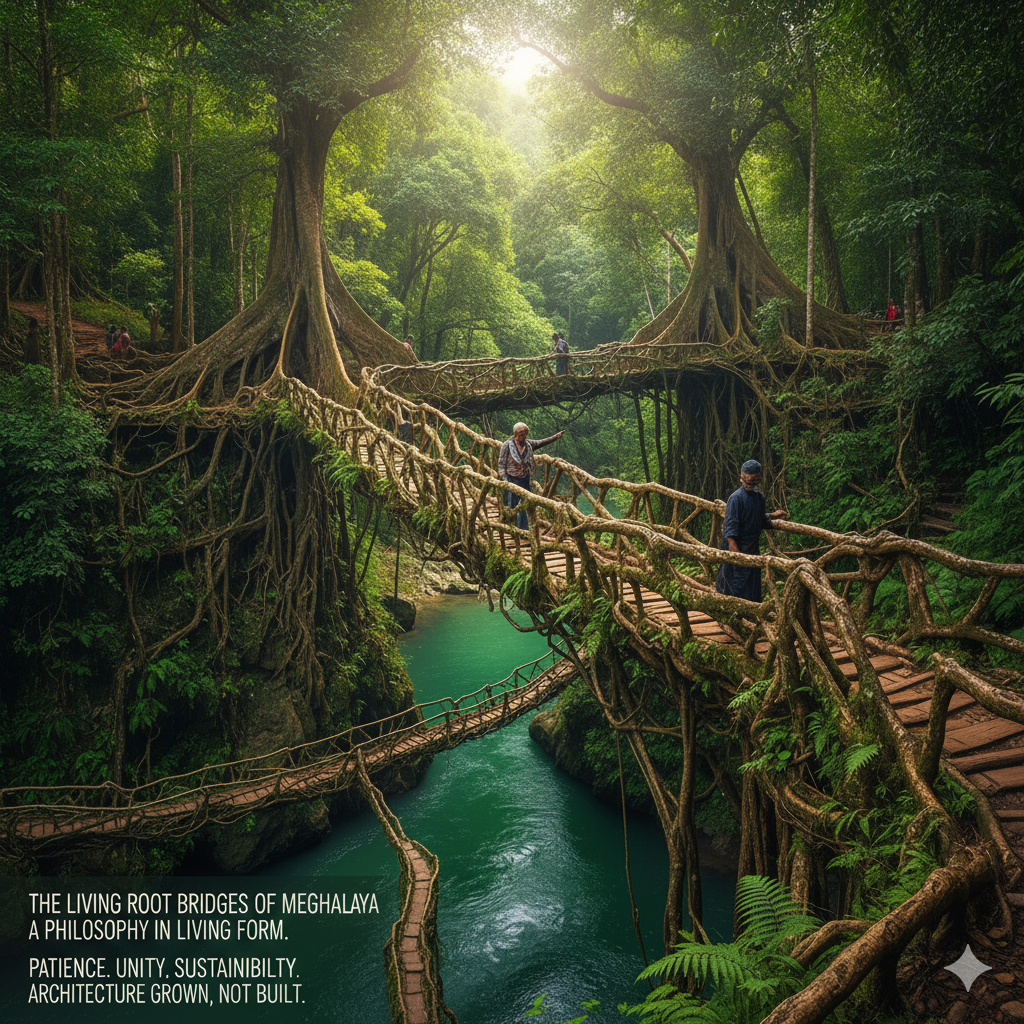
If you listen closely while standing on one of these ancient bridges, you might just hear the whisper of the forest saying —
“Slow down. Grow with me.”
Check Also: 7 Incredible Facts About the Glass Skywalk Grand Canyon – Walk on Air
FAQs About the Living Root Bridges
1. Where are the Living Root Bridges located?
They’re found in Meghalaya, India — primarily in Cherrapunji, Nongriat, and Mawlynnong regions.
2. How old are the Living Root Bridges?
Some bridges are estimated to be between 150–500 years old.
3. Can you walk on the Double Decker Root Bridge?
Yes, visitors can walk and photograph the bridge, but heavy crowds are discouraged to preserve it.
4. Is a guide necessary to visit the bridges?
Not mandatory, but local guides enhance your experience with stories and safe routes.
5. Are the bridges part of UNESCO Heritage?
They are on India’s tentative list for UNESCO World Heritage Sites, recognized for cultural and ecological importance.