
When the Earth Decides to Breathe Thunder
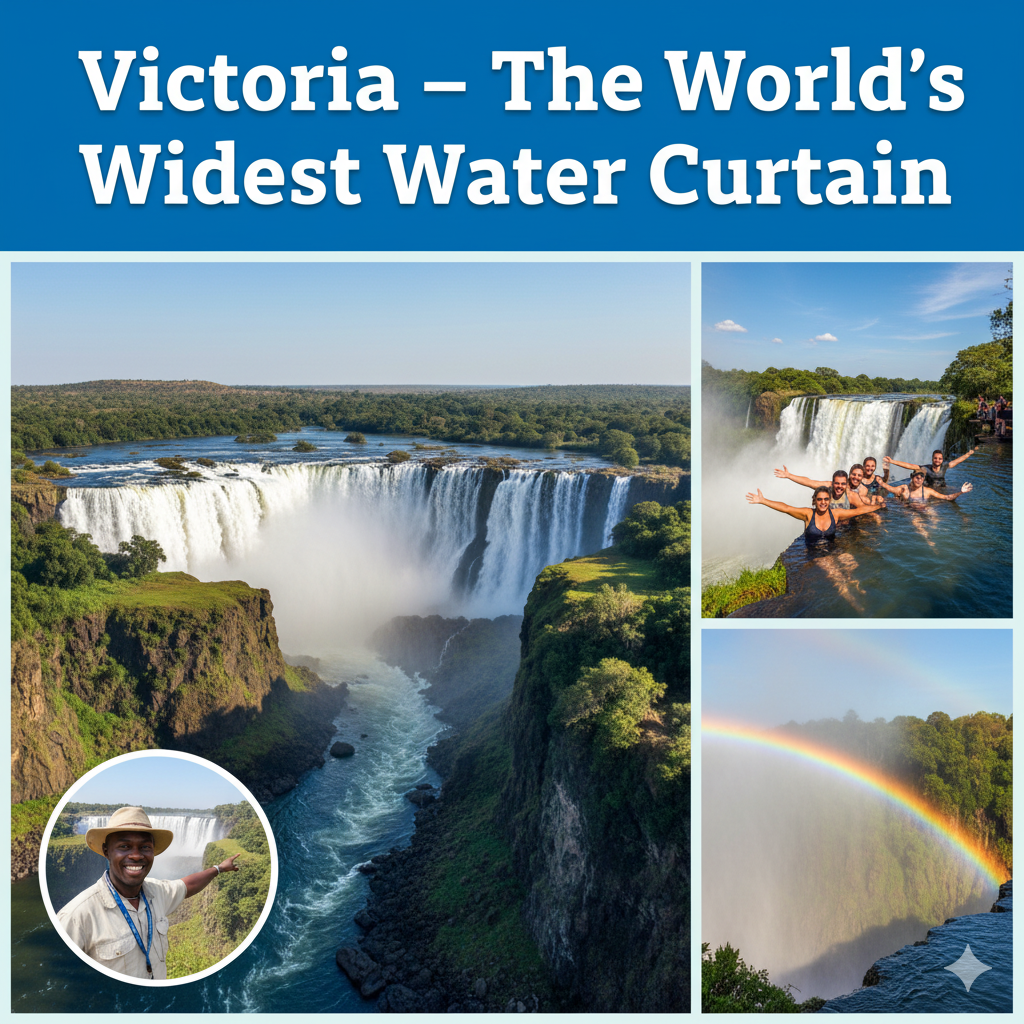
Imagine standing at the edge of a canyon so vast that your voice gets lost in its echo — and before you lies a curtain of water so immense it seems to dissolve into clouds. Welcome to Victoria Falls, known locally as “Mosi-oa-Tunya” — The Smoke That Thunders.
Straddling the border between Zambia and Zimbabwe, Victoria Falls isn’t just the world’s widest waterfall — it’s an explosion of nature’s power, elegance, and energy. The roar is so mighty it can be heard from 40 kilometers away, and the mist rises like ghostly breath into the African sky.
For centuries, this roaring curtain has captivated explorers, spiritual seekers, and thrill-chasers. And when you stand there, soaked in mist, you’ll understand why.
Why Victoria Falls Is Called the World’s Widest Water Curtain
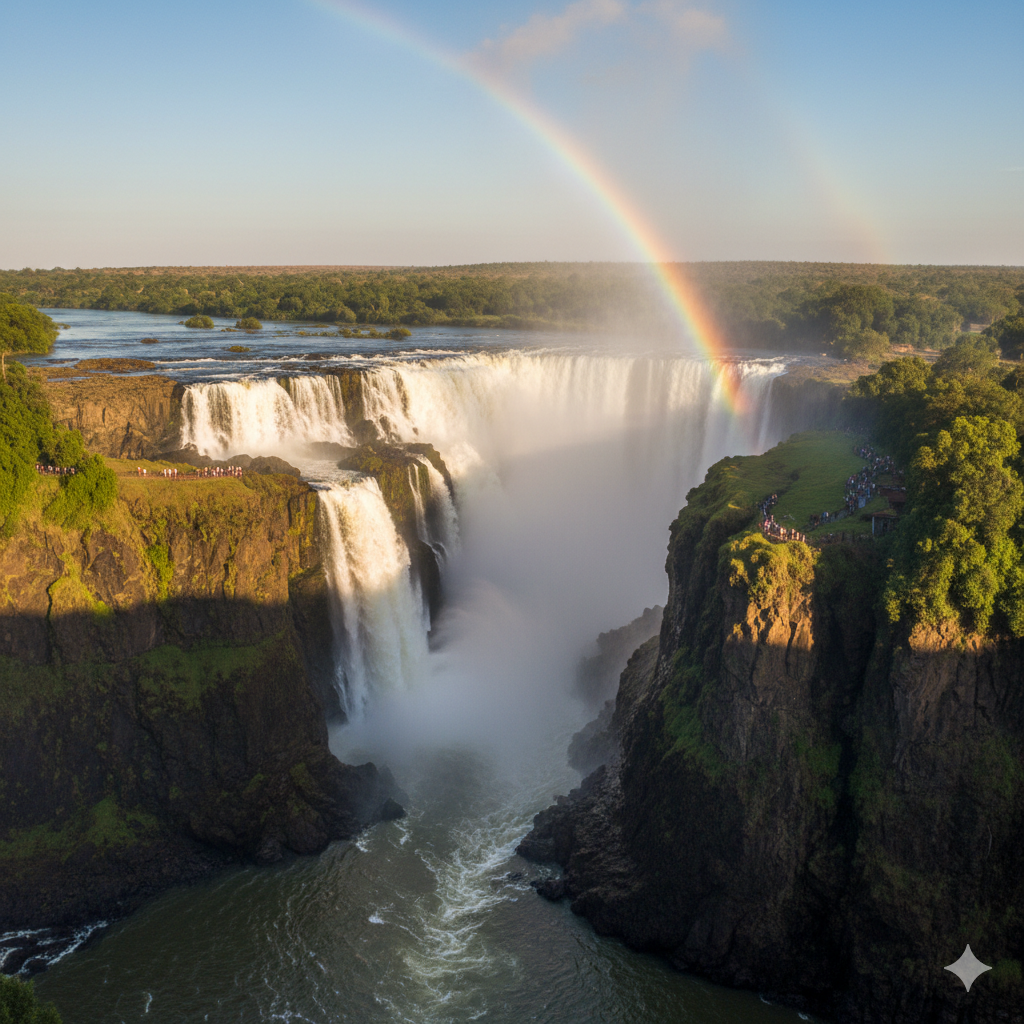
Unlike most waterfalls, Victoria Falls doesn’t drop in a single cascade — it spans an incredible 1.7 kilometers (1 mile) across, with a vertical plunge of 108 meters (354 feet) into the Zambezi Gorge.
This makes it the largest curtain of falling water on Earth, a natural amphitheater of thunder and mist.
The Smoke That Thunders
The indigenous Kololo people named it Mosi-oa-Tunya, meaning The Smoke That Thunders. The “smoke” refers to the towering mist clouds, visible from over 20 kilometers away, while the “thunder” is the deafening sound of millions of liters of water crashing every second.
A Place Where Rainbows Never Sleep
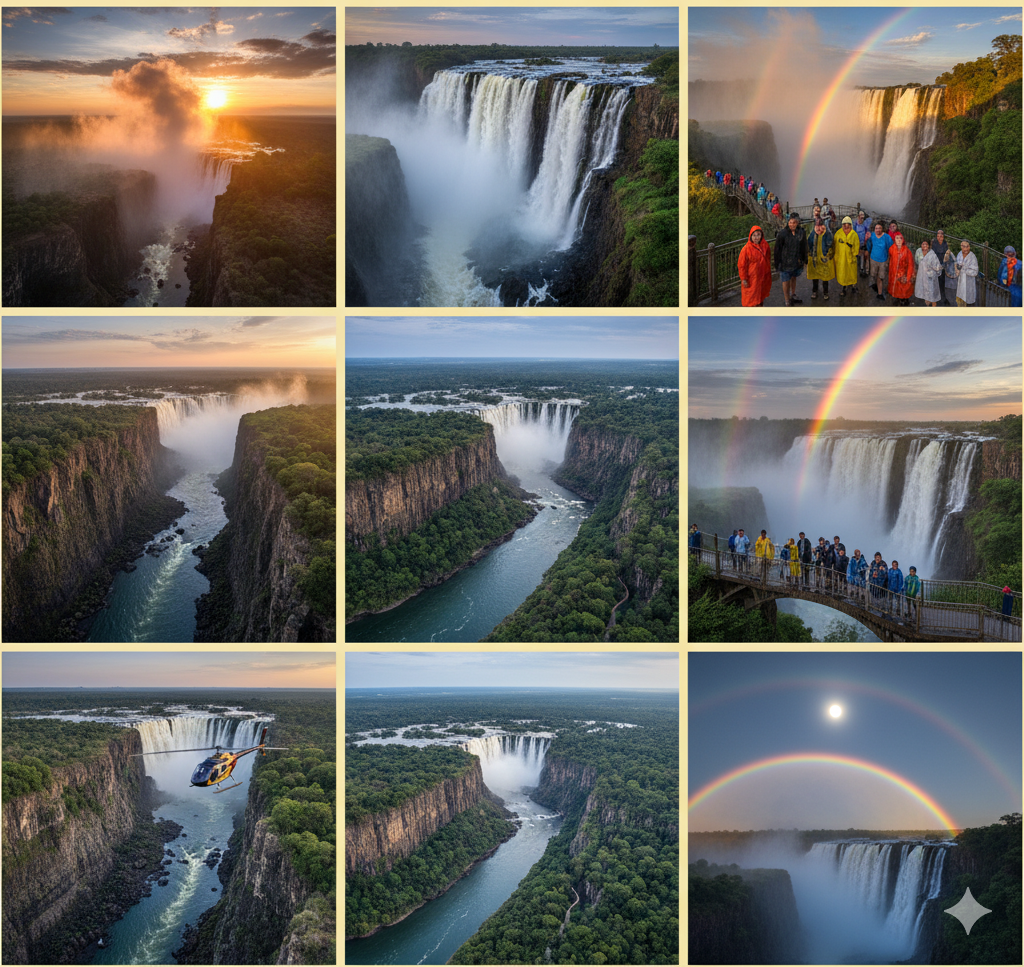
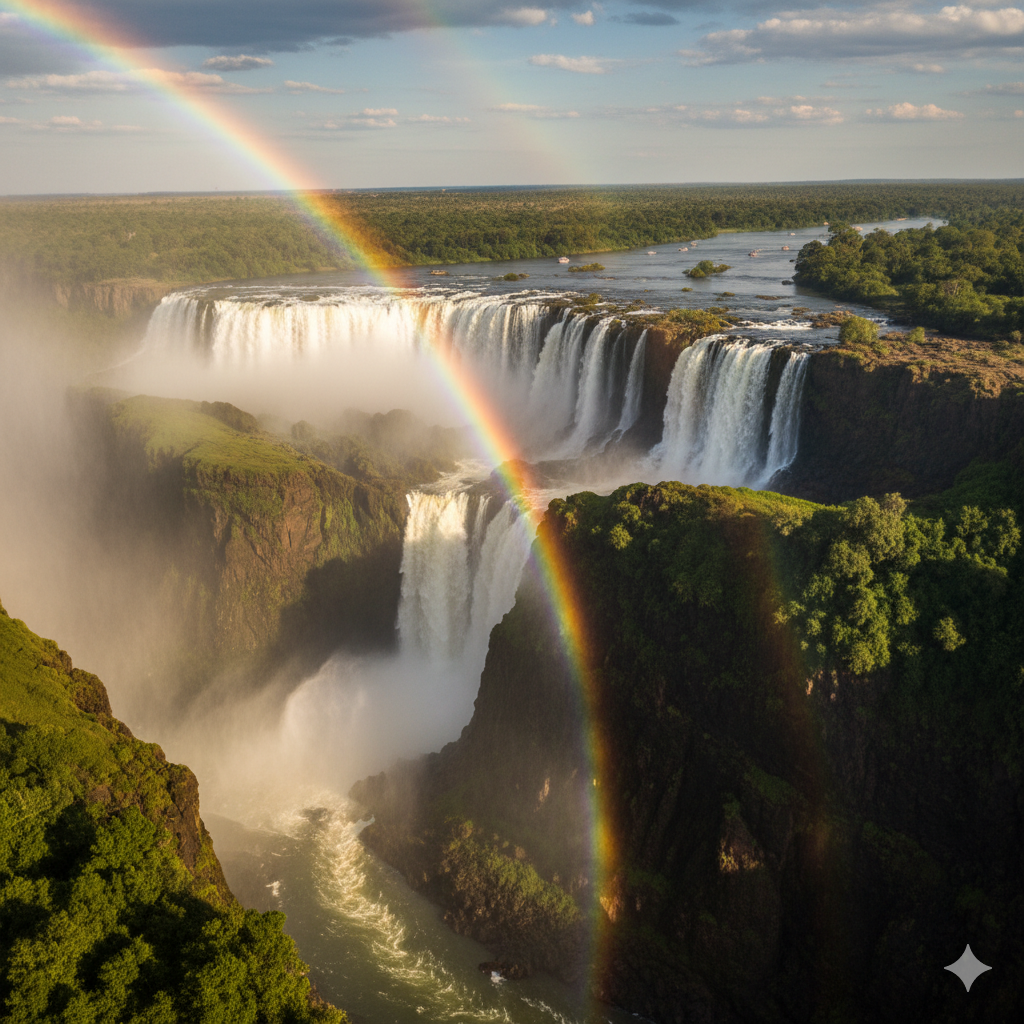
Stand anywhere near the Falls, and you’ll see constant double rainbows formed by the fine mist refracting sunlight. During full moon nights, visitors can witness a rare “moonbow” — a lunar rainbow glowing over the misty gorge.
Shared by Two Nations
Victoria Falls is shared between Zimbabwe (western side) and Zambia (eastern side). Both countries offer distinct views:
- Zimbabwe provides panoramic vistas and access to multiple viewpoints.
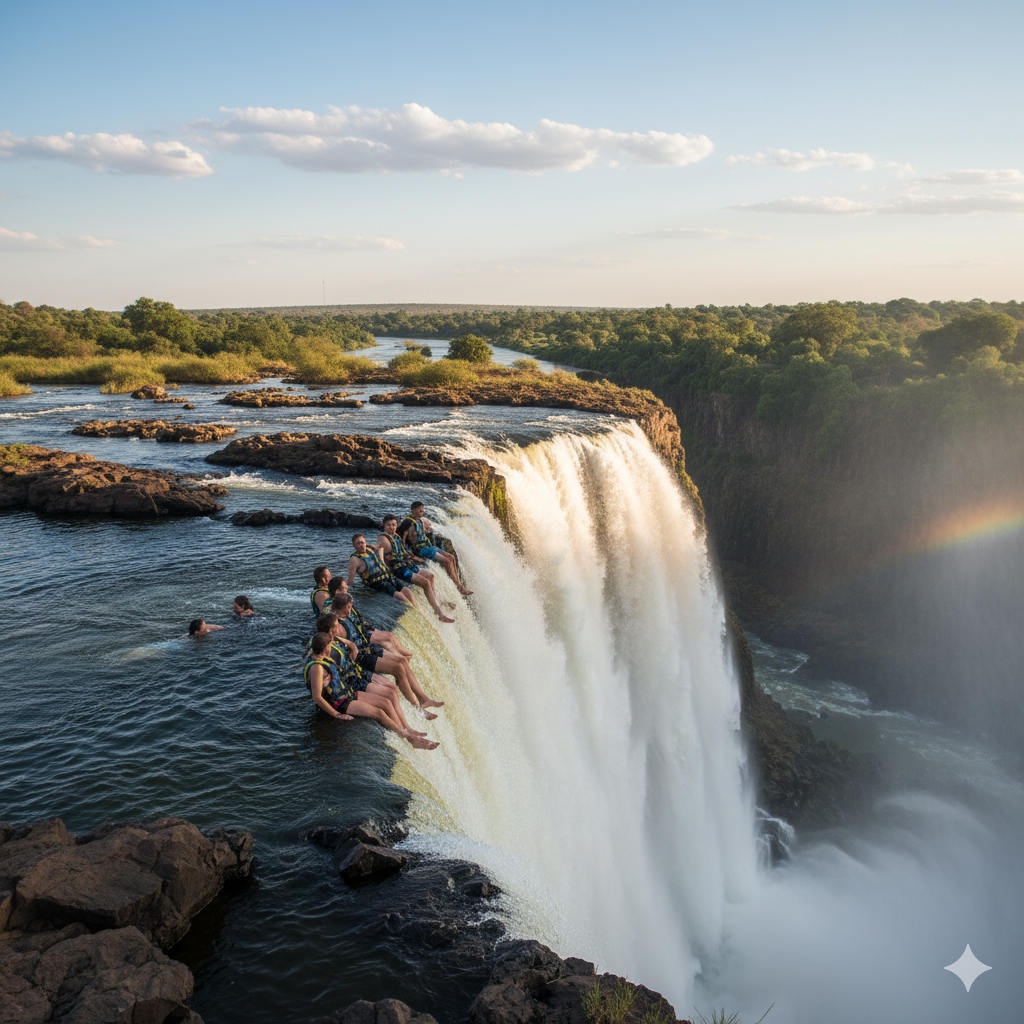
- Zambia offers adventurous experiences, like the Devil’s Pool, where you can swim at the edge of the world.
From Sacred Land to World Heritage Wonder
Long before European explorers arrived, Victoria Falls was sacred ground for local tribes. The Toka-Leya and Kololo people revered it as the dwelling of Nyaminyami, the River God — a serpent spirit believed to control the Zambezi River’s moods.
In 1855, the Scottish explorer Dr. David Livingstone became the first European to record the Falls. He named it “Victoria Falls” in honor of Queen Victoria. His famous words still echo through time:
“Scenes so lovely must have been gazed upon by angels in their flight.”
The Falls quickly became a symbol of exploration and wonder, attracting scientists, artists, and travelers from every continent.
In 1989, Victoria Falls was declared a UNESCO World Heritage Site, recognizing both its geological importance and its cultural heritage.
Legends, Myths & Nature’s Power
The Legend of Nyaminyami – The River Spirit
Locals tell stories of Nyaminyami, a serpent deity who guards the Zambezi River. When the Kariba Dam was built downstream in the 1950s, floods destroyed the project multiple times — locals believed it was Nyaminyami’s fury for disturbing his home.
The Moonbow Phenomenon
During full moons, the mist creates lunar rainbows, visible to the naked eye — a phenomenon found in only a few places on Earth. The locals say these moonbows are the spirits of ancestors dancing in the mist.
Geological Wonder
Geologists explain that Victoria Falls has been carving its way through basalt rock for over 100,000 years, creating eight zig-zagging gorges. Every few millennia, the waterfall recedes, leaving behind another scar in the Earth’s crust — proof of time’s relentless artistry.
How to Reach Victoria Falls
Victoria Falls is accessible from both Zimbabwe and Zambia, and travelers can easily cross between the two countries using a KAZA Univisa.
By Air:
- Victoria Falls Airport (Zimbabwe) – 20 minutes from the Falls.
- Harry Mwanga Nkumbula Airport (Livingstone, Zambia) – 30 minutes from the Falls.
From Major Cities:
- From Harare (Zimbabwe): 9-hour drive or 1-hour flight.
- From Lusaka (Zambia): 7-hour drive or 1-hour flight.
On Foot:
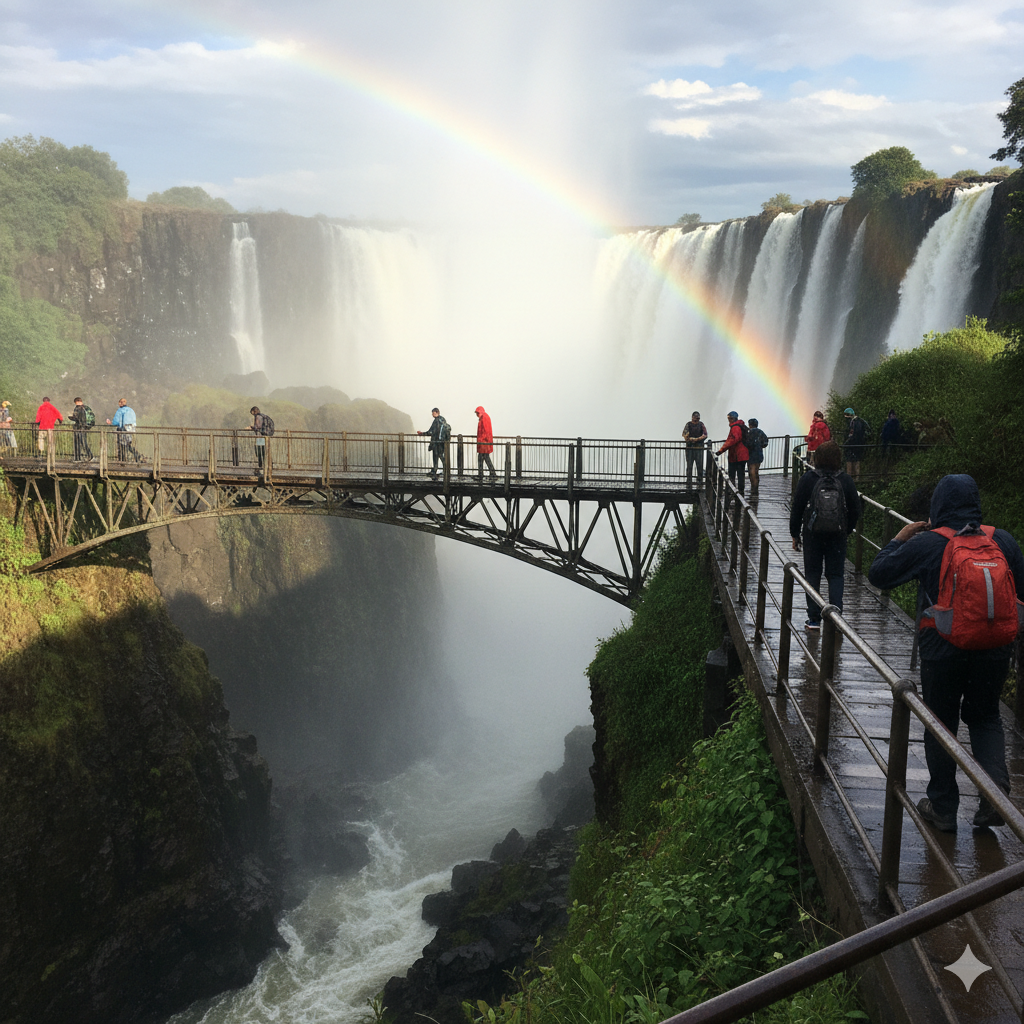
You can walk across the Victoria Falls Bridge that connects Zambia and Zimbabwe, with breathtaking mid-air views of the gorge.
Tip: Carry your passport if you plan to cross between both sides for photography or adventure activities.
Tickets & Fees
| Country | Adult Entry Fee | Child Entry Fee | Camera Fee | Visa Info |
|---|---|---|---|---|
| Zimbabwe | $30 USD | $15 USD | Free | Available on arrival |
| Zambia | $20 USD | $10 USD | Free | KAZA Univisa recommended |
Optional Adventures:
- Helicopter “Flight of Angels” – $150–$180
- Bungee Jump (Victoria Bridge) – $120
- Devil’s Pool Swim (Seasonal) – $100
- Zambezi River Rafting – $90–$130
KAZA Univisa allows access to both Zimbabwe and Zambia sides for $50, valid for 30 days.
Check Also: 7 Magical Secrets of the Island That Glows at Night – Maldives Starry Beach
Best Time to Visit Victoria Falls
The experience of Victoria Falls changes with the seasons, and each period has its magic.
High Water Season (February–May)
- Peak volume of water — thunderous roar and heavy mist.
- Ideal for photographers who love raw power.
- Some viewpoints may be obscured by spray.
Low Water Season (September–December)
- Water levels drop, revealing rock formations and deeper gorges.
- Perfect for Devil’s Pool, bungee jumps, and clear photography.
Best Overall Time: April to June — the perfect balance between flow, clarity, and rainbows.
Hidden Gems Around Victoria Falls
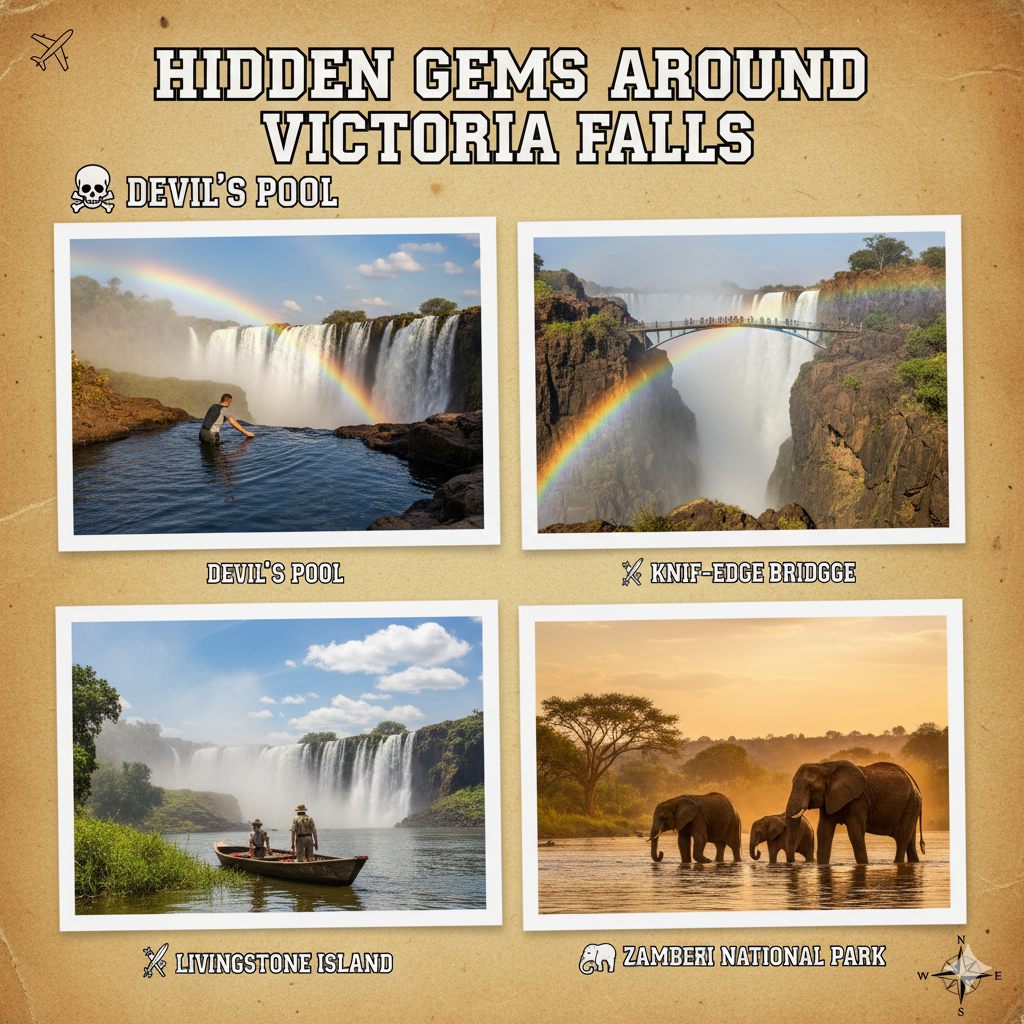
Devil’s Pool
Located on the Zambian side, this natural infinity pool forms at the very edge of the falls — where you can peer 100 meters straight down while swimming safely during low-water months.
Knife-Edge Bridge
Offers the most dramatic frontal view of the main falls and rainbows during the morning light.
Livingstone Island
Named after the explorer, it’s where he first viewed the falls. Accessible by boat tours during the dry season.
Zambezi National Park
Home to elephants, hippos, crocodiles, and over 400 bird species — a safari adventure minutes away from the falls.
Local Talk & Tips from Zambian & Zimbabwean Guides
- Best Photo Time: Early morning or late afternoon for golden light and misty rainbows.
- Protect Your Gear: The mist can soak cameras; use waterproof covers.
- Respect Local Beliefs: Nyaminyami is still deeply respected — avoid mocking myths.
- Stay Hydrated: Tropical humidity and heat can be intense, especially on the Zambia side.
- Currency: Both USD and local Kwacha/Dollar are widely accepted.
A local guide once said:
“At the Falls, we don’t shout to be heard — we listen to understand thunder.”
Source:
- Official Victoria Falls Tourism Website
- UNESCO World Heritage Listing – Mosi-oa-Tunya / Victoria Falls
Local Food Experiences
The regions around Victoria Falls are rich with flavor and culture. Whether dining in luxury or eating street food, every bite carries the warmth of Africa.
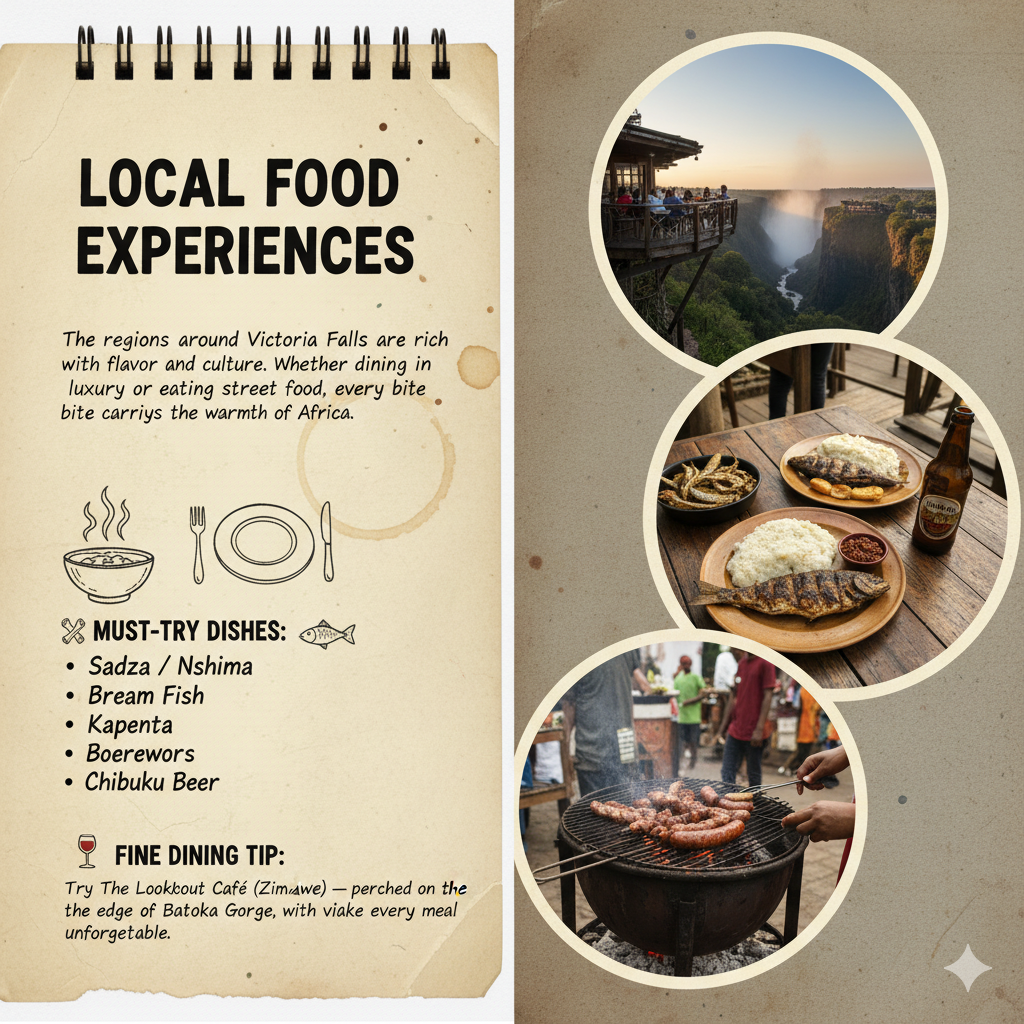
Must-Try Dishes:
- Sadza / Nshima – Staple maize meal served with meat or vegetable relish.
- Bream Fish – Freshly grilled Zambezi river fish.
- Kapenta – Small dried sardines, deep-fried and crunchy.
- Boerewors – Spicy African sausage popular in both Zambia and Zimbabwe.
- Chibuku Beer – Local fermented drink, served in clay pots.
Fine Dining Tip:
Try The Lookout Café (Zimbabwe side) — perched on the edge of Batoka Gorge, with views that make every meal unforgettable.
Traveler: Where Water Writes Its Own Legend
Victoria Falls is more than a spectacle — it’s a living reminder of nature’s grandeur and humility. The Zambezi River doesn’t just fall; it performs. It roars, glows, and breathes mist into the African sky, like a heartbeat of the Earth itself.
Standing there, drenched in spray, you don’t just see the falls — you feel them. Every drop tells a story of timeless rhythm, power, and beauty.
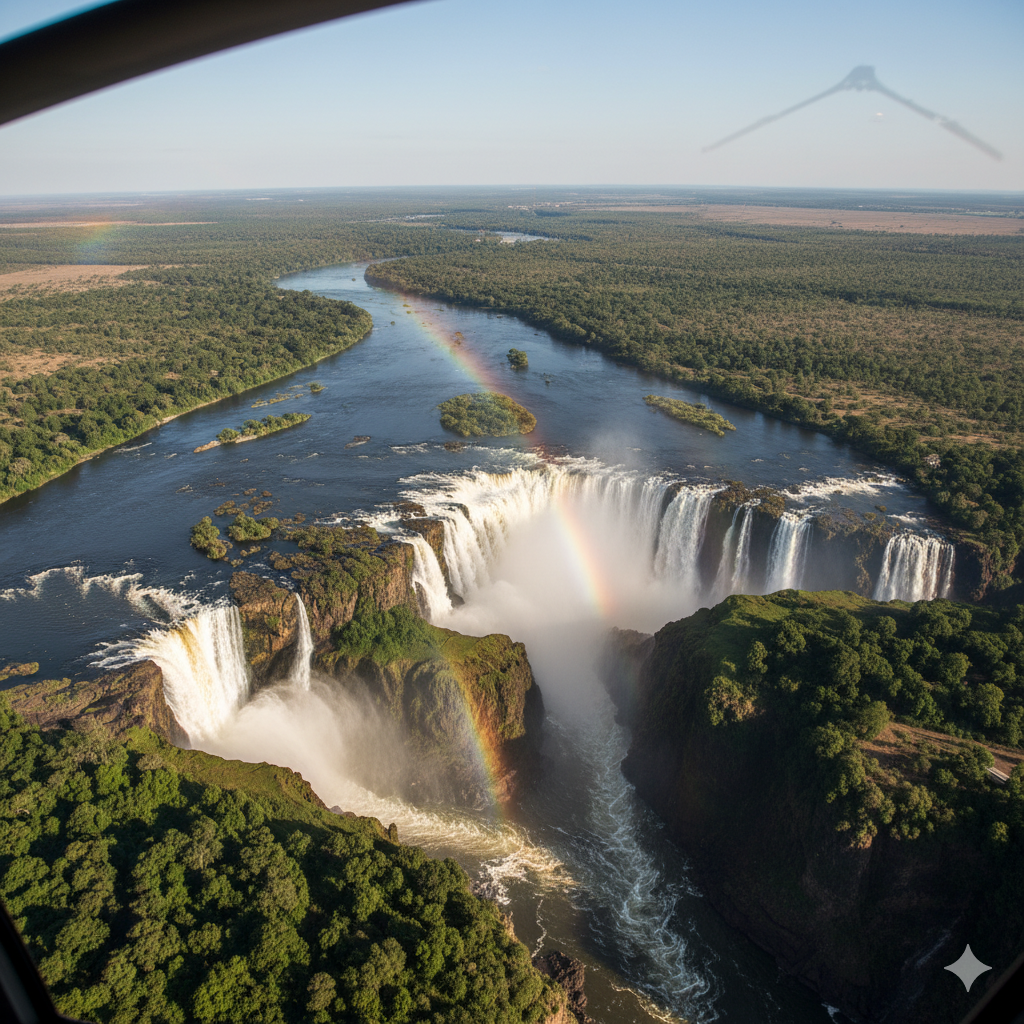
“You arrive at Victoria Falls to witness water.
You leave realizing you’ve witnessed life.”
FAQs About Victoria Falls
1. Where is Victoria Falls located?
Victoria Falls lies on the border between Zambia and Zimbabwe in southern Africa.
2. How tall and wide is Victoria Falls?
It’s approximately 108 meters (354 ft) tall and 1.7 kilometers (1 mile) wide.
3. Can you swim at Victoria Falls?
Yes, at Devil’s Pool on the Zambian side during low-water season (August–December).
4. Is it better to view the Falls from Zimbabwe or Zambia?
Both sides are stunning — Zimbabwe offers wider views, while Zambia provides closer adventure access.
5. Is Victoria Falls a UNESCO site?
Yes, it was designated a UNESCO World Heritage Site in 1989.