
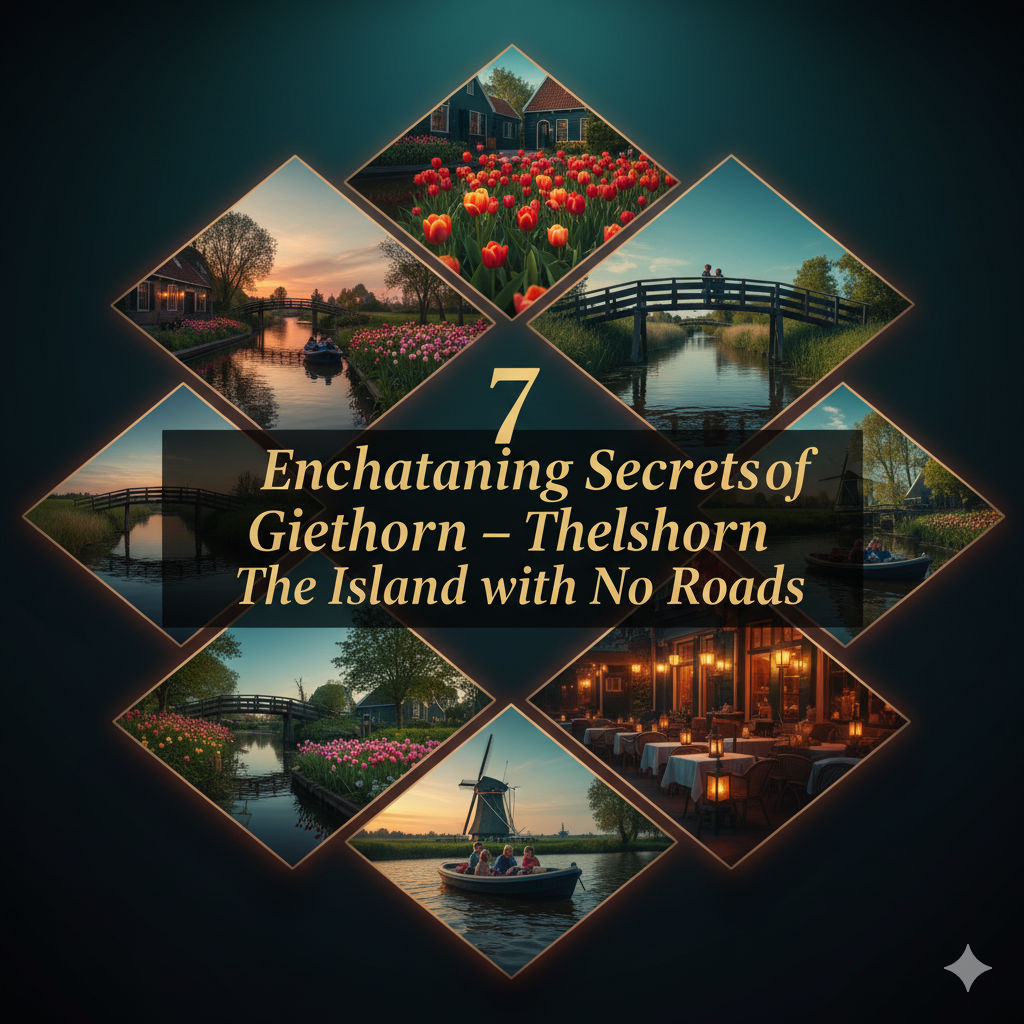

The Dream Village Where Cars Don’t Exist
Imagine a village so peaceful that the loudest sound you’ll hear is the gentle splash of oars in water. Welcome to Giethoorn, often called “the Venice of the North”, a breathtaking village in the Netherlands where there are no roads — only canals, footbridges, and whisper boats gliding past thatched-roof cottages.
In a world that races toward noise and technology, Giethoorn remains frozen in timeless serenity. Here, nature is not just a backdrop — it’s a lifestyle. Locals commute by boat, postmen deliver letters over bridges, and the village glow at sunset feels almost otherworldly.
Why Giethoorn is the World’s Quiet Paradise
Giethoorn sits in the province of Overijssel, surrounded by the Weerribben-Wieden National Park. It’s a patchwork of narrow waterways, lush gardens, and wooden cottages built centuries ago.
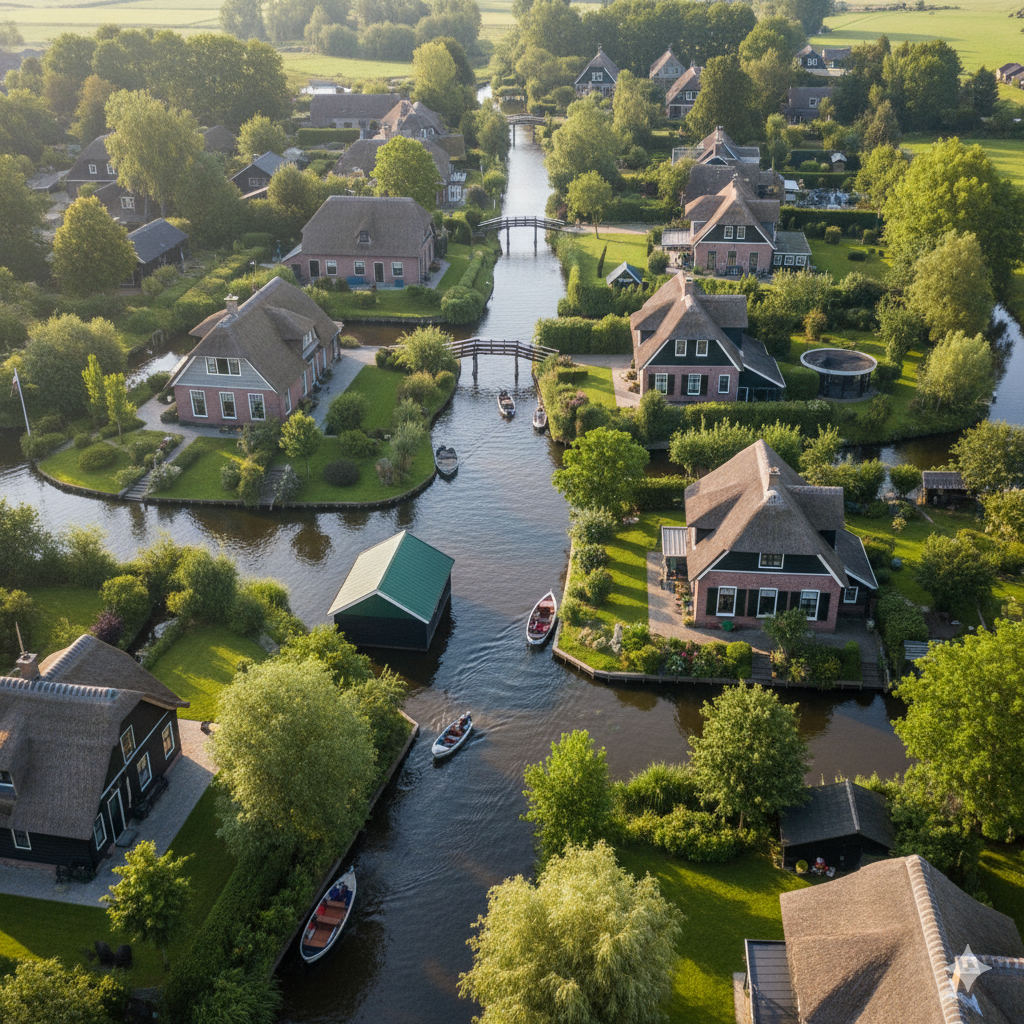
What makes Giethoorn special isn’t just its beauty — it’s the absence of roads. Everything runs through over 180 small wooden bridges and narrow canals.
The Canals of Calm
Boats glide like water lilies between gardens, connecting homes, cafés, and hidden corners. Each ripple in the canal tells a story of a slower, simpler world.
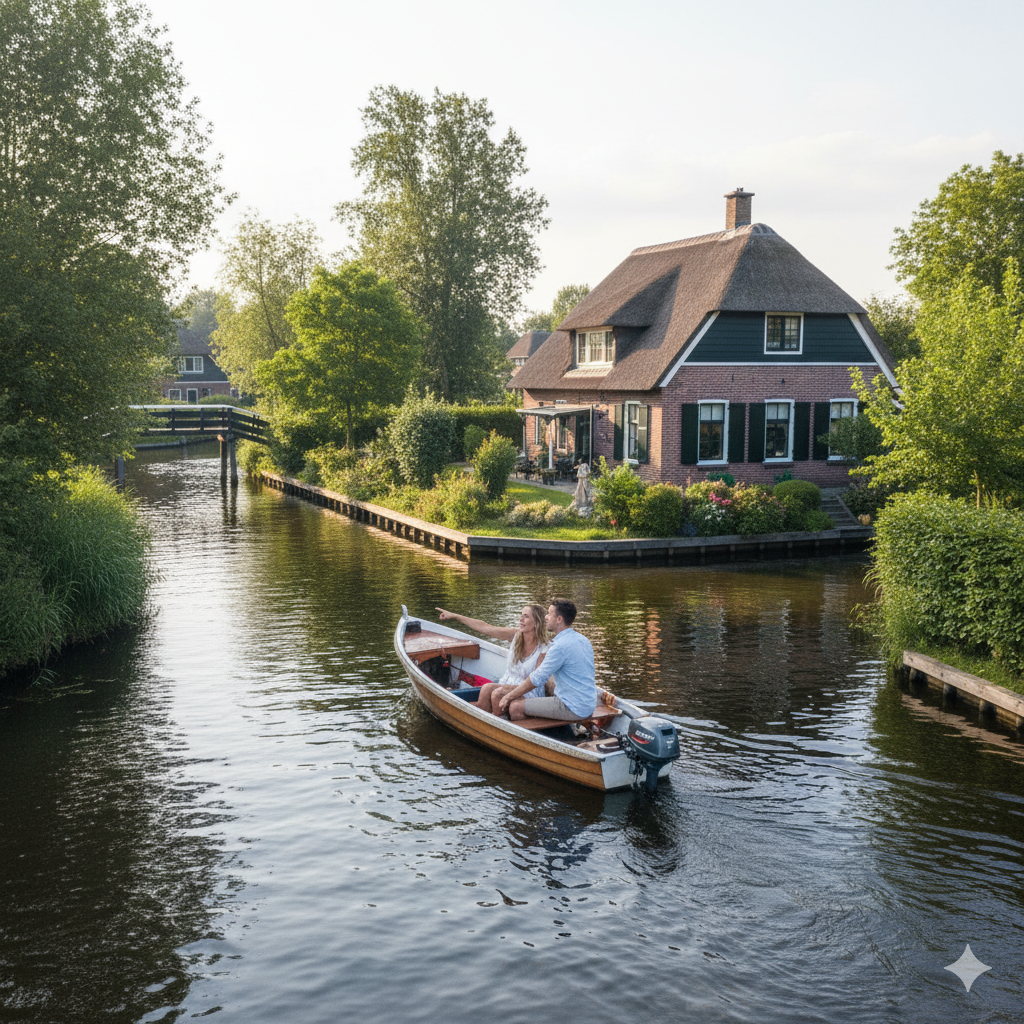
Thatched Dream Houses
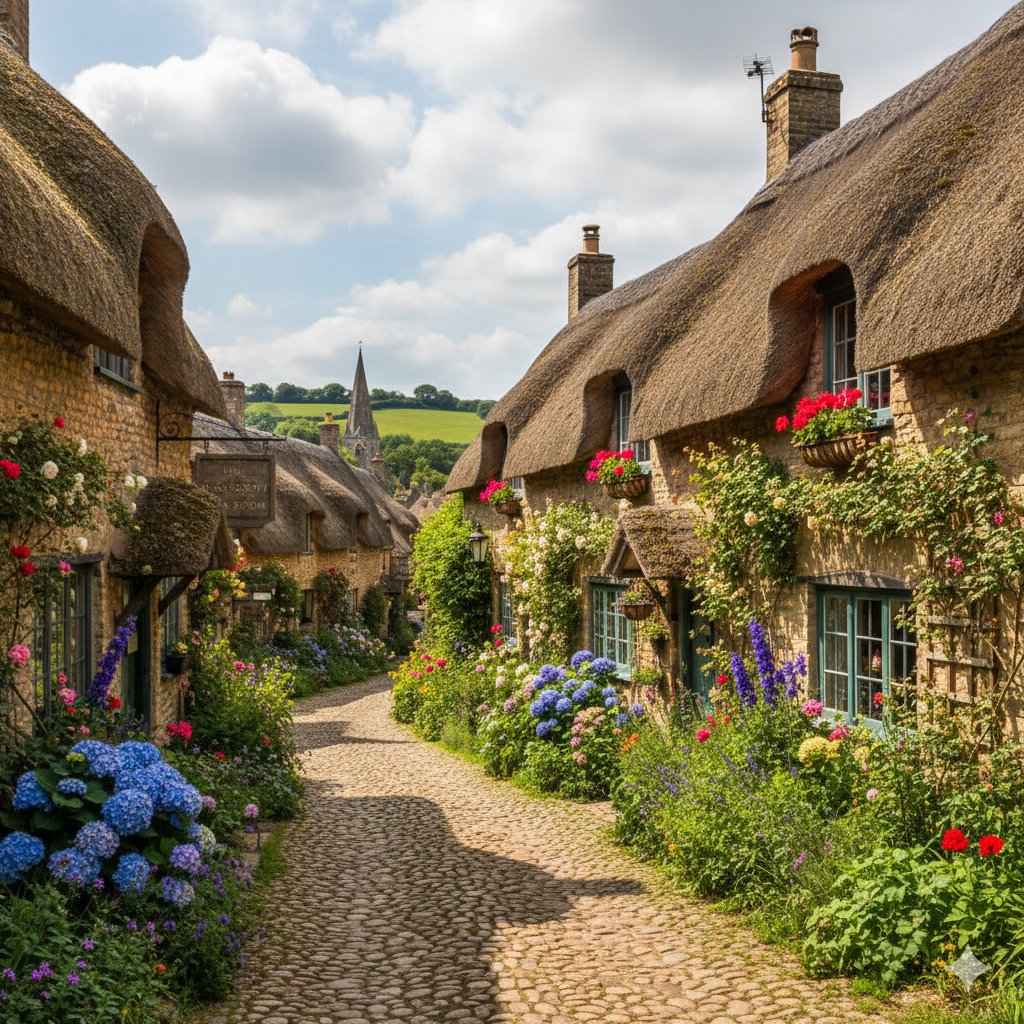
Traditional Dutch houses here have mossy thatched roofs and flower-filled gardens — each one looks like it was painted straight out of a fairytale.
Silence That Heals
The absence of traffic creates an atmosphere so serene, visitors often say it feels “like meditation in motion.”
From Peat Diggers to Fairytale Icons
Giethoorn’s origins date back to the 13th century, when Mediterranean settlers came searching for peat — a fuel source used for heating. The villagers dug up peat deposits, leaving behind deep holes that filled with water, creating the canals we see today.
Over centuries, wooden bridges and cottages were built on the small islands formed between these canals. Locals used small “punters” (flat-bottomed boats) for transport — a tradition that still continues today.
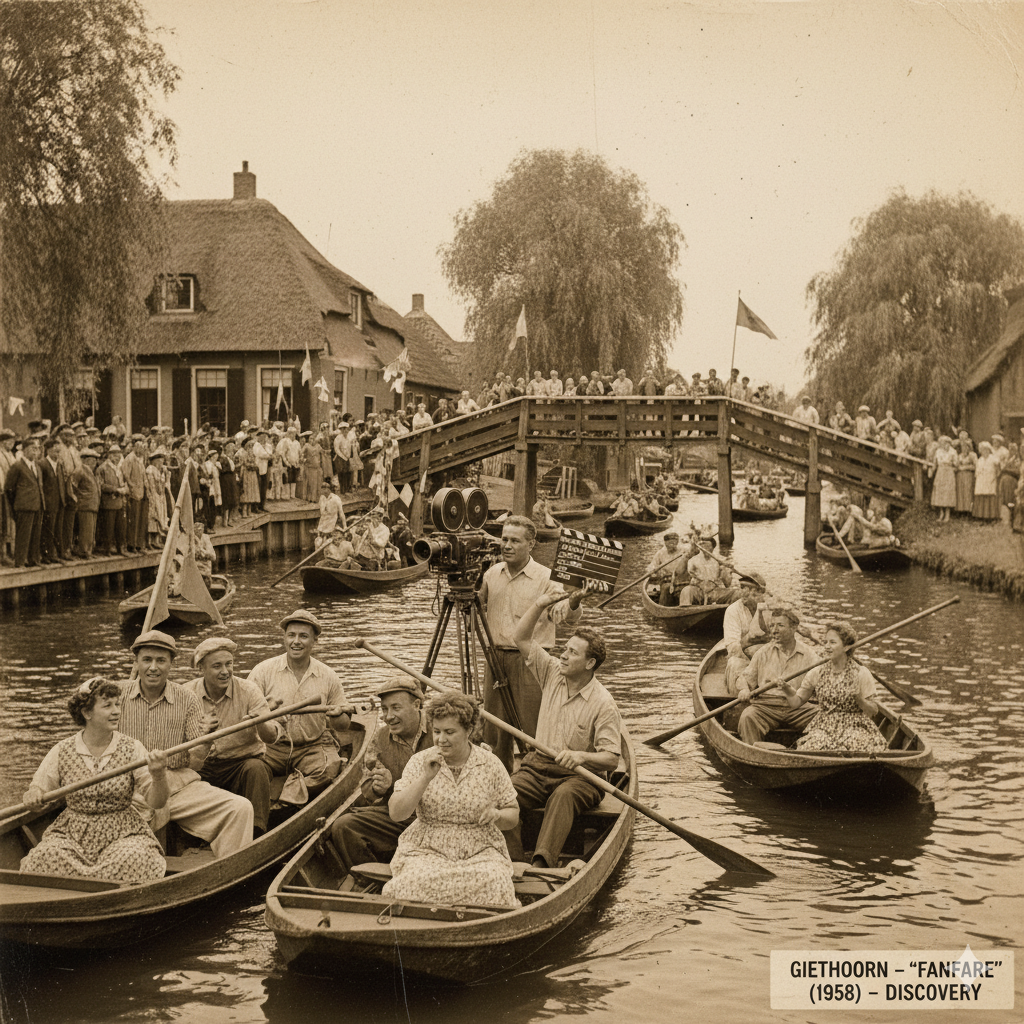
By the mid-20th century, Giethoorn was discovered by artists and filmmakers, and in 1958, it gained global fame through the Dutch movie “Fanfare” by Bert Haanstra.
Today, it’s one of the Netherlands’ most photographed destinations — yet it retains the charm of a hidden village untouched by modernity.
Mystery & Timeless Charm: The Spirit of Still Water
Some locals believe the canals whisper stories at dusk. Travelers often describe a sense of nostalgia and peace here that feels spiritual — as if the village holds the memories of centuries in its still waters.
While there’s no supernatural mystery, Giethoorn’s magic lies in its absence of chaos. It’s a living example of sustainable coexistence — where humans and nature live in perfect harmony.
How to Reach Giethoorn – Step-by-Step Travel Guide
By Air:
- The nearest airport is Amsterdam Schiphol (AMS) — about 120 km away.
- From the airport, take a train to Steenwijk (approx. 1.5 hours).
By Train:
- From Amsterdam Central Station → Steenwijk.
- From Steenwijk → take Bus 70 or a taxi to Giethoorn village.
By Car (Optional for Nearby Visitors):
- Park your car at the village outskirts; only boats or walking allowed inside.
By Tour:
- Many guided tours from Amsterdam, Rotterdam, and Utrecht offer day trips including canal boat rides and lunch.
Tickets, Fees & Entry
Giethoorn itself is free to visit — no entry fee!
However, you may want to budget for:
- Boat rental (2–3 hours): €15–€25
- Guided tour (optional): €30–€50
- Museum entry: €5–€10 per site
Check Also: 7 Breathtaking Secrets of China Cliff Village – Living on the Edge of the World
Best Time to Visit Giethoorn
| Season | What to Expect | Ideal For |
|---|---|---|
| Spring (April–June) | Tulips in bloom, vibrant canals, mild weather | Photography & peace |
| Summer (July–August) | Warm, busier, longer daylight | Family travel & picnics |
| Autumn (Sept–Oct) | Golden foliage reflections on water | Romantic escapes |
| Winter (Nov–Feb) | Frozen canals, cozy fireplaces | Unique photography |
Pro Tip: Visit early morning or late afternoon for golden lighting and fewer tourists.
Hidden Gems of Giethoorn
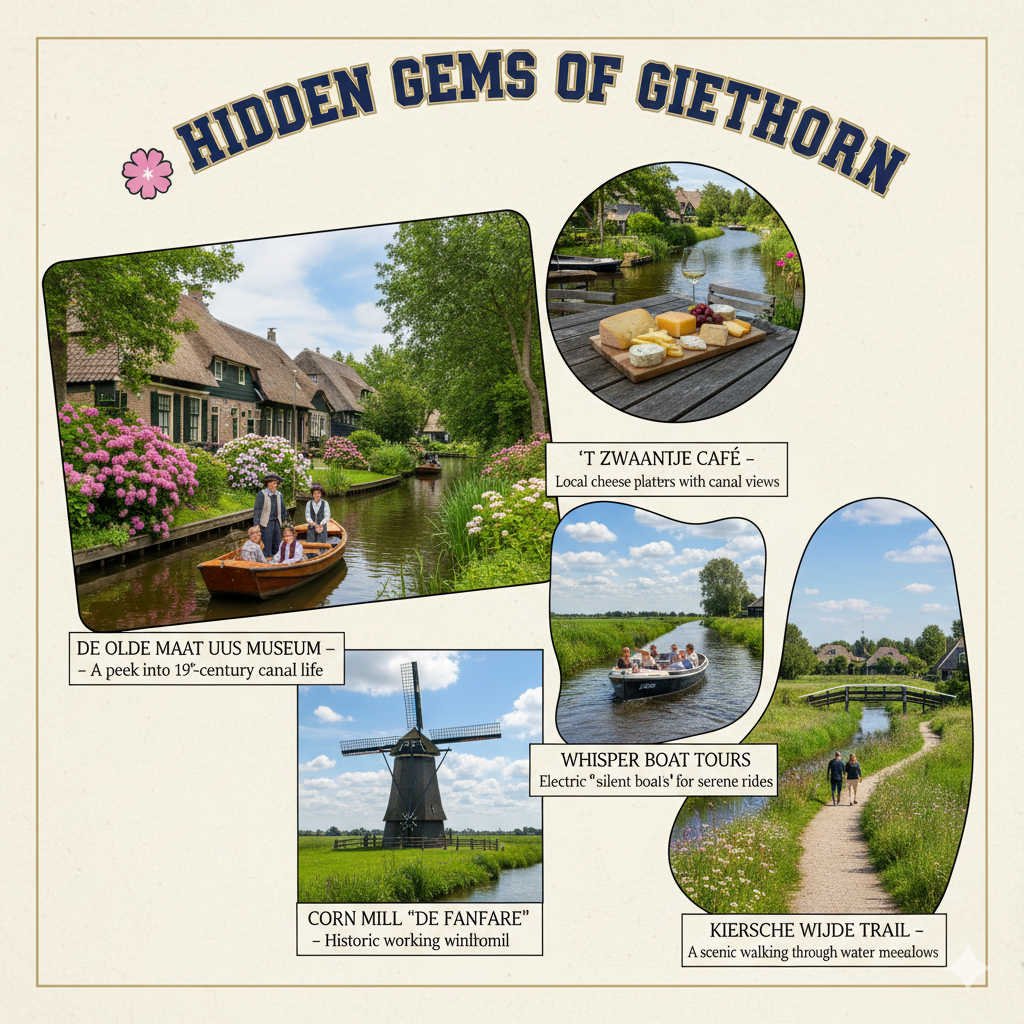
- De Olde Maat Uus Museum – A peek into 19th-century canal life.
- ‘t Zwaantje Café – Local cheese platters with canal views.
- Corn Mill “De Fanfare” – Historic working windmill.
- Whisper Boat Tours – Electric “silent boats” for serene rides.
- Kiersche Wijde Trail – A scenic walking path through water meadows.
Local Talk & Tips
- Locals are friendly but value peace — keep noise low while boating.
- Don’t speed your boat; wake waves can damage canals.
- Always book accommodations early — the village fills up in summer.
- Bicycles are allowed — follow paths, not gardens!
Source:
Local Food Experiences
Giethoorn’s cuisine blends Dutch farmhouse tradition with waterfront charm.
Must-Try Dishes:
- Pannekoeken (Dutch pancakes) – Served with cheese, apple, or bacon.
- Erwtensoep (Pea soup) – Winter comfort classic.
- Smoked eel – Local delicacy for seafood lovers.
- Homemade stroopwafels – Caramel syrup waffles from local bakeries.

Recommended Spots:
- De Lindenhof – 2-Michelin-star fine dining restaurant.
- Grand Café Fanfare – Cozy spot for local beers and canal views.
Traveler: Where Silence Speaks Louder Than Words
In Giethoorn, every bridge tells a story, every ripple carries calm. It’s a reminder that sometimes, to move forward, we must slow down.
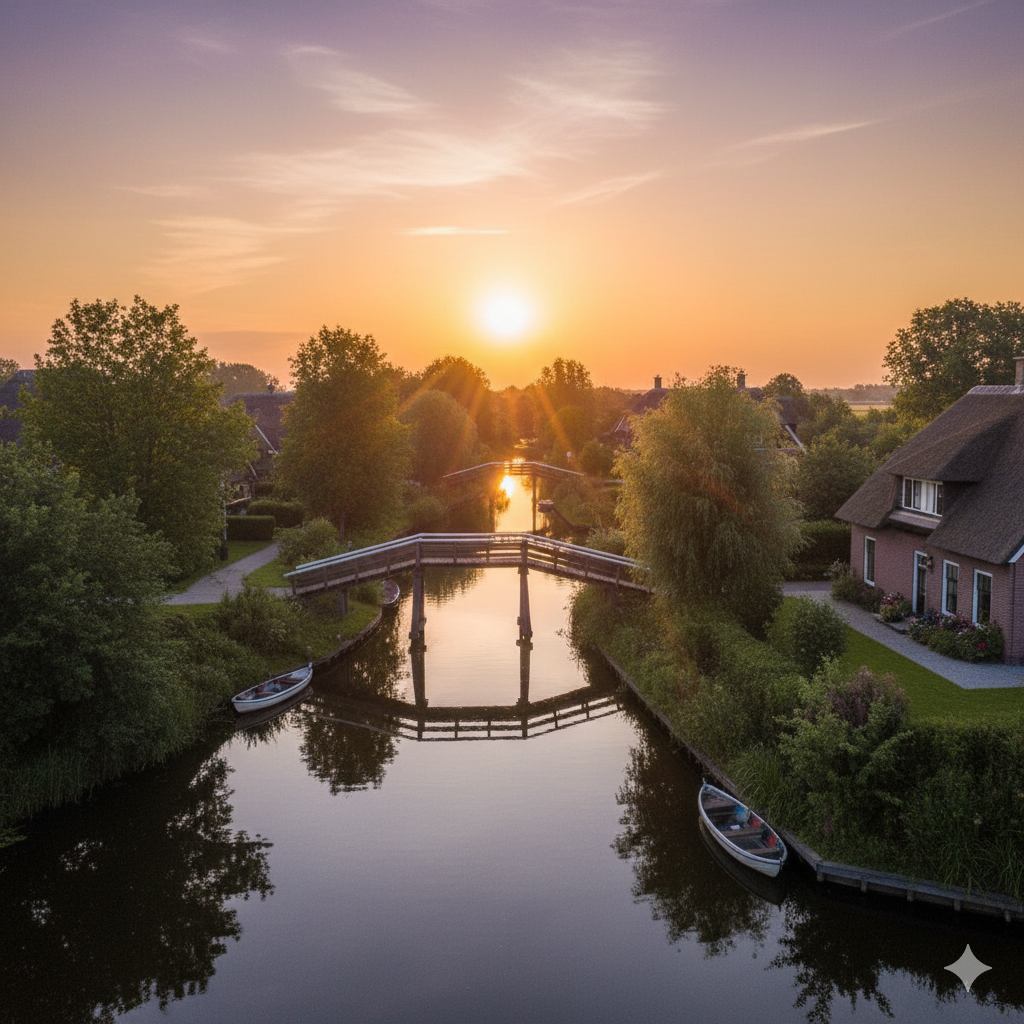
The Island with No Roads isn’t just a place — it’s a living poem written in water and peace. For those seeking escape from the world’s noise, Giethoorn is paradise rediscovered.
FAQs
Q1: Is Giethoorn really car-free?
Yes. There are no public roads in the main village; only canals and footpaths.
Q2: How long should I stay?
At least 1–2 days to explore the canals, museums, and enjoy a boat tour.
Q3: Is Giethoorn family-friendly?
Absolutely! Children love the boats and peaceful walks.
Q4: Can I visit Giethoorn in winter?
Yes. When canals freeze, locals even ice skate through the village!