
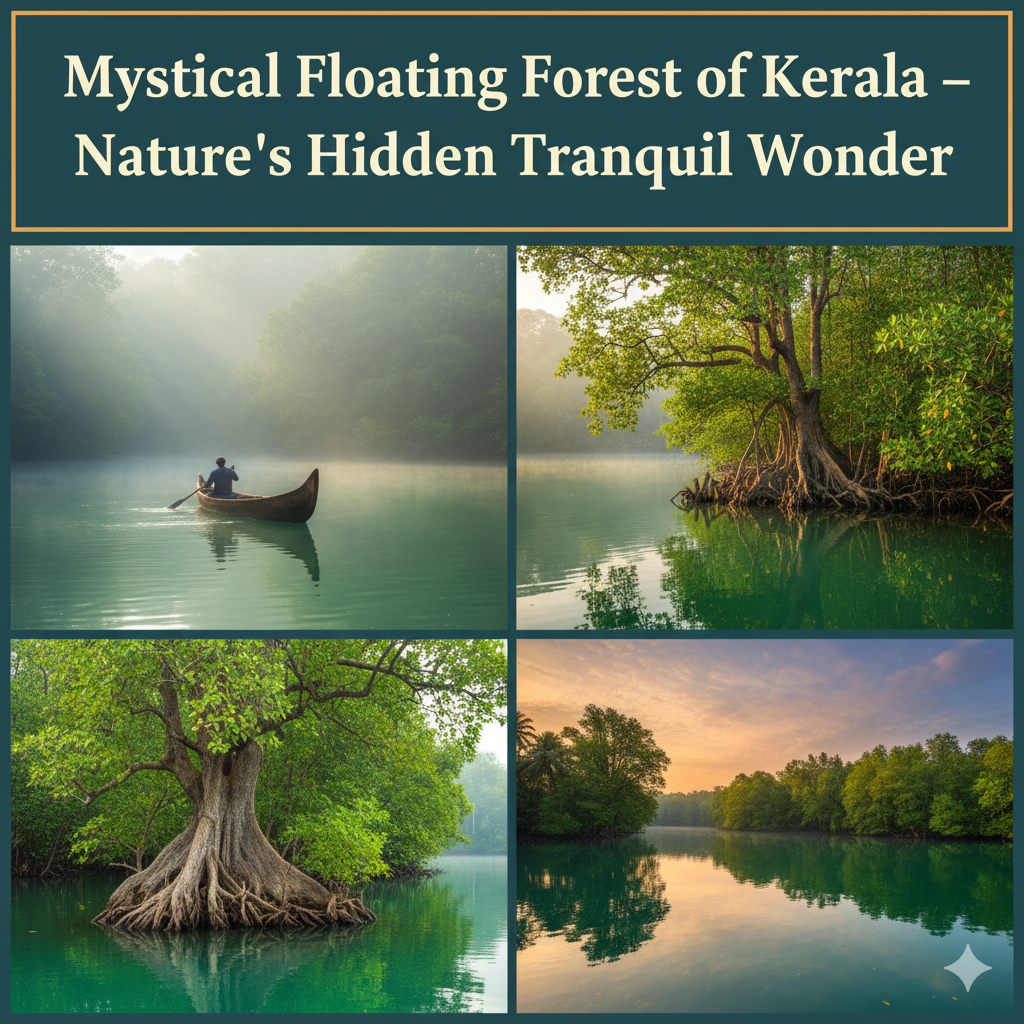

Kerala’s Magical Forest That Floats on Water
Tucked deep within the misty backwaters of southern India lies one of the most surreal natural wonders in the world — the Floating Forest Kerala, a living maze of mangroves and winding waterways that appear to drift silently on the water’s surface. While many know Kerala for its houseboats, Ayurveda retreats, and coconut-lined coast, very few visitors ever hear about this hidden ecological paradise.
Floating like green islands across glassy blue water, these mangrove forests are not only a sanctuary for rare birds, insects, and aquatic life — they are living examples of a centuries-old coexistence between nature and human culture, found nowhere else on the planet.

In this 2025 complete guide, we’re sailing into this mysterious landscape to reveal everything you need to know about visiting the Floating Forest of Kerala — from its origins to how to explore it, where to stay, what to eat, and why it’s one of the most important ecological treasures in India today.
What Exactly is Kerala’s Floating Forest?
Kerala’s Floating Forest is made up of ecosystems of semi-submerged mangrove trees and floating vegetation that cluster into thick masses across Kerala’s backwater districts, most notably in the Kuttanad region — one of the few places in the world where farming is done below sea level.
These forests “float” because their root systems are not anchored deeply into the riverbeds but spread out and interlock through layers of soil, silt, and organic matter that formed over centuries. This phenomenon gives the forest its mystical appearance — trees that seemingly hover atop still waters.
History & Mystery: How Did the Floating Forest Form?
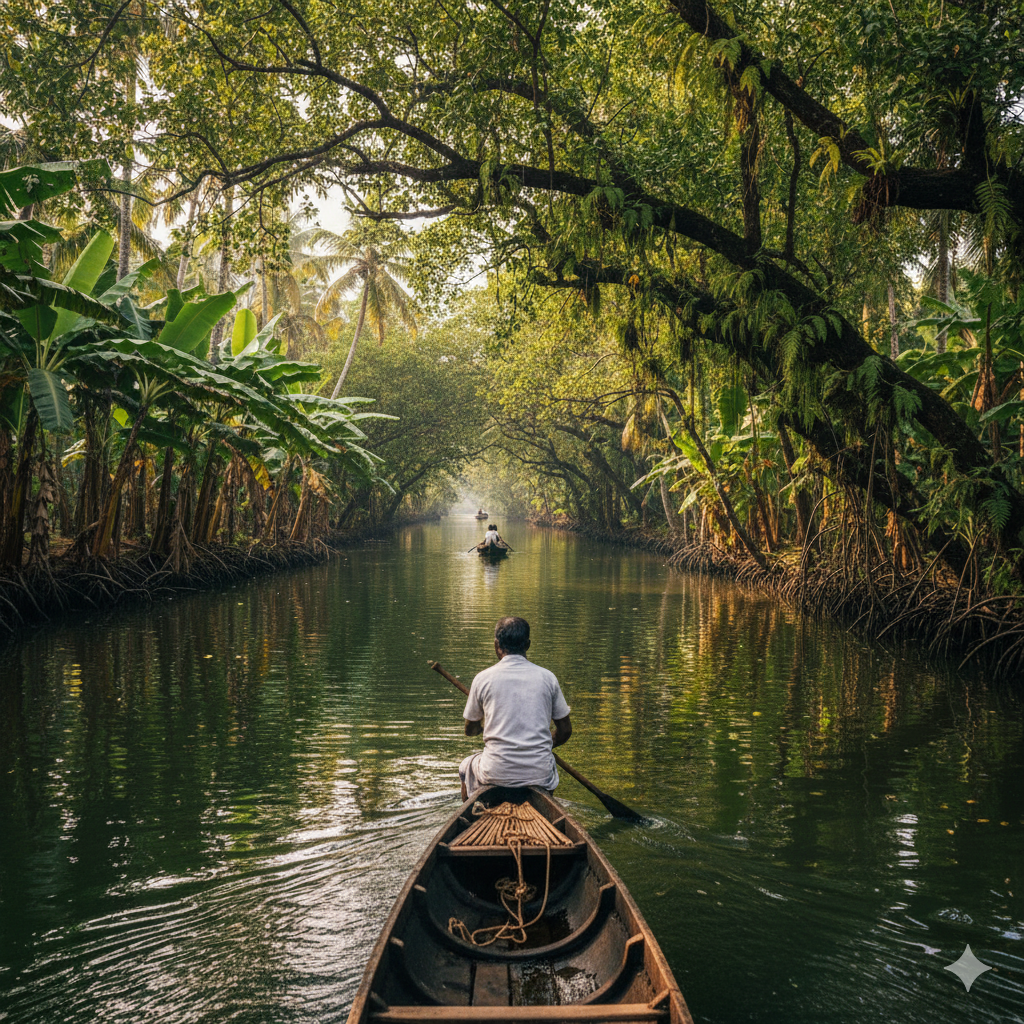
- Formed 800–1000 years ago through seasonal flooding and gradual vegetative accumulation in the Vembanad-Kuttanad delta.
- Mangroves adapted to survive in brackish, often oxygen-poor conditions.
- Tribal and fishing communities were the first guardians of this forest before modern tourism.
- Today, the forest is under the protection of eco-friendly initiatives and is a candidate for classification under UNESCO’s tentative natural heritage list due to its unique wetland ecology.
Wildlife & Biodiversity: A Living Haven for Nature
| Wildlife Type | Species Found |
|---|---|
| Birds | Brahminy Kite, White-Throated Kingfisher, Purple Heron, Indian Darter |
| Reptiles | Water Monitor Lizard, Rat Snake, Small Turtles |
| Aquatic Life | Pearlspot Fish (Karimeen), Freshwater Prawns, Clams |
| Flora | Rhizophora, Avicennia mangroves, lotus, water lettuce |
This floating wonderland houses 200+ species of birds, over 35 aquatic species, and is considered a world wetland biodiversity hotspot.
How to Reach the Floating Forest
Location:
- Nearest Base: Kumarakom, Kerala
- District: Kottayam
- Region: Southern India
By Air:
- Cochin International Airport (COK): 86 km (2.5 hrs)
By Train:
- Kottayam Railway Station: 16 km (45 mins)
- Alappuzha Station: 40 km (1 hr)
By Road:
- Connected by state-run buses, taxis, and private cars from Kochi, Kottayam, Alappuzha.
By Boat:
- Canoe, kayak, or guided eco-tours from Kumarakom or Alappuzha backwaters.
Entry Fees & Tour Costs (2025)
| Activity | Price (USD) |
|---|---|
| Shared canoe tour (2 hrs) | $25 per person |
| Private eco-boat tour | $40–$60 per person |
| Kayak rental (per hour) | $10 |
| Forest eco-permit | $2 |
Tip: Book early-morning or sunset tours for the best wildlife sightings and photography lighting.
Best Time to Visit the Floating Forest
| Season | Weather & Experience |
|---|---|
| November – February | Cool & pleasant. Ideal for boating, photography, and birdwatching. |
| June – September | Monsoon rains. Magical greens but slightly muddy access. |
| March – May | Warm & humid. Great for fewer crowds. |
Suggested Itinerary (1–2 Days)
Day 1:
- Arrive in Kumarakom
- Check into a backwater homestay or eco-resort
- Sunset canoe ride through floating forest
Day 2:
- Sunrise birdwatching tour (optional)
- Visit nearby paddy fields and stilt villages
- Try authentic Kuttanadan lunch
- Visit Kumarakom Bird Sanctuary
- Take houseboat cruise to Alappuzha (optional overnight)
Check Also: The Cave of Crystals Mexico Shimmering Underground Wonderland (2025 Guide)
Hidden Gems Inside the Floating Forest
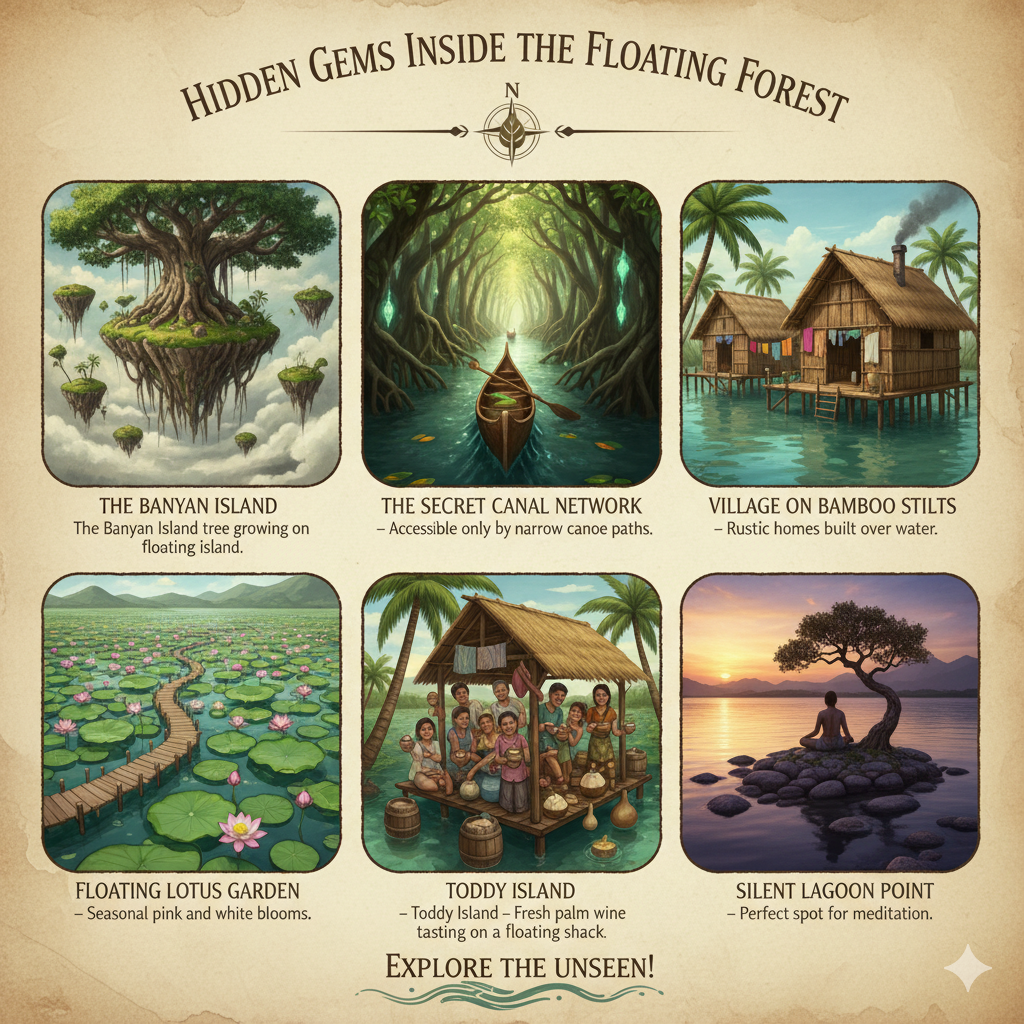
- The Banyan Island – A single banyan tree growing on a floating island.
- The Secret Canal Network – Accessible only by narrow canoe paths.
- Village on Bamboo Stilts – Rustic homes built over water.
- Floating Lotus Garden – Seasonal pink and white blooms.
- Toddy Island – Fresh palm wine tasting on a floating shack.
- Silent Lagoon Point – Perfect spot for reflection and meditation.
Local Food & Cultural Experiences
No trip to the floating forest is complete without traditional Kerala flavors served on banana leaves.
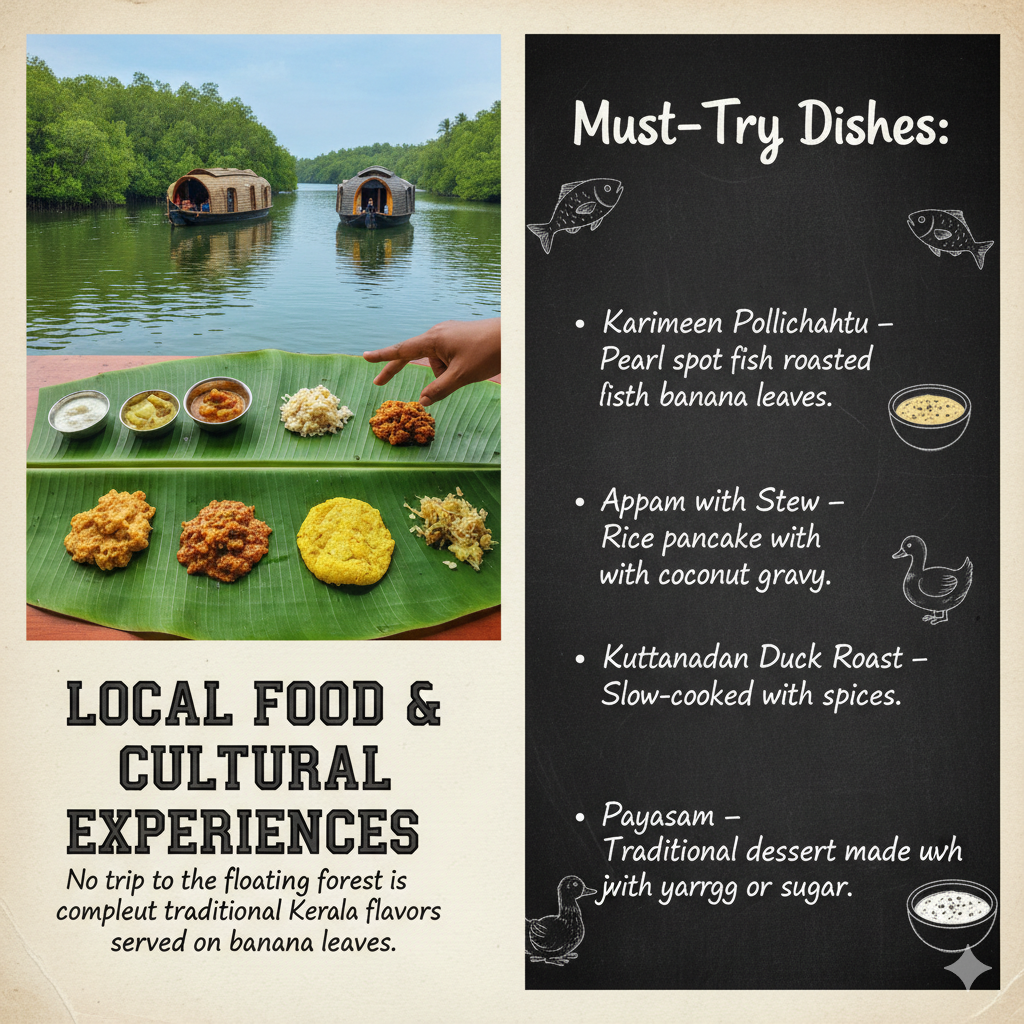
Must-Try Dishes:
- Karimeen Pollichathu – Pearl spot fish roasted in banana leaves.
- Appam with Stew – Rice pancake with coconut gravy.
- Kuttanadan Duck Roast – Slow-cooked with spices.
- Payasam – Traditional dessert made with jaggery or sugar.
Most tours offer homestay lunch experiences cooked by local families.
Eco-Tourism & Sustainability
- 90% of tours support local boatmen, fishermen, and farmers
- New 2025 initiative: Plastic-free zones around forest entry points
- Visitors can plant mangrove saplings through NGO-backed programs
Local Saying: “If the mangroves fall, the village will drown.” Protecting this ecosystem protects entire communities.
Source:
Where to Stay Near the Floating Forest
| Type | Suggested Stay | Price Range |
|---|---|---|
| Luxury | Coconut Lagoon, Kumarakom | $180–$350/night |
| Boutique | Rhythm Kumarakom | $90–$150/night |
| Homestay | Mango Meadows Eco Stay | $40–$70/night |
Cultural Etiquette & Travel Tips
- Respect the forests and waterways — no littering
- Greet locals with a smile or “Namaskaram”
- Wear lightweight waterproof footwear
- Ask before filming people, especially in villages
Traveler: A Sanctuary for the Soul
Kerala’s Floating Forest isn’t just a location — it’s an experience that stays with you long after you’ve left. Its floating landscapes, quiet waterways, and soulful local culture make it one of India’s most magical natural escapes.
Whether you’re a photographer, eco-traveler, birder, nature-lover, or a seeker of peace in the middle of the world’s madness — this forest is your call to go slow, breathe deep, and marvel at nature’s quiet power.
FAQs About the Floating Forest of Kerala
1. Can I swim in the floating forest waterways?
No, swimming isn’t recommended due to mangrove roots and wildlife.
2. Is the floating forest safe for solo travelers?
Absolutely — guided tours and local hosts offer safe, friendly experiences.
3. What’s the best way to explore — houseboat or canoe?
Canoe or kayak for narrow forest passages; houseboat for overnight backwater experience.
4. Are there mosquitoes? What precautions should I take?
Yes — bring eco-safe repellents, especially during monsoons.
5. Is it suitable for kids or elderly visitors?
Yes — choose flat-bottom houseboats or shaded bigger canoes.