
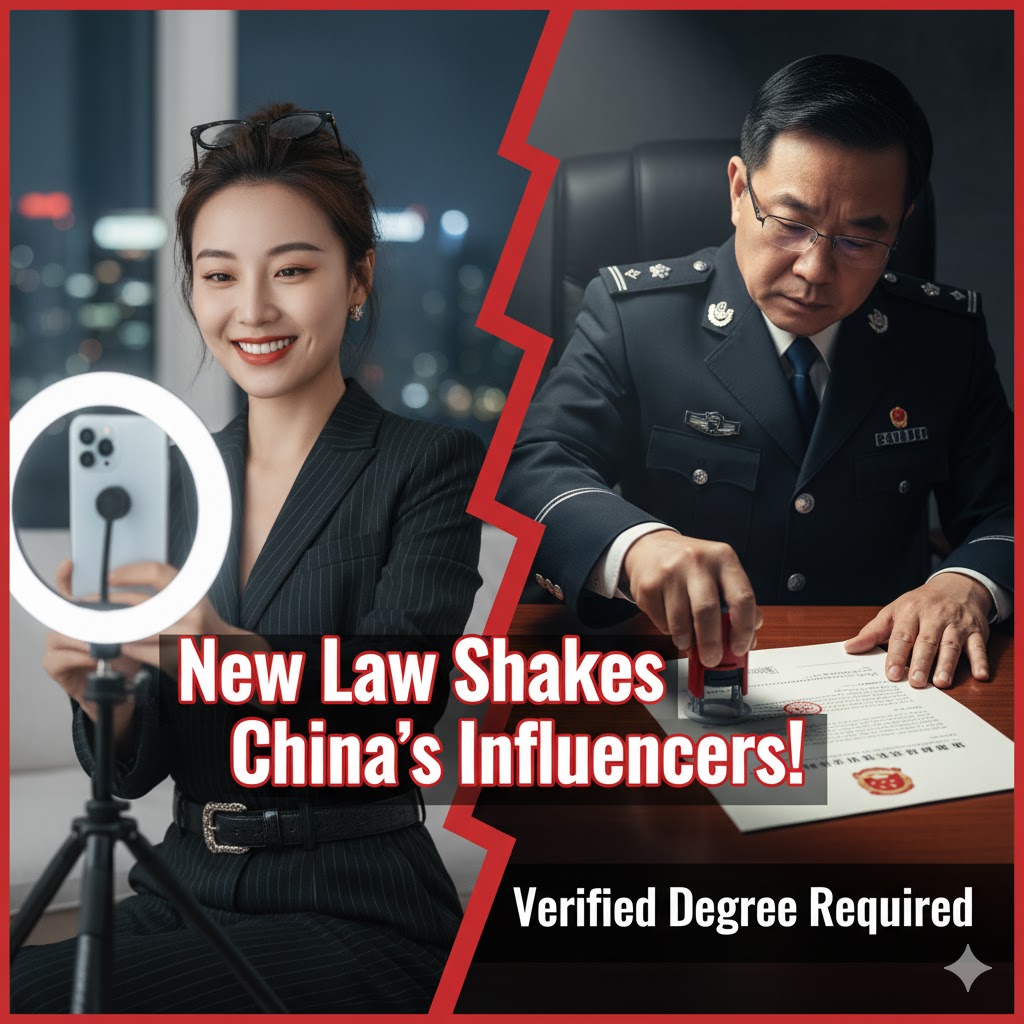

China Influencer Law 2025: Only Qualified Voices Can Talk About Expert Topics
In a sweeping new move to regulate the fast-growing world of online content, China has introduced a law that limits who can speak on “professional topics”—including health, finance, education, and law. Under this rule, only influencers who hold verified degrees or professional licenses in these fields are allowed to post related content online.
This change, introduced by the Cyberspace Administration of China (CAC), officially took effect in late October 2025. It’s part of a broader effort to combat online misinformation, strengthen content authenticity, and hold digital creators accountable for the advice they share with millions of followers.
Read More: Floyd Roger Myers Jr: Fresh Prince Star Dies at 42 EPIC

Why China Is Doing This
The CAC stated that the new influencer rules aim to protect citizens from misleading or harmful information, particularly in areas where advice could impact people’s finances, health, or legal standing.
China’s online ecosystem is home to millions of creators who shape opinions daily. However, as digital platforms expand, so do cases of “fake experts”—individuals offering medical or financial guidance without proper credentials. The government now requires creators who claim authority to upload proof of their qualifications, such as diplomas or professional certificates, before posting.

What the Law Actually Requires
- Creators discussing professional fields (law, medicine, finance, education) must hold relevant degrees or licenses.
- Platforms like Douyin (TikTok China), Bilibili, and Weibo must verify these qualifications.
- AI-generated or academic-based content must be clearly labeled.
- Violations can result in content removal, account suspension, or fines up to 100,000 yuan (≈$13,700).
These new requirements put heavy responsibility on both content creators and social platforms, forcing them to prioritize truth over virality.

Supporters Say It’s About Quality — Critics Say It’s About Control
The new influencer law has sparked a fierce debate across China’s digital landscape.
Supporters argue it’s a much-needed step to clean up social media spaces flooded with unreliable “advice gurus.” They believe the law will raise content quality, protect users, and encourage creators with real expertise to share their knowledge responsibly.
On the other hand, critics worry it might stifle creativity and suppress independent voices—especially those who share genuine experiences but lack formal degrees. They see it as part of China’s ongoing effort to tighten control over digital narratives and reduce unregulated public discourse.

How It Impacts Influencers and Viewers
For influencers, this regulation changes the entire game. If you’re creating content on sensitive or expert topics in China, you’ll now need to:
- Provide verifiable credentials to your platform.
- Add disclaimers if your content isn’t professional advice.
- Stick to lifestyle or entertainment niches if you lack a degree.
For viewers, it could mean more accurate content—but also fewer independent perspectives. While some users appreciate the reliability boost, others miss the authenticity and diversity that once made Chinese social media unique.

A Global Ripple Effect
China’s approach could inspire other countries to consider similar standards, especially for YMYL (Your Money or Your Life) content—topics where misinformation can harm people’s finances or health.
Countries such as South Korea and Singapore already monitor influencer advertising closely, and the EU is exploring laws around AI-generated misinformation. China’s degree requirement might just be the start of a global trend toward professional accountability online.

What This Means for the Future of Influence
This law signals the end of the “viral expert” era—at least in China. Authentic storytelling and verified expertise will now shape who gets to speak and who gets silenced.
In the long run, it could lead to a healthier information ecosystem, where audiences trust advice again. Yet, it also raises ethical questions: should only degree-holders have the right to share informed opinions?

Expert Insight
Digital culture analyst Li Wei, from Beijing University, commented:
“China’s new influencer law doesn’t just change who can speak—it changes what trust means online. The power of influence is shifting from popularity to proof.”
Her statement captures the essence of this transformation: the digital influence economy is evolving from entertainment-based to credibility-based, redefining what it means to be a thought leader in the modern age.
FAQs
1. Who does the new law apply to?
The law applies to anyone in China discussing expert-level subjects—health, finance, law, or education—on digital platforms.
2. What proof must influencers provide?
They must submit degrees, licenses, or certifications for platform verification before posting expert content.
3. Can non-degree holders still post opinions?
Yes. They can share personal experiences or lifestyle opinions, but not professional advice that implies expertise.
4. What happens if someone breaks the rule?
Their content may be removed, accounts suspended, or fined under CAC enforcement measures.
5. How does this affect global influencers?
Foreign influencers collaborating with Chinese platforms may also need to comply if their content targets Chinese audiences.

Expert Guide:
China’s influencer law marks a turning point in how online credibility is defined. While it’s designed to protect the public from misinformation, it also challenges the open, community-driven spirit that built the social web.
Whether this regulation becomes a model for accountability or a tool for censorship will depend on how it’s enforced—and how the global creator community responds.
Sources: