

A New Era for Canadian Work Opportunities
Canada’s labor market continues to expand in 2025, creating a surge in international job opportunities. With thousands of employers seeking skilled workers, the Canada Work Permit 2025 program has introduced powerful LMIA-exempt categories to make the hiring process faster and more accessible.
If you’ve dreamed of working in Canada without going through the lengthy Labour Market Impact Assessment (LMIA) process, this guide is your ultimate resource. We’ll uncover every major LMIA exemption category, eligibility requirements, and the most in-demand roles for foreign professionals.
What Is an LMIA and Why It Matters
An LMIA (Labour Market Impact Assessment) is a document employers must obtain before hiring a foreign worker, proving that no Canadian citizen or permanent resident is available for the job.
However, many work permit types are LMIA-exempt, meaning you can work in Canada without your employer needing this approval.
This exemption speeds up visa processing, reduces employer burden, and opens doors for thousands of global professionals each year.
Top LMIA-Exempt Categories for 2025
Here’s a complete list of the most important LMIA-exempt categories under the International Mobility Program (IMP) for 2025:
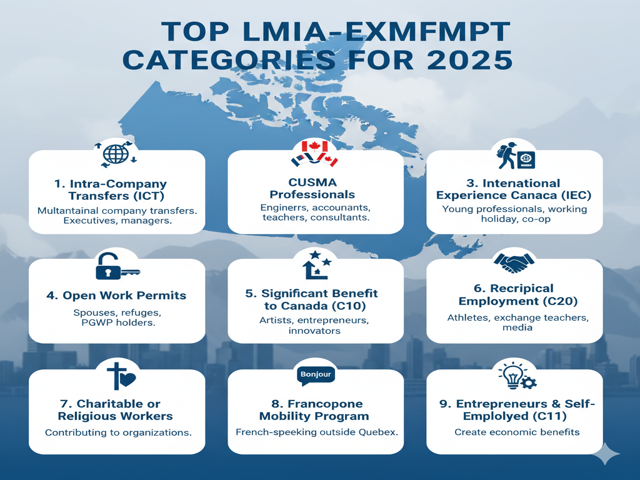
1. Intra-Company Transfers (ICT)
If you work for a multinational company, you can transfer to a Canadian branch or affiliate without an LMIA.
Eligible Roles: Executives, senior managers, specialized knowledge employees.
Example: Transferring from a U.S. IT firm to its Canadian subsidiary.
2. CUSMA (USMCA) Professionals
Under the Canada–United States–Mexico Agreement, citizens of these countries can work in Canada without an LMIA for certain professional occupations.
Popular Fields: Engineering, accounting, teaching, management consulting.
3. International Experience Canada (IEC)
This program allows young professionals, working holidaymakers, and co-op interns from partner countries to gain Canadian work experience.
LMIA Status: Exempt under the youth mobility agreement.
4. Open Work Permits
Some individuals can get open work permits that are not tied to a specific employer and don’t need LMIA.
Examples:
- Spouses of skilled workers or students
- Refugees and protected persons
- Post-Graduation Work Permit (PGWP) holders
5. Significant Benefit to Canada (C10 Exemption)
Applicants who can demonstrate a major social, cultural, or economic benefit to Canada may qualify for this exemption.
Examples: Artists, entrepreneurs, and highly skilled innovators.
6. Reciprocal Employment (C20 Exemption)
Used when Canadians receive similar opportunities abroad.
Examples: Professional athletes, exchange teachers, or media specialists.
7. Charitable or Religious Workers
Those contributing to charitable or religious organizations can often bypass LMIA under section R205(d).
8. Francophone Mobility Program
French-speaking foreign nationals who want to work outside Quebec can obtain an LMIA-exempt work permit.
Goal: Promote linguistic diversity and attract skilled Francophone talent.
9. Entrepreneurs & Self-Employed (C11 Exemption)
Entrepreneurs who can create or maintain significant economic benefits for Canadians can obtain an LMIA-exempt permit.
Eligibility Criteria for LMIA-Exempt Work Permits
To qualify for these categories, applicants must meet specific conditions such as:
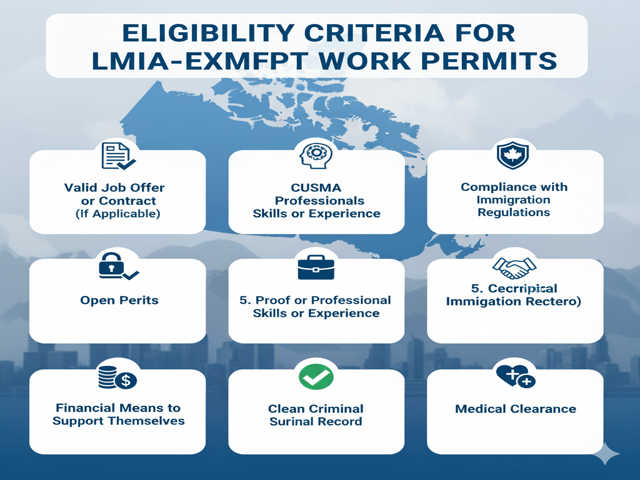
- Valid job offer or contract (if applicable)
- Proof of professional skills or experience
- Compliance with immigration regulations
- Financial means to support themselves in Canada
- Clean criminal record and medical clearance
Processing Times & Fees in 2025
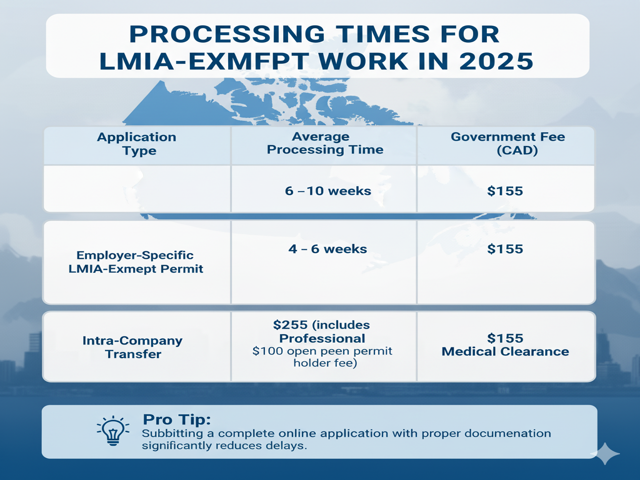
| Application Type | Average Processing Time | Government Fee (CAD) |
|---|---|---|
| Employer-Specific LMIA-Exempt Permit | 6–10 weeks | $155 |
| Open Work Permit | 4–6 weeks | $255 (includes $100 open permit holder fee) |
| Intra-Company Transfer | 5–8 weeks | $155 |
Pro Tip: Submitting a complete online application with proper documentation significantly reduces delays.
Top Countries Benefiting from LMIA Exemptions
The following nationalities are seeing high approval rates for LMIA-exempt work permits in 2025:
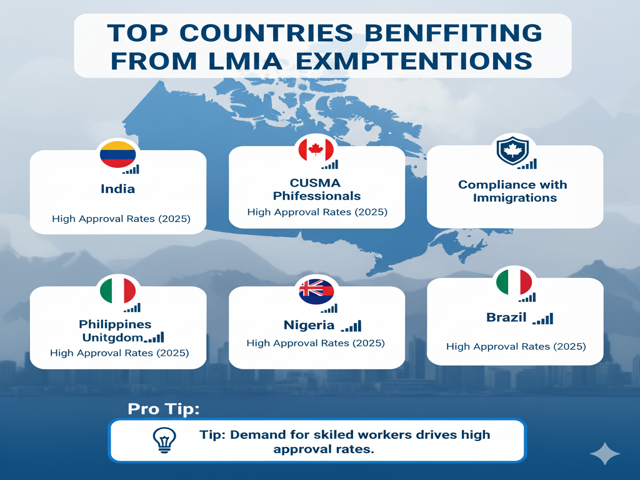
- India
- Philippines
- United Kingdom
- Nigeria
- Brazil
- France
- Mexico
Benefits of LMIA-Exempt Work Permits
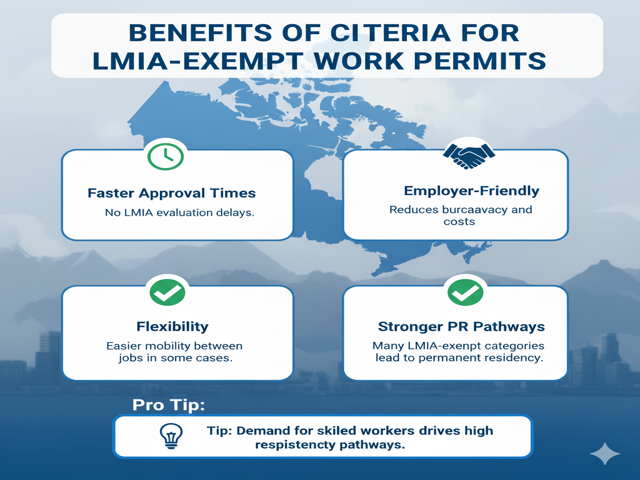
✅ Faster Approval Times — No LMIA evaluation delays.
✅ Employer-Friendly — Reduces bureaucracy and costs.
✅ Flexibility — Easier mobility between jobs in some cases.
✅ Stronger PR Pathways — Many LMIA-exempt categories lead to permanent residency.
Transitioning from LMIA-Exempt to Permanent Residency
Many LMIA-exempt work permit holders can transition to permanent residency (PR) through:
- Express Entry (CEC or FSWP)
- Provincial Nominee Programs (PNPs)
- Atlantic Immigration Program (AIP)
- Rural and Northern Immigration Pilot (RNIP)
Pro Tip: If your Canadian work experience is under an LMIA-exempt permit, it still counts toward PR eligibility under Canadian Experience Class (CEC).
2025 Immigration Trends: LMIA-Exempt Surge
Canada’s immigration targets for 2025–2026 emphasize attracting digital professionals, healthcare workers, and tech entrepreneurs.
Over 40% of temporary workers are now entering through LMIA-exempt channels — proving that Canada is prioritizing mobility and talent over paperwork.
Source: Government of Canada – Work Permits
Key Insights for 2025 Applicants
- The C11 Entrepreneur stream is expanding for digital entrepreneurs.
- The Francophone Mobility Program continues until 2026.
- AI-based processing tools are reducing manual LMIA reviews.
- Post-pandemic hiring flexibility remains high in tech and healthcare.
FAQs – Canada Work Permit 2025
1. Can I apply for an LMIA-exempt work permit without a job offer?
In most cases, no — unless you’re applying under an open work permit category (like PGWP or spouse).
2. How long can I stay in Canada with an LMIA-exempt work permit?
Usually, the permit is valid for 1–3 years, depending on your category.
3. Do LMIA-exempt jobs count toward PR?
Yes! Canadian work experience under an LMIA-exempt permit counts for Express Entry eligibility.
4. Can my family come with me?
Yes. Your spouse can apply for an open work permit, and dependent children can study in Canada.
Read Also: Canada Express Entry 2025 CRS Score Trends
Agent Advise: The Future of Work in Canada Is Borderless
The Canada Work Permit 2025 program showcases a bold shift toward mobility, innovation, and inclusion. LMIA-exempt categories empower professionals to join Canada’s workforce faster, helping both employers and employees thrive.
If you’re a global talent ready to contribute to Canada’s economy, now’s the time to act — 2025 may be the year you turn your career dreams into Canadian reality.