
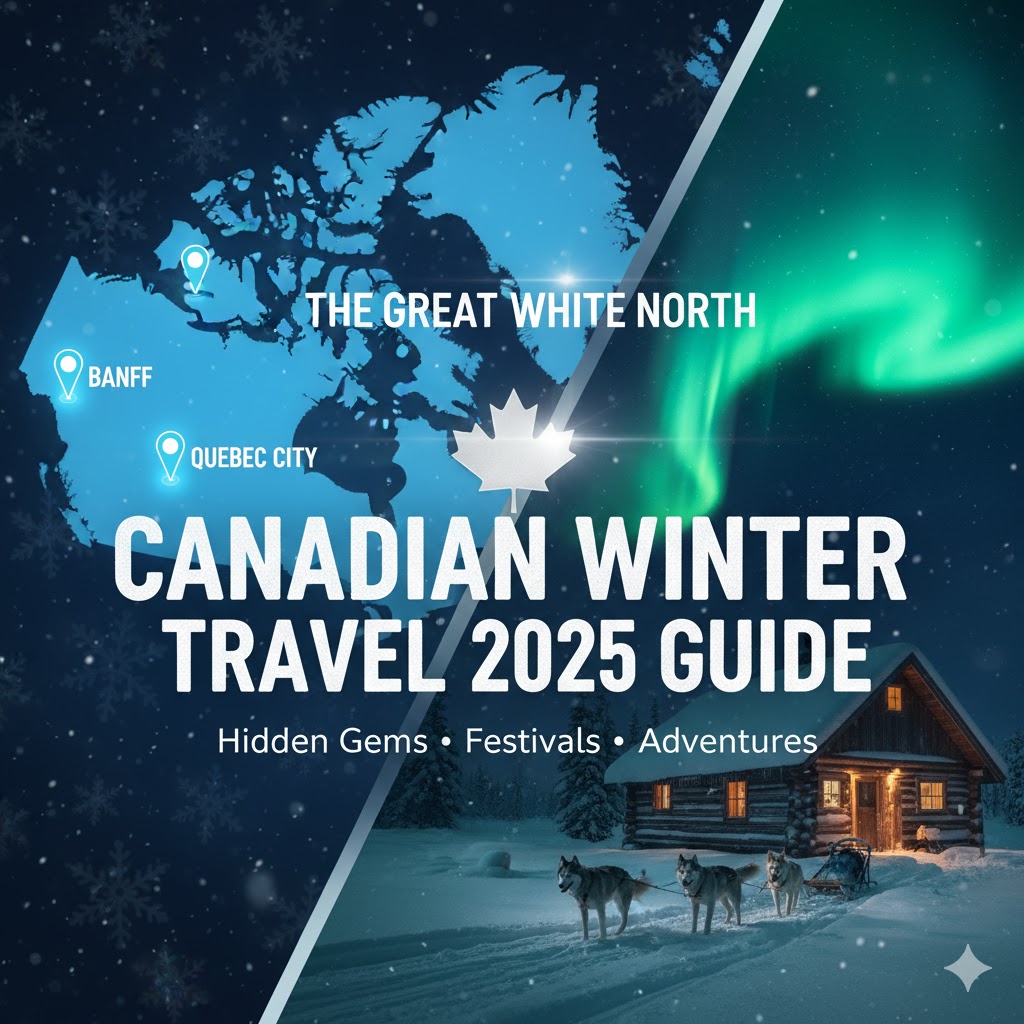

Introduction – Canada’s Magical Winter Wonderland Awaits
Canada transforms into a mesmerizing snow paradise each winter, inviting travelers to witness its frozen lakes, snow-dusted peaks, and heartwarming culture. The Canadian Winter Travel 2025 Guide is your all-in-one map to the best ski resorts, ice festivals, scenic train rides, and cozy northern escapes.
Whether you dream of gliding across frozen lakes in Ontario, chasing the Northern Lights in Yukon, or exploring Quebec City’s Winter Carnival, this guide will help you plan the perfect seasonal adventure. From luxurious mountain lodges to budget-friendly cabins, winter in Canada offers something extraordinary for every traveler.
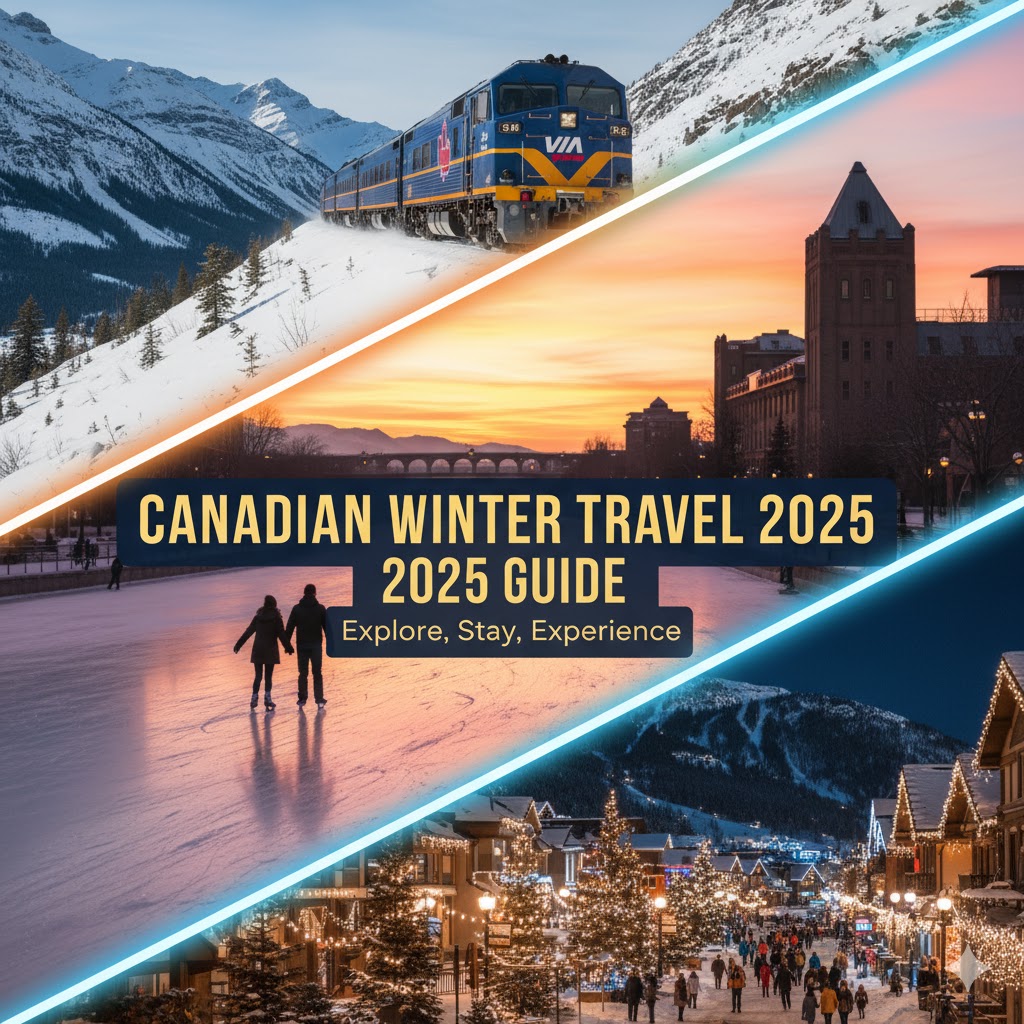
🏔️ Top Winter Destinations in Canada (2025 Edition)
1. Banff National Park, Alberta
Banff in winter is a postcard brought to life. Snow-covered peaks, steaming hot springs, and endless ski trails make it a dreamland for adventure lovers. Don’t miss Lake Louise’s Ice Magic Festival in January 2025.
2. Whistler, British Columbia
A global favorite for skiing and snowboarding, Whistler’s lively village vibes and world-class resorts make it an essential winter stop. The Peak 2 Peak Gondola offers panoramic alpine views like no other.
3. Quebec City, Quebec
Europe meets North America here. Quebec City’s cobblestone streets and the famous Winter Carnival offer a fairy-tale setting filled with music, parades, and ice sculptures.
4. Whitehorse, Yukon
Home to the Northern Lights, Whitehorse is a must for sky-watchers. The Aurora Borealis season (November–March) is at its peak in early 2025, with clear skies and magical displays.
5. Ottawa, Ontario
Canada’s capital becomes an ice-skater’s paradise with the Rideau Canal Skateway, stretching over 7.8 kilometers — the world’s largest naturally frozen skating rink.
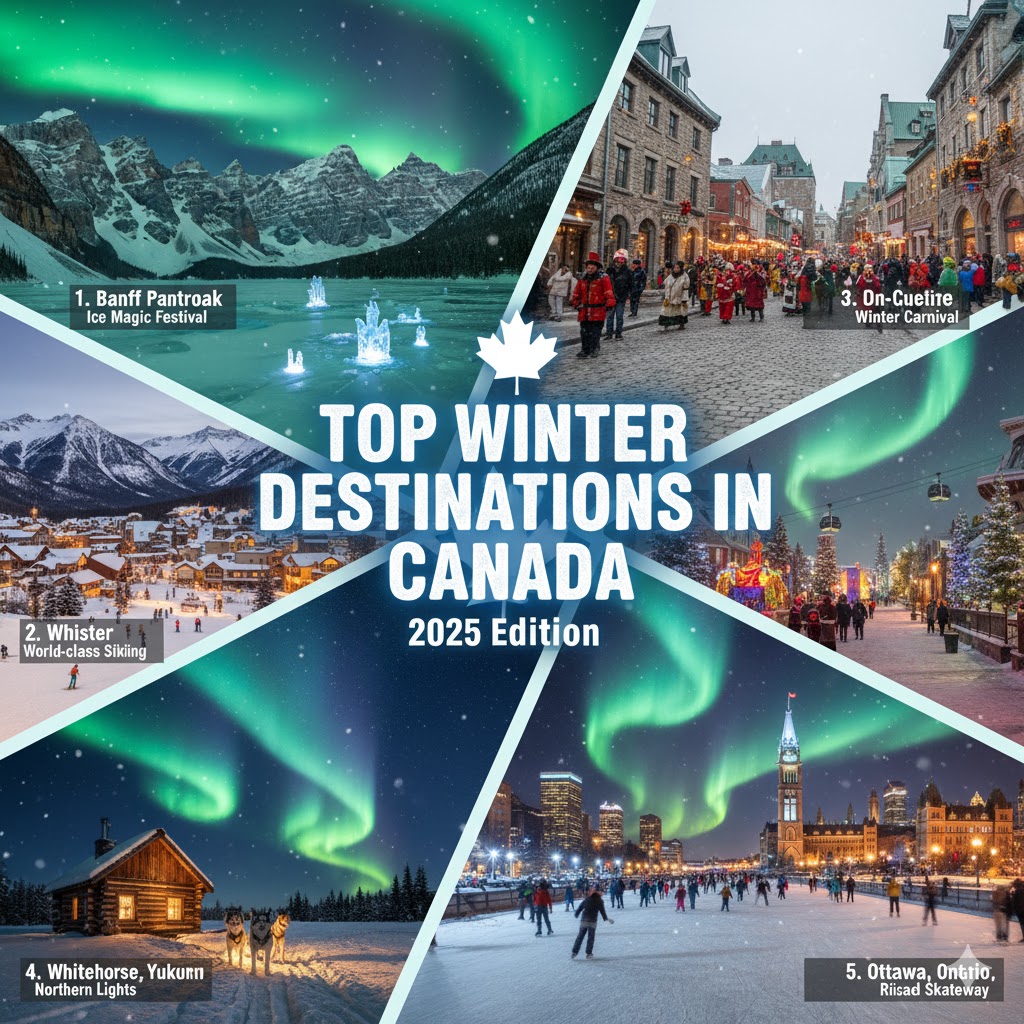
🎟️ Winter Festivals & Events 2025
- Quebec Winter Carnival (Feb 7–16, 2025) – Ice sculptures, snow slides, night parades, and maple taffy galore.
- Winterlude Ottawa (Jan 31–Feb 17, 2025) – Frozen art displays, snow playgrounds, and food markets along the Rideau Canal.
- Banff SnowDays (Jan 17–26, 2025) – Ice carvings, ski races, and mountain celebrations.
- Niagara Icewine Festival (Jan 10–26, 2025) – Sip Canada’s signature Icewine amid snowy vineyards.
🧤 Best Winter Activities to Try in Canada
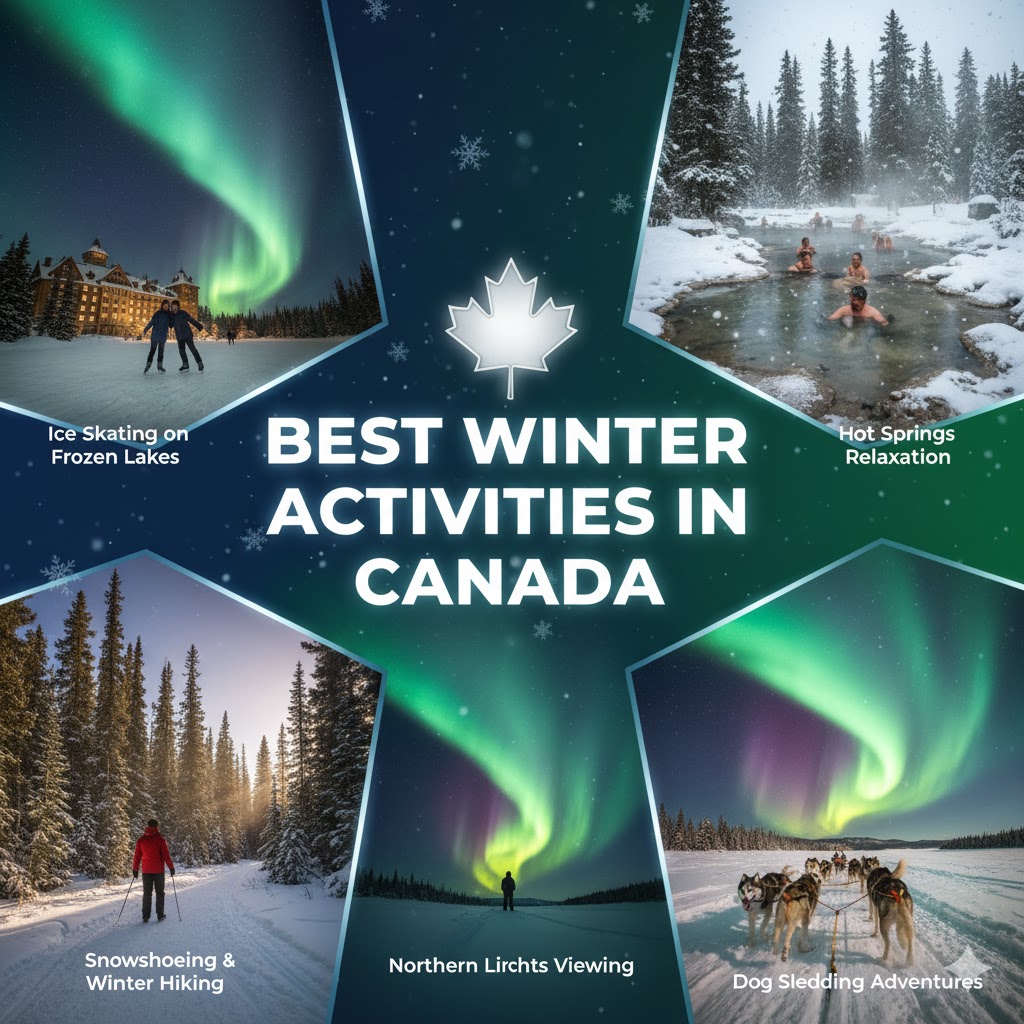
- Ice Skating on Frozen Lakes – Experience skating under starlit skies on Lake Louise or Ottawa’s Rideau Canal.
- Snowshoeing & Winter Hiking – Explore Jasper or Mont-Tremblant trails blanketed in snow.
- Northern Lights Viewing – Ideal in Yukon, Northwest Territories, and northern Manitoba.
- Dog Sledding Adventures – Feel the thrill of gliding across icy landscapes led by Huskies in Whitehorse or Churchill.
- Hot Springs Relaxation – Soak in Banff Upper Hot Springs or Harrison Hot Springs while snowflakes fall around you.
🚆 How to Travel Across Canada in Winter
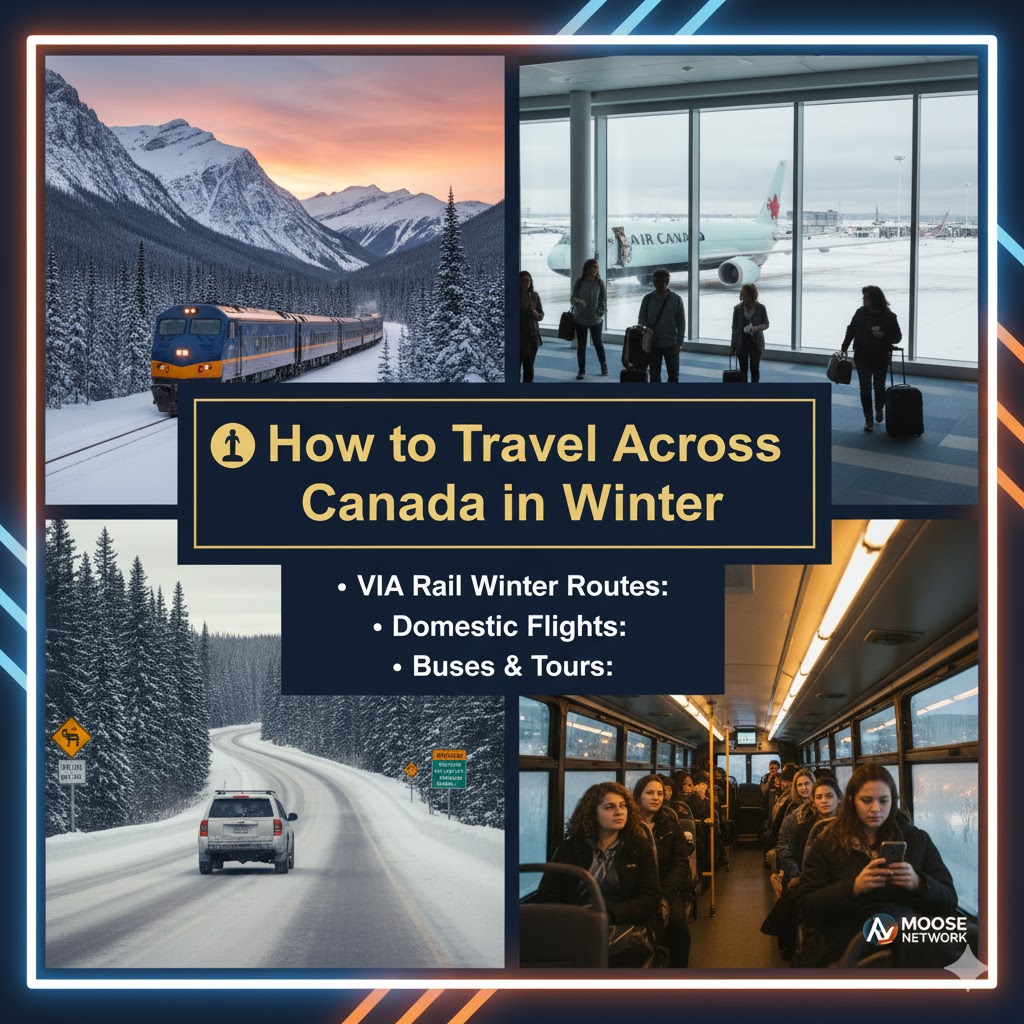
- VIA Rail Winter Routes: Take the Canadian Train (Toronto to Vancouver) — an unforgettable 4,466 km journey through snow-covered mountains and forests.
- Domestic Flights: Major carriers like Air Canada, WestJet, and Porter Airlines offer flexible winter fares across provinces.
- Car Rentals: Opt for AWD/4×4 vehicles with snow tires. Avoid driving during snowstorms and check weather advisories.
- Buses & Tours: Companies like Greyhound and Moose Network provide budget options for intercity winter travel.
Hidden Winter Gems in Canada (2025 Must-Visit Secrets)
While Banff and Whistler get all the spotlight, Canada hides dozens of less-known winter escapes perfect for travelers seeking serenity, culture, or raw wilderness.
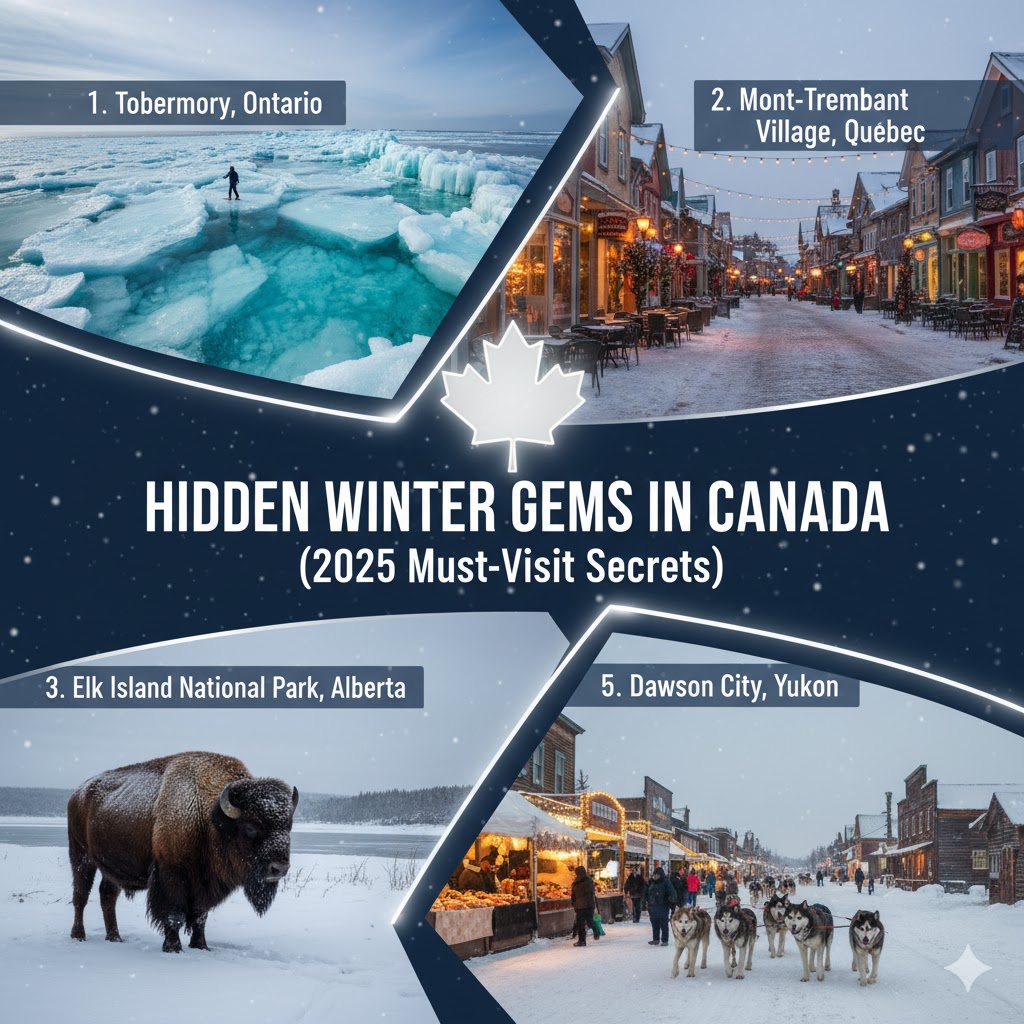
1. Tobermory, Ontario
In winter, the turquoise waters of Georgian Bay freeze into crystal-like ice sheets. Ideal for winter photography and snowshoeing around Bruce Peninsula National Park.
2. Mont-Tremblant Village, Quebec
This French-inspired village feels like a European ski town — filled with cobbled streets, boutiques, and après-ski cafés glowing under fairy lights.
3. Elk Island National Park, Alberta
A peaceful alternative to Banff, offering winter wildlife spotting — from bison to elk — against the backdrop of frozen lakes and open skies.
4. Charlottetown, Prince Edward Island
Home to cozy B&Bs, winter markets, and light festivals. Local seafood remains a must-try, even when snow blankets the harbor.
5. Dawson City, Yukon
A historic Gold Rush town turned winter wonderland. Experience the Yukon Quest Dog Sled Race and northern frontier charm frozen in time.
🏨 Where to Stay – Cozy Winter Accommodations in 2025
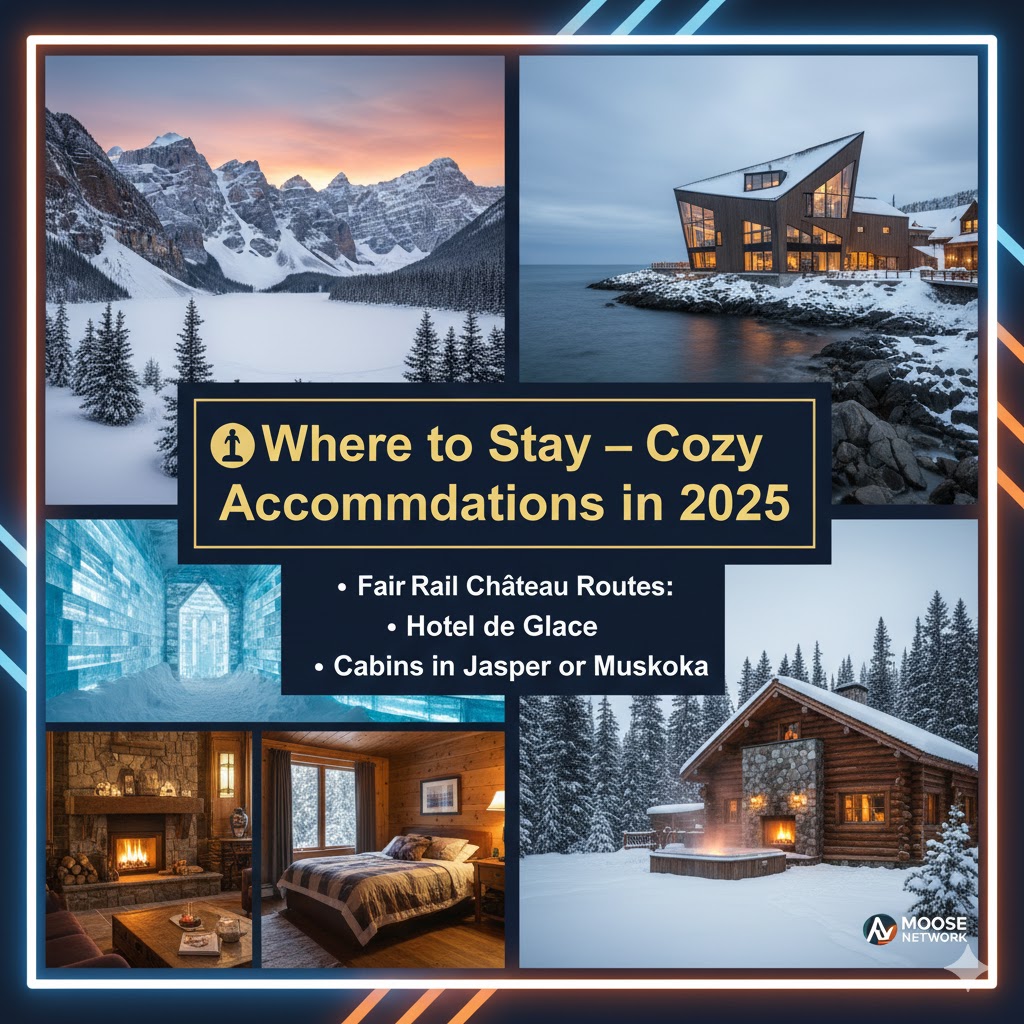
- Fairmont Château Lake Louise (Alberta) – Overlooking a frozen lake surrounded by the Rockies; ideal for luxury travelers.
- Fogo Island Inn (Newfoundland & Labrador) – A world-famous architectural marvel offering unmatched Arctic ocean views.
- Hotel de Glace (Quebec) – Canada’s only ice hotel, rebuilt annually from 500 tons of ice and 30,000 tons of snow.
- HI Banff Alpine Centre (Alberta) – A budget-friendly, social lodge close to Banff’s major attractions.
- Cabins in Jasper or Muskoka – Rustic wooden cabins with fireplaces and hot tubs for private winter retreats.
🧳 What to Pack for Winter Travel in Canada (2025 Checklist)
Canada’s winters can be unpredictable — temperatures often range from –5°C to –30°C. Pack wisely to stay warm and safe:
- Thermal layers (base, fleece, and waterproof outer shell)
- Insulated boots with strong grip
- Touchscreen gloves and wool hats
- Portable hand warmers and heat pads
- Reusable water bottle (hydration matters in cold climates)
- Snow goggles or UV-protective sunglasses
- Power bank (cold drains batteries fast!)
- Travel insurance covering winter sports
💡 Pro Tip: Keep an emergency kit if driving — include blankets, flashlight, extra snacks, and tire chains.

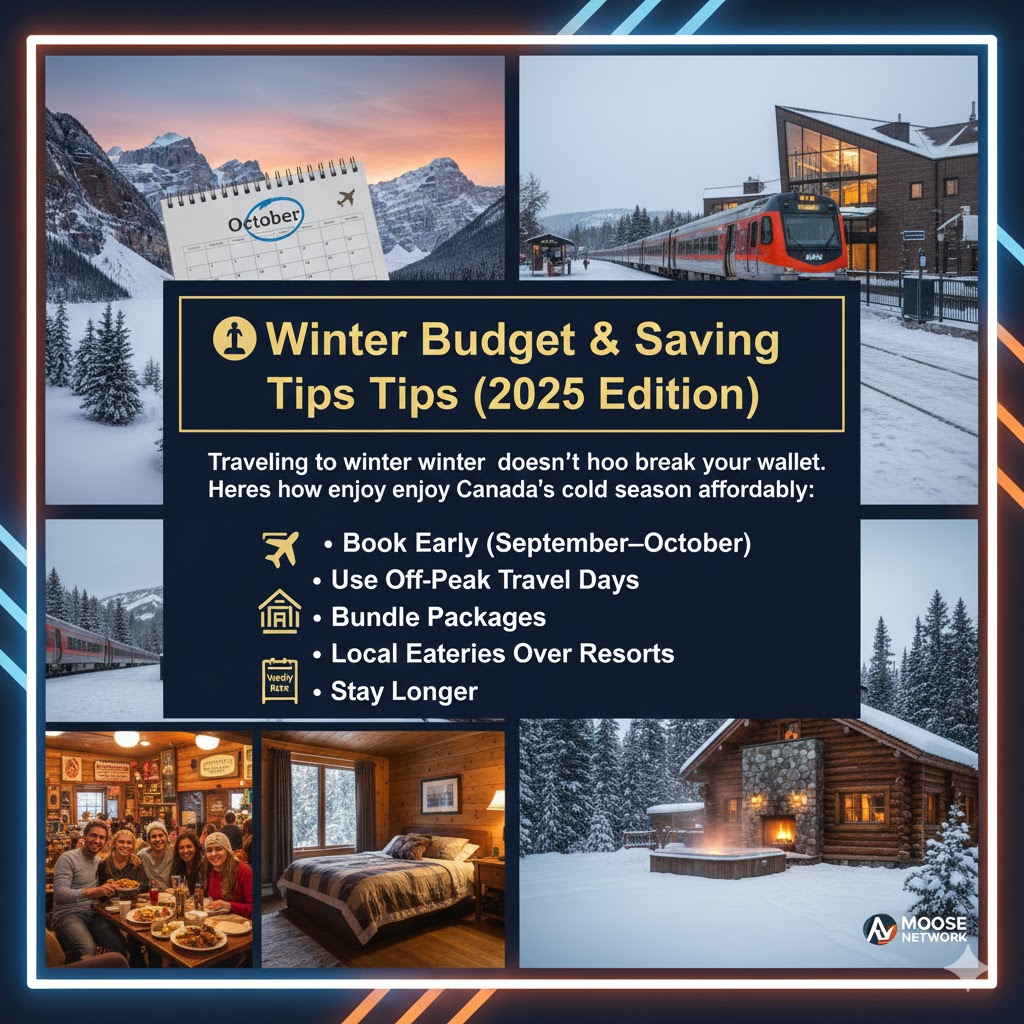
💰 Winter Budget & Saving Tips (2025 Edition)
Traveling in winter doesn’t have to break your wallet. Here’s how to enjoy Canada’s cold season affordably:
- Book Early (September–October): Prices rise after November.
- Use Off-Peak Travel Days: Midweek flights and trains are cheaper.
- Bundle Packages: Combine flight + hotel for major discounts.
- Travel by Rail: VIA Rail offers seasonal passes for long-distance savings.
- Local Eateries Over Resorts: Try authentic food spots for half the cost of tourist restaurants.
- Stay Longer: Some Airbnbs and lodges offer weekly rate discounts.
🍲 Local Winter Cuisine You Must Try
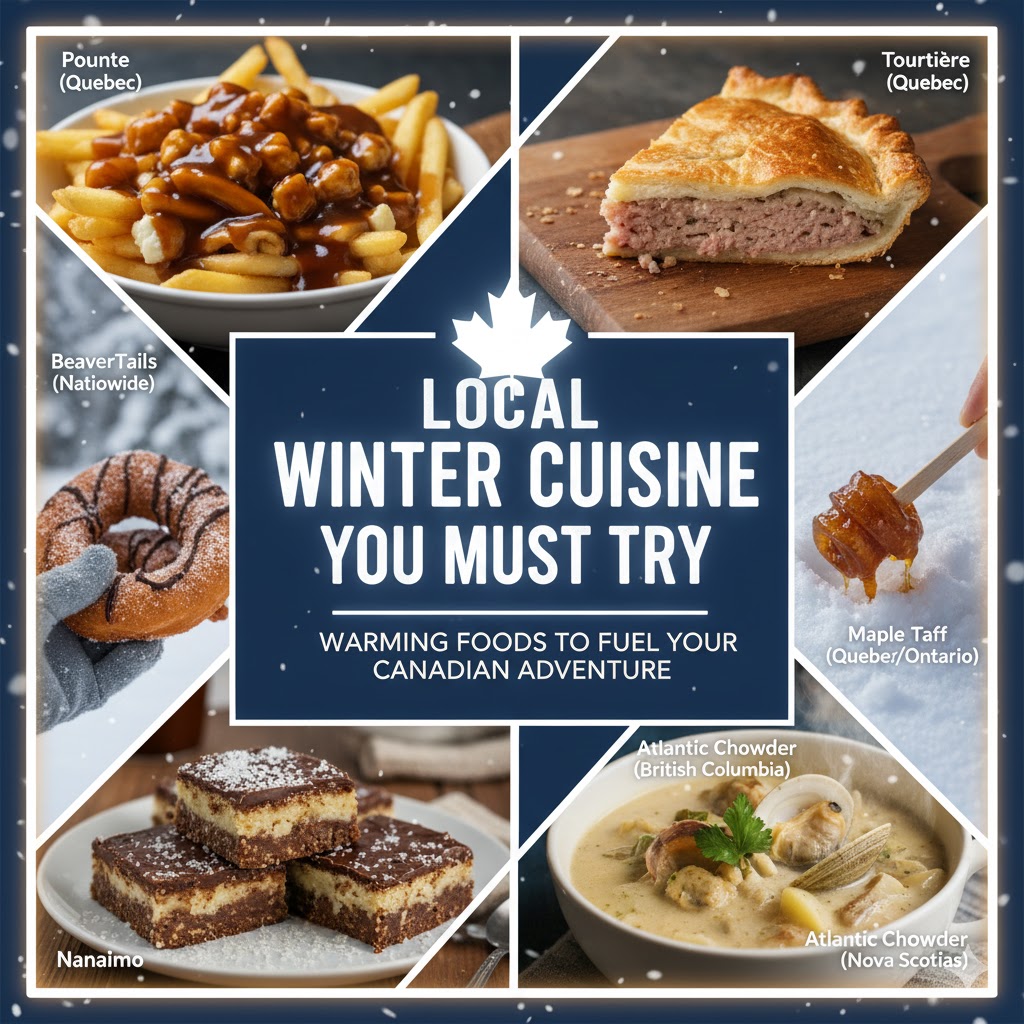
Canadian winter cuisine is heartwarming and packed with local flavors that fuel you against the chill:
- Poutine (Quebec): Fries, cheese curds, and gravy — the ultimate comfort food.
- Tourtière (Quebec): A savory meat pie often served during holidays.
- BeaverTails (Nationwide): Fried pastry topped with chocolate, sugar, or cinnamon.
- Maple Taffy (Quebec/Ontario): Poured hot onto snow and rolled into sweet, chewy sticks.
- Nanaimo Bars (British Columbia): No-bake layered dessert of chocolate, custard, and coconut.
- Atlantic Chowder (Nova Scotia): Rich seafood soup perfect for stormy nights.
🚗 Travel Safety & Health Tips for 2025 Travelers
- Check Weather Alerts: Always monitor Environment Canada updates.
- Plan Routes in Advance: Snowstorms can delay transport in rural provinces.
- Stay Hydrated: Cold weather dehydrates faster than you think.
- Respect Nature: Stick to marked trails and avoid frozen lakes unless approved safe.
- Stay Connected: Download offline maps — some northern regions have limited coverage.
Best Time to Visit Canada in Winter 2025
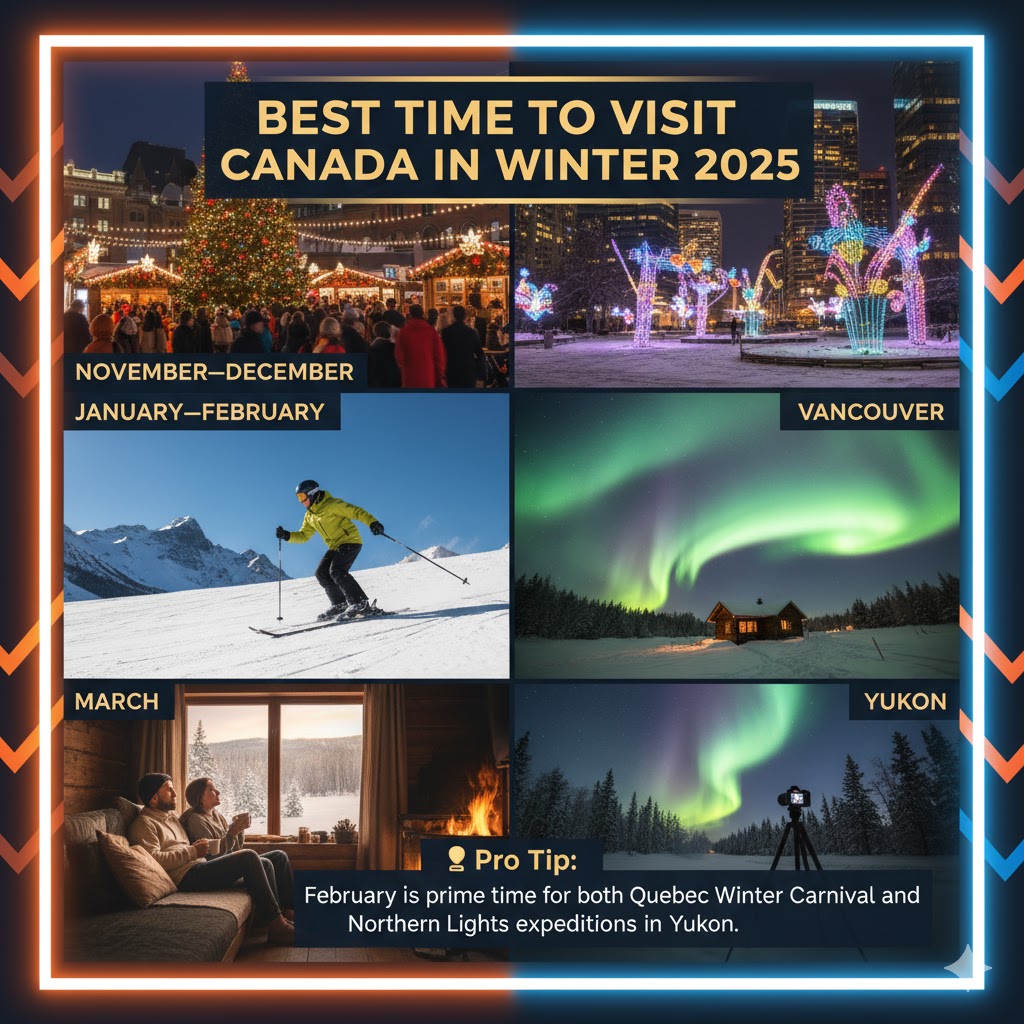
Canada’s winter season runs from November to March, but the best months depend on your goals and tolerance for cold.
- November–December: Early snow, Christmas markets, and magical light festivals. Great for urban travelers visiting Toronto, Ottawa, or Vancouver.
- January–February: Peak snow season — ideal for skiing, ice festivals, and Northern Lights viewing. Expect temperatures between –10°C and –25°C.
- March: Transition month. Warmer weather, thinner crowds, and discounted travel packages — perfect for a cozy, budget-friendly escape.
💡 Pro Tip: February is prime time for both the Quebec Winter Carnival and Northern Lights expeditions in Yukon.
📸 Best Winter Photography Spots in Canada
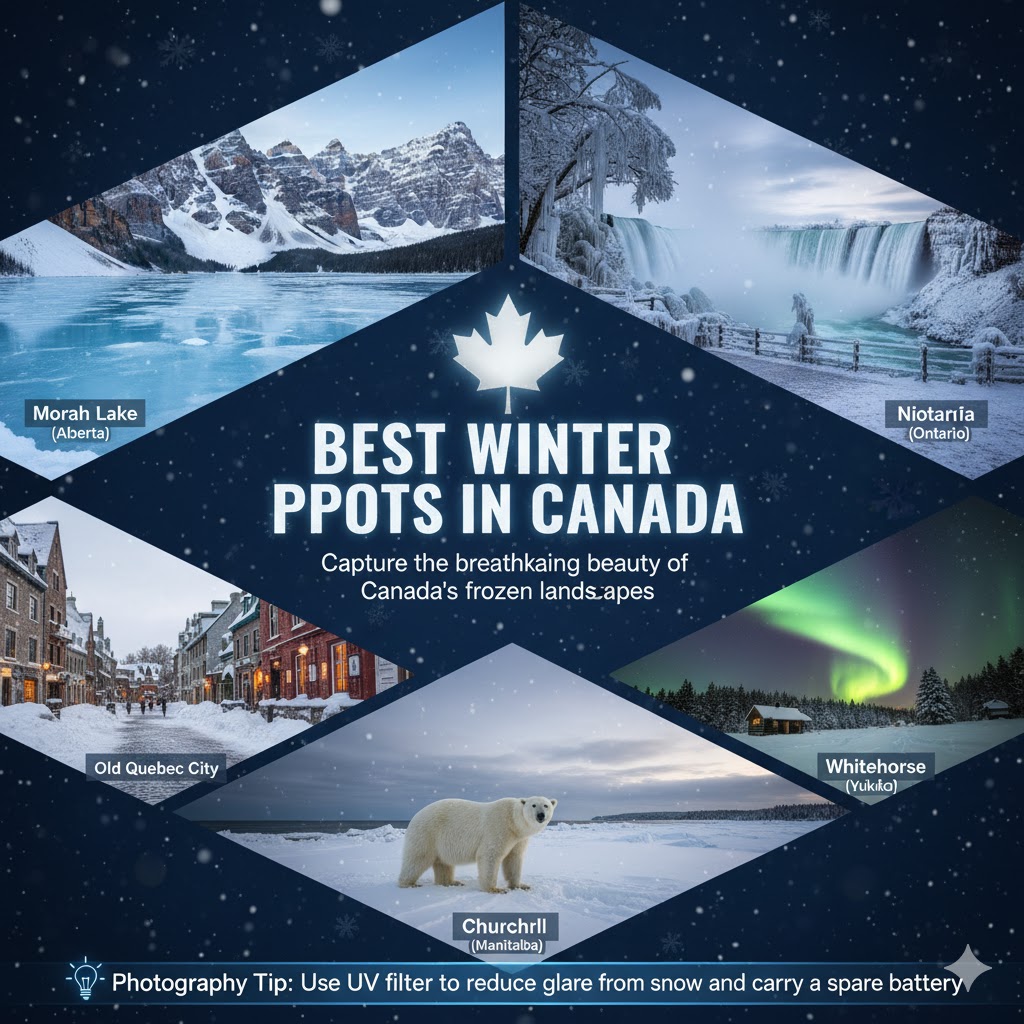
Capture the breathtaking beauty of Canada’s frozen landscapes with these must-visit photography destinations:
- Moraine Lake (Alberta): Iconic turquoise waters surrounded by snow-dusted peaks.
- Niagara Falls (Ontario): The mist freezes into crystalline formations, creating a surreal frozen wonderland.
- Old Quebec (Quebec City): Charming cobblestone streets and European architecture blanketed in snow.
- Whitehorse (Yukon): Northern Lights dancing over snow-covered forests — the shot of a lifetime.
- Churchill (Manitoba): Capture polar bears roaming in their natural habitat during late November.
💡 Photography Tip: Use a UV filter to reduce glare from snow and carry a spare battery — cold temperatures drain them quickly.
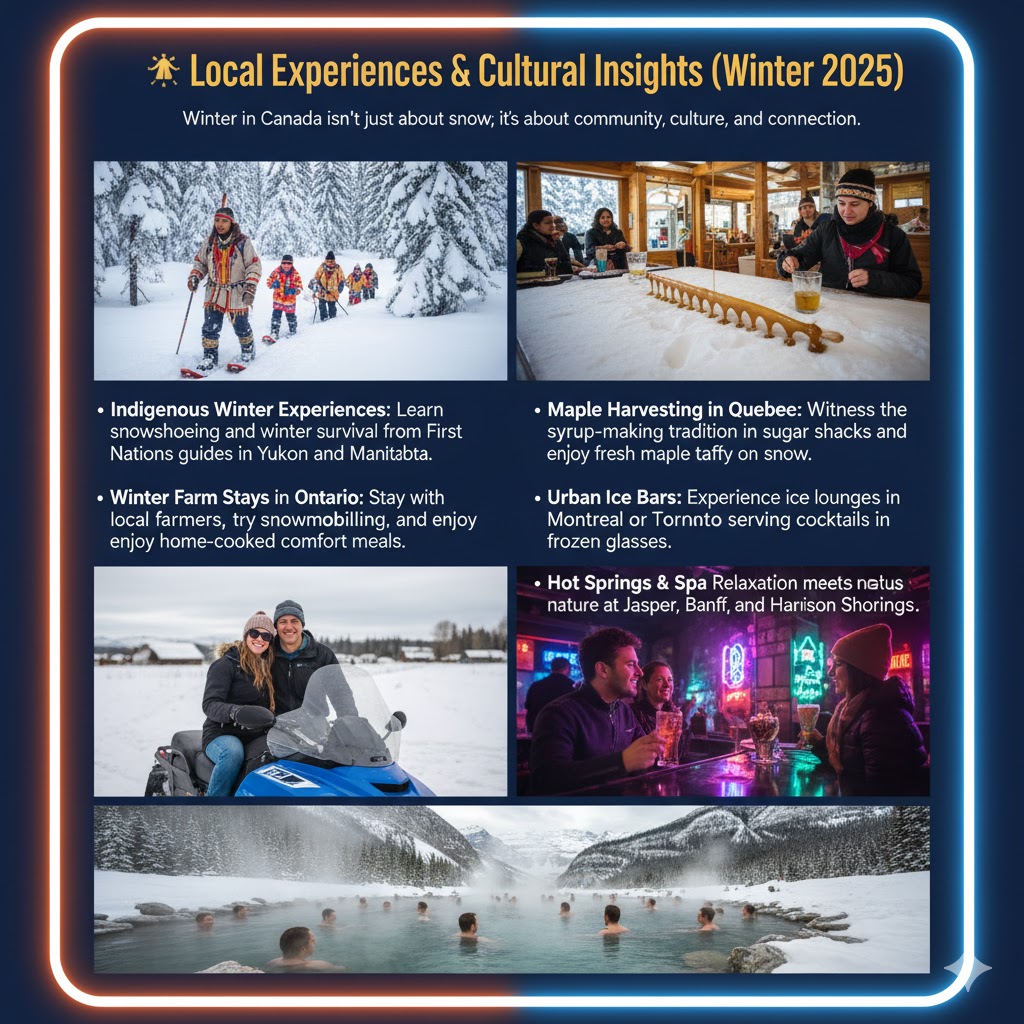
🎭 Local Experiences & Cultural Insights (Winter 2025)
Winter in Canada isn’t just about snow; it’s about community, culture, and connection.
- Indigenous Winter Experiences: Learn snowshoeing and winter survival from First Nations guides in Yukon and Manitoba.
- Maple Harvesting in Quebec: Witness the syrup-making tradition in sugar shacks and enjoy fresh maple taffy on snow.
- Winter Farm Stays in Ontario: Stay with local farmers, try snowmobiling, and enjoy home-cooked comfort meals.
- Urban Ice Bars: Experience ice lounges in Montreal or Toronto serving cocktails in frozen glasses.
- Hot Springs & Spa Culture: Relaxation meets nature at Jasper, Banff, and Harrison Hot Springs.
Read More:
- Explore Windsor Castle – Complete Travel Guide 2025 – Discover royal travel history and luxury architecture.
- Top Scenic Routes in Gilgit-Baltistan 2025 – A guide to the most breathtaking mountain drives.
References:
- Canada Tourism Official Site – Explore Winter Adventures
- Environment Canada – Weather and Safety Updates
Frequently Asked Questions (FAQs)
1. When is the best time to visit Canada for winter activities in 2025?
The best time to visit is from December to February, when snow conditions are perfect for skiing, dog sledding, and ice skating. February is especially magical for festivals like Winterlude and Quebec Winter Carnival.
2. What are the most popular winter destinations in Canada?
Top destinations include Banff, Whistler, Quebec City, Whitehorse, and Ottawa. Each offers a unique winter experience — from mountain adventures to cultural festivities and northern lights viewing.
3. How cold does it get during Canadian winters?
Temperatures vary by region but generally range from –5°C in coastal cities to –30°C in the northern provinces. Always check local weather forecasts and dress in layers for warmth and comfort.
4. Are Canadian roads safe for winter travel?
Yes — but preparation is key. Major highways are regularly plowed, yet snowstorms can cause delays. Rent an AWD vehicle, use winter tires, and monitor road conditions via Environment Canada or local alerts.
5. Can I see the Northern Lights in 2025?
Absolutely! The best viewing months are November to March, especially in Yukon, Northwest Territories, and northern Manitoba. Book tours that take you outside city lights for the clearest skies.
6. What should I pack for a Canadian winter trip?
Essentials include thermal clothing, insulated boots, gloves, hats, waterproof outerwear, and portable chargers. Don’t forget sunscreen — snow reflects sunlight and can cause winter sunburn.
7. Are there family-friendly winter experiences in Canada?
Yes! Families love ice skating on the Rideau Canal, tubing parks in Quebec, snowshoeing trails in Jasper, and indoor waterparks in Niagara Falls. Many ski resorts also have children’s programs and beginner slopes.
8. How can I travel between provinces during winter?
For long distances, VIA Rail and Air Canada offer reliable winter schedules. For scenic travel, try the Canadian Train from Toronto to Vancouver — it’s one of the world’s most beautiful snowy routes.
9. Is winter travel expensive in Canada?
Winter can be affordable if you plan smartly. Traveling midweek, booking early (by October), and choosing local stays over luxury resorts can cut costs significantly. Many attractions also offer off-season discounts.
10. Do all provinces celebrate winter festivals?
Most do! Quebec, Ontario, and Alberta host large-scale winter festivals, while smaller provinces celebrate local traditions — from icewine events in Niagara to snow sculpture contests in Newfoundland.
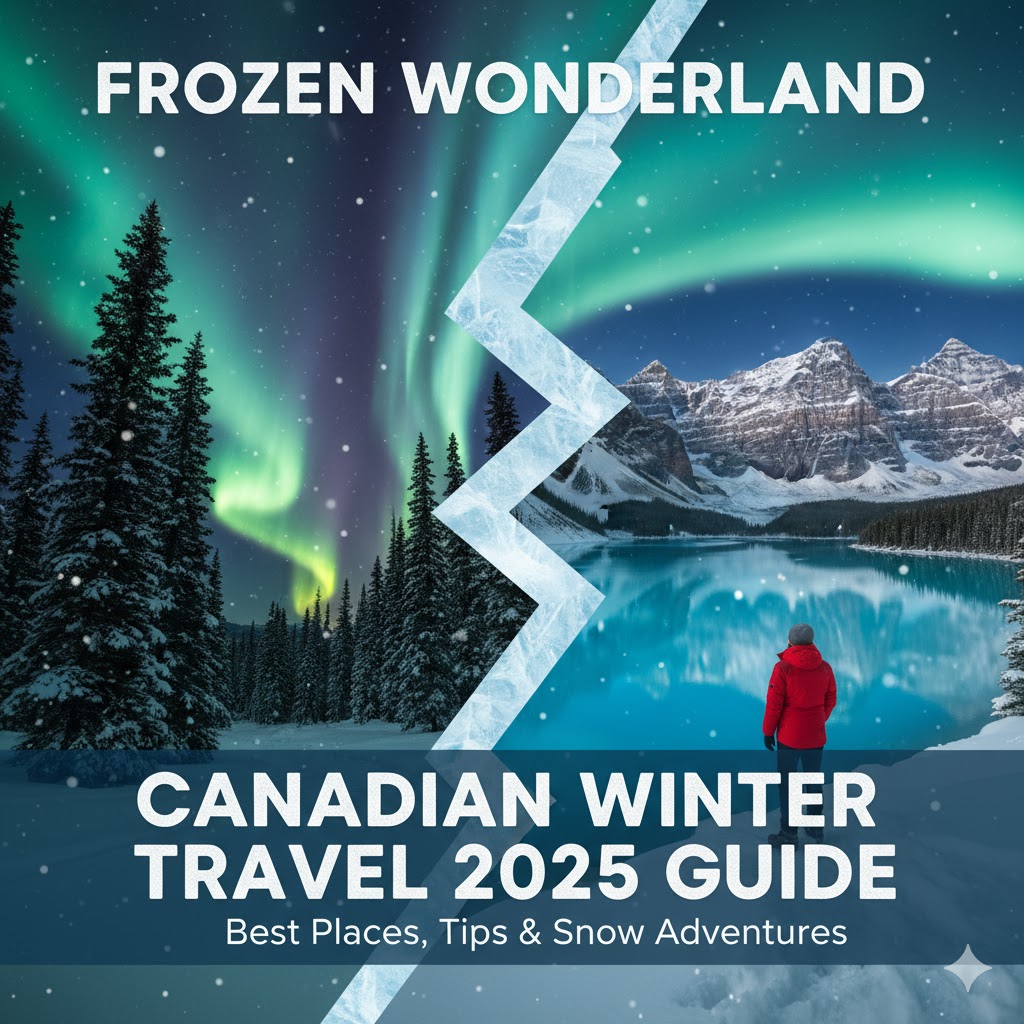
Traveler Guide – Embrace the Spirit of Canadian Winter 2025
Canada in winter is not just a destination — it’s an experience that awakens every sense. From frozen lakes and glowing ice castles to maple-scented air and the shimmer of the Northern Lights, the country offers pure seasonal magic.
Whether you’re skiing through Banff’s alpine trails, joining locals at Quebec’s Winter Carnival, or cozying up by a cabin fire in Muskoka, the beauty of Canada’s winter lies in its diversity and warmth of spirit.
The Canadian Winter Travel 2025 Guide serves as your essential compass — blending adventure, culture, and comfort. Pack your thermals, charge your camera, and let Canada show you what true winter wonder feels like.