


Introduction: Chile Blooming Desert– Chile’s Rare and Dazzling Miracle
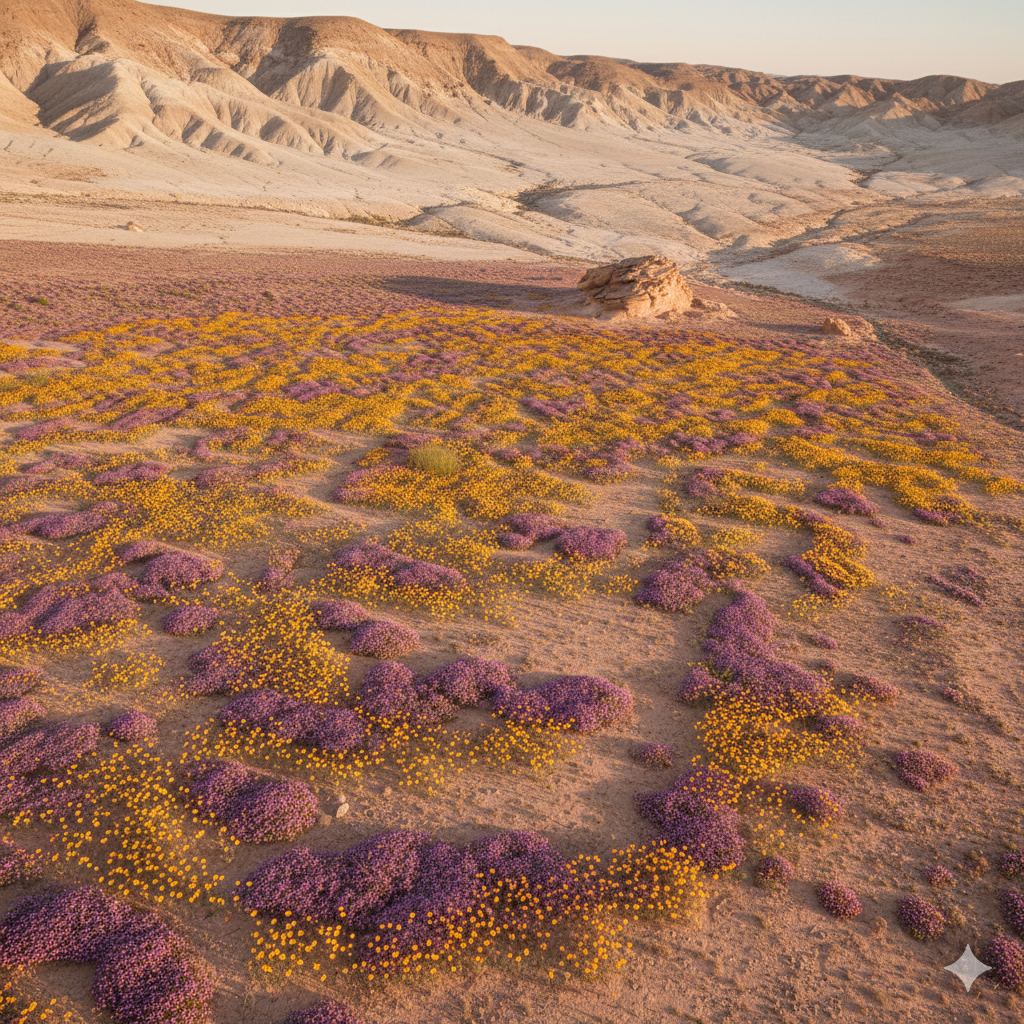
Chile’s Atacama Desert — known as the driest place on Earth — hides a magical secret. Once every few years (and sometimes once in a decade), the endless beige of arid land transforms into a sea of bright pink, purple, yellow, and white flowers. This surreal event, called “Desierto Florido” (the flowering desert), draws botanists, photographers, and nature lovers from across the world.
But what makes this phenomenon unbelievably special is that it’s unpredictable, fleeting, and deeply tied to global climate patterns like El Niño. The plants literally lie dormant for years, waiting for just the right amount of rain to burst into color. It’s a miracle of science and survival, found nowhere else on Earth at this scale.
In this in-depth guide, we’ll explore 7 incredible facts about Chile’s blooming desert, when and where it happens, how to get there, hidden gems, eco-tips, best local food to try, plus tons more insider info.
Let’s begin with the basics…

What Is the Atacama Desert? (A Quick Look)
Located in Northern Chile, the Atacama Desert stretches for over 1,600 km (1,000 miles) — from the Pacific Coast into the Andes mountain range. Known as the driest non-polar place in the world, some regions here have gone without rainfall for 500+ years.
Key facts about the Atacama:
- Elevation range: 2,400m to 4,500m (7900–14,700 ft)
- Average rainfall: Less than 1 mm per year
- Famous natural landmarks: El Tatio Geysers, Valle de la Luna, Altiplano Lagoons
- Scientific significance: Used by NASA to simulate Mars-like environments
And yet… in the right moment — it blooms like Eden.
check also:Boiling Lake Dominica – 7 Unbelievable Fiery Facts About the World’s Hottest Volcanic Pool
Incredible Facts About Chile’s Blooming Desert
The Desert Only Blooms After Rainfall – Sometimes Once a Decade
This phenomenon only occurs when unusually high rainfall (10–20 times the normal) falls between July and September. The seeds from hundreds of wildflower species are buried beneath the soil waiting — for years — or even decades.
More Than 200 Species of Flowers Emerge
The bloom includes species endemic to Chile, such as:
- Pata de guanaco (pink-purple)
- Suspiro del campo (white-yellow)
- Añañuca (red-orange bellflowers)

It Can Be Seen From Space
During peak bloom, the desert can turn into a giant carpet visible in satellite images — a rare treat for environmental scientists studying climate impact.
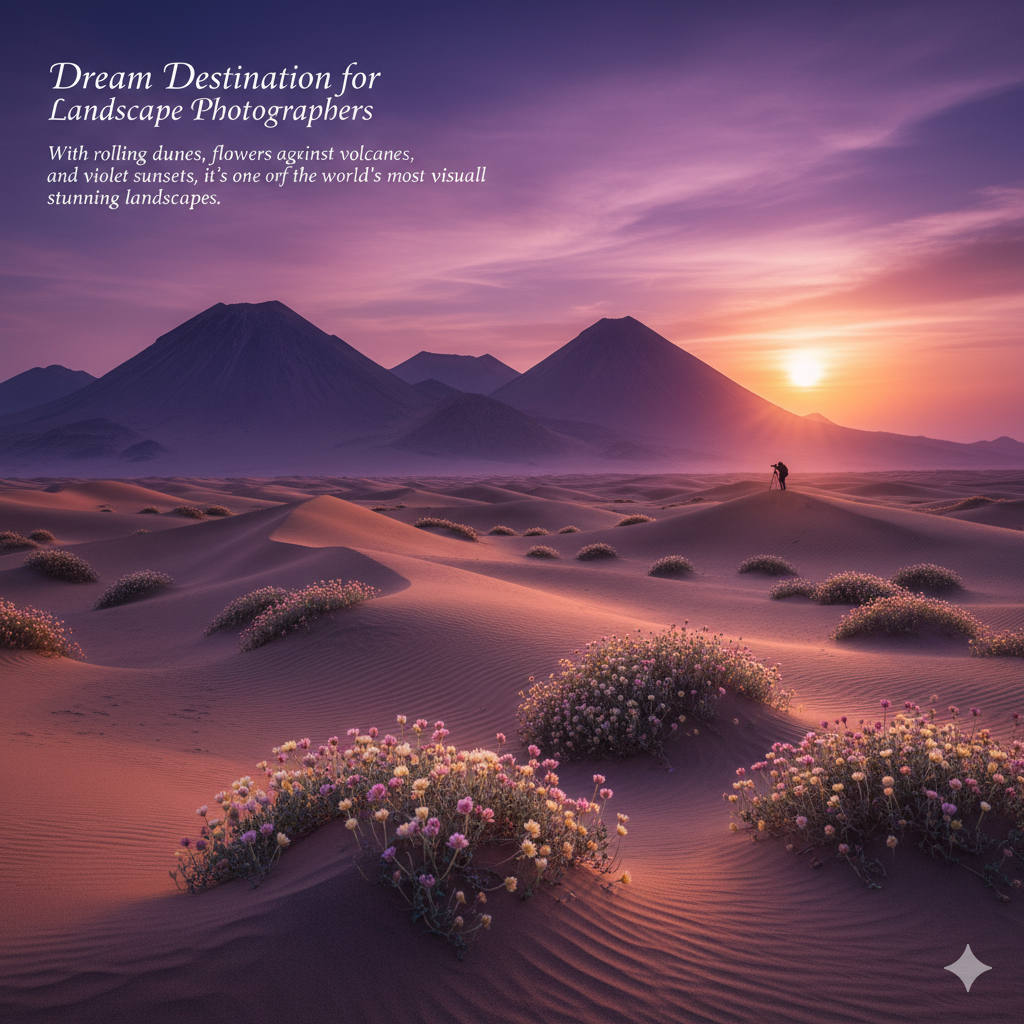
It Is a Dream Destination for Landscape Photographers
With rolling dunes, flowers against volcanoes, and violet sunsets, it’s one of the world’s most visually stunning landscapes.
Researchers Study It for Climate Change & Adaptation
Some species have lasted 100+ years through complete drought, becoming a model of plant survival science.
Best Bloom Spots Are Near Coastal Range & Pan de Azúcar Park
Not all parts bloom — only select regions receive enough moisture.
Tourists Must Be Mindful — It’s a Fragile Ecosystem
Unfortunately, in recent years, the beauty has been damaged by careless walking, selfies, and tire tracks. Officials now enforce controlled access.
Source:
Best Time to See the Blooming Desert in Chile
- Ideal Months: Late September – Early November
- Frequency: Irregular. Last full-scale blooms: 2010, 2015, 2017, 2021
- Peak Colors: First 14 days after first rain
- Best Tours Depart From: La Serena, Copiapó, Vallenar
Tip: Always check local tour operators for real-time bloom status — it’s never guaranteed.
How to Get to the Atacama Desert (Full Guide)
Closest Airports:
- Copiapó (Desierto de Atacama Airport – CPO)
- Calama (El Loa Airport – CJC) – closer to classic Atacama Valley destinations
From Santiago:
- Flight: 1.5 to 2 hours to Copiapó
- Bus: 12–16 hours (budget option)
- Car Rental: Best option for bloom seekers (4×4 recommended)
Insider Tip: Combine blooming field tours with other top attractions like the Tatio Geysers, Valle de la Luna, and ALMA Observatory.
check also:Boiling Lake Dominica – 7 Unbelievable Fiery Facts About the World’s Hottest Volcanic Pool
Costs, Tours, Fees, and Park Info
| Service | Average Price (USD) |
|---|---|
| Desert Bloom Tour (Full Day) | $60–$90 |
| Private Photography Tour | $200+ |
| Rental Car (Per Day) | $50–$80 |
| Copiapó Room (Mid-range) | $60–$120/night |
| Entry Fees | Free in most areas |
Note: Book months in advance for peak bloom years.
Hidden Gems Worth Adding to Your Trip
- Pan de Azúcar National Park Beaches – Desert meets ocean
- Cerro Paranal Observatory – Home to Europe’s Very Large Telescope
- Ojos del Salar Pools – Deep azure desert lakes
- El Tatio Geysers – World’s 3rd largest geothermal field
Must-Try Local Food in the Atacama Region
- Pastel de Choclo
- Quinoa stew with goat cheese
- Pisco Sour with Rica Rica herb
- Empanadas de Mariscos (seafood pockets)
Eco Travel Reminder
Please never step on or pick flowers. Stick to marked paths and do not enter blooming zones with vehicles. The seeds need decades to recover.
Conclusion: Why the Chilean Blooming Desert Should Be On Your Bucket List
The Atacama Desert bloom is not just a natural wonder — it’s a symbol of resilience, patience, and beauty found in the harshest conditions. Whether you’re a botanist, photographer, stargazer, or bucket-list explorer, it’s an event that touches the soul and reminds us of nature’s power.
If you’ve ever dreamed of seeing a desert explode into color — this is your chance.

FAQs
1. How often does the desert bloom in Chile?
It varies — sometimes once every few years, but sometimes a decade passes without a bloom.
2. How long does the bloom last?
Usually 4 to 8 weeks — but peak colors last only 10 to 14 days.
3. Is a permit needed to visit?
Most areas are free, but guided tours are highly recommended.
4. Do I need a 4×4 rental?
Yes. Some roads are unpaved and require high clearance