


A Journey Into Earth’s Deep Freeze
Imagine stepping outside and your eyelashes instantly freezing. Your breath crystallizes midair. Cars refuse to start. Rivers turn to solid glass. Yet — despite all odds — life continues.
Welcome to Oymyakon, a remote village in the Sakha Republic of northeastern Russia, often hailed as the coldest village on Earth. Known as the “Pole of Cold,” Oymyakon has recorded temperatures plunging below −67.7°C (−89.9°F), rivaling even Antarctica’s coastal chills.
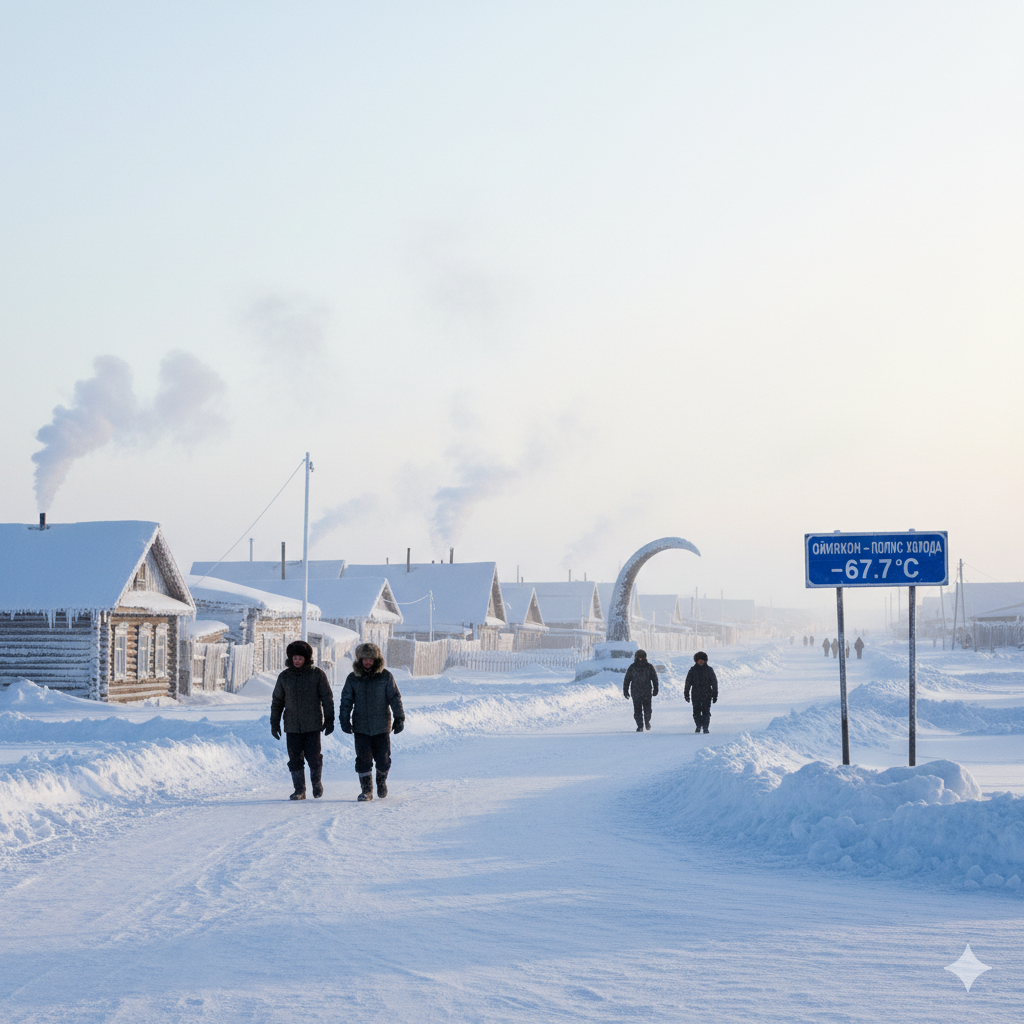
But beyond the numbers lies something far more fascinating — a community that has adapted, endured, and even thrived amidst relentless frost. This is not just a village; it’s a living museum of human resilience — where even the sun struggles to rise for weeks, yet warmth survives in the hearts of its people.
A World Frozen in Time
Oymyakon sits nestled between snow-covered valleys and frost-clad mountains, over 750 meters above sea level. The village, home to roughly 500–800 residents, is surrounded by a landscape so icy it feels almost extraterrestrial.

The Bioclimatic Paradox
Despite being one of the coldest spots on Earth, Oymyakon isn’t covered in permanent snow — the air is too dry. You’ll see diamond-dust crystals shimmering in sunlight instead of snowflakes.
The Frozen River of Life
The Indigirka River, which snakes near the village, freezes solid for nearly 9 months a year. Yet in summer, it bursts back to life, feeding the ecosystem and offering crystal-clear reflections of the endless taiga.
People of Ice and Iron
The Yakut people — the main residents of Oymyakon — are known for their warmth despite the chill. They dress in reindeer fur, eat frozen horse meat, and treat the cold not as an enemy, but as part of life itself.
“In Oymyakon, we don’t fight winter — we live with it,” says one local elder, smiling beneath his frost-lined hat.
How Humanity Found a Home at the Edge of Survival
Oymyakon’s story began as a reindeer herding ground for nomadic tribes centuries ago. The name itself means “unfrozen water” — a reference to a nearby hot spring that never freezes, even in −60°C.

During the 1930s Soviet era, the region became more populated when Stalin’s government established settlements to exploit Siberia’s natural resources. Despite the harshness, the Yakut and Even people adapted quickly — creating homes built with triple insulation, fireplaces carved from stone, and clothing sewn from reindeer hide.
The Record-Breaking Freeze
In February 1933, Oymyakon entered the record books when temperatures hit −67.7°C, the coldest ever recorded in the Northern Hemisphere. This temperature still stands unchallenged — a benchmark of Earth’s extreme endurance.
Why Do People Still Live Here?
It’s one of the great paradoxes — why would anyone live in a place where cars freeze solid, ink turns to ice, and even metal snaps like glass?

The answer lies in tradition and pride. Generations of Yakut people have lived here, herding reindeer, hunting, and fishing in frozen rivers. They feel deeply connected to the land — to leave would mean abandoning their identity.
Scientifically, Oymyakon’s freezing temperatures are caused by its geographic basin location. Cold air sinks into the valley and cannot escape, creating a self-contained freezer effect. The village sits like a natural ice bowl — beautiful yet brutal.
How to Reach Oymyakon: The Road to the Pole of Cold

Reaching Oymyakon isn’t easy — and that’s part of its mystique.
- Fly to Yakutsk, the capital of the Sakha Republic — the world’s coldest major city.
- From Yakutsk, take the “Road of Bones” (Kolyma Highway) — a 900 km route through frozen tundra, named after the prisoners who built it during Stalin’s regime.
- Travel via 4×4 vehicles or local guided tours — a journey taking 2–3 days depending on weather.
Despite the challenge, it’s an unforgettable drive — past ghost towns, snow forests, and frozen rivers. Along the way, you’ll cross a bridge of ice that feels like stepping into another planet.
Tickets, Permits & Fees
Visiting Oymyakon requires careful planning.
- Visa: Standard Russian visa required.
- Permits: Some areas need travel authorization from local authorities (especially if joining indigenous zones).
- Tour Packages: Starting from $2,000–$3,500 USD per person for guided expeditions including lodging, transport, and meals.
- Accommodation: Traditional guesthouses and homestays are available (heated, rustic comfort).
Tip: Book tours through reputable eco-travel companies such as Yakutia Extreme Tours or Siberian Adventure Company.
Best Time to Visit the Coldest Village on Earth

- Winter (Dec–Feb): For the full freeze experience — temperatures drop below −50°C, skies are crystal clear, and the landscape glows blue under the moonlight.
- Spring (Mar–Apr): Days grow longer; perfect for photography and milder weather (−30°C).
- Summer (Jun–Aug): A brief thaw, with lush valleys and blooming tundra flowers.
- Autumn (Sep–Oct): A golden season when the taiga forests turn amber before frost returns.
Hidden Gems Around Oymyakon

- Pole of Cold Monument: A metal statue of a bull marking the coldest temperature ever recorded — a must-visit photo spot.
- Tomtor Village: An old Soviet-era settlement nearby with museums showcasing the region’s icy history.
- Thermal Springs: Hidden near the mountains — naturally warm pools that steam in sub-zero air.
- Frozen Forest Trails: Local guides offer snowmobile rides through surreal landscapes of ice-coated trees.
Check Also: 7 Incredible Facts About the Glass Skywalk Grand Canyon – Walk on Air
Local Talk & Survival Tips
- Locals never turn off their engines in winter — even overnight.
- To stay warm, they wear fur hats called malakhai and layers of deer hide.
- Don’t try to breathe too deeply outdoors — your lungs will sting.
- Phones and cameras must be insulated; batteries die instantly in extreme cold.
“If you respect the cold, it will respect you,” says Yakut resident Nikolai. “But if you challenge it — you lose.”
Local Food Experiences: Dining in Deep Freeze

Life in Oymyakon means high-fat, protein-rich meals for energy. Traditional Yakut dishes include:
- Stroganina: Frozen raw fish shaved into delicate curls — eaten with salt and mustard.
- Reindeer Meat Stew: Slow-cooked with herbs, hearty and warming.
- Indigirka Salad: Diced fish, onions, and spices — served ice-cold.
- Koumiss: Fermented mare’s milk, a local delicacy for special occasions.
Source:
Traveler: The Heartbeat Beneath the Ice
Oymyakon isn’t just the coldest village on Earth — it’s a symbol of human endurance and respect for nature’s extremes. In a world obsessed with comfort, Oymyakon stands as a reminder that beauty and resilience thrive even in the harshest corners.
When you visit, you’ll see more than ice. You’ll see warmth — in smiles, in fires, in frozen breath rising against the aurora-lit sky.

It’s not just about surviving here. It’s about living fully, even when the world stands still.
FAQs About Oymyakon – The Coldest Village on Earth
Q1: What’s the coldest temperature ever recorded in Oymyakon?
A: −67.7°C (−89.9°F), recorded in 1933 — the coldest in the Northern Hemisphere.
Q2: Can tourists actually visit Oymyakon?
A: Yes! With proper gear and guided tours from Yakutsk, travelers can safely experience this frozen wonder.
Q3: Do locals have schools or internet?
A: Yes — Oymyakon has schools, small shops, and limited internet access through satellite.
Q4: What happens to cars in such extreme cold?
A: Engines run continuously, and oil thickens like tar. Locals use heated garages or wood stoves under the chassis.
Q5: Is Oymyakon dangerous for foreigners?
A: Not if properly equipped. With professional guides and local knowledge, it’s a safe and unforgettable experience.


