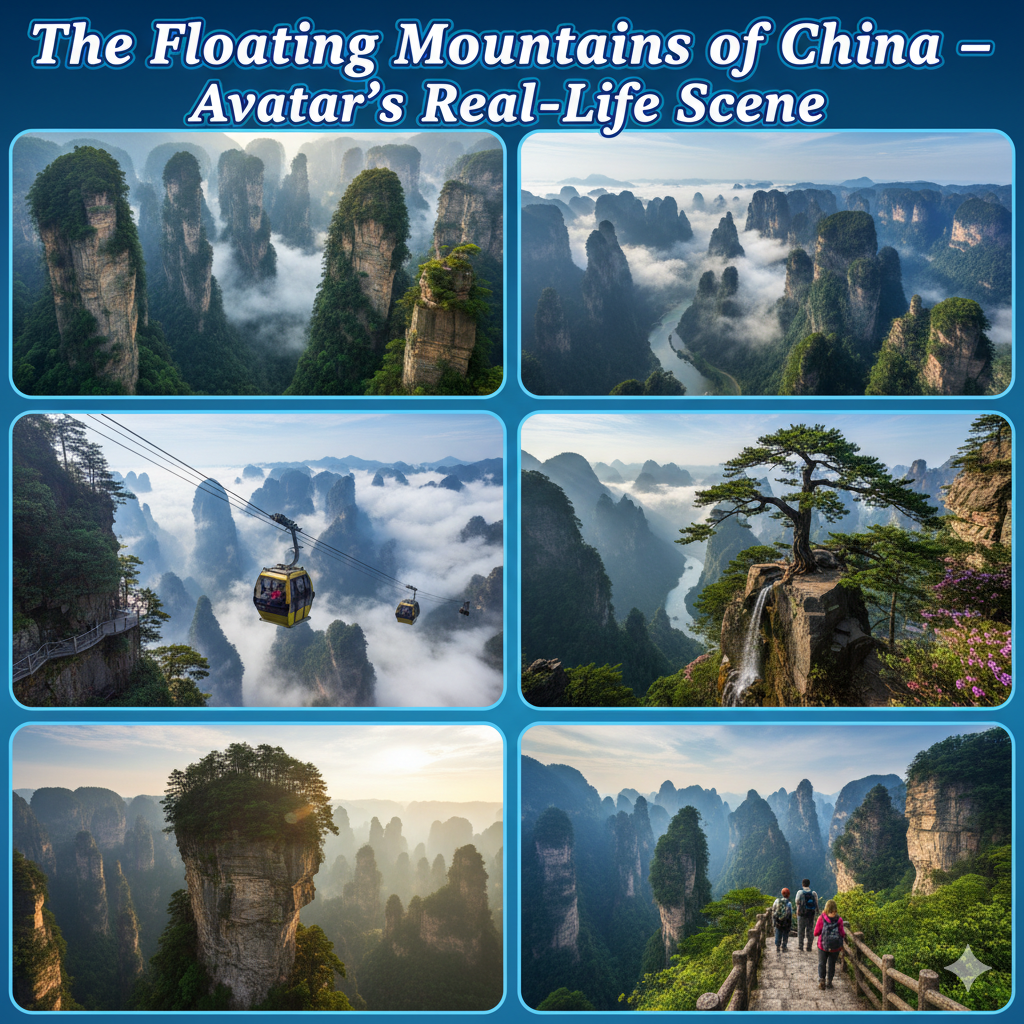

A Surreal Natural Wonder
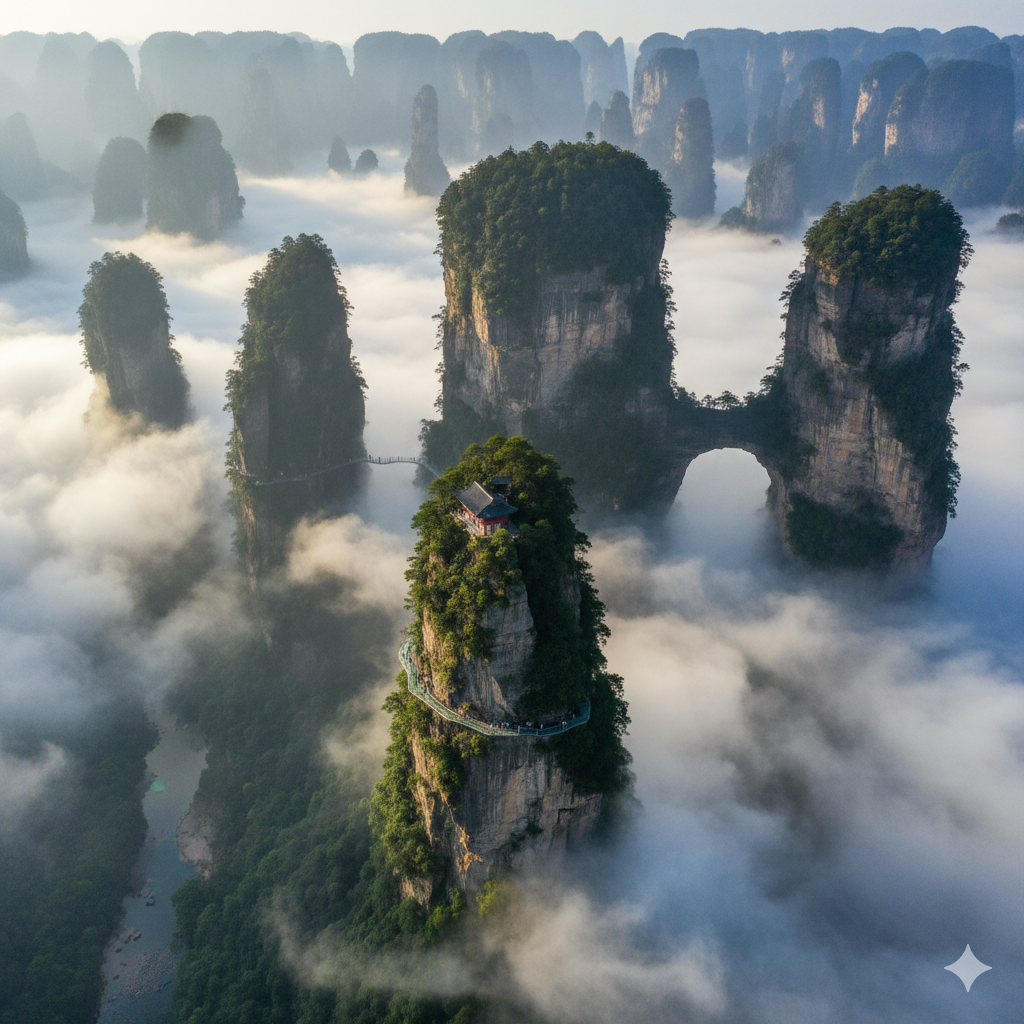
Imagine stepping into a scene that seems plucked straight from a science fiction movie. Floating Mountains of China, officially known as the Zhangjiajie National Forest Park, offer just that — a landscape of towering sandstone pillars rising from misty forests, seemingly floating above the Earth.
These majestic formations inspired the iconic floating mountains in James Cameron’s film Avatar, turning the park into a real-life fantasy world. Visiting Zhangjiajie is not just sightseeing; it’s experiencing a cinematic wonder of nature.
Location & Access: Reaching Zhangjiajie
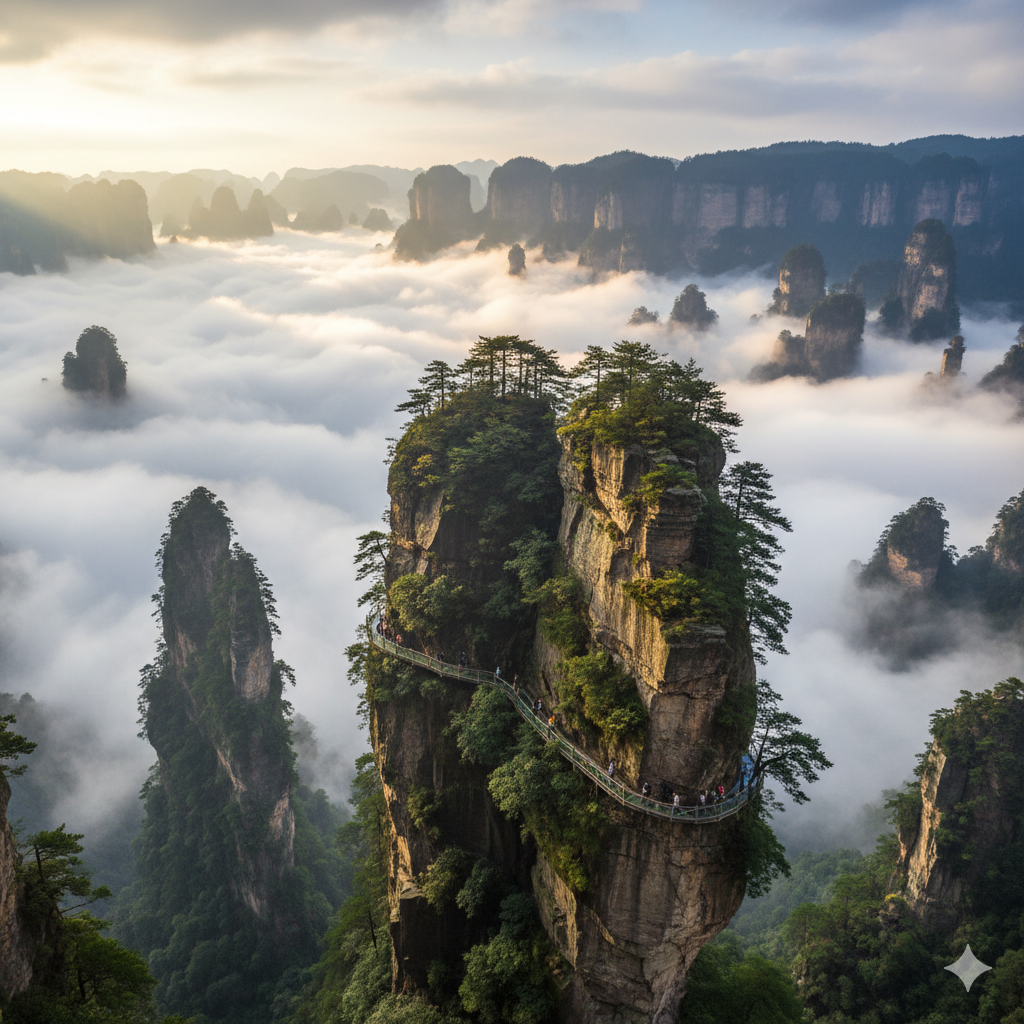
Zhangjiajie National Forest Park is located in Hunan Province, China. Key access points and tips:
- Nearest Airports: Zhangjiajie Hehua International Airport (ZHA)
- Transport: Shuttle buses, cable cars, and scenic elevators make exploring the park easier
- Tours: Guided tours provide historical context and safe routes to the tallest pillars
- Tip: Multi-day passes are recommended to explore all scenic areas, including Tianzi Mountain, Yuanjiajie, and Golden Whip Stream
Geology & Formation: Nature’s Sculpting Power
The Floating Mountains are sandstone pillars formed over millions of years by:
- Erosion: Wind, rain, and frost gradually carved the rock into tall, slender columns
- Sedimentation: Layers of quartz sandstone formed the bases of the pillars
- Weathering: Constant exposure to the elements shaped the jagged, otherworldly peaks
Some pillars reach over 1,000 meters (3,300 ft) in height, creating the illusion of floating mountains when shrouded in fog.
Source:
National Geographic – Floating Mountains of China
Cultural & Cinematic Impact
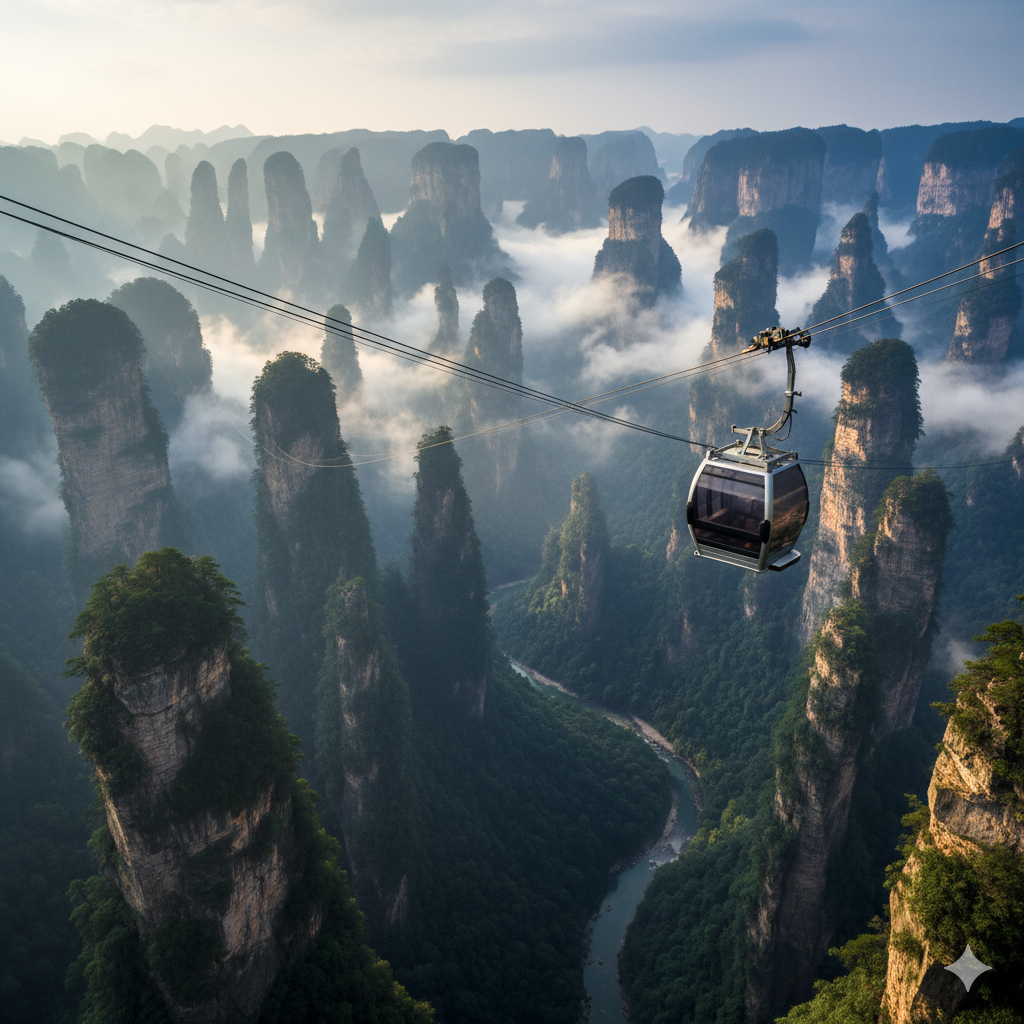
- Avatar Inspiration: James Cameron visited Zhangjiajie in 2009, citing its surreal landscape as the inspiration for Pandora’s floating mountains
- Local Legends: The Tujia and Miao ethnic communities attribute spiritual significance to the mountains, calling them “Heavenly Pillars”
- Tourism Boom: Since Avatar, the park has become a global tourist destination, attracting millions of visitors annually
The combination of cinematic fame and local lore makes Zhangjiajie both magical and culturally significant.
Best Time to Visit: Seasons & Conditions
- Spring (March–May): Lush greenery, light mist, and mild weather
- Summer (June–August): Dense forest foliage and clear visibility, but crowded
- Autumn (September–November): Stunning fall colors, fewer tourists, ideal photography conditions
- Winter (December–February): Snow-dusted pillars, mystical fog, cold but quieter
Photography Tip: Early morning fog enhances the “floating” illusion of the pillars.
Activities & Experiences
- Cable Cars: Take the Tianzi Mountain Cable Car for panoramic views
- Hiking Trails: Explore scenic areas like Yuanjiajie, known for “Avatar Hallelujah Mountains”
- Glass Bridge: Walk across the Zhangjiajie Glass Bridge, suspended over the Grand Canyon
- Photography Tours: Capture mist-shrouded pillars, wildlife, and sunset hues
- Local Villages: Discover Tujia and Miao culture near the park
Visitors can combine adventure, photography, and cultural exploration in one breathtaking itinerary.
Wildlife & Flora
- Flora: Subtropical forests with rare plant species, mosses, and ferns
- Fauna: Macaques, pheasants, and diverse bird species inhabit the forested valleys
- Conservation: Strict protection measures preserve the ecosystem and natural beauty
The biodiversity adds depth to the mystical landscape, making the park an ecological treasure as well.
Conservation & Safety
- Stick to marked trails and observation points
- Respect wildlife and avoid feeding animals
- Avoid littering; the park maintains strict ecological regulations
- Use certified guides for hiking and climbing trails
Responsible tourism ensures that Zhangjiajie remains a pristine wonder for future generations.
Check Also: Ghost Town of Pripyat: 10 Incredible Secrets Where Nature Reclaims Chernobyl
FAQs – Exploring the Floating Mountains
Q1: Where are China’s Floating Mountains located?
A1: In Zhangjiajie National Forest Park, Hunan Province, China.
Q2: How tall are the sandstone pillars?
A2: Some pillars exceed 1,000 meters (3,300 ft) in height.
Q3: When is the best time to visit?
A3: Spring and autumn offer the best visibility and fewer crowds.
Q4: Can visitors hike the pillars?
A4: Yes, guided hiking trails are available, but climbing the pillars themselves is prohibited.
Q5: How did the mountains inspire Avatar?
A5: James Cameron visited Zhangjiajie and based Pandora’s floating mountains on its surreal landscape.
Traveler: Stepping Into a Cinematic Fantasy
The Floating Mountains of China are a breathtaking natural spectacle that blends geology, culture, and cinematic fame. Mist-shrouded pillars rising from lush forests create a real-life Avatar scene that leaves every visitor in awe.
For adventurers, photographers, and nature lovers, Zhangjiajie is a once-in-a-lifetime journey into a surreal and mystical world.