
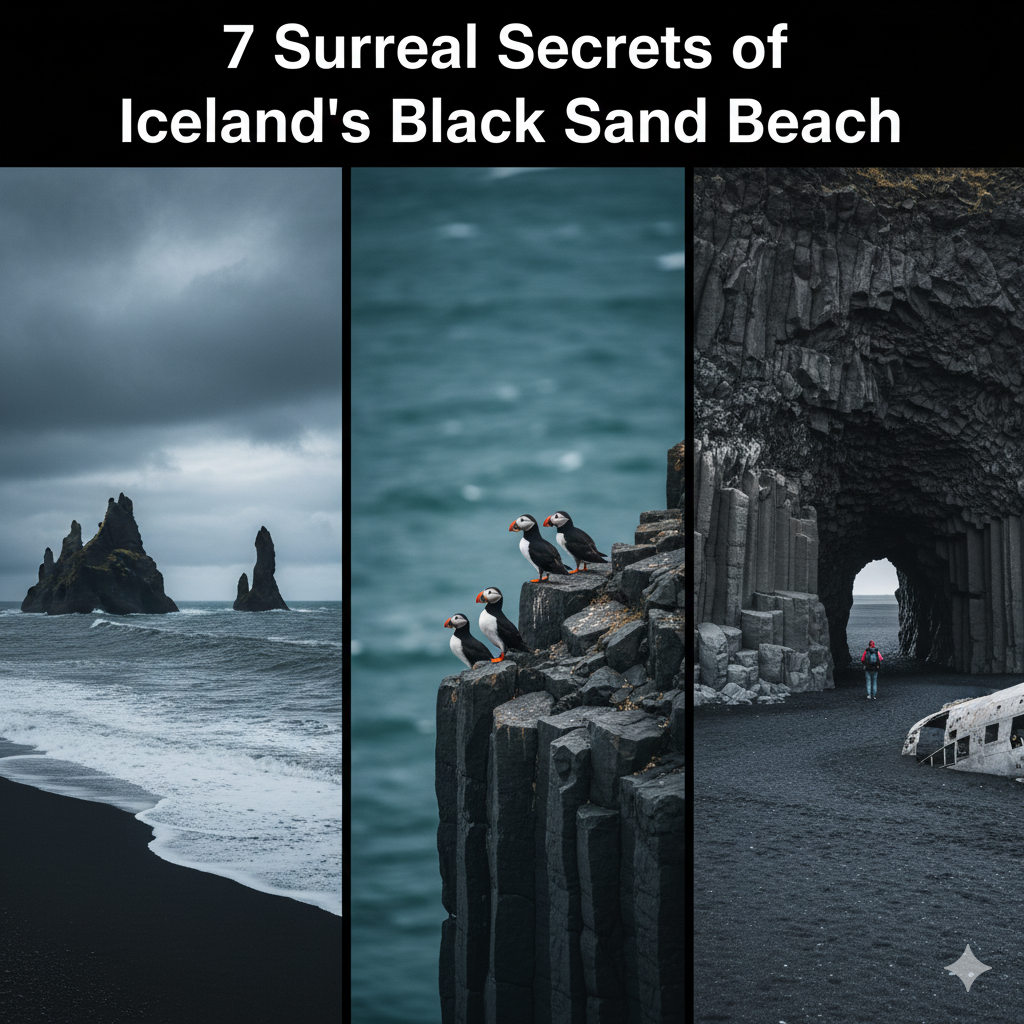

Where Fire Meets Ice – The Story of Reynisfjara (Iceland Black Sand Beach)
On Iceland’s southern coast, not far from the quiet fishing village of Vík í Mýrdal, lies a beach like no other — a stark, cinematic shoreline of jet-black sand, towering basalt columns, thundering Atlantic waves, and dramatic rock formations that rise like ancient sea sentinels. This is Reynisfjara, Iceland’s black sand beach most famous, and one of the most surreal coastal landscapes on Earth.
Born of volcanic fire and sculpted by centuries of restless ocean, this place is both beautiful and dangerous — a coastal gallery where nature’s raw power is always on display.
But what makes Reynisfjara even more special goes beyond the visuals — it’s the folklore of sea trolls frozen in rock, the unearthly howling of winter winds, the adorable puffins nesting atop basalt cliffs, and the heart-stopping “sneaker waves” that snatch the unwary back into the sea.

In this ultimate guide, we’ll uncover 7 surreal secrets of Iceland’s black sand beach — including how it formed, when to visit, the myths behind its sea stacks, hidden caves, how to reach it, where to stay, safety tips, and more.
Let’s dive into the secrets behind this volcanic wonder…
iceland Black Sand beach
The Science Behind the Scene
Iceland is home to more than 30 active volcanic systems, and Reynisfjara owes its existence entirely to lava. Specifically, when lava from nearby Katla volcano flowed rapidly into the cold Atlantic Ocean centuries ago, the sudden temperature change caused it to fracture into smooth, tiny fragments — creating jet-black volcanic sand.
Key Facts:
- It’s not actually “sand” — it’s ground volcanic glass (called basalt)
- Unlike tropical beaches, the minerals contain no quartz, only cooled lava
- Waves grind lava rock over centuries to create smooth black grains
Reynisfjara is one of over a dozen black sand beaches in Iceland — but none are as visually dramatic.

The Iconic Basalt Columns: Nature’s Geometric Masterpiece
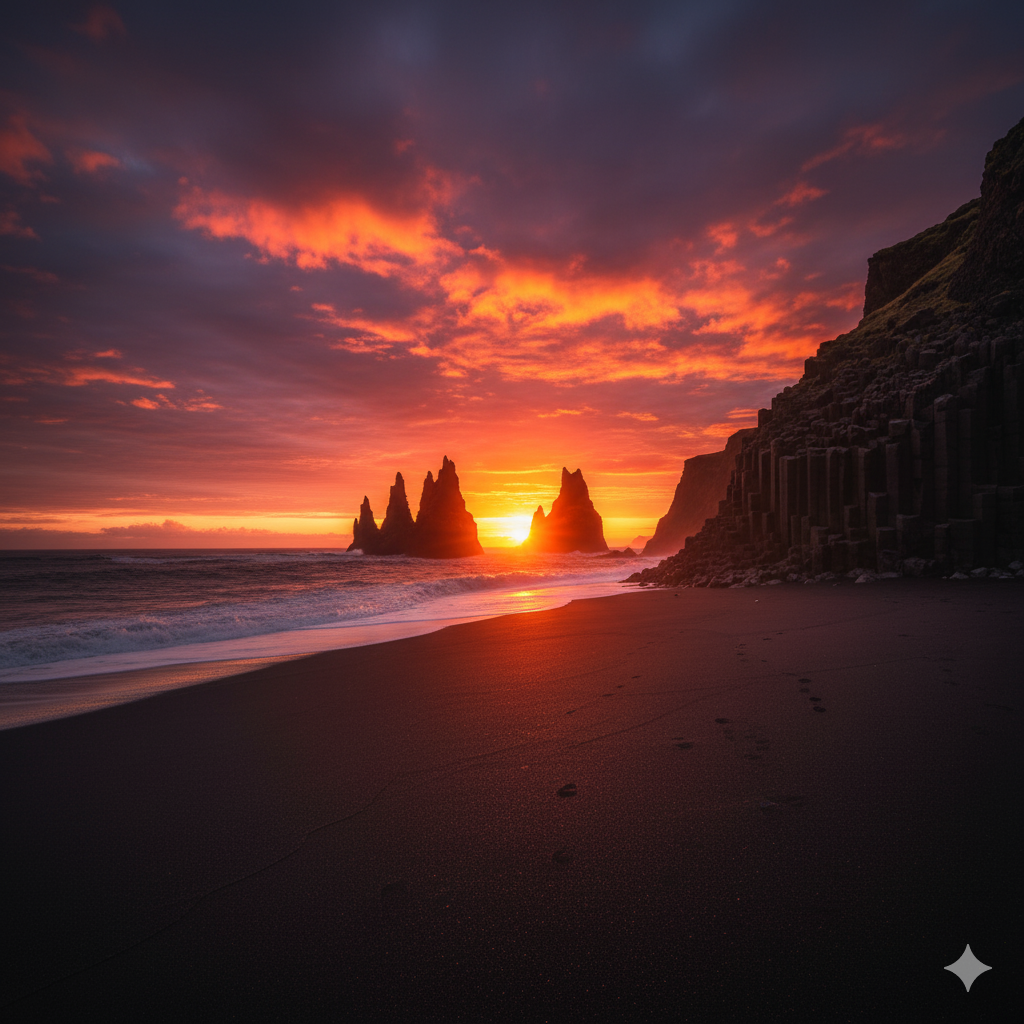
Standing at the entrance of Reynisfjara Beach is a towering formation of hexagonal basalt columns known as Hálsanefshellir Cave.
These geometric pillars are the result of lava cooling so evenly and slowly that its surface cracked into perfect natural patterns — the same process behind Giant’s Causeway in Ireland and Fingal’s Cave in Scotland.
Tip: These columns are Instagram-famous — go during sunrise or early morning for crowd-free photos.
Reynisdrangar Sea Stacks: Trolls, Myths, and Legend
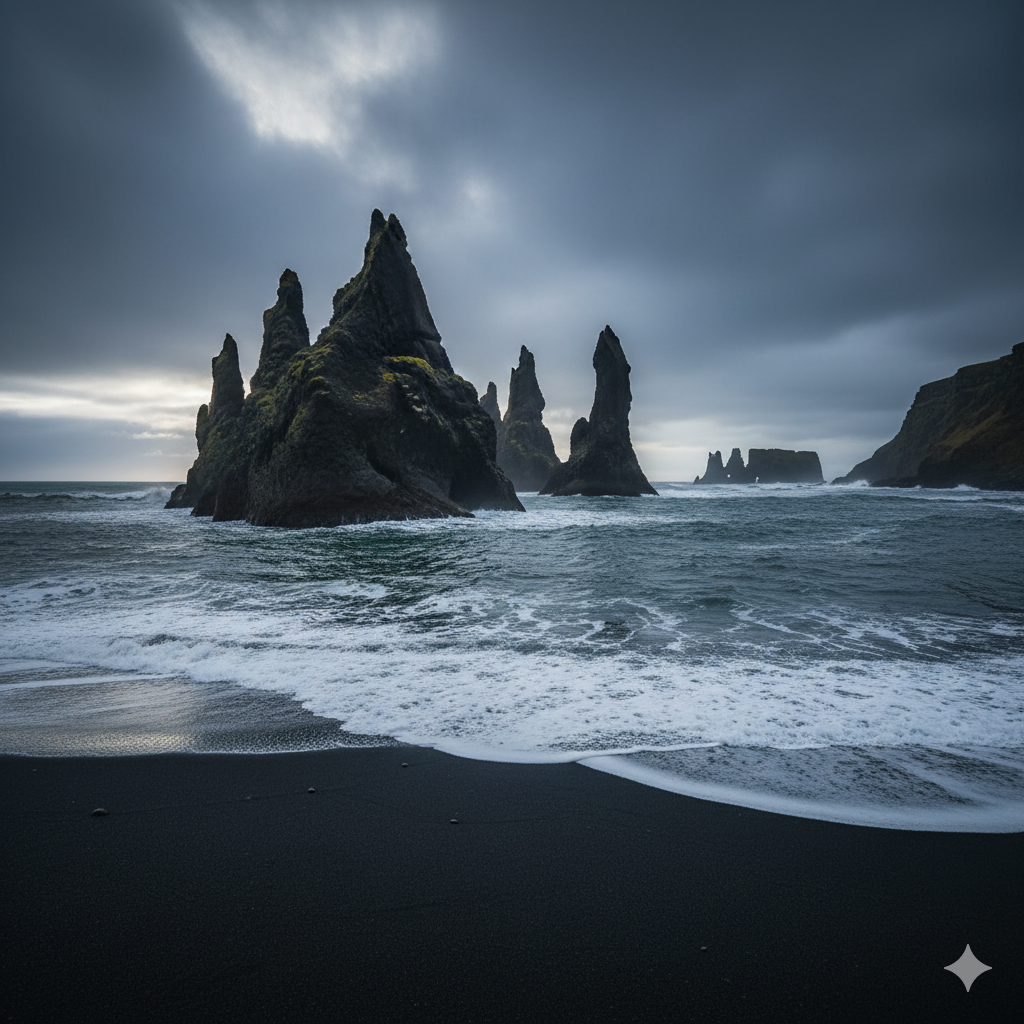
A few hundred meters offshore lie the Reynisdrangar, three jagged, needle-like rock formations rising from the Atlantic. According to Icelandic folklore, they were once trolls who tried to drag a ship ashore — but were caught in daylight and turned to stone.
Legend says that during full moon nights, the trolls still whisper across the waves.
Exact height: up to 66 meters (217 feet)
Fun fact: These stacks were featured in Game of Thrones, Star Wars: Rogue One, and Noah (2014).
Wildlife Encounter: Puffins and Sea Birds
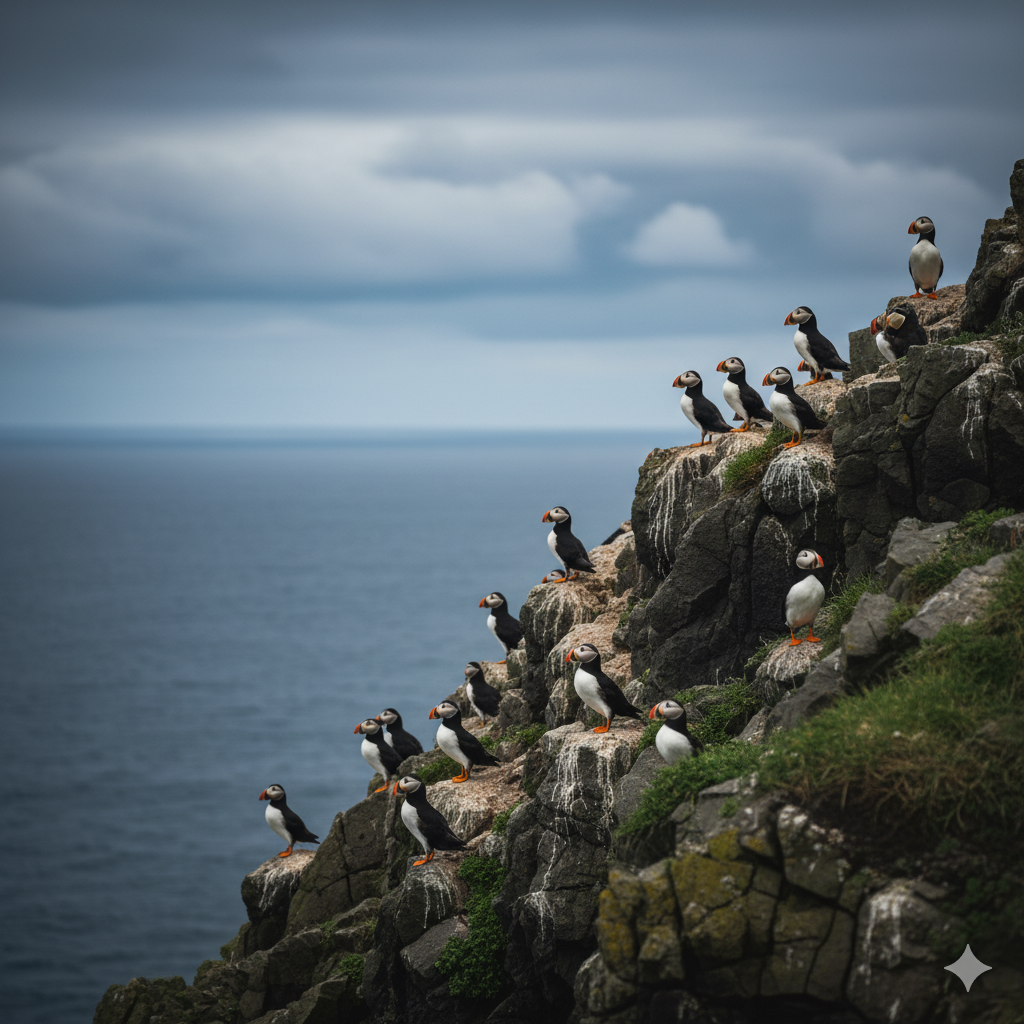
From May to August, cliffs near Reynisfjara act as nesting grounds for Atlantic puffins, one of Iceland’s most beloved birds.
Best place to see puffins:
- Dyrhólaey Peninsula viewpoint
- Requires respectful distance (binoculars recommended)
Other birds spotted:
- Arctic Terns
- Guillemots
- Northern Fulmars
The Danger is Real: Sneaker Waves & Safety Rules
Reynisfjara’s beauty has a sinister element — the beach is known for deadly sneaker waves, sudden surges of water that can drag visitors into freezing seas without warning.
Travel Safety Tips at Reynisfjara:
- Never turn your back on the ocean
- Stay behind yellow safety lines at all times
- Never walk close to the surf — even when it’s calm
Tragically, several tourists have drowned here in the past decade. Respect the signs.
check also: World’s Most Isolated Tribe: 7 Astonishing Secrets of the Sentinelese People
Best Time to Visit (Month-by-Month)
| Month | What to Expect |
|---|---|
| May–August | Puffins, warmer weather, long daylight hours |
| September–October | Fewer crowds, golden-hour landscapes |
| November–March | Northern Lights chance + dramatic winter waves |
| April | Spring thaw; quieter but colder |
Pro tip: Sunrise or sunset = magic photo lighting.
How to Reach Reynisfjara + Roads & Routes
Location: 187 km (116 miles) southeast of Reykjavik
Closest village: Vík í Mýrdal (10 min drive)
Transport Options:
- Rent a car (most flexible)
- Join a South Coast day tour from Reykjavik
- Local bus from Vik → Reynisfjara stop + walk
Driving time from Reykjavik: ~2 hours 30 mins via Route 1 (Ring Road)
source:
Nearby Attractions Worth Visiting
- Dyrhólaey Arch & Lighthouse – Puffin paradise
- Sólheimasandur Plane Wreck – Famous DC-3 wreck (4 km hike)
- Skógafoss Waterfall – 200 ft curtain waterfall
- Fjaðrárgljúfur Canyon – Otherworldly, winding green cliff canyon
Where to Stay Near Reynisfjara
- Budget: Puffin Hostel Vík
- Mid-Range: Hotel Kría
- Luxury: Black Beach Suites (ocean view rooms)
- Unique: Vik Glamping Cabins (glass dome stays)
Local Icelandic Food to Try Nearby
- Kjötsúpa – Traditional lamb soup
- Skyr – Icelandic protein dairy
- Arctic Char – River-to-plate freshness
- Vík Bakery Rye Bread + Lava Salt Butter
Quick Dos & Don’ts
Do stay behind safety lines
Do respect wildlife habitats
Do visit during golden hour
Don’t fly drones without a permit
Don’t climb unstable cliffs
Don’t ignore tide warnings
FAQ
Q: Can you swim at Reynisfjara Beach?
A: No — the water is dangerously cold and waves unpredictable.
Q: Is Reynisfjara suitable for children?
Yes, but strict supervision is required — this is not a place for water play.
Q: Is parking free?
Yes, there is free parking on-site.
7 Surreal Secrets of Iceland’s Black Sand Beach”
Split Scene Visuals7 Surreal Secrets of Iceland’s Black Sand Beach”
Split Scene Visuals