
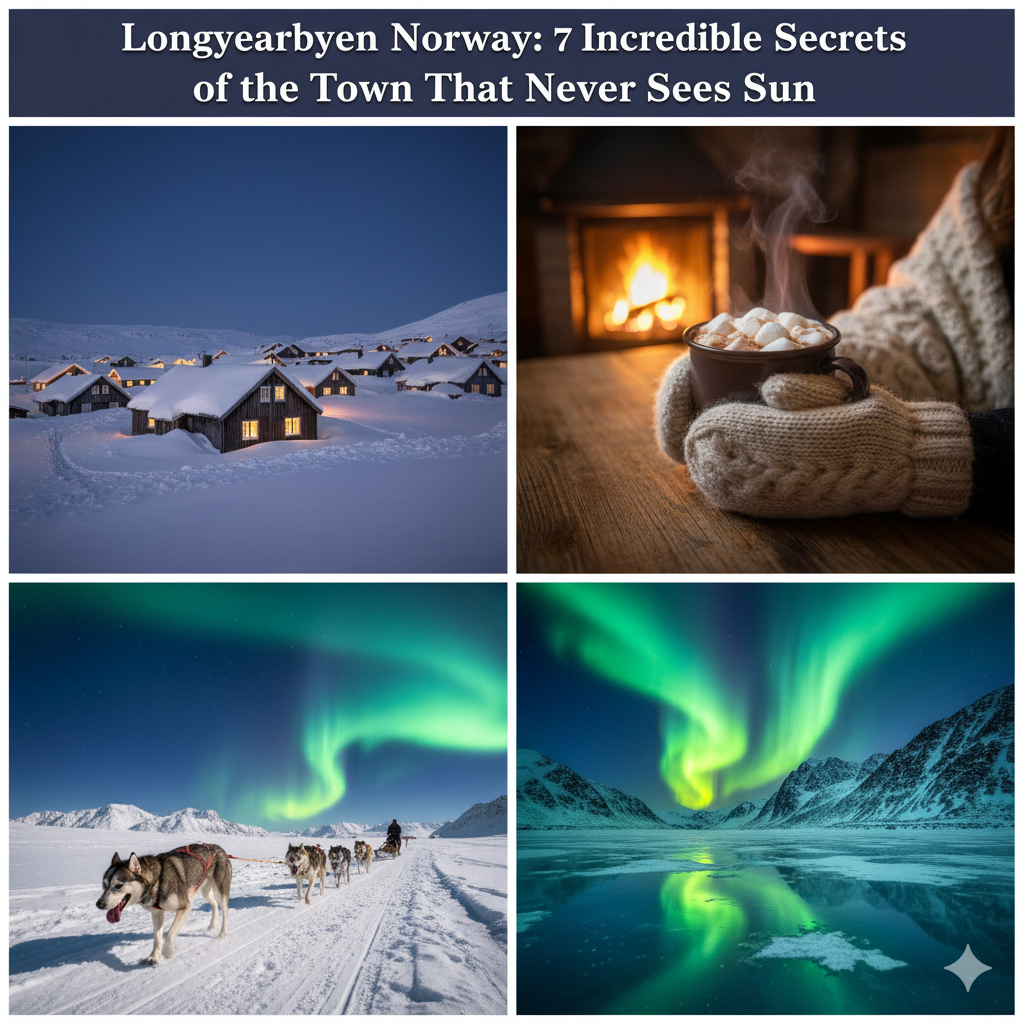

Where Darkness Becomes Day
Imagine living in a town where the sun doesn’t rise for months, and the sky glows with auroras instead of daylight. Welcome to Longyearbyen Norway — the northernmost settlement on Svalbard Island, home to a polar night so long that it reshapes daily life, culture, and the environment.
Known as “the town that never sees sun”, Longyearbyen offers travelers a unique Arctic experience: icy landscapes, ethereal northern lights, and the surreal beauty of a world suspended between dusk and dawn.
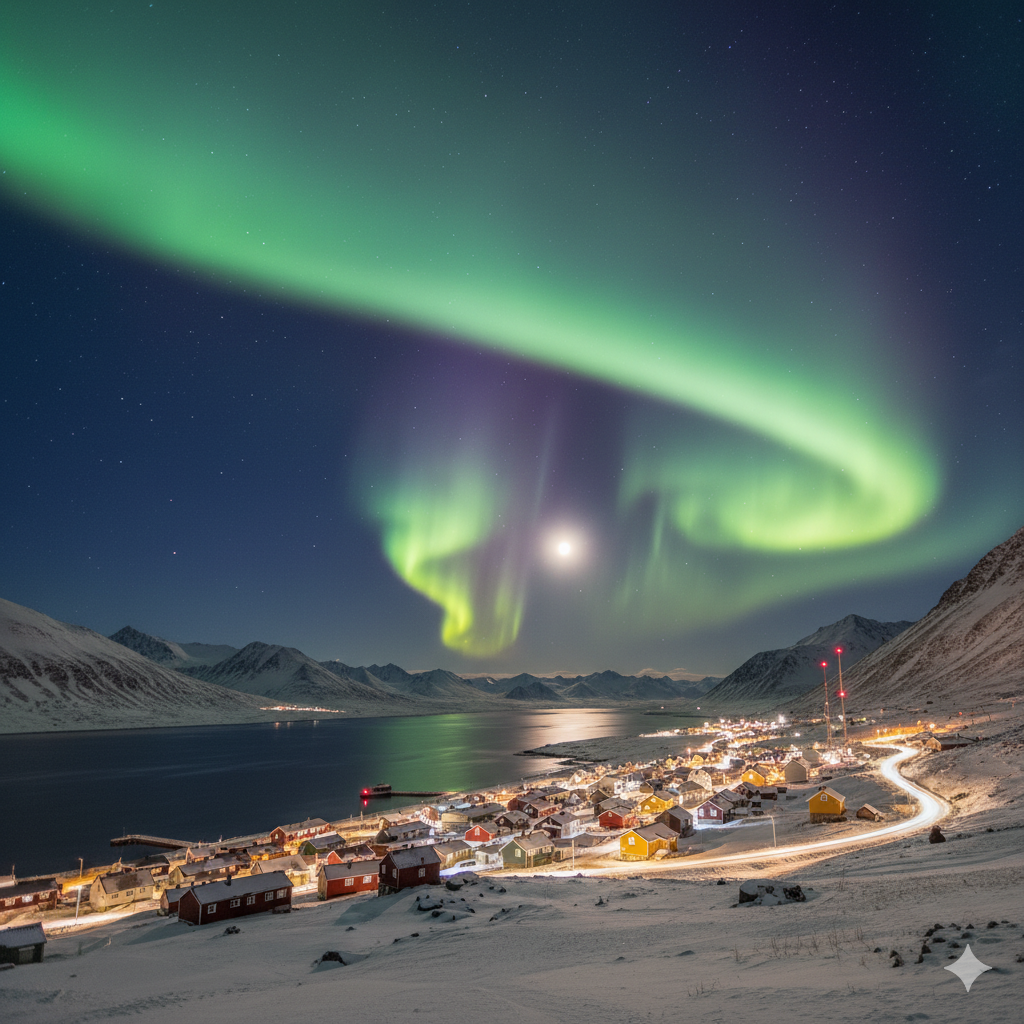
In this article, we’ll explore the history, geography, polar night phenomenon, travel tips, local culture, hidden gems, and culinary experiences of this mesmerizing Arctic town.
History and Geography of Longyearbyen Norway
A Town Born of Coal
- Founded in 1906 by John Munro Longyear, an American coal mining entrepreneur.
- Originally a mining settlement, it has transformed into a center for Arctic research and tourism.
- Svalbard is a Norwegian archipelago in the Arctic Ocean, roughly halfway between mainland Norway and the North Pole.
Geography
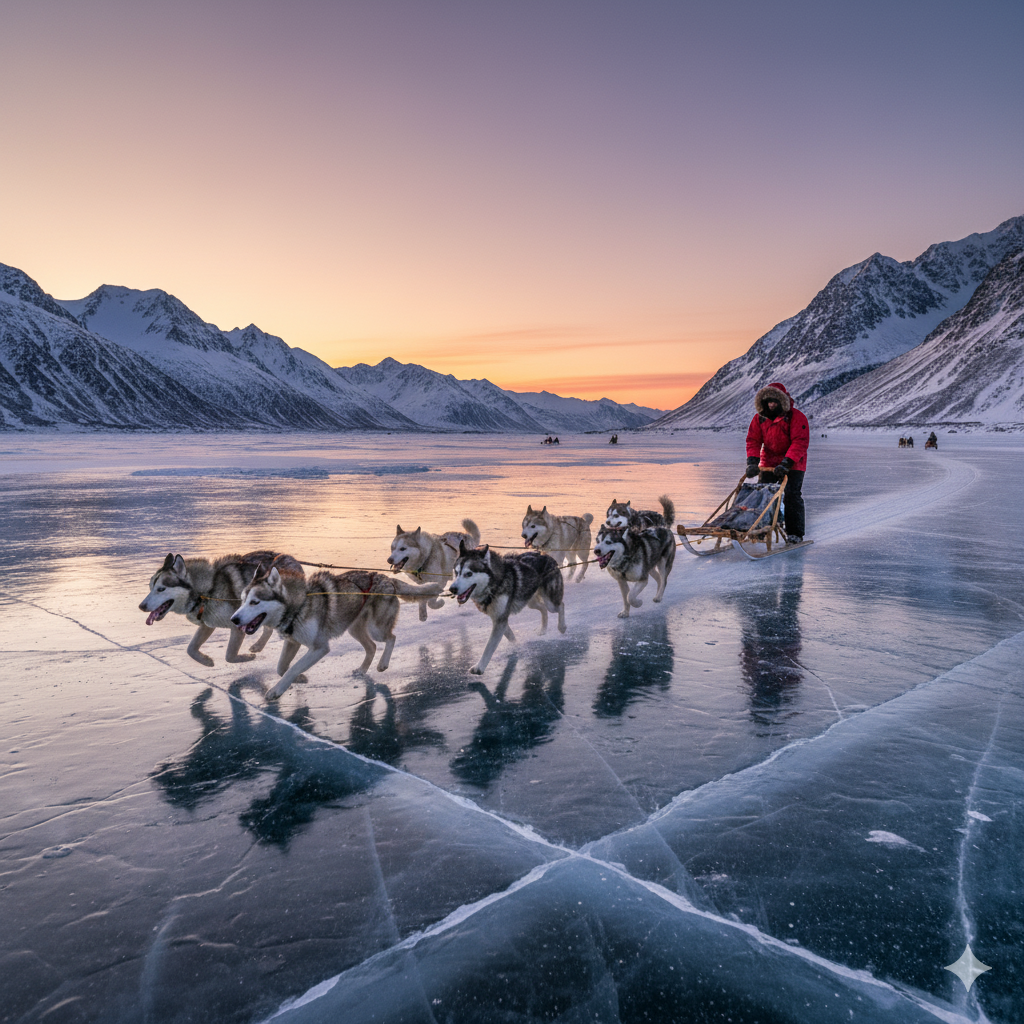
- Latitude: 78°13’ N, just 800 miles from the North Pole.
- Located in Isfjorden, surrounded by snow-capped mountains and frozen fjords.
- Polar Night: lasts from late October to mid-February, roughly four months of darkness.
The Polar Night Phenomenon
What is the Polar Night?
- A natural phenomenon where the sun remains below the horizon for extended periods.
- Not total darkness: the sky experiences civil twilight, giving blue and purple hues across snow and ice.
- Contrasts with Midnight Sun, which occurs from late April to August.
How it Affects Life
- Residents adapt routines to artificial daylight.
- Mental health management is important: locals use light therapy lamps.
- Wildlife is adapted too: polar bears, Arctic foxes, and reindeer navigate the long night effortlessly.

Wildlife and Natural Wonders
- Polar Bears: Roam beyond town limits; must be cautious when exploring outside.
- Reindeer: Frequently spotted on the outskirts.
- Arctic Foxes: Small, elusive, and perfectly camouflaged against snow.
- Birdlife: Snow buntings and guillemots frequent during winter twilight.
Check Also: Chile Blooming Desert – The Atacama Miracle That Happens Once a Year
How to Visit Longyearbyen
By Air
- Longyearbyen Airport (LYR) connects to Oslo and Tromsø.
- Multiple daily flights during tourist season; fewer in winter.
By Sea
- Expedition cruises from Norway and Greenland often stop at Longyearbyen.
Local Transport
- Walking, snowmobiles, and dog sleds during winter.
- Rental cars are limited; guided tours are highly recommended for safety.
Tickets, Fees & Permits
- No visa required for most travelers visiting Norway, but Svalbard has special entry regulations.
- Arctic excursions often require permits or guided tour bookings.
- Expect higher costs due to remote location and imported goods.
Best Time to Visit
| Season | Highlights |
|---|---|
| November–January | Polar Night, Northern Lights, snow adventures |
| February–March | Longer daylight, skiing, dog sledding |
| April–August | Midnight Sun, glacier hiking, wildlife spotting |
Pro Tip: Visit during polar night for auroras or late spring for extended daylight adventures.
Source:
- Schloss Neuschwanstein – Official Castle Tickets and Visitor Info
- Bavarian Castles and Lakes – Official Tourism Portal
Hidden Gems of Longyearbyen
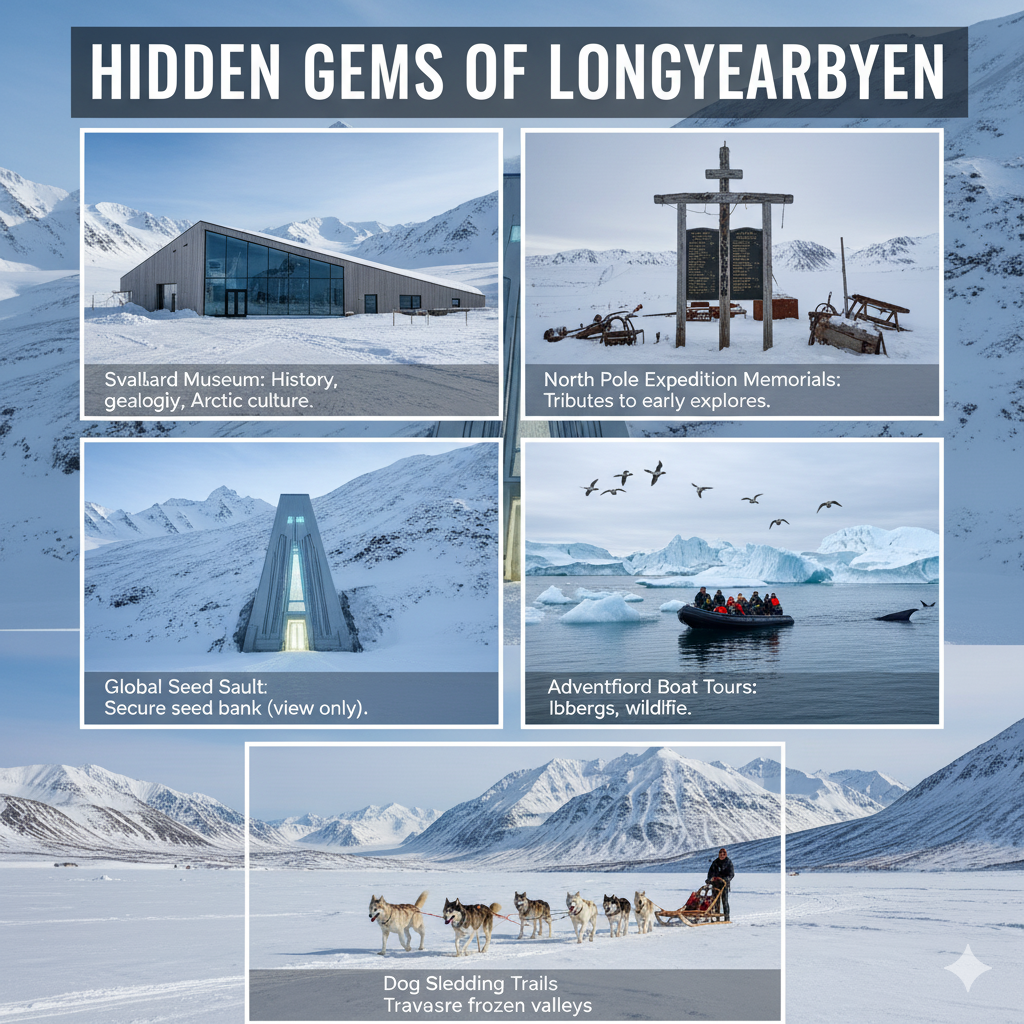
- Svalbard Museum: History, geology, and Arctic culture.
- North Pole Expedition Memorials: Tributes to early explorers.
- Global Seed Vault: Secure seed bank in the mountains (view only).
- Adventfjord Boat Tours: Icebergs, wildlife, and Arctic landscapes.
- Dog Sledding Trails: Traverse frozen valleys with huskies.
Local Food Experiences

- Arctic Char: Fresh fish from nearby fjords.
- Reindeer Stew: Traditional hearty Arctic meal.
- Seal and Whale Dishes: Specialty dishes for adventurous palates.
- Coffee & Bakery Treats: Cozy cafés provide warmth and comfort during dark months.
Tip: Sample local beer and cocktails in pubs that embrace long winter nights.
Local Life & Cultural Insights
- Population: ~2,000 people; international community of scientists, miners, and tourists.
- Safety: Polar bears are common—travel with guides outside town.
- Health: Limited medical facilities; winter darkness requires light therapy.
- Education & Research: Arctic University of Norway conducts climate, glaciology, and wildlife studies.
FAQs – Longyearbyen Travel Guide
Q1. Can I visit during Polar Night safely?
Yes, with guided tours. Local guides ensure safety and navigation.
Q2. Do I need a visa for Svalbard?
Svalbard is visa-free for most nationalities, but entry via Norway may require a Schengen visa.
Q3. When is the best time to see the Northern Lights?
From late November to mid-February during Polar Night.
Q4. Are there accommodations in Longyearbyen?
Yes, hotels, guesthouses, and lodges cater to tourists year-round.
Q5. Can I explore independently?
Limited. Polar bears and Arctic conditions make guided tours safer.
Q6. How do locals cope with darkness?
Light therapy lamps, community activities, and indoor cultural events.
Traveler – Embrace the Polar Shadow
Longyearbyen is a town unlike any other, where darkness and light exist in extremes, and nature reigns supreme. From polar bears to huskies, frozen fjords to aurora-lit skies, this Arctic settlement immerses you in a magical, otherworldly experience.
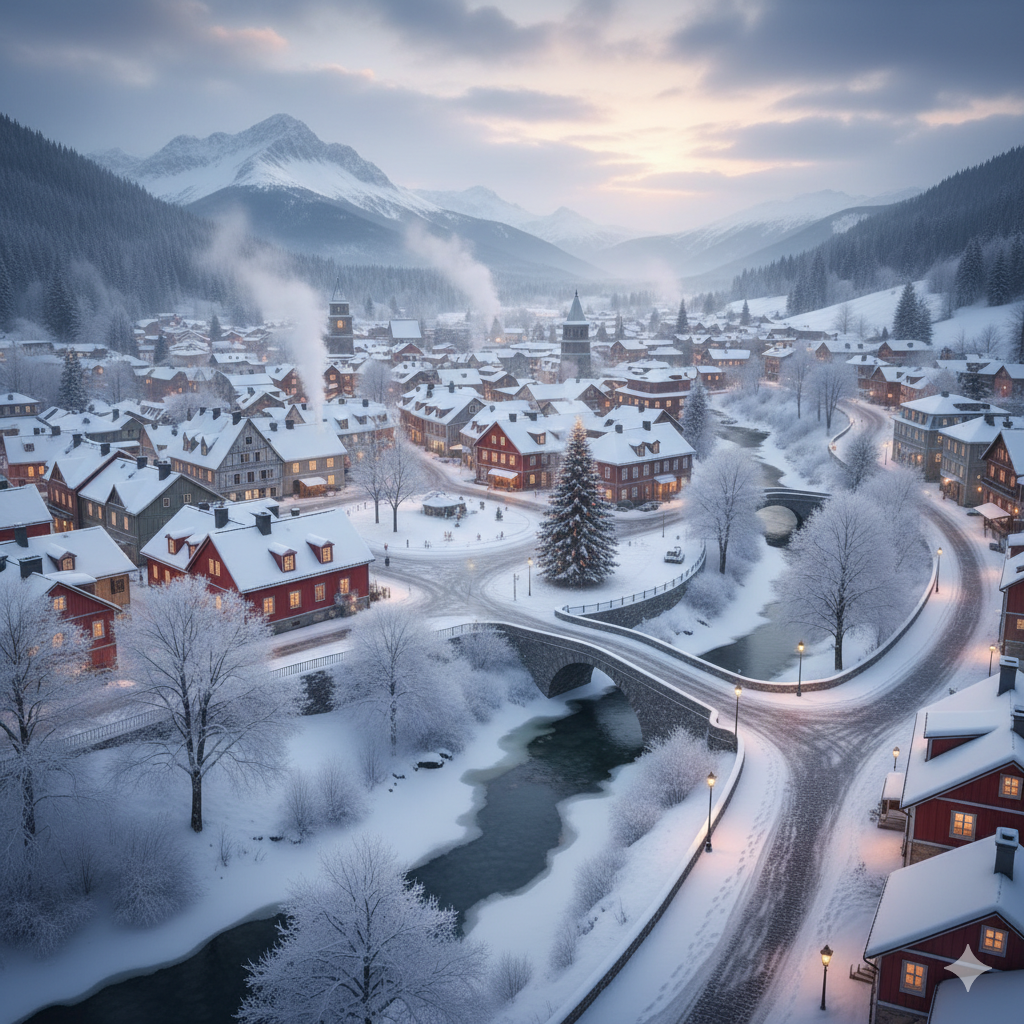
Visiting the town that never sees sun is not just a trip; it’s a journey into human resilience, Arctic wonder, and surreal beauty.
Prepare to explore, photograph, and marvel at Norway’s polar shadow, where darkness is not emptiness, but a canvas for magic.