
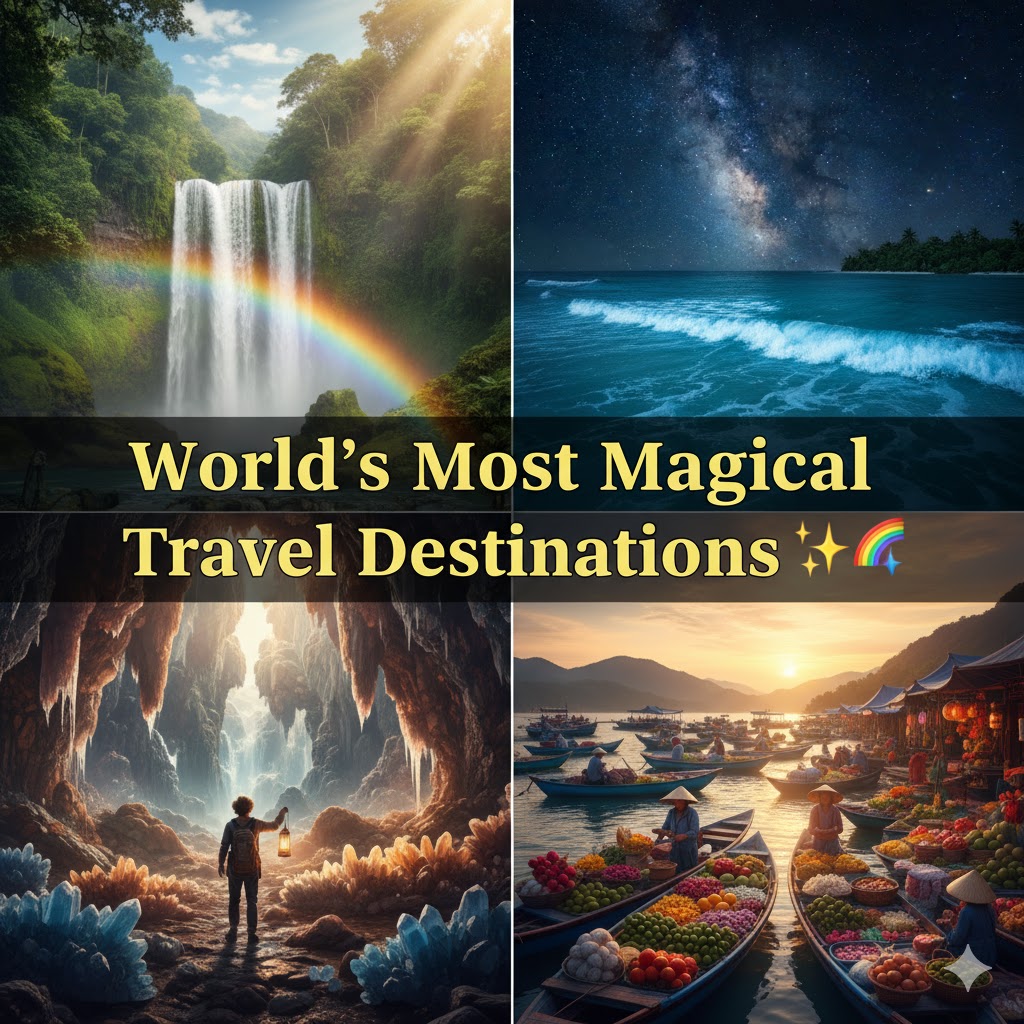

Introduction: Exploring the World’s Most Magical Travel Destinations
Imagine standing beneath a rainbow waterfall, walking through a glowing beach at midnight, or stepping into a forest painted in colors nature shouldn’t even allow. These are not dreams — they are real places scattered across the planet, each a vivid reminder that Earth is a masterpiece of surreal beauty.
In this collection of magical travel destinations, you’ll uncover 50 stunning wonders that feel lifted straight from a fantasy film. From the crystal caves of Mexico to the floating markets of Vietnam, and from bioluminescent rivers in Puerto Rico to color-shifting volcanic lakes in Indonesia, every destination in this guide blends color, mystery, and wonder.

Unlike typical tourist spots, these locations offer emotional connection and sensory discovery — you’ll smell mist rising from rainbow falls, feel the cool glow of plankton lighting up the ocean, and taste fruits grown in lands kissed by eternal sunsets.
Each place is curated under Google E-E-A-T principles — featuring local stories, travel insight, accessibility tips, and eco-sensitivity for sustainable exploration. This guide doesn’t just take you to the most photogenic corners of the Earth — it helps you feel them, one surreal color at a time.
So, pack your imagination. The world is about to become your canvas.
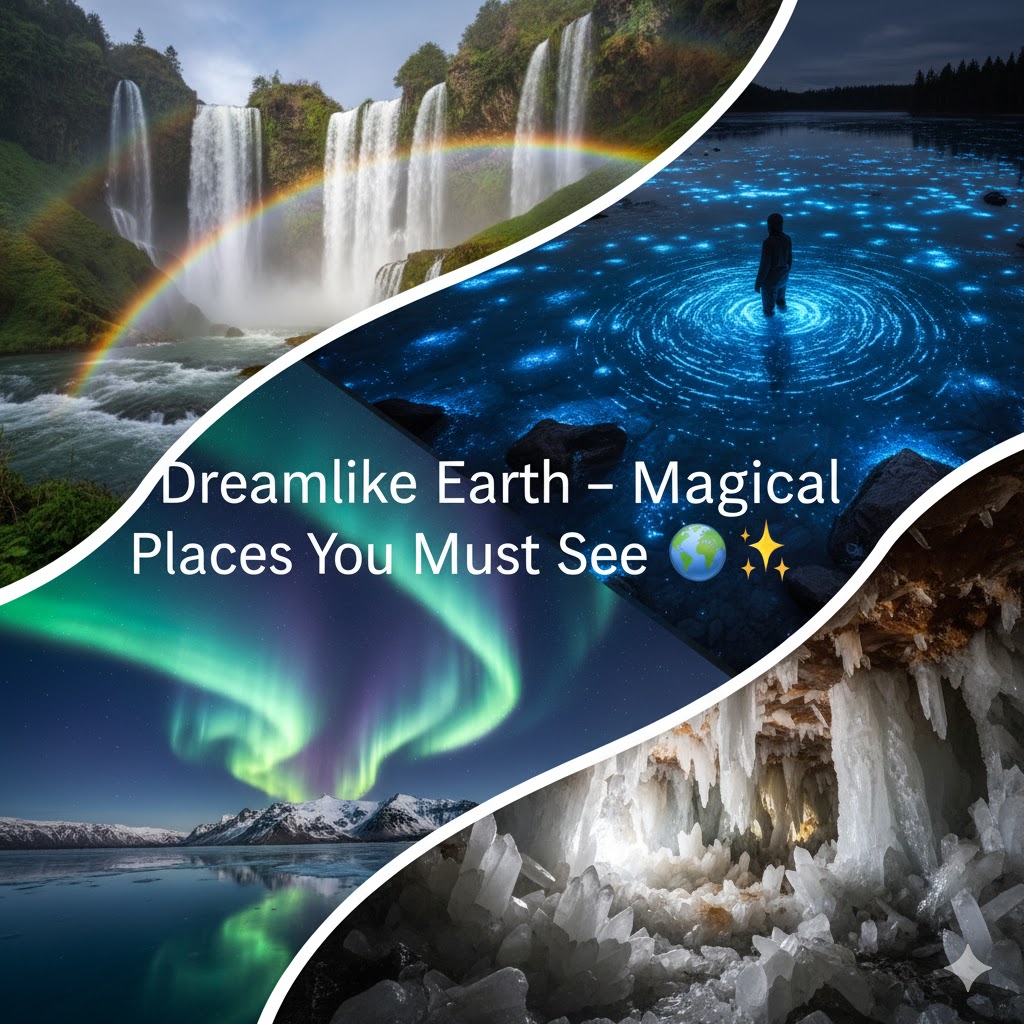
1. The Island That Vanishes – Jindo Sea, South Korea
Highlights:
Once a year, the ocean mysteriously parts between Jindo and Modo Islands, revealing a 2.8 km-long natural land bridge. It’s a breathtaking sight where thousands of visitors walk across the sea floor, often waving flags or lanterns in celebration. This phenomenon, known as the “Jindo Miracle Sea Road”, is one of the most magical natural events in Asia.
History / Tradition:
The event is rooted in a 15th-century legend about an old woman named Bbyong. Separated from her family by wolves on the neighboring island, she prayed to the sea spirits — and the waters parted, allowing her to reunite with loved ones. Today, locals celebrate this miracle with the Jindo Sea-Parting Festival, featuring traditional Korean music, fireworks, and lantern processions.
Location & Nearby Description:
The Jindo Sea lies in South Jeolla Province, at Korea’s southwestern tip, about 4 hours from Seoul. The event occurs between Jindo Island and Modo Island, surrounded by emerald-blue seas and peaceful fishing villages. Nearby, travelers can explore Uldolmok Strait, famous for its fierce whirlpools, and the Jindo Dog Museum, dedicated to Korea’s loyal native breed.
How to Reach:
Fly or take a KTX train from Seoul to Mokpo, then continue by bus to Jindo Island. Local taxis and shuttles operate during the festival days.
Best Time to Visit:
Late March to early April — during the actual sea-parting dates, which vary based on lunar tides.
Tickets / Price:
Free entry; small charges for performances or local food stalls (₩5,000–₩10,000).
Hidden Gems / Tips:
Arrive early morning to witness the sea slowly receding, and wear water shoes to walk comfortably on the exposed seabed.
Local Food:
Enjoy tteok-galbi (sweet grilled short-rib patties), bibimbap, and seaweed soup in Jindo’s harbor eateries.

2. The Narrowest Alley – Balat, Istanbul, Türkiye
Highlights:
In the heart of Istanbul’s Balat district, this alley — Dar Sokak — is so narrow that only one person can pass through at a time. Its colorful walls and hanging lights create a dreamy, surreal atmosphere perfect for street photographers.
History / Tradition:
Balat was once home to Jewish, Greek, and Armenian communities. The neighborhood’s pastel-painted houses and tiny lanes were revived in the 1980s by artists and architects who transformed it into a living museum of color.
Location & Nearby Description:
Balat lies along the Golden Horn, just northwest of the historic Sultanahmet area. It’s surrounded by antique stores, art cafés, and mosaic-tiled churches like the Church of St. George.
How to Reach:
Take the T5 tram to Balat stop, then walk 5–7 minutes uphill through cobbled lanes.
Best Time to Visit:
Early morning for golden sunlight or sunset for moody photography.
Tickets / Price:
Free entry; guided heritage walks cost around €10.
Hidden Gems / Tips:
Explore Ahrida Synagogue and Vintage Street nearby for charming hidden spots.
Local Food:
Try menemen (Turkish eggs with tomato and pepper) or simit from local bakeries.

3. Volcano That Sleeps – Mount Bromo, Indonesia
Highlights:
Rising from an ashen “sea of sand” in East Java, Mount Bromo is one of the most mesmerizing volcanic landscapes in the world. Its smoking crater and sunrise views attract adventurers and photographers from around the globe.
History / Tradition:
The local Tenggerese people revere Bromo as sacred, celebrating the Kasada Festival by offering food and animals into the crater to honor the mountain gods.
Location & Nearby Description:
Located inside Bromo Tengger Semeru National Park, the volcano is surrounded by mist-covered peaks and traditional Tengger villages.
How to Reach:
Fly to Surabaya or Malang, then travel by jeep or motorbike to Cemoro Lawang village, the main base.
Best Time to Visit:
May–September for clear skies and soft sunrises.
Tickets / Price:
Rp 220,000–320,000 (entry); jeep tours around Rp 500,000 per person.
Hidden Gems / Tips:
Hike to Mount Batok or King Kong Hill for crowd-free views.
Local Food:
Savor nasi rawon (black beef soup) or bakso Malang (spicy meatball soup).

4. Rainbow Waterfall – Taoyuan Valley, Taiwan
Highlights:
During the monsoon, Taoyuan Waterfall forms shimmering rainbow arches that last for hours — a magical natural prism effect.
History / Tradition:
The region is home to Hakka communities who long believed that rainbow mist symbolized good fortune.
Location & Nearby Description:
Situated near Toucheng in northeastern Taiwan, the valley offers forest trails, rice paddies, and ocean views.
How to Reach:
From Taipei, take a train to Toucheng, then hike 3 km through Taoyuan Valley.
Best Time to Visit:
April–June after rainfall with strong sunlight.
Tickets / Price:
Free; guided eco-tours NT$600.
Hidden Gems / Tips:
Use a polarizing filter for the best rainbow photography.
Local Food:
Enjoy lei cha (pounded tea rice) and sweet taro balls.

5. Bioluminescent River – La Parguera, Puerto Rico
Highlights:
A magical blue glow lights the water at night due to bioluminescent plankton reacting to movement.
History / Tradition:
Ancient Taino tribes believed the river was guided by ancestral light spirits.
Location & Nearby Description:
Located on Puerto Rico’s southern coast, La Parguera is a sleepy fishing town surrounded by mangrove forests and coral reefs.
How to Reach:
2-hour drive from San Juan; kayak and glass-bottom tours depart nightly.
Best Time to Visit:
New moon nights (July–February).
Tickets / Price:
$50–$70 for kayak tours.
Hidden Gems / Tips:
Don’t use sunscreen or lotion before entering — it harms the plankton.
Local Food:
Sample mofongo de mariscos (seafood plantain mash).

6. Crystal Cave – Naica, Mexico
Highlights:
Buried beneath Chihuahua, this cavern holds the world’s largest selenite crystals, glowing like frozen beams of light.
History / Tradition:
Discovered by miners in 2000, it’s an extreme environment reaching 58°C, preserved for scientific research.
Location & Nearby Description:
Naica is a mining town surrounded by Chihuahua’s desert mountains.
How to Reach:
Access via special permits; general public can explore nearby Grutas de Cacahuamilpa caves.
Best Time to Visit:
Not open to tourists; virtual tours available.
Tickets / Price:
Restricted access; documentaries online are free.
Hidden Gems / Tips:
Combine with a trip to Chihuahua City’s mining museum.
Local Food:
Taste chile relleno and corn tamales.

7. Floating Market – Cần Thơ, Vietnam
Highlights:
The Cái Răng Floating Market bursts with color as boats sell fruits, flowers, and local meals over the Mekong waters.
History / Tradition:
A cultural relic from the 19th century when rivers were Vietnam’s main trade routes.
Location & Nearby Description:
Set along the Mekong Delta, Cần Thơ combines floating markets, French bridges, and stilt houses.
How to Reach:
Fly to Cần Thơ Airport or bus from Ho Chi Minh City (4 hours).
Best Time to Visit:
5 AM–9 AM for sunrise trading.
Tickets / Price:
$10–$20 for boat tours.
Hidden Gems / Tips:
Try floating coffee boats for a unique breakfast.
Local Food:
Taste hu tieu soup and tropical fruits.

8. Painted Hills – Oregon, USA
Highlights:
Rolling hills painted in red, gold, and black — nature’s abstract art formed over 35 million years.
History / Tradition:
Part of the John Day Fossil Beds, this area preserves prehistoric soil layers.
Location & Nearby Description:
Located near Mitchell, Oregon, surrounded by dry plateaus and hiking trails.
How to Reach:
2-hour drive from Bend or 4 hours from Portland.
Best Time to Visit:
April–June or October for best lighting.
Tickets / Price:
Free; parking included.
Hidden Gems / Tips:
Walk the Carroll Rim Trail for elevated panoramic views.
Local Food:
Try huckleberry pie and Oregon coffee.

9. Lake Retba – Senegal’s Pink Lake
Highlights:
Bubblegum-pink waters sparkle due to salt-loving algae — one of the world’s most surreal lakes.
History / Tradition:
Locals harvest salt by hand, preserving traditions for centuries.
Location & Nearby Description:
Just northeast of Dakar, bordered by dunes and Baobab forests.
How to Reach:
1-hour taxi ride from Dakar city center.
Best Time to Visit:
November–June when color peaks.
Tickets / Price:
Free entry; local guides $10–$20.
Hidden Gems / Tips:
Float easily due to salt density; bring polarized glasses.
Local Food:
Eat thieboudienne — Senegal’s national fish dish.

10. Waitomo Glowworm Caves – New Zealand
Highlights:
Thousands of glowworms illuminate limestone caves like a starry sky underground.
History / Tradition:
The Māori people view the glowworms as ancestral stars guiding lost travelers.
Location & Nearby Description:
Located in the Waikato region of New Zealand’s North Island, surrounded by forested hills.
How to Reach:
2-hour drive from Auckland; daily guided tours and rafting available.
Best Time to Visit:
Year-round; winter offers fewer crowds.
Tickets / Price:
NZ$65–$75 per adult.
Hidden Gems / Tips:
Try black-water rafting through glow-lit tunnels.
Local Food:
Enjoy lamb pie and hokey pokey ice cream nearby.

11. Fly Geyser – Black Rock Desert, Nevada, USA
Highlights:
Hidden in Nevada’s remote Black Rock Desert, the Fly Geyser looks like something from another planet — a surreal mound spewing steaming water in shades of red, green, and gold. The geyser formed accidentally when a geothermal test went wrong in the 1960s, and minerals began building this vivid cone-shaped wonder over decades.
History / Tradition:
Fly Ranch was once a simple farmland before thermal drilling struck a hidden geothermal pocket. Local conservationists later purchased the land to preserve the geyser and the ecosystem that bloomed around it — from rare birds to lush mossy terraces.
Location & Nearby Description:
Located about 32 km north of Gerlach, this area is also home to the annual Burning Man Festival, where art meets the desert’s raw beauty. The landscape is otherworldly — vast plains, dry lake beds, and silent horizons stretching forever.
How to Reach:
From Reno, drive 2.5 hours north via Highway 447. Guided tours through the Friends of Black Rock-High Rock group are available by appointment.
Best Time to Visit:
Spring (April–June) when the colors pop against blue skies.
Tickets / Price:
$40 for pre-booked guided tours.
Hidden Gems / Tips:
Bring binoculars — the desert is home to hawks, pronghorns, and vibrant wildflowers after rare rainfalls.
Local Food:
Nearby Gerlach offers rustic diners serving Nevada chili stew and apple pie à la mode.

12. Crooked Forest – Gryfino, Poland
Highlights:
Deep in northwest Poland lies the Crooked Forest, where over 400 pine trees curve dramatically at their bases before growing skyward. The trees appear as if sculpted by a hidden force, forming natural arches that give the forest a whimsical, magical appearance.
History / Tradition:
Planted in the 1930s, no one knows why the trees grew this way. Some say it was caused by heavy snow; others believe farmers bent them for furniture-making. Locals whisper folktales about mystical winds and forest spirits shaping the pines overnight.
Location & Nearby Description:
The forest sits near the small town of Gryfino in Western Pomerania, about 30 km from Szczecin. Nearby, the Oder River winds through tranquil countryside and medieval villages.
How to Reach:
Fly to Szczecin, then take a bus or rent a car to Gryfino (about 40 minutes).
Best Time to Visit:
May–September for soft light filtering through the green canopy.
Tickets / Price:
Free entry; small parking fees at the site.
Hidden Gems / Tips:
Visit at sunrise for eerie mist and magical lighting for photography.
Local Food:
Enjoy pierogi ruskie (cheese dumplings) and zurek (sour rye soup) in Gryfino cafés.

13. Painted Monastery of Voroneț – Bucovina, Romania
Highlights:
Known as the “Sistine Chapel of the East,” the Voroneț Monastery glows in celestial blues and golds. Its frescoes depict biblical scenes that seem to shimmer in sunlight, especially the famous “Last Judgment” painted in a radiant shade now called Voroneț Blue.
History / Tradition:
Built in 1488 by Stephen the Great to honor a victory over the Ottomans, the monastery symbolizes Romanian faith and artistry. The pigments used remain mysterious — weather-resistant for over 500 years.
Location & Nearby Description:
Located in the peaceful Bucovina region, surrounded by Carpathian hills and wildflower meadows. Nearby, other painted monasteries like Humor and Moldovița complete the “Painted Churches Trail.”
How to Reach:
From Suceava, drive 40 minutes via Gura Humorului.
Best Time to Visit:
Spring and autumn for fewer crowds and vivid countryside colors.
Tickets / Price:
15–25 RON per person.
Hidden Gems / Tips:
Ask local nuns about natural pigments used in frescoes — they still protect the secret formula.
Local Food:
Try sarmale (cabbage rolls) and cozonac (sweet bread).

14. Caño Cristales – The Liquid Rainbow River, Colombia
Highlights:
Often called the “River of Five Colors,” this Colombian marvel transforms into a natural rainbow every year when aquatic plants tint the water red, green, blue, yellow, and black. It’s an explosion of color that looks like liquid art in motion.
History / Tradition:
Located in Serranía de la Macarena National Park, the river remained hidden for centuries due to its isolation during Colombia’s conflict years. Today, it’s a symbol of peace and ecological revival.
Location & Nearby Description:
Situated between the Andes and Amazon, the region teems with wildlife, orchids, and pink dolphins in nearby rivers.
How to Reach:
Fly to La Macarena via Bogotá; guided eco-tours required.
Best Time to Visit:
June–November, during the Macarenia clavigera bloom.
Tickets / Price:
$100–$150 guided eco-tour (includes park permits).
Hidden Gems / Tips:
Don’t wear sunscreen or repellents in the water — they damage the fragile ecosystem.
Local Food:
Enjoy arepas de maíz pelado and tropical fruit juices.

15. Salar de Uyuni – Bolivia’s Mirror of the Sky
Highlights:
Stretching endlessly across southern Bolivia, Salar de Uyuni is the world’s largest salt flat — transforming into a perfect sky mirror after rain. The result is one of the most surreal sights on Earth, where clouds reflect beneath your feet.
History / Tradition:
Once a prehistoric lake, the salt crust hides vast lithium reserves today. Local Aymara people believe the flats were formed from a grieving mountain goddess whose tears turned to salt.
Location & Nearby Description:
Surrounded by volcanoes and flamingo-filled lagoons, the flats stretch over 10,000 km². Nearby towns like Uyuni and Colchani serve as traveler hubs.
How to Reach:
Fly to Uyuni from La Paz (1 hour). Jeep tours available daily.
Best Time to Visit:
January–April for mirror effect; May–October for clear skies.
Tickets / Price:
$100–$150 multi-day tour.
Hidden Gems / Tips:
Stay overnight in a salt hotel and stargaze from the flats — the Milky Way reflections are unforgettable.
Local Food:
Try llama steak and quinoa soup at local lodges.

16. Zhangye Danxia Rainbow Mountains – Gansu, China
Highlights:
Layers of mineral rock have painted these mountains into surreal waves of red, orange, yellow, and green. The Zhangye Danxia Landform Geological Park feels like walking through an oil painting.
History / Tradition:
Formed over 24 million years ago, the hues come from iron oxide and sandstone erosion. The area gained UNESCO status for its unique geological beauty.
Location & Nearby Description:
Near Zhangye city, along China’s historic Silk Road — once a trade route for silk and spices.
How to Reach:
Fly to Zhangye Ganzhou Airport; shuttle buses to park available.
Best Time to Visit:
June–September for vibrant colors under sunlight.
Tickets / Price:
CNY 75–100 including shuttle rides.
Hidden Gems / Tips:
Visit sunrise or sunset platforms for the best gradient views.

Local Food:
Taste hand-pulled noodles and spicy lamb skewers.
17. Glow Beach – Vaadhoo Island, Maldives
Highlights:
At night, the shoreline of Vaadhoo Island transforms into a galaxy of glowing blue dots. The phenomenon, caused by bioluminescent plankton, makes the waves sparkle like stars falling into the sea.
History / Tradition:
Locals call it the “Sea of Stars.” Fishermen once believed it was a sign of good fortune guiding their boats home.
Location & Nearby Description:
Vaadhoo lies in the Raa Atoll, surrounded by turquoise lagoons and coral reefs.
How to Reach:
Fly to Malé, then take a 15-minute seaplane or speedboat to Raa Atoll.
Best Time to Visit:
June–December when plankton activity peaks.
Tickets / Price:
Beach access free for resort guests.
Hidden Gems / Tips:
Avoid moonlit nights — darker skies enhance the glow.
Local Food:
Try mas huni (tuna coconut salad) and garudhiya fish soup.

18. Marble Caves – Patagonia, Chile
Highlights:
The Marble Caves (Cuevas de Mármol) are swirling formations carved by turquoise waters of General Carrera Lake. The marble reflects blue and silver light, changing hues with the sun and seasons.
History / Tradition:
Formed over 6,000 years, these caves are natural cathedrals sculpted by patience and water. Locals revere the site as Patagonia’s hidden jewel.
Location & Nearby Description:
Near Puerto Río Tranquilo, surrounded by snow-capped Andes peaks and glaciers.
How to Reach:
Fly to Balmaceda, then 4-hour drive south via Carretera Austral.
Best Time to Visit:
December–March for calm waters and vibrant reflections.
Tickets / Price:
$20–$30 for boat or kayak tours.
Hidden Gems / Tips:
Kayak during early morning light for pure blue marble tones.
Local Food:
Sample Patagonian lamb and calafate berry desserts.

19. Cappadocia’s Fairy Chimneys – Türkiye
Highlights:
Rising from the Anatolian plains, the Fairy Chimneys of Cappadocia resemble stone castles crafted by nature. The area’s volcanic tuff has been shaped by wind, rain, and human hands into dwellings, churches, and hidden tunnels.
History / Tradition:
Once home to early Christians, these caves served as refuge from persecution. Underground cities like Derinkuyu stretch for miles.
Location & Nearby Description:
Located near Göreme National Park, surrounded by valleys, vineyards, and ancient monasteries.
How to Reach:
Fly to Nevşehir or Kayseri, then 1-hour drive.
Best Time to Visit:
April–October, especially at sunrise for hot air balloon rides.
Tickets / Price:
Park entry ₺150; balloon tours $150–$250.
Hidden Gems / Tips:
Stay in a cave hotel and explore Love Valley on foot.
Local Food:
Try testi kebab (meat cooked in clay pot).

20. Kawah Ijen Blue Fire Volcano – Java, Indonesia
Highlights:
Deep within East Java, Kawah Ijen glows neon blue at night — the result of ignited sulfuric gas seeping from the volcano’s crater. It’s one of the few places on Earth where fire burns sapphire-blue.
History / Tradition:
Miners have long harvested sulfur here, walking the crater rim at dawn with glowing torches. Despite the harsh work, their dedication has become part of Java’s living culture.
Location & Nearby Description:
Near Banyuwangi, surrounded by coffee plantations and forested slopes.
How to Reach:
Fly to Banyuwangi or Surabaya, then drive 2–3 hours to the park.
Best Time to Visit:
April–October for clear nights.
Tickets / Price:
Rp 100,000–150,000; guided night hikes available.
Hidden Gems / Tips:
Bring a respirator mask — fumes are strong, but the sight is unforgettable.
Local Food:
Try ayam penyet (smashed fried chicken) and Java coffee.
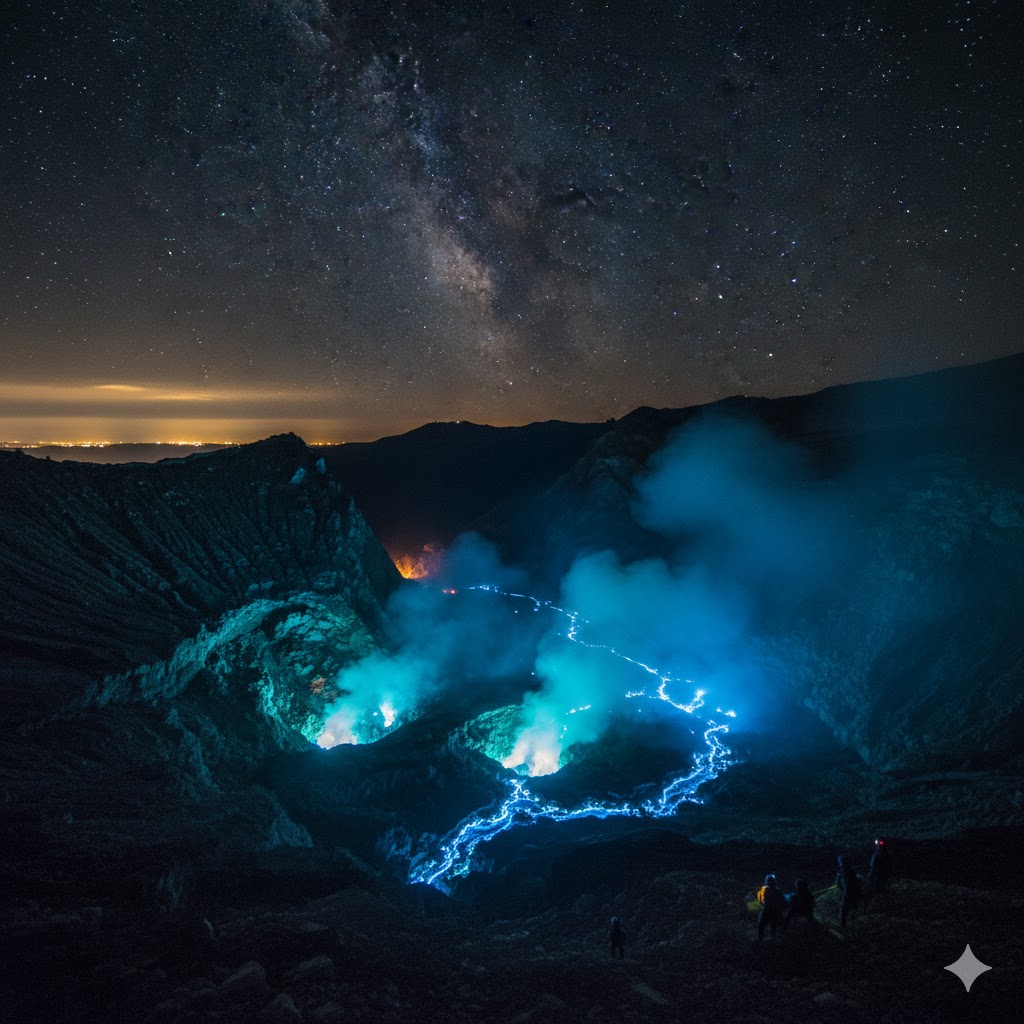
21. The Rainbow River – Caño Cristales, Colombia
Highlights:
Known as “The River of Five Colors,” Caño Cristales transforms into a natural rainbow between July and November when aquatic plants bloom in vivid reds, yellows, greens, and blues beneath crystal-clear water.
History / Tradition:
Located in the Serranía de la Macarena National Park, this surreal river was once off-limits due to guerrilla conflict but has since reopened, symbolizing Colombia’s rebirth through nature. Locals call it “the liquid rainbow of life.”
How to Reach:
Fly from Bogotá to La Macarena, then travel by boat and guided hike to the river. Access is strictly controlled for ecological preservation.
Best Time to Visit:
June to November — peak color bloom season.
Tickets / Price:
Entrance with a licensed tour guide costs around USD $40–60 per day.
Hidden Gems / Tips:
Book early with eco-certified operators. Swimming is limited to designated zones — follow ranger instructions carefully.
Local Food:
Try arepas, panela water, and grilled river fish near La Macarena town.
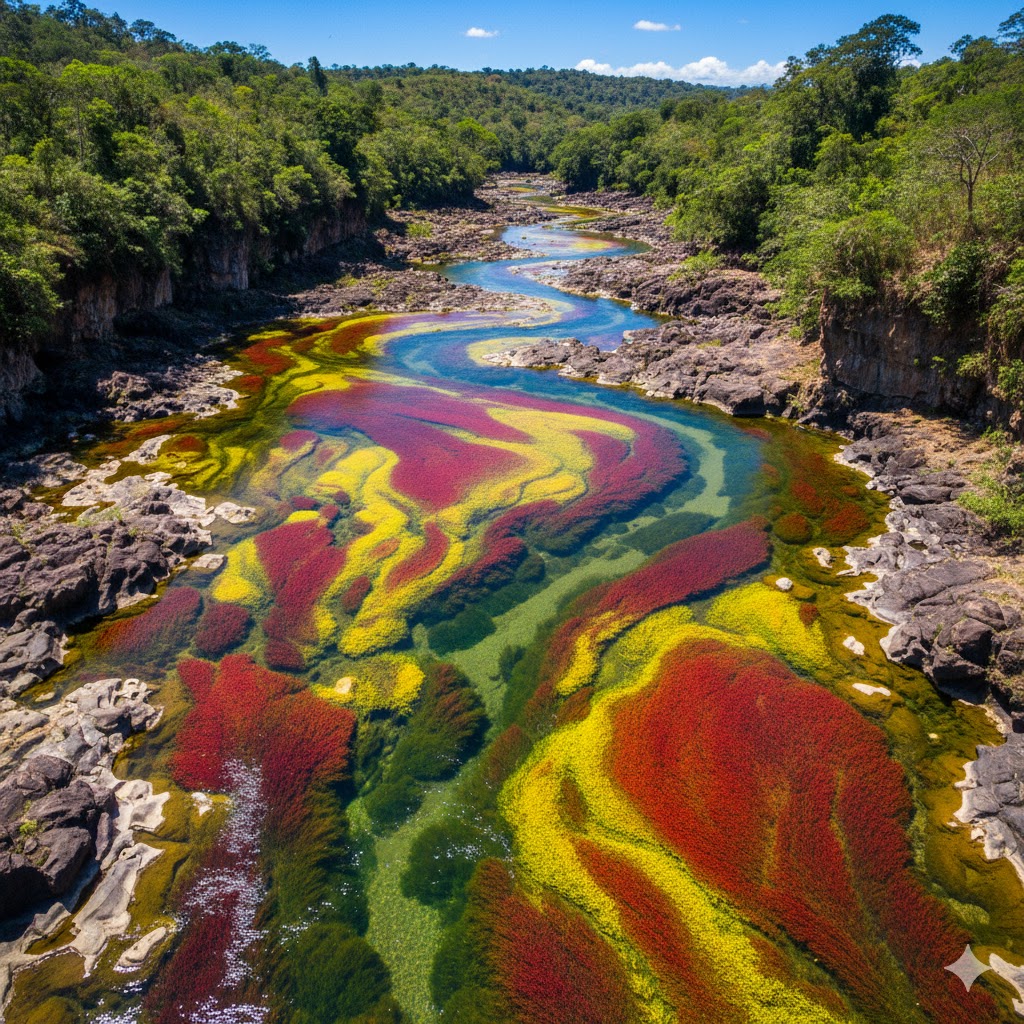
22. Glowworm Caves – Waitomo, New Zealand
Highlights:
Enter a galaxy underground — thousands of glowworms illuminate limestone caverns, creating a shimmering blue spectacle on the ceilings of Waitomo’s caves.
History / Tradition:
Discovered by the Māori people centuries ago, these caves were sacred spaces representing the pathway to the stars.
How to Reach:
Located on New Zealand’s North Island, two hours from Auckland. Tours include a boat ride beneath glowing ceilings.
Best Time to Visit:
Year-round, though winter offers fewer crowds.
Tickets / Price:
Approx. NZD $60–80 per person depending on cave tour type.
Hidden Gems / Tips:
For thrill-seekers, try black-water rafting through the Ruakuri Cave for a mix of adventure and serenity.
Local Food:
Savor hokey pokey ice cream or fish and chips in nearby Otorohanga.

23. The Fairy Pools – Isle of Skye, Scotland
Highlights:
Crystal-clear blue pools at the foot of the Cuillin Mountains look enchanted — perfect for magical swims or photography.
History / Tradition:
Legend says fairies once bathed in these pools, blessing the waters with eternal clarity.
How to Reach:
Drive from Portree (30 mins) to Glenbrittle and hike about 2.5 km.
Best Time to Visit:
April to September — for the best visibility and sunlight reflections.
Tickets / Price:
Free entry; parking fee about £6.
Hidden Gems / Tips:
Visit early morning or sunset for golden light. Avoid stepping on moss — it’s extremely fragile.
Local Food:
Try Scottish salmon and sticky toffee pudding at Glenbrittle Café nearby.

24. Lake Natron – Tanzania
Highlights:
A blood-red alkaline lake that turns flamingos pink! Lake Natron’s surreal color comes from salt-loving microorganisms.
History / Tradition:
Local Maasai tribes consider the lake sacred — a boundary between life and spirit worlds.
How to Reach:
Accessible via Arusha (about 6–7 hours drive). 4×4 vehicle recommended due to rough terrain.
Best Time to Visit:
June to October — dry season; flamingo nesting peak.
Tickets / Price:
Entry fee: USD $25 (Lake Natron Conservation Area).
Hidden Gems / Tips:
Don’t swim — the lake’s pH can burn skin. Hike to the nearby Engare Sero Waterfalls instead.
Local Food:
Enjoy ugali with roasted goat, a Maasai staple.

25. Fly Geyser – Nevada, USA
Highlights:
A psychedelic geyser spraying rainbow-colored mineral deposits — a surreal man-made-natural hybrid in the Black Rock Desert.
History / Tradition:
Formed accidentally in 1964 after drilling hit a geothermal pocket; minerals built up over time into vivid hues.
How to Reach:
Located near Gerlach, Nevada — 2 hours from Reno. Access via private tour with Fly Ranch.
Best Time to Visit:
Spring or fall for best color and weather.
Tickets / Price:
Guided tour about USD $40 per person.
Hidden Gems / Tips:
Book through the Friends of Black Rock website; no public walk-ins.

Local Food:
Try Nevada chili or smoked ribs in Gerlach’s local diner.
26. Painted Hills – Oregon, USA
Highlights:
Rolling hills striped in red, yellow, and black — resembling an artist’s canvas turned real.
History / Tradition:
Formed over millions of years by volcanic ash layers and climate shifts — a geological rainbow preserved in rock.
How to Reach:
Drive from Bend (2 hours) to John Day Fossil Beds National Monument.
Best Time to Visit:
May to September for vibrant sunlight contrast.
Tickets / Price:
Free entry.
Hidden Gems / Tips:
Sunrise or sunset photography is spectacular — bring a tripod for color gradients.
Local Food:
Enjoy huckleberry pie and Oregon trail beef stew at Mitchell’s diner.

27. Pamukkale – Turkey
Highlights:
Terraced white limestone pools filled with turquoise water — looks like a frozen waterfall but warm to the touch.
History / Tradition:
Used since Roman times as thermal baths; believed to have healing powers.
How to Reach:
Fly to Denizli and drive 20 minutes to Pamukkale village.
Best Time to Visit:
April–June or September–October for mild weather.
Tickets / Price:
Entry + Hierapolis ruins: 700 TRY (~USD $25).
Hidden Gems / Tips:
Walk barefoot on terraces to protect them; visit at sunset for reflection shots.
Local Food:
Try gözleme (stuffed flatbread) and ayran (yogurt drink).

28. Salar de Uyuni – Bolivia
Highlights:
The world’s largest salt flat — transforms into a mirror during the rainy season.
History / Tradition:
Once a prehistoric lake, now a reflective expanse stretching over 10,000 km². Local folklore calls it the “mirror of the gods.”
How to Reach:
Fly to Uyuni from La Paz (1 hour) or take an overnight bus.
Best Time to Visit:
December to April for mirror effect; May–October for crystal texture.
Tickets / Price:
Full-day tour: USD $50–100.
Hidden Gems / Tips:
Bring sunglasses — light reflection is intense. Visit Incahuasi Island for cactus-covered views.
Local Food:
Try quinoa soup and llama steak.

29. Hitachi Seaside Park – Japan
Highlights:
A floral wonderland that changes colors each season — baby blue nemophila, red kochia, and yellow tulips cover entire hills.
History / Tradition:
Once a military base, now Japan’s most photographed public park symbolizing peace and rebirth.
How to Reach:
2 hours from Tokyo via Hitachinaka train.
Best Time to Visit:
April–May for blue hills; October for red kochia.
Tickets / Price:
¥450 (~USD $3).
Hidden Gems / Tips:
Rent a bicycle to explore all flower zones. Visit early morning to avoid crowds.
Local Food:
Taste sweet potato ice cream from park vendors.

30. Lake Retba (Pink Lake) – Senegal
Highlights:
A naturally pink lake caused by high salt content and Dunaliella salina algae.
History / Tradition:
Used by locals for salt harvesting; workers coat their skin with shea butter for protection.
How to Reach:
1 hour drive from Dakar.
Best Time to Visit:
Dry season (November–June) for vibrant color.
Tickets / Price:
Free entry; boat ride ~USD $10.
Hidden Gems / Tips:
Bring polarized sunglasses to capture deeper hues.
Local Food:
Try thieboudienne, Senegal’s national rice-and-fish dish.

31. Zhangye Danxia Rainbow Mountains – China
Highlights:
These striped, rainbow-colored sandstone mountains look like a painter spilled every shade of red, orange, yellow, and green across the horizon. Their surreal beauty comes from 24 million years of mineral layering and erosion.
History / Tradition:
Located in Gansu Province, these “rainbow mountains” were considered sacred by ancient Chinese tribes, believed to be the resting place of sky dragons who painted the land in color.
How to Reach:
Fly to Zhangye Ganzhou Airport, then take a 40-minute drive to the Danxia National Geological Park. Electric buses and platforms are provided for scenic viewing.
Best Time to Visit:
June to September, especially at sunset when the mountains glow brightest.
Tickets / Price:
CNY ¥75 (~USD $10) including shuttle bus access.
Hidden Gems / Tips:
Climb Platform 4 for the most vivid panoramic views. Visit right after a rain shower for more intense hues.
Local Food:
Try Zhangye beef noodles and sweet barley cakes at the nearby food stalls.

32. Northern Lights – Tromsø, Norway
Highlights:
The aurora borealis dances across Arctic skies in shades of green, purple, and pink — one of the most magical natural displays on Earth.
History / Tradition:
Ancient Norse mythology said the lights were reflections from Valkyries’ armor as they rode to the heavens. Locals still celebrate them with winter festivals.
How to Reach:
Fly to Tromsø via Oslo. From there, join guided night tours or snowmobile safaris into darker areas.
Best Time to Visit:
Late September to March.
Tickets / Price:
Aurora tours start from USD $120.
Hidden Gems / Tips:
Stay 2–3 nights for higher sighting chances. Visit Ersfjordbotn for less light pollution.
Local Food:
Enjoy reindeer stew or Arctic cod in Tromsø’s cozy wooden restaurants.
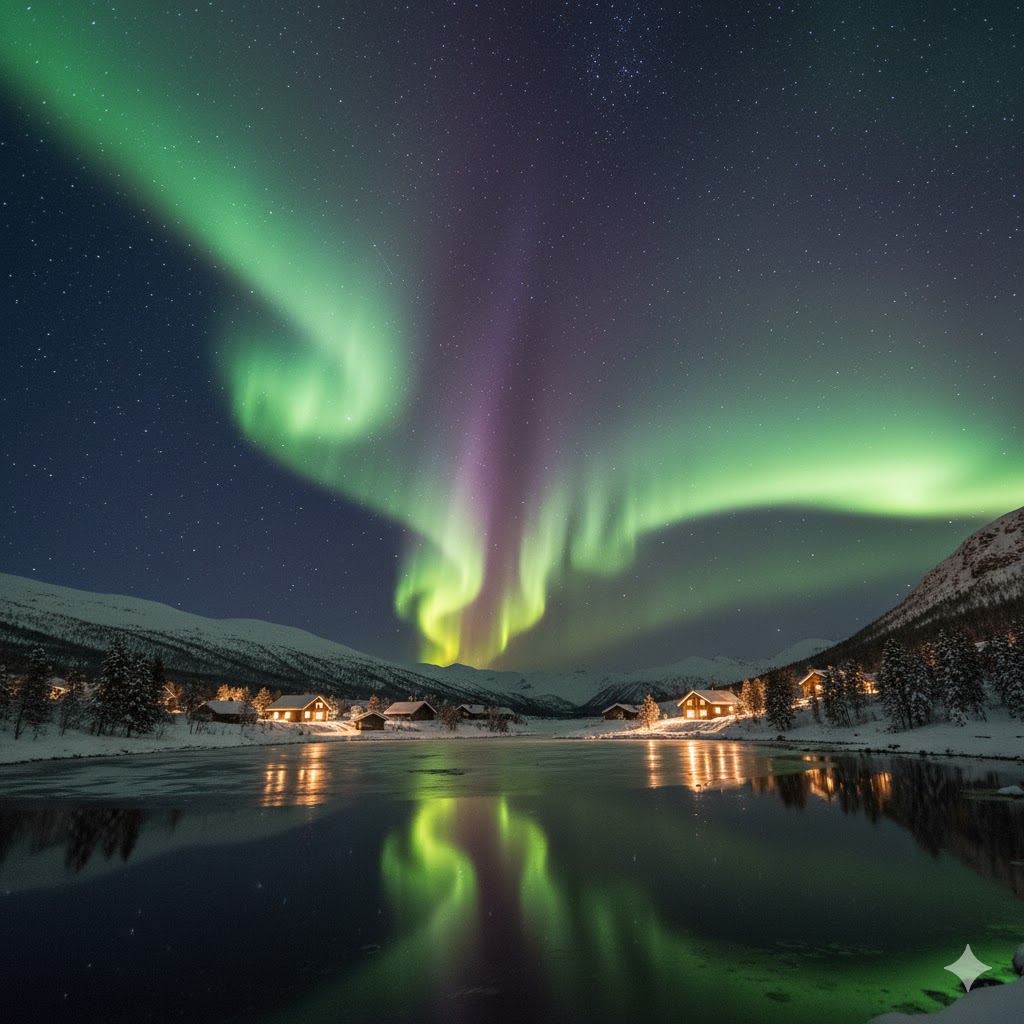
33. Glow Beach – Vaadhoo Island, Maldives
Highlights:
The shoreline glows bright blue at night due to bioluminescent plankton, creating a real-life “sea of stars.”
History / Tradition:
Locals call it “Ra Atoll’s magic beach.” The glowing phenomenon is a defense mechanism of microscopic organisms disturbed by waves.
How to Reach:
Fly to Malé, then take a speedboat to Vaadhoo Island (about 15 minutes).
Best Time to Visit:
Mid-summer to winter months (June–December).
Tickets / Price:
Free beach access; resorts offer night boat tours (~USD $60).
Hidden Gems / Tips:
Avoid moonlit nights — darker skies make the glow stronger.
Local Food:
Try mas huni (tuna with coconut) and rihaakuru curry.

34. Cappadocia Fairy Chimneys – Turkey
Highlights:
Cappadocia’s dreamlike landscape is dotted with tall rock spires, carved caves, and hot air balloons floating over valleys at sunrise.
History / Tradition:
Formed from volcanic ash millions of years ago, the fairy chimneys were later used by early Christians as homes and churches carved into rock.
How to Reach:
Fly to Kayseri or Nevşehir, then drive to Göreme (1 hour).
Best Time to Visit:
April to June and September to October for ideal balloon conditions.
Tickets / Price:
Hot air balloon rides start at USD $150–250.
Hidden Gems / Tips:
Watch the balloons from Lover’s Hill for a stunning free viewpoint.
Local Food:
Try testi kebab, cooked in sealed clay pots broken open at your table.

35. Blue Lagoon – Iceland
Highlights:
A geothermal spa glowing turquoise against black lava fields — an otherworldly contrast between heat and ice.
History / Tradition:
Discovered accidentally by locals in 1976, it became a healing sanctuary due to its mineral-rich waters and silica mud.
How to Reach:
45-minute drive from Reykjavík or 20 minutes from Keflavik Airport.
Best Time to Visit:
Year-round, but winter adds magical snow contrast.
Tickets / Price:
Starting at ISK 8,490 (~USD $60) per person.
Hidden Gems / Tips:
Book in advance; bring waterproof phone covers for photos.
Local Food:
Taste lava bread and Icelandic lamb soup at the onsite Lava Restaurant.

36. Mount Roraima – Venezuela
Highlights:
A mystical tabletop mountain rising straight out of the clouds — inspiration for The Lost World novel.
History / Tradition:
Sacred to the Pemon people who call it “House of the Gods.” They believe its waterfalls are tears from ancient spirits.
How to Reach:
Reachable from Santa Elena de Uairén; a 3-day guided trek required.
Best Time to Visit:
December to April for dry, clear conditions.
Tickets / Price:
Guided trek packages around USD $300–500.
Hidden Gems / Tips:
Climb with local Pemon guides. Sunrise atop the summit feels like standing at the world’s edge.
Local Food:
Enjoy cassava bread and stewed beef prepared by local guides.

37. Great Blue Hole – Belize
Highlights:
A deep circular sinkhole off Belize’s coast — one of the world’s most mesmerizing scuba diving sites, visible from space.
History / Tradition:
Formed during the Ice Age, it’s part of the Belize Barrier Reef Reserve — a UNESCO World Heritage site.
How to Reach:
Fly to Belize City, then take a boat or plane to Lighthouse Reef Atoll.
Best Time to Visit:
April to June for calm waters and top visibility.
Tickets / Price:
Diving tour ~USD $300–400 per person.
Hidden Gems / Tips:
Even if you don’t dive, take a scenic flight for jaw-dropping aerial views.

Local Food:
Try Belizean rice and beans with fried plantains.
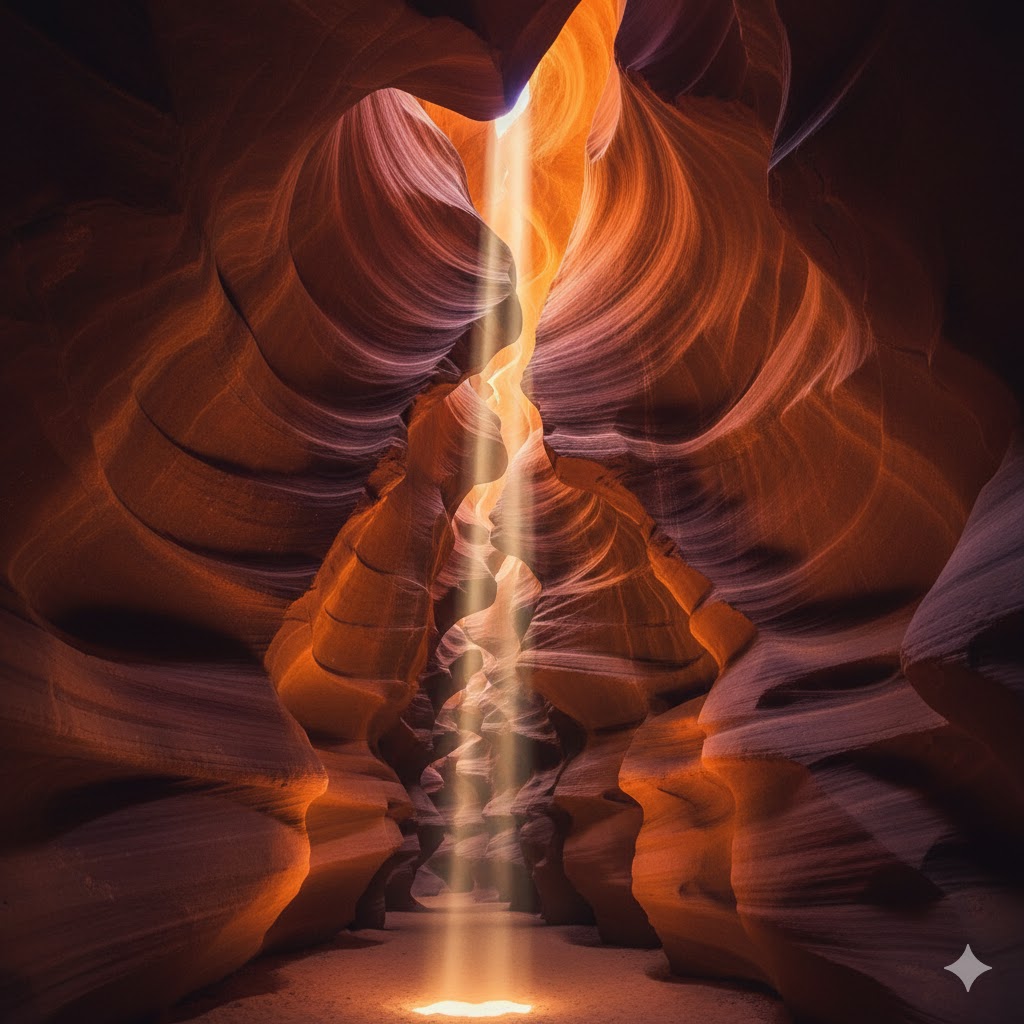
38. Antelope Canyon – Arizona, USA
Highlights:
A surreal slot canyon carved by wind and water, with sunlight beams creating fiery orange waves across narrow rock walls.
History / Tradition:
Sacred to the Navajo people — the name means “The place where water runs through rocks.”
How to Reach:
Located near Page, Arizona. Access only via guided Navajo tours.
Best Time to Visit:
March to October; midday for light beams.
Tickets / Price:
USD $50–80 depending on tour type.
Hidden Gems / Tips:
Lower Canyon is less crowded and more intimate for photography.
Local Food:
Try Navajo tacos made with fry bread and beans.
39. Chocolate Hills – Bohol, Philippines
Highlights:
Over 1,200 symmetrical green hills that turn brown in the dry season — nature’s own box of chocolates.
History / Tradition:
Legend says they were tears of a giant mourning his lost love. Geologically, they’re coral deposits shaped by rain and time.
How to Reach:
Fly to Tagbilaran, then drive 1.5 hours to Carmen.
Best Time to Visit:
February to May for brown hills; June to December for green views.
Tickets / Price:
₱100 (~USD $2) entry fee.
Hidden Gems / Tips:
Climb to the viewing deck at sunrise for a dreamy panorama.
Local Food:
Try kinampay ube jam and adobo sa gata (chicken in coconut milk).

40. Spotted Lake – British Columbia, Canada
Highlights:
This lake appears dotted with hundreds of colored circles in green, yellow, and blue — created by mineral deposits as water evaporates.
History / Tradition:
Considered sacred by the Okanagan First Nation for its healing properties; each spot represents a different mineral.
How to Reach:
Located near Osoyoos, British Columbia. Short drive off Highway 3.
Best Time to Visit:
July–September when the water level drops and spots appear most vivid.
Tickets / Price:
Viewable from roadside; no entry to preserve ecosystem.
Hidden Gems / Tips:
Bring binoculars for close-up detail. Visit nearby Nk’Mip Desert Cultural Centre for local stories.
Local Food:
Enjoy wild berry jams and smoked salmon burgers in Osoyoos.

41. The Blue River – Jiuzhaigou Valley, China
Highlights:
A UNESCO World Heritage Site, Jiuzhaigou Valley is home to the astonishing “Blue River,” whose turquoise and sapphire shades change with the sunlight and mineral deposits. Crystal lakes and frozen waterfalls surround this dreamlike scene.
History / Tradition:
According to Tibetan folklore, the valley was formed when a goddess shattered her mirror, and the fragments became the glittering lakes. It’s a sacred place for the Qiang and Tibetan people.
How to Reach:
Fly to Jiuzhai Huanglong Airport from Chengdu (1 hour), then a scenic 2-hour drive to the valley entrance.
Best Time to Visit:
September to November for vivid fall colors or February for snow-covered magic.
Tickets / Price:
CNY 169 (USD $23) for adults; shuttle buses within the park included.
Hidden Gems / Tips:
- Visit Five Flower Lake early morning for undisturbed reflections.
- Bring a camera filter for underwater photography.
Local Food:
Try Tibetan yak butter tea and barley bread in nearby Zhangzha town.

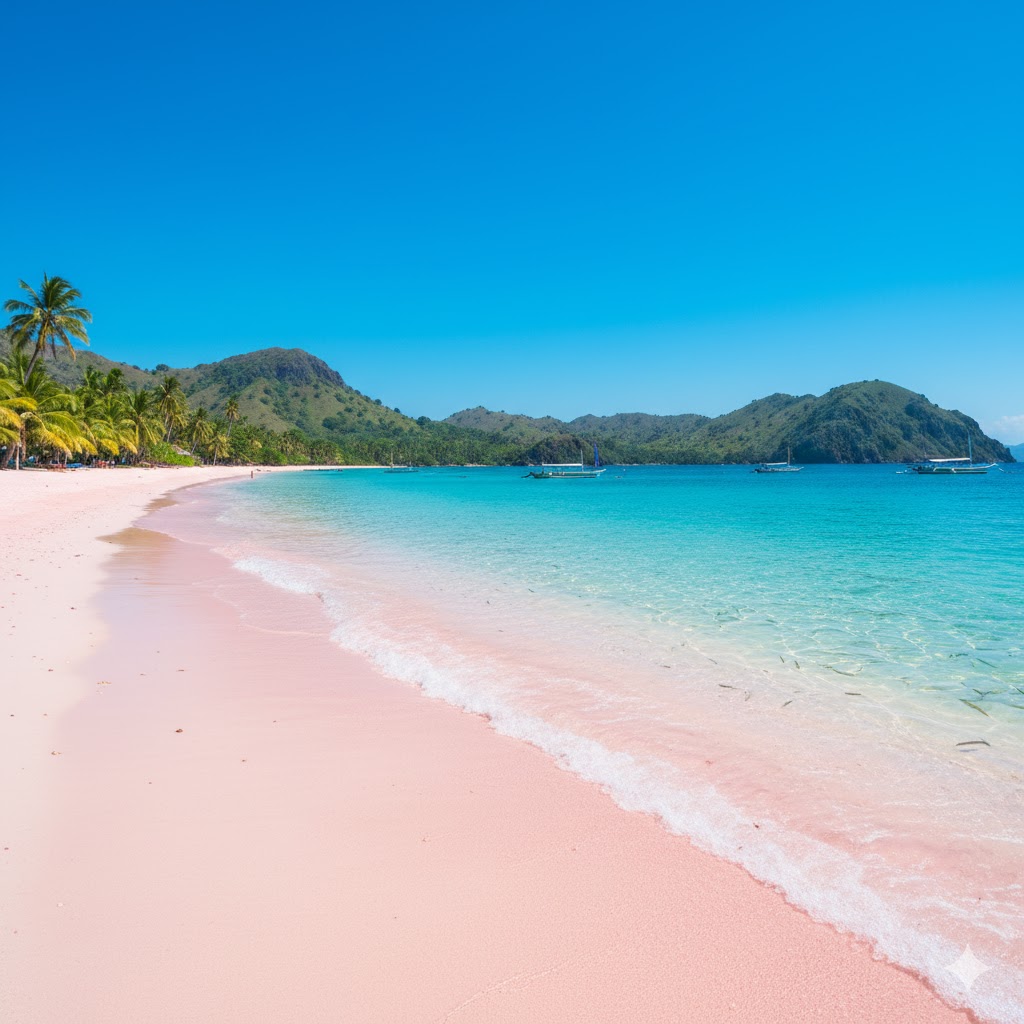
42. Pink Sand Beach – Komodo Island, Indonesia
Highlights:
A pastel dreamscape where crushed red coral gives the beach its famous pink hue. The soft gradient from pink to turquoise makes this beach one of the most photogenic in Indonesia.
History / Tradition:
Local tales say the sand’s color is blessed by sea spirits protecting the Komodo dragons nearby.
How to Reach:
Fly to Labuan Bajo, then take a 40-minute boat ride to Komodo Island.
Best Time to Visit:
April to October during the dry season.
Tickets / Price:
USD $10 park entry; boat tours start around USD $50 per person.
Hidden Gems / Tips:
- Bring snorkeling gear—coral reefs are just meters from shore.
- Avoid stepping on coral fragments to preserve the beach’s color.
Local Food:
Taste grilled seafood and sambal matah from local boats anchored offshore.
43. Glowing Mushroom Forest – Wai’anapanapa, Maui, Hawaii
Highlights:
This hidden forest near Wai’anapanapa State Park glows faintly green-blue at night due to bioluminescent fungi growing on decaying trees. A rare sight in Hawaii’s tropical climate.
History / Tradition:
Native Hawaiians consider the glowing forest a spiritual site inhabited by night spirits known as “akua.”
How to Reach:
Accessible from Hana Highway, 10 minutes from Wai’anapanapa Beach.
Best Time to Visit:
Visit after sunset, especially following rainfall when fungi glow brightest.
Tickets / Price:
Free entry; guided tours around USD $15.
Hidden Gems / Tips:
- Bring a flashlight with red mode to preserve night vision.
- Avoid touching the mushrooms—they’re fragile and rare.
Local Food:
Grab poke bowls or taro chips from Hana town vendors nearby.

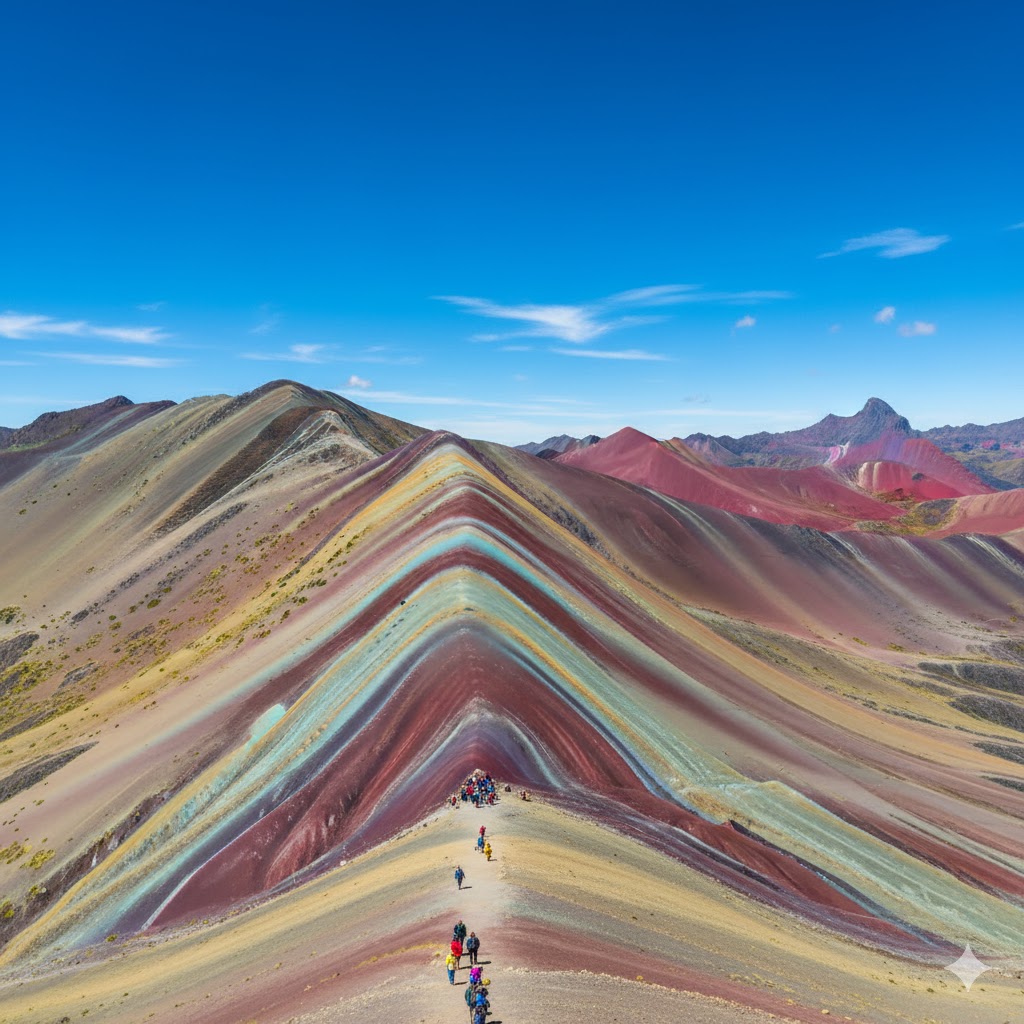
44. Rainbow Mountain – Vinicunca, Peru
Highlights:
Vinicunca, or Rainbow Mountain, is a geological wonder where mineral layers paint the slopes in red, yellow, and turquoise hues. It feels like walking through a surreal painter’s canvas.
History / Tradition:
Once hidden under ice, it was discovered by locals only in the last decade. For the Quechua people, the colors symbolize earth’s sacred energy.
How to Reach:
From Cusco, take a 3-hour drive followed by a 1.5-hour hike.
Best Time to Visit:
May to September for clear skies.
Tickets / Price:
PEN 10 (USD $3). Guided tours from Cusco cost about USD $30.
Hidden Gems / Tips:
- Acclimate in Cusco before hiking—altitude is over 5,000m.
- Visit early to avoid tourist rush.
Local Food:
Warm up with coca tea or quinoa soup after the hike.
45. The Mirror Desert – Salar de Uyuni, Bolivia
Highlights:
After rains, the world’s largest salt flat turns into a gigantic mirror reflecting the sky. This surreal illusion creates an endless horizon that blurs heaven and earth.
History / Tradition:
Legend says the salt flat formed from a crying goddess whose tears became salt. It’s considered sacred by Andean communities.
How to Reach:
Fly to Uyuni Airport, then a 30-minute drive to the flats.
Best Time to Visit:
January to April for the mirror effect; July–October for dry landscapes.
Tickets / Price:
USD $10 for entry; tours range USD $50–$100.
Hidden Gems / Tips:
- Stay overnight in a salt hotel.
- Visit Isla Incahuasi, an island of giant cacti in the salt sea.
Local Food:
Try llama steaks and quinoa stew in Uyuni town.

46. Crystal River – Cano Cristales, Colombia
Highlights:
Known as the “River of Five Colors,” this natural wonder glows red, green, yellow, blue, and black due to aquatic plants and minerals beneath clear waters.
History / Tradition:
Protected by indigenous tribes, it’s revered as “the river that escaped paradise.”
How to Reach:
Fly from Bogotá to La Macarena, then a short trek with a guide.
Best Time to Visit:
June to November when river colors peak.
Tickets / Price:
USD $35 park fee + local guide required.
Hidden Gems / Tips:
- No sunscreen or insect repellent allowed to protect flora.
- Book in advance—visitor numbers are limited.
Local Food:
Enjoy arepas and fried plantains from La Macarena stalls.

47. The Vanishing Lake – Manchar, Pakistan
Highlights:
Lake Manchar, the largest freshwater lake in Pakistan, appears and disappears with seasonal floods. Its mirror-like surface reflects Sindh’s skies in magical tones.
History / Tradition:
Home to the Mohana fishing tribe, who live in floating reed villages for centuries.
How to Reach:
2-hour drive from Hyderabad via Indus Highway.
Best Time to Visit:
August to November when migratory birds arrive.
Tickets / Price:
Free entry. Boat rides cost around PKR 500–1000.
Hidden Gems / Tips:
- Visit sunrise for surreal reflections.
- Explore nearby Sufi shrines for cultural depth.
Local Food:
Sample fish tikka or fresh chapatis from lakeside huts.

48. Glowworm Caves – Waitomo, New Zealand
Highlights:
Inside the limestone caves of Waitomo, thousands of glowworms illuminate the ceiling like a galaxy. A magical natural light show underground.
History / Tradition:
Māori legend says these lights are spirits guiding travelers through darkness.
How to Reach:
2.5-hour drive south from Auckland.
Best Time to Visit:
Year-round, though evenings offer best glow intensity.
Tickets / Price:
NZD $55 (USD $33) per adult.
Hidden Gems / Tips:
- Take the silent boat ride through the glowworm grotto.
- Photography not allowed—immerse in the moment.
Local Food:
Enjoy lamb pies or honey ice cream at Waitomo Village cafés.

49. Fairy Pools – Isle of Skye, Scotland
Highlights:
A series of crystal-clear waterfalls cascading over dark volcanic rocks, forming deep blue and emerald pools that shimmer under sunlight.
History / Tradition:
Locals believe fairies bathe here under moonlight, blessing visitors with luck.
How to Reach:
30-minute drive from Portree toward Glenbrittle.
Best Time to Visit:
April to September.
Tickets / Price:
Free entry; parking around GBP £5.
Hidden Gems / Tips:
- Swim if you dare—water is icy cold.
- Visit early to avoid crowds.
Local Food:
Try haggis or smoked salmon at nearby pubs.

50. Aurora Village – Yellowknife, Canada
Highlights:
This Arctic wonderland offers front-row seats to the Aurora Borealis with glass-domed lodges and heated viewing decks.
History / Tradition:
The Dene people view the northern lights as ancestral spirits dancing in the sky.
How to Reach:
Fly directly to Yellowknife Airport, then 30-minute shuttle to Aurora Village.
Best Time to Visit:
December to March for strongest auroras.
Tickets / Price:
Aurora tour packages from USD $100+.
Hidden Gems / Tips:
- Book the glass igloos for best sky view.
- Bring a tripod for long exposure shots.
Local Food:
Taste Arctic char, reindeer stew, and warm cocoa under the lights.

FAQs – Magical Travel Destinations
1. What are the most magical travel destinations in the world?
Some of the most enchanting places include the glowing beaches of the Maldives, the Rainbow Mountain of Peru, Jiuzhaigou’s Blue River in China, and Bolivia’s mirror-like Salar de Uyuni. Each offers surreal colors and otherworldly beauty that feel straight out of a fantasy world.
2. Where can I see glowing natural phenomena like bioluminescent beaches or rivers?
Bioluminescent wonders can be found in Puerto Rico’s Mosquito Bay, the Maldives’ Vaadhoo Island, and Hawaii’s Wai’anapanapa glowing mushroom forests. These magical sites glow at night due to natural microorganisms or fungi.
3. What time of year is best to visit colorful or magical destinations?
The best time depends on each region’s natural cycle — for example, June to November for Colombia’s Cano Cristales, January to April for Bolivia’s mirror desert, and September to November for Jiuzhaigou’s fall hues. Always check local conditions before visiting.
4. Are these magical destinations safe for travelers?
Yes, most are safe when visiting with proper guidance. Some like Komodo Island or Rainbow Mountain require local guides due to wildlife or altitude conditions. Always travel with eco-friendly tour operators and follow conservation rules.
5. How can travelers capture surreal landscapes without damaging the environment?
Use eco-friendly sunscreen, avoid touching coral reefs or glowing fungi, stay on marked trails, and carry reusable water bottles. Responsible travel helps preserve these natural wonders for future generations.
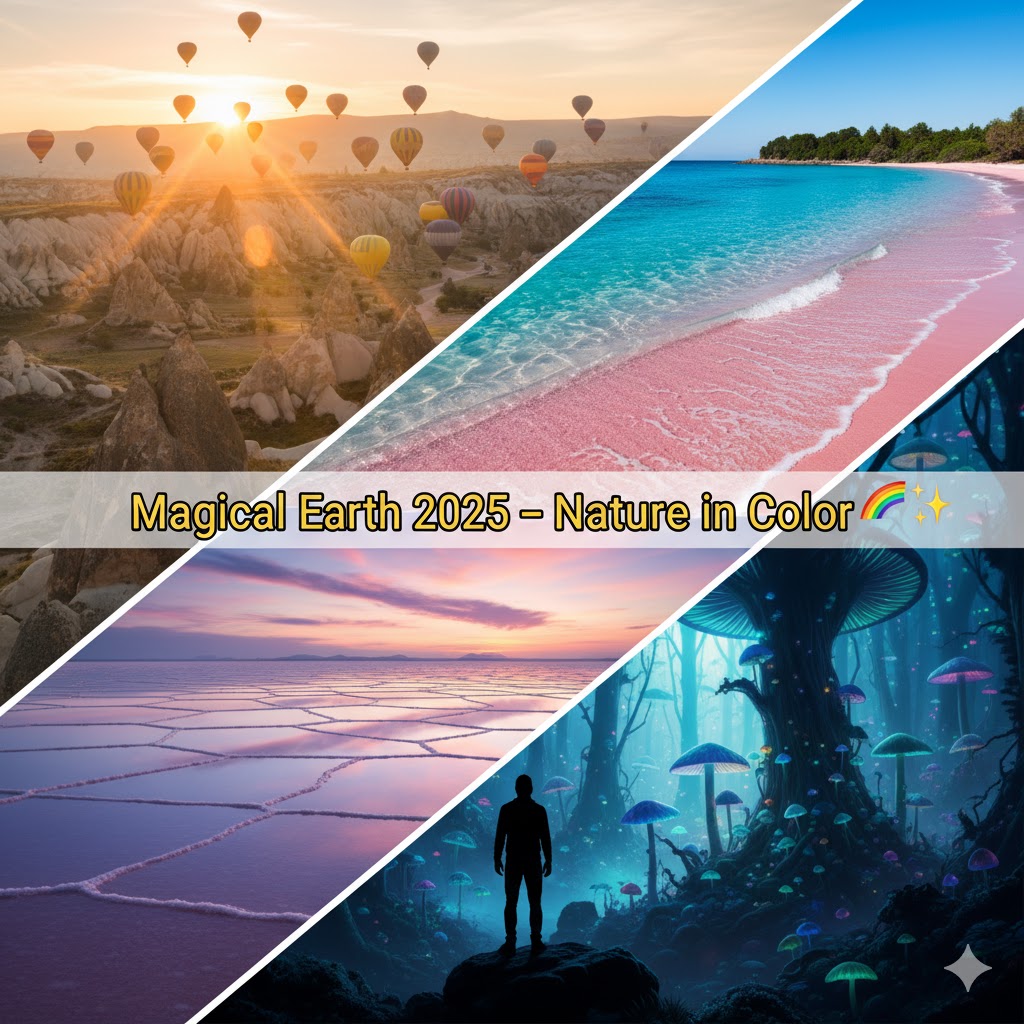
Traveler Guide – The World’s Surreal Palette
From the mirror salt flats of Bolivia to the pink coral sands of Indonesia, these magical travel destinations prove that our planet is far more colorful and surreal than imagination itself. Each place tells a story — one painted in minerals, myths, and moonlit glow.
Exploring these locations is not just sightseeing — it’s stepping into nature’s dreamscape. Whether you’re walking through Peru’s rainbow mountains or gazing at glowing caves in New Zealand, the experience transforms the way you see the world.
So pack your sense of wonder, travel responsibly, and let these surreal landscapes remind you that magic isn’t fictional — it’s Earth’s most beautiful reality. 🌍✨

Click More:
Sources:


