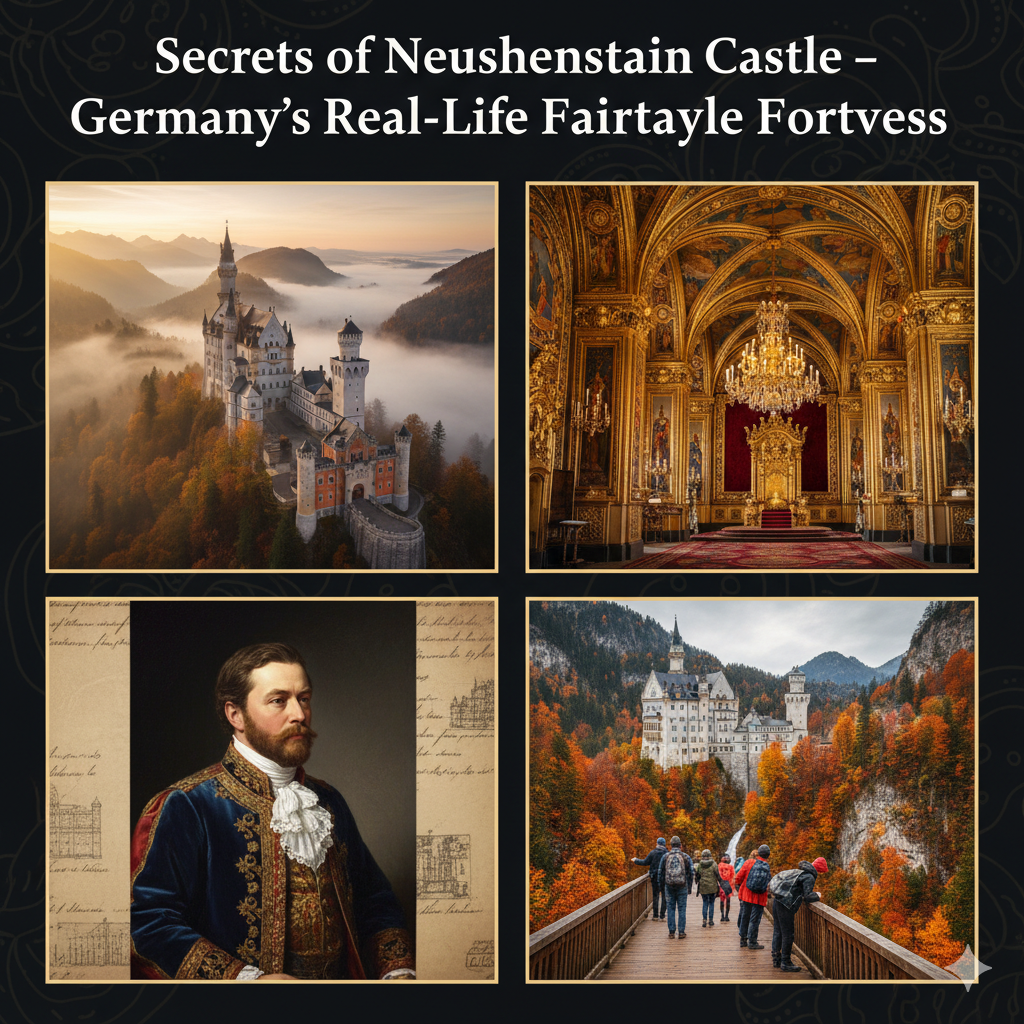

A Castle Pulled Straight from a Fairytale
Floating above mist-shrouded forests and alpine meadows of Bavaria, Neuschwanstein Castle stands like an image from a dream. With soaring spires, perfect symmetry, and kindled legends of mad kings and lost fortunes—this iconic landmark has inspired storytellers, travelers, and animators alike (yes, even Walt Disney).
But beyond the breathtaking façade lies a tapestry of secrets: ones buried beneath royal obsessions, hidden chambers, baffling disappearances—and the tragic story of a king who dreamed too big.
In this article, we’re stepping beyond the postcard views. We’re unlocking 7 magical secrets behind Germany’s most celebrated castle—revealing the history, architecture, myths, mysteries, travel tips, food suggestions, and hidden gems you probably haven’t heard before.
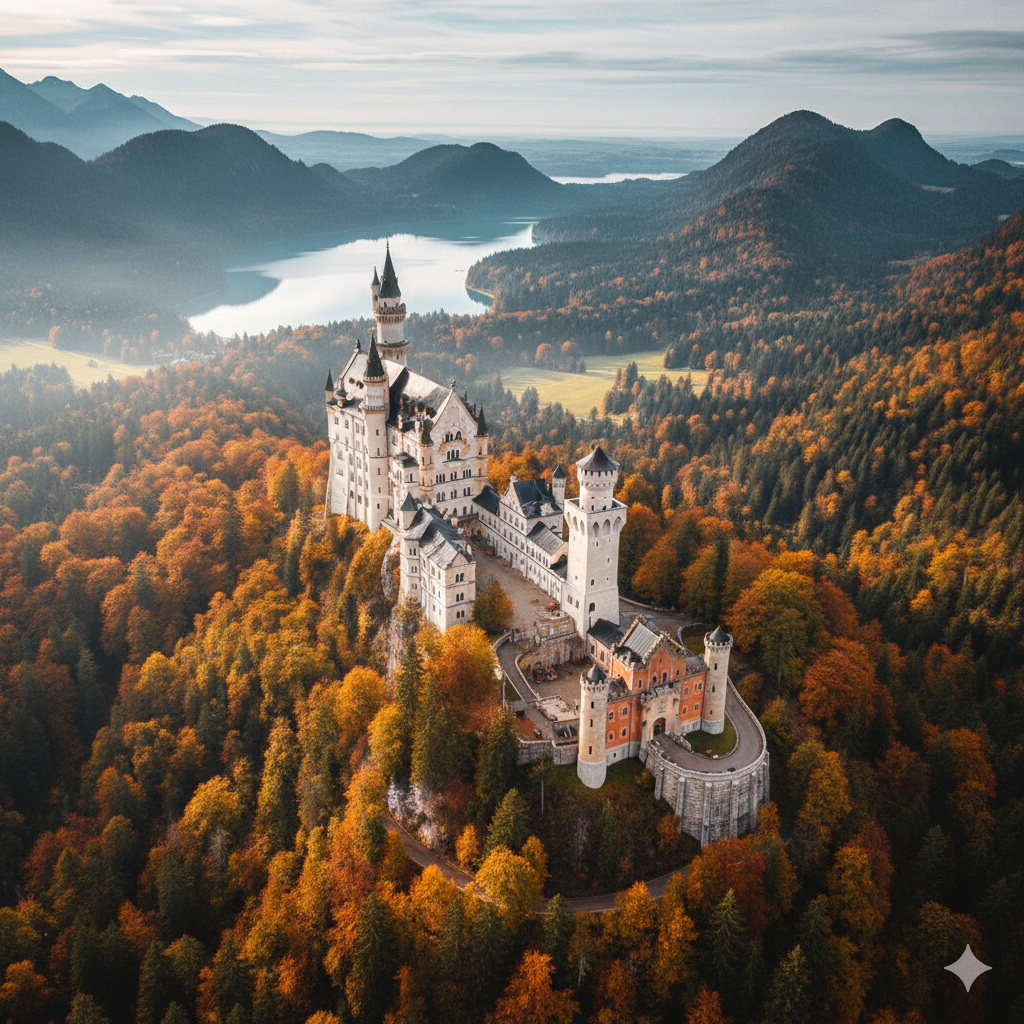
Whether you’re planning a visit to Bavaria or living out your inner fairytale fantasy—the Neuschwanstein Castle is a journey every dreamer deserves.
Let’s unlock the gates…
The Secret Rooms Ludwig II Never Saw Completed
Unlike most royal projects, Neuschwanstein Castle was never completed. Out of 200 planned rooms, only 14 were fully finished by the time of King Ludwig II’s mysterious death in 1886.
Some of the incomplete rooms still bear the markings of master builders, left like time capsules in Bavaria’s highlands.
The Mystical Features That Did Get Built:
- The Throne Hall – A dazzling Byzantine-style room… without a throne! The king died before it arrived.
- The Grotto – An artificial cave complete with stalactites, mood lighting, and a hidden doorway.
- Singer’s Hall – One of the largest castle rooms in Germany, modeled after medieval legends of knights and ladies.

Why it Matters
Ludwig’s grand vision was never about politics… it was about art, music, and imagination. He wanted a world where poetry and opera reigned supreme. That’s why Neuschwanstein was built as a stage—an immersive theatre of wonder inspired by his favorite composer, Richard Wagner.
“I love to sleep in a storm, because storms remind me that Heaven is always changing.” – Ludwig II
The Tragic Fairy King: Ludwig II’s Obsession and Mysterious Death
King Ludwig II of Bavaria wasn’t your typical monarch. Obsessed with art, architecture, and fantasy, he turned his life into a dreamscape—and Neuschwanstein was its star.
But his dreams came at a cost.
Ludwig II – The Dreamer vs. The State
- He spent all of his private wealth—and borrowed heavily—to build Neuschwanstein.
- Bavaria’s ministers declared him insane.
- He was arrested and deposed before the castle was finished.
- Shortly after, he was found drowned under mysterious circumstances at Lake Starnberg.
Until today, speculation persists:
- Was it suicide?
- Was it murder by political rivals?
- Was it staged by conspirators to stop his extravagance?
Neuschwanstein became the unfinished diary of a king whose fantasies were deemed too dangerous.
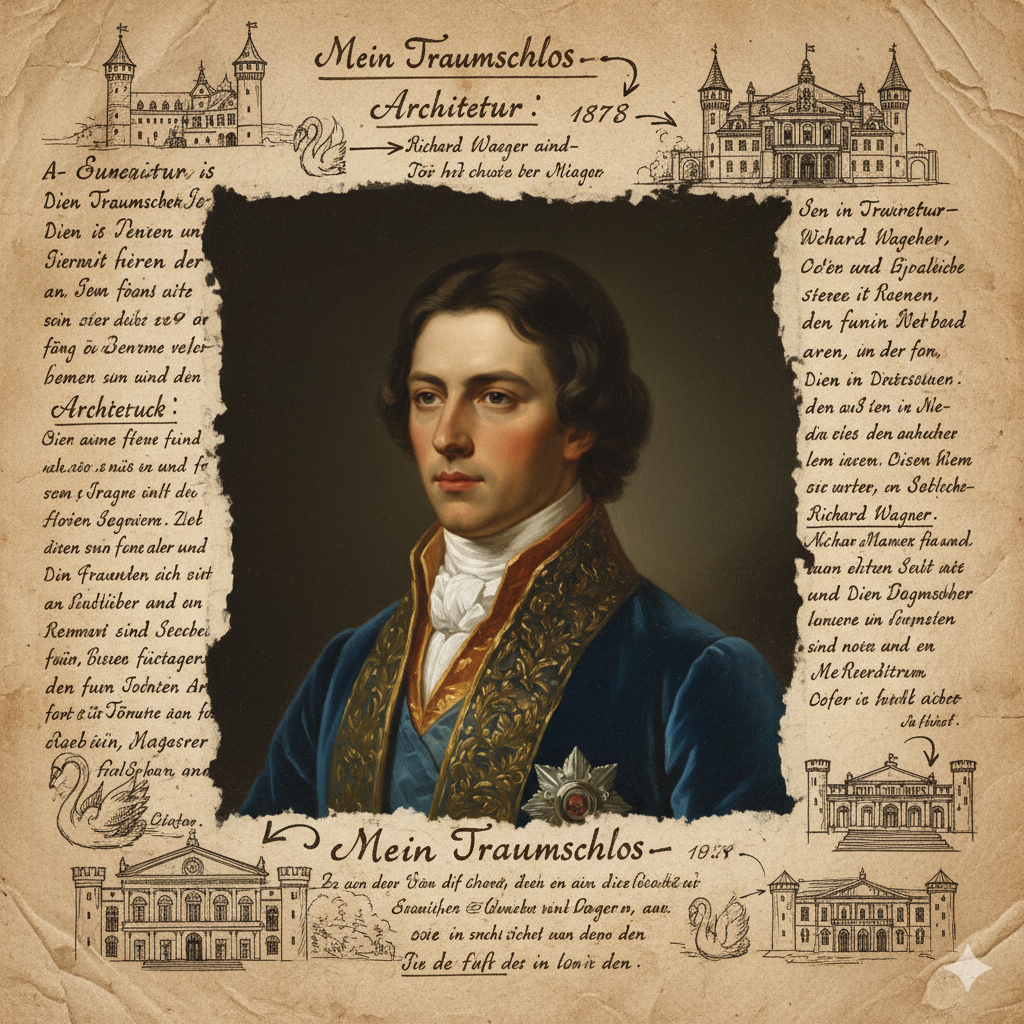
Neuschwanstein Isn’t Medieval – It’s 19th Century Hollywood
Don’t be fooled by the turrets and towers—Neuschwanstein Castle was NOT built in the Middle Ages. It was constructed in the late 1800s, during the height of Bavaria’s romanticism revival.
The castle is a blend of:
- Neo-Gothic
- Byzantine
- Romanesque
- Fantasy architecture
Think: Middle Ages meets 19th-century imagination.
Hollywood Connection:
Neuschwanstein directly inspired Sleeping Beauty Castle at Disneyland. Walt Disney visited the castle in the 1950s and later used its silhouette as the logo for Disney’s film studio.
Today, Neuschwanstein Castle welcomes over 1.5 million visitors a year and is one of the most photographed castles in the world.
How to Reach Neuschwanstein Castle – A Complete Travel Route
Neuschwanstein Castle is located in Bavaria, Germany, near the village of Hohenschwangau, close to the Austrian border.
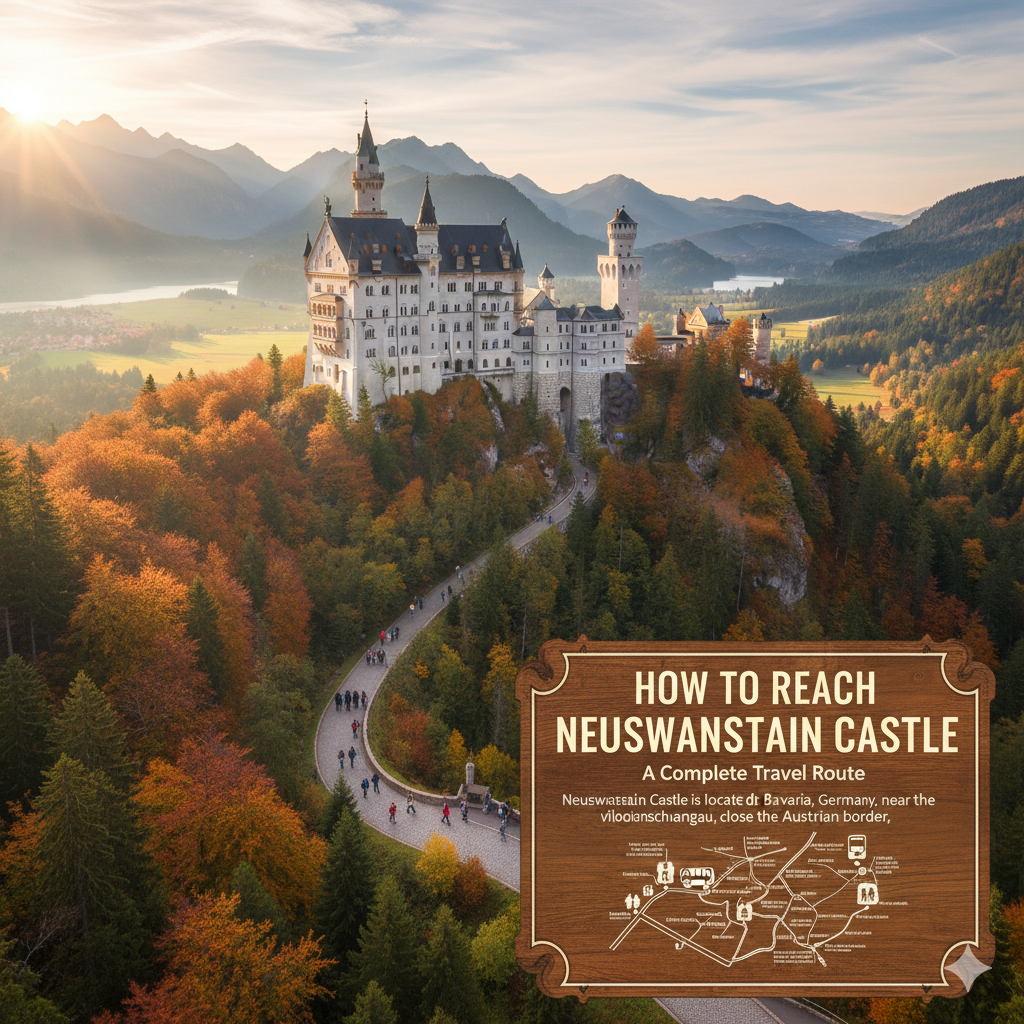
Nearest Airports:
- Munich International Airport (approx. 2 hours by car)
- Stuttgart Airport (approx. 2 hours 30 minutes)
By Train:
- Take the train from Munich → Füssen (approx. 2 hrs. – direct)
- From Füssen, take bus #73 or #78 to Hohenschwangau
Last Mile Hike or Shuttle:
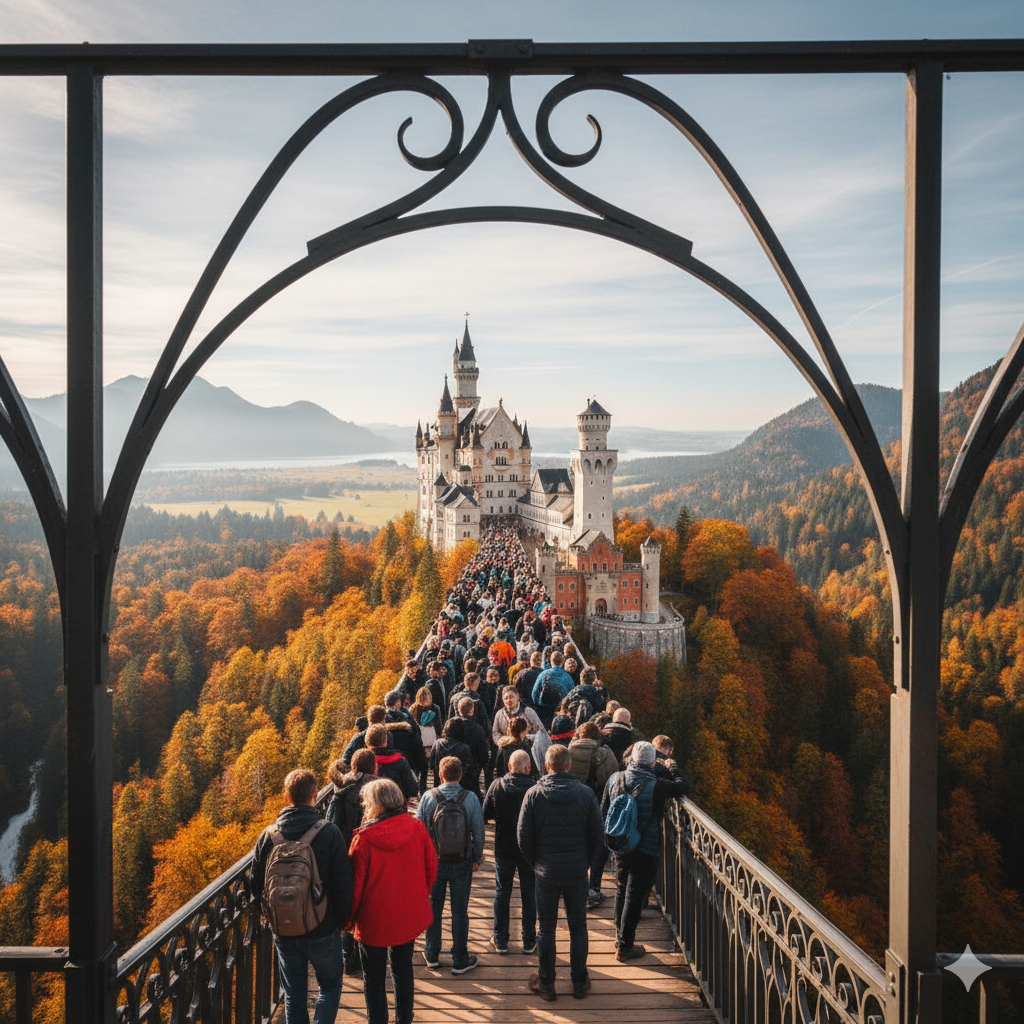
- From ticket center, either walk uphill 30–40 mins, take horse carriage, or shuttle bus to Mary’s Bridge viewpoint.
Check Also: 7 Mysteries of Hawaii’s Staircase to Nowhere: The Forbidden Haiku Stairs
Tickets, Entry Fees & Tour Options
Ticket Prices (2025):
- Adults: €18
- Reduced / Students: €14
- Children under 18: FREE
- Online reservation fee: €2.50 per person
Castle Hours:
- April to October: 9 AM – 6 PM
- November to March: 10 AM – 4 PM
- Closed: Jan 1, Dec 24–25, Dec 31
Important: Entry is ONLY by guided tour and tickets often sell out weeks in advance.
Reserve early via the official ticket portal (linked below).
Best Time to Visit Neuschwanstein Castle
| Season | Experience | Why Visit? |
|---|---|---|
| Spring (Apr–May) | Wildflowers in bloom | Clear skies, fewer tourists |
| Summer (Jun–Aug) | Peak crowds & sunny weather | Best for photos & hiking |
| Autumn (Sep–Oct) | Stunning fall foliage | Golden valley views, crisp air |
| Winter (Nov–Mar) | Snowy fairytale scenes | Magical castle dusted in snow, quiet |
Travel Pro Tip: Visit during early October for perfect weather + vibrant foliage + smaller crowds.
Source:
- Schloss Neuschwanstein – Official Castle Tickets and Visitor Info
- Bavarian Castles and Lakes – Official Tourism Portal
Hidden Gems and Nearby Wonders
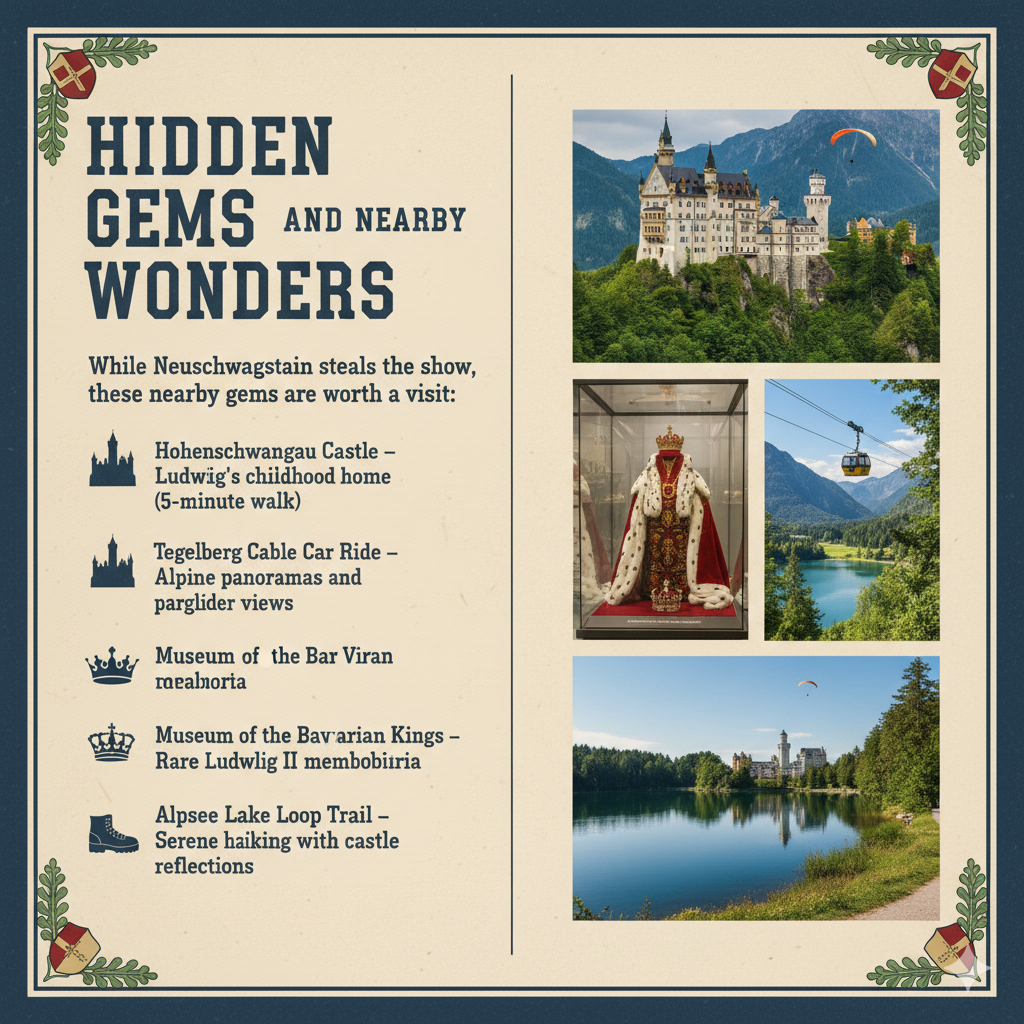
While Neuschwanstein steals the show, these nearby gems are worth a visit:
Hohenschwangau Castle – Ludwig’s childhood home (5-minute walk)
Tegelberg Cable Car Ride – Alpine panoramas and paraglider views
Museum of the Bavarian Kings – Rare Ludwig II memorabilia
Alpsee Lake Loop Trail – Serene hiking with castle reflections
Secret Spot: Head to the quieter Pöllat Gorge Trail – a waterfall-filled gorge walk under the castle’s cliffs.
Local Food Experiences – Eat Like a Bavarian
Order like a local:
- Schweinshaxe – Roasted pork knuckle
- Käsespätzle – German mac & cheese
- Apfelstrudel – Apple pastry heaven
- Weißbier – Bavarian wheat beer
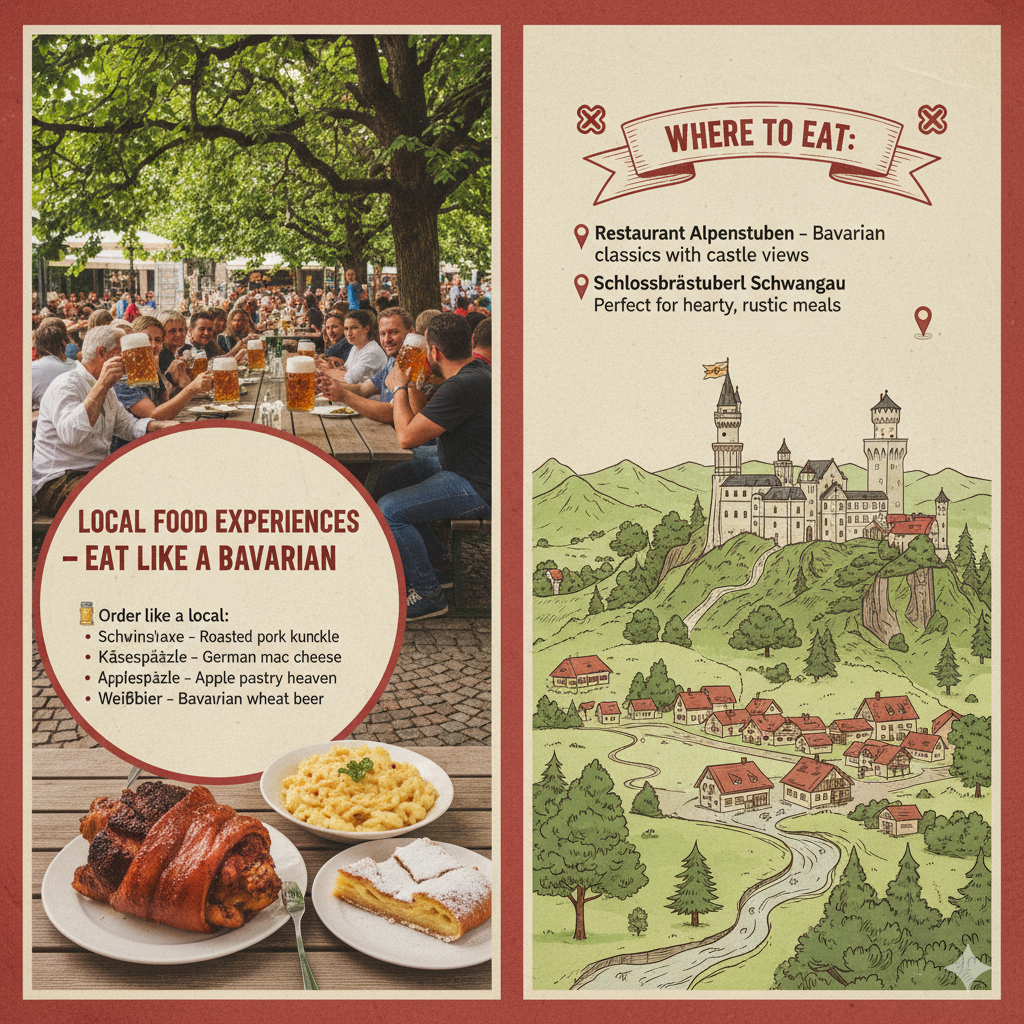
Where to Eat:
- Restaurant Alpenstuben – Bavarian classics with castle views
- Schlossbräustüberl Schwangau – Perfect for hearty, rustic meals
FAQs – Neuschwanstein Travel Facts You Need to Know
1. Is Neuschwanstein Castle worth visiting?
Absolutely. Beyond photo ops, it’s a journey into German history, architecture, and royal storytelling.
2. Can I go inside the castle?
Yes—interior visits are only permitted via guided tours. Booking ahead is essential.
3. What movies or shows feature Neuschwanstein?
It inspired Disney’s Sleeping Beauty Castle, and was featured in Chitty Chitty Bang Bang and The Great Escape.
4. How long do you need to visit?
About 4–5 hours, including walk up, tour, and nearby sights.
5. Can I visit without hiking uphill?
Shuttle buses and horse carriages are available to reduce walking.
6. Is it wheelchair accessible?
Only partially. The interior tour has multiple flights of stairs.
Final Thoughts – A Dream That Lives On
Neuschwanstein Castle is more than a monument. It’s the portrait of a dream left unfinished—and a reminder of what happens when imagination dares to defy reality.
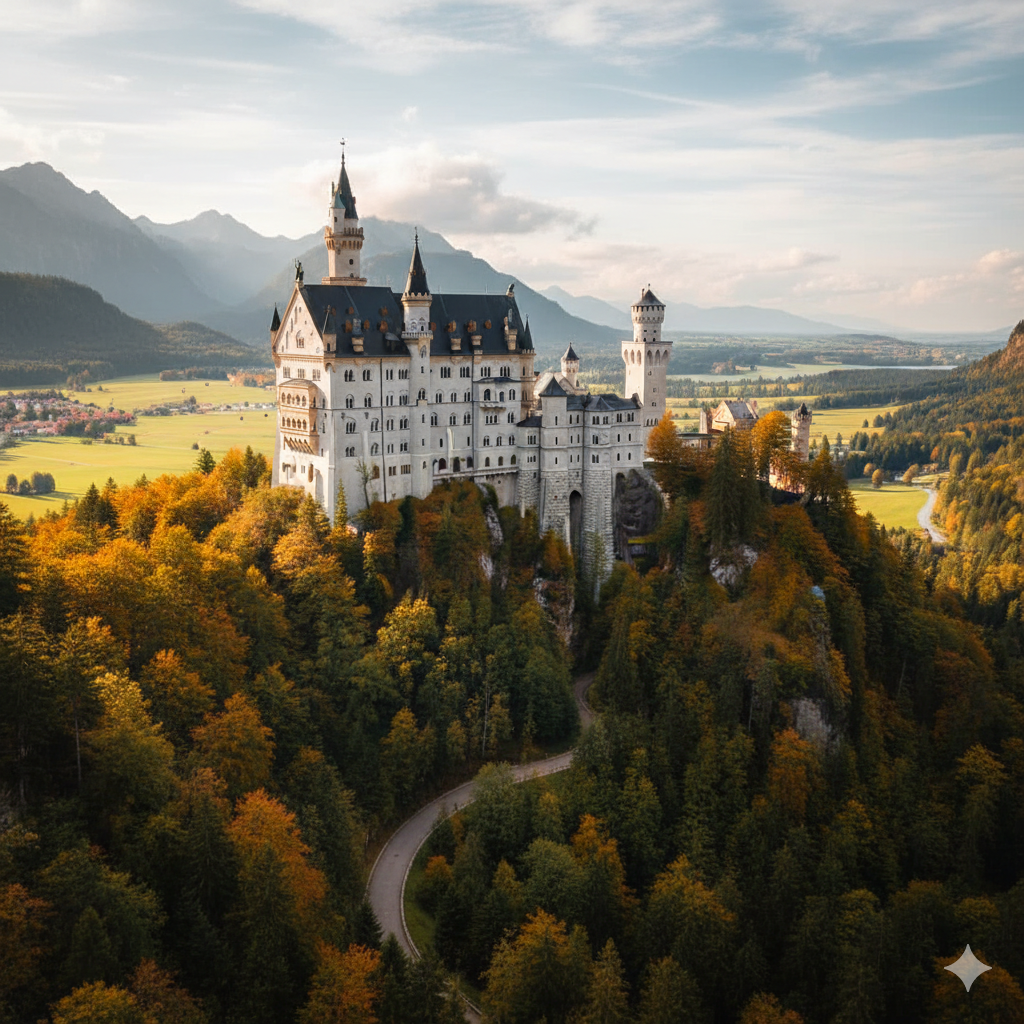
Whether you visit on a snowy winter morning or a golden autumn afternoon, one thing is certain:
You don’t just see Neuschwanstein.
You feel it.
A fairytale etched in stone… floating in the clouds… forever waiting for its king to return.
Are you ready to climb into the story?