


The Rainbow Mountains of Peru: A Journey into Nature’s Masterpiece
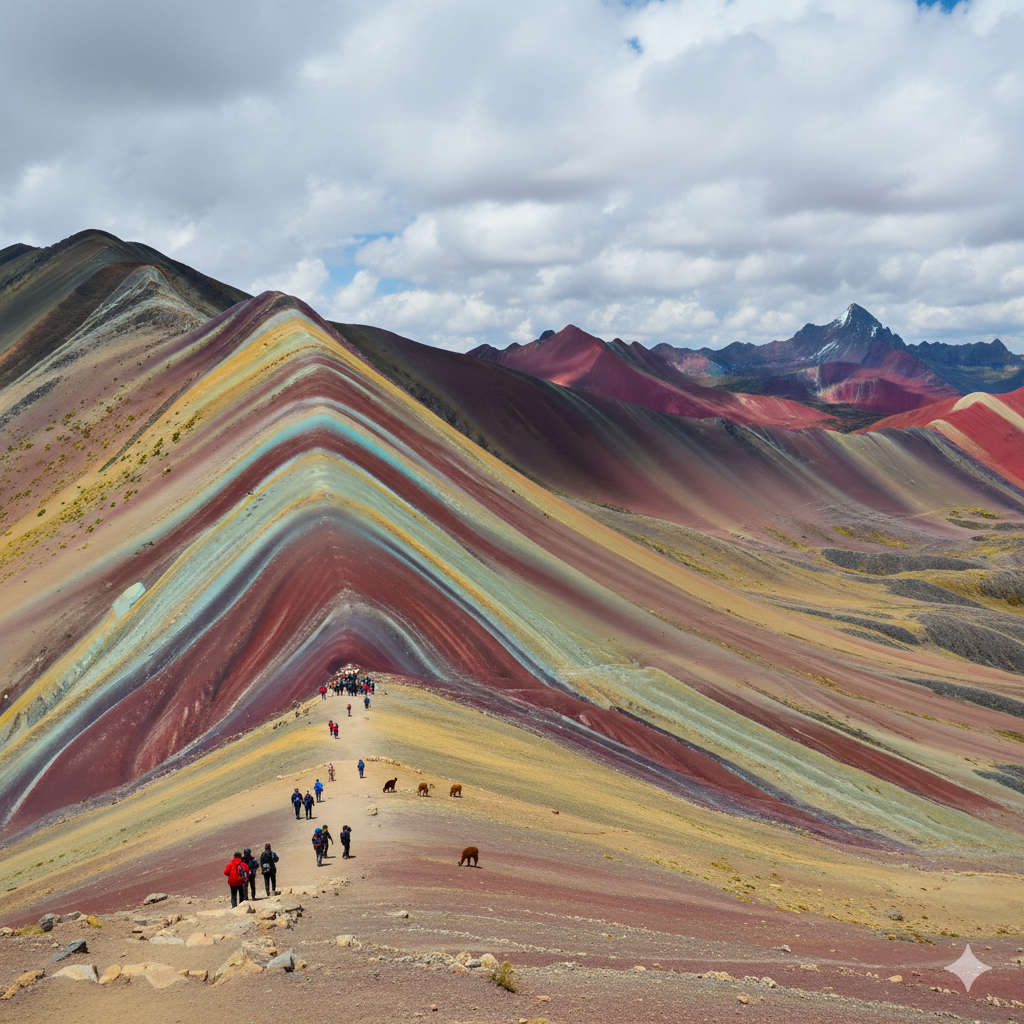
The Rainbow Mountains of Peru aren’t just a place you visit — they’re an experience that etches itself into your soul. Known locally as Vinicunca or Montaña de Siete Colores (Mountain of Seven Colors), this geological wonder rises proudly in the Andes, about three hours from Cusco, painting the sky with layers of crimson, gold, turquoise, and lavender.
If Machu Picchu is Peru’s ancient soul, then Vinicunca is its living canvas — a natural wonder sculpted by time, climate, and minerals that turned rock into art. For travelers seeking both thrill and tranquility, this is one of South America’s most unforgettable journeys.
In this guide, we’ll explore not only how to visit Rainbow Mountain, but also what makes it so spiritually and visually extraordinary. From local legends to acclimatization tips, this is your complete insider’s guide to Peru’s most colorful mountain.
Where the Colors Meet the Clouds – The Story of Vinicunca

At over 5,200 meters (17,000 feet) above sea level, Vinicunca was once hidden beneath thick layers of snow and ice. Only in the early 2010s, as global temperatures shifted, did its dazzling colors emerge — revealing a geological painting millions of years in the making.
Each stripe tells a story of mineral evolution:
- Red: iron oxide
- Yellow: iron sulfide
- Green: chlorite
- Lavender: goethite and oxidized limonite
- White: quartzose sandstone
The result? A mountain that looks airbrushed by nature itself — a real-life rainbow of minerals where time, weather, and wind sculpted perfection.
Local Quechua communities consider Vinicunca sacred. They believe it’s part of the spiritual spine of the Andes, where Mother Earth (Pachamama) reveals her energy through color. For them, this mountain is alive — breathing, watching, protecting.
How to Get There – Your Gateway from Cusco
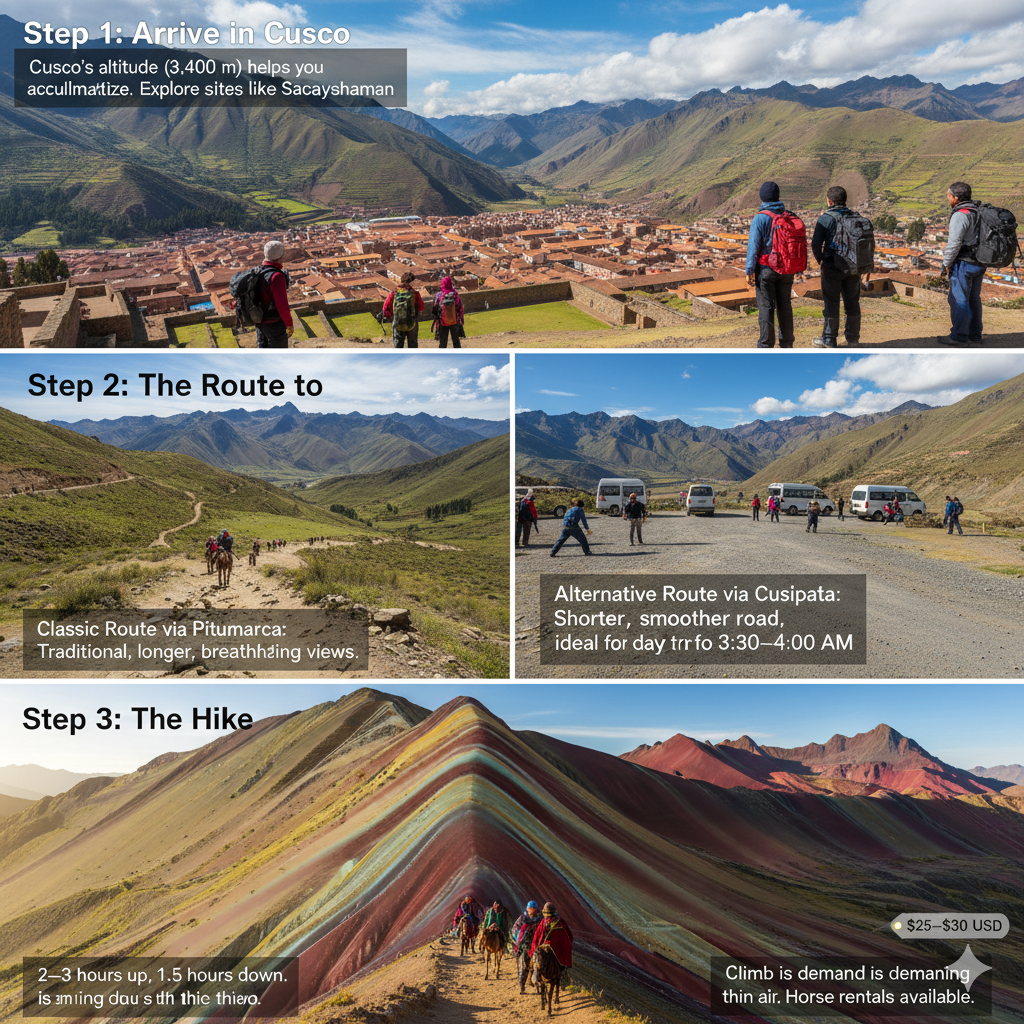
Step 1: Arrive in Cusco
Your journey begins in Cusco, the cultural capital of the Inca Empire. Cusco’s altitude (3,400 m) helps you acclimatize before heading higher into the Andes. Spend 2–3 days here exploring sites like Sacsayhuamán and the Sacred Valley before the climb.
Step 2: The Route to Rainbow Mountain
There are two main routes to Vinicunca:
- Classic Route via Pitumarca: The traditional, slightly longer path — breathtaking views, moderate crowd.
- Alternative Route via Cusipata: Shorter (6–7 km trek roundtrip), smoother road, ideal for day trips.
Most tours leave Cusco around 3:30–4:00 AM and return by early evening.
Step 3: The Hike
From the trailhead, the hike typically takes:
- 2–3 hours up (depending on fitness & altitude)
- 1.5 hours down
The climb is steady but demanding due to thin air. Locals offer horse rentals (approx. $25–$30 USD) if you prefer a gentler ascent.
The First Glimpse – When the Mountain Appears
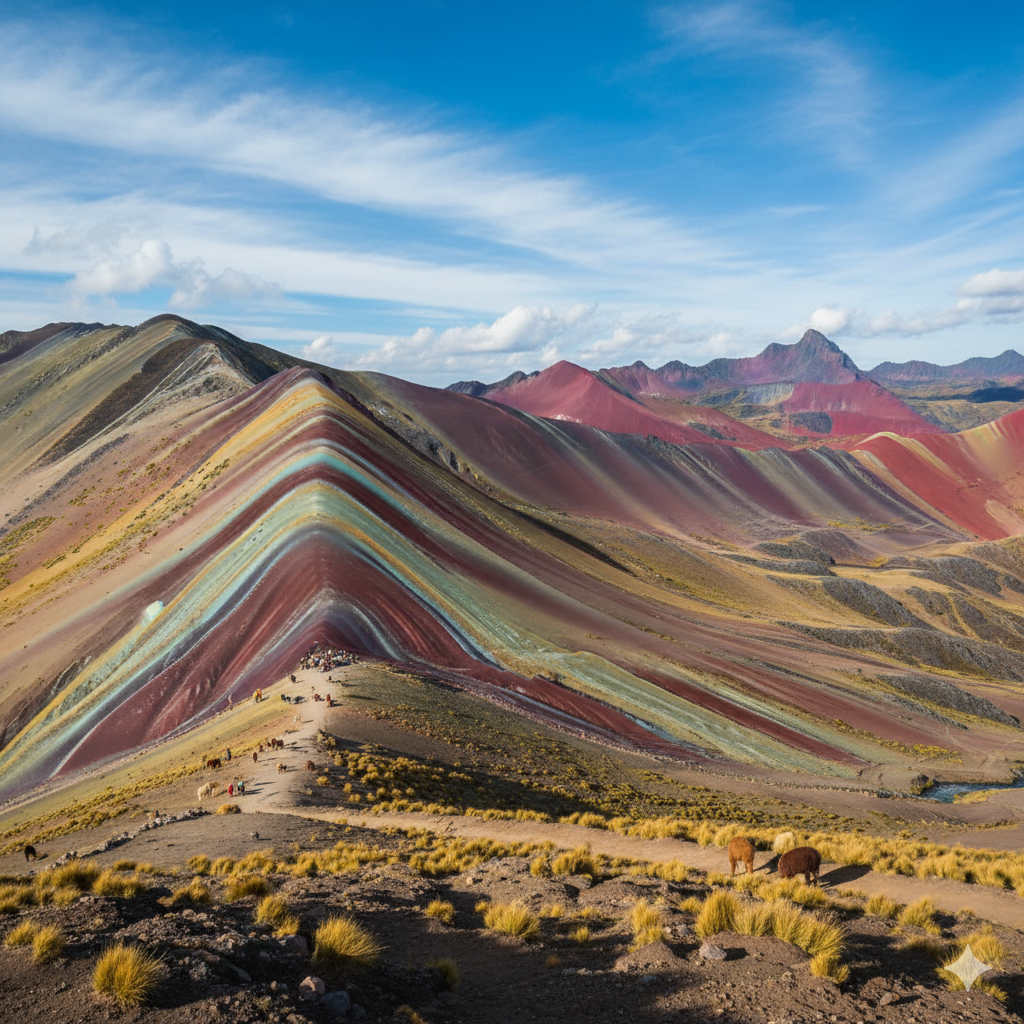
As you approach the final ridge, your heart pounds — not from altitude alone, but from sheer awe. Suddenly, you see it: the Rainbow Mountain unfurling across the horizon, streaks of red, orange, and turquoise blending like watercolor in motion.
It’s hard to believe it’s real. Many travelers pause in silence, unable to find words as the Andean wind hums through the valleys.
Pro Tip
Arrive early (around 7–8 AM) to avoid crowds and catch the morning light. The colors are softer and more vivid when the sun rises.
Photography Guide – Capturing the Magic
Want that perfect Instagram-worthy shot? Here’s how to frame it like a pro:
| Tip | Description |
|---|---|
| Best Time: | Early morning (6–8 AM) or late afternoon (3–4 PM) for ideal light balance. |
| Gear: | Use a DSLR or mirrorless with polarizing filter to reduce glare. |
| Weather: | The colors appear strongest after a light rain — moisture enhances hue. |
| Pose Tip: | Stand at the viewpoint’s ridge trail with the mountain behind; use a wide-angle lens for depth. |
| Avoid Overediting: | The mountain’s real colors are naturally vivid — subtle editing is best. |
Adventure Meets Altitude – Surviving 5,000 Meters
Vinicunca’s beauty comes with a challenge: altitude sickness (soroche). The air is thin, the climb is steep, and the body needs time to adjust.

Acclimatization Tips:
- Spend at least 2–3 days in Cusco first.
- Drink coca tea (offered everywhere).
- Avoid alcohol and heavy meals pre-hike.
- Go slow and steady — oxygen is your best friend.
- If symptoms appear (dizziness, nausea), descend immediately.
Local Life – The People of the Andes
The Rainbow Mountains aren’t just geological art — they’re home to Quechua families who’ve lived here for centuries, herding alpacas and llamas.
Their colorful ponchos mirror the land they live on. Women weave intricate patterns inspired by the same hues of Vinicunca, while men guide travelers and share ancestral stories.
Visiting here is a chance to support indigenous tourism, helping local families earn income while preserving their traditions.
Pro tip: Buy handwoven alpaca scarves or coca candy from local stalls — every purchase helps sustain mountain communities.
What to Eat on the Way
After hours of hiking, you’ll crave something warm.

Typical meals in the Cusipata route include:
- Quinoa soup – nourishing and light
- Lomo saltado – stir-fried beef with rice
- Mate de coca – herbal tea that helps with altitude
- Papas andina – native Andean potatoes with cheese
For vegetarians, options are plentiful — Peruvian cuisine is rich in plant-based protein (quinoa, beans, corn).
What to Pack – Travel Essentials
| Item | Why You Need It |
|---|---|
| Warm Layers | Freezing mornings, windy peaks |
| Sun Protection | Intense UV rays at high altitudes |
| Hiking Boots | Rocky, uneven trails |
| Sunglasses | Snow glare even when sunny |
| Water Bottle | Minimum 2 liters |
| Energy Snacks | Quick recovery during climb |
| Camera / Drone | (Note: drone use requires permission) |
Source:
When to Visit – The Best Seasons
The dry season (May–October) is ideal: clear skies, strong colors, and fewer landslides.
Avoid December–March (rainy season). The trail can become muddy and dangerous, and the mountain may be obscured by fog or snow.
The Nearby Hidden Gems

While Vinicunca steals the spotlight, the surrounding region holds other breathtaking treasures:
- Red Valley (Valle Rojo): A dramatic crimson canyon just 30 minutes beyond Rainbow Mountain.
- Ausangate Glacier: The sacred mountain of the Andes, home to turquoise lakes and alpaca herders.
- Palccoyo: The “Alternative Rainbow Mountain” — lower altitude, easier hike, and fewer tourists.
Spiritual Connection – The Heart of Pachamama
For locals, the mountain isn’t just scenic — it’s sacred energy. Pilgrims visit to thank Pachamama (Mother Earth) for life, crops, and balance. You might even see offerings of coca leaves and flowers along the trail.
Take a moment to sit in silence. Feel the wind, the pulse of the earth, the whisper of ancient spirits carried by the Andes. This isn’t just sightseeing — it’s soul-seeing.
Sustainable Travel – Protecting the Painted Mountains
Over-tourism is a rising concern. To keep Vinicunca pristine:
- Stick to marked paths.
- Avoid plastic waste — bring reusable bottles.
- Respect local customs and wildlife.
- Travel with eco-certified tour operators.
Your footsteps matter — let them leave only admiration behind.
Check Also: 10 Magical Facts About the Ice Hotel Sweden – Rebuilt Anew Each Winter
Frequently Asked Questions (FAQs)
Q1: How hard is the Rainbow Mountain hike?
A: It’s moderately difficult due to altitude, not distance. Fit beginners can complete it with breaks.
Q2: Can I visit Rainbow Mountain without a tour?
A: Yes, but a guided tour ensures safety, transport, and oxygen support if needed.
Q3: How much does a Rainbow Mountain tour cost?
A: Around $35–$50 USD, including transport, meals, and guide.
Q4: Can I see snow at Rainbow Mountain?
A: Yes, during the wet season (Dec–March), parts of the mountain may be dusted with snow.
Q5: Is it safe for solo travelers?
A: Absolutely. Peru is welcoming to solo travelers; just use registered guides and licensed operators.
Traveler – A Symphony of Stone and Spirit
Visiting the Rainbow Mountains of Peru is like stepping into a dream painted by nature herself. The air is thin, the climb is challenging, but the reward — oh, it’s beyond words.
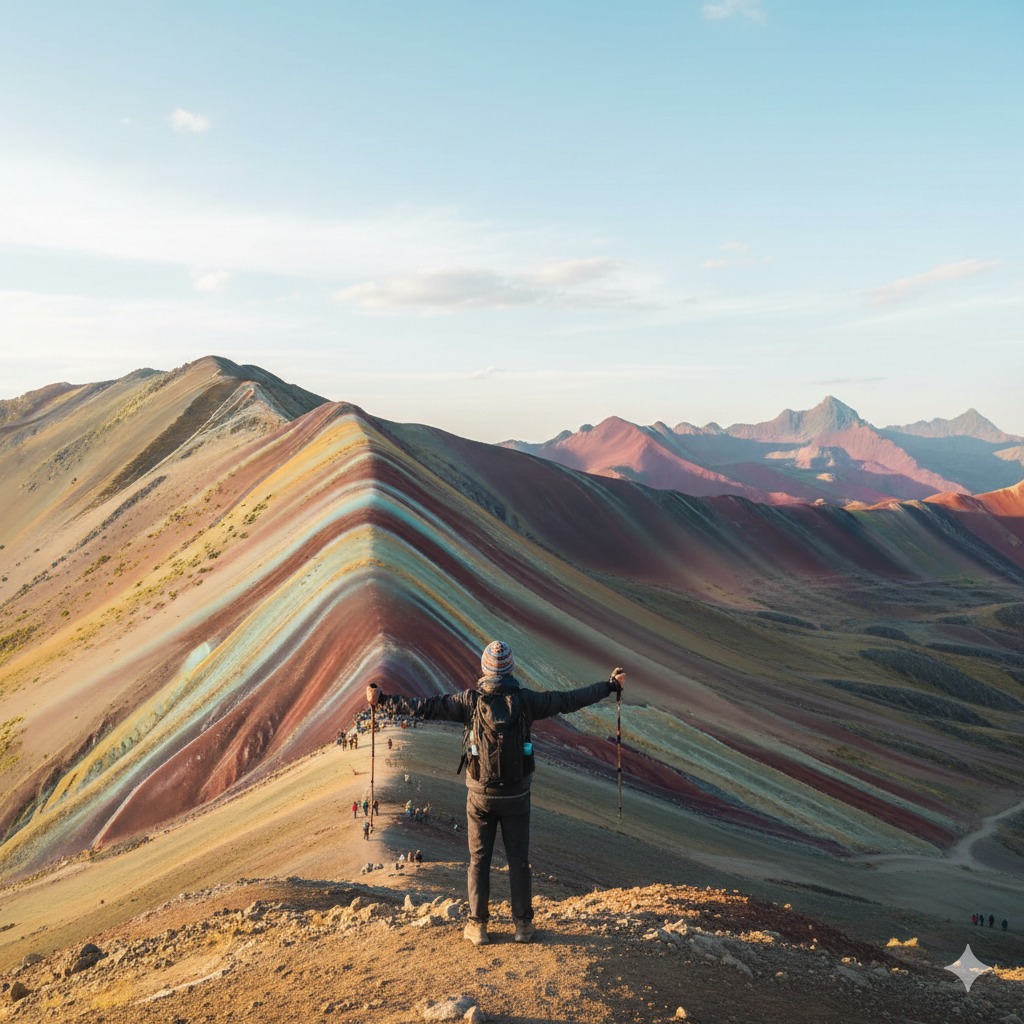
Each color you see is a heartbeat of the Andes. Each breath you take carries the wisdom of Pachamama. Whether you’re a photographer, adventurer, or soul seeker, Vinicunca offers more than a view — it offers perspective.
Come not just to witness the colors, but to feel them — the pulse of time, earth, and spirit fused into one timeless masterpiece.