
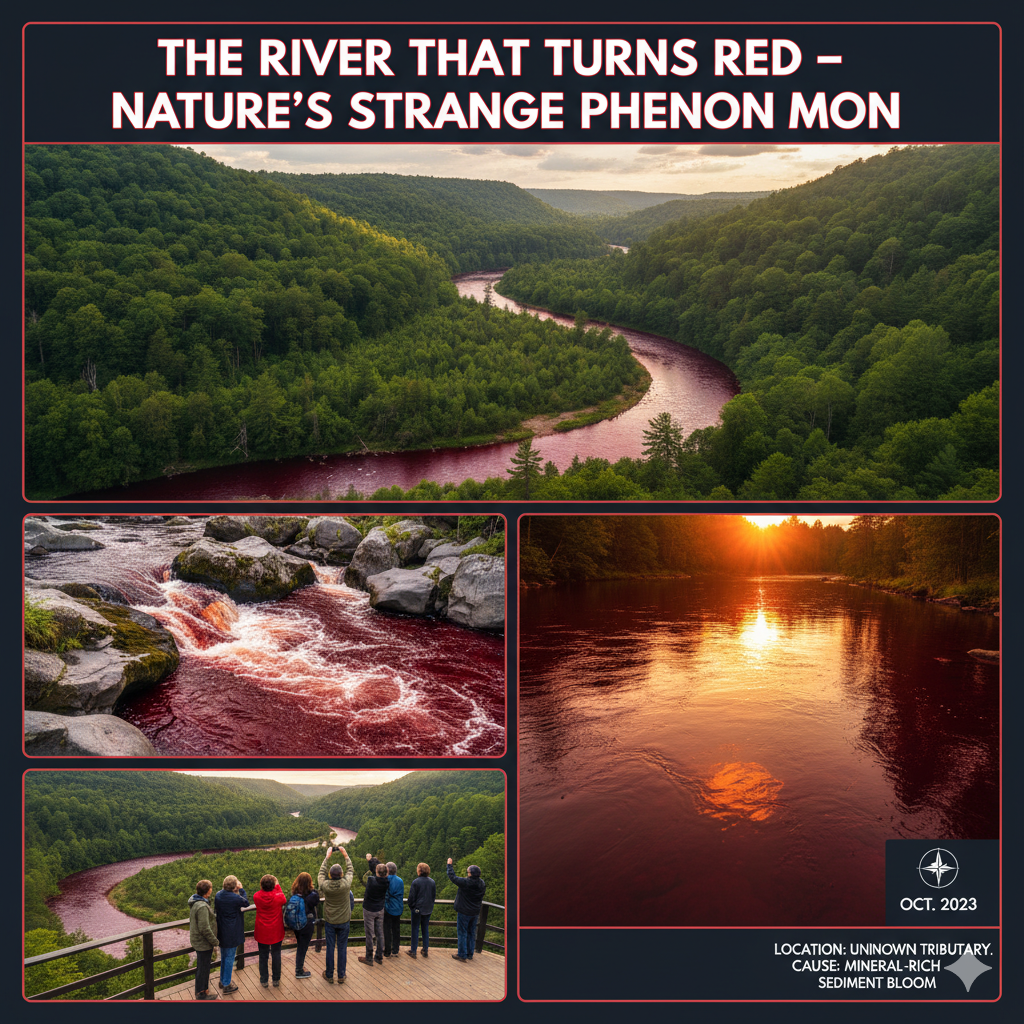

A River Like No Other
Rivers are usually symbols of life — flowing, clear, and sustaining ecosystems. But some rivers defy expectation, turning vivid red, leaving scientists and travelers awestruck. Known as one of nature’s most striking phenomena, these rivers captivate with their surreal hues and mysterious origins.
From mythic legends to scientific curiosity, a River Turns Red represents a bizarre yet beautiful transformation of nature, showing how ecosystems can sometimes display the unexpected.
The Science Behind the Red Color
Why do some rivers turn red? The cause depends on the region and river:

- Algae Blooms: Certain types of red algae (like Trentepohlia) can release pigments that turn water red
- Mineral Content: High concentrations of iron or other minerals from surrounding soils can tint rivers red
- Sediment & Erosion: Flooded or fast-moving rivers may carry clay or silt with reddish hues
- Chemical Reactions: In rare cases, reactions between natural elements create striking red water
Fun Fact: Some rivers only turn red seasonally, making timing essential for witnessing this phenomenon.
Famous Red Rivers Around the World
- Caño Cristales, Colombia: Dubbed the “River of Five Colors,” red algae dominates between July and November
- Rio Tinto, Spain: Deep crimson from high iron content due to mining activity
- Huang He (Yellow River), China: At times, iron and clay combine to create reddish-orange hues
- Baker River, Chile: Certain stretches show red sediments under specific conditions
These rivers are celebrated not only for their rarity but also for the spectacular visuals they create.
Cultural & Historical Significance
Red rivers have inspired countless legends and folklore:
- In some cultures, they are seen as sacred or cursed waters
- Ancient tales often attributed the red color to blood from mythical battles or gods’ wrath
- Local communities sometimes celebrate festivals timed with the seasonal red color
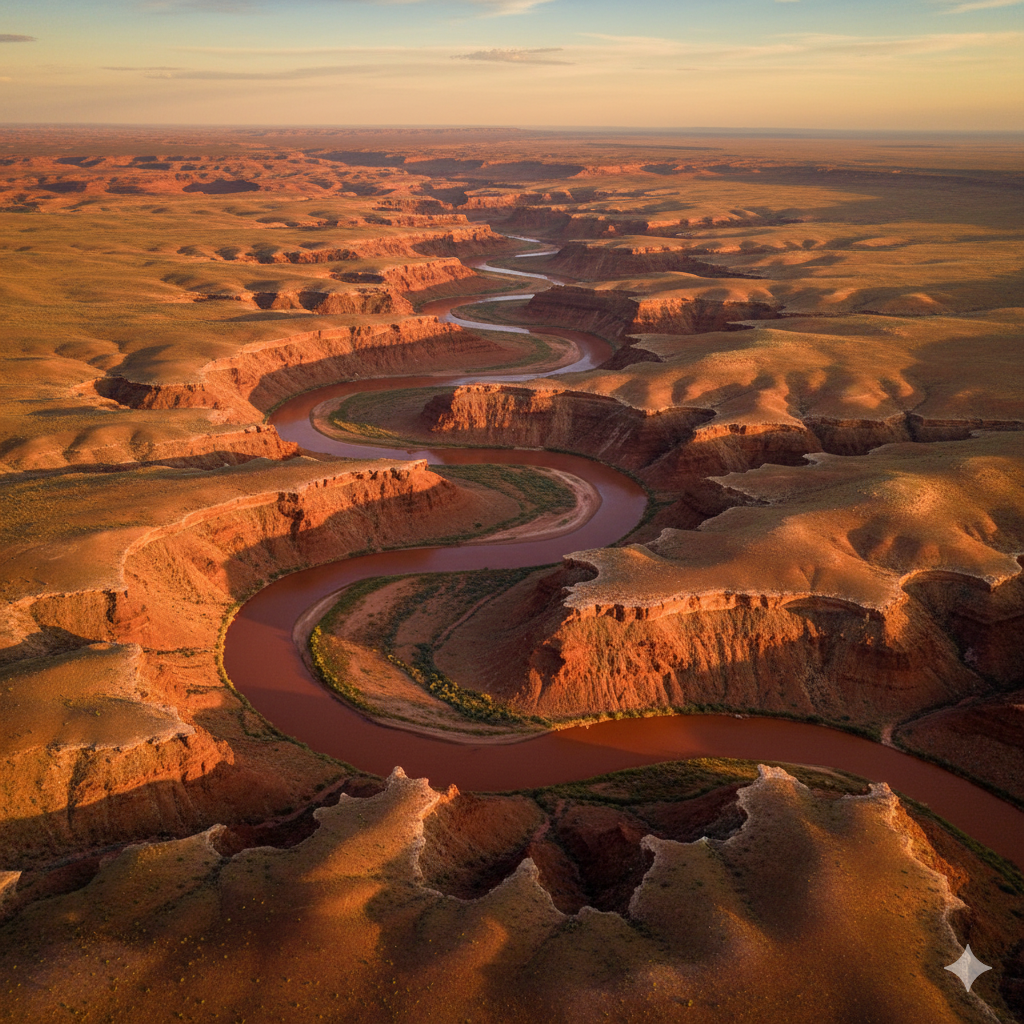
The combination of science and mythology makes red rivers both educational and enchanting to visit.
Source:
Best Time to Witness the Phenomenon
- Seasonal Rivers: Red coloration often appears only in certain months (e.g., July–November for Caño Cristales)
- After Rainfall: Sediment-rich runoff can temporarily redden rivers
- Temperature & Flow: Warm water encourages algae growth, while slow flow concentrates pigments
📸 Tip: Research the specific river’s peak color months and plan photography trips accordingly.
Photography Tips: Capturing a Red River
- Golden Hour: Sunrise or sunset enhances natural red tones
- Aerial Photography: Drone shots capture the full extent of red stretches
- Polarizing Filters: Reduce glare on water surfaces
- Wide-Angle Lens: Shows river meandering through landscapes for dramatic effect
Red rivers offer a once-in-a-lifetime visual experience for photographers and travelers alike.
Environmental & Safety Considerations
- Avoid disturbing algae or sediments that cause the red hue
- Stay on designated paths or guided tours to protect fragile ecosystems
- Respect local communities and cultural beliefs surrounding the river
- Check water safety and avoid swimming in rivers with high mineral concentrations
Responsible travel ensures these rare natural wonders remain intact for future generations.
Check Also: Hidden Lagoon of Philippines: 10 Awe-Inspiring Secrets of This Paradise Escape
FAQs – Exploring Red Rivers
Q1: Why does a river turn red?
A1: Causes include red algae blooms, high mineral content, sediment, or chemical reactions in the water.
Q2: Are red rivers safe to visit?
A2: Most are safe, but some may contain high mineral or chemical content — always follow local guidelines.
Q3: Can the red color be seen year-round?
A3: Usually not — many rivers are seasonal, with peak red color during certain months.
Q4: Which is the most famous red river?
A4: Colombia’s Caño Cristales is renowned as the “River of Five Colors,” with brilliant red stretches.
Q5: How can I photograph a red river safely?
A5: Use drones for aerial views, polarizing filters to reduce glare, and respect protected areas.
Traveler: Witnessing Nature’s Unusual Palette
The river that turns red is more than a scientific curiosity — it’s a living masterpiece of nature, combining vibrant colors, seasonal shifts, and cultural significance. Standing beside a crimson river is both surreal and humbling, reminding us of nature’s capacity to surprise and captivate.
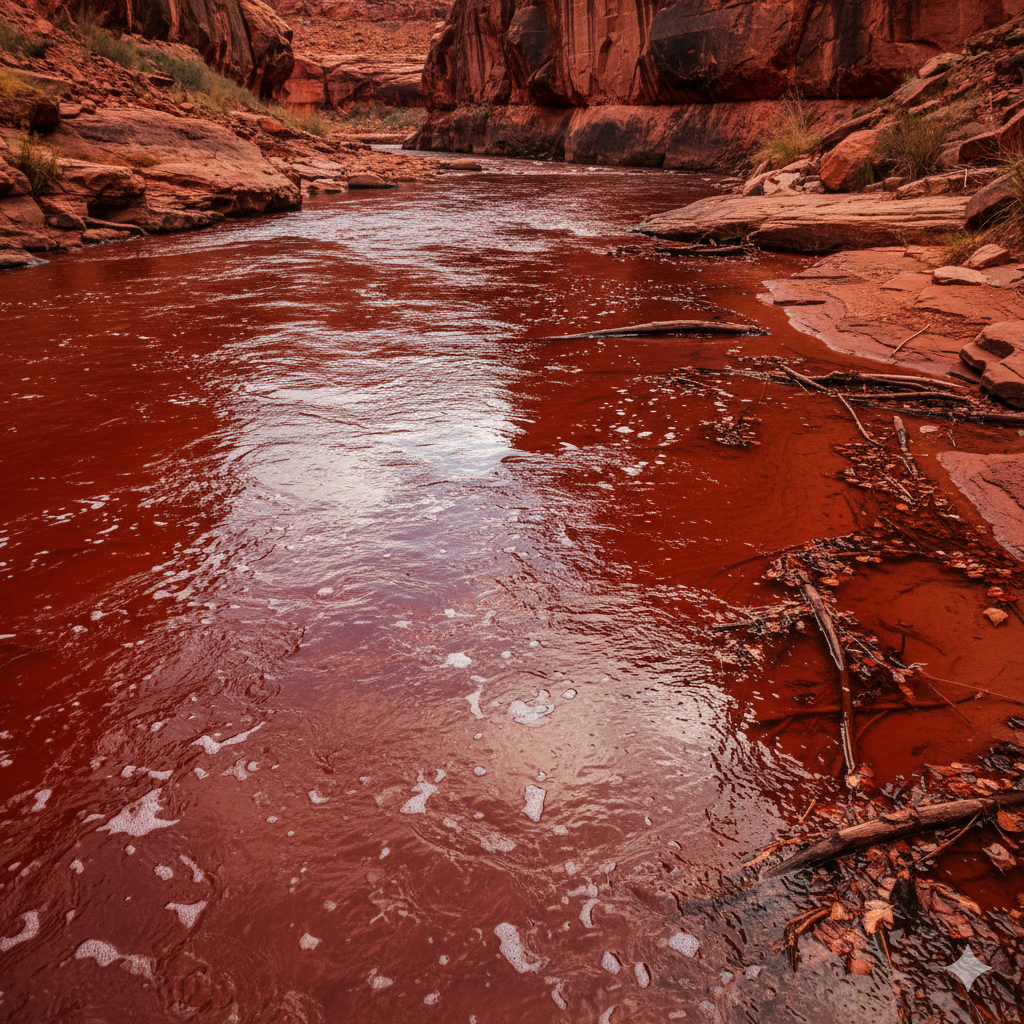
For travelers, photographers, and nature enthusiasts, witnessing a red river is an unforgettable journey into the world’s rarest natural phenomena.