
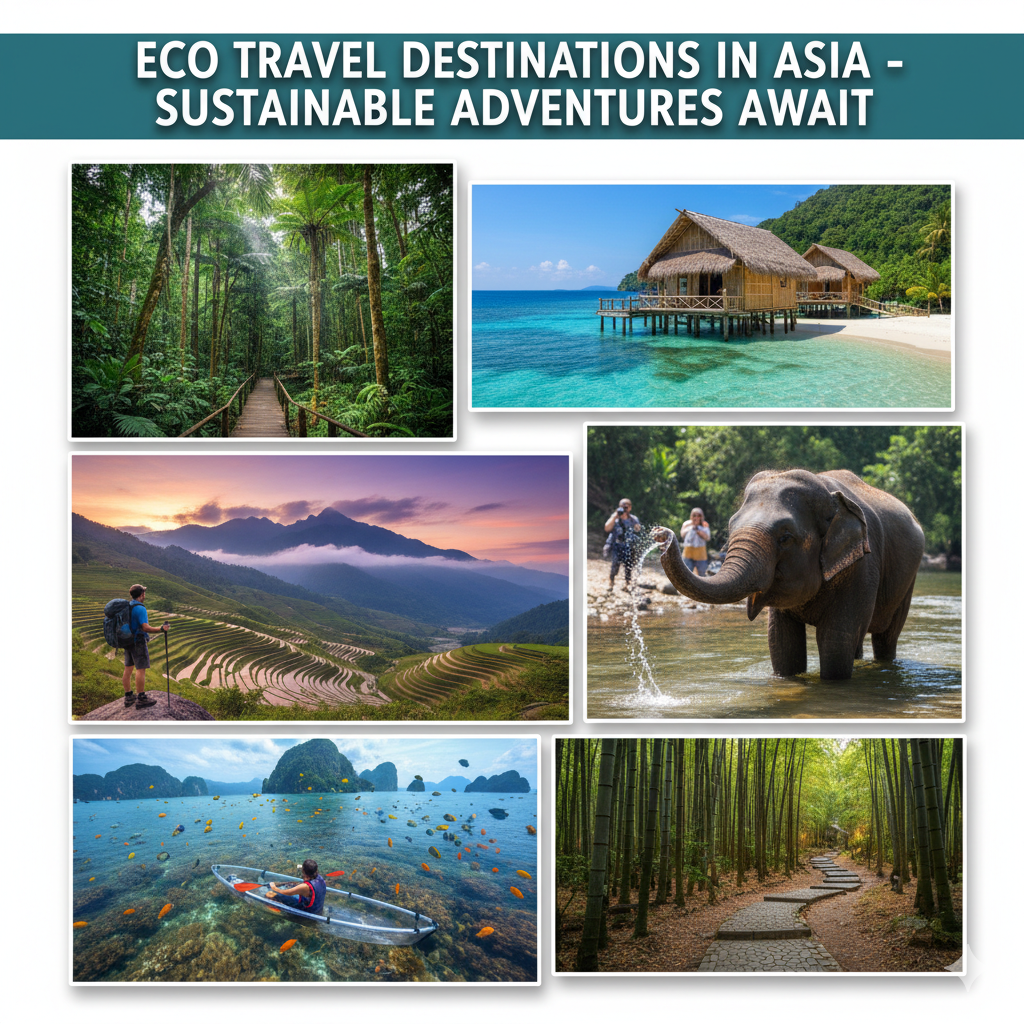

Eco travel Asia offers a perfect blend of adventure, culture, and sustainability for conscious travelers. From untouched tropical islands to serene mountain retreats, Asia is home to numerous destinations where nature, wildlife, and local communities are preserved and celebrated. Whether you want to trek through lush forests, explore vibrant eco-villages, or relax in sustainable resorts, these top eco travel destinations in Asia ensure a responsible and unforgettable journey.
1. Ubud, Bali – Indonesia
Why visit: Nestled in Bali’s lush interior, Ubud is a hub for eco-conscious travelers. Visitors can enjoy organic farms, yoga retreats, and community-based tourism initiatives.

Eco highlights:
- Organic rice paddies and farm stays
- Sustainable yoga and wellness retreats
- Local handicraft workshops supporting community development
Visit Bali – Official Tourism Guide
2. Chiang Mai – Thailand
Why visit: Chiang Mai blends rich culture with green tourism. Travelers can explore elephant sanctuaries and forest reserves that prioritize wildlife protection.

Eco highlights:
- Ethical elephant experiences
- Organic cooking classes
- Trekking in Doi Suthep-Pui National Park
3. Sapa – Vietnam
Sapa is a picturesque town in the Hoàng Liên Son Mountains of northwestern Vietnam. It’s famous for its stunning terraced rice fields, lush green valleys, and diverse ethnic minority communities.
Why visit: Famous for terraced rice fields and minority ethnic villages, Sapa is perfect for eco trekking and cultural immersion.

Eco highlights:
- Homestays supporting local communities
- Guided eco-treks through terraced mountains
- Sustainable handicraft markets
4. Palawan – Philippines
Why visit: Palawan’s pristine beaches and protected marine areas make it Asia’s crown jewel for eco-travelers.

Eco highlights:
- Kayaking through mangrove forests
- Snorkeling in marine protected areas
- Staying in eco-lodges powered by renewable energy
Philippine Department of Tourism – Palawan
5. Bhutan – The Last Himalayan Kingdom
Why visit: Bhutan prioritizes Gross National Happiness and sustainable tourism. It’s the perfect blend of spirituality, pristine landscapes, and cultural preservation.

Eco highlights:
- Trekking with minimal environmental footprint
- Staying in sustainable lodges
- Participating in community-based conservation programs
6. Kerala – India
Why visit: Known as “God’s Own Country,” Kerala excels in eco-tourism through backwaters, wildlife sanctuaries, and organic farm stays.

Eco highlights:
- Houseboats with solar energy systems
- Wildlife safaris in Periyar National Park
- Ayurvedic retreats and eco-farming experiences
7. Siem Reap – Cambodia
Siem Reap is a popular resort town in northwestern Cambodia, and it’s the gateway to the magnificent ruins of Angkor. The city itself offers a vibrant mix of traditional Khmer culture and modern amenities.
Why visit: Beyond Angkor Wat, Siem Reap promotes sustainable tourism through community projects and green hotels.

Eco highlights:
- Cycling tours through rice paddies
- Supporting local craft villages
- Eco-lodges with waste reduction initiatives
8. Jeju Island – South Korea
Jeju Island, also known as “Island of the Gods,” is a volcanic island located off the southern coast of South Korea. It’s a popular tourist destination, famous for its unique volcanic landscapes, beautiful beaches, and vibrant culture.
Why visit: Jeju is a volcanic island offering eco-friendly adventures, including lava tube explorations and coastal conservation projects.

Eco highlights:
- Hiking Hallasan National Park
- Sustainable seafood experiences
- Visiting eco-museums and botanical gardens
9. Luang Prabang – Laos
Luang Prabang is a charming city in Laos, renowned for its rich cultural and historical heritage. It was designated a UNESCO World Heritage Site in 1995. The city is nestled in a valley at the confluence of the Mekong and Nam Khan rivers, surrounded by lush mountains.
Why visit: A UNESCO World Heritage city that balances cultural preservation with eco-tourism initiatives.

Eco highlights:
- Riverside eco-lodges
- Trekking with local guides
- Supporting community-based projects
10. Borneo – Malaysia & Indonesia
Borneo is a large island in Southeast Asia, shared by three countries: Malaysia, Indonesia, and Brunei.
The Malaysian part of Borneo consists of the states of Sabah and Sarawak, and the federal territory of Labuan. It’s known for its stunning natural beauty, including ancient rainforests, diverse wildlife, and beautiful coastlines.
Why visit: Home to endangered species like orangutans and pygmy elephants, Borneo is perfect for wildlife-focused eco-travel.

Eco highlights:
- Visiting ethical wildlife sanctuaries
- Rainforest treks with minimal impact
- Staying in eco-resorts supporting reforestation
Check Also: 7 Mesmerizing Secrets of Blue Grotto Italy – The Sea Cave of Magic Light
Traveler
By choosing these breathtaking eco travel destinations in Asia, you not only immerse yourself in natural beauty but also contribute to local environmental and cultural preservation efforts. Every sustainable choice — from staying in eco-lodges, supporting community tourism, or reducing waste — helps protect these rare landscapes and traditions for future generations.

Eco travel isn’t just a trend; it’s a responsibility and a rewarding way to explore the world.
FAQs
Q1. What is eco travel?
Eco travel focuses on responsible tourism that minimizes environmental impact while benefiting local communities.
Q2. Which Asian country is best for eco-tourism?
Countries like Bhutan, Indonesia, Thailand, and the Philippines are leaders in sustainable tourism initiatives.
Q3. How can I travel sustainably in Asia?
- Choose eco-lodges and green hotels
- Respect wildlife and natural habitats
- Support local communities and businesses