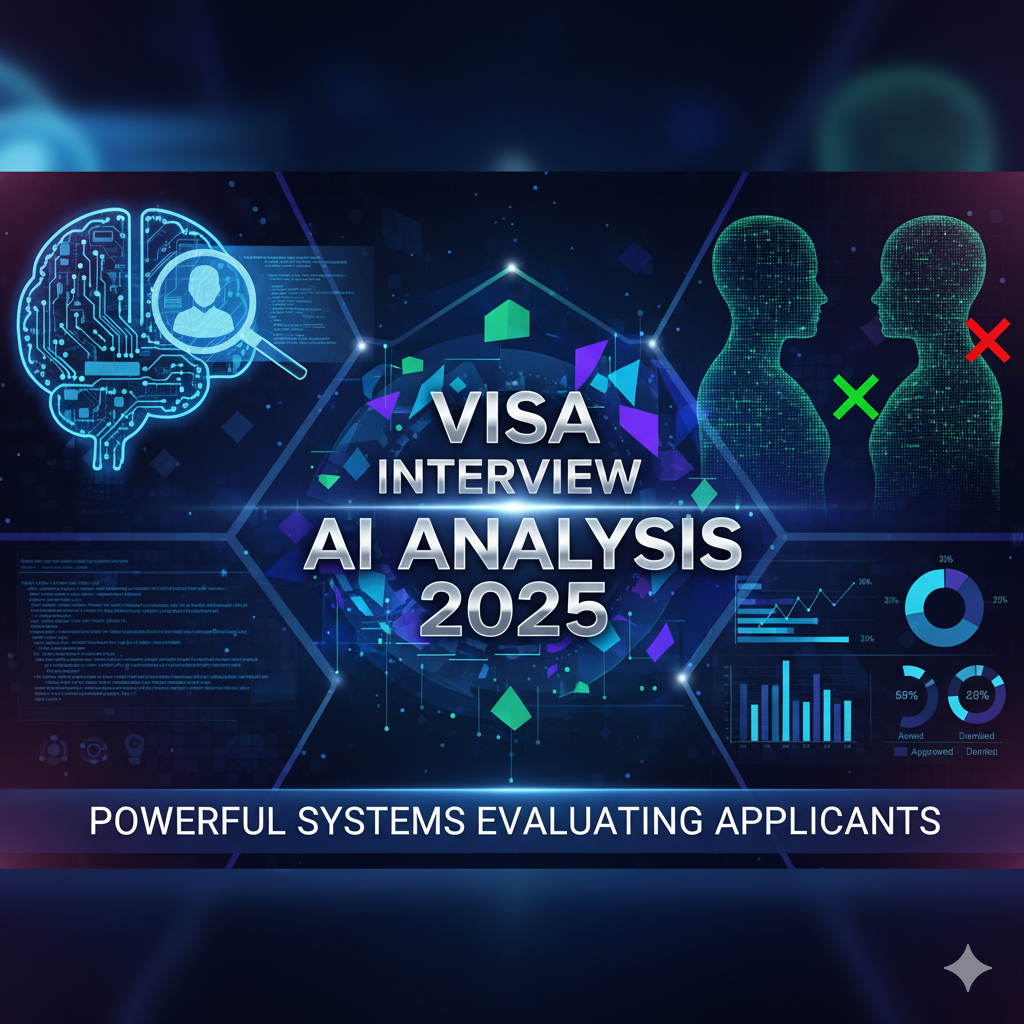

Visa Interview AI Analysis 2025 marks a groundbreaking shift in how countries assess visa applicants. Artificial Intelligence (AI) now plays a major role in identifying credibility, evaluating behavior, and reducing human bias. Governments worldwide are embracing AI-powered systems to enhance transparency and security while speeding up decision-making.
As global travel rebounds, AI-based screening tools have become essential in modern immigration processes. From facial recognition to tone analysis, visa officers are now aided by intelligent algorithms that interpret applicant behavior with stunning precision.
1. What Is Visa Interview AI Analysis 2025?
AI visa interview systems are automated platforms that evaluate a candidate’s eligibility through data-driven insights. These tools monitor facial expressions, vocal stress, micro-reactions, and even word patterns to detect truthfulness and intent.
Countries like the United States, Canada, and the EU have started testing AI-powered interview modules that score applicants based on consistency and psychological markers rather than human impression alone.
Example: The EU’s iBorderCtrl project analyzed over 30 behavioral cues using AI before applicants reached border checkpoints.
2. How AI Evaluates Applicants
AI-driven systems combine several layers of analysis:

- Facial Expression Recognition: Detects nervousness, hesitation, or micro-emotional changes.
- Voice Stress Analysis: Identifies potential inconsistencies in tone or emotional stability.
- Natural Language Processing (NLP): Evaluates vocabulary, grammar, and cultural understanding.
- Behavioral Biometrics: Tracks body language, posture, and reaction speed to questions.
These tools create an “applicant trust score” that complements human assessment rather than replacing it.
3. Global Adoption Trends (Visa Interview AI Analysis 2025 Updates)
By 2025, more than 40 nations have integrated Visa Interview AI Analysis processes.
Leading adopters include:
- United States: Testing AI-assisted pre-screening for visitor and student visa applicants.
- United Kingdom: Using digital analysis for risk-based applicant profiling.
- Singapore & UAE: Implementing real-time AI monitoring during remote interviews.
- Germany & Canada: Employing AI for fraud detection and faster document verification.
According to a Deloitte AI Immigration Study, AI implementation has improved processing speed by up to 60%.
4. Benefits of Visa Interview AI Analysis 2025
AI integration offers several powerful advantages:

- Fair Evaluation: Reduces human bias in decision-making.
- Time Efficiency: Cuts average processing times by 40–50%.
- Fraud Detection: Identifies forged documents and mismatched answers.
- Enhanced Security: Uses biometric verification for identity consistency.
- Scalability: Handles high application volumes during peak travel seasons.
5. Ethical and Privacy Concerns
AI surveillance raises valid privacy concerns. Critics argue that algorithms may misinterpret cultural gestures or speech variations as “deceptive behavior.”
Countries now require transparency reports explaining how AI systems make decisions and how applicants can appeal.
In 2025, new AI Fairness Regulations by the EU and UK mandate that applicants must be informed when AI is used in their visa assessments.
6. How Applicants Can Optimize Their AI Evaluation
To perform confidently in an AI-analyzed interview, applicants should:

- Maintain natural posture and tone.
- Practice calm, steady responses.
- Review common visa questions and answer truthfully.
- Avoid rehearsed or robotic answers.
- Double-check online forms for data consistency.
Pro Tip: Many immigration consultants now offer AI-prep mock interviews to help applicants adapt to the new digital evaluation style.
7. Countries Leading AI Visa Transformation

| Country | AI System Used | Key Feature |
|---|---|---|
| USA | CBP Smart Screening | Real-time behavioral mapping |
| UK | Digital Border Pilot | Predictive applicant profiling |
| UAE | SmartVisa Hub | Voice and emotion recognition |
| Canada | IRCC AI Gateway | Document fraud prevention |
| Germany | EU Blue AI | Emotion and tone analysis |
8. The Future of Visa Interview AI Analysis 2025
AI will soon be capable of live sentiment tracking, multi-language analysis, and even cross-referencing global databases for instant background checks.
By 2026, experts predict over 75% of visa applications will pass through AI screening at least once during processing.
Explore our article on Visa Application AI Screening 2025
🧾 FAQs — Visa Interview AI Analysis 2025
Q1. Can AI systems reject a visa application automatically?
No, AI systems assist officers by providing scores — final decisions remain human-made.
Q2. Are applicants notified when AI tools are used?
Yes. Most governments are required to disclose AI usage during interviews.
Q3. Can errors from AI evaluation be appealed?
Yes. Applicants can request manual review and data correction.
Q4. Which visas currently use AI systems?
Tourist, student, and work visa categories in several countries, including the USA and EU states.
Q5. How to prepare for AI-based interviews?
Practice calm, authentic answers, ensure data accuracy, and stay consistent across forms.
Agent Advise
Visa Interview AI Analysis 2025 highlights how digital intelligence is reshaping global migration. By enhancing fairness, cutting waiting times, and minimizing human bias, AI ensures more transparent and data-driven visa evaluations.
As long as applicants maintain honesty and composure, these systems can actually make the visa process smoother and faster than ever before.