
Introduction: World Record Travel – Unique & Record-Breaking Wonders
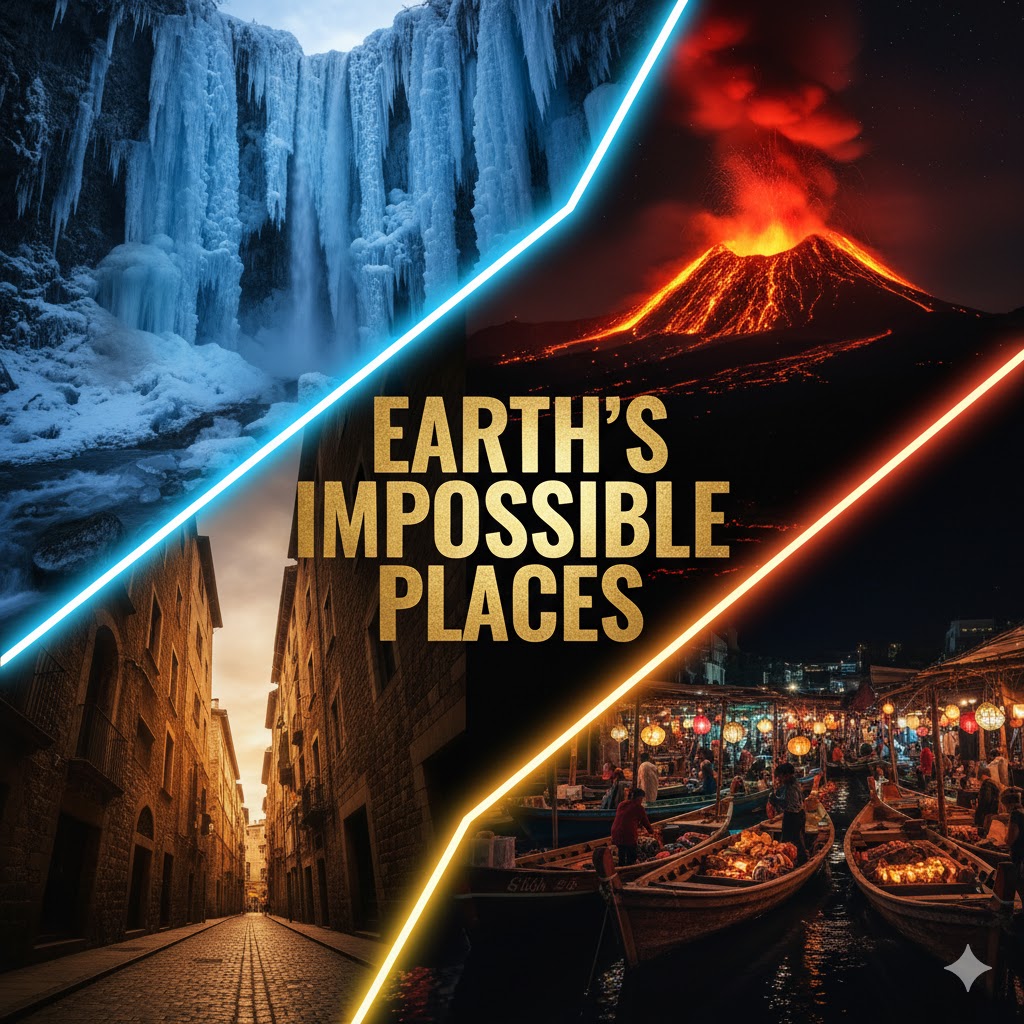
Travel isn’t just about destinations — it’s about records written in nature’s language. From the world’s tallest waterfalls crashing through emerald valleys to ice caves shimmering beneath frozen seas, the planet holds wonders that seem to challenge the limits of possibility.
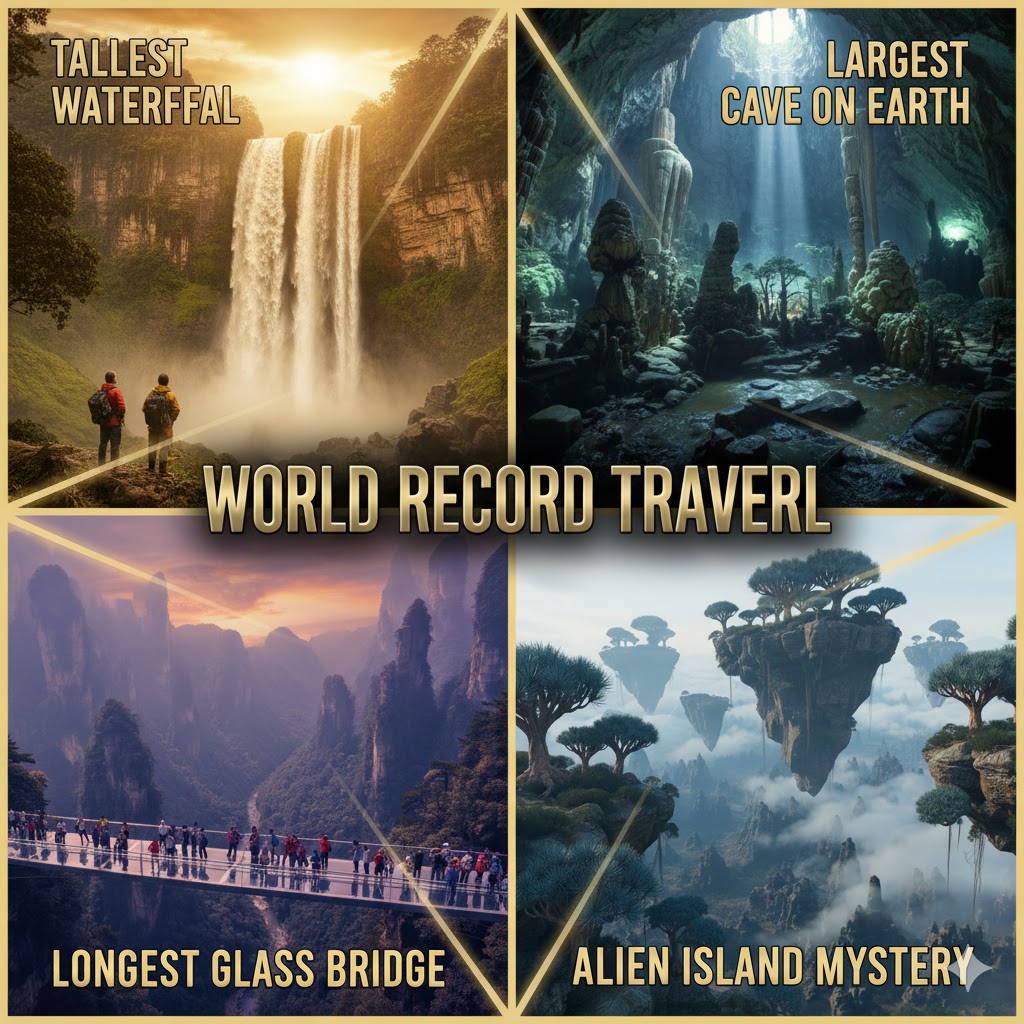
This new series, “Unique & Record-Breaking Wonders (Series 1–50)”, is your invitation to journey through the unbelievable corners of our world — where islands float in mist, bridges stretch like silver ribbons between mountains, and caves echo with stories older than humankind.
Each destination in this collection is more than a place; it’s a living legend. These are landscapes that defy logic, each with their own cultural, natural, or historical “record.” You’ll explore locations so surreal they seem like scenes from another planet — waterfalls that glow in moonlight, glass bridges that hang above clouds, and streets barely wide enough for a single person to pass.
This collection celebrates not only natural record-holders but also human engineering marvels — structures that redefine ambition and artistry. Whether you’re an explorer chasing the rare or a dreamer seeking inspiration, these wonders promise a journey through time, mystery, and magnitude.
So, pack curiosity, courage, and wonder — and step into the realm of the extraordinary.
1. The Island of Floating Rocks – Socotra, Yemen
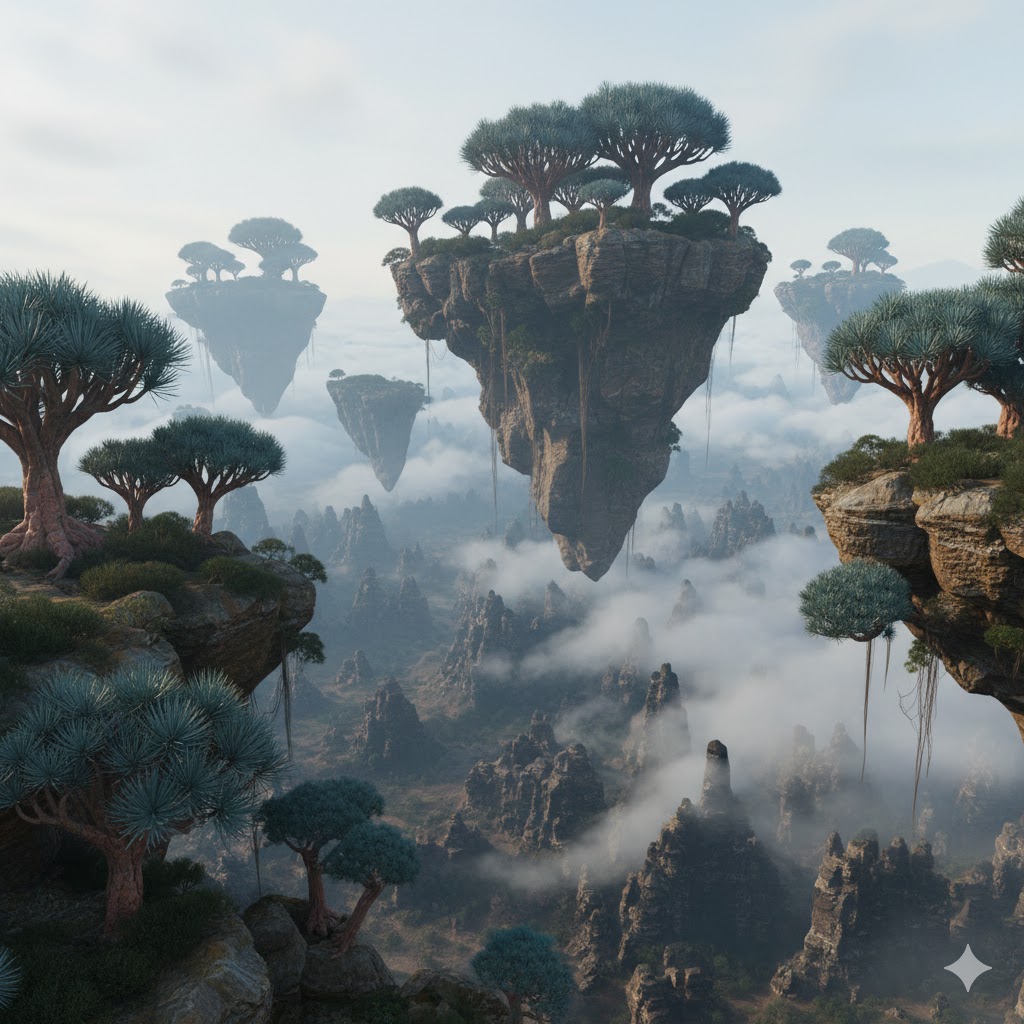
Hidden deep in the Arabian Sea, Socotra Island is often described as one of Earth’s most alien places — a land where nature blurs into mystery. Locals tell tales of floating rocks that rise slightly when desert winds hum across the dunes. Scientists call it an illusion caused by magnetized minerals, but many islanders believe the rocks are alive — ancient guardians of lost travelers.
Highlights
- The famed Dragon’s Blood Trees, with crimson sap said to have healing power.
- Limestone caves filled with prehistoric carvings.
- The Detwah Lagoon, where eerie reflections shimmer under moonlight.
History & Mystery
Socotra’s myths trace back to the Sabaean Kingdom and even Alexander the Great’s era, when sailors swore the island was cursed by spirits. Ancient Greek texts mention the “Isle of Bliss” — a deceptive paradise luring explorers to madness.
How to Reach
Fly via Cairo or Abu Dhabi directly to Socotra Airport. Access is limited to charter flights, maintaining the island’s untouched nature.
Best Time to Visit
October to April — dry season with misty mornings and perfect exploration weather.
Hidden Gems & Local Tips
Hire local Bedouin guides for permission to visit restricted caves. Always carry plenty of water — the island’s dry winds can be intense.
Local Food Experience
Try Socotri honey, famed for its healing properties and unique flavor infused with Dragon’s Blood resin aroma.
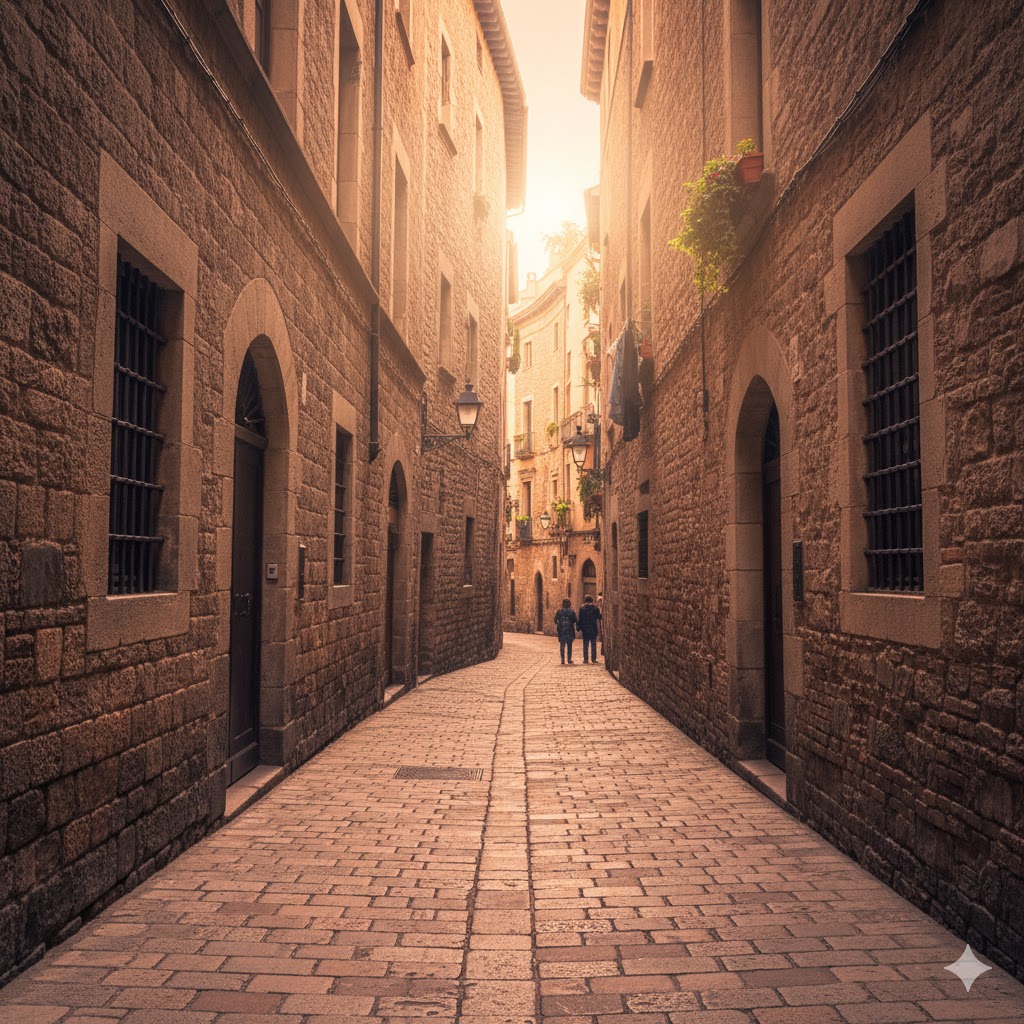
🏘️ 2. The Narrowest Street in Barcelona – Carrer de les Mosques, Spain
Tucked inside Barcelona’s Gothic Quarter lies a street so narrow you can touch both walls at once. Known as Carrer de les Mosques, this lane is barely 1 meter wide, earning its title as Europe’s narrowest street. The walls whisper stories of medieval travelers and hidden trade routes.
Highlights
- A hidden passage connecting to the ancient Roman walls.
- Vintage iron lamps casting golden hues at dusk.
- Local artisan cafés just beyond the alley’s entrance.
History & Mystery
The lane’s name translates to “Street of the Flies,” once home to merchants who kept livestock nearby. Today, it’s a hidden photo haven — and a world record of intimacy and charm.
How to Reach
Located in Barcelona’s Gothic Quarter, a short walk from Plaça Reial or La Rambla.
Best Time to Visit
Spring and Autumn, when the quarter is alive yet less crowded.
Hidden Gems & Local Tips
Visit early morning for serene photos. Local guidebooks often miss it — ask at nearby Carrer Ferran cafés for directions.
Local Food Experience
Enjoy tapas and churros con chocolate at La Alcoba Azul, one of Barcelona’s most atmospheric eateries nearby.
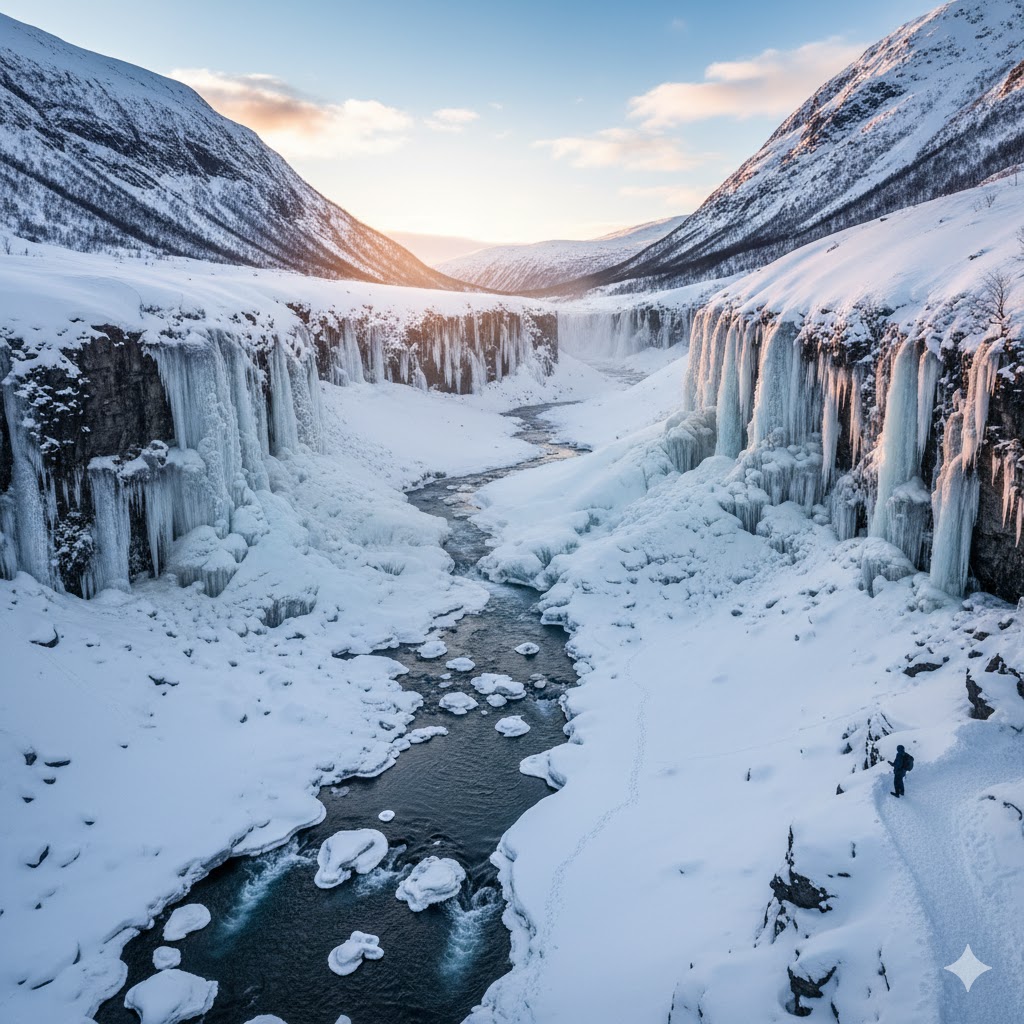
3. The Frozen Waterfall of Norway – Vøringsfossen
High in the Hardangervidda plateau, Vøringsfossen transforms every winter into a frozen cathedral of blue ice. This waterfall, dropping over 180 meters, stands as Norway’s most dramatic winter spectacle. When temperatures drop below zero, cascading water solidifies into intricate crystal patterns, creating the illusion of ice suspended in time.
Highlights
- Norway’s tallest and most photographed waterfall.
- A viewing bridge connecting both cliffs for a bird’s-eye panorama.
- Ideal for ice climbing and frozen photography sessions.
History & Mystery
Discovered by English tourists in the 1800s, Vøringsfossen became a symbol of Norway’s raw northern beauty. Legends say the icy mist hides “the breath of mountain spirits.”
How to Reach
Located near Eidfjord, reachable via Bergen by car or train. Follow Route 7 into the Hardanger region.
Best Time to Visit
December to February for the full frozen glory; summer offers lush views.
Hidden Gems & Local Tips
Stay at Fossli Hotel, built in 1891, overlooking the falls — Edvard Grieg once composed music here.
Local Food Experience
Try rakfisk (fermented trout) and hot cloudberry dessert at nearby village eateries.
🌋 4. The Volcano That Glows – Kīlauea, Hawaii
Among the world’s most active and accessible volcanoes, Kīlauea glows crimson at night, earning the name “The Volcano That Breathes Fire.” This phenomenon attracts travelers who want to witness nature’s heartbeat beneath Earth’s crust.
Highlights
- Nighttime lava viewing from Halemaʻumaʻu crater.
- Lush volcanic rainforest trails inside Hawaii Volcanoes National Park.
- Steam vents and glowing fissures visible after sunset.
History & Mystery
Ancient Hawaiians revered the volcano as the home of Pele, Goddess of Fire. Offerings were once left at the crater rim to calm her temper.
How to Reach
Fly to Hilo International Airport, then drive 45 minutes to the national park.
Best Time to Visit
May to October, when skies are clear and volcanic glow is brightest.
Hidden Gems & Local Tips
Visit at dusk for the most vivid glow. Bring a light jacket — temperatures drop quickly at elevation.
Local Food Experience
Sample poke bowls and loco moco at Hilo’s local food stalls.

🛶 5. The Floating Market of Thailand – Damnoen Saduak
A living postcard of old Siam, Damnoen Saduak Floating Market near Bangkok is a world-record symbol of culture on water. Here, boats brim with tropical fruit, spices, and handwoven hats as vendors paddle gently through narrow canals.
Highlights
- Thailand’s most famous and longest-operating floating market.
- Early-morning photography heaven — reflections, colors, and life in motion.
- Souvenir boats selling silk and coconut sweets.
History & Mystery
Dating back to the 19th century, it was King Rama IV who ordered canals to connect rivers, turning the area into a thriving water-based economy.
How to Reach
90-minute drive from Bangkok via Highway 35; boats can be hired for a small fee.
Best Time to Visit
6 AM – 9 AM before crowds gather; weekends are livelier.
Hidden Gems & Local Tips
Skip tourist boats and rent a small paddle canoe for local interaction.
Local Food Experience
Try boat noodles, fresh mango sticky rice, and grilled coconut pancakes.

💎 6. The Crystal Waterfall – Hierve el Agua, Mexico
Unlike any waterfall on Earth, Hierve el Agua in Oaxaca appears frozen in midair — but it’s not ice; it’s mineral crystals formed by centuries of calcium carbonate deposits. These petrified cascades look like marble waterfalls glowing in sunlight.
Highlights
- Natural infinity pools overlooking Oaxaca Valley.
- Rare white “stone waterfalls” with sparkling mineral texture.
- Ancient Zapotec irrigation relics nearby.
History & Mystery
For centuries, locals called it “Water That Boils” — warm mineral springs still bubble atop the rock.
How to Reach
90 minutes from Oaxaca City via Highway 190; local taxis run daily.
Best Time to Visit
March to June, when mineral pools shimmer brightest under dry skies.
Hidden Gems & Local Tips
Visit early to avoid crowds and bring swimwear for the natural pools.
Local Food Experience
Enjoy Oaxacan tamales and mezcal tastings from local vendors near the entrance.

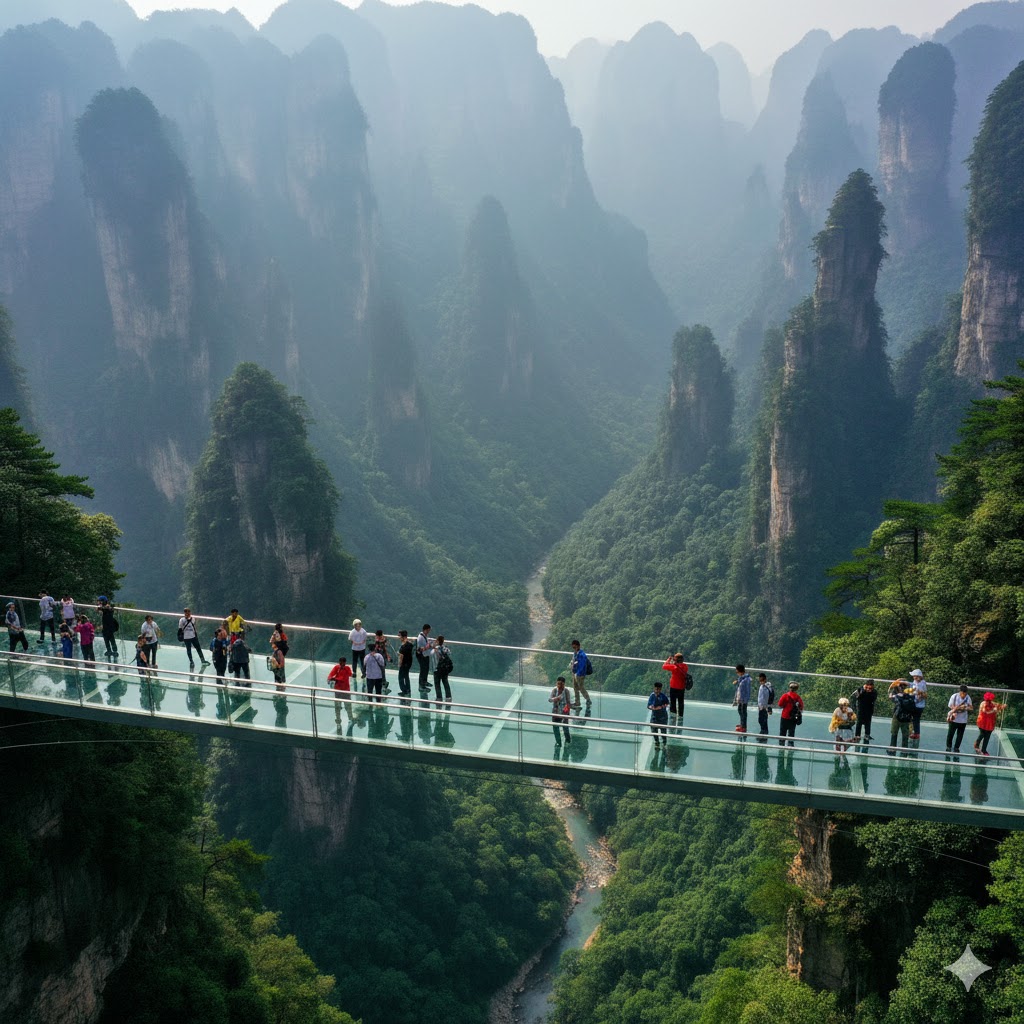
🌉 7. The Glass Bridge of China – Zhangjiajie
Hovering 980 feet above a deep canyon, Zhangjiajie Glass Bridge in Hunan Province is the longest and highest glass-bottom bridge in the world — a test of courage and engineering beauty.
Highlights
- 430-meter-long see-through walkway suspended above misty mountains.
- Bungee jumping platform — world’s highest commercial jump.
- Panoramic views of Zhangjiajie’s sandstone pillars (inspiration for Avatar).
History & Mystery
Opened in 2016, this marvel symbolizes China’s push for architectural innovation. Engineers used transparent panels stronger than steel.
How to Reach
Fly to Zhangjiajie Hehua Airport, then 40-minute drive to Wulingyuan Scenic Area.
Best Time to Visit
April to October — misty mornings create ethereal views.
Hidden Gems & Local Tips
Go early morning for fewer tourists and clearer glass views.
Local Food Experience
Taste hotpot and Hunan spicy tofu in nearby Zhangjiajie town.
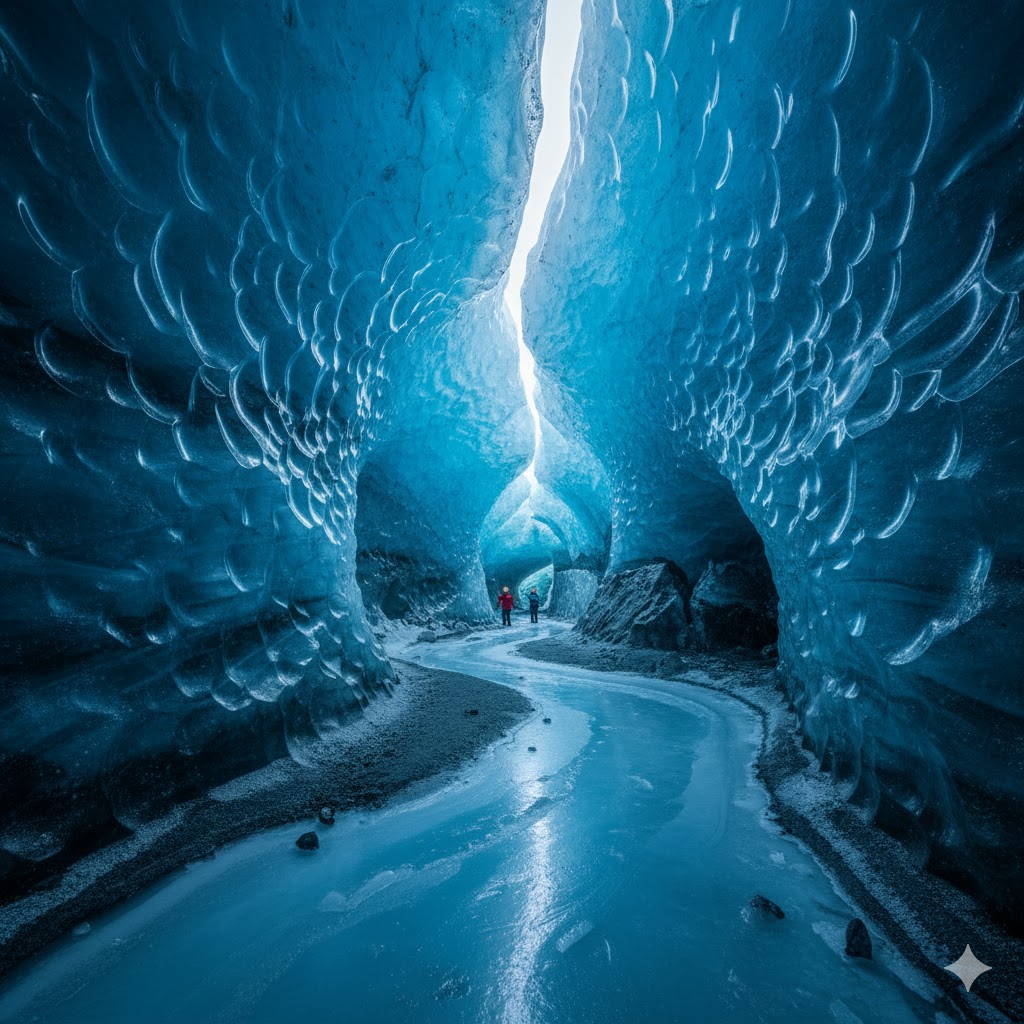
🧊 8. The Hidden Ice Cave – Svalbard, Norway
Deep beneath the Arctic glaciers of Svalbard lies a hidden labyrinth of ice tunnels glowing in surreal blue. These caves form every winter, melting away each summer — a fleeting masterpiece of nature.
Highlights
- Walls of frozen crystals and ancient air bubbles.
- Guided expeditions through underground ice chambers.
- Unmatched Northern Lights visibility above the caves.
History & Mystery
Scientists discovered preserved pollen and air samples from 10,000 years ago — a frozen timeline of Earth’s past.
How to Reach
Flights to Longyearbyen, then guided snowmobile or ice-hike tours.
Best Time to Visit
January to March when ice formations are stable.
Hidden Gems & Local Tips
Always travel with certified Arctic guides for safety.
Local Food Experience
Warm up with reindeer stew and cloudberry jam at local Svalbard lodges.
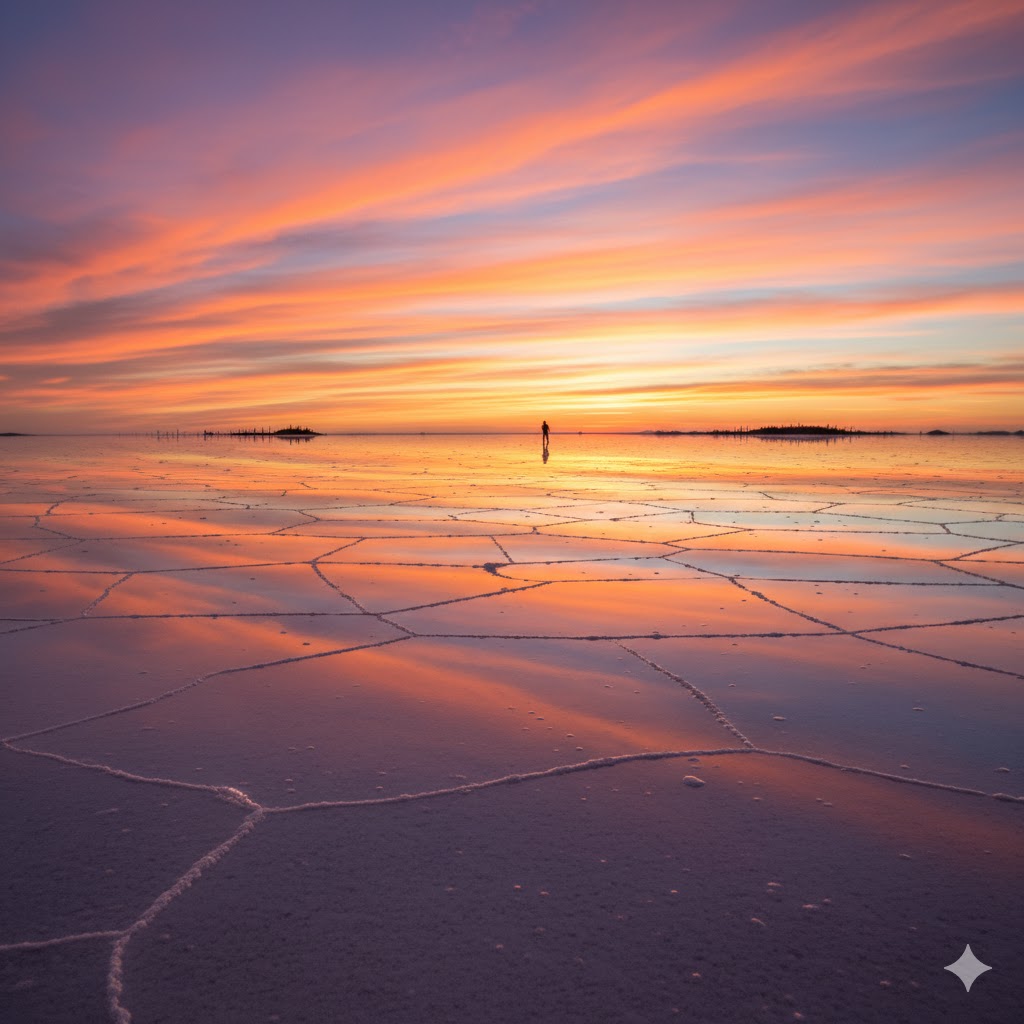
🪞 9. The Desert Mirror Lake – Salar de Uyuni, Bolivia
Spanning over 10,000 square kilometers, Salar de Uyuni is the largest salt flat on Earth. When it rains, the surface turns into a perfect mirror, reflecting the sky so flawlessly that astronauts use it to calibrate satellites.
Highlights
- Mirror reflection photography — day and night.
- Salt hotels built entirely from blocks of salt.
- Stargazing under infinite reflections.
History & Mystery
Formed from ancient lakes that dried up 30,000 years ago, Uyuni remains one of nature’s most surreal landscapes.
How to Reach
Fly to Uyuni Airport, then guided tours via 4×4 vehicles.
Best Time to Visit
January to April for the mirror effect.
Hidden Gems & Local Tips
Stay overnight to watch the Milky Way reflected on the flats.
Local Food Experience
Taste llama steaks and quinoa soup in Uyuni town.
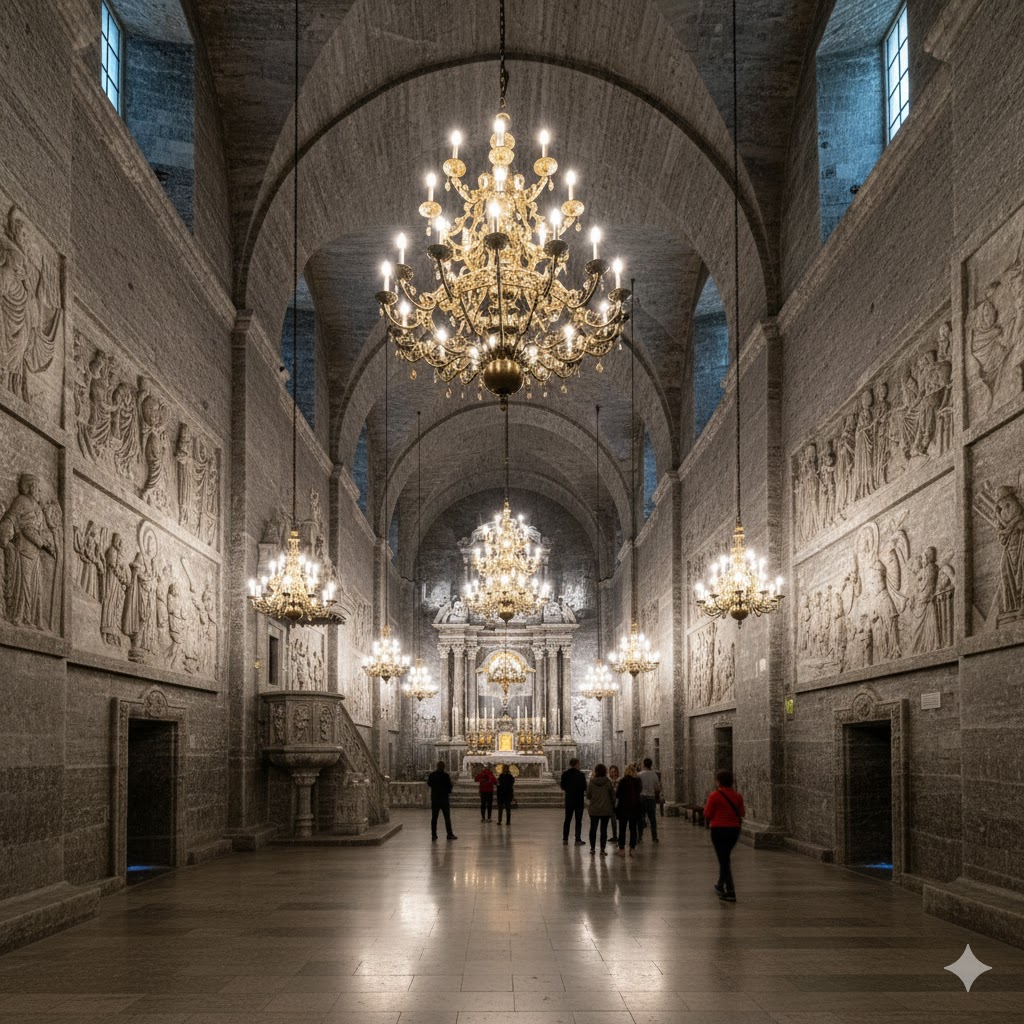
⛪ 10. The Underground Cathedral – Wieliczka Salt Mine, Poland
Beneath Kraków lies a cathedral carved entirely from salt — chandeliers, altars, and sculptures shimmering under dim lamps. Wieliczka Salt Mine is a UNESCO World Heritage site and one of the world’s oldest working mines, operating since the 13th century.
Highlights
- The Chapel of St. Kinga carved 100 meters underground.
- Underground saline lakes and sculptures of saints.
- Concerts held inside salt halls with unique acoustics.
History & Mystery
Miners believed St. Kinga’s spirit protected them from cave-ins — her salt statue remains the mine’s heart.
How to Reach
20 minutes from Kraków city center by train or bus.
Best Time to Visit
Open year-round; cool temperatures make it ideal even in summer.
Hidden Gems & Local Tips
Join the miner’s route tour for an authentic experience.
Local Food Experience
Try pierogi with mushroom filling at the on-site restaurant after your descent.
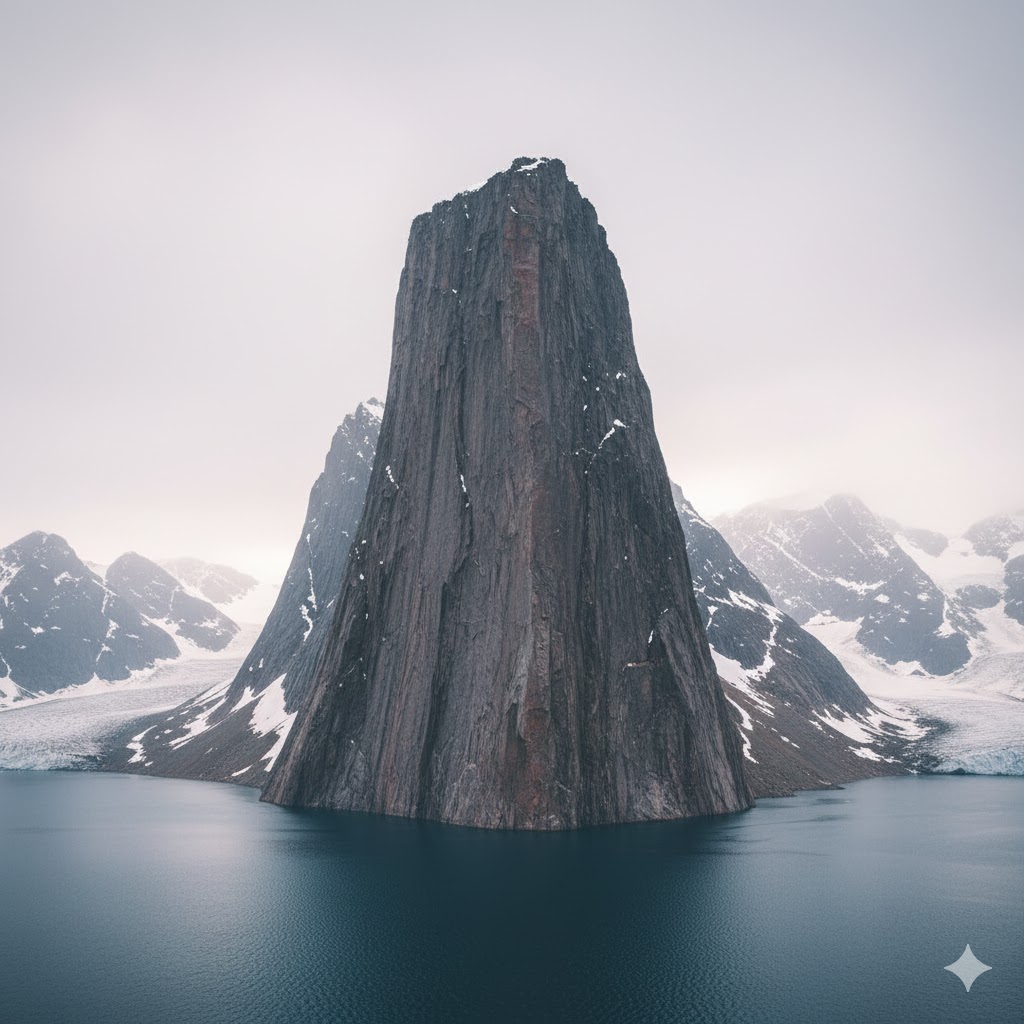
11. Mount Thor — Auyuittuq National Park, Canada (World’s Greatest Vertical Drop)
A granite spine on Baffin Island, Mount Thor boasts the planet’s greatest purely vertical drop — a staggering 1,250 metres of clean, sheer cliff that draws elite climbers and photographers.
Highlights
- World-record vertical cliff face (1,250 m).
- Arctic tundra, fjords, and polar light changing hour by hour.
- Rare arctic flora and migratory birdlife.
History & Mystery
Named Mount Thor by Norse-inspired explorers, the cliff has long been revered as one of Earth’s most extreme climbing challenges.
How to Reach
Fly to Pond Inlet or Qikiqtarjuaq then transfer by boat or charter to Auyuittuq National Park; local outfitters run guided expeditions.
Best Time to Visit
July–August for accessible conditions and midnight sun; short season due to Arctic climate.
Hidden Gems & Local Tips
Hire Inuit guides for safer coastal access and local lore. Bring layered cold-weather gear even in summer.
Local Food Experience
Try locally sourced Arctic char and bannock with northern berry preserves.
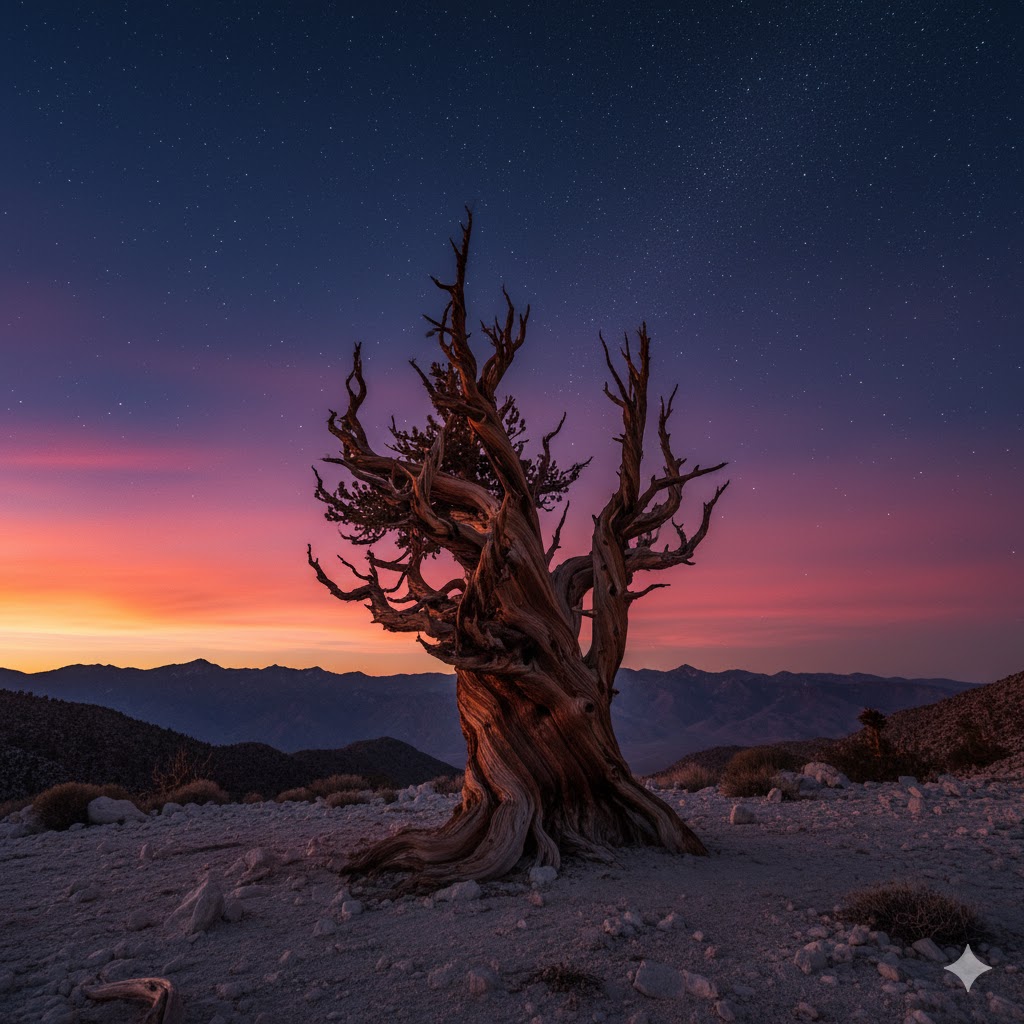
12. Methuselah — White Mountains, California, USA (One of the Oldest Non-Clonal Trees)
Methuselah, a bristlecone pine, is one of the world’s oldest known non-clonal trees — its age exceeds 4,800 years, a living timestamp of human history and climate.
Highlights
- Ancient bristlecone pine with millennia of tree-ring records.
- High alpine solitude and stark, beautiful landscape.
- Scientific value for dendrochronology.
History & Mystery
These trees survived millennia in harsh, high-altitude conditions; many ancient myths surround their endurance.
How to Reach
Access from Bishop, California; short hikes into Inyo National Forest (exact location is protected to prevent vandalism).
Best Time to Visit
June–September for snow-free trails and stable weather.
Hidden Gems & Local Tips
Respect site restrictions — the exact tree location is guarded to protect it. Visit the Schulman Grove visitor center for interpretation.
Local Food Experience
Enjoy mountain trout and hearty trail meals in Bishop’s local cafés.
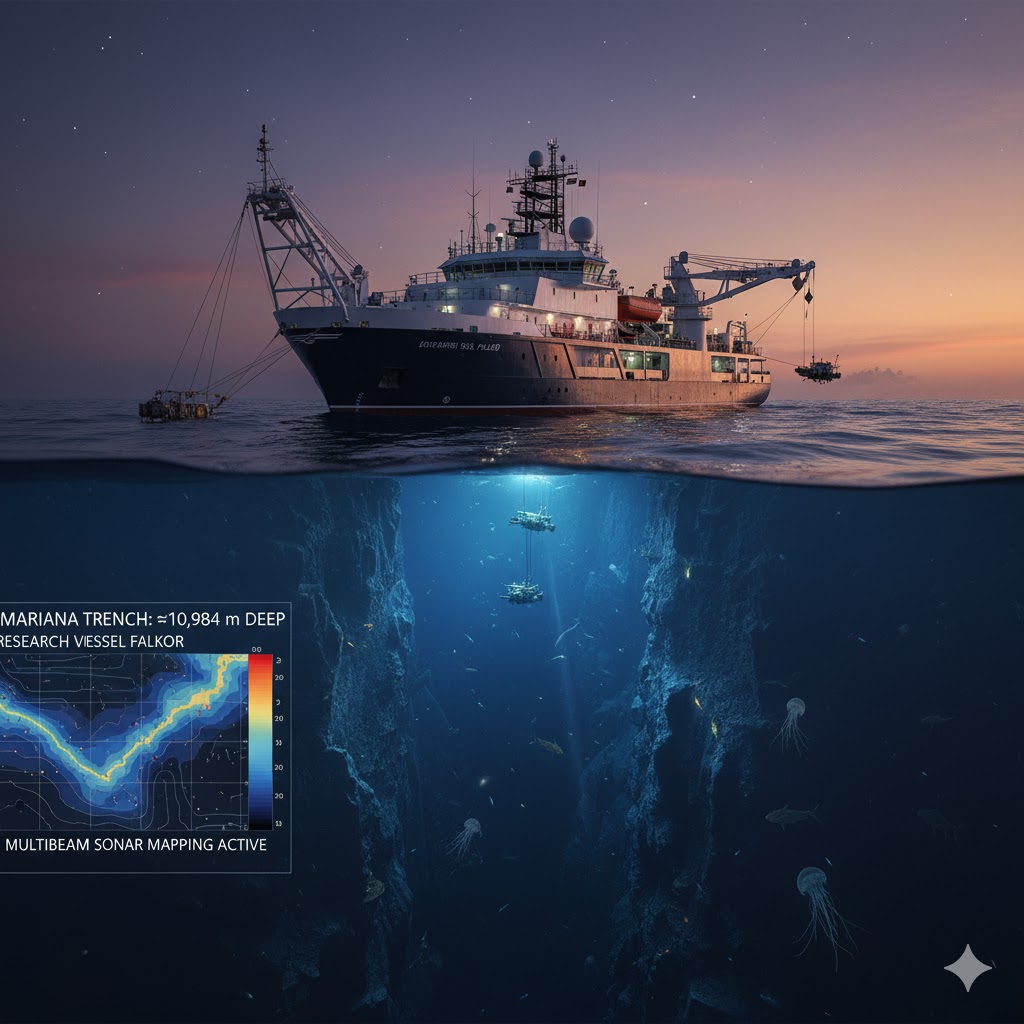
13. Challenger Deep (Mariana Trench) — Western Pacific (Deepest Known Point in Earth’s Oceans)
The Challenger Deep in the Mariana Trench is Earth’s most profound oceanic point — descending nearly 11,000 metres beneath sea level. It’s the limit of human exploration and the cradle of extreme deep-sea science.
Highlights
- Deepest known point on Earth (~10,920–10,940 m, measurements vary).
- Unique deep-sea organisms adapted to immense pressure.
- Historical submersible dives by pioneering explorers.
History & Mystery
First sounded in the 19th century; manned descents came much later. Each mission reveals new life forms and geological insights.
How to Reach
Access via research vessels from Guam or the Federated States of Micronesia; only specialized scientific or commercial submersible expeditions go there.
Best Time to Visit
Expedition timing depends on vessel schedules and weather windows — typically arranged in calmer months (local seasonality applies).
Hidden Gems & Local Tips
This is science-grade exploration — join accredited research programs or documentaries rather than DIY tourism.
Local Food Experience
Onboard expedition kitchens serve international cuisine optimized for long sea voyages.
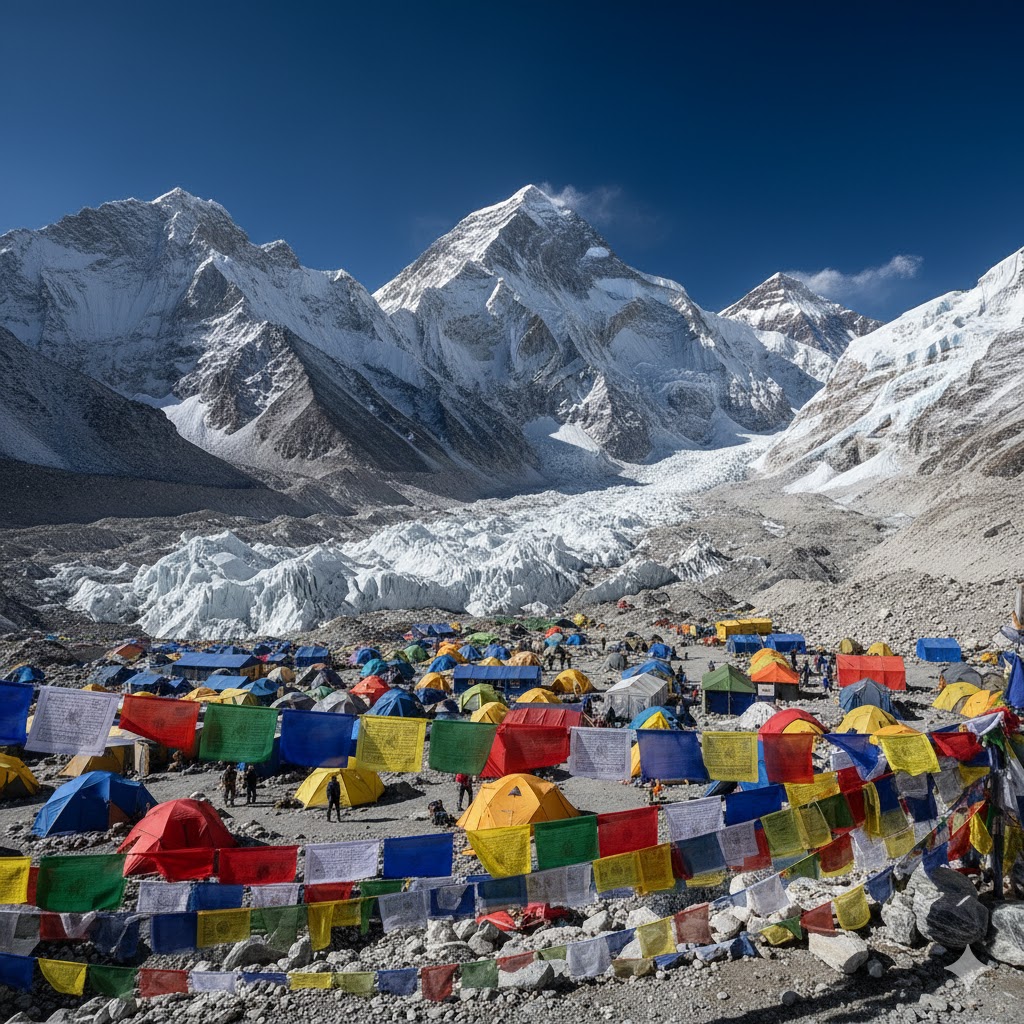
14. Mount Everest Base Camp — Nepal/Tibet (World’s Highest Mountaineering Gateway)
While Everest itself is the record, Everest Base Camp is the world’s highest major trekking gateway (South Base Camp at ~5,364 m). It’s where human ambition meets raw altitude and Himalayan culture.
Highlights
- Sherpa culture, prayer flags, and Khumbu icefall views.
- Teahouse trails and high-altitude acclimatization routes.
- Panorama of Everest, Lhotse, Nuptse, and Ama Dablam.
History & Mystery
Everest’s conquest history is full of triumph, tragedy, and enduring human spirit — Base Camp is the emotional heart of that narrative.
How to Reach
Fly to Lukla (Tenzing–Hillary Airport) from Kathmandu, then trek 8–10 days depending on route and acclimatization.
Best Time to Visit
Pre-monsoon (April–May) and post-monsoon (Sept–Nov) for clear weather windows.
Hidden Gems & Local Tips
Acclimatize properly — avoid rushing; hire experienced Sherpa guides and use reputable trek operators.
Local Food Experience
Sip sweet, buttery yak tea and enjoy dal bhat (lentils and rice) in teahouse stopovers.
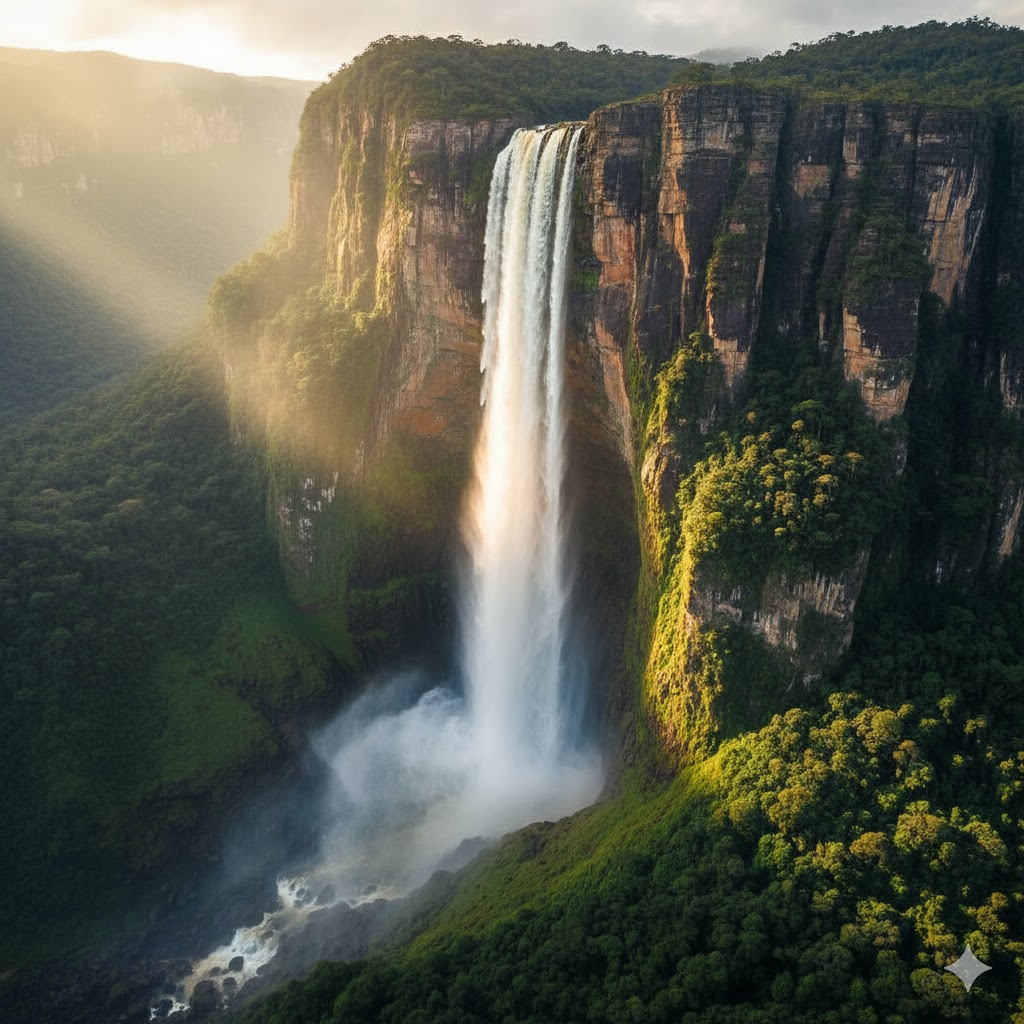
15. Angel Falls — Canaima National Park, Venezuela (World’s Tallest Uninterrupted Waterfall)
Angel Falls plunges an uninterrupted 979 metres from Auyán-tepui — the world’s highest single drop — a dreamlike column of water disappearing into jungle mist.
Highlights
- Tallest uninterrupted waterfall on Earth (979 m).
- Dramatic tepui tabletop mountains and river journeys.
- Remote jungle experience and indigenous Pemon culture.
History & Mystery
Named for aviator Jimmie Angel who flew over the falls in 1933 — local Pemon stories predate the “discovery.”
How to Reach
Fly to Canaima (small aircraft from Ciudad Bolívar/Caracas), then riverboat and jungle trek depending on water levels.
Best Time to Visit
Wet season (May–Nov) for fullest flow; dry season offers clearer approaches.
Hidden Gems & Local Tips
Boat-and-trek routes vary by season; hiring local guides supports community tourism and safety.
Local Food Experience
River fish stews and cassava-based breads prepared by Pemon hosts.
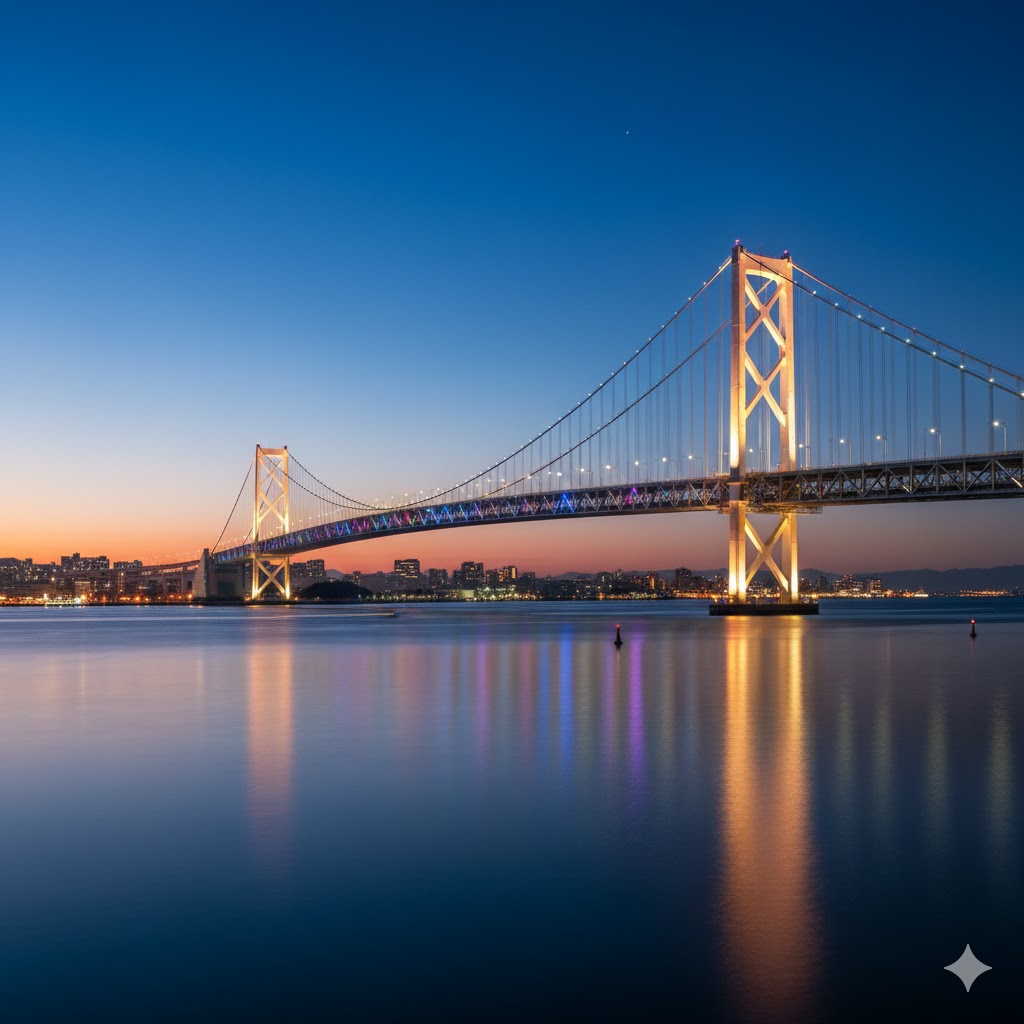
16. Akashi Kaikyō Bridge — Japan (World’s Longest Central Suspension Span)
Linking Kobe and Awaji Island, the Akashi Kaikyō Bridge holds the record for the longest central span of any suspension bridge — 1,991 metres — a monument to precision engineering and seismic resilience.
Highlights
- 1,991-metre central span and elegant cable profile.
- Panoramic observation decks and nighttime illuminations.
- Advanced earthquake-resilient engineering.
History & Mystery
Constructed after a severe seismic event motivated stronger sea crossings; the bridge symbolizes Japan’s commitment to safety and design.
How to Reach
Accessible from Kobe and Kobe Airport; local trains and buses connect to visitor centers.
Best Time to Visit
Year-round; spring cherry blossoms and autumn foliage enhance nearby views.
Hidden Gems & Local Tips
Visit the Maiko Marine Promenade (a glass-walled walkway inside the bridge tower) for dramatic views.
Local Food Experience
Sample Kobe beef and coastal seafood in Kobe’s harbour district.
17. Sarawak Chamber — Gunung Mulu National Park, Malaysia (One of the Largest Cave Chambers by Volume)
Hidden in Borneo’s rainforest, the Sarawak Chamber is among the largest cave chambers by volume — a cathedral-scale void where jungle sounds dim and geological time becomes tangible.
Highlights
- Vast subterranean space able to hold multiple jumbo jets.
- Limestone karst scenery, pinnacles, and biodiversity above ground.
- Rare bat columns and cave formations.
History & Mystery
Explored in the 1980s by British cavers, Sarawak Chamber redefined cave scale and conservation priorities in Southeast Asia.
How to Reach
Fly to Mulu Airport (from Miri or elsewhere in Malaysian Borneo), then short river and rainforest transfers.
Best Time to Visit
April–October — drier months make jungle travel smoother.
Hidden Gems & Local Tips
Combine cave visits with canopy walks and indigenous Penan cultural experiences.
Local Food Experience
Try Iban and Penan dishes — river fish, tapioca, and jungle-foraged greens.

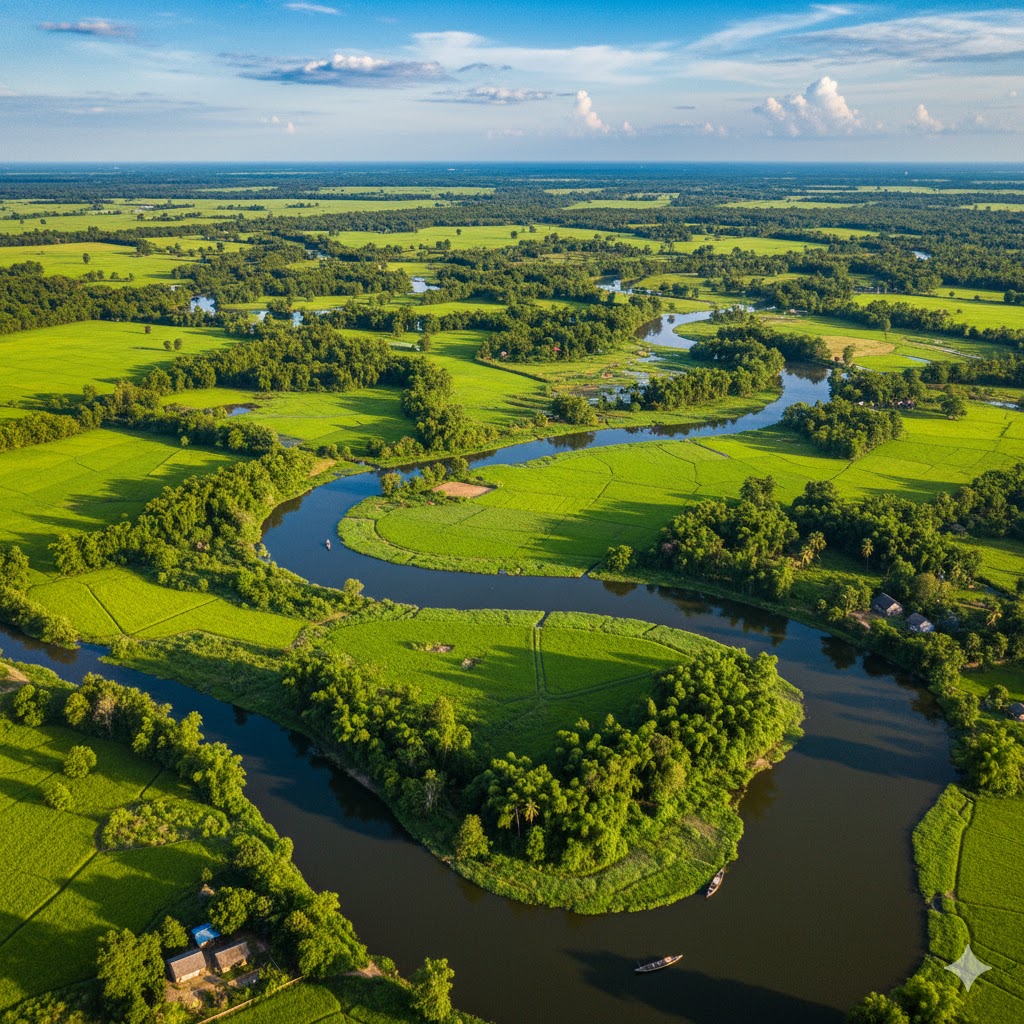
18. Majuli — Assam, India (World’s Largest River Island)
Nestled in the Brahmaputra River, Majuli is the world’s largest river island — a living canvas of Assamese culture, vaishnavite monasteries (satras), and changing riverine landscapes.
Highlights
- Largest river island by area (subject to shifting with river dynamics).
- Rich neo-Vaishnavite culture, mask-making traditions, and folk festivals.
- Seasonal wetlands and migratory birdlife.
History & Mystery
Majuli has been a spiritual and cultural hub for centuries; erosion and river change constantly reshape the island, challenging communities and conservationists.
How to Reach
Ferries from Jorhat and road connections; local transport across the island is by bike or shared vehicles.
Best Time to Visit
November–April for festivals and birdwatching; monsoon alters accessibility.
Hidden Gems & Local Tips
Stay in a satra guesthouse to experience traditional dance, music, and local pottery.
Local Food Experience
Relish ** Assamese thali**, smoked fish, and local rice beers served by homestays.
19. Keret House — Warsaw, Poland (World’s Narrowest House)
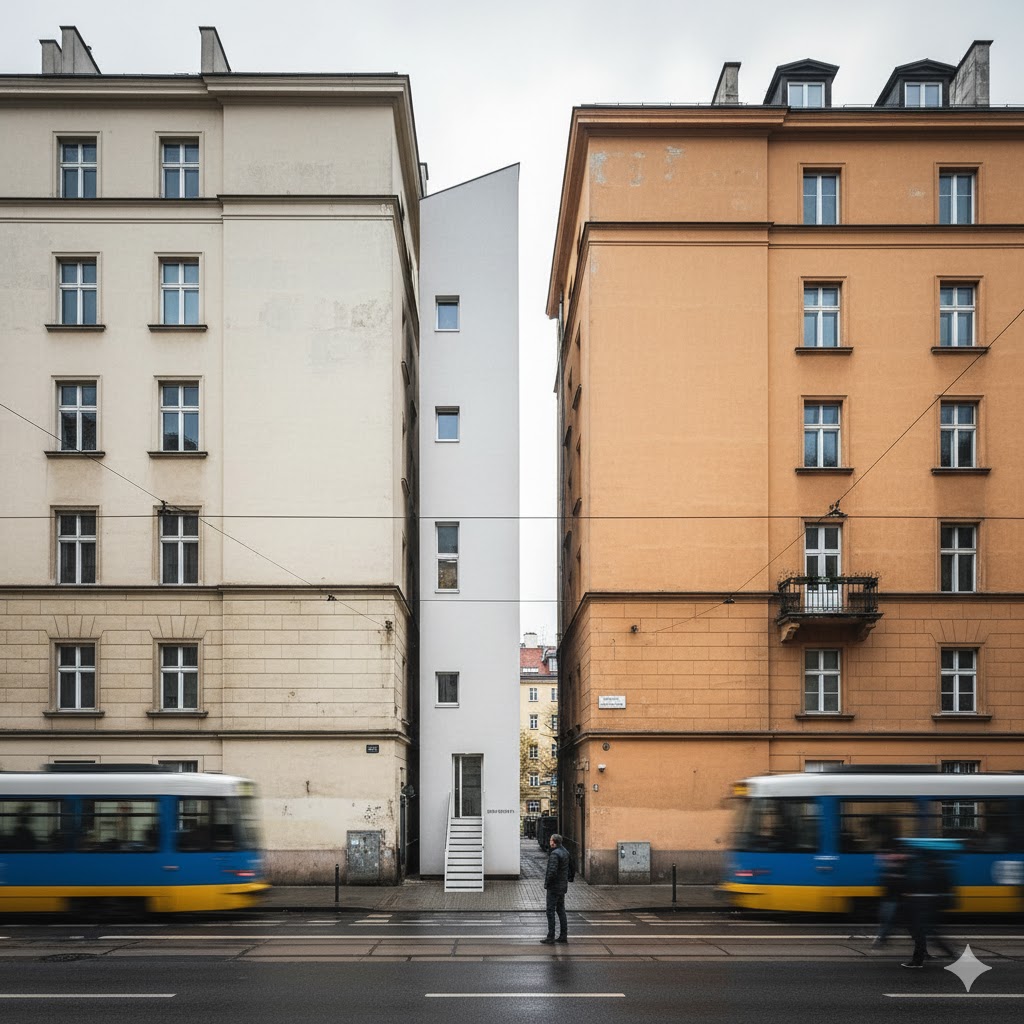
Tucked into a narrow slit between two buildings, the Keret House is often called the world’s narrowest permanent dwelling — a poetic micro-home that reimagines urban infill and tiny-house living.
Highlights
- Interior width ranges from 92 cm to 152 cm, ingeniously designed.
- Functioning art installation / inhabited space blending architecture and urbanism.
- Gallery and cultural events (subject to curatorial programming).
History & Mystery
Commissioned by artist-architect Jakub Szczęsny, Keret House is a statement on space, memory, and post-war urban fabric in Warsaw.
How to Reach
Located in Warsaw’s Muranów district; walkable from the city centre.
Best Time to Visit
Year-round; combine with a Warsaw architecture and history walk.
Hidden Gems & Local Tips
Check opening times — Keret frequently hosts small exhibitions and author readings.
Local Food Experience
Explore nearby cafés for Polish pierogi and local craft coffee.
20. Lake Titicaca — Peru / Bolivia (Highest Navigable Lake for Large Vessels)
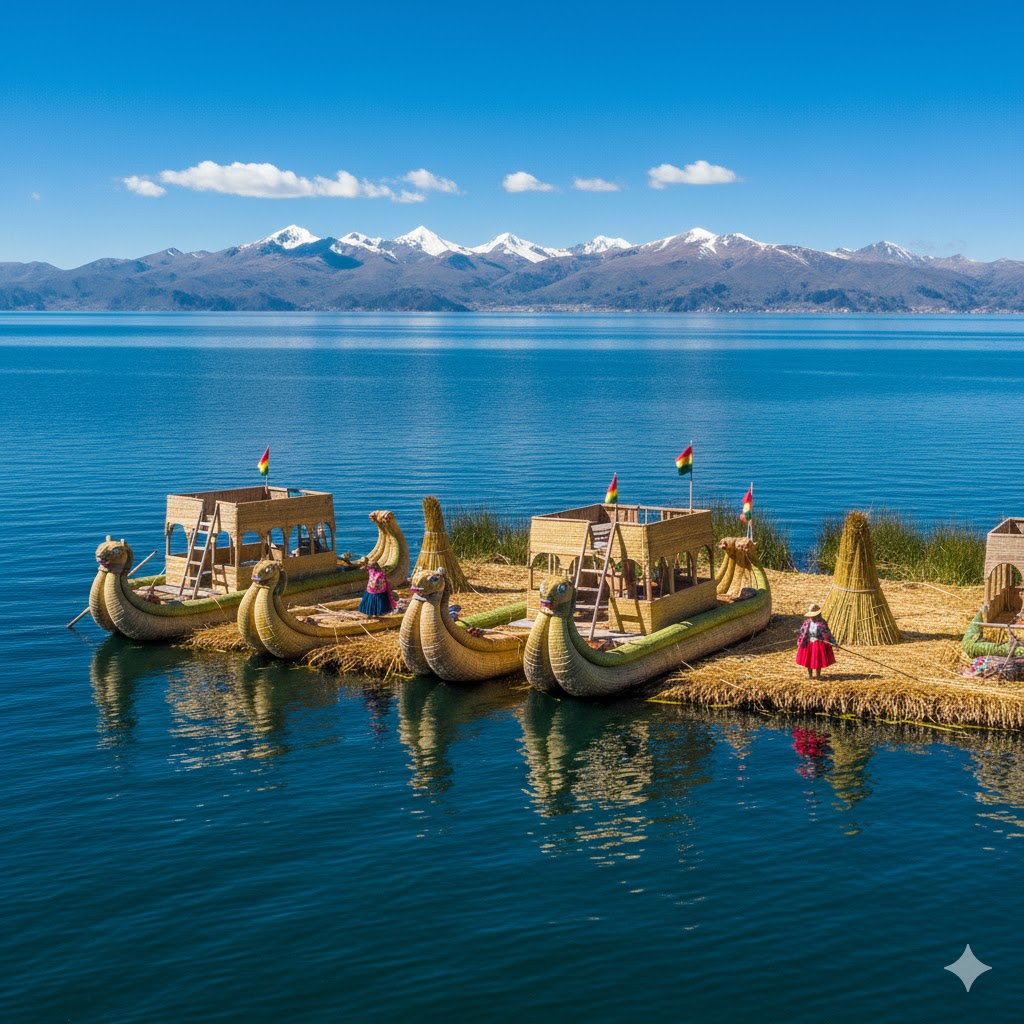
Perched high on the Altiplano at about 3,812 metres, Lake Titicaca is the world’s highest large navigable lake — a cradle of Andean civilizations, reed islands, and living indigenous traditions.
Highlights
- Navigable waters for ferries and historic reed boats.
- Uros floating islands made of totora reeds.
- Pre-Inca and Inca archaeological sites on lake islands.
History & Mystery
Viewed as a sacred birthplace in Andean cosmology, Titicaca’s islands host centuries of continuous human habitation and ritual.
How to Reach
Fly to Cuzco (Peru) or La Paz (Bolivia) then travel by road to Puno (Peru) / Copacabana (Bolivia) for lake access.
Best Time to Visit
May–October (dry season) for clear skies and calm waters.
Hidden Gems & Local Tips
Stay with island families on Taquile or Amantani for homestays and weaving workshops.
Local Food Experience
Try trucha (freshwater trout) and quinoa stews served in lakeside eateries.
21. The World’s Deepest Pool – Deep Dive Dubai, UAE
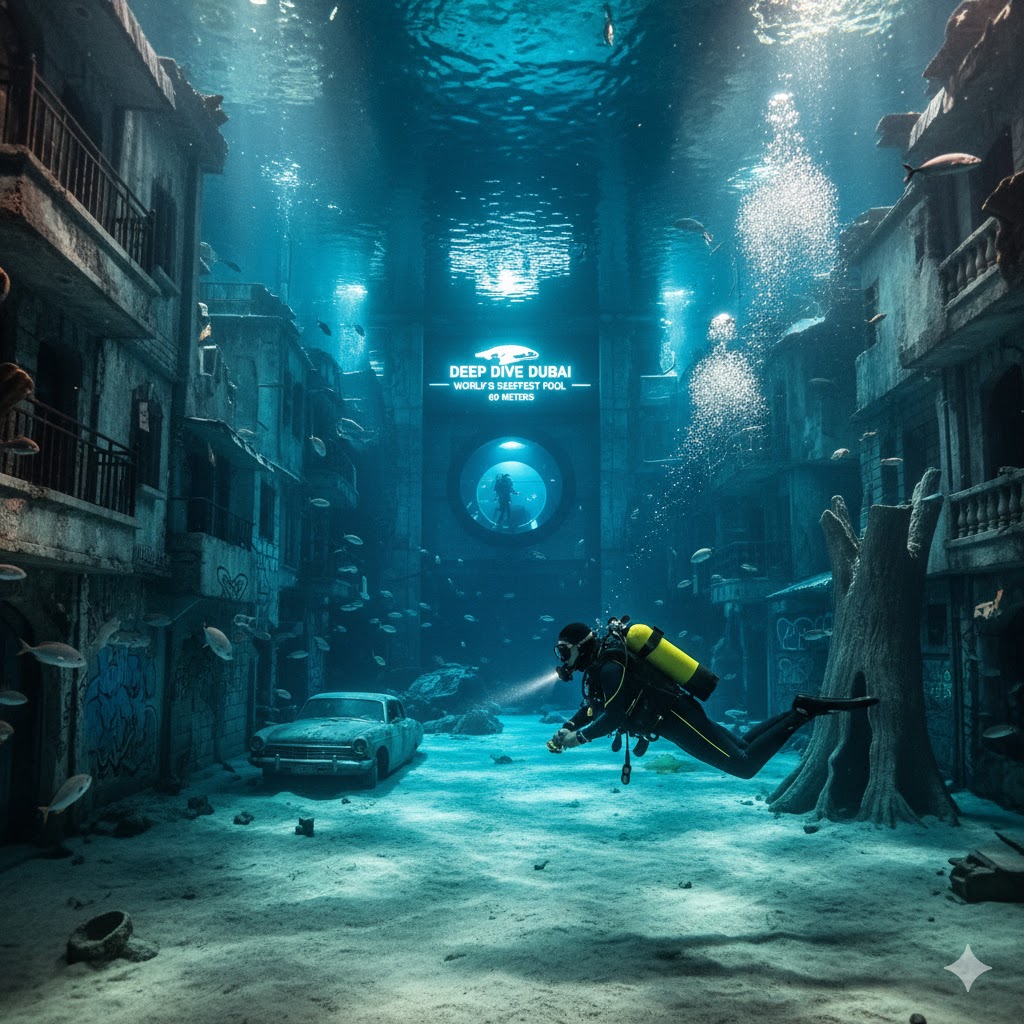
A futuristic marvel nestled in the heart of Dubai, Deep Dive holds the Guinness World Record as the deepest diving pool in the world — plunging an astonishing 60 meters (197 feet) below the surface. It’s not just a pool but an entire submerged cityscape, where divers can explore sunken apartments, cars, and even arcade rooms.
Highlights
- 14 million liters of freshwater filtered every six hours.
- Fully equipped underwater film studio.
- High-tech lighting simulating natural underwater light.
History & Mystery
Opened in 2021 under the patronage of Sheikh Hamdan bin Mohammed, it symbolizes Dubai’s relentless ambition to break limits and redefine luxury experiences.
How to Reach
Located in Nad Al Sheba, just a 15-minute drive from downtown Dubai.
Best Time to Visit
Year-round — the temperature-controlled facility welcomes divers in all seasons.
Hidden Gems & Local Tips
Non-divers can watch live feeds from observation windows while sipping coffee at the café above the pool.
Local Food Experience
Nearby restaurants like Coya and Zuma serve world-class dining perfect for post-dive indulgence.
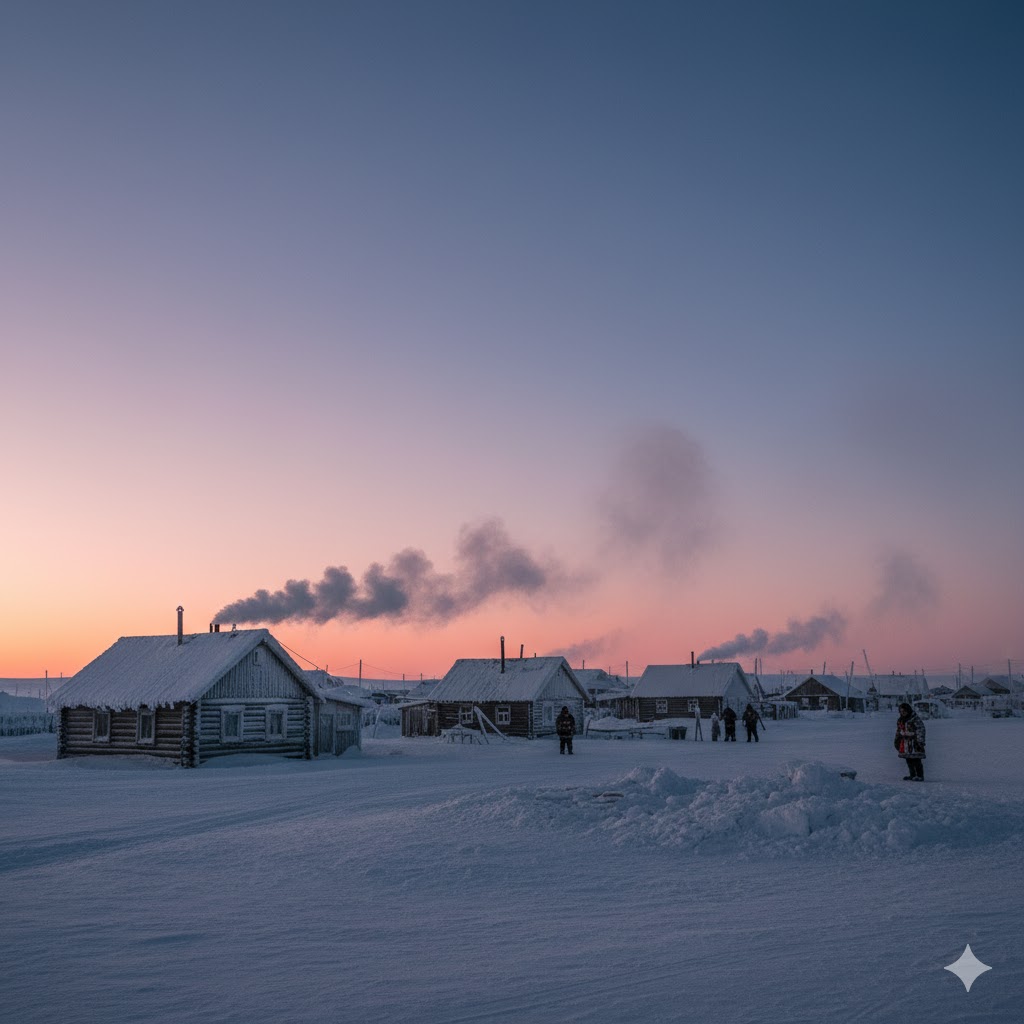
22. The Coldest Village on Earth – Oymyakon, Russia – World Record Travel
Oymyakon, tucked in Siberia’s frozen heart, holds the title of the coldest permanently inhabited place on Earth, where temperatures can drop to -67°C (-88°F). Despite the freezing climate, life persists — and thrives — with resilience and culture.
Highlights
- Witness frost flowers on the Indigirka River.
- Meet the Yakut people known for their horse-breeding traditions.
- Visit the “Pole of Cold” monument.
History & Mystery
Originally a stop for reindeer herders, Oymyakon became a settlement during Stalin’s era. Its people adapted with remarkable ingenuity to an almost alien environment.
How to Reach
Fly to Yakutsk, then drive or take a winter convoy through the Road of Bones.
Best Time to Visit
December to February for extreme cold experiences.
Hidden Gems & Local Tips
Dress in fur-lined boots and layers — even car engines run 24/7 to prevent freezing.
Local Food Experience
Taste stroganina, frozen raw fish sliced into icy ribbons — a Siberian delicacy.
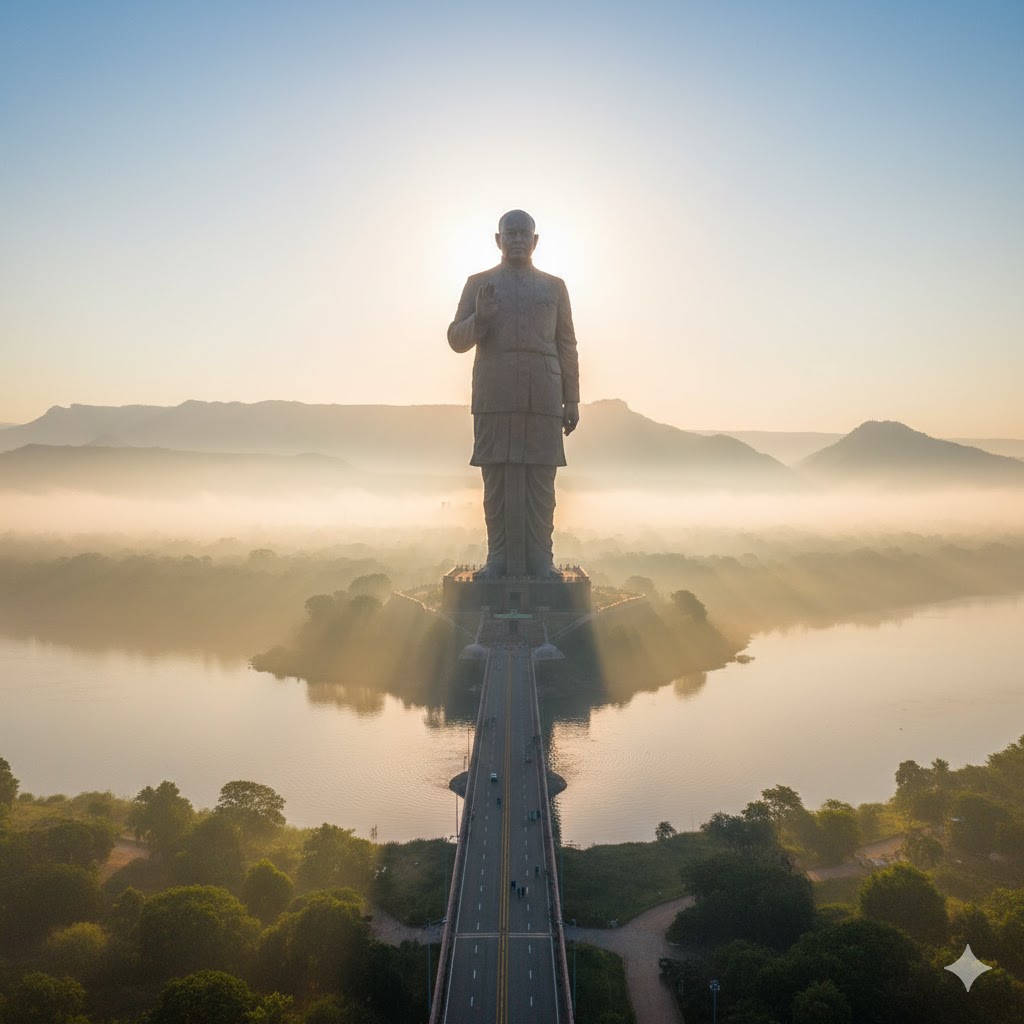
23. The Tallest Statue in the World – Statue of Unity, India
Towering at 182 meters (597 feet), the Statue of Unity honors Sardar Vallabhbhai Patel — India’s “Iron Man.” Surpassing the Spring Temple Buddha of China, it’s a symbol of unity and national pride.
Highlights
- Panoramic viewing gallery at 153 meters.
- Laser light shows narrating Patel’s life.
- Sardar Patel Zoological Park nearby.
History & Mystery
Inaugurated in 2018, the statue stands as a tribute to the man who unified 562 princely states into modern India.
How to Reach
Fly to Vadodara or Ahmedabad; buses and trains connect to Kevadia, Gujarat.
Best Time to Visit
October to March — cooler temperatures for outdoor exploration.
Hidden Gems & Local Tips
Book the Valley of Flowers trail for surreal views of the statue framed in blossoms.
Local Food Experience
Try Gujarati thali — a vibrant spread of lentils, vegetables, and sweets.
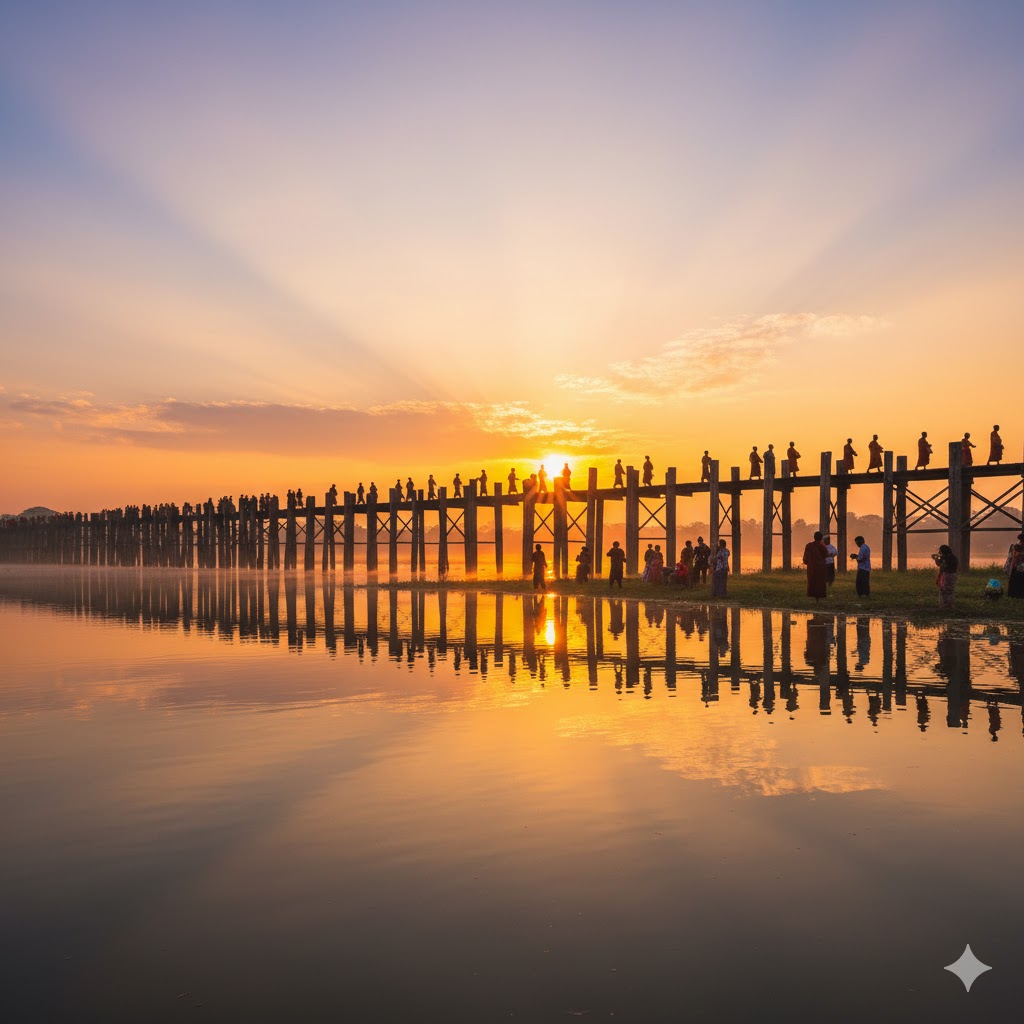
24. The World’s Longest Wooden Bridge – U Bein Bridge, Myanmar – World Record Travel
Stretching gracefully over 1.2 km, the U Bein Bridge near Mandalay is the world’s longest teak bridge. Built around 1850 from reclaimed palace wood, it remains a symbol of enduring faith and simplicity.
Highlights
- Magical sunsets reflecting off Taungthaman Lake.
- Daily Buddhist monk processions.
- Traditional fishermen using conical nets.
History & Mystery
Named after the mayor who commissioned it, the bridge survived wars, floods, and time, carrying monks and locals alike for over 170 years.
How to Reach
From Mandalay city, it’s just a short taxi ride to Amarapura Township.
Best Time to Visit
November to February — dry season offers clear reflections.
Hidden Gems & Local Tips
Arrive before sunrise for solitude and soft golden light for photos.
Local Food Experience
Taste Mandalay mohinga, Myanmar’s national fish noodle soup.
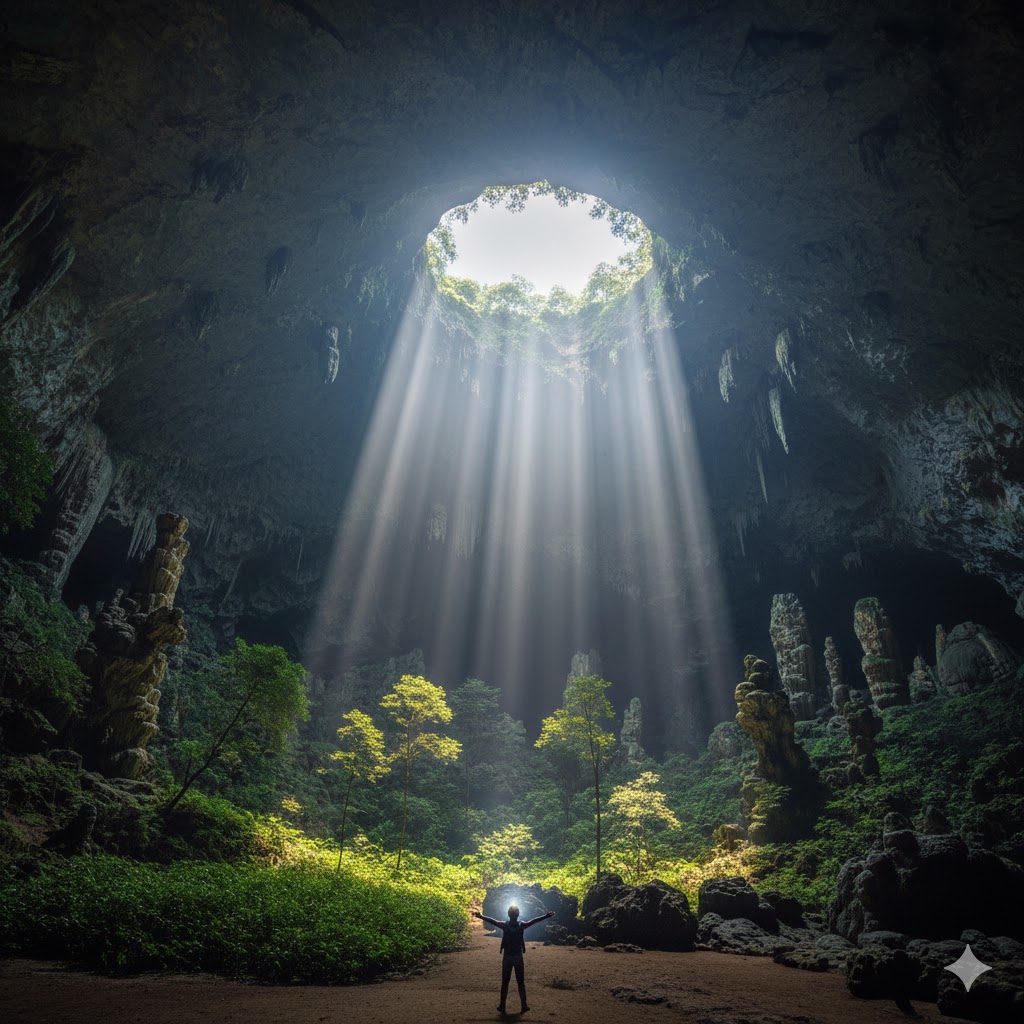
25. The Largest Cave Passage – Hang Sơn Đoòng, Vietnam
Nestled in Phong Nha-Kẻ Bàng National Park, Hang Sơn Đoòng is the largest cave passage in the world — big enough to fit a 40-story skyscraper within. Its own weather system and jungle make it a world unto itself.
Highlights
- Massive stalagmites and underground rivers.
- Natural skylights illuminating hidden forests.
- Guided treks by limited expedition permits.
History & Mystery
Discovered in 1991 by a local farmer and explored by British cavers in 2009, it redefined humanity’s understanding of subterranean worlds.
How to Reach
Fly to Dong Hoi, then travel to Phong Nha Village. Guided tours are mandatory.
Best Time to Visit
February to August — dry months ensure safe exploration.
Hidden Gems & Local Tips
Only 1000 visitors allowed yearly — book early with Oxalis Adventure.
Local Food Experience
Sample pho bo and banh xeo from Phong Nha’s riverside cafés.
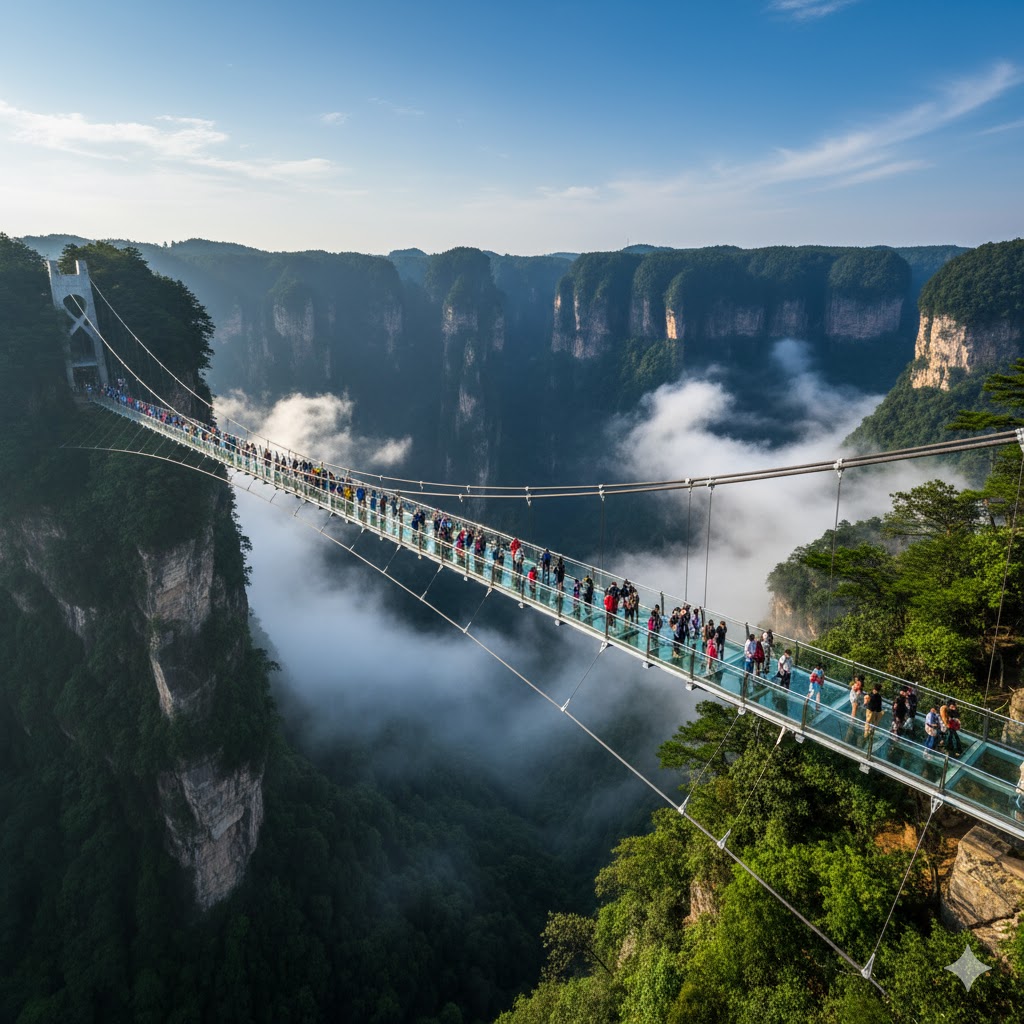
26. The Longest Glass Bridge – Zhangjiajie, China
Suspended 300 meters above the Zhangjiajie Grand Canyon, this 430-meter-long glass bridge in China offers a thrilling, heart-stopping walk over clouds. Transparent panels reveal dizzying views of lush valleys below — not for the faint-hearted!
Highlights
- 99 glass panels engineered for extreme durability.
- Skywalk views and bungee jumping station.
- Interactive light displays at night.
History & Mystery
Opened in 2016, the bridge inspired designs for futuristic cities in films like Avatar. It symbolizes modern China’s harmony between technology and nature.
How to Reach
Fly to Zhangjiajie Hehua Airport; shuttles connect directly to the canyon park.
Best Time to Visit
April to October — clear skies enhance visibility.
Hidden Gems & Local Tips
Visit early morning for less crowd and surreal mist. Don’t miss the nearby Avatar Hallelujah Mountains.
Local Food Experience
Enjoy Hunan spicy noodles and local rice wines after your walk.
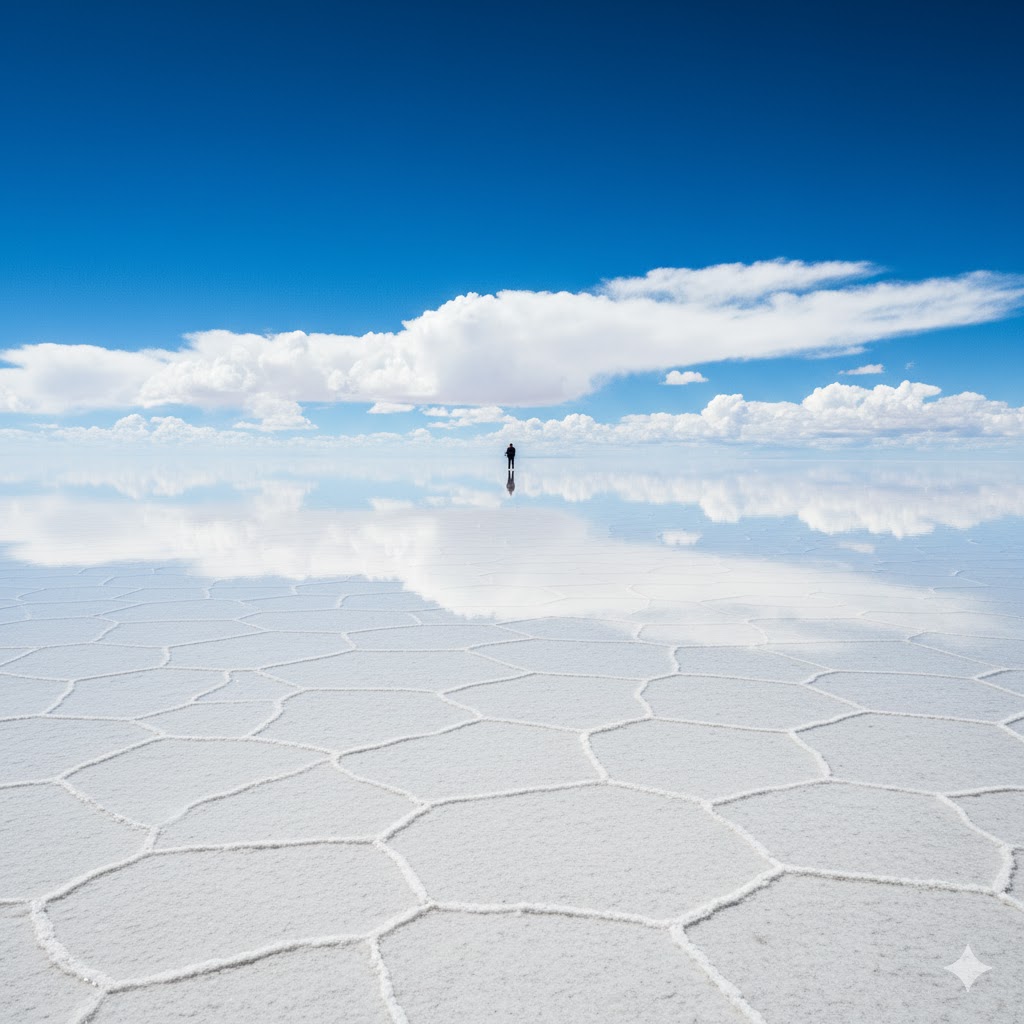
27. The World’s Largest Salt Flat – Salar de Uyuni, Bolivia
Stretching over 10,000 square kilometers, Salar de Uyuni transforms into a surreal mirror of the heavens during the rainy season. It’s both a dreamscape and a photographer’s paradise — a literal reflection of Earth and sky.
Highlights
- Natural mirror effect during rains (Jan–Apr).
- Salt hotels made entirely of salt bricks.
- Nearby Isla Incahuasi dotted with giant cacti.
History & Mystery
Formed from ancient prehistoric lakes, this salt desert contains one of the world’s largest lithium reserves.
How to Reach
Fly to Uyuni from La Paz or drive via the Altiplano route.
Best Time to Visit
May to October for the dry season (hexagonal salt patterns).
Hidden Gems & Local Tips
Take perspective photos and stay overnight to witness celestial reflections at night.
Local Food Experience
Try llama steak and quinoa soup — local delicacies served in Uyuni town.
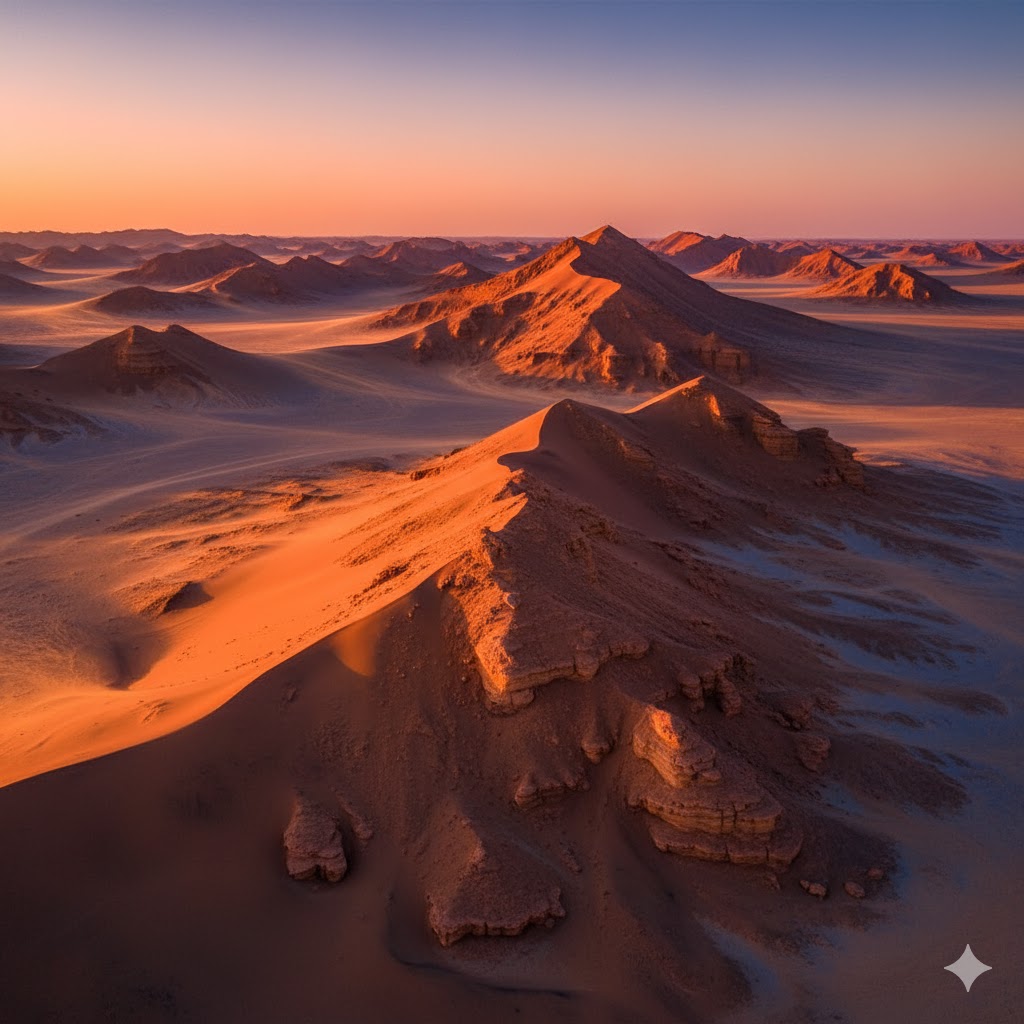
28. The Hottest Place on Earth – Lut Desert, Iran
Known locally as Dasht-e Lut, this Martian-like desert recorded temperatures over 70°C (158°F) — the hottest surface temperature on Earth. It’s a world of sculpted sand dunes, black lava plains, and salt ridges unlike anywhere else.
Highlights
- Kaluts — towering sand formations carved by centuries of wind.
- Star-filled skies ideal for astrophotography.
- UNESCO World Heritage Site (since 2016).
History & Mystery
Legends call it the “Plain of Emptiness,” yet explorers find ancient caravan routes etched in salt valleys.
How to Reach
Fly to Kerman, then drive 5 hours southeast to Shahdad Desert Camp.
Best Time to Visit
October to March — cooler, safe conditions for travel.
Hidden Gems & Local Tips
Book night safaris to see bioluminescent minerals glowing faintly in moonlight.
Local Food Experience
Taste Persian kebabs and saffron tea with desert nomads.
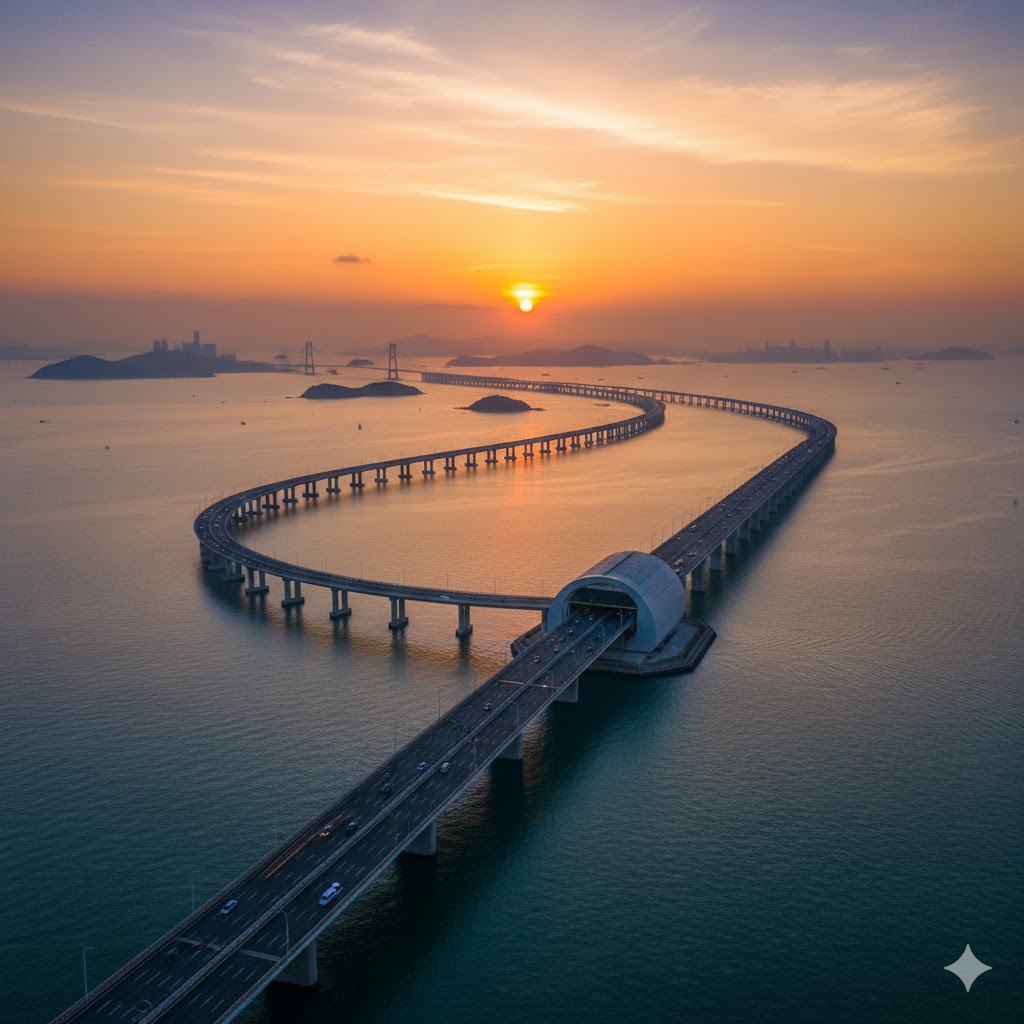
29. The World’s Longest Sea Bridge – Hong Kong–Zhuhai–Macau Bridge, China
Spanning 55 kilometers (34 miles) across the Pearl River Delta, this engineering wonder links three major cities — Hong Kong, Zhuhai, and Macau. It’s the world’s longest sea-crossing bridge and a marvel of modern connectivity.
Highlights
- Six-lane highway over ocean tunnels and artificial islands.
- LED-lit pillars glowing in changing colors.
- 120-year projected lifespan.
History & Mystery
Completed in 2018 after a decade of construction, it represents unity in the Greater Bay Area.
How to Reach
Accessible via Hong Kong or Macau international airports.
Best Time to Visit
October to March for mild weather and clear views.
Hidden Gems & Local Tips
Take a guided shuttle for panoramic photo stops mid-route.
Local Food Experience
Try dim sum and Macanese egg tarts at either end of the bridge.
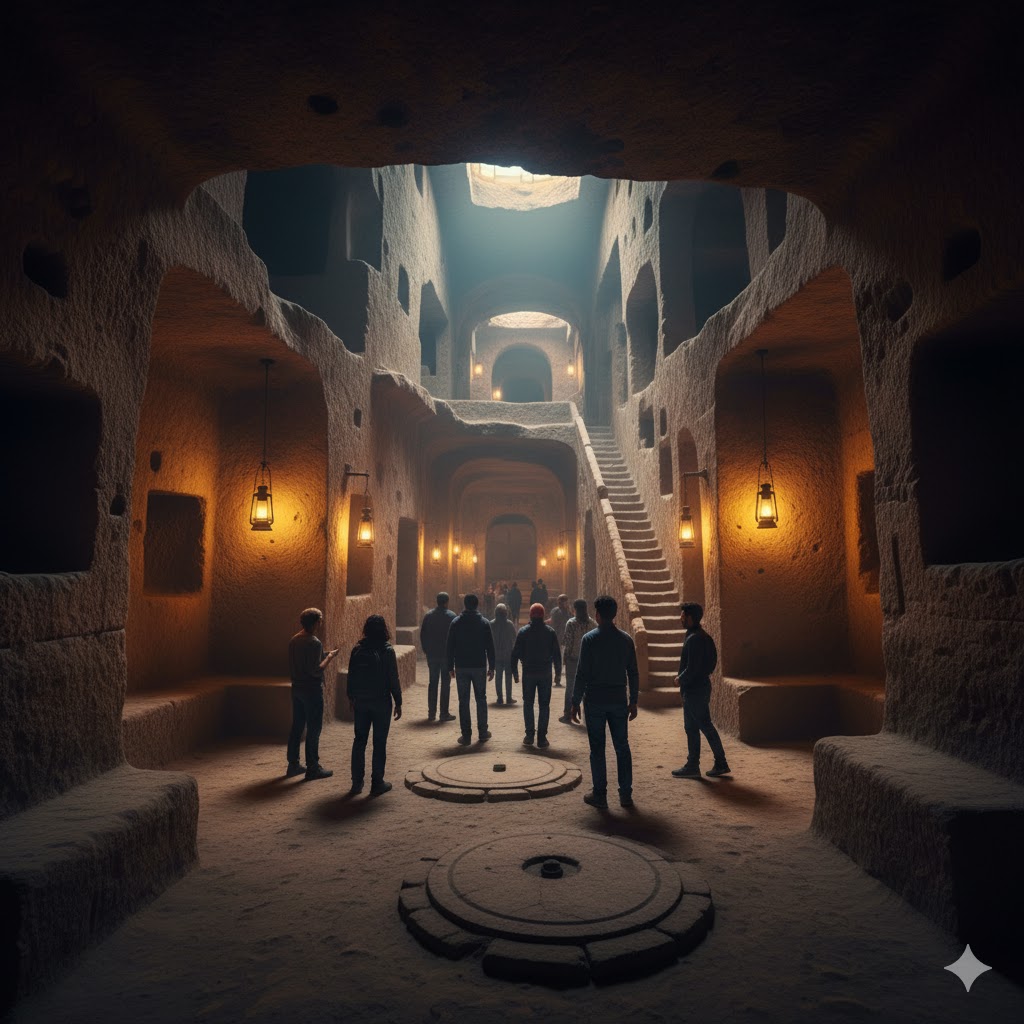
30. The Largest Underground City – Derinkuyu, Turkey
Hidden beneath Cappadocia’s surface, Derinkuyu Underground City once sheltered up to 20,000 people from invasions. Carved across 18 levels of volcanic rock, it remains one of the most mysterious subterranean settlements in history.
Highlights
- Ancient ventilation shafts and churches underground.
- Stone doors that sealed entire passages.
- Labyrinth tunnels connecting neighboring cities.
History & Mystery
Built possibly by the Phrygians in 8th century BCE and expanded by Byzantines, Derinkuyu reflects ancient engineering brilliance.
How to Reach
From Göreme or Nevşehir, local tours provide access to the site.
Best Time to Visit
April to October — ideal for pairing with Cappadocia’s hot air balloon rides.
Hidden Gems & Local Tips
Hire local archaeologists as guides for rare entry into restricted chambers.
Local Food Experience
Relish manti (Turkish dumplings) and baklava after exploring the tunnels.
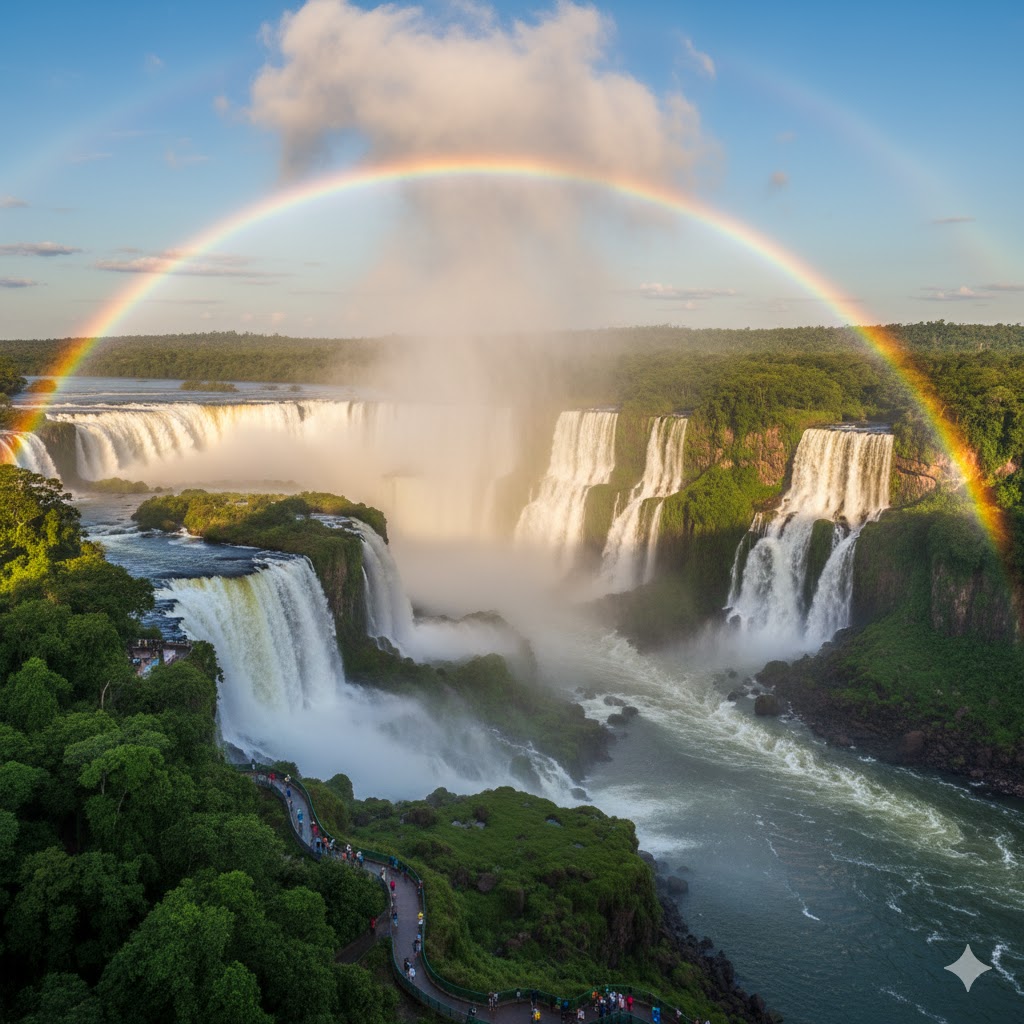
31. The World’s Widest Waterfall — Iguazú Falls, Argentina / Brazil
Iguazú Falls is a thunderous curtain of water that spans nearly 2.7 kilometers at its widest point — a living symphony of spray, rainbows, and roar that eclipses ordinary waterfall-scale expectations.
Highlights
- 275 separate drops including the awe-inspiring “Devil’s Throat.”
- Boat rides that take you under cascading sheets.
- Lush subtropical rainforest teeming with coatis and toucans.
History & Mystery
Discovered by Europeans in the 16th century, Iguazú’s name comes from the Guaraní words “y” (water) and “ûasú” (big). Indigenous stories speak of a jealous river god and a broken canoe — explaining the falls’ origin in legend.
How to Reach
Fly to Puerto Iguazú (Argentina) or Foz do Iguaçu (Brazil), then short transfers to national park entrances on either side.
Best Time to Visit
Year-round; high water (Jan–Mar) for maximum drama; lower flows (May–Sept) for clearer viewpoints.
Hidden Gems & Local Tips
Take the lesser-known Macuco Trail for intimate jungle encounters. Bring waterproof gear — you will get soaked.
Local Food Experience
Sample grilled churrasco (Brazilian barbecue) or Argentine empanadas in nearby towns.
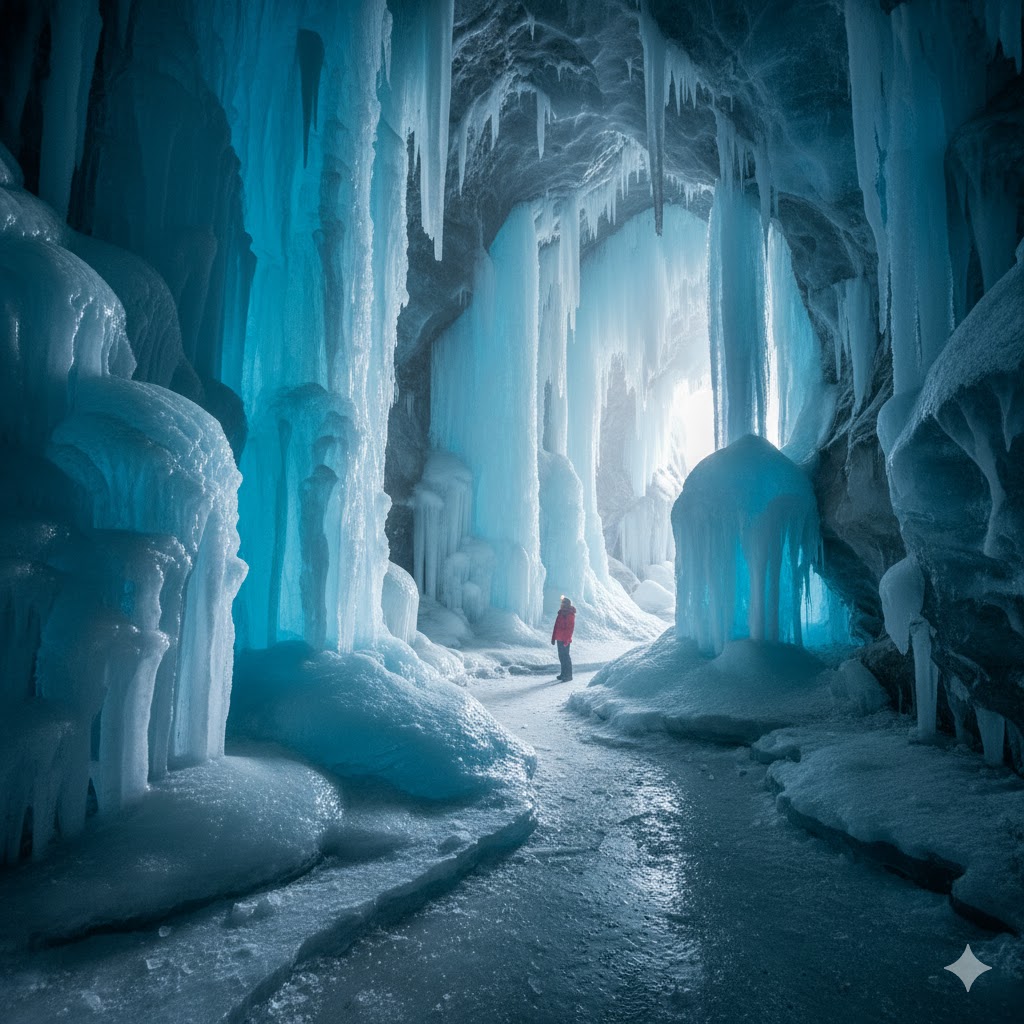
32. The Longest Glacier Cave System — Eisriesenwelt, Austria
Eisriesenwelt (World of the Ice Giants) is the world’s largest accessible ice cave system, a crystalline cathedral carved into limestone where frozen sculptures glint under guided lights.
Highlights
- Miles of ice-carved chambers and pillars.
- Guided tours with dramatic lighting that enhances the ice formations.
- Alpine skyline views from the cave entrance.
History & Mystery
Known since the 18th century, the caves were opened to visitors in the early 20th century. Locals once used the cool chambers to store ice and perishables.
How to Reach
Fly to Salzburg or Innsbruck; then drive or take local transit to Werfen and a short cable car to the cave ridge.
Best Time to Visit
May to October — accessible tours run in warmer months when interior ice persists.
Hidden Gems & Local Tips
Book the early tour to avoid crowds and capture the icicles in soft morning light.
Local Food Experience
Warm up after the cave with hearty Wiener schnitzel and alpine cheeses in Werfen.
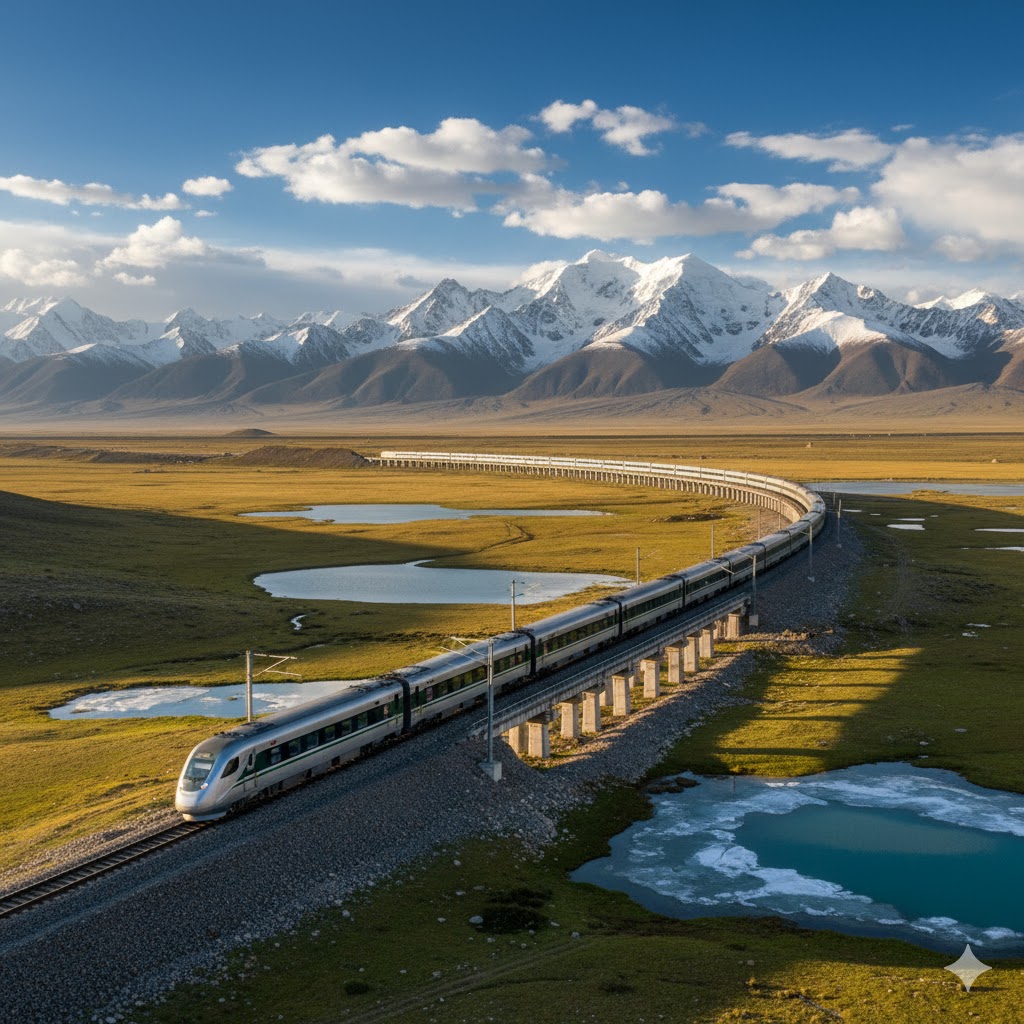
33. The Highest Railway — Qinghai–Tibet Railway, China
This engineering triumph climbs to over 5,000 meters above sea level, connecting remote Tibetan plateau communities with modern China — a rail journey across permafrost, turquoise lakes, and sky-high plateaus.
Highlights
- Stunning high-altitude scenery and wildlife sightings.
- Pressurized carriages with oxygen supply for comfort.
- Stops at cultural towns and access to Lhasa.
History & Mystery
Completed in 2006, the railway required novel engineering to stabilize tracks over permafrost, reshaping life and tourism on the plateau.
How to Reach
Depart from Xining or Lanzhou; trains to Lhasa run regularly but sell out during peak seasons.
Best Time to Visit
May to October for clearer skies and milder temperatures.
Hidden Gems & Local Tips
Acclimatize in Xining for a day to reduce altitude sickness risk. Carry motion-sickness remedies for winding sections.
Local Food Experience
Try tsampa (barley flour) and yak butter tea in local teahouses.
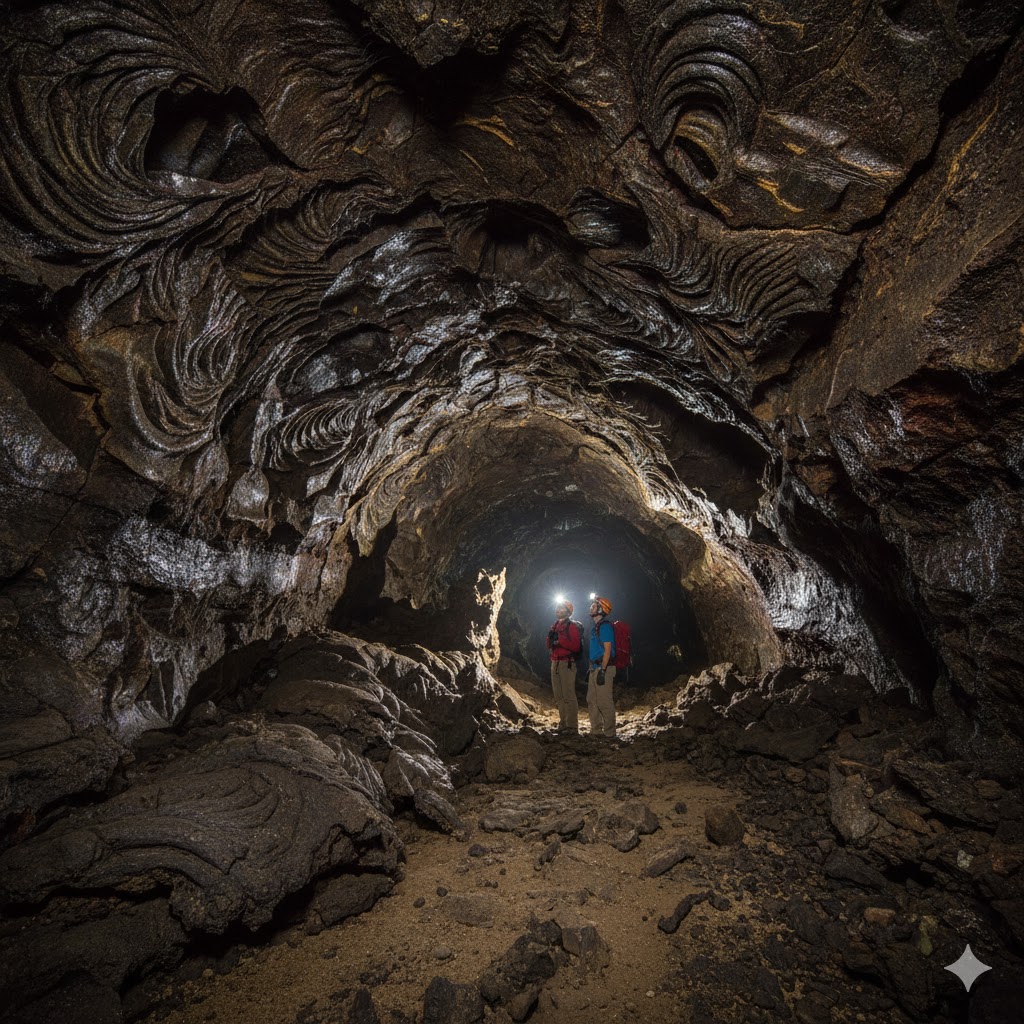
34. The Longest Lava Tube — Kazumura Cave, Hawaii (Big Island), USA
Kazumura is one of the planet’s longest lava tubes — a subterranean world of basalt arches, ropey lava textures, and geological stories etched in volcanic stone.
Highlights
- Mile-after-mile of continuous tube passageways.
- Rare subterranean ecosystems and mineral textures.
- Adventurous caving routes for experienced explorers.
History & Mystery
Formed during powerful flows of Kīlauea volcano, Kazumura records lava’s fluid history in its sculpted ceilings and floors.
How to Reach
Fly to Hilo; arrange guided expeditions through authorized caving operators on the Big Island.
Best Time to Visit
Year-round; guided tours operate with expert safety briefings.
Hidden Gems & Local Tips
This is advanced caving — bring headlamps, sturdy boots, and book a certified guide.
Local Food Experience
Relax with local poi, fresh tropical fruit, and kona coffee after your descent.
35. The Narrowest Canal — Al-Saqr Canal, Shibam, Yemen
Shibam’s ancient mudbrick city sits amid Yemen’s Hadhramaut valley; tiny canals and alleys thread the old town — Al-Saqr Canal is famed locally for its narrowness and historic irrigation role.
Highlights
- Towering mudbrick houses rising like an ancient skyline.
- Intricate water channels that supported early urban life.
- UNESCO-listed historic architecture.
History & Mystery
Shibam, dubbed the “Manhattan of the Desert,” dates to the 16th century; its channels were crucial for agriculture and survival in an arid landscape.
How to Reach
Access is limited; travel requires local arrangements from Sana’a or Hadhramaut regional hubs and careful planning due to security contexts.
Best Time to Visit
October to March — cooler, more comfortable for walking the alleys.
Hidden Gems & Local Tips
Hire a local guide to understand the qat, architecture, and restricted neighborhoods respectfully.
Local Food Experience
Try saltah and fresh flatbreads served in local family homes.

36. The Longest Undersea Tunnel — Seikan Tunnel, Japan
Stretching 53.85 km and plunging beneath the Tsugaru Strait, the Seikan Tunnel links Honshu and Hokkaido — an undersea artery of economic and logistic importance.
Highlights
- Longest operational undersea rail tunnel by length.
- Engineering marvel cutting through seabed geology.
- Fast connections between Japan’s major islands.
History & Mystery
Completed in 1988 after decades of work, Seikan was built to withstand temblors and oceanic pressures — a quiet titan of infrastructure.
How to Reach
Board trains from Tokyo or Aomori; the tunnel is experienced en route to Hakodate on Hokkaido.
Best Time to Visit
Year-round; combine with seasonal festivals in Hokkaido for cultural contrast.
Hidden Gems & Local Tips
Ask conductors for the approximate passage time through the tunnel and sit on the correct side for subtle ocean views at portals.
Local Food Experience
Sample kani (crab) and Hokkaido seafood specialties in Hakodate markets.

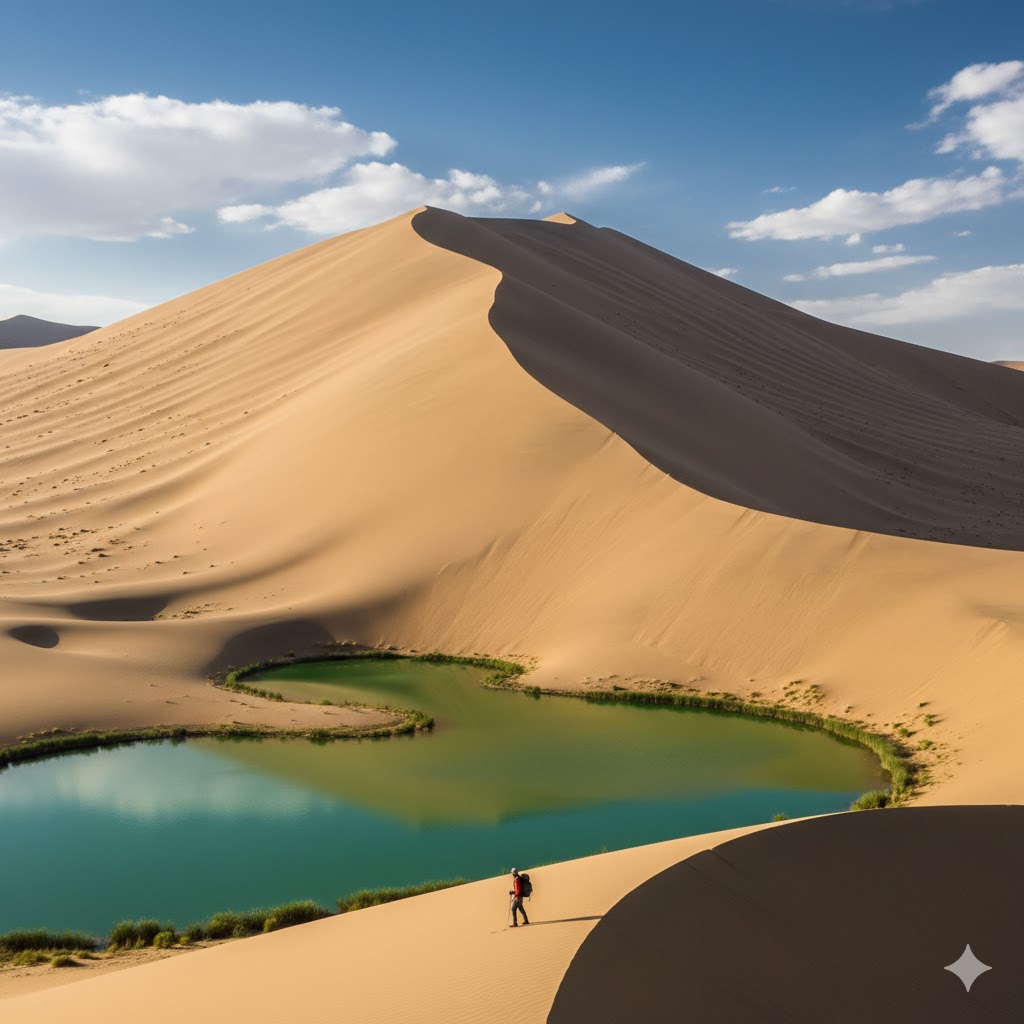
37. The Tallest Sand Dune — Badain Jaran Desert, China
Badain Jaran holds dunes that tower over 500 meters — monumental walls of wind-sculpted sand interleaved with emerald lakes, an otherworldly contrast of extremes.
Highlights
- Some of the world’s tallest stationary sand dunes.
- Hidden desert lakes between dune ridges.
- Camel caravans and silence like no other landscape.
History & Mystery
Geologists study the ancient winds that formed these dunes; locals speak of ghost lights and shifting trails.
How to Reach
Fly to Zhangye or Jiuquan, then arrange desert transit via local guides into the Gobi-adjacent sands.
Best Time to Visit
April to June and September to October for comfortable daytime temps.
Hidden Gems & Local Tips
Stay in a desert camp for sunrise dune photography and stargazing; bring sun protection and plenty of water.
Local Food Experience
Hearty Mongolian-style stews and hand-baked breads prepared by camp hosts.
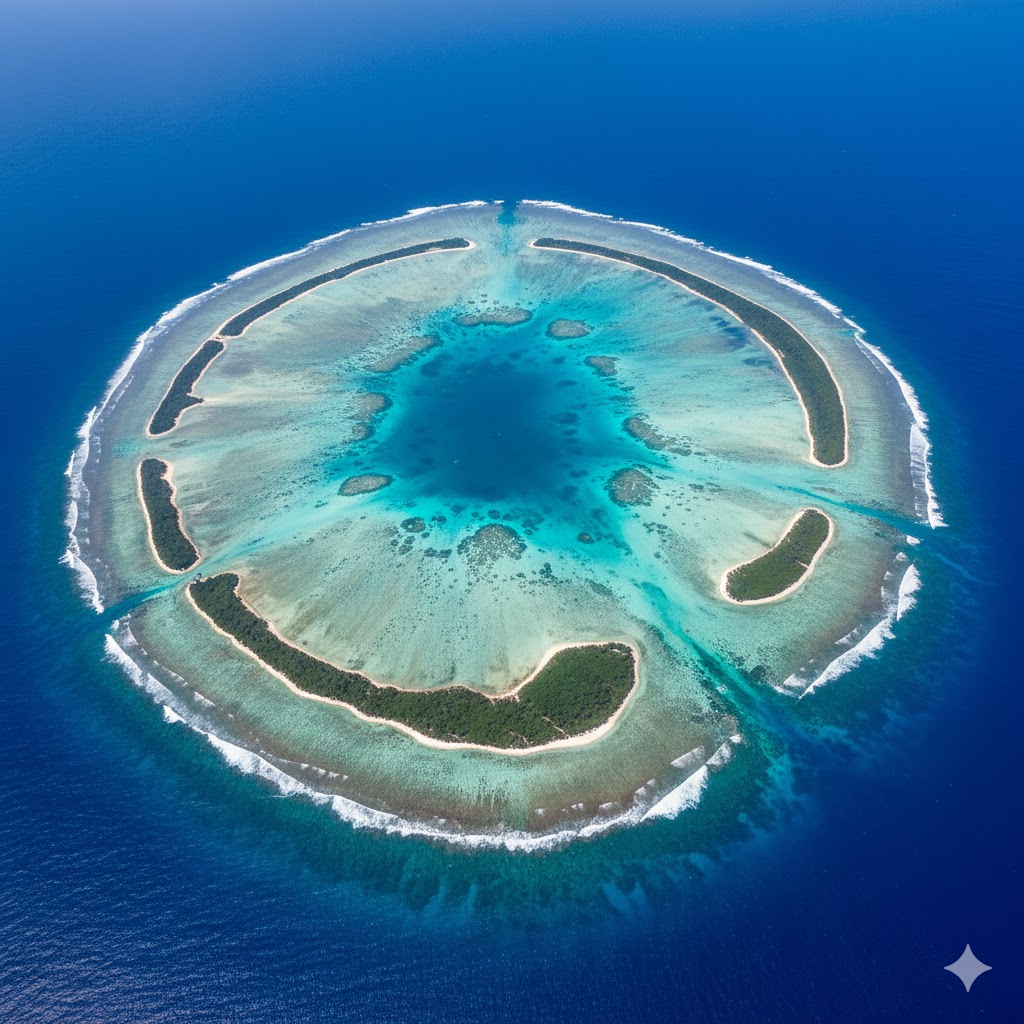
38. The Largest Coral Atoll — Kwajalein Atoll, Marshall Islands
Kwajalein Atoll encompasses vast lagoon waters and reef systems that hold the title among the world’s largest coral atolls — turquoise, shallow, and bursting with marine life.
Highlights
- Endless shallow lagoons ideal for snorkeling and scientific study.
- Strategic WWII history and island communities.
- Remote, pristine reefs seldom visited by mass tourism.
History & Mystery
A theater of Pacific wartime history, later becoming a hub for missile testing; today it balances local culture with environmental stewardship.
How to Reach
Flights are limited; access typically via Majuro with charter arrangements to outer atolls.
Best Time to Visit
December to April — dry season with calm seas.
Hidden Gems & Local Tips
Coordinate with local operators for eco-focused snorkel tours and respect restricted military zones.
Local Food Experience
Fresh coconut, reef fish, and Marshallese dishes like bwiro (taro pudding).
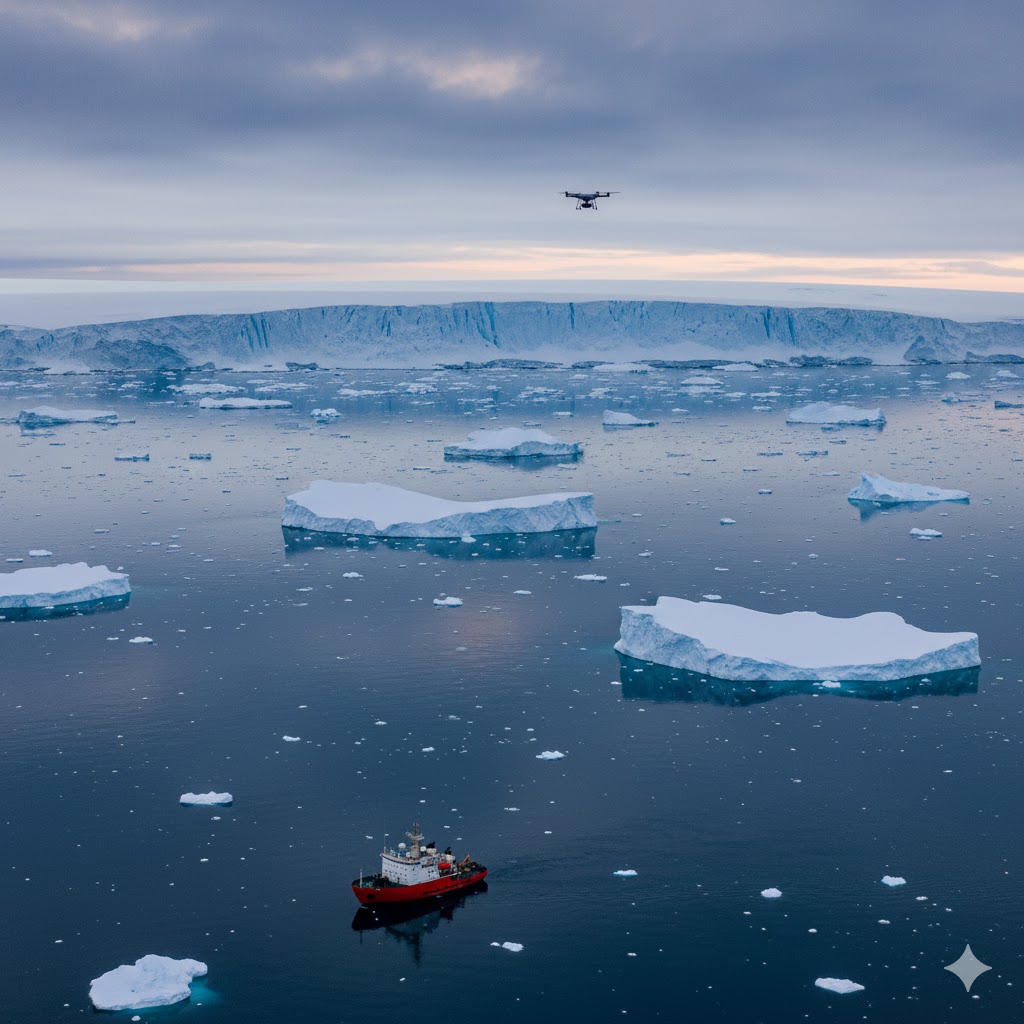
39. The Widest Ice Shelf — Ross Ice Shelf, Antarctica – World Record Travel
The Ross Ice Shelf is a staggering floating ice platform larger than many countries — an immobile sea of blue-white that feeds glaciers and anchors Antarctica’s climate story.
Highlights
- Vast, otherworldly vistas and towering icebergs calving at the front.
- Scientific stations studying climate, glaciology, and astronomy.
- Rare wildlife sightings: penguins and seals on nearby ice floes.
History & Mystery
Explorers like Shackleton and Scott visited nearby regions; Ross remains central to polar research and profound silence.
How to Reach
Expeditions depart from Hobart, New Zealand or Punta Arenas, Chile — specialized voyages only.
Best Time to Visit
Antarctic summer (November to March) — daylight and safer ice conditions.
Hidden Gems & Local Tips
Choose an expedition with robust environmental policies; travel is highly regulated to protect fragile ecosystems.
Local Food Experience
Ship-board chefs serve hearty expedition fare — think warm stews and fresh-baked bread after cold days ashore.
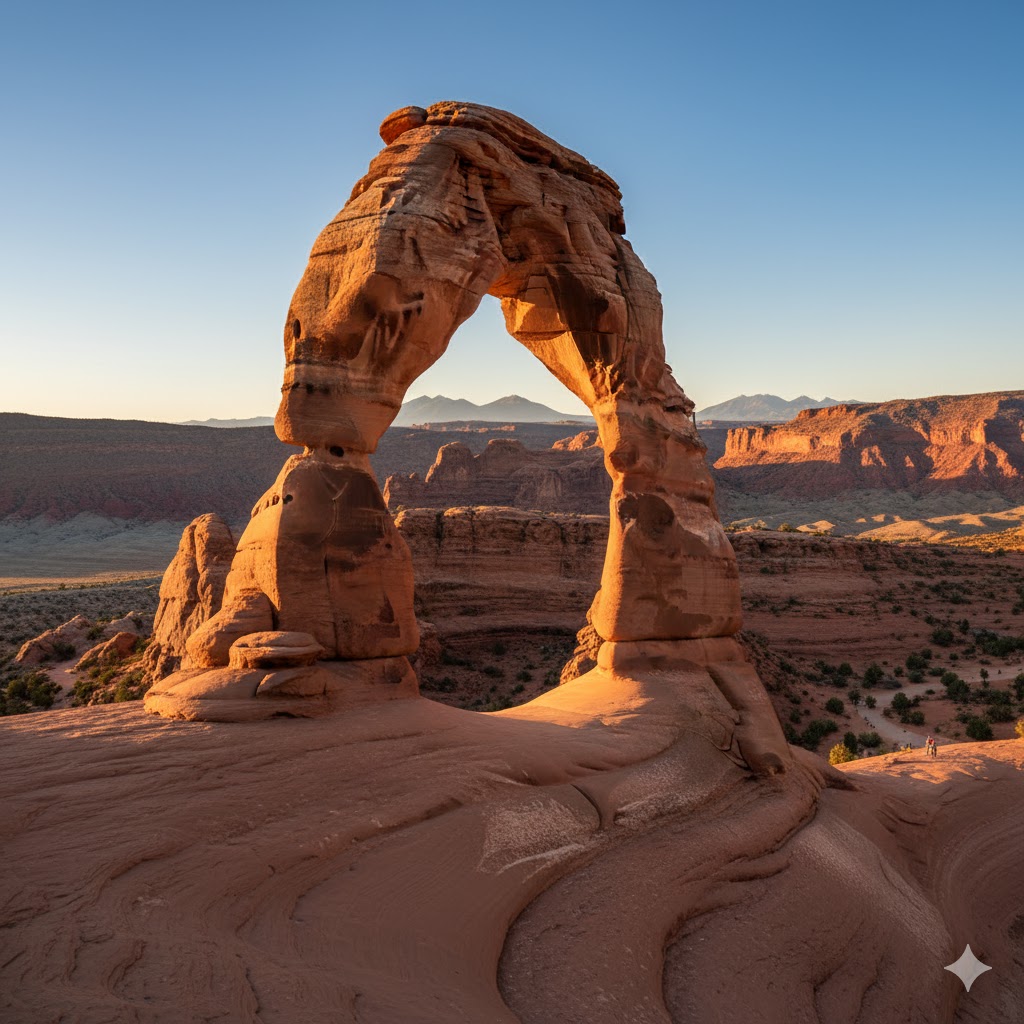
40. The Longest Natural Arch — Landscape Arch, USA (Utah) – World Record Travel
Landscape Arch — thin, elegant, and improbably balanced — stretches across a sandstone amphitheater with one of the longest natural spans in the world, an eroded ribbon of rock that inspires both awe and quiet caution.
Highlights
- A delicate sandstone span within Arches National Park.
- Sunset light turning sandstone into molten gold.
- Access via a gentle trail through desert scenery.
History & Mystery
Formed by wind and water over millennia, the arch is an ongoing lesson in geological fragility; occasional rockfalls remind visitors of nature’s slow patience.
How to Reach
Fly to Salt Lake City or Moab; drive to Arches National Park and follow the well-marked trail.
Best Time to Visit
April–May and September–October for mild days and dramatic skies.
Hidden Gems & Local Tips
Photograph at dawn to avoid crowds; respect fenced areas — the arch is fragile and protected.
Local Food Experience
Enjoy Southwestern cuisine and craft beers in nearby Moab after your hike.
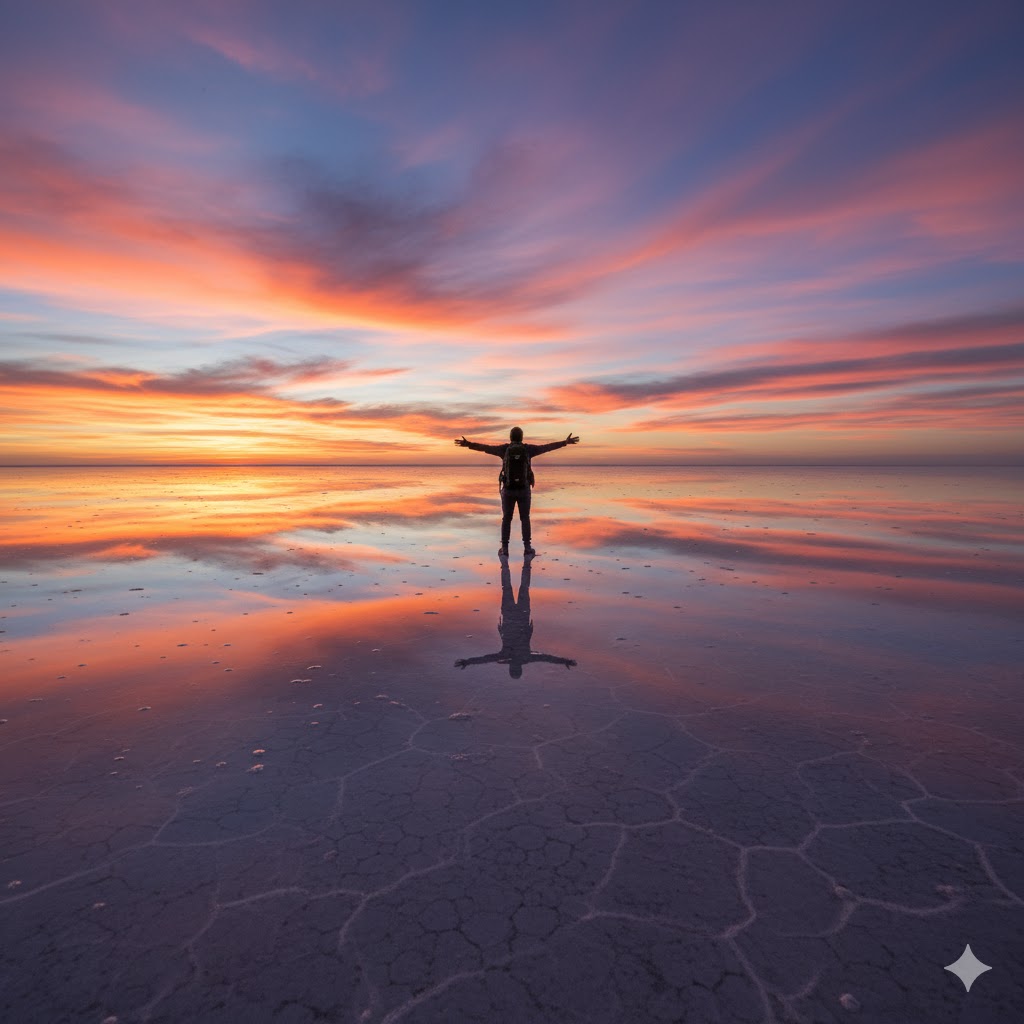
41. Salar de Uyuni — Bolivia (World’s Largest Salt Flat) – World Record Travel
A glimmering mirror stretching to the horizon, Salar de Uyuni is the world’s largest salt flat, born from ancient lakes that evaporated into pure crystalline crusts. When covered by rain, it turns into the biggest natural mirror on Earth.
Highlights
- 10,582 square kilometers of salt plains.
- Mirror effect after rainfall creates surreal reflections.
- Train cemetery and Incahuasi Island with giant cacti.
History & Mystery
Formed from prehistoric Lake Minchin, the flats are sacred in Aymara legend — believed to be the tears of a heartbroken goddess.
How to Reach
Fly to Uyuni Airport or access via La Paz and Potosí by bus/train. Guided 4×4 tours are common.
Best Time to Visit
Dec–April (wet season) for mirror effect; May–Nov for clear skies and salt hexagons.
Hidden Gems & Local Tips
Stay overnight in a salt hotel and stargaze — the flat reflects constellations perfectly.
Local Food Experience
Try llama steak and quinoa soup in Uyuni town.
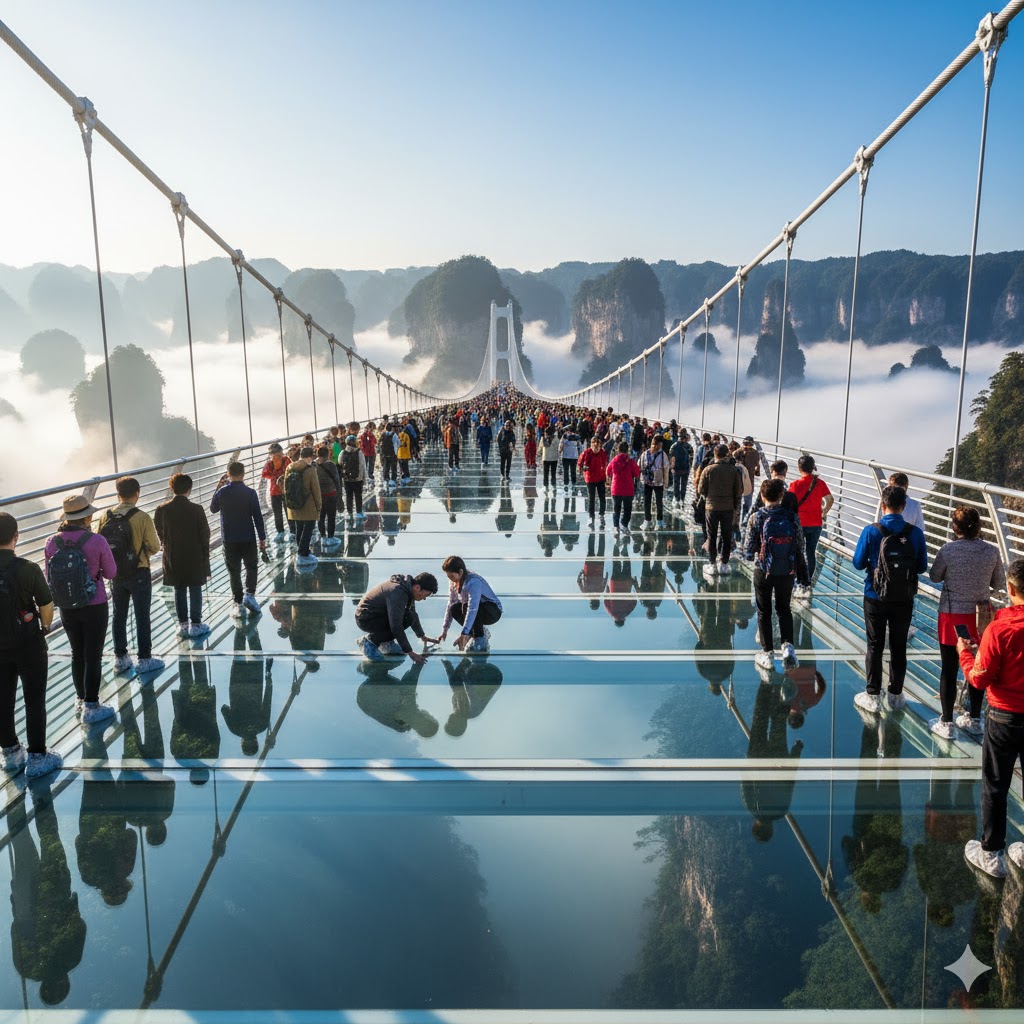
42. Mariana Sky Bridge — China (World’s Longest Glass Bridge) – World Record Travel
Suspended over Zhangjiajie Grand Canyon, the Mariana Sky Bridge is the world’s longest and highest glass-bottom bridge, offering a heart-stopping walk over breathtaking voids and karst peaks.
Highlights
- 430 meters long, 300 meters high.
- Transparent glass floor with panoramic mountain views.
- Bungee jumping platform — the highest in the world (260 m).
History & Mystery
Opened in 2016, it blends ancient natural beauty with ultramodern architecture inspired by Avatar’s floating mountains.
How to Reach
Fly to Zhangjiajie Hehua Airport, then 1-hour drive to the Grand Canyon Park.
Best Time to Visit
April–October for mild weather and clear visibility.
Hidden Gems & Local Tips
Visit early morning to avoid crowds; photography permits may apply for drones.
Local Food Experience
Taste Hunan spicy hotpot and rice noodles near Wulingyuan town.
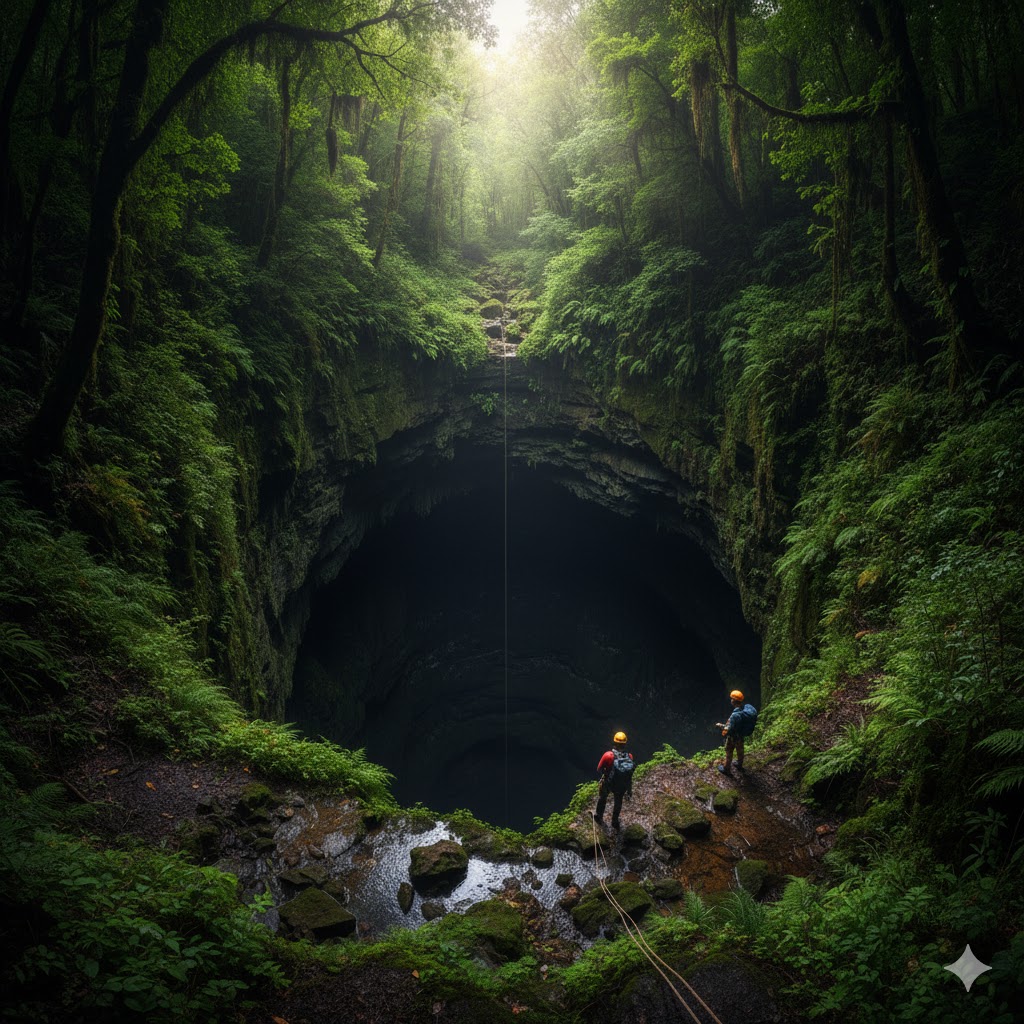
43. Krubera Cave — Abkhazia, Georgia (World’s Deepest Known Cave)
Known as the Everest of the underground world, Krubera Cave plunges more than 2,197 meters deep, making it the world’s deepest known cave — an abyss carved by ancient water.
Highlights
- Record-breaking cave depth (2.2 km).
- Labyrinthine passages, subterranean rivers, and fossils.
- One of the most challenging speleological sites globally.
History & Mystery
Named after geographer Alexander Kruber, its depth was verified through decades of exploration by Ukrainian cavers.
How to Reach
Accessible from Sukhumi, though political and safety permissions vary — guided scientific visits only.
Best Time to Visit
Summer (June–Sept) for stable expedition logistics.
Hidden Gems & Local Tips
Caving expeditions must be organized through official research channels; physical fitness is key.
Local Food Experience
Sample Khachapuri (cheese bread) and local Abkhaz wines.
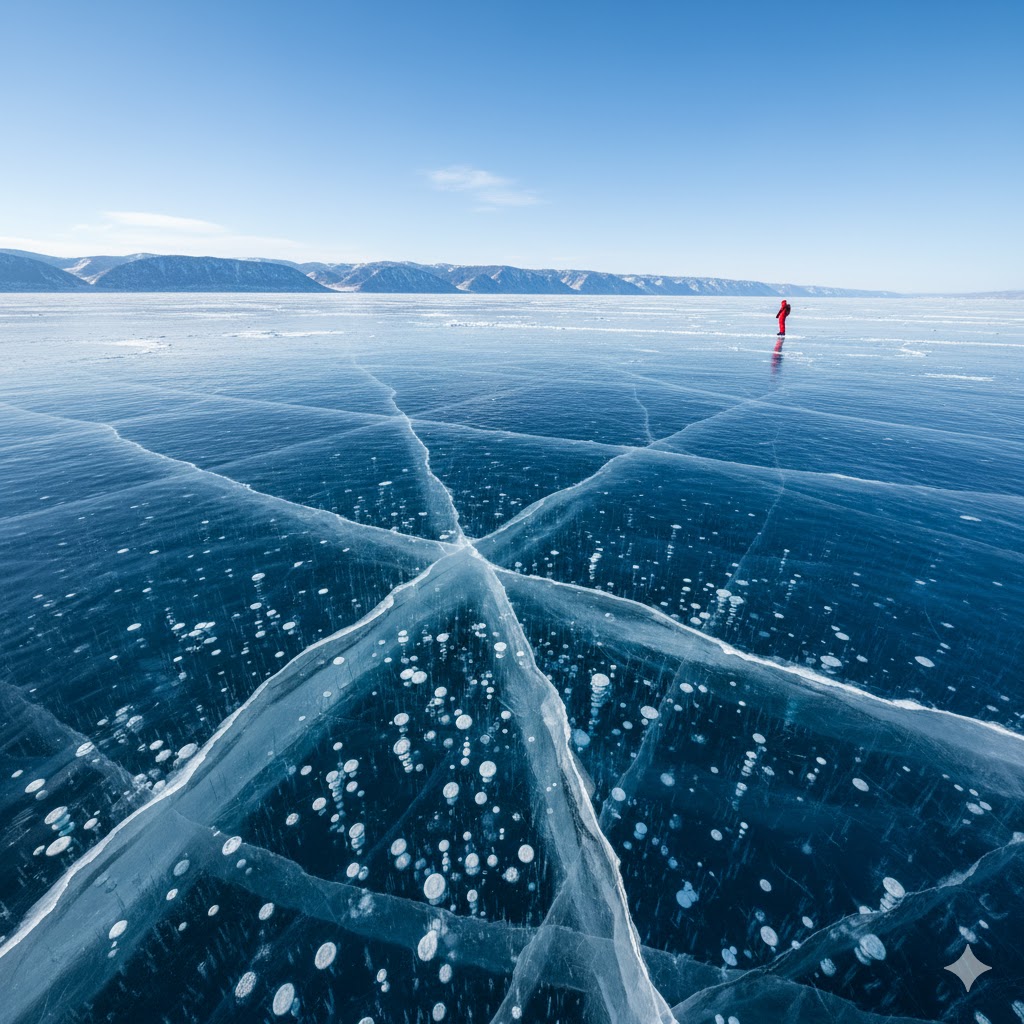
44. Lake Baikal — Russia (World’s Deepest Freshwater Lake) – World Record Travel
A natural wonder of staggering beauty, Lake Baikal is the world’s deepest and oldest freshwater lake, holding about 20% of Earth’s unfrozen freshwater.
Highlights
- Maximum depth of 1,642 meters.
- Home to the Baikal seal (nerpa), world’s only freshwater seal.
- UNESCO World Heritage Site.
History & Mystery
Locals call it the “Sacred Sea.” Legends say its waters possess healing powers; scientists study its unique biodiversity.
How to Reach
Fly to Irkutsk or Ulan-Ude and continue to Listvyanka or Olkhon Island.
Best Time to Visit
Winter (Jan–Mar) for ice phenomena; summer (June–Aug) for trekking and kayaking.
Hidden Gems & Local Tips
Try ice-walking tours or dog sledding on frozen Baikal in winter.
Local Food Experience
Taste omul fish, smoked fresh from the lake.
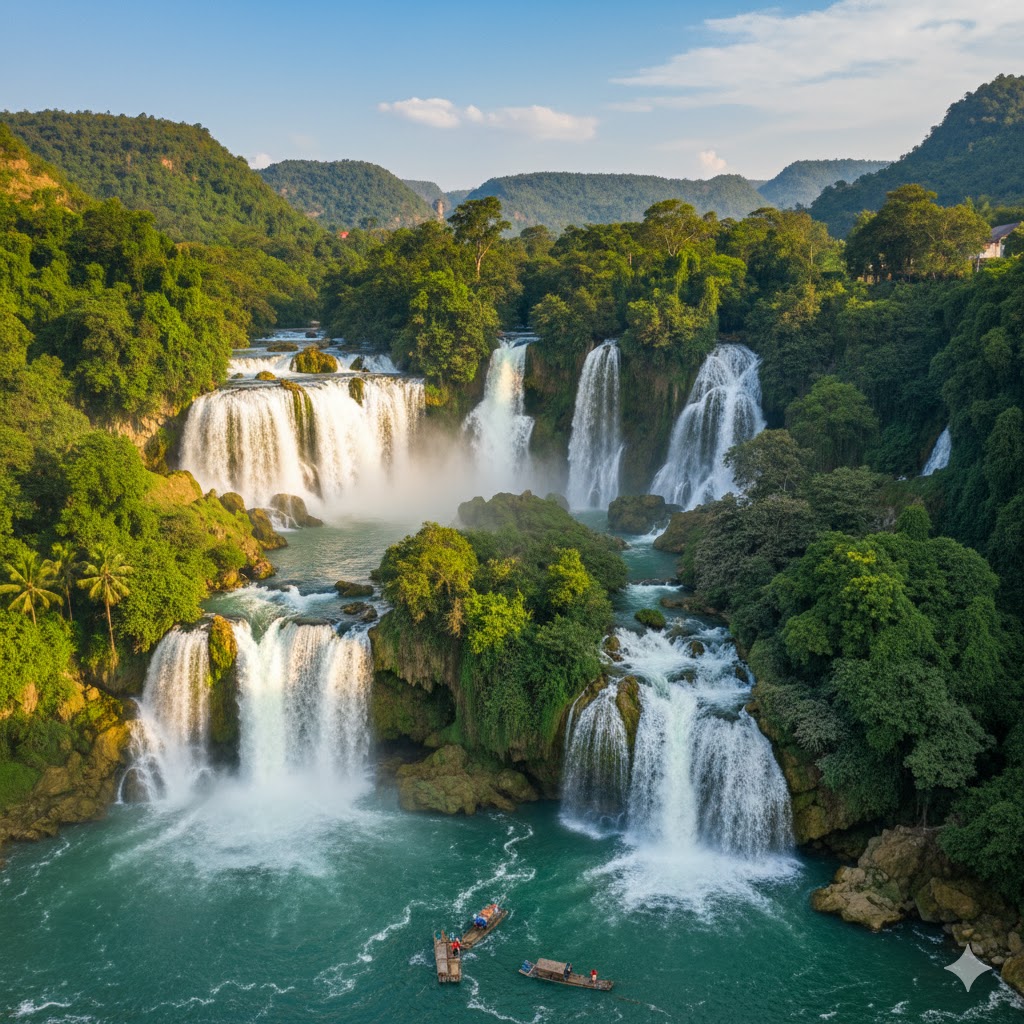
45. Ban Gioc–Detian Falls — Vietnam/China (Asia’s Largest Transnational Waterfall)
Cascading between two nations, Ban Gioc–Detian Falls forms Asia’s largest shared waterfall — a majestic multi-tiered wall of water surrounded by limestone karsts.
Highlights
- 70-meter height, 200-meter width.
- Shared between Vietnam and China.
- Bamboo raft rides offer close views.
History & Mystery
The falls mark centuries of border coexistence — a natural bridge of peace and trade between two ancient cultures.
How to Reach
From Cao Bằng (Vietnam) or Nanning (China) by road; 4–5-hour scenic drive.
Best Time to Visit
September–October for full flow and vivid greenery.
Hidden Gems & Local Tips
Take the cross-border raft for the best angle; carry dual-entry permits if visiting both sides.
Local Food Experience
Try sticky rice with grilled fish and bamboo shoots in local eateries.
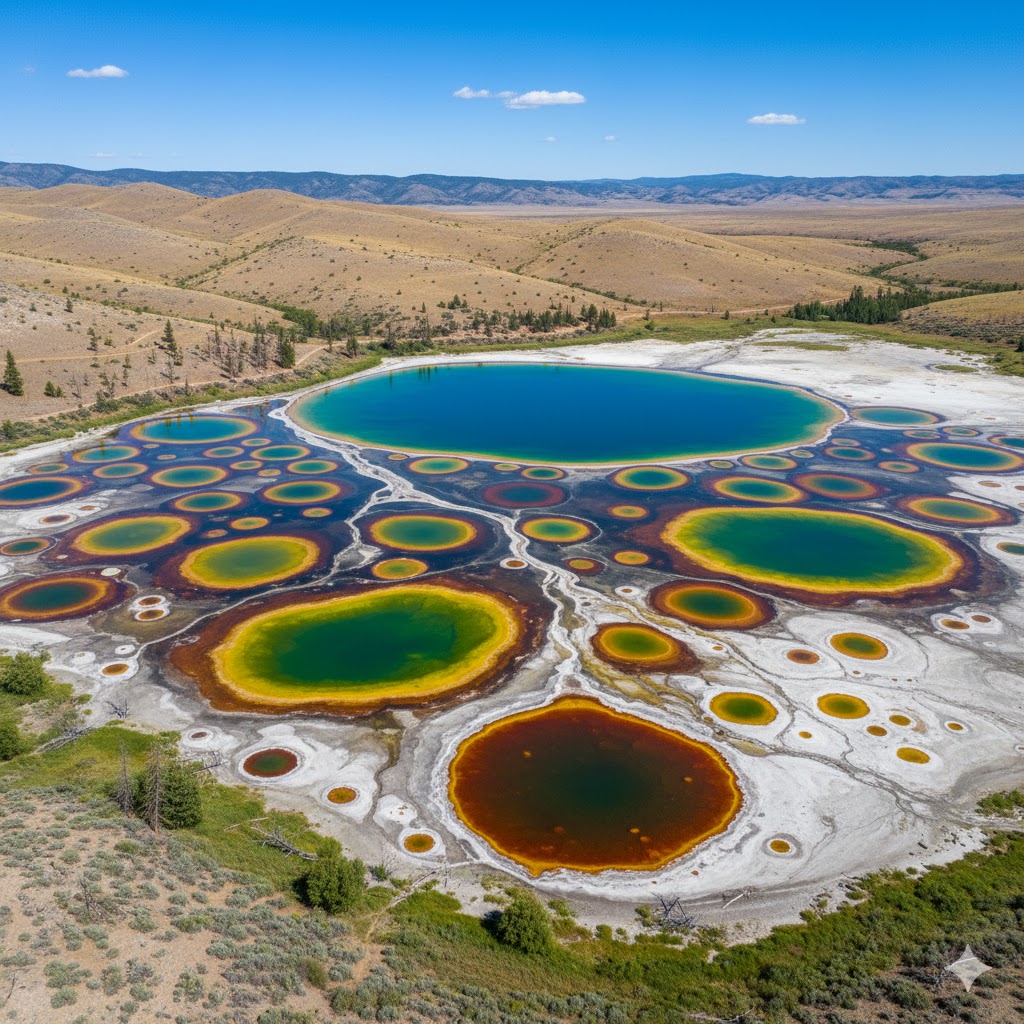
46. Spotted Lake — British Columbia, Canada (World’s Most Mineral-Rich Lake)
During summer evaporation, Spotted Lake (Khiluk) transforms into hundreds of colorful mineral pools, earning its title as the world’s most mineral-rich lake.
Highlights
- Naturally separated mineral pools of magnesium, calcium, and sodium.
- Sacred to the Okanagan people for healing rituals.
- Vibrant color change across seasons.
History & Mystery
The First Nations tribes considered it a sacred medicine lake long before scientific study recognized its unique composition.
How to Reach
Located near Osoyoos along Highway 3; accessible viewpoint off the main road.
Best Time to Visit
July–September for visible mineral “spots.”
Hidden Gems & Local Tips
Respect local spiritual importance — avoid stepping beyond designated viewpoints.
Local Food Experience
Taste Okanagan orchard fruits and local wines.
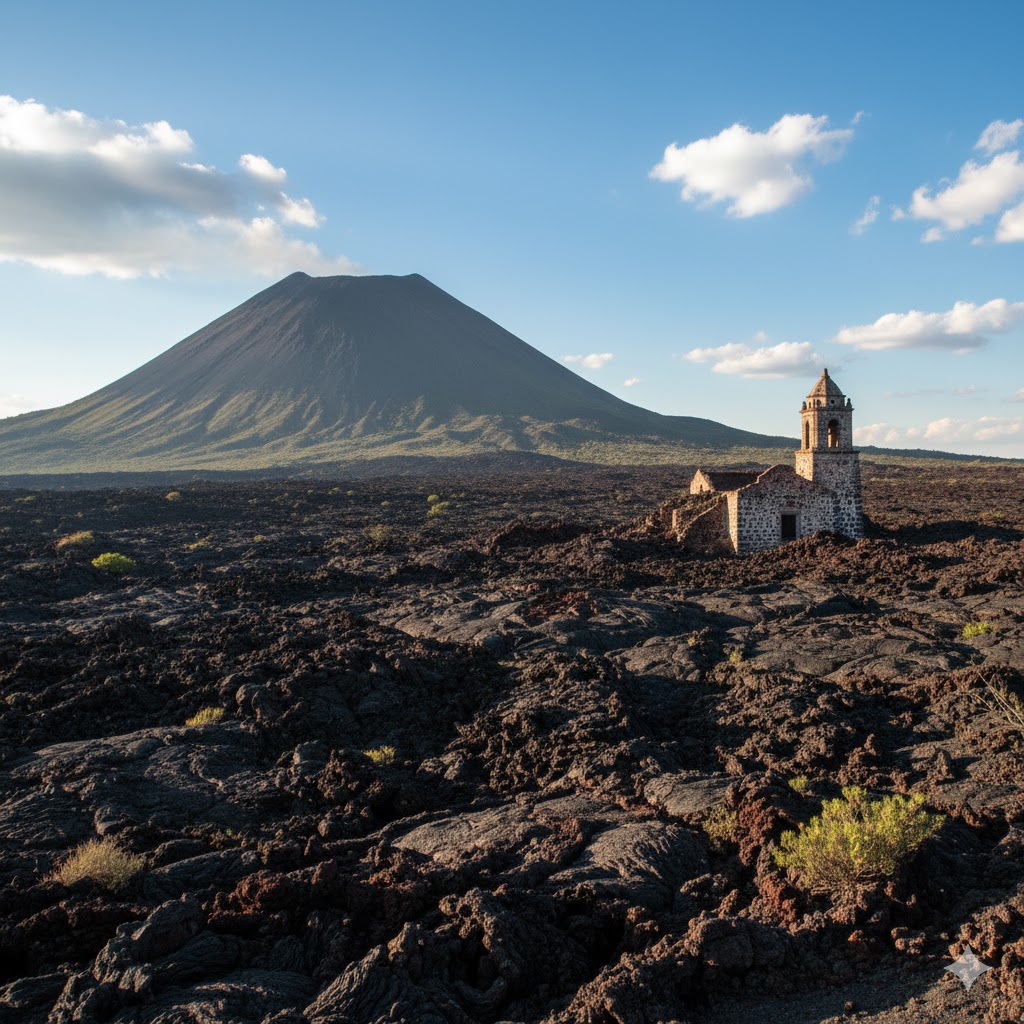
47. Parícutin Volcano — Michoacán, Mexico (World’s Youngest Volcano)
Born suddenly in 1943 from a farmer’s field, Parícutin is the world’s youngest volcano, offering a rare opportunity to witness geology in motion.
Highlights
- Emerged in 1943 and grew 424 meters within 9 years.
- Lava-buried church remains partially visible.
- UNESCO-listed volcanic landscape.
History & Mystery
Eruption began with smoke and tremors witnessed by farmer Dionisio Pulido; scientists documented its entire life cycle.
How to Reach
Near Uruapan, accessible by road and short hike or horseback.
Best Time to Visit
November–April (dry season) for clearer trails.
Hidden Gems & Local Tips
Climb the volcanic cone for sweeping views of the buried town.
Local Food Experience
Try corundas (tamale-like dish) and avocado ice cream in local markets.
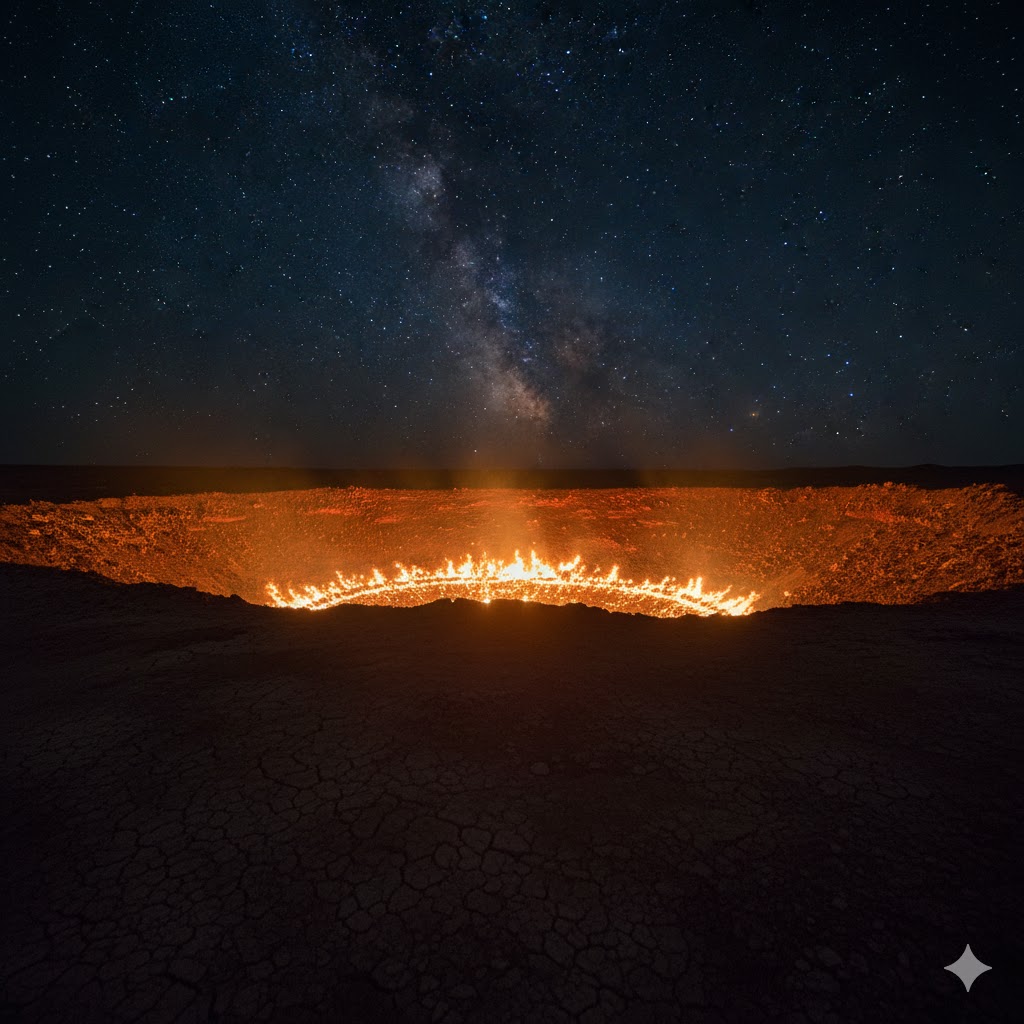
48. The Door to Hell — Derweze, Turkmenistan (World’s Longest Burning Gas Crater)
Known as the Door to Hell, this fiery pit has burned continuously since 1971, making it the longest-burning natural gas crater in the world.
Highlights
- Diameter ~70 meters, blazing orange glow day and night.
- Iconic desert camping destination.
- Natural gas vent collapsed during drilling.
History & Mystery
Soviet engineers ignited the crater to prevent methane release — it has burned ever since, symbolizing both human error and wonder.
How to Reach
Drive 3.5 hours from Ashgabat into the Karakum Desert.
Best Time to Visit
Spring (Mar–May) and autumn (Sept–Nov) for mild desert nights.
Hidden Gems & Local Tips
Camp nearby at dusk for unforgettable night photography.
Local Food Experience
Desert-cooked kebabs and fresh flatbreads by campfire.
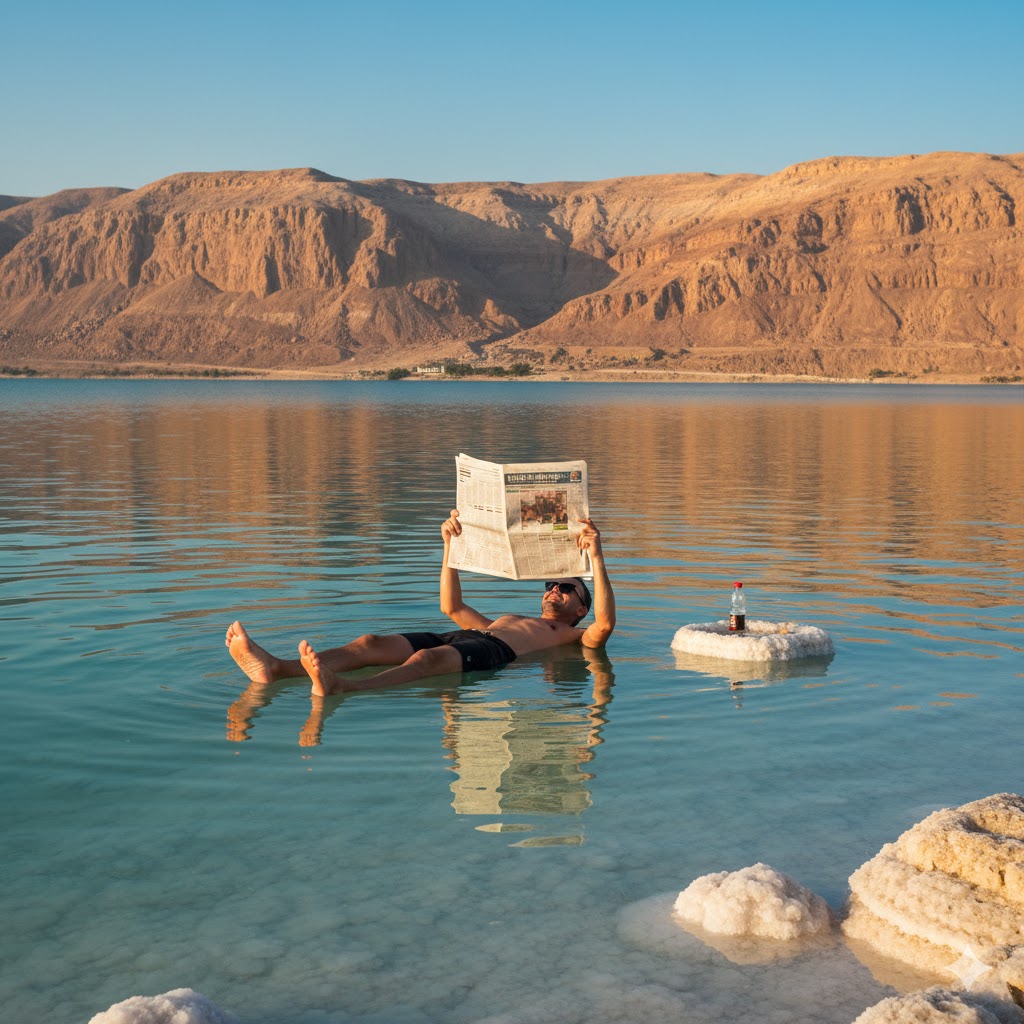
49. The Dead Sea — Jordan/Israel (World’s Lowest Point on Land) – World Record Travel
The Dead Sea sits 430 meters below sea level, Earth’s lowest exposed land point, where buoyancy defies gravity and minerals rejuvenate the skin.
Highlights
- High salinity lets you float effortlessly.
- Rich in therapeutic minerals.
- Historical significance in Abrahamic religions.
History & Mystery
Mentioned in ancient texts, this hypersaline lake has attracted visitors for millennia seeking health and spiritual peace.
How to Reach
From Amman or Jerusalem, 1-hour drive by scenic desert highways.
Best Time to Visit
October–April for comfortable temperatures.
Hidden Gems & Local Tips
Avoid shaving before swimming — the salt stings! Visit nearby Qumran Caves (Dead Sea Scrolls site).
Local Food Experience
Try falafel, hummus, and fresh pomegranate juice from roadside stalls.
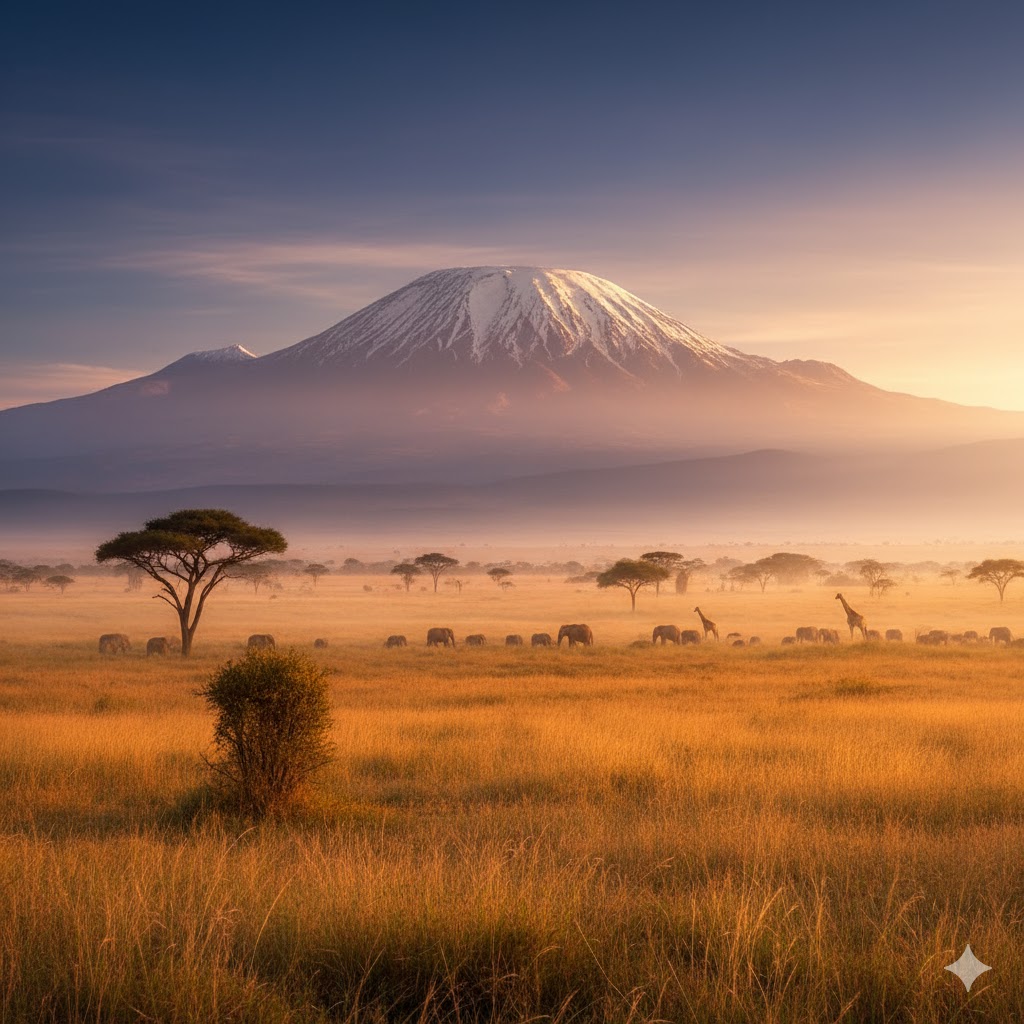
50. Mount Kilimanjaro — Tanzania (World’s Tallest Free-Standing Mountain)
Rising in majestic solitude, Mount Kilimanjaro is the world’s tallest free-standing mountain, soaring 5,895 meters above the African plains.
Highlights
- Snow-capped summit at the equator.
- Multiple climbing routes — Marangu, Machame, Lemosho.
- UNESCO World Heritage ecosystem.
History & Mystery
Local Chagga legend calls it “Mountain of Greatness,” home to spirits guarding snow and rain.
How to Reach
Fly to Kilimanjaro International Airport (JRO) near Moshi/Arusha; guided treks 6–9 days.
Best Time to Visit
January–March and June–October for dry, clear ascents.
Hidden Gems & Local Tips
Acclimatize well; take a slower route for success and health. Hire certified Tanzanian guides.
Local Food Experience
Enjoy nyama choma (grilled meat) and banana stew post-climb celebration.
Traveler Guide: World Record Travel Wonders
Travel is more than seeing sights — it’s touching the edges of what seems impossible. From waterfalls that roar louder than thunder to caves that could fit skyscrapers, these record-breaking wonders remind us how small — yet extraordinary — the world truly is.
Each destination in this series isn’t just a “place”; it’s a story written by nature and time, whispering to travelers who seek awe, courage, and curiosity. Whether you chase the highest peaks or walk the narrowest lanes, remember — the record is not just in the land but in the journey itself.

FAQs – World Record Travel Desintations
Q1. What is the best time to explore world record travel destinations?
It varies — tropical wonders like Socotra or Thailand are best from October to April, while icy landscapes like Norway’s frozen waterfalls shine in winter (December–March).
Q2. Are these destinations suitable for family travel?
Most are, though a few (like volcanic hikes and deep caves) require fitness and professional guides for safety.
Q3. How can I plan a “world record travel” route efficiently?
Use multi-destination flight tools or global rail passes. Combine by continent — e.g., Asia (China–Thailand–Vietnam), Europe (Norway–Spain–Italy).
Q4. Do I need special permits or guides for extreme sites?
Yes — caves, restricted islands, and national parks often need local permissions. Hiring certified local guides ensures cultural respect and safety.