
There are landscapes that feel like they belong to another planet, places so surreal they can’t possibly be real. Salar de Uyuni, the world’s largest salt flat, is undeniably one of those places.
Located high in the Andes of southwest Bolivia, Salar de Uyuni stretches endlessly on a 10,000 square kilometer (3,900 sq mi) salty expanse that reflects the sky like an endless mirror. Whether you’re a photographer chasing the perfect reflection shot, a curious traveler seeking the unknown, or an adventurer longing to explore nature’s most spectacular illusions — this place is made for you.
In this in-depth travel guide, you will discover the fascinating stories, mysteries, and practical travel information to plan a once-in-a-lifetime trip to Bolivia’s most otherworldly attraction.
What Makes Salar de Uyuni So Special?
- The World’s Largest Salt Flat on Earth
- A landscape made entirely of salt crust
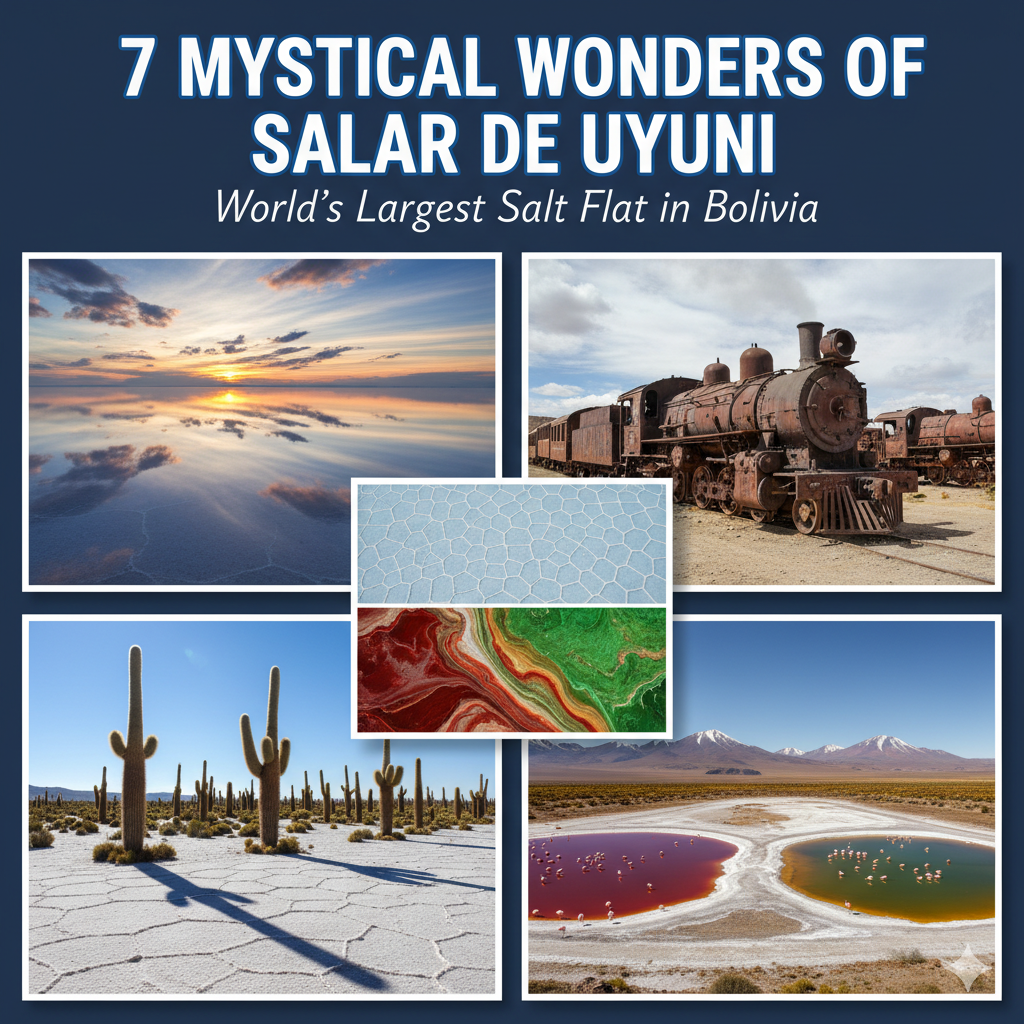
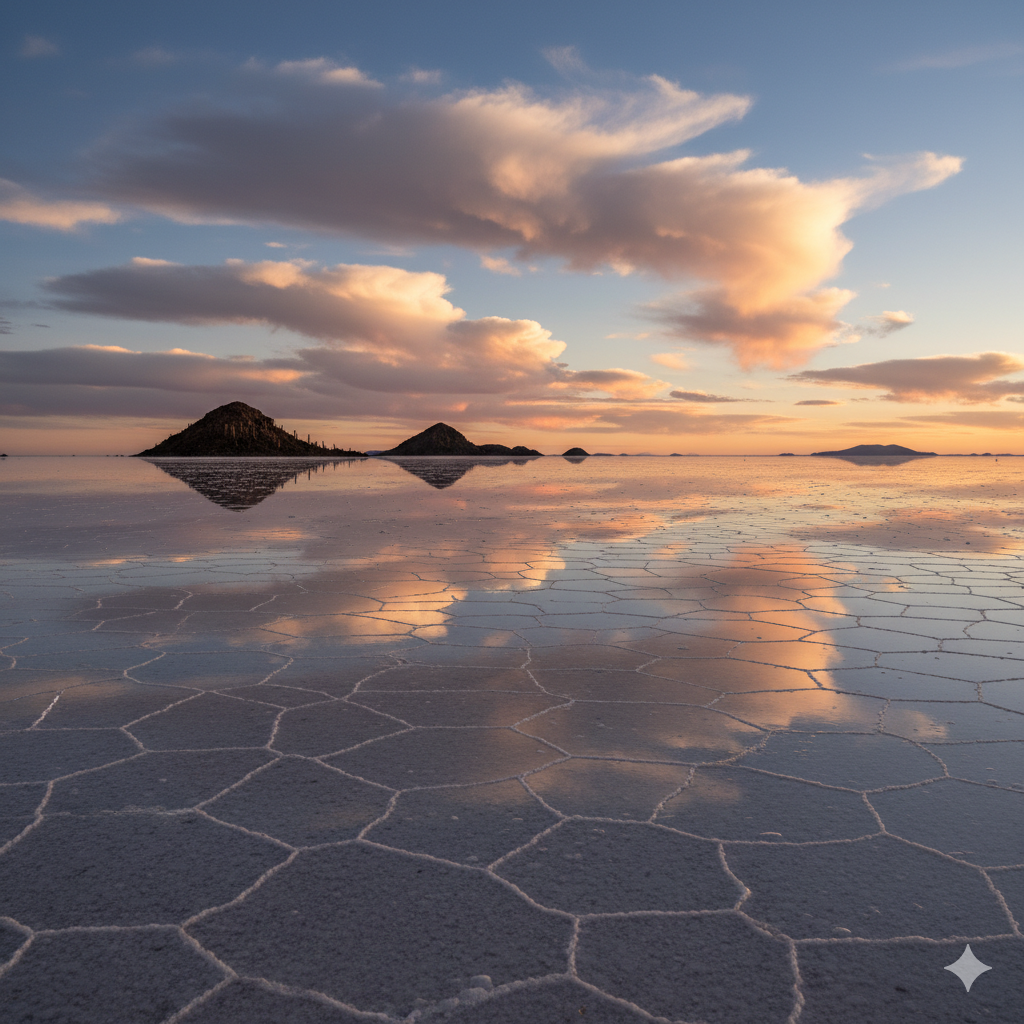
- A magical “mirror effect” during the rainy season
- Home to rare wildlife like pink flamingos
- A gateway to vivid red and green high-altitude lakes
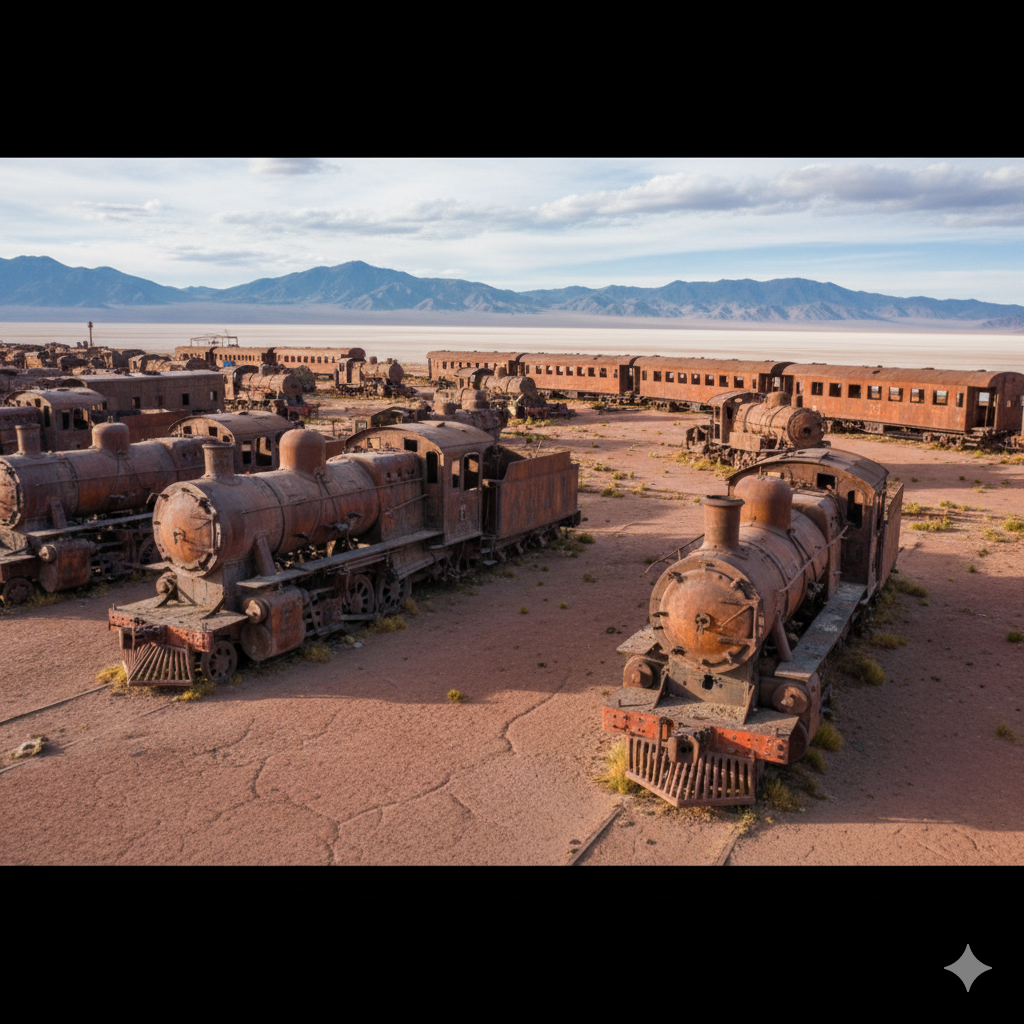
- The final resting place of rusted trains in the “Cementerio de Trenes”
- A major source of lithium (what powers your phone and EV)
Brief History of Salar de Uyuni
Salar de Uyuni wasn’t always a salt flat. Millions of years ago, it was part of a prehistoric lake called Lago Minchin. Over time, the lake dried up, leaving behind massive salt deposits — up to 10 meters deep.
Local legends also play their part. In Aymara mythology, the salt flat was created from the tears and milk of a giant goddess named Tunupa after she lost her child. Her “tears” formed the salt that remains today.
The Mystery of Salar de Uyuni
With its flawless horizon and overwhelming silence, Salar de Uyuni feels less like earth and more like a dream. The salt desert is so perfectly flat, it has been used by NASA to calibrate satellites in space. That’s right — this white desert is helping guide space missions.
Optical Illusions
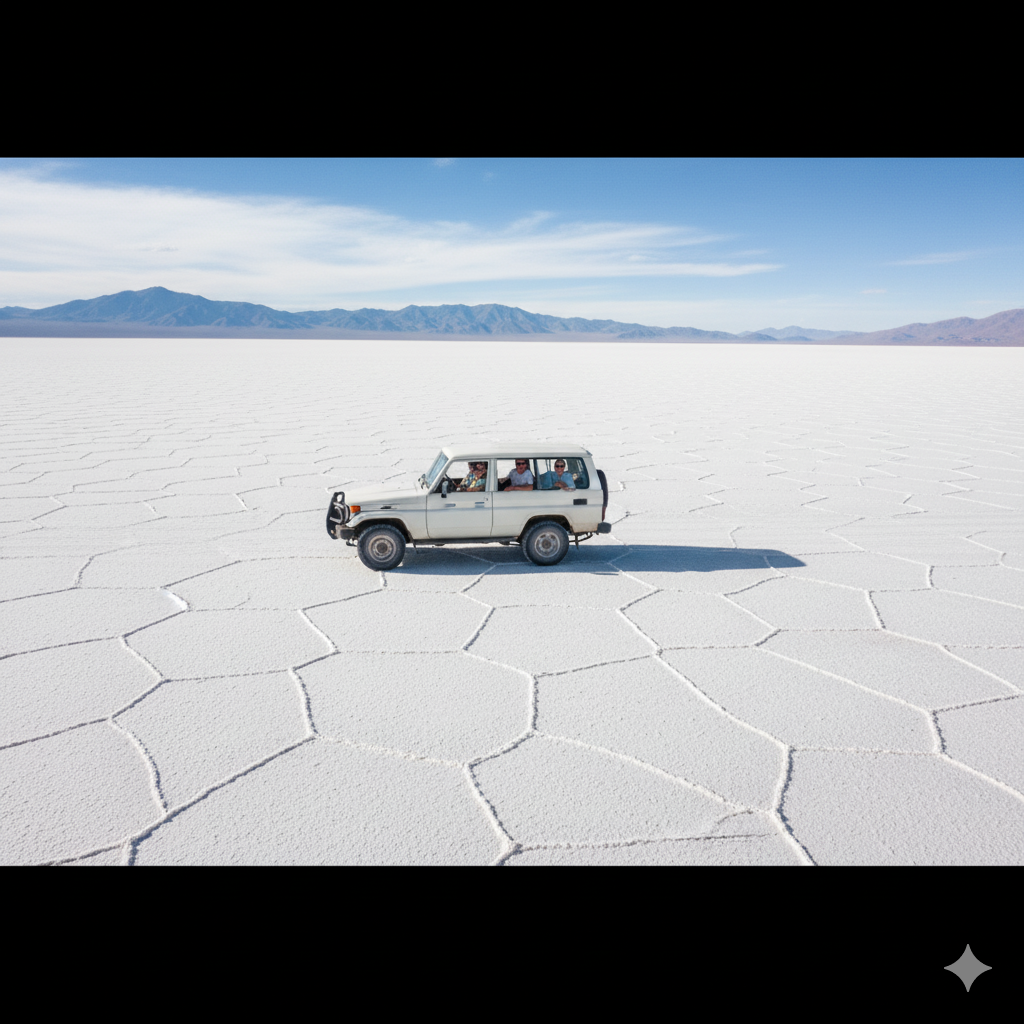
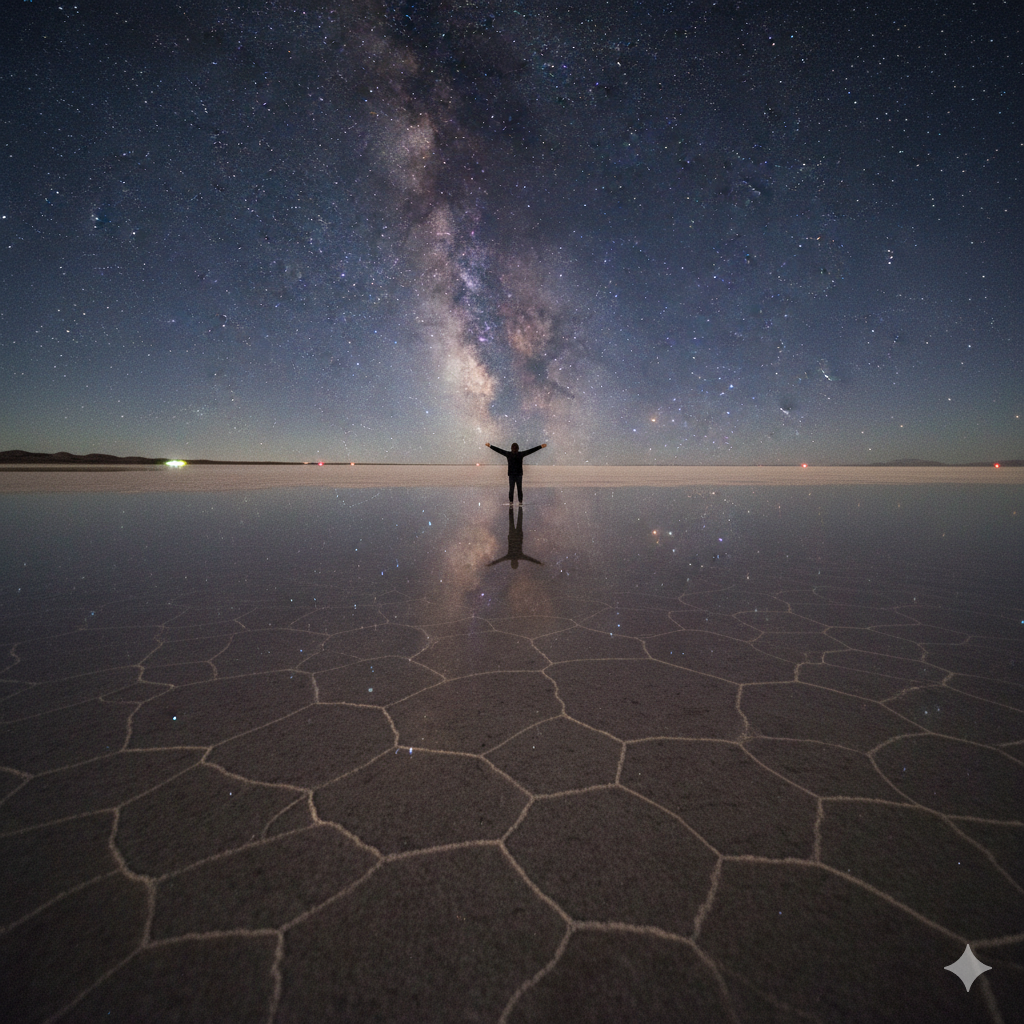
The dry season brings sharp geometric patterns in the salt. But when it rains, the flat turns into a giant mirror that reflects the sky. It’s almost impossible to know where earth ends and sky begins — a natural optical illusion only found here.
How to Reach Salar de Uyuni
Step 1: Fly to Bolivia
Most travelers start from Bolivia’s capital, La Paz, or Sucre. From La Paz, you can take:
- Direct flight to Uyuni (approx. 1 hour)
- Overnight bus (approx. 8–10 hours)
Step 2: Travel to Uyuni Town
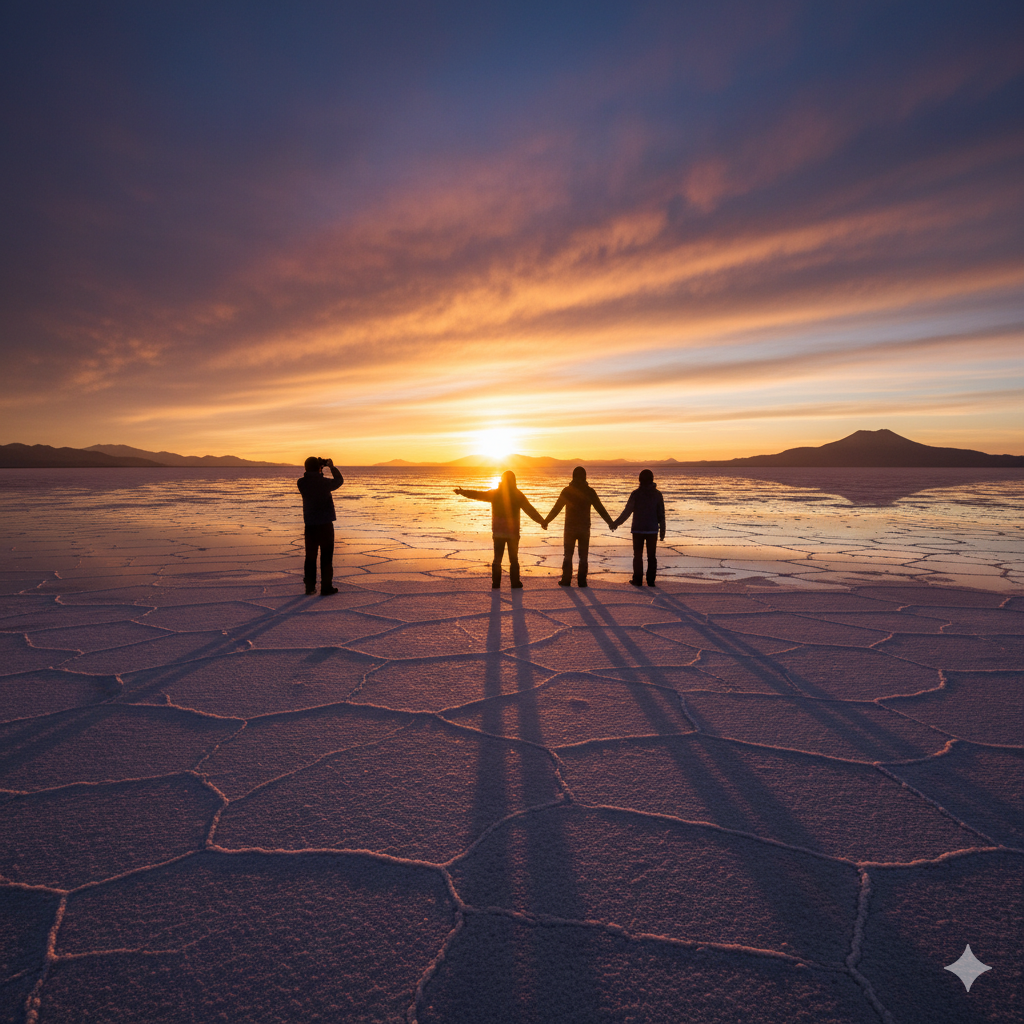
Uyuni town is the base for all tours. You can book a guided 4×4 Jeep tour ranging from 1–4 days. Tours typically include transportation, meals, and accommodation.
Tickets, Fees & Tour Options
| Type of Experience | Cost (USD) | Duration |
|---|---|---|
| 1-Day Salt Flat Tour | $30–60 | 8 hours |
| 3-Day Salt Flat & Lagoons | $180–250 | 3 days |
| Private Photography Tour | $300–450 | 1–2 days |
Entrance Fees:
- Incahuasi Island: ~$5 USD
- Eduardo Avaroa National Reserve: ~$20 USD (for multi-day tours)
Tip: Always check if meals, accommodation, and transportation are included.
Source:
- Bolivia Tourism Board – Official Site
- Lonely Planet – Salar de Uyuni Travel Guide
Best Time to Visit Salar de Uyuni
| Season | What to Expect |
|---|---|
| December – April | Wet season, mirror effect, cloudy reflections |
| May – November | Dry season, crystal patterns, starry night skies |
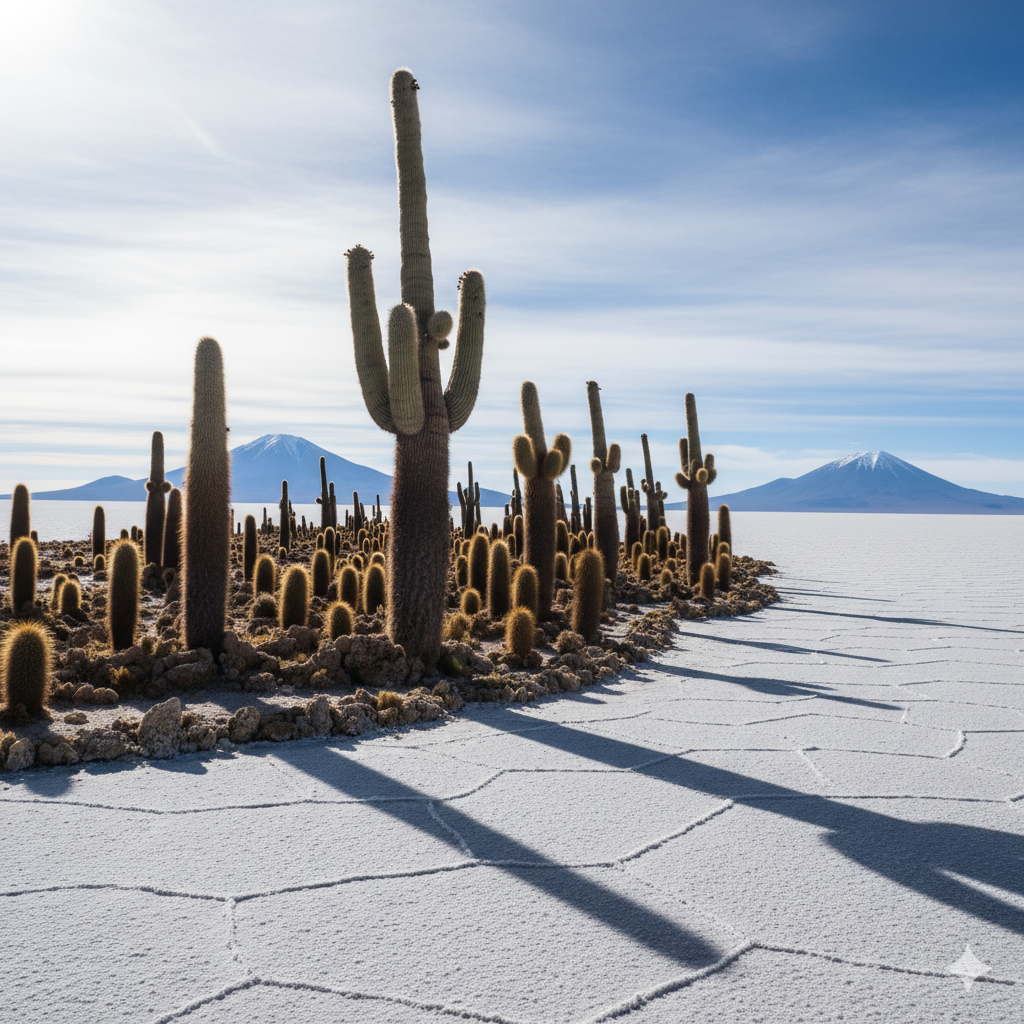
If you’re dreaming of that perfect mirror effect photo and don’t mind the rain, visit January–March. For clear skies and better stargazing, choose June–September.
Hidden Gems Not to Miss
Incahuasi Island
A rocky island full of 1,000+ year old giant cacti in the middle of the salt flats.
Train Graveyard
Near Uyuni town, you’ll find rusted trains lying abandoned in the desert — a post-apocalyptic scene perfect for Instagram.
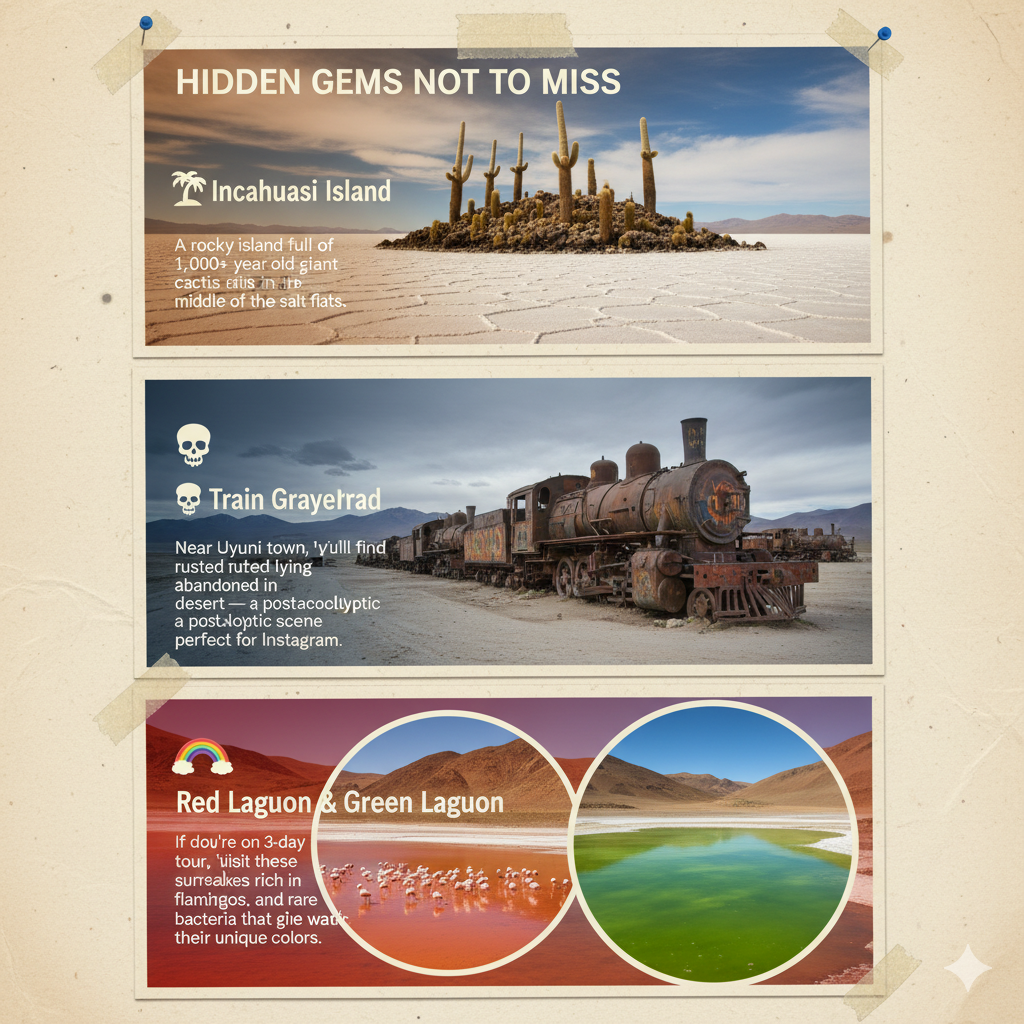
Red Lagoon & Green Lagoon
If you’re on a 3-day tour, you’ll visit these surreal lakes rich in minerals, flamingos, and rare bacteria that give the water their unique colors.
Local Food Experiences
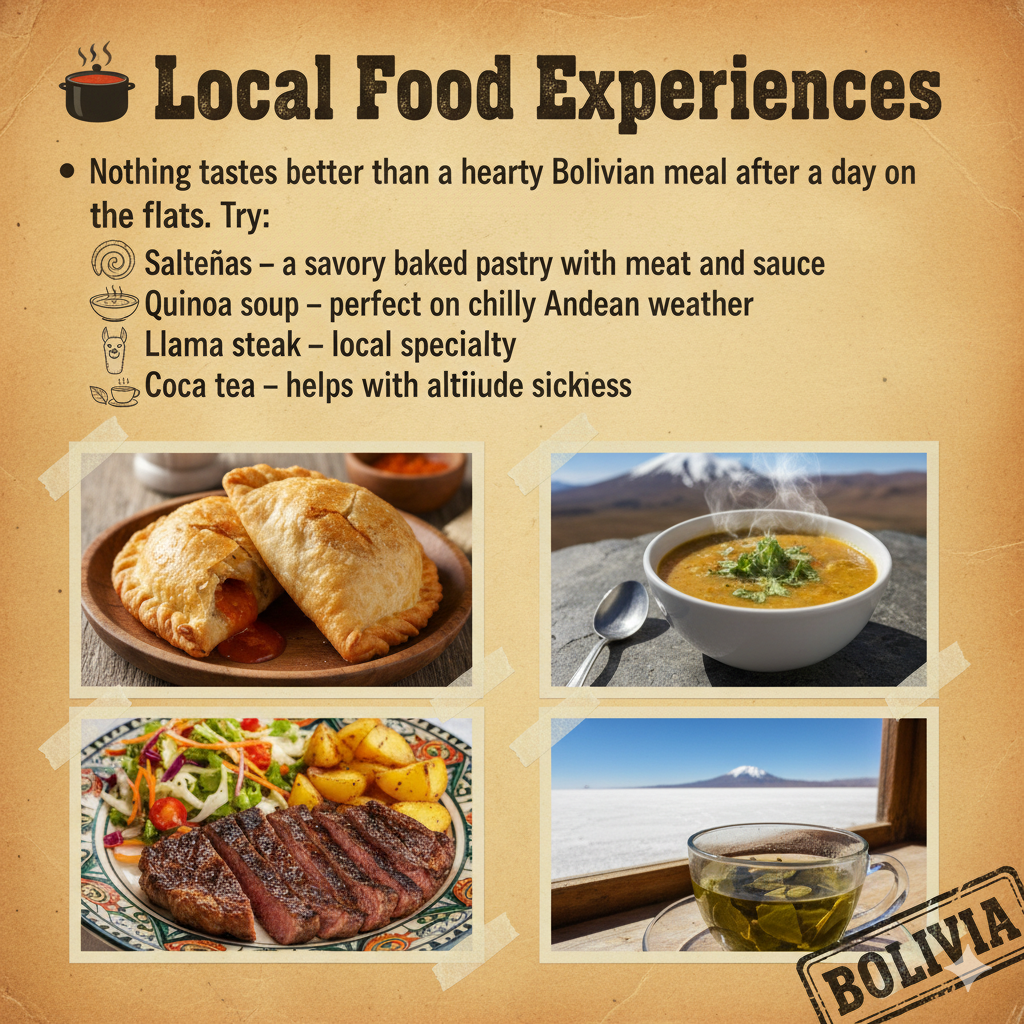
Nothing tastes better than a hearty Bolivian meal after a day on the flats. Try:
- Salteñas – a savory baked pastry with meat and sauce
- Quinoa soup – perfect for chilly Andean weather
- Llama steak – a local specialty
- Coca tea – helps with altitude sickness
If you’re visiting Uyuni town, don’t miss quinoa pizza and local produce markets for true Bolivian flavors.
Check Also: Vanuatu Underwater Mailbox – 7 Stunning Facts About the World’s Deepest Post Office
Local Talk: Useful Phrases
| Spanish Phrase | Meaning |
|---|---|
| Cuánto cuesta | How much does it cost? |
| Una foto, por favor | A photo, please! |
| Dónde está el baño | Where is the bathroom? |
| Gracias por todo | Thank you for everything |
Traveler – Why You Must Visit Salar de Uyuni
Salar de Uyuni is not just another destination — it’s a surreal world that defies all logic. From walking on sky-like mirrors to stargazing under infinite constellations, this is a place that stays with you forever. Whether you’re a photographer, explorer, or dreamer, Bolivia’s endless white desert invites you to rediscover wonder itself.
Frequently Asked Questions
1. Can you stay overnight on the salt flat?
Yes! Some tours offer overnight stays in salt hotels, where walls and beds are made from blocks of salt.
2. Is Salar de Uyuni safe for solo travelers?
Absolutely. Booking a group tour is the best way to explore safely.
3. How high is Salar de Uyuni?
Approximately 3,656 meters (11,995 ft) above sea level. Bring altitude medication or coca tea!
4. Is there internet at the salt flats?
No signal out on the flats. Disconnect and enjoy the silence.
5. What should I pack?
- Sunglasses
- Sunblock
- Warm jacket
- Camera & tripod
- Snacks & water
- Portable battery pack