
The Living Legend of tree Methuselah
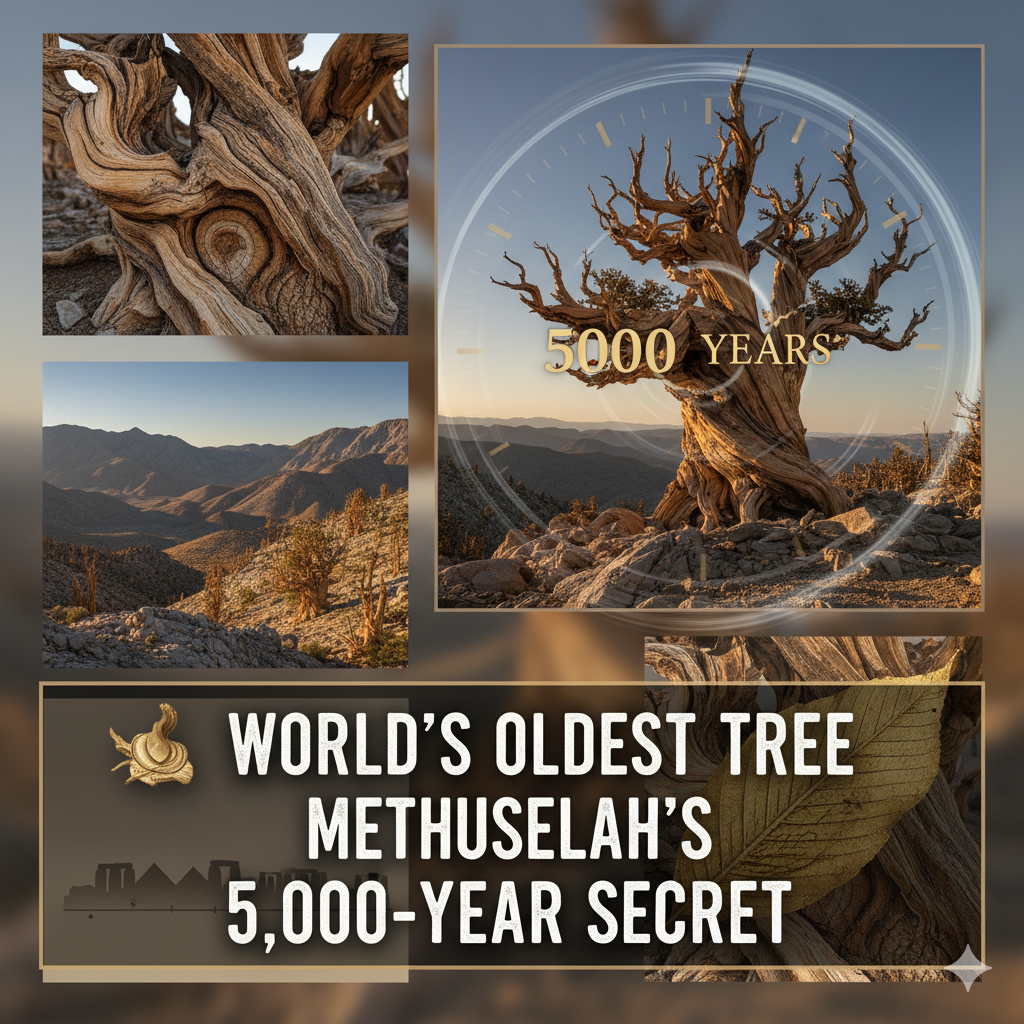
The world’s oldest tree, known as Methuselah, has been alive for nearly 5,000 years, silently witnessing the birth of human civilization. Before the pyramids touched the skies and before Stonehenge stood tall, Methuselah was already rooted deep in the mountains of California—thriving against snow, wind, and time itself.
Hidden high within the White Mountains of California, this ancient bristlecone pine isn’t just a tree; it’s a living time capsule—one that holds the story of Earth’s resilience. And perhaps the most fascinating part? Its exact location remains a closely guarded secret.

In this article, we’ll uncover Methuselah’s 5,000-year-old secret, explore what makes it the oldest living organism on Earth, and discover the incredible lessons this ancient tree still whispers to us today.
Where Is Methuselah Located? – A Hidden Sanctuary in California
Methuselah grows in the White Mountains of eastern California, within the Inyo National Forest. It belongs to the species Pinus longaeva, commonly known as the Great Basin bristlecone pine—trees famous for their astonishing longevity and ability to thrive in extreme conditions.
But here’s the catch: the exact location of Methuselah is a secret.

The U.S. Forest Service has chosen not to reveal its coordinates to the public. Why? To protect it from vandalism, over-tourism, and souvenir-seekers who might unintentionally harm the ancient wonder.
A Landscape from Another World
The White Mountains are rugged, wind-sculpted, and breathtaking. At altitudes above 10,000 feet, conditions are harsh—icy winters, dry summers, and thin air. Yet, Methuselah thrives. It’s almost poetic how life endures where it’s least expected.
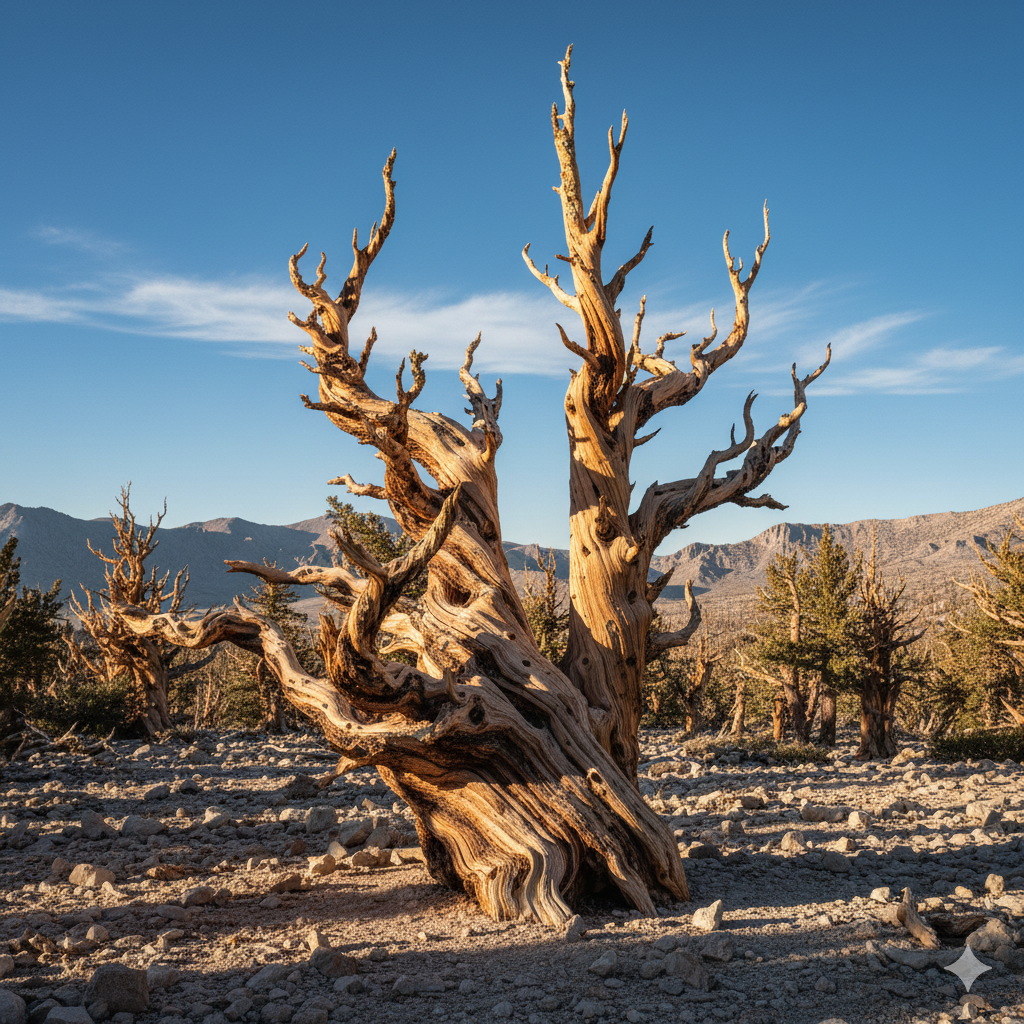
“In its silence lies a message: survival is not about strength, but adaptation.”
The Science Behind Its Longevity – Nature’s Time Machine
How can a tree live for five millennia? The answer lies in its biology, climate, and survival strategy.
1. Slow and Steady Growth
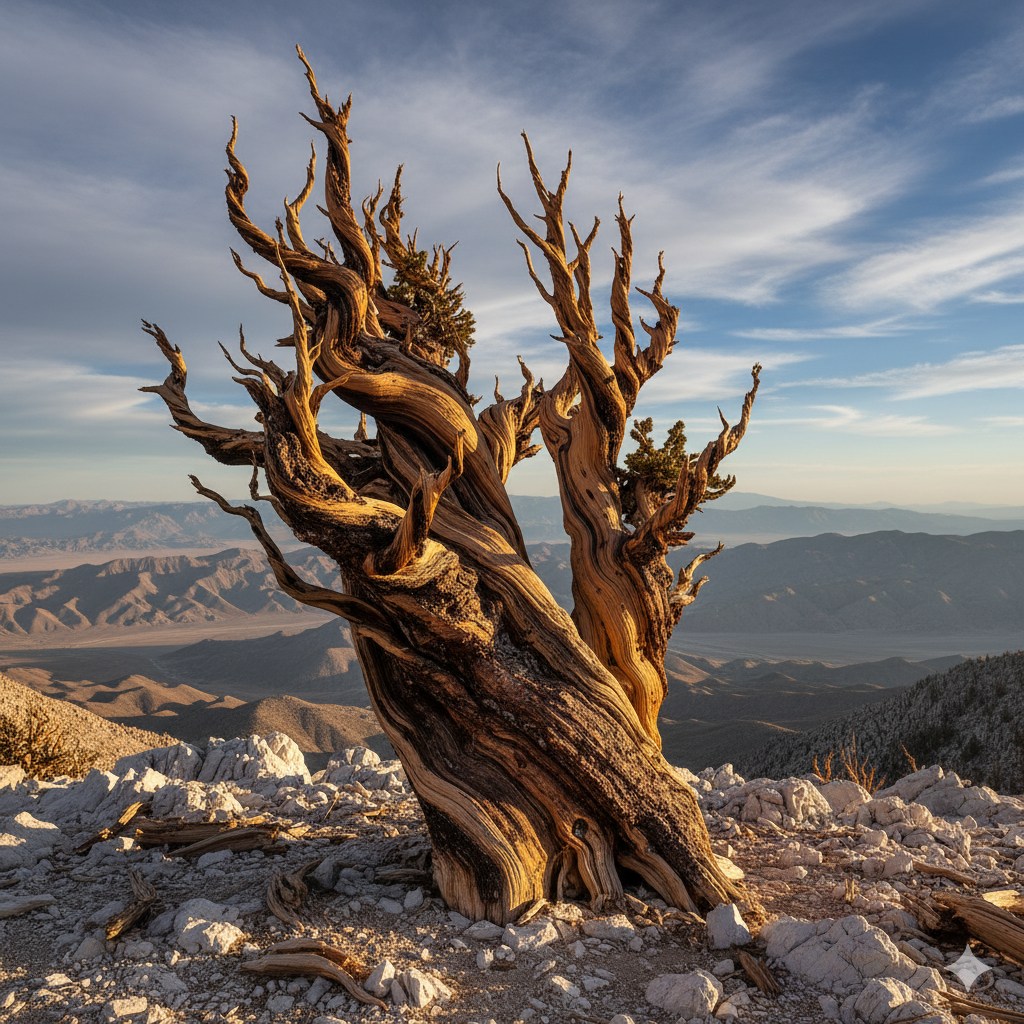
Methuselah grows incredibly slowly—sometimes less than a millimeter per year. This slow growth results in dense, resin-rich wood, resistant to rot and pests.
2. Natural Preservation
The cold, dry mountain air limits fungi and bacteria. Even dead sections of the tree remain intact for thousands of years.
3. Partial Life Strategy
Interestingly, much of Methuselah’s trunk is dead wood, yet parts of it continue to grow. This self-pruning process lets it survive even after losing large sections of bark.
4. Genetic Adaptation
Scientists studying Pinus longaeva have found unique genetic traits that promote stress tolerance and DNA repair—essential for long-term survival in extreme environments.
Methuselah isn’t just a tree—it’s a living biological archive, holding data about past climates, atmospheric changes, and ecological shifts dating back to prehistoric times.
Methuselah vs. Other Ancient Trees – A Battle Through Time
While Methuselah holds the title of world’s oldest known living non-clonal tree, it has ancient rivals.
| Tree Name | Location | Age (approx.) | Type | Notable Fact |
|---|---|---|---|---|
| Methuselah | California, USA | ~4,855–5,000 years | Bristlecone Pine | World’s oldest known tree |
| Prometheus (cut down) | Nevada, USA | 4,900+ years | Bristlecone Pine | Accidentally felled in 1964 |
| Old Tjikko | Sweden | 9,560 years | Spruce (clonal) | Oldest clonal tree |
| Llangernyw Yew | Wales | 4,000–5,000 years | Yew | Grows in a churchyard |
| Sarv-e Abarqu | Iran | 4,000 years | Cypress | National natural monument |
Key difference:
- Methuselah is non-clonal, meaning it’s the same individual tree living continuously.
- Old Tjikko is clonal, meaning new shoots have replaced the old trunk over time.
So, when it comes to single, continuous life — Methuselah reigns supreme.
Myths, Legends, and Symbolism of Methuselah
The name “Methuselah” comes from the Biblical patriarch Methuselah, said to have lived 969 years — the longest lifespan recorded in scripture. It’s a fitting name for a tree that has lived more than five times longer than its namesake.
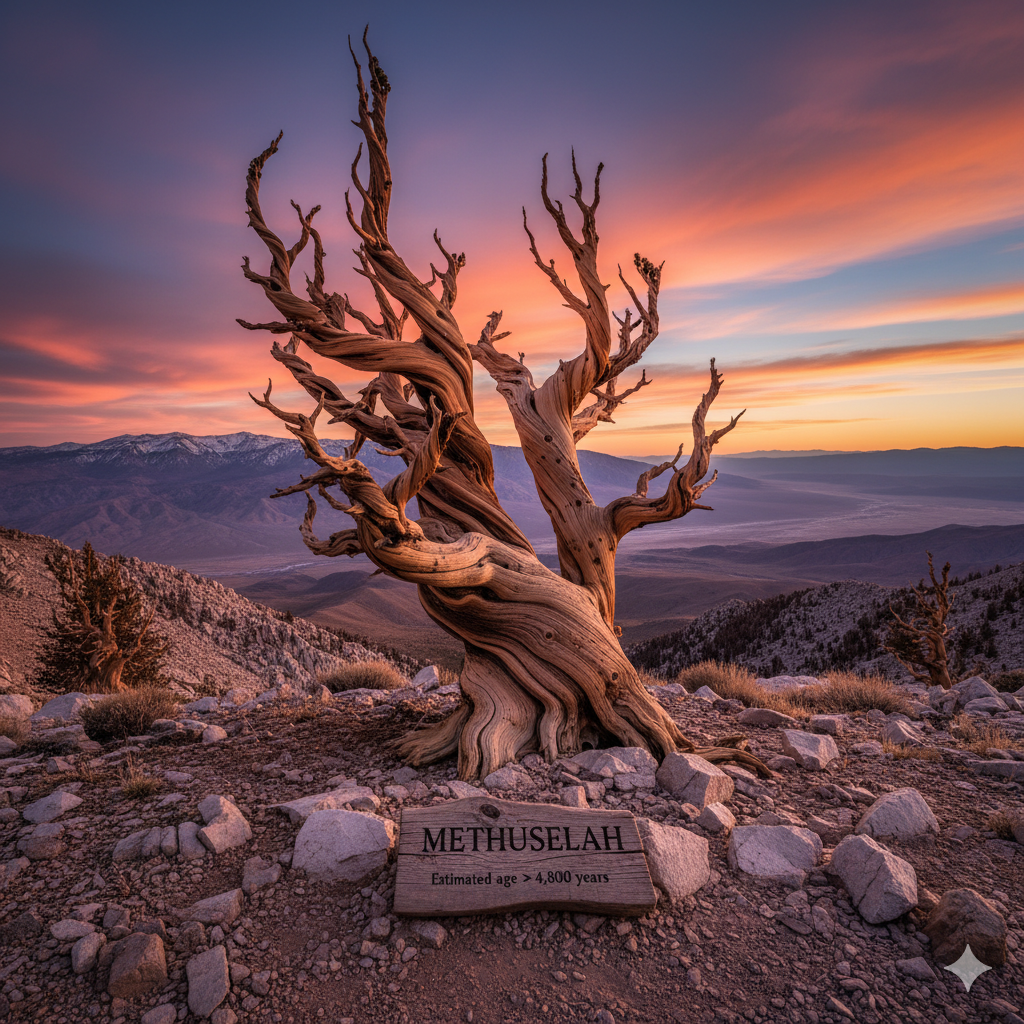
Throughout history, trees have been symbols of immortality, wisdom, and continuity. Ancient cultures—from Druids to Native Americans—viewed old trees as sacred beings, guardians of knowledge older than humankind.
In this sense, Methuselah is not just a tree—it’s a storyteller, silently recording the heartbeat of the planet for 50 centuries.
Preservation and Modern Scientific Studies
Tree Rings and Time Capsules
Dendrochronologists (tree-ring scientists) study Methuselah’s growth rings to understand ancient climate patterns. Each ring tells a story—of droughts, volcanic winters, and environmental shifts.

By comparing these rings with ice cores and fossil records, scientists have reconstructed 10,000 years of Earth’s climate—proving that trees are among nature’s most precise historians.
Protecting Methuselah in the Modern Era
To preserve Methuselah:
- Its location remains undisclosed.
- Access to surrounding areas is limited to designated trails.
- Researchers use non-invasive sampling methods to avoid damaging it.
The Inyo National Forest’s Ancient Bristlecone Pine Forest is now a protected sanctuary, not just for Methuselah but for its younger siblings—some of which are nearly as old.
What Methuselah Teaches Humanity
Amid modern chaos, Methuselah stands as a timeless symbol of patience and endurance.
1: Strength Lies in Adaptation
It thrives not by dominating its environment but by coexisting with it.

2: Longevity Comes from Simplicity
Methuselah doesn’t rush to grow or expand—it conserves energy and endures.

3: The Past Still Lives Within Us
Just as Methuselah carries ancient carbon from millennia past, humanity too carries echoes of history within its DNA.
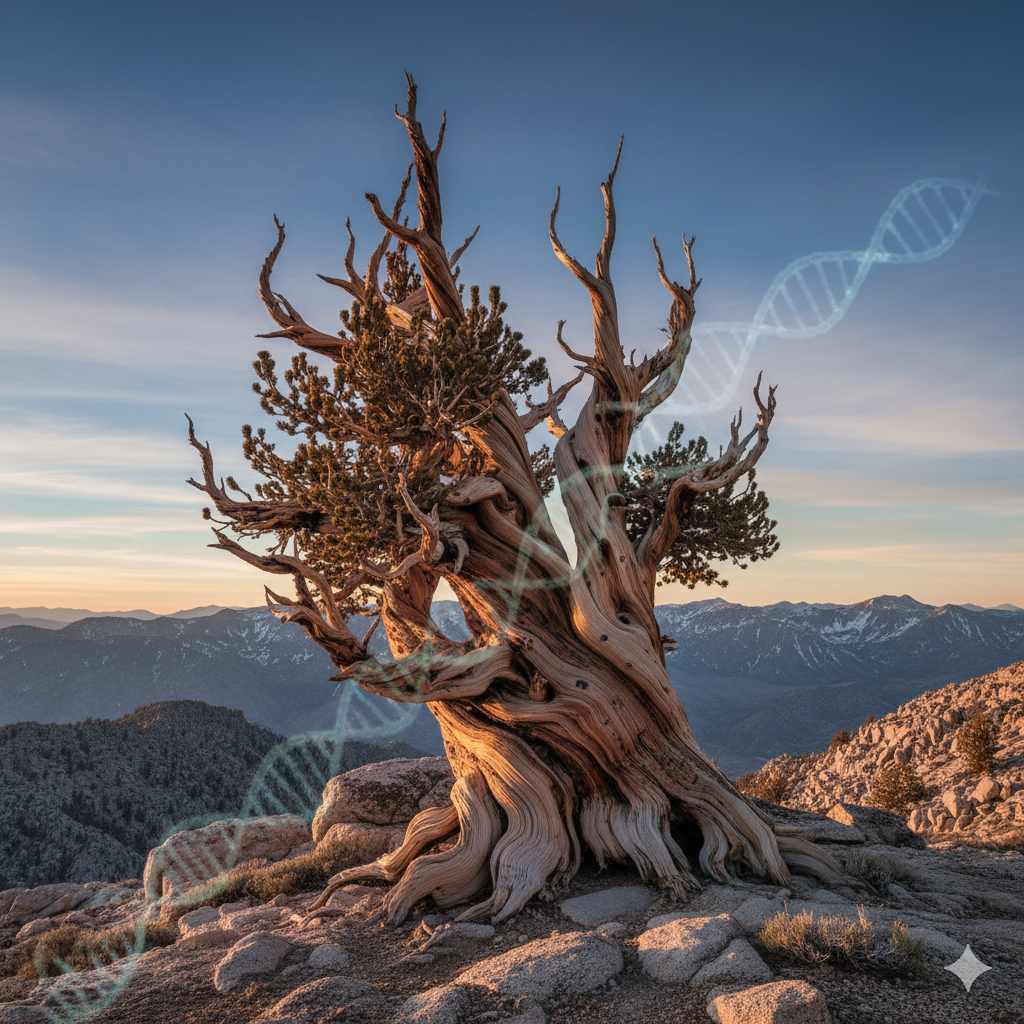
“If Methuselah could speak, it would remind us: time rewards those who listen, not those who rush.”
Check Also: 10 Magical Facts About the Ice Hotel Sweden – Rebuilt Anew Each Winter
How to Visit Methuselah (Without Harming Nature)
While Methuselah’s exact location is secret, you can still experience the Ancient Bristlecone Pine Forest in the Inyo National Forest, near Bishop, California.
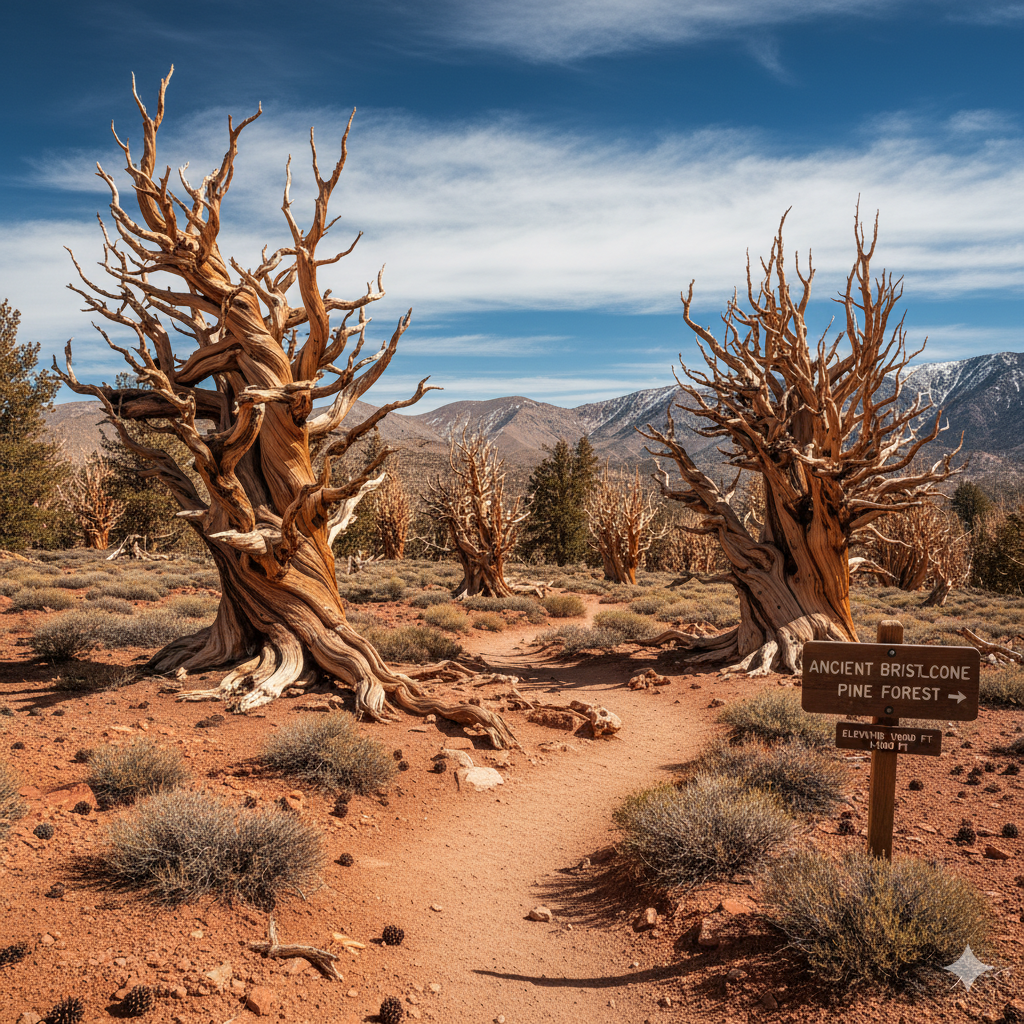
Travel Tips:
- Start at the Ancient Bristlecone Pine Forest Visitor Center in Schulman Grove.
- Follow the Methuselah Grove Trail (approx. 4.5 miles round trip).
- Respect signage—some areas are restricted for preservation.
- Carry plenty of water; altitude can exceed 10,000 ft.
- Never carve, break, or remove bark—these trees are extremely delicate.
This is a spiritual, almost meditative experience. Walking through groves of twisted, ancient trees feels like stepping into a living museum of Earth’s memory.
Source:
FAQs About Methuselah – The World’s Oldest Tree
Q1: Where exactly is Methuselah located?
The U.S. Forest Service keeps Methuselah’s exact location secret to protect it from harm. It’s in California’s White Mountains within Inyo National Forest.
Q2: How old is Methuselah?
Methuselah is estimated to be around 4,855 to 5,000 years old, making it the world’s oldest known non-clonal tree.
Q3: Can I visit the Methuselah tree?
You can visit the general Methuselah Grove Trail, but not the specific tree itself, as it’s unmarked for preservation.
Q4: Is Methuselah still alive today?
Yes, Methuselah is still alive and thriving despite its extreme age and environment.
Q5: What’s the secret behind its longevity?
Methuselah survives due to slow growth, dense wood, high altitude, dry climate, and unique genetic adaptations that prevent decay.
Traveler – World’s Oldest Tree – The Silent Witness of 5,000 Years
Methuselah stands as a living monument of time—a whispering reminder of nature’s patience and resilience.
It has witnessed the rise of human civilization, the fall of empires, the birth of modern science, and the dawn of space exploration—all without moving an inch.
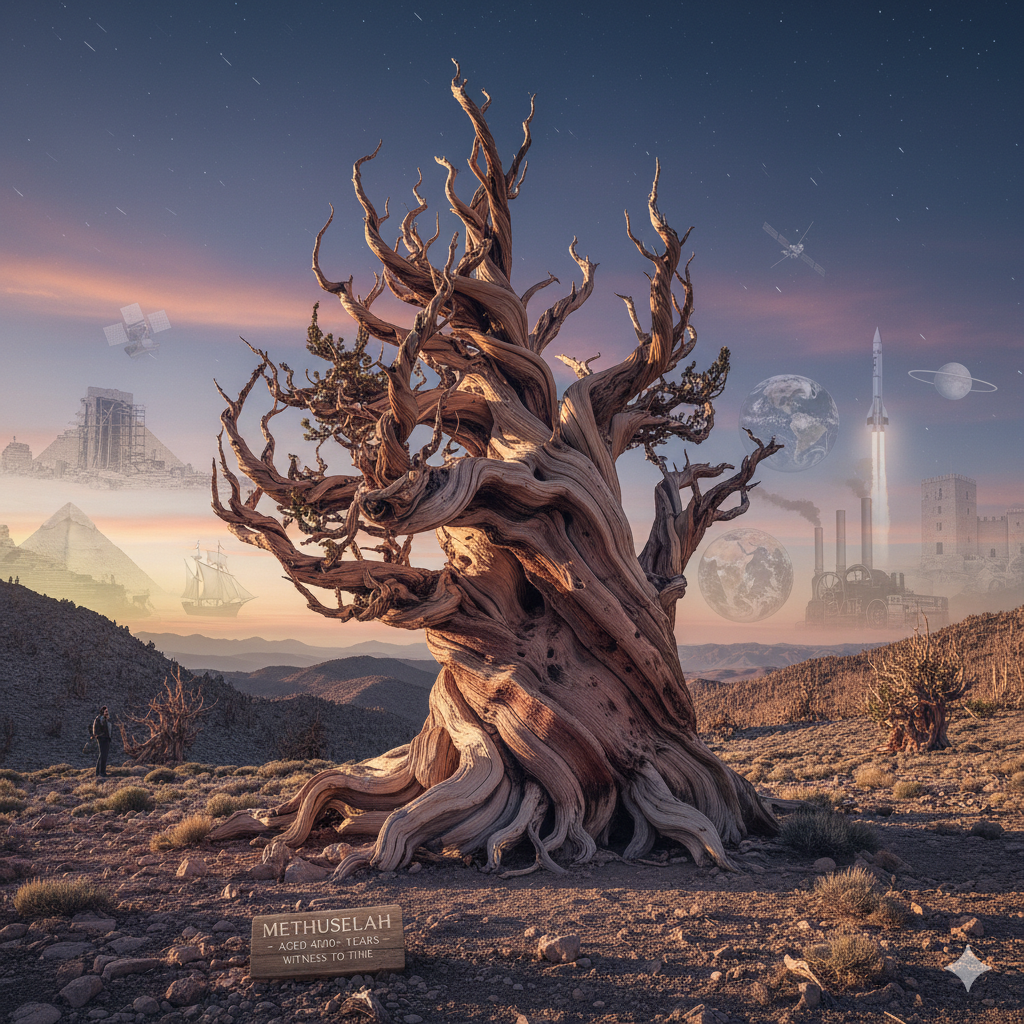
In a world obsessed with speed, Methuselah teaches the art of enduring quietly, growing slowly, and living meaningfully.
So next time you walk beneath a tree, remember:
It might be younger than Methuselah—but it still carries a piece of eternity within its roots.