
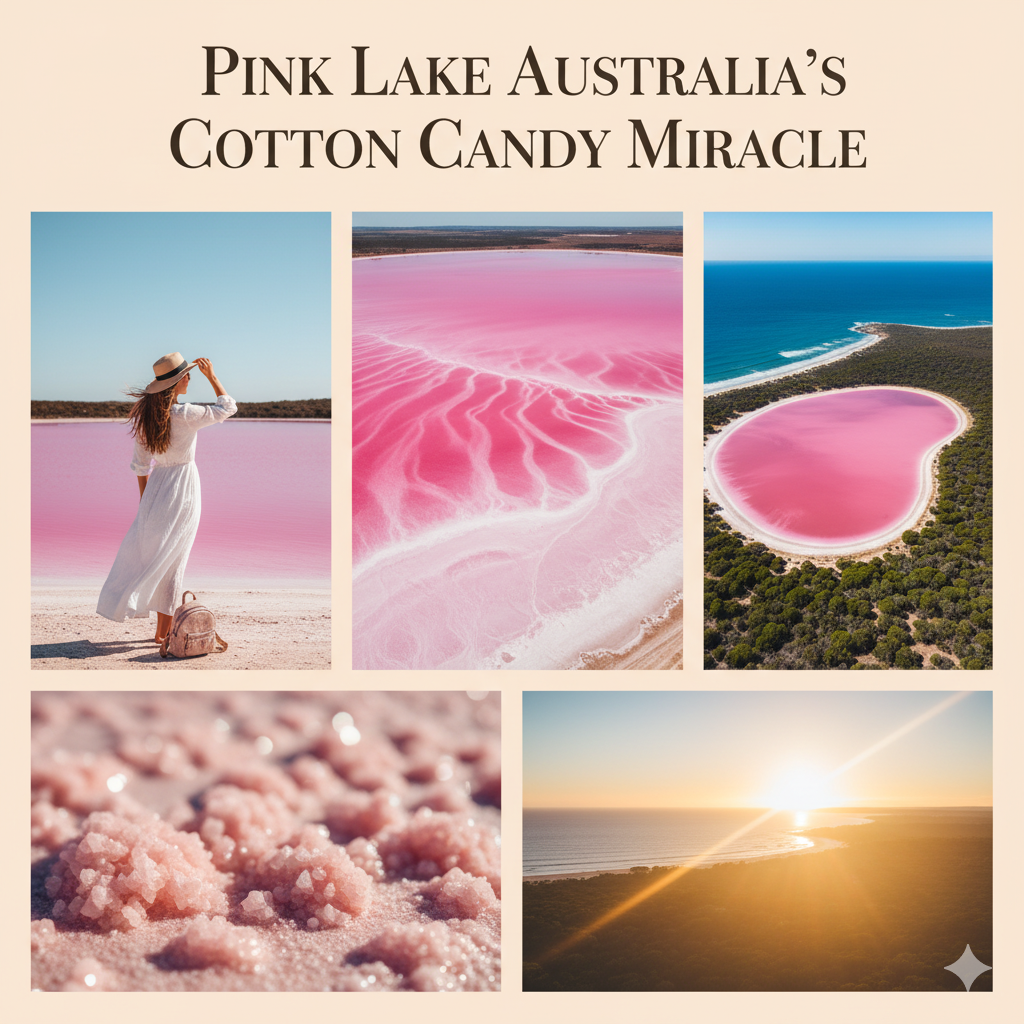

The Pink Lake Australia – Nature’s Cotton Candy Dream
Pink Lake Australia looks like something straight out of a fantasy film — a bright bubblegum-pink body of water surrounded by golden sand, green eucalyptus trees, and the deep blue ocean nearby.
It’s not a filter or Photoshop trick. It’s real.
And it’s one of the world’s most mind-blowing natural wonders.
In this article, we’ll explore 10 fascinating facts about Australia’s Pink Lake, reveal why it turns pink, and show you where and when you can see this mesmerizing cotton candy miracle for yourself.
There’s More Than One “Pink Lake” in Australia
Australia actually has multiple pink lakes, but the most famous ones are:
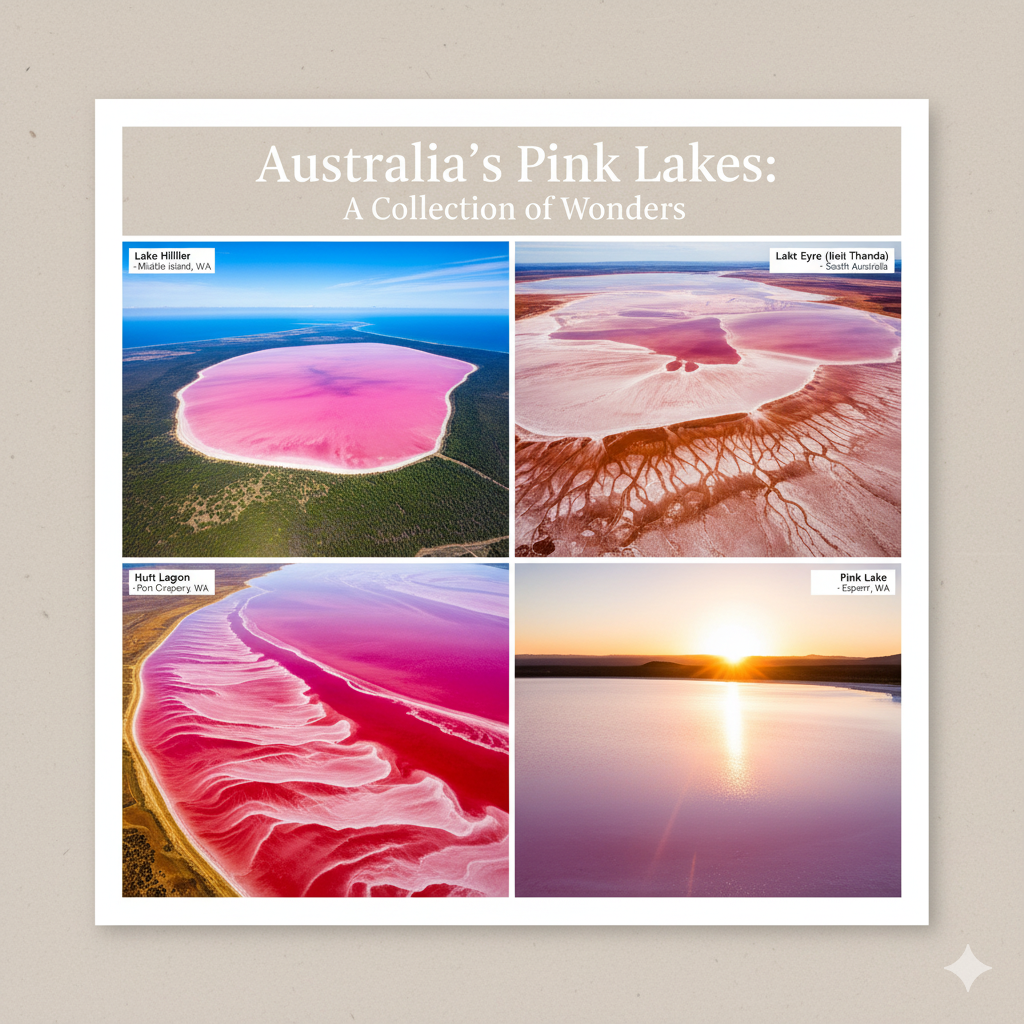
- Lake Hillier – located on Middle Island in Western Australia
- Lake Eyre (Kati Thanda) – in South Australia
- Hutt Lagoon – near the town of Port Gregory, Western Australia
- Pink Lake (Esperance) – near the coastal town of Esperance
Each lake displays slightly different shades of pink — from soft pastel blush to bright neon magenta — depending on the salt levels, sunlight, and microorganisms inside.
Why the Water Is Pink
The Pink Lake’s color is caused by a biological and chemical reaction between salt, sunlight, and microorganisms.

The key players are:
- Dunaliella salina (a microalgae)
- Halobacteria (salt-loving bacteria)
When exposed to strong sunlight and high salinity, these microorganisms produce carotenoid pigments, like the ones found in carrots.
The result? A dazzling bubblegum-pink or strawberry hue that can range from baby pink to hot fuchsia depending on the season.
It’s one of nature’s most colorful illusions — but totally real.
The Best Time to See It Glow Pink
Timing is everything.
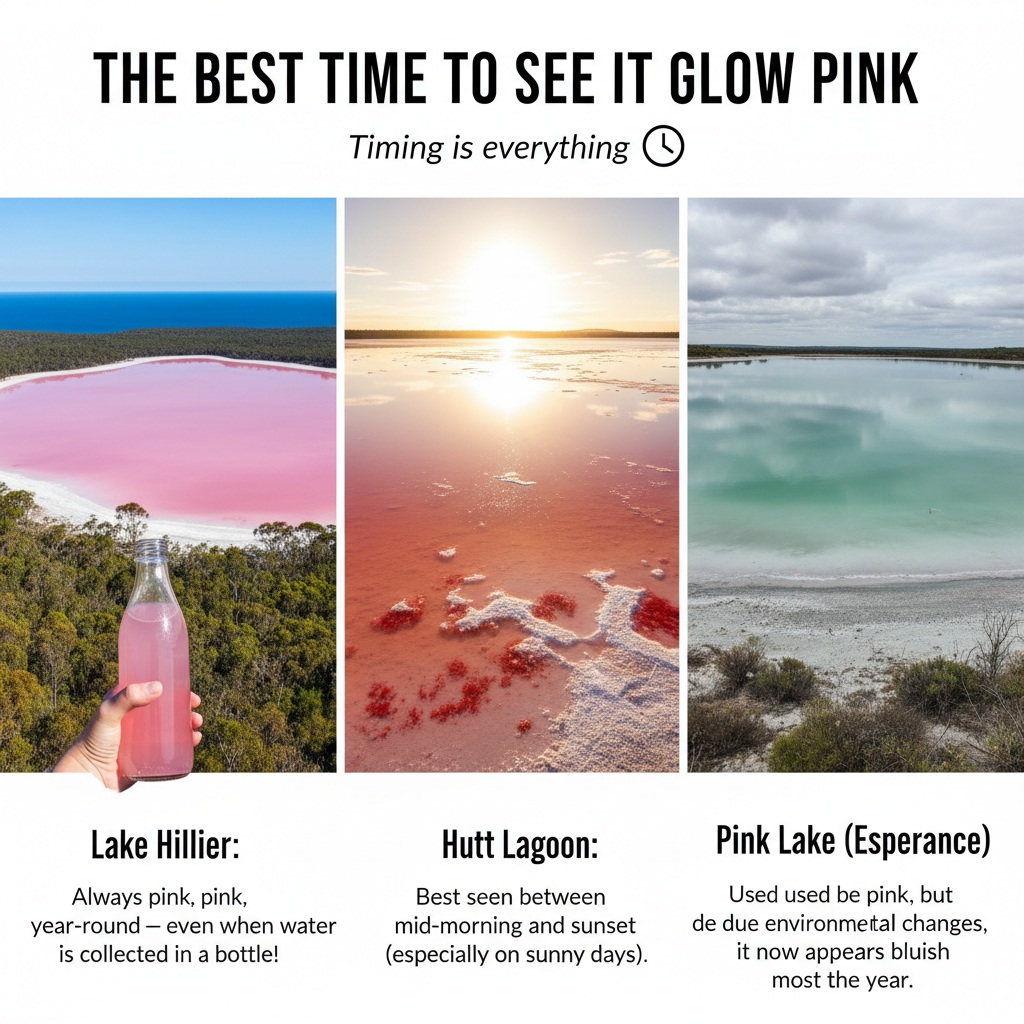
- Lake Hillier: Always pink, year-round — even when water is collected in a bottle!
- Hutt Lagoon: Best seen between mid-morning and sunset (especially on sunny days).
- Pink Lake (Esperance): Used to be pink, but due to environmental changes, it now appears bluish most of the year.
The color intensity depends on temperature, salinity, and sunlight — the warmer and sunnier the day, the more vivid the pink.
Lake Hillier – The Most Famous Pink Lake
Located on Middle Island off Western Australia’s southern coast, Lake Hillier is the most iconic of all pink lakes.

Coordinates: 34°05′46″S 123°12′10″E
Nearest Town: Esperance
Separated from the ocean by just a narrow strip of sand dunes
From the air, it looks like a giant pool of pink milk surrounded by turquoise sea — a sight so surreal it’s hard to believe it’s natural.
Unfortunately, visitors can’t swim in Lake Hillier because it’s protected for scientific research, but you can fly over it via scenic tours from Esperance.
Hutt Lagoon – Instagram’s Pink Paradise
If you want to get up close and personal with a pink lake, Hutt Lagoon near Port Gregory is the spot.
Depending on the time of day and light, it shifts from lilac purple to bubblegum pink to deep red.

Fun fact:
The area is used to harvest beta-carotene, a pigment derived from the same algae that make the lake pink — and it’s used in cosmetics and food coloring!
No wonder influencers call it “Australia’s Cotton Candy Mirror.”
Can You Swim in the Pink Lake?
In most pink lakes, yes, you can — but with caution.
Because the salinity levels are extremely high, similar to the Dead Sea, you’ll float effortlessly but may experience stinging sensations if you have cuts or sensitive skin.

- Lake Hillier: No swimming (protected zone)
- Hutt Lagoon: Allowed, but check local access points
- Lake Eyre: Occasionally fills with water, but it’s extremely saline
Always rinse off afterward — the salt can dry and irritate your skin.
How to Get There
To Lake Hillier:
- Fly from Perth to Esperance, then take a scenic flight to Middle Island.
- No road or public transport access (remote nature reserve).
To Hutt Lagoon:
- Located near Port Gregory, about 6 hours north of Perth.
- Easy access via road — perfect for photographers and road-trippers.
To Pink Lake (Esperance):
- Just 4 km from Esperance town center.
- Accessible by car; lake color varies seasonally.
Legends, Myths, and Aboriginal Connection
Local Aboriginal communities have long believed the pink lakes are sacred — gifts from nature that symbolize balance and purity.
According to some legends, the lakes’ colors represent the “spirit of the land” reflecting joy and renewal.

Modern myths, of course, abound — with some travelers joking that it’s a lake made of strawberry milkshake or that it’s “dyed for Instagram.”
In truth, it’s millions of years of geology and biology working in harmony.
Source:
The Science Still Amazes Researchers
Scientists continue to study why some pink lakes keep their color even in a test tube while others change with seasons.
Lake Hillier, for instance, remains pink permanently, no matter how much water is removed — a mystery attributed to the interaction between algae and salt minerals.
Researchers also use these lakes to study extremophiles — microorganisms that thrive in harsh, saline environments similar to conditions found on Mars.
In other words, Australia’s pink lakes might hold clues to extraterrestrial life.
Pink Lakes and Eco-Tourism
Today, Australia’s pink lakes have become icons of sustainable tourism and scientific curiosity.
Authorities are careful to protect their fragile ecosystems from over-tourism, pollution, and human interference.
Many tour companies emphasize eco-friendly practices — limiting foot traffic, banning swimming in protected areas, and encouraging aerial viewing to preserve the delicate environment.
By respecting these natural wonders, travelers can ensure the lakes remain pink, pristine, and picture-perfect for generations to come.
Bonus: The Perfect Instagram Moment
If you want to capture the “cotton candy” glow perfectly:
- Visit around midday to late afternoon on a clear, sunny day.
- Use a polarizing filter to reduce glare.
- Drone shots show the pink-to-blue contrast beautifully.
Pro tip: The combination of turquoise ocean, golden dunes, and pink water makes for a once-in-a-lifetime photo opportunity.
Check Also: 7 Fascinating Facts About the Crooked Forest – Poland Twisted Natural Mystery
FAQs
1. Why is the Pink Lake pink?
Because of algae and bacteria that produce red carotenoid pigments in salty water.
2. Can you swim in Lake Hillier?
No, it’s protected — but you can visit nearby pink lakes like Hutt Lagoon.
3. Is the color natural or artificial?
Completely natural — no dyes or chemicals involved.
4. Does the color change over time?
Yes, depending on sunlight, salinity, and temperature.
5. What’s the best time to visit?
During Australia’s summer months (November–March) for peak color.
Traveler: Nature’s Sweetest Surprise
The Pink Lake of Australia is proof that Mother Nature is the world’s greatest artist.
With hues that look painted by a candy-lover’s brush, these lakes invite us to witness beauty that’s both rare and real.

Whether you’re seeing it from a plane over Lake Hillier or standing by the shores of Hutt Lagoon, one thing’s certain — you’ll never forget the surreal sight of a lake that glows pink under the sun.
It’s not a dream.
It’s Australia’s cotton candy miracle.


