
Facial Recognition Borders 2026 – The Next Era of Seamless Travel
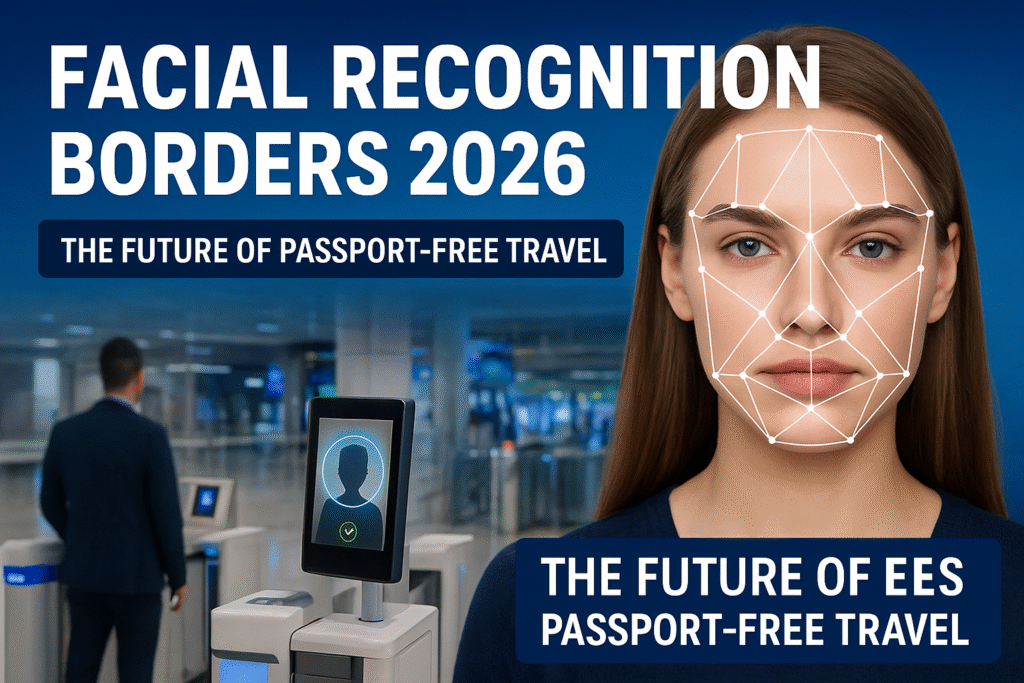
Facial Recognition Borders 2026 marks the beginning of a bold transformation in global mobility. Imagine traveling internationally without ever pulling out your passport — no fumbling at immigration counters, no stamping delays, and no paperwork headaches.
That’s not a sci-fi dream anymore — it’s becoming reality.
Countries across Europe, the US, UAE, Singapore, and Australia are integrating AI-powered facial recognition systems at airports, sea terminals, and land borders. The goal? To make travel faster, safer, and fully digital while maintaining strict security standards.
Let’s explore how this technology works, which countries are adopting it, what benefits travelers gain, and how it could redefine what “passport control” means in 2026 and beyond.
What Are Facial Recognition Borders 2026?
Facial recognition borders use AI-driven biometric systems to verify a traveler’s identity by matching their facial features with digital records stored in secure government databases.
Instead of presenting a physical passport, your face becomes your digital key. Cameras scan and confirm your identity within seconds, enabling smooth entry or exit.
Key Components:
- AI-based facial recognition algorithms
- Biometric data encryption and storage
- E-gate automation systems
- Cross-border data-sharing agreements
This fusion of AI and border security is often referred to as “Smart Borders” — part of the global move toward contactless, efficient, and data-secure travel.
How AI Powers the System
AI algorithms analyze millions of facial points — distance between eyes, nose shape, jawline contours — to create a unique facial signature.
This signature is compared against:
- Your passport photo (digital form)
- Immigration databases
- Watchlists and security systems
The entire process takes less than 5 seconds at advanced e-gates like those in Singapore’s Changi Airport and Dubai International Airport.
Fact: Dubai aims to become the first passport-free airport hub by 2026, allowing travelers to walk through gates with only a face scan.
Top Countries Implementing Facial Recognition Borders 2026
| Country | System Name | Implementation Phase | Key Highlights |
|---|
| UAE (Dubai) | Smart Travel Corridor | Active since 2024 | Full biometric check-in and boarding |
| Singapore | Automated Immigration Clearance | By 2026 | No passports required for residents and visitors |
| USA | CBP Biometric Exit Program | Expanding to 50+ airports | Used for arrivals and departures |
| EU (Schengen) | Entry/Exit System (EES) | Launching 2026 | Centralized database across 27 member states |
| Australia | SmartGate Expansion | Ongoing | Integrates ePassport and face recognition |
| UK | Future Borders Strategy | Testing 2025 | Contactless border crossings pilot |
| Canada | Biometric Modernization | Planning 2026 rollout | Links with US travel systems |
These systems are all part of a global border modernization wave, connecting biometric identity, AI verification, and digital passports.
Benefits of Facial Recognition Borders 2026
- Faster Processing:
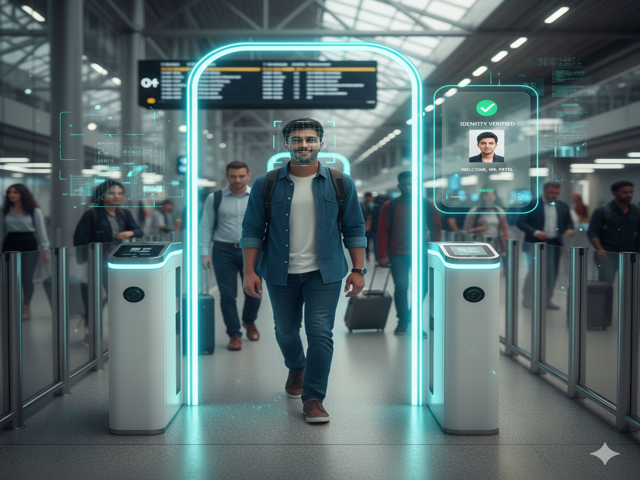
Travelers pass through immigration in seconds — reducing long airport queues. - Enhanced Security:
AI eliminates human error by matching unique facial data with encrypted government records. - Seamless Experience:
Passport-free travel enables fully digital journeys, from check-in to boarding. - Reduced Fraud:
Impossible to fake or duplicate facial biometric patterns. - Eco-Friendly:
Less paper, fewer plastic cards, and digital integration reduce environmental impact.
Challenges & Privacy Concerns
While innovation brings convenience, data privacy remains a major issue.
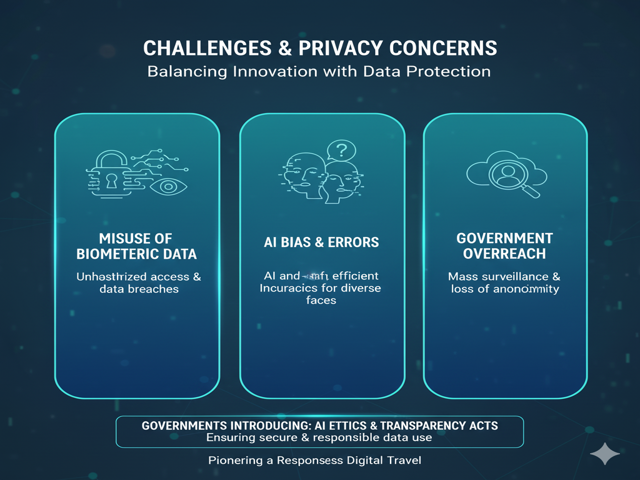
Concerns include:
- Misuse of biometric data
- Potential government overreach
- Errors in AI facial recognition for diverse faces
Governments are now introducing AI Ethics & Transparency Acts to ensure data is stored securely and used responsibly.
Tip: Always verify if your biometric consent is optional when traveling — some countries allow opting out.
How Your Data is Protected
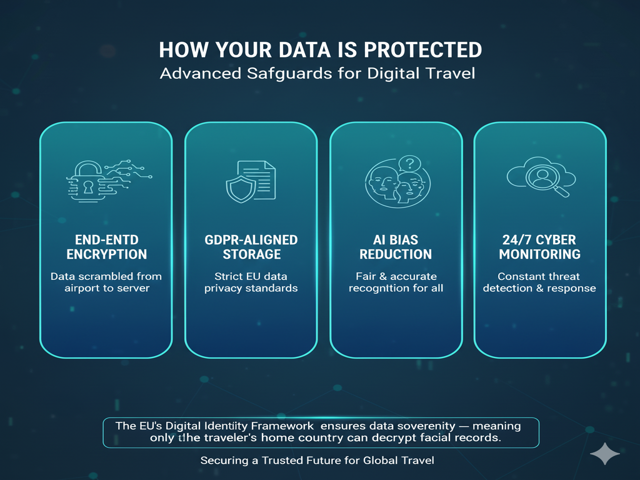
Modern border systems use:
- End-to-end encryption
- GDPR-aligned storage
- AI bias reduction techniques
- 24/7 cyber monitoring
The EU’s Digital Identity Framework ensures data sovereignty — meaning only the traveler’s home country can decrypt facial records.
Real-World Examples
- Dubai Smart Tunnel: Walk through and get cleared without stopping.
- Singapore Changi T5: 100% biometric terminal.
- EU Schengen EES: Digital visa and entry logs combined.
- US CBP Facial Comparison: Used for over 300 million travelers since 2019.
The Future of Passport-Free Travel
By 2030, experts predict 70% of global travelers will pass through biometric borders.
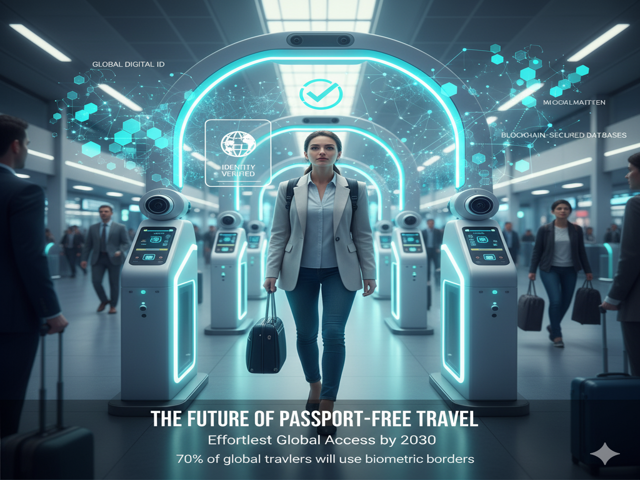
Physical passports might become optional for most destinations, replaced by global digital IDs linked to blockchain-secured databases.
Imagine: A single face scan granting access to airports, hotels, and car rentals — anywhere in the world.
Source: IATA – One ID Initiative
FAQs
1. What is a facial recognition border 2026?
It’s an AI-based system that verifies your identity using facial scans instead of physical passports.
2. Which countries use facial recognition at borders in 2026?
UAE, Singapore, the US, the EU, and Australia are leading adopters of facial recognition technology.
3. Is my biometric data safe?
Yes, governments use encryption and data protection laws such as GDPR to secure your facial data.
4. Will passports become obsolete?
By 2030, passports may become optional for many travelers as digital identity takes over.
5. What if facial recognition fails?
Manual verification and passport checks remain available as a backup.
Related Post: Schengen Visa Digitalization 2025: Online Applications & New Rules
Agent Advise
Facial Recognition Borders 2026 symbolize a revolutionary shift in global travel — faster, smarter, and paperless.
While privacy and ethics remain under discussion, one thing is certain: the future of international travel is digital.
If you’re planning a trip soon, expect AI, biometrics, and facial ID to shape your journey from start to finish — redefining how the world moves.