

Saudi Arabia’s New Era of Employment
Saudi Arabia has entered a historic phase of transformation under Vision 2030, aiming to diversify its economy beyond oil and open new pathways for global professionals. The Saudi Arabia Work Visa 2025 is your key to entering one of the fastest-growing job markets in the Middle East.
Whether you’re an engineer, doctor, IT specialist, or skilled laborer, this comprehensive guide will help you navigate the Work Visa application, Iqama (residency permit) process, and life as an expat in the Kingdom — from requirements and costs to legal updates and lifestyle insights.
Understanding the Saudi Arabia Work Visa 2025
The Work Visa (Employment Visa) allows foreign nationals to legally live and work in Saudi Arabia. It is usually sponsored by a Saudi employer, who applies on behalf of the employee through the Ministry of Foreign Affairs (MOFA) and Ministry of Human Resources and Social Development (MHRSD).
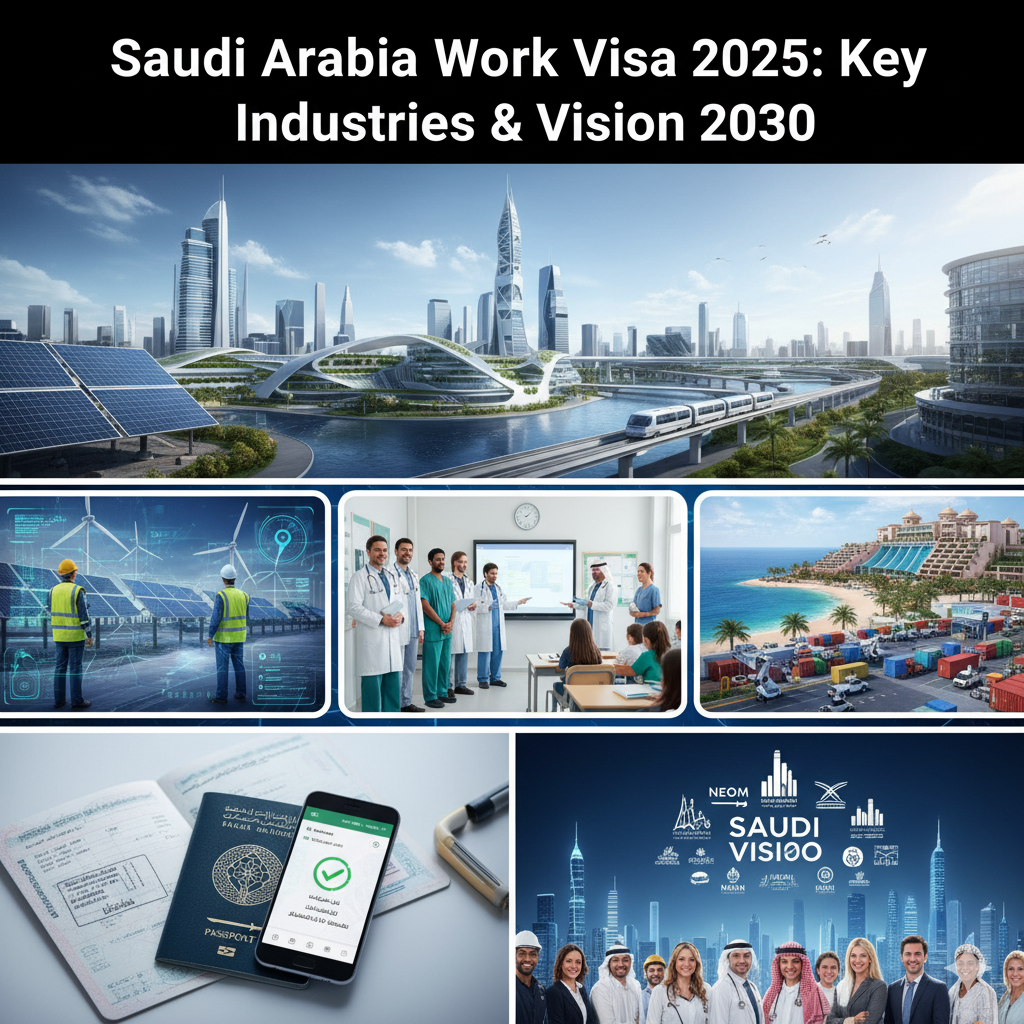
Key Characteristics:
- Valid for up to 2 years, renewable
- Requires employer sponsorship
- Converts to Iqama (residency permit) after arrival
- Allows dependents under a separate family visa
Industries Actively Hiring in 2025:
- Construction & Infrastructure
- Renewable Energy (NEOM, The Line)
- Information Technology
- Healthcare & Nursing
- Tourism & Hospitality
- Education & Training
- Logistics and Smart Transportation
Saudi Arabia’s Vision 2030 projects — like NEOM, Qiddiya, and Red Sea Global — have fueled record demand for skilled expatriate professionals.
Step-by-Step Process to Obtain a Saudi Arabia Work Visa 2025
The process is detailed but systematic. Here’s how it works from application to entry:
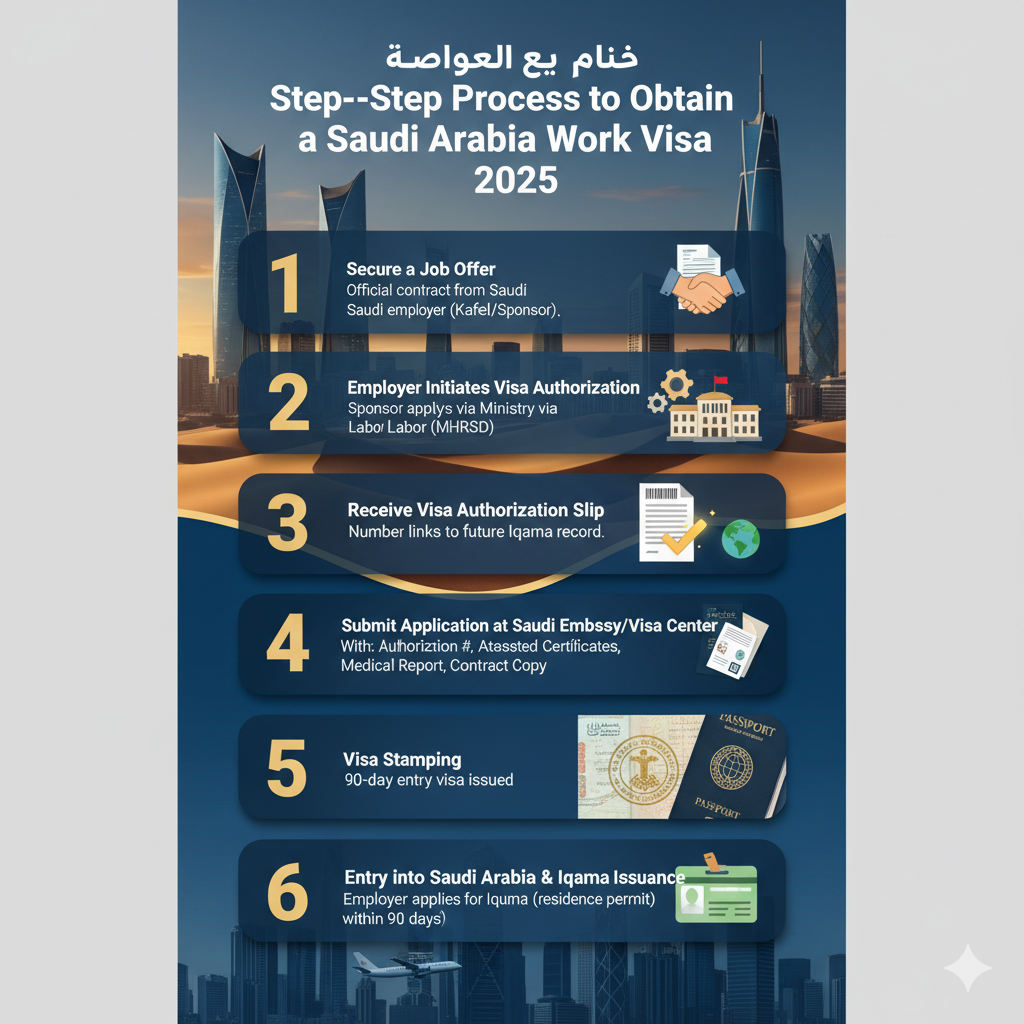
Step 1 – Secure a Job Offer
You must first receive an official job offer or employment contract from a Saudi employer. This employer becomes your Kafeel (sponsor).
Step 2 – Employer Initiates Visa Authorization
The sponsor applies through the Ministry of Labor (MHRSD) for a Work Visa Authorization Number.
Step 3 – Receive Visa Authorization Slip
Once approved, you’ll receive an authorization number that links your application to your future Iqama record.
Step 4 – Submit Application at Saudi Embassy or Visa Center
You (the applicant) must visit the nearest Saudi Embassy or authorized visa center with:
- Visa authorization number
- Valid passport (minimum 6 months)
- Educational and experience certificates (attested)
- Medical fitness report
- Employment contract copy
Step 5 – Visa Stamping
After approval, your passport is stamped with a Work Visa, valid for 90 days to enter the Kingdom.
Step 6 – Entry into Saudi Arabia & Iqama Issuance
Upon arrival, your employer must apply for your Iqama (residence permit) within 90 days.
The Iqama Process Explained 2025
The Iqama is the official Saudi residence and work permit, required for all expatriates staying more than 90 days. It’s the most important document in Saudi Arabia for identification and legal stay.
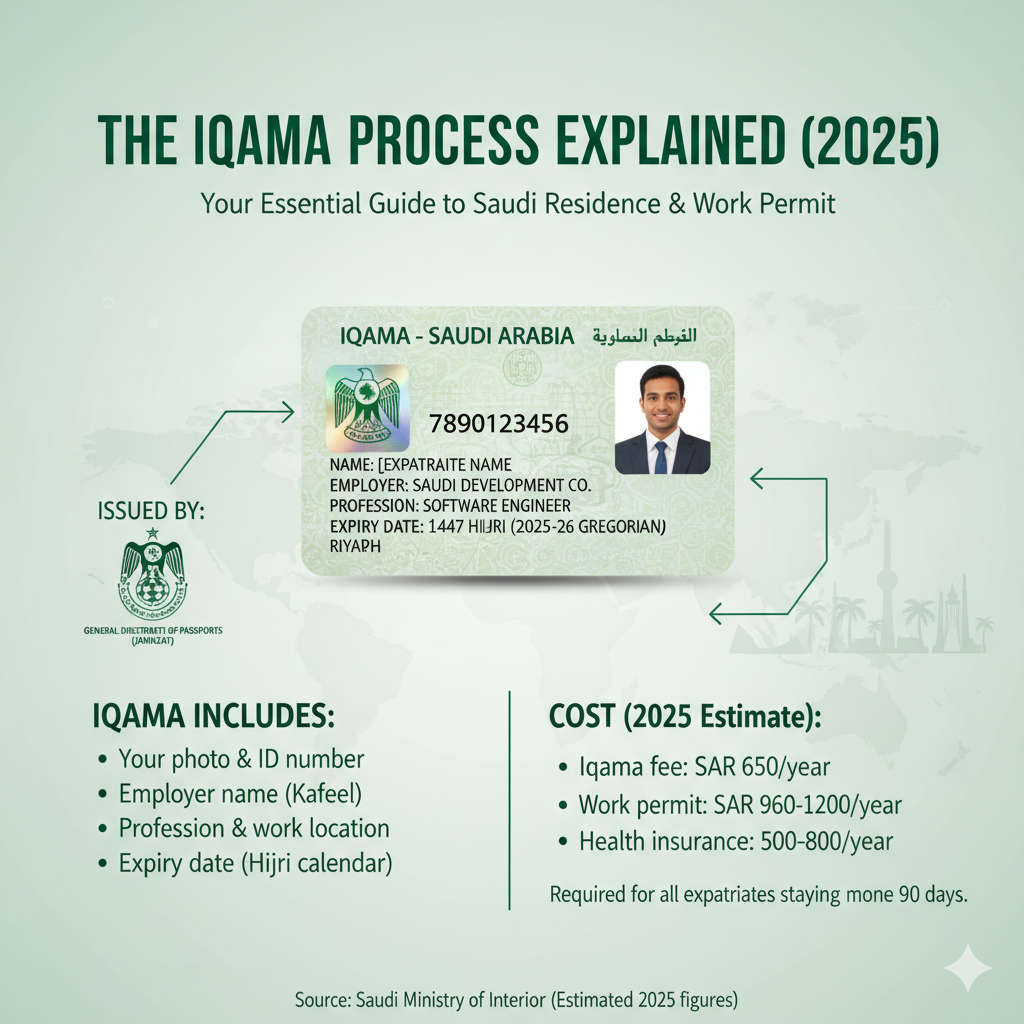
Issued By:
Saudi Arabia’s General Directorate of Passports (Jawazat)
Iqama Includes:
- Your photo and ID number
- Employer name (Kafeel)
- Profession and work location
- Expiry date (Hijri calendar)
Cost (2025 Estimate):
- Iqama fee: SAR 650/year
- Work permit: SAR 960–1200/year
- Health insurance: SAR 500–800/year
Required Documents for Work Visa & Iqama 2025
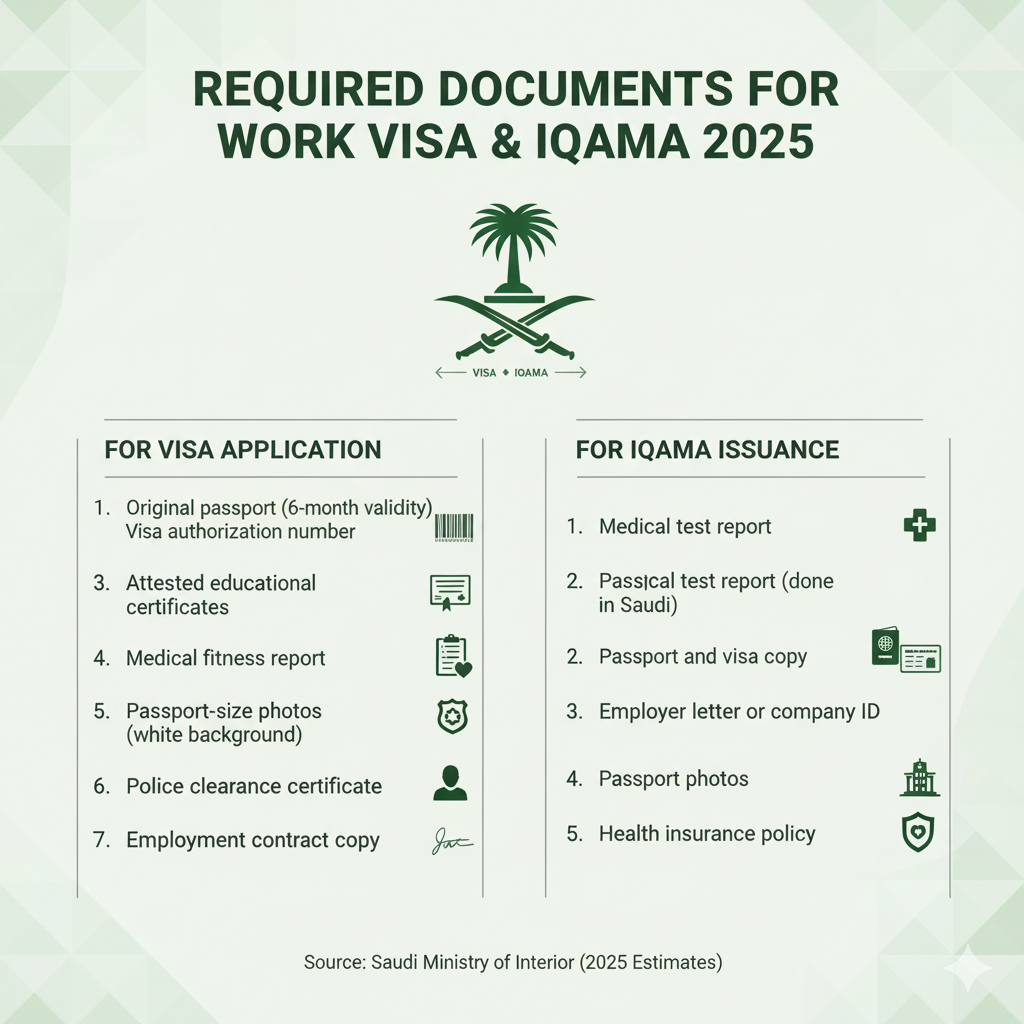
For Visa Application:
- Original passport (6-month validity)
- Visa authorization number
- Attested educational certificates
- Medical fitness report
- Passport-size photos (white background)
- Police clearance certificate
- Employment contract copy
For Iqama Issuance:
- Medical test report (done in Saudi)
- Passport and visa copy
- Employer letter or company ID
- Passport photos
- Health insurance policy
Iqama Renewal, Transfer, and Exit-Reentry Rules (Saudi Arabia Work Visa 2025)
The Saudi government has made several reforms to simplify Iqama management for expatriates.
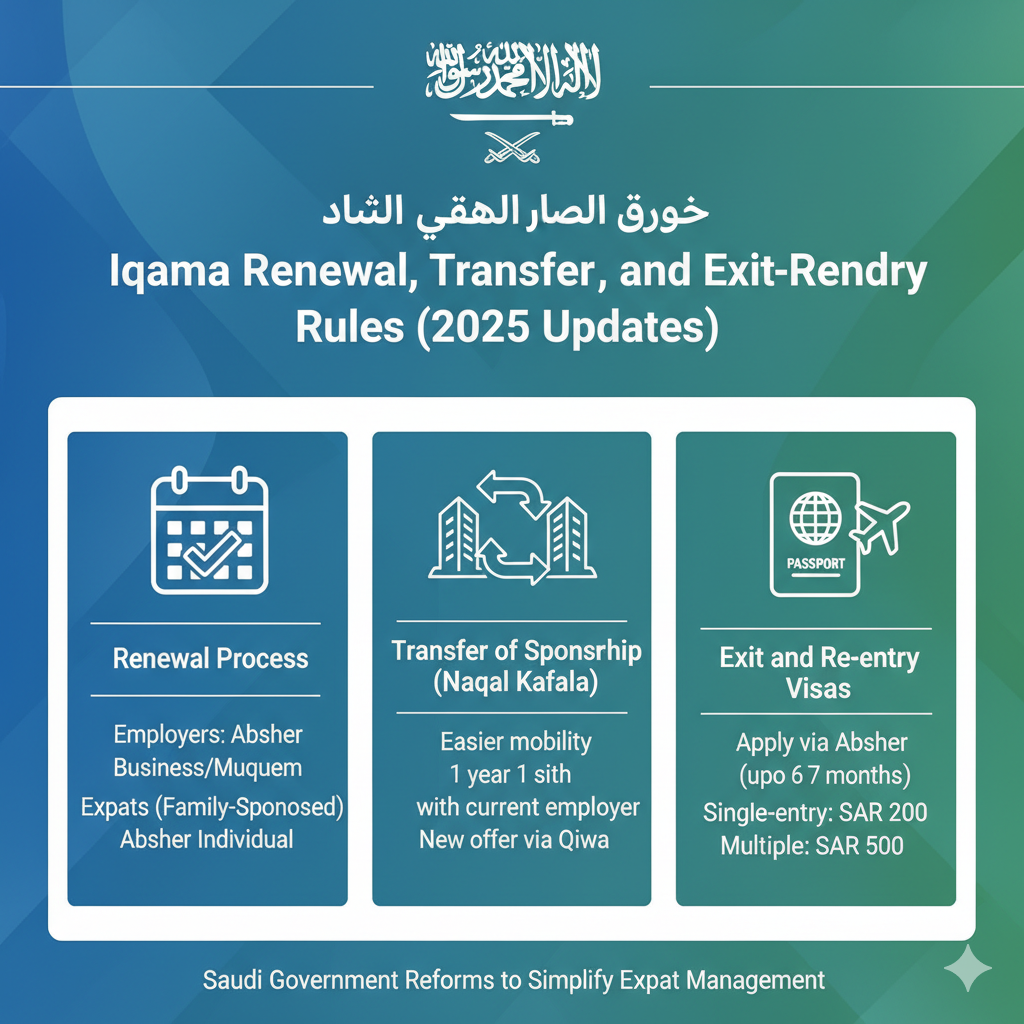
Renewal Process:
- Employers renew Iqamas annually via Absher Business or Muqeem portal.
- Expats can renew through Absher Individual if sponsored by a family.
Transfer of Sponsorship (Naqal Kafala):
Foreign employees can now change sponsors more easily under new labor mobility reforms.
- Must have completed 1 year with current employer
- Need new employer’s offer through Qiwa platform
Exit and Re-entry Visas:
You can apply for exit/re-entry via the Absher platform for up to 6 months.
- Single-entry: SAR 200
- Multiple-entry: SAR 500
Saudi Arabia’s Vision 2030 and Job Market Expansion
Vision 2030 is creating unprecedented employment growth in non-oil sectors.
Key Mega-Projects Creating Jobs:
- NEOM – futuristic smart city
- The Red Sea Project – luxury sustainable resorts
- Qiddiya – entertainment capital
- Diriyah Gate – cultural heritage city
- Amaala – wellness destination
By 2025, Saudi Arabia expects over 10 million foreign workers to contribute to its labor force, supported by modern visa and labor reforms.
Saudi Arabia Work Visa 2025 Types
| Visa Type | Purpose | Duration | Eligible Applicants |
|---|---|---|---|
| Employment Visa | Long-term work | 1–2 years | All foreign employees |
| Temporary Work Visa | Short-term contracts | 3–6 months | Project-based professionals |
| Business Visa | Meetings, consultations | Up to 90 days | Entrepreneurs, investors |
| Residence (Iqama) | Post-arrival stay | Renewable yearly | All expats with valid work visas |
Common Challenges and How to Overcome Them
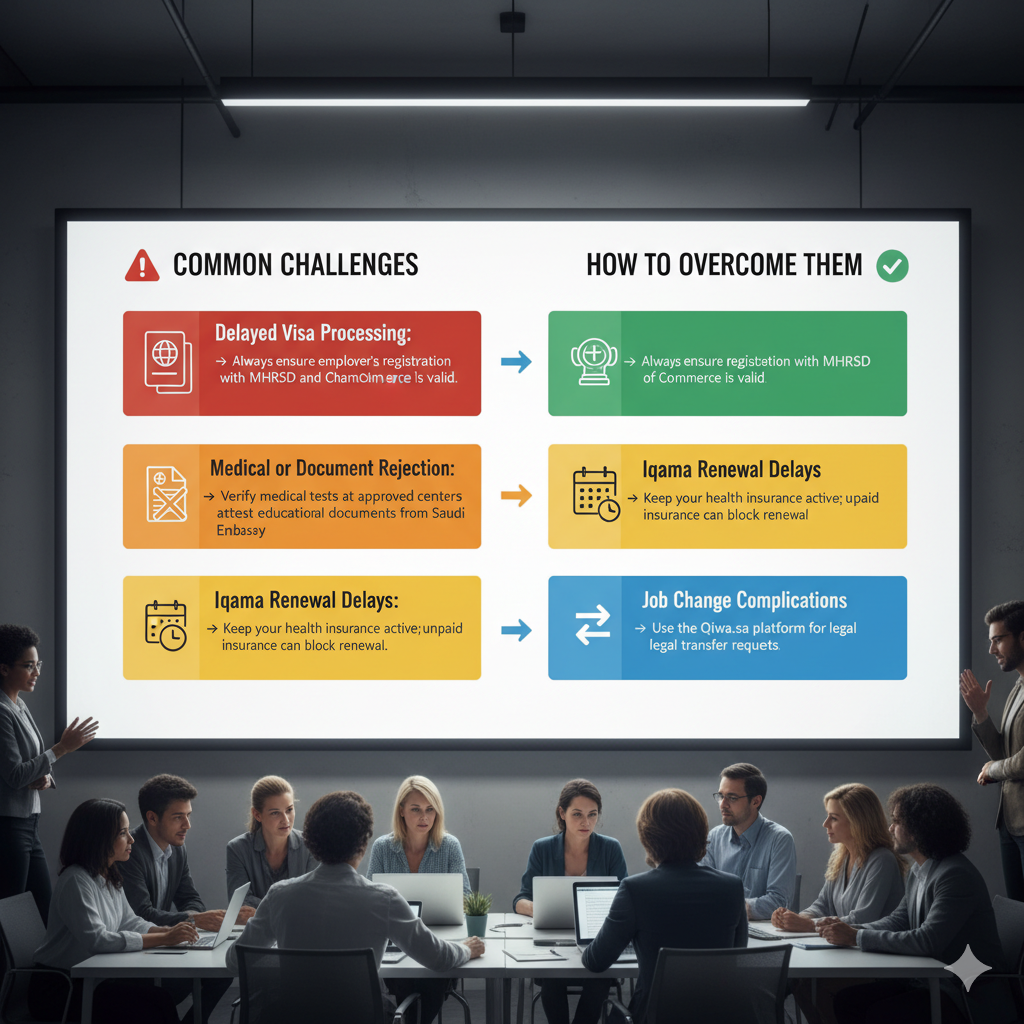
Delayed Visa Processing:
→ Always ensure employer’s registration with MHRSD and Chamber of Commerce is valid.
Medical or Document Rejection:
→ Verify medical tests at approved centers and attest educational documents from the Saudi Embassy.
Iqama Renewal Delays:
→ Keep your health insurance active; unpaid insurance can block renewal.
Job Change Complications:
→ Use the Qiwa.sa platform for legal transfer requests.
Source:
- Saudi Ministry of Labor
- Saudi Visa Portal
- Vision 2030 Official
Life in Saudi Arabia for Expats (2025 Edition)
Top Cities for Expat Professionals:
- Riyadh: Financial & tech hub
- Jeddah: Coastal city, diverse communities
- Dammam: Industrial and oil sector base
- NEOM Region: Future of innovation
Cultural Adaptation:
Saudi Arabia has become significantly more open and cosmopolitan.
- Women can now drive and work freely
- Mixed-gender workplaces are common
- Cinemas, concerts, and festivals are part of modern life
Average Monthly Salaries (2025):
| Profession | Average Monthly Salary (SAR) |
|---|---|
| Engineer | 12,000 – 18,000 |
| Nurse | 8,000 – 12,000 |
| IT Specialist | 10,000 – 20,000 |
| Construction Worker | 2,000 – 4,000 |
| Teacher | 7,000 – 14,000 |
Check Also: UAE Work Visa 2025 – Exciting Freelancer Permit Changes and New Opportunities
Bringing Family Members to Saudi Arabia
Once your Iqama is issued, you can sponsor your spouse and children under a Family Residence Visa.
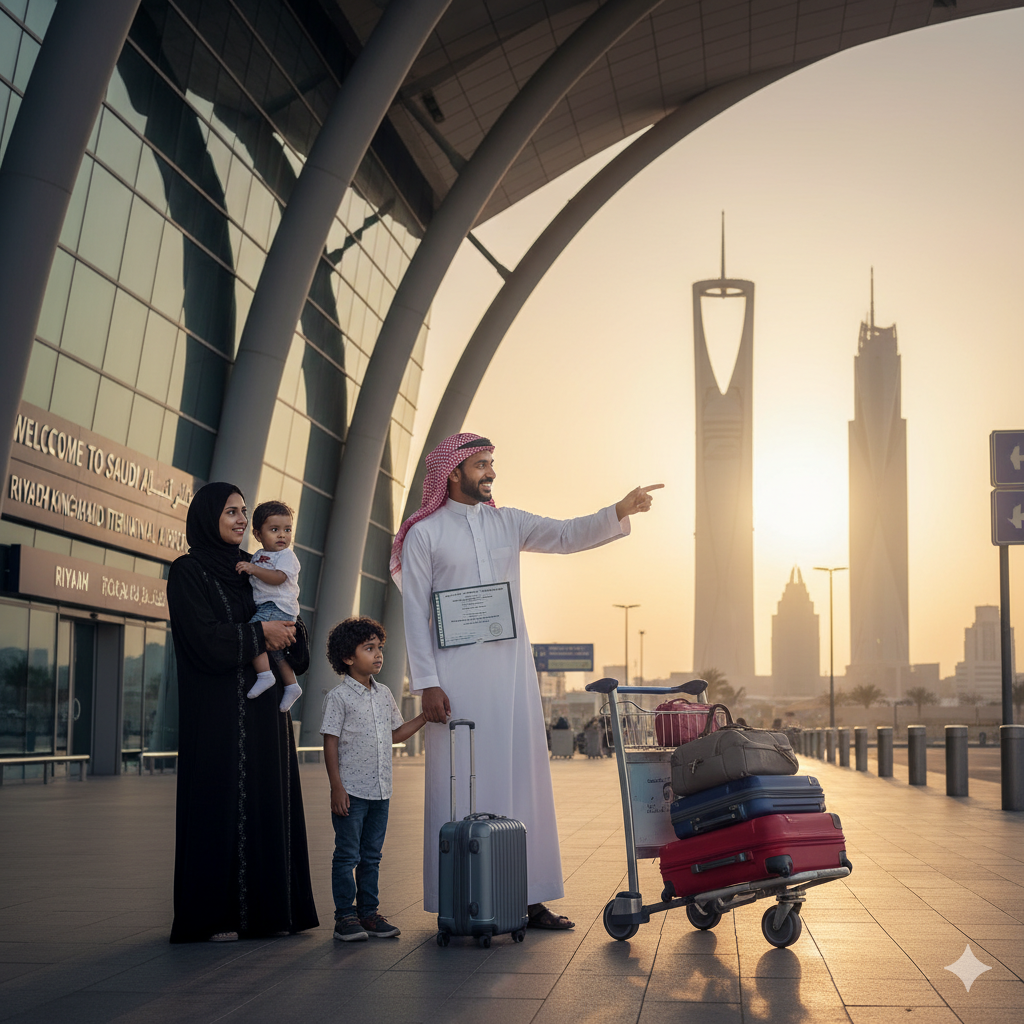
Requirements:
- Valid Iqama
- Minimum salary: SAR 5,000/month
- Attested marriage and birth certificates
- Family accommodation contract
Dependents also receive their Iqama cards upon arrival.
FAQs – Saudi Arabia Work Visa & Iqama 2025
Q1. How long does the Saudi Work Visa process take?
2–6 weeks, depending on embassy and employer documentation.
Q2. Can I change jobs in Saudi Arabia without my sponsor’s approval?
Yes, under the 2024 labor reforms, you can switch after one year via Qiwa.
Q3. What happens if my Iqama expires?
You may face penalties or deportation. Renewal should be done before expiry.
Q4. Can I bring my family on a work visa?
Yes, after your Iqama is issued, through a Family Residence Visa.
Q5. Is Saudi Arabia safe for expatriates?
Yes. The Kingdom maintains strong security, modern infrastructure, and a welcoming expat community.
Agent Advise: Building Your Future in Saudi Arabia
The Saudi Arabia Work Visa 2025 and Iqama system have been modernized to match the Kingdom’s ambitious economic growth and global openness. Whether you’re seeking career growth, better income, or a multicultural experience, Saudi Arabia now stands among the top destinations for skilled professionals.

With digital applications, transparent labor laws, and expanding industries, this is the best time to start your Saudi career journey — where tradition meets innovation, and opportunity meets progress.