
Turkmenistan Door to Hell — When the Earth Itself Catches Fire
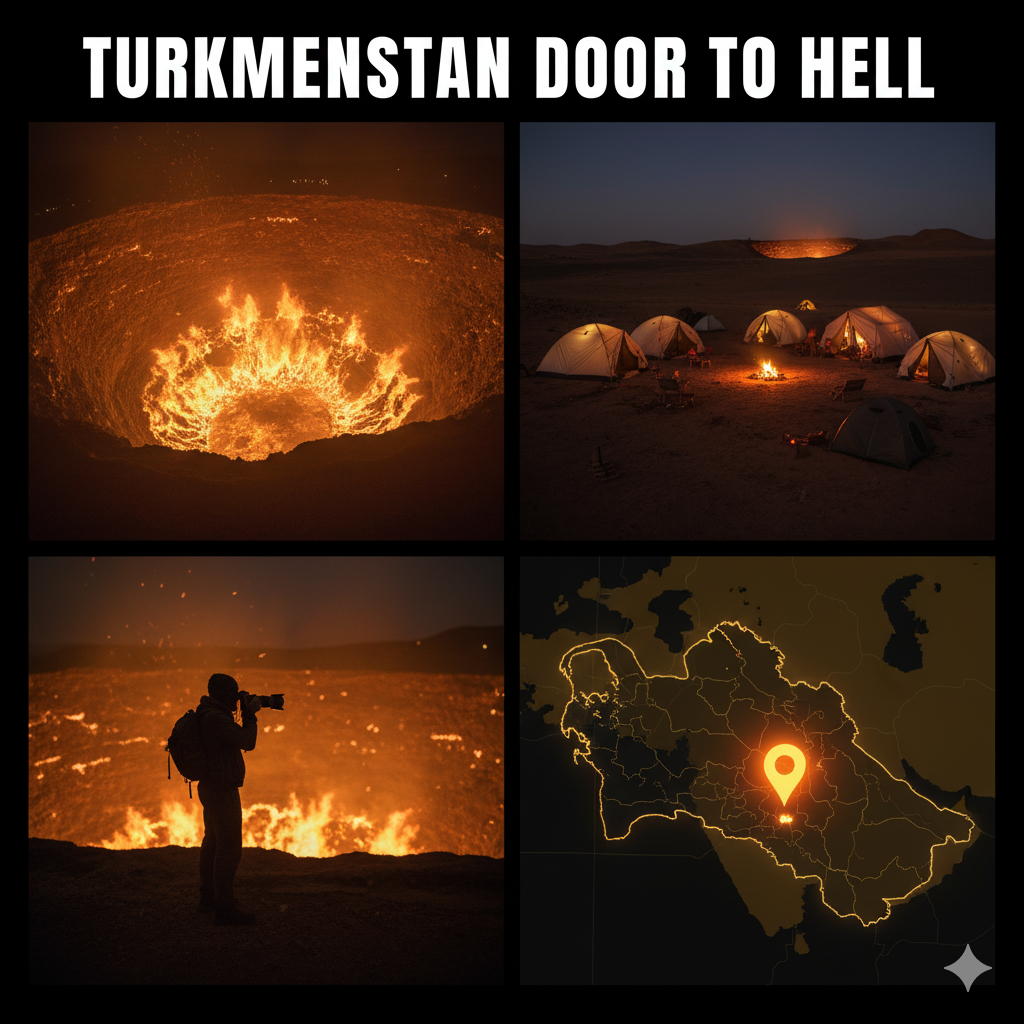
Turkmenistan Door to Hell is one of the most jaw-dropping natural wonders on Earth — a blazing crater in the middle of the Karakum Desert that has been burning for more than half a century.
Imagine standing before a massive fiery pit — flames roaring, heat pulsing, and the night sky glowing in orange hues.
This isn’t a special effect or a mythical tale. It’s the Darvaza Gas Crater, a real location that looks like a portal to another world.
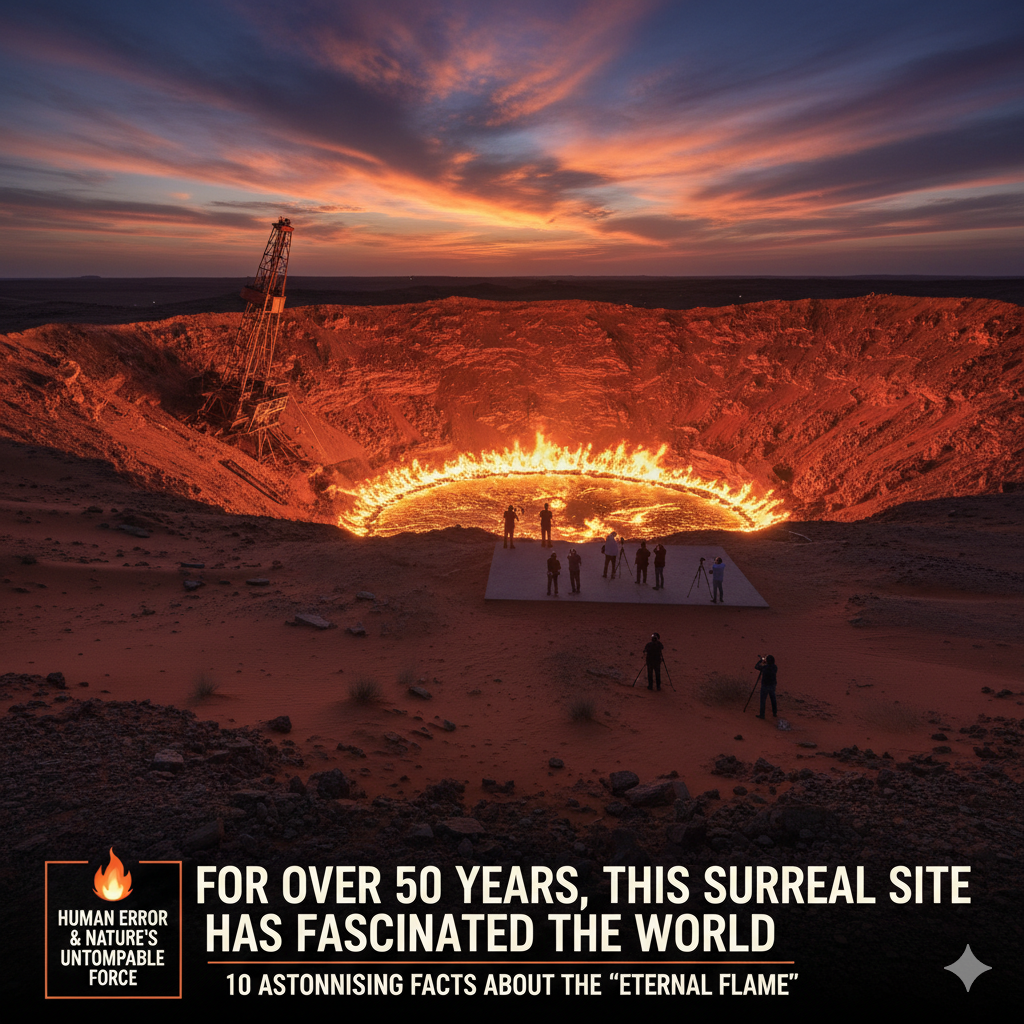
For over 50 years, this surreal site has fascinated travelers, scientists, and photographers. In this article, we’ll uncover 10 astonishing facts about how this “eternal flame” was created, what keeps it burning, and why it continues to symbolize both human error and nature’s unstoppable force.
Where Exactly Is the Turkmenistan Door to Hell ?
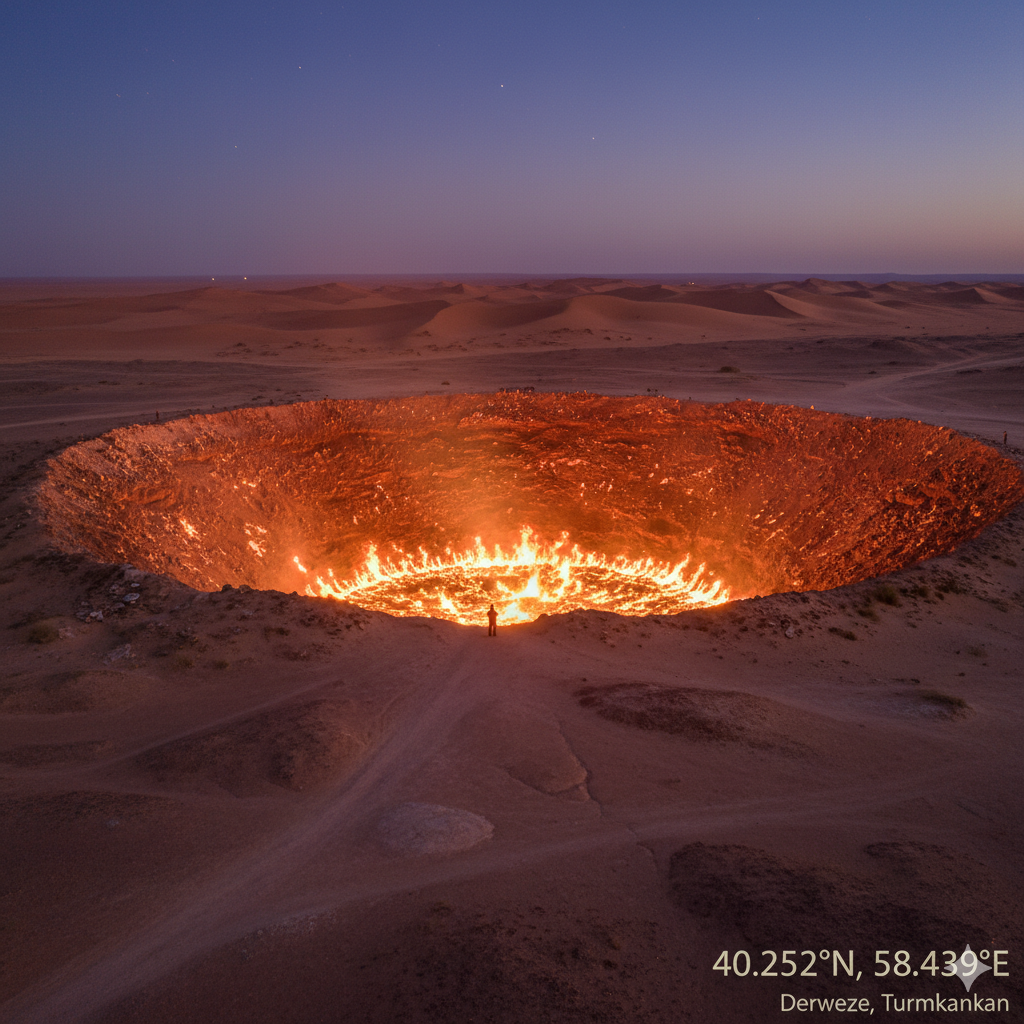
The Darvaza Gas Crater lies in the heart of the Karakum Desert, about 260 kilometers north of Ashgabat, the capital of Turkmenistan.
Coordinates: 40.252°N, 58.439°E
Location: Derweze (Darvaza) region, Turkmenistan
It’s part of one of the world’s largest deserts, where temperatures can soar above 50°C in summer and drop below freezing in winter.
Despite the harsh environment, thousands of travelers each year make the desert trek to witness this surreal inferno.
How Was the Door to Hell Created?
In 1971, Soviet geologists were drilling for natural gas reserves in the Karakum Desert. Unfortunately, their drilling rig collapsed into a hidden underground cavern — a massive gas-filled void.
To prevent the leakage of methane, which is highly toxic and flammable, scientists decided to set the gas on fire, expecting it to burn out within a few weeks.
But that “temporary flame” never died out.
More than 50 years later, it’s still burning — continuously.
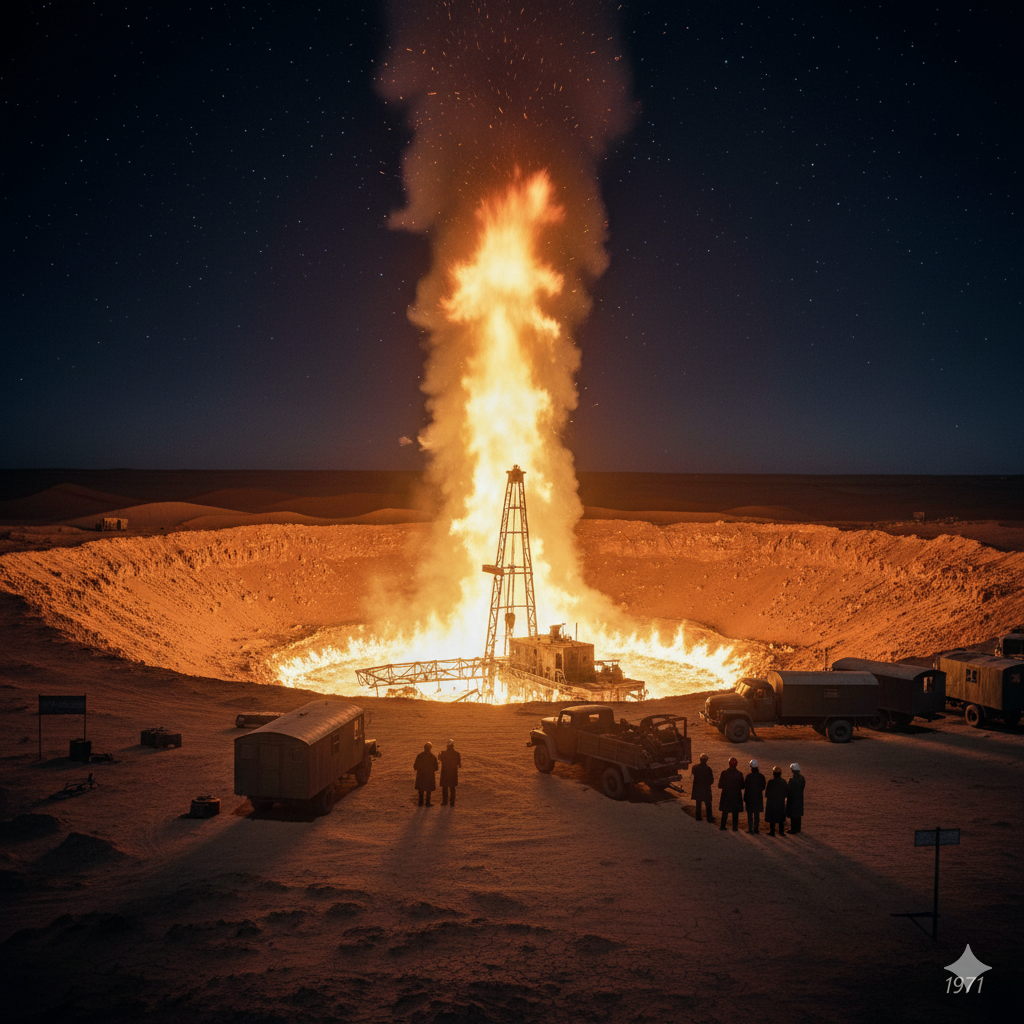
Thus, the “Door to Hell” was born — not through myth or magic, but through an accident of science.
How Long Has It Been Burning?
The fire has been burning non-stop since 1971, making it one of the longest-burning fires on Earth.
That’s over 50 years of continuous combustion.
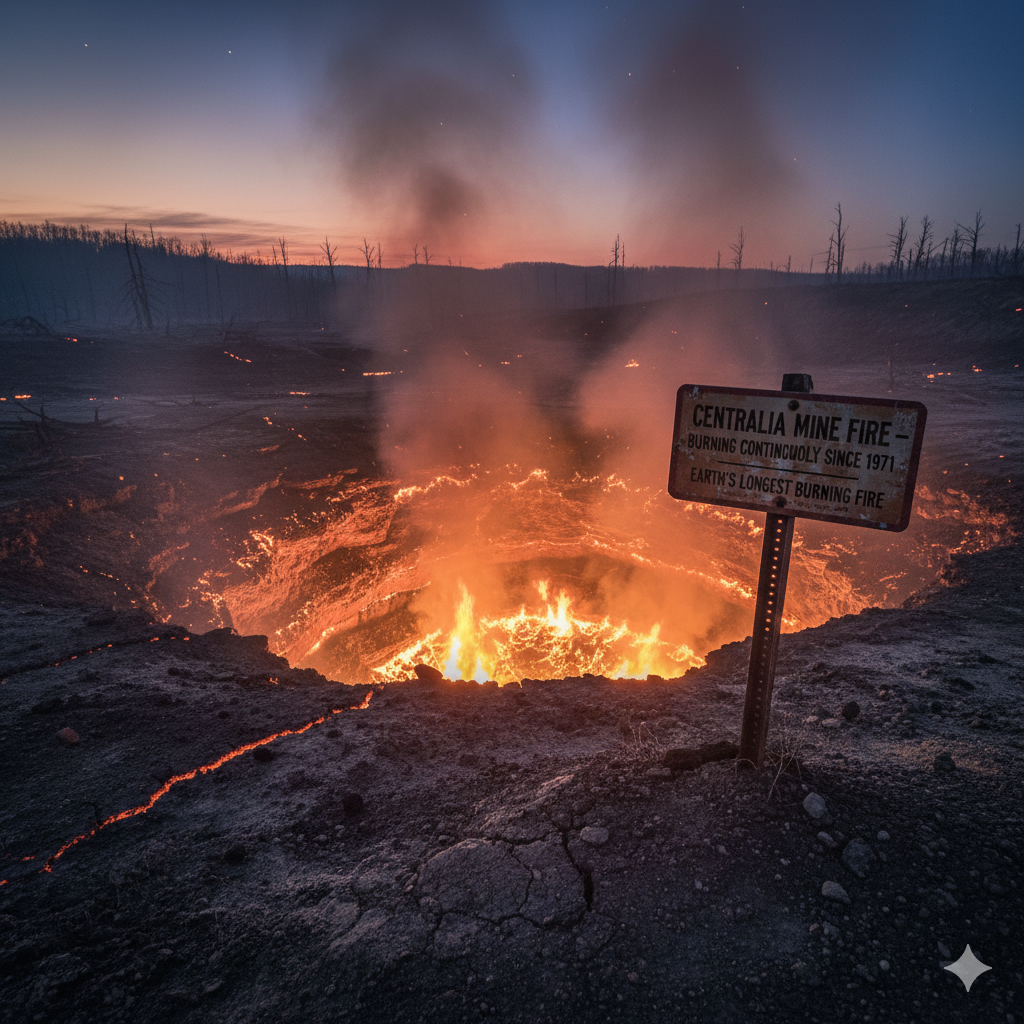
Scientists estimate that methane gas from deep underground continues to feed the flames. Despite occasional efforts to extinguish or cap the crater, it has resisted all attempts.
What Exactly Is Burning Inside?
The primary gas fueling the inferno is methane (CH₄), the same natural gas used for household energy.
When ignited, methane burns cleanly but powerfully, producing carbon dioxide, water vapor, and intense heat.
Because the crater sits above a vast natural gas reserve, methane constantly seeps upward, sustaining the fire like an underground stove.
Temperature readings near the pit’s edge can reach up to 1000°C (1832°F). Standing too close can melt shoes or cameras.
How Big Is the Crater?
The Door to Hell is an impressive sight:
- Diameter: ~70 meters (230 feet)
- Depth: ~30 meters (98 feet)
- Area: Roughly equal to a football field
It’s essentially a collapsed natural gas cavern, a gaping circle of fire that glows brightest after sunset.
At night, the flames light up the desert sky, visible from kilometers away.
Visiting the Turkmenistan Door to Hell – A Fiery Adventure
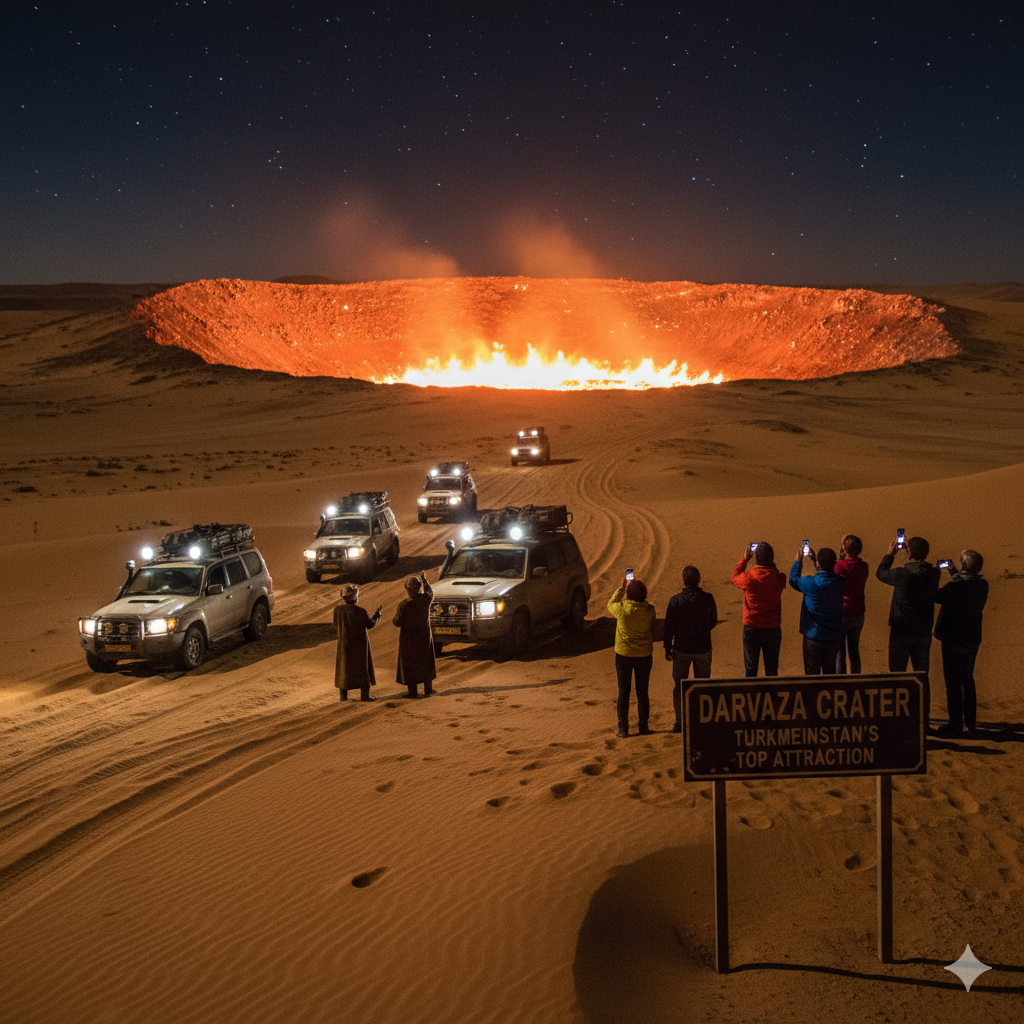
Tourism to the crater began in the early 2000s, as travelers and adventurers started sharing photos online.
Today, it’s one of Turkmenistan’s top tourist attractions, despite being located in one of the world’s least-visited countries.
How to Visit
- Most visitors book tours from Ashgabat via licensed travel agencies.
- The drive takes around 4–5 hours across desert terrain.
- The last 7 km require off-road vehicles to cross sand dunes.
Many adventurers camp overnight near the crater — a surreal experience of stargazing under a burning horizon.
Tip: The best view is just after sunset when the flames glow brightest and the desert cools.
What It Feels Like Standing at the Edge
As you approach, the first thing you’ll feel is heat — intense and dry, even from several meters away.
The air vibrates with shimmering waves of warmth.
You’ll hear a steady roar, like an enormous furnace breathing beneath the Earth.
Standing there, you can’t help but feel awe — and a bit of primal fear. It truly feels like a portal to another world.
Many travelers describe the experience as both spiritual and unsettling — a confrontation with the raw power of the planet.
The Science of a Never-Ending Fire
So, how does it keep burning?
The explanation lies in natural gas dynamics. The Karakum Desert sits atop one of the largest natural gas fields in the world.
Methane seeps through cracks and fractures in the underground rock layers, feeding the surface fire continuously.
As long as methane pressure remains constant, the flame won’t die out — essentially creating an open-air natural gas vent that burns indefinitely.
Scientists have compared it to smaller “eternal flames” found in places like Iraq or the U.S., but none come close in size or intensity.
Myths, Legends, and the “Turkmenistan Door to Hell Gate to Hell” Name
Locals in the nearby Darvaza village coined the term “Door to Hell” (sometimes “Gates of Hell”) due to the crater’s eerie glow and heat.
Stories soon spread — travelers said the crater looked like a portal to the underworld, glowing red and spitting fire.
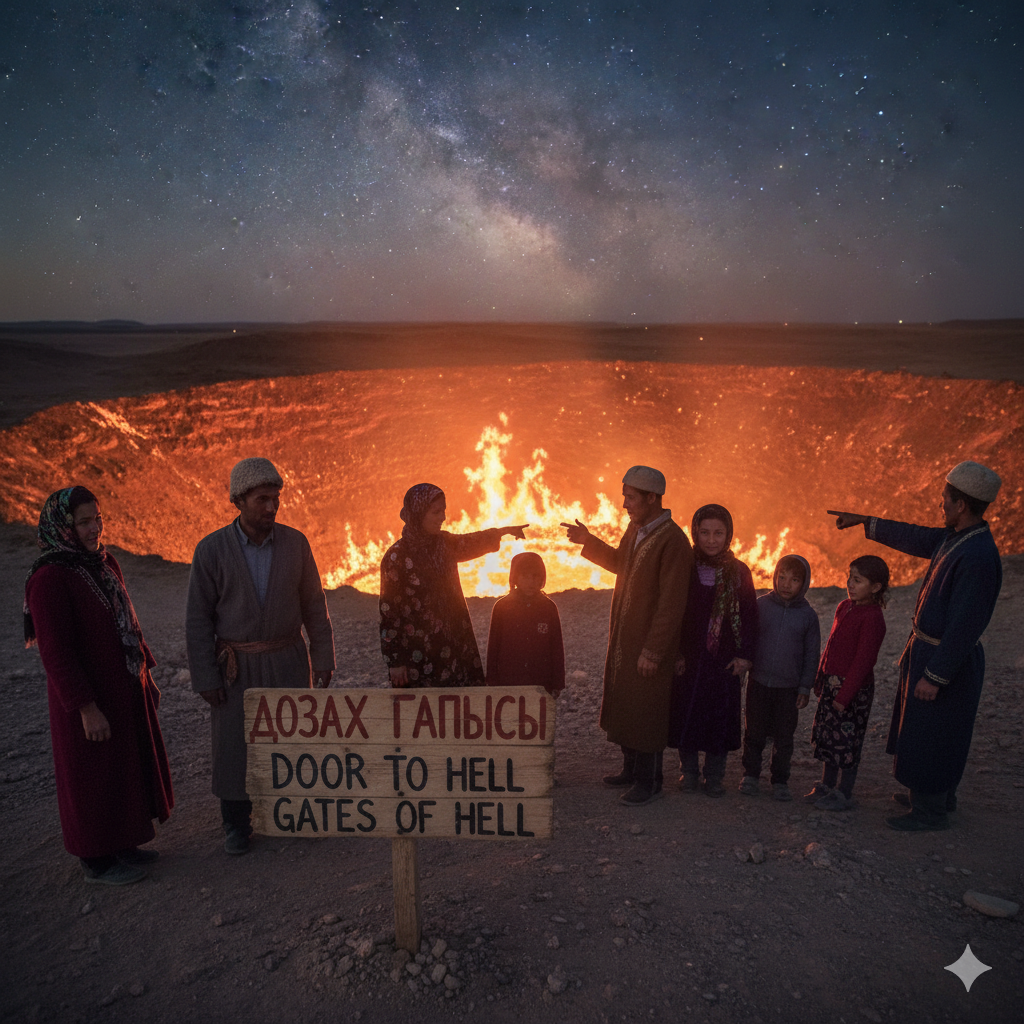
Others claimed it was punishment for disturbing nature’s balance or a warning from the Earth itself.
Though most locals don’t believe these myths literally, the name stuck — and today, it’s the pit’s global identity.
NASA and Scientific Interest
In 2013, a National Geographic team led by explorer George Kourounis descended into the crater for the first time to study its ecosystem.
To their surprise, they discovered bacteria thriving inside, despite extreme heat and toxic gases.
This finding fascinated scientists because it suggested that life could survive on planets like Mars, where methane and heat are also present.
NASA and astrobiologists now use Darvaza as a model for studying extremophile life forms — organisms that survive in impossible conditions.
Source:
Government Plans to Extinguish It
In 2022, Turkmenistan’s president Serdar Berdimuhamedow announced plans to finally extinguish the fire.
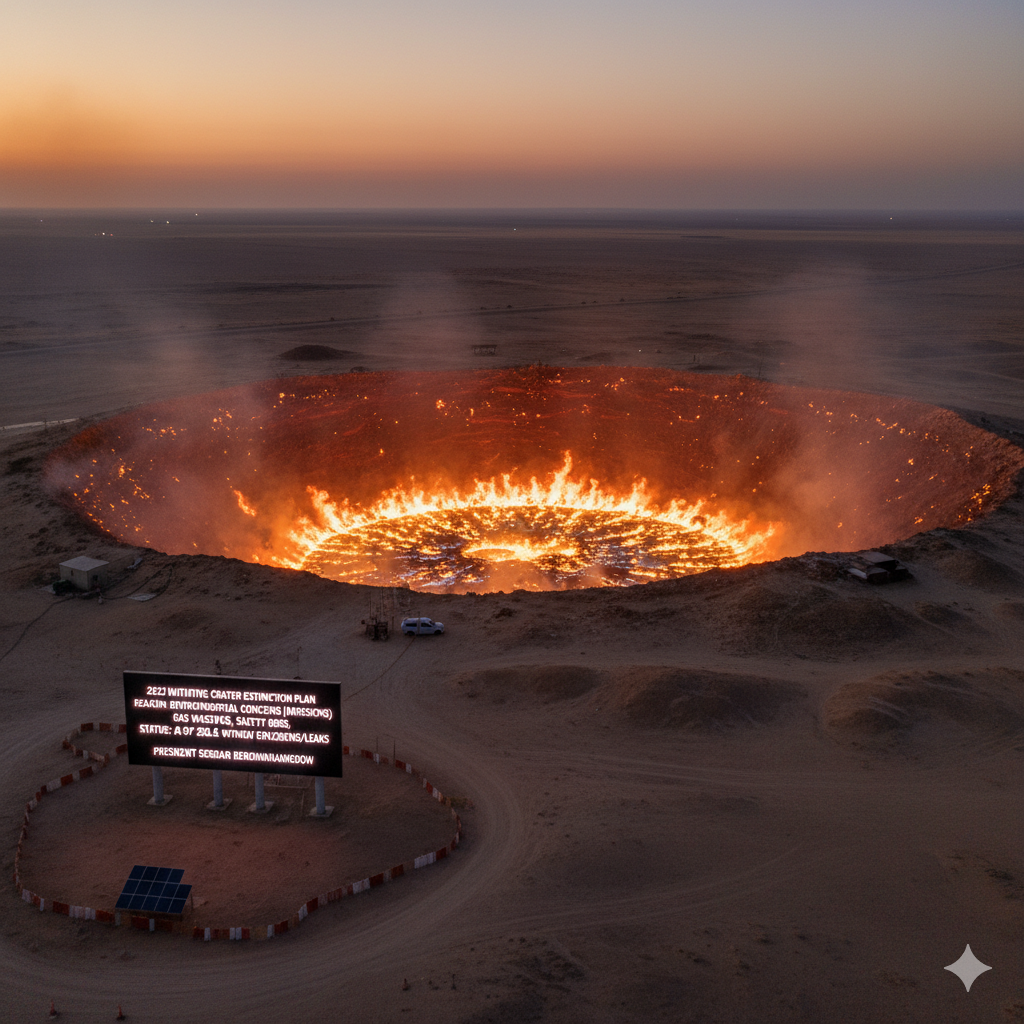
The reason:
- Environmental concerns (methane emissions)
- Gas wastage
- Safety risks
However, as of 2025, the crater still burns, and experts say it’s nearly impossible to put out without risking massive underground explosions or gas leaks.
So for now, the Door to Hell stays open.
The Economic and Environmental Dilemma
The pit is both a tourist magnet and an environmental concern.
Methane is a powerful greenhouse gas — far more potent than CO₂.
Although burning it releases CO₂, scientists argue that it’s still better than allowing pure methane to escape.
At the same time, Turkmenistan relies heavily on natural gas exports, so closing the pit has symbolic and political implications.
The challenge remains:
How do you balance nature’s mistake, tourism, and climate responsibility?
What to Expect When You Visit Turkmenistan Door to Hell
If you’re planning to witness this fiery wonder, here’s what you’ll find:
- A remote desert with no fences or barriers — approach with caution.
- Camping grounds about 300 meters away.
- Local guides who cook dinner on open fires.
- A sky filled with stars and a glowing crater lighting the horizon.
Pro tip: Bring a scarf, flashlight, power bank, and lots of water. There are no facilities nearby.
Photography Tips For Turkmenistan Door to Hell
Photographers from around the world travel here for surreal shots.
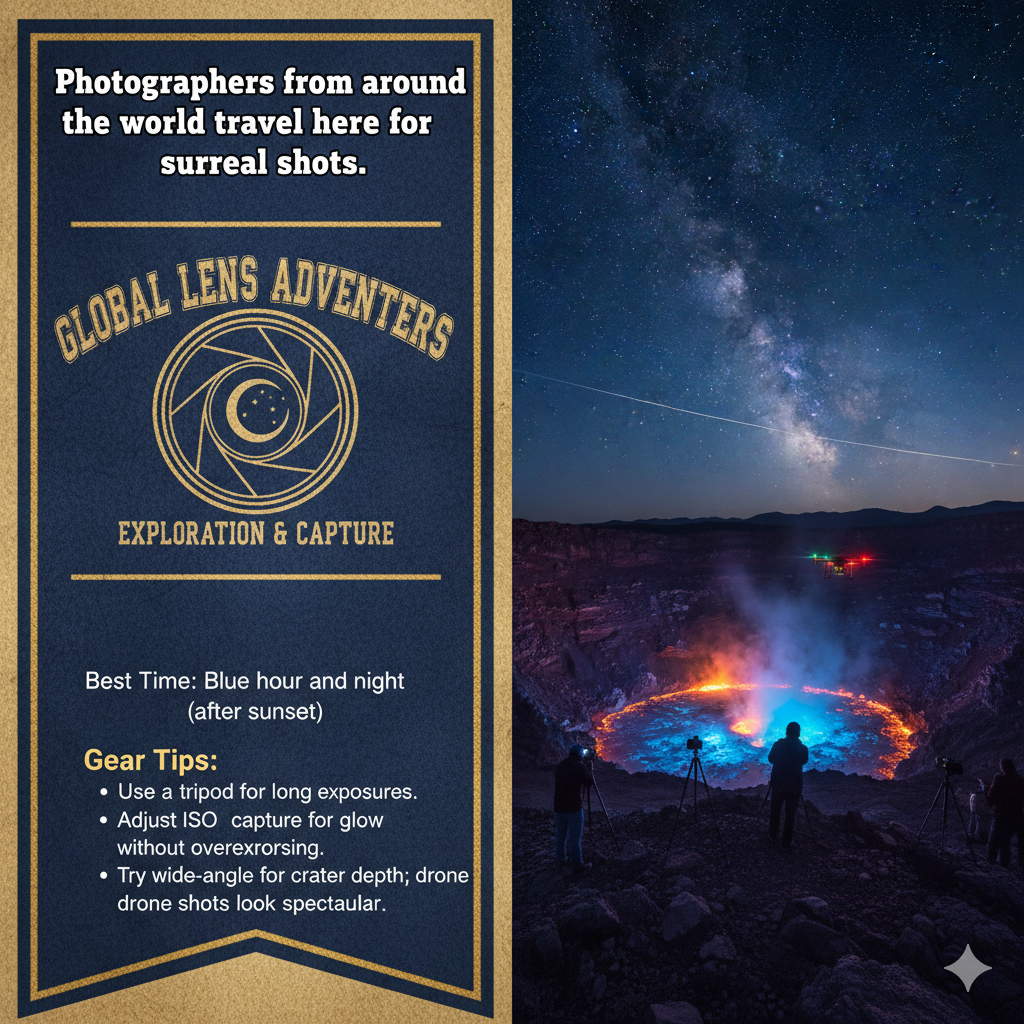
Best Time: Blue hour and night (after sunset)
Gear Tips:
- Use a tripod for long exposures.
- Adjust ISO to capture the glow without overexposing.
- Try wide-angle for crater depth; drone shots look spectacular.
Hashtags:
#DoortoHell #TurkmenistanFirePit #DarvazaCrater #EternalFlame
Check Also: Top 10 Fascinating Facts About the Narrowest Street in Prague
Similar “Eternal Flames” Around the World
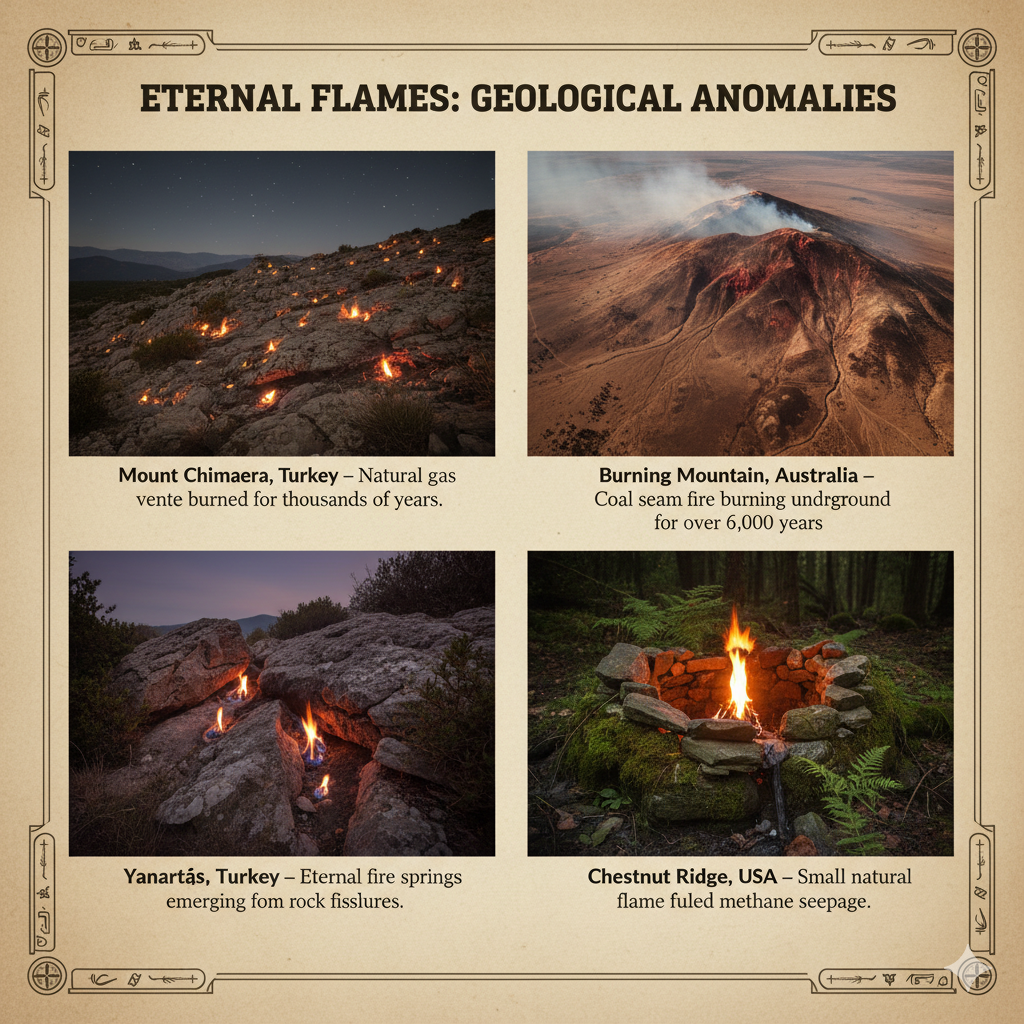
- Mount Chimaera, Turkey – Natural gas vents have burned for thousands of years.
- Burning Mountain, Australia – Coal seam fire burning underground for over 6,000 years.
- Yanartaş, Turkey – Eternal fire springs emerging from rock fissures.
- Chestnut Ridge, USA – Small natural flame fueled by methane seepage.
But none have the scale, intensity, or legend of Turkmenistan’s Door to Hell.
FAQs – Turkmenistan Door to Hell
1. How did the Turkmenistan Door to Hell form?
It was created accidentally by Soviet scientists in 1971 after a gas drilling collapse.
2. How long has it been burning?
For more than 50 years, continuously.
3. Can you visit the crater?
Yes, through guided desert tours from Ashgabat.
4. Is it dangerous?
It’s safe if you keep a distance, but heat and gas can be hazardous near the edge.
5. Will it ever stop burning?
Not anytime soon — unless the gas supply naturally runs out or is capped by the government.
Traveler: Earth’s Fiery Warning – Turkmenistan Door to Hell
The Turkmenistan Door to Hell is more than a spectacle — it’s a symbol of human error, natural power, and the unpredictability of our planet.
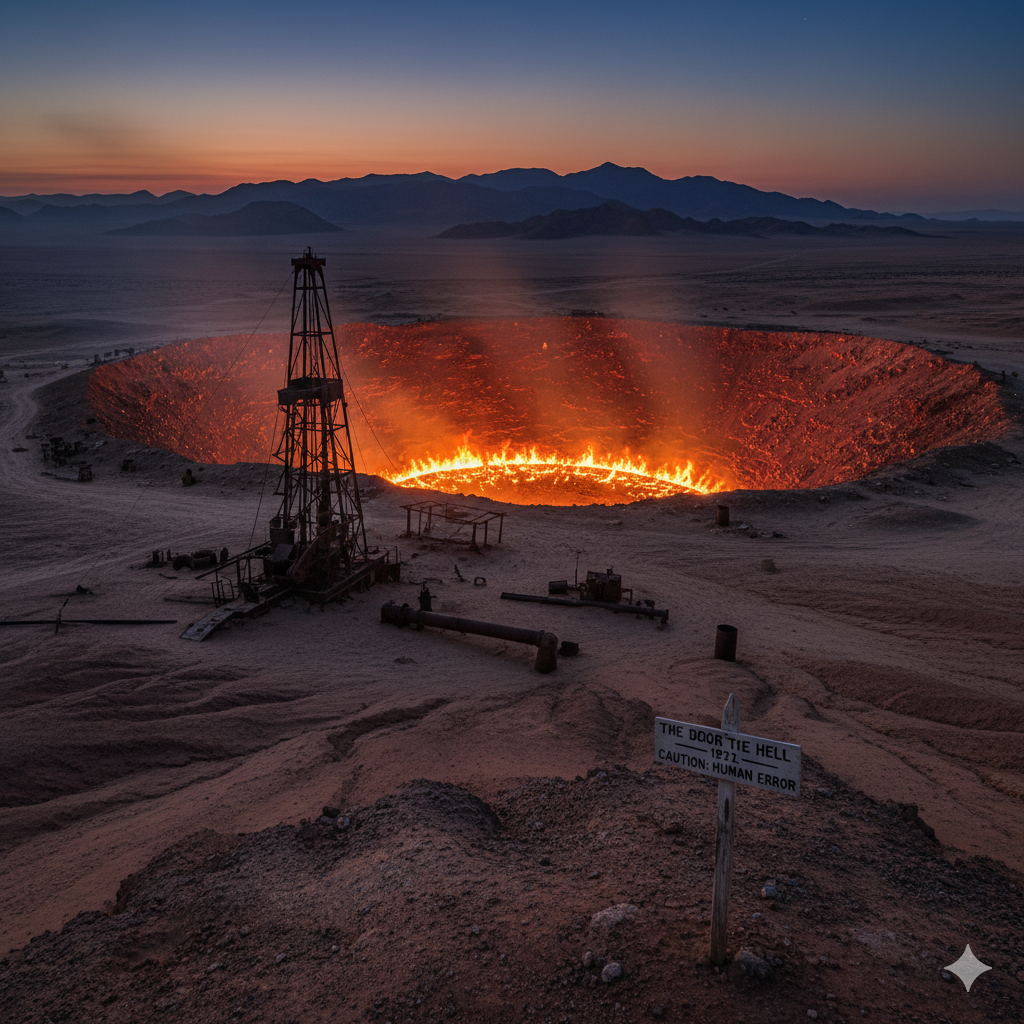
Born from a mistake, it’s become a beacon — burning for decades in defiance of time, politics, and science.
As it continues to blaze across the Turkmen night, the crater reminds us that beneath our feet lies a world still alive, volatile, and mysterious.
And sometimes, when you dig too deep,
you just might open the gates to Hell.