
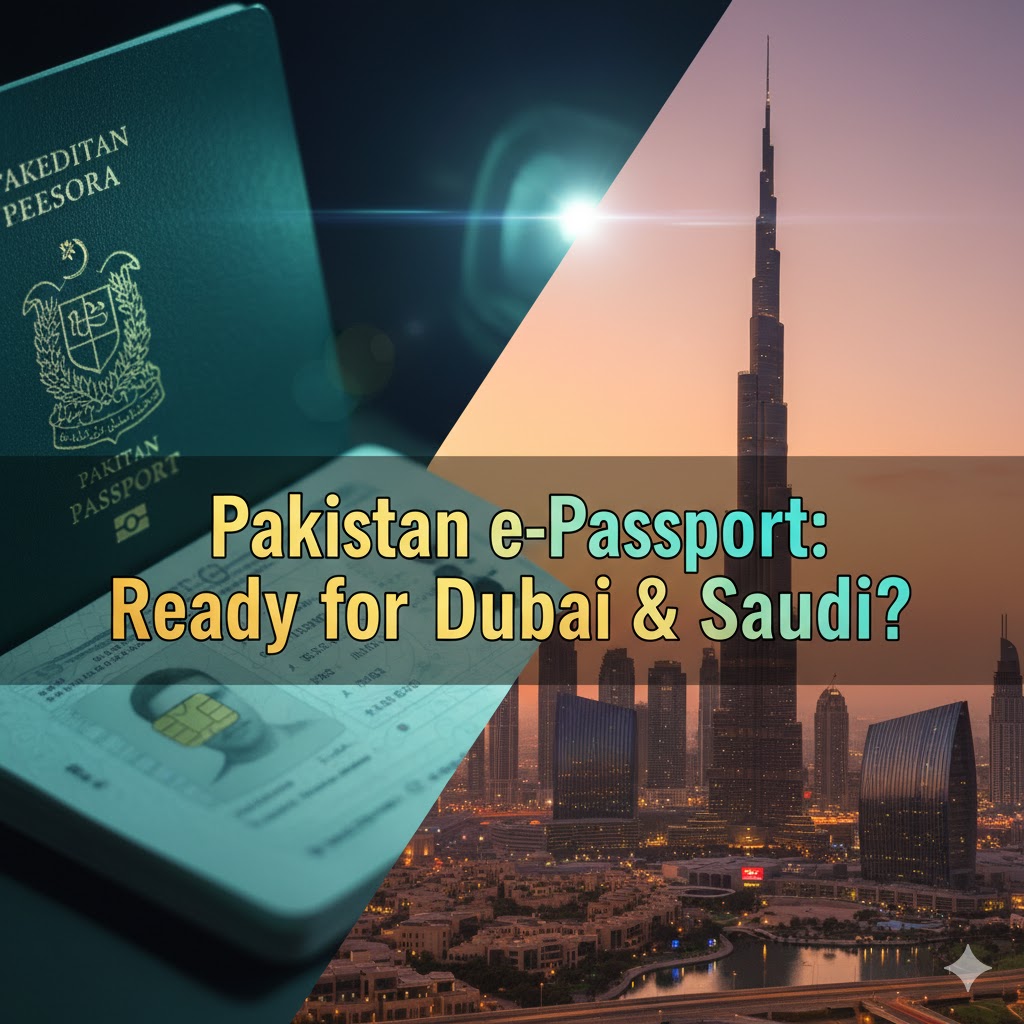

Introduction: A Pakistan e-Passport for the Modern Traveler
A quiet revolution is taking place in Pakistan’s travel system — one that’s reshaping how millions journey to Dubai, Riyadh, and beyond. The country has launched its first-ever biometric e-passport, a high-tech upgrade designed to bring Pakistani travelers into the digital age of border control and global mobility.
Gone are the days of lengthy counters, manual stamps, and document verifications. The new e-Passport comes with a built-in microchip, storing biometric data like facial and fingerprint information, ensuring smoother verification at international airports — especially in Gulf nations known for advanced immigration systems.
For the millions of overseas Pakistanis working and living in Dubai, Abu Dhabi, Riyadh, or Jeddah, this innovation isn’t just a document — it’s a gateway to faster, safer, and more respected travel.
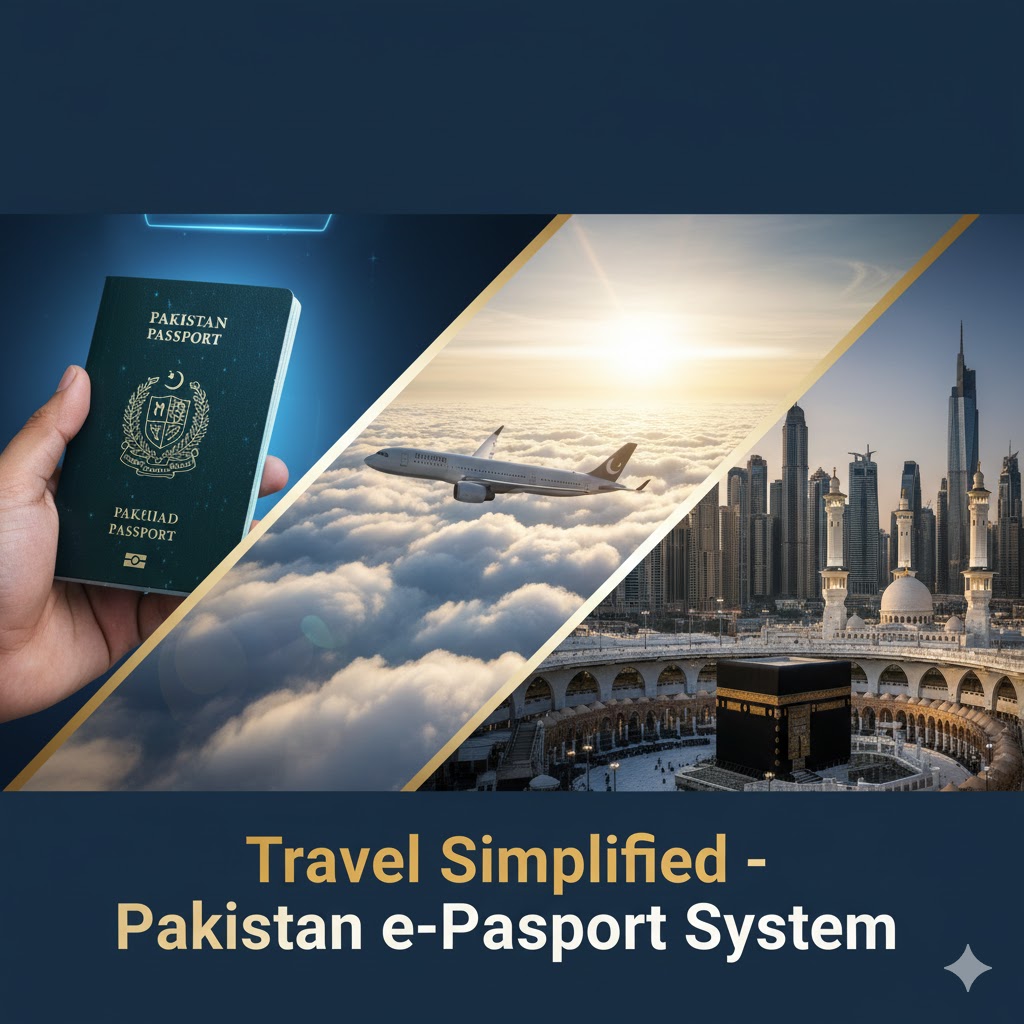
What Makes the e-Passport Different
Unlike traditional machine-readable passports (MRPs), Pakistan’s e-Passport integrates cutting-edge biometric verification. The embedded chip securely holds personal and digital identity details, protected through encryption technology that matches international standards set by the International Civil Aviation Organization (ICAO).
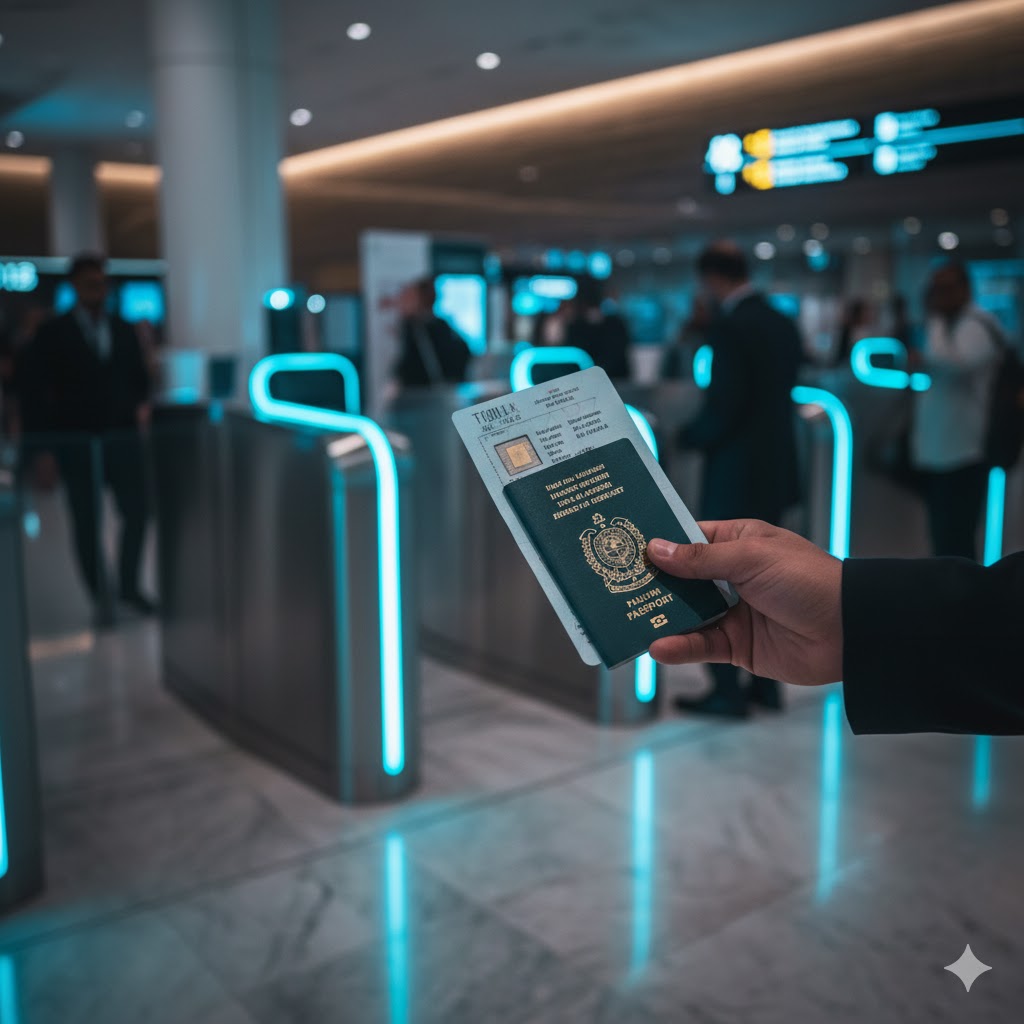
It’s not just about security — it’s about convenience. Countries like the UAE and Saudi Arabia now rely heavily on e-gates and smart travel systems, which automatically scan and verify chip-based passports. With this upgrade, Pakistani travelers can expect:
- Shorter queues at immigration checkpoints.
- Reduced risk of identity fraud or document forgery.
- Seamless compatibility with smart airport systems in Dubai and Riyadh.
- Global credibility as Pakistan joins the world’s biometric passport nations.
Read More: Saudi Arabia Work Visa 2025 – Guide to Iqama Process for Employment
Pakistan’s e-Passport Rollout: From Vision to Reality
The idea of introducing an e-Passport in Pakistan had been in discussion for years, but it officially became reality when the Directorate General of Immigration and Passports (DGIP) began issuing them in phases.
Initially limited to diplomatic and official users, the system has now expanded across the country — with plans to make online applications and renewals accessible for overseas Pakistanis through embassies in Dubai, Riyadh, and Jeddah.
Key highlights include:
- Launch: Began nationwide rollout between 2023–2024.
- Security Features: Laser engraving, biometric chip, and holographic elements to prevent tampering.
- Service Options: 5- and 10-year validity options; standard or urgent categories.
- Processing Time: Typically 3–10 working days, depending on urgency.
Why This Matters for Travel to Dubai and Saudi Arabia
For Dubai Travelers
Dubai’s airports are among the most advanced globally, equipped with facial recognition scanners and biometric e-gates. For Pakistani travelers, holding an e-Passport can mean faster check-ins, smoother security checks, and quicker clearance upon arrival.
For professionals, students, and families visiting Dubai, the e-Passport ensures a more streamlined immigration experience—especially during high travel seasons like Eid or Expo-related events.
For Saudi Arabia Travelers
Saudi Arabia, a frequent destination for Umrah, Hajj, and employment, has also modernized its border systems. The new e-Passport aligns with Saudi biometric systems, reducing manual verification and improving entry accuracy for Pakistani pilgrims.
During the holy months, when millions arrive simultaneously, this small chip could make the difference between a smooth arrival and hours of waiting.
How to Apply for an e-Passport in Pakistan
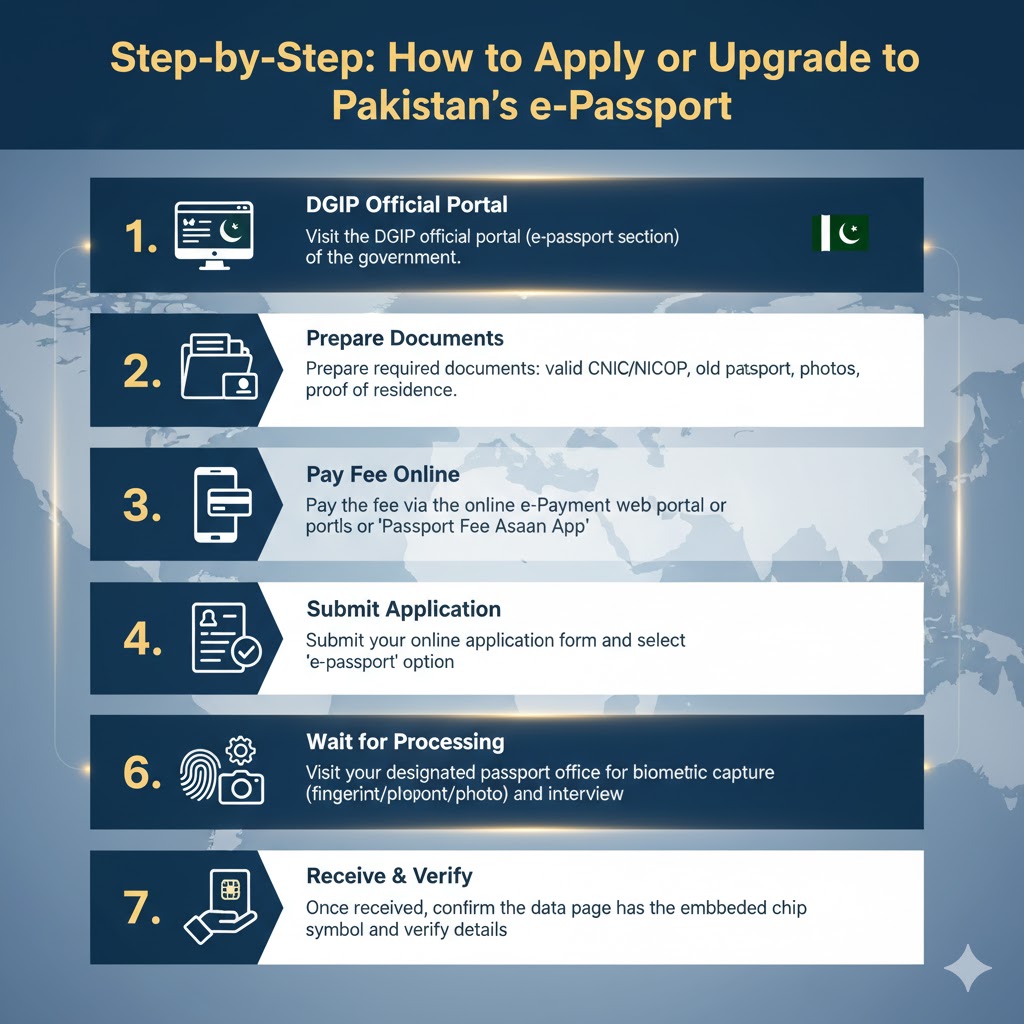
Applying for an e-Passport is simple and increasingly digital:
- Visit the DGIP official portal.
- Create an account and fill out the e-Passport application form.
- Upload the required documents — CNIC/NICOP, photos, and previous passport (if any).
- Pay the relevant fee through the online payment gateway.
- Book your biometric appointment at the nearest passport office or consulate.
- Collect your new e-Passport once it’s ready — it will have the chip symbol on the front cover.
Fee Structure (As of 2025)
| Validity | Pages | Type | Fee (PKR) |
|---|---|---|---|
| 5 Years | 36 | Standard | 9,000 |
| 5 Years | 36 | Urgent | 15,000 |
| 10 Years | 36 | Standard | 13,500 |
| 10 Years | 36 | Urgent | 22,500 |
Frequent travelers can also opt for a 72-page version, which costs slightly more but lasts longer.
Safety, Privacy, and Data Protection
Many travelers worry about privacy — and rightly so. However, Pakistan’s e-Passport system follows strict digital encryption standards to ensure that data stored in the chip is accessible only to authorized immigration systems.
No personal data can be read remotely without permission, making the document secure against cloning or unauthorized scanning.
Hidden Benefits Few Talk About
- Global Image Upgrade: Countries assess document integrity when reviewing visa applications. A stronger passport design improves Pakistan’s credibility.
- Ease of Renewal: Online renewal options mean less embassy hassle for overseas Pakistanis.
- Enhanced Record Accuracy: Chip data reduces human error at border checks.
- Faster Visa Processing: Embassies can cross-verify passport authenticity instantly.

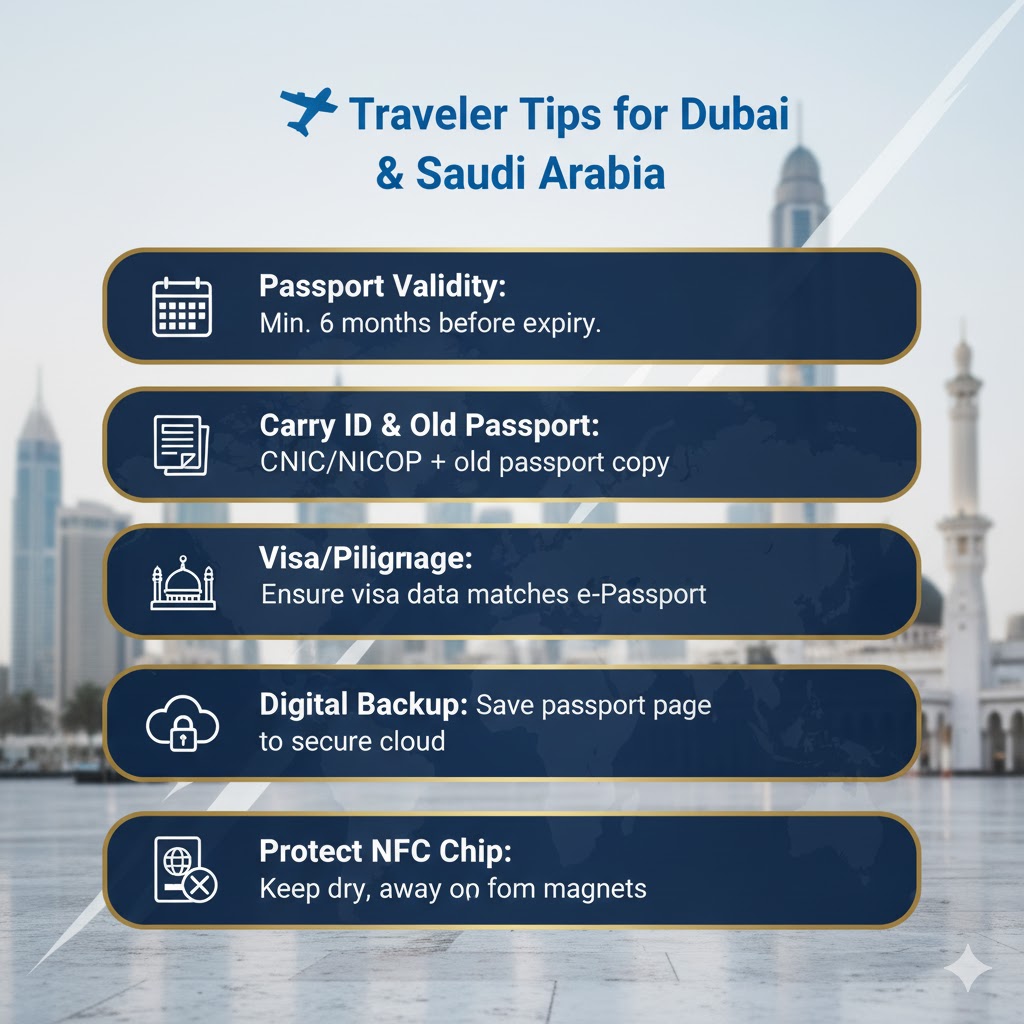
Traveler Tips for Dubai & Saudi Arabia
- Always check your passport validity (minimum 6 months before expiry).
- Carry both your CNIC/NICOP and a photocopy of your old passport for verification.
- For pilgrims, ensure your Umrah or Hajj visa details match your e-Passport data.
- Save a digital backup of your passport page in a secure cloud folder.
- Keep your passport dry and away from magnetic surfaces — it contains an NFC chip.
Common Myths Debunked
| Myth | Reality |
|---|---|
| e-Passport gives visa-free entry | ❌ You still need a valid visa. |
| Chip data can be hacked easily | ❌ It’s encrypted and protected by ICAO standards. |
| Only new applicants can get it | ❌ Existing passport holders can upgrade anytime. |
| Overseas Pakistanis can’t apply | ⚠️ They can — through consulates offering biometric capture. |
Traveler Guide: A Step Toward Smarter, Safer Travel
Pakistan’s e-Passport isn’t just a new design — it’s a symbol of modernization.
For millions traveling to Dubai and Saudi Arabia, this digital passport means less waiting, fewer risks, and greater global acceptance.
It strengthens Pakistan’s standing in global travel security and empowers citizens to move confidently in a fast-changing world.
Whether you’re a professional heading to Dubai, a pilgrim journeying to Makkah, or a family returning home — this small chip is your biggest travel upgrade yet.

Frequently Asked Questions (FAQs)
1. What is the Pakistan e-Passport, and how is it different from the old passport?
The Pakistan e-Passport is a biometric travel document embedded with a secure NFC chip that stores your personal and fingerprint data. Unlike the old machine-readable passport (MRP), the e-Passport can be used for automated immigration gates, offers enhanced anti-fraud features, and complies with ICAO global standards—making it safer, faster, and internationally trusted for travel to countries like Dubai and Saudi Arabia.
2. Can overseas Pakistanis in Dubai or Saudi Arabia apply for the e-Passport?
Yes, but availability depends on rollout stages. Currently, full e-Passport issuance is active in Pakistan, while renewal services abroad are being expanded through Pakistani embassies and consulates in Dubai, Riyadh, and Jeddah. Many overseas applicants can begin online through the DGIP e-Services Portal and complete biometric verification at designated missions.
3. Is the e-Passport mandatory for travel to Dubai or Saudi Arabia?
Not yet. Machine-Readable Passports (MRPs) remain valid until expiry. However, e-Passports are recommended because they speed up immigration clearance—especially at airports equipped with biometric e-gates like Dubai International and Riyadh’s King Khalid Airport. Over time, e-Passports will likely become the standard travel document for smoother Gulf entry.
4. How long does it take to get an e-Passport in Pakistan?
Processing time varies by category:
- Standard: about 10–14 working days.
- Urgent: typically 3–5 working days.
Applicants can track their status online at dgip.gov.pk.
5. What are the fees for the Pakistan e-Passport?
As of the latest DGIP update:
- 5-year validity (36 pages): Rs 9,000 standard / Rs 15,000 urgent.
- 10-year validity (36 pages): Rs 13,500 standard / Rs 22,500 urgent.
Larger 72-page options are also available for frequent travelers.
6. Will my e-Passport help with visa-free access or faster Umrah/Hajj entry?
No, the e-Passport itself does not replace visas, but it can reduce verification delays at Saudi and UAE entry points. For pilgrims and workers, it ensures data accuracy and security—critical for faster immigration processing during peak Umrah or Hajj seasons.
7. How can I verify if my e-Passport is genuine or active?
Check for the biometric chip icon on the passport cover and confirm data through DGIP’s official website. You can also scan it via an NFC-enabled smartphone using ICAO-compliant verification apps to confirm chip data integrity.
8. What should overseas Pakistanis do if they still have an old passport?
If your passport is valid, you may continue using it until expiry. However, it’s recommended to upgrade to the e-Passport at your next renewal to stay aligned with future global travel requirements.
9. Are there any safety or privacy concerns with the new e-Passport chip?
No. The embedded chip is encrypted and digitally signed, making it extremely difficult to tamper with. The system follows ICAO PKD (Public Key Directory) protocols, ensuring secure data exchange during international verification.
10. Where can I apply or renew my e-Passport?
Applications can be made at any Passport Office across Pakistan or through the DGIP e-Services portal. Overseas Pakistanis can check their nearest Pakistani Consulate in Dubai, Riyadh, or Jeddah for biometric appointment slots.
References:
- DGIP Official Portal – e-Passport Details
- Pakistani Consulate in Dubai – Passport Services
- SaudiPress – Biometric e-Gate Launch in Riyadh Airport